What Are the Different Types of Crib Mattresses?
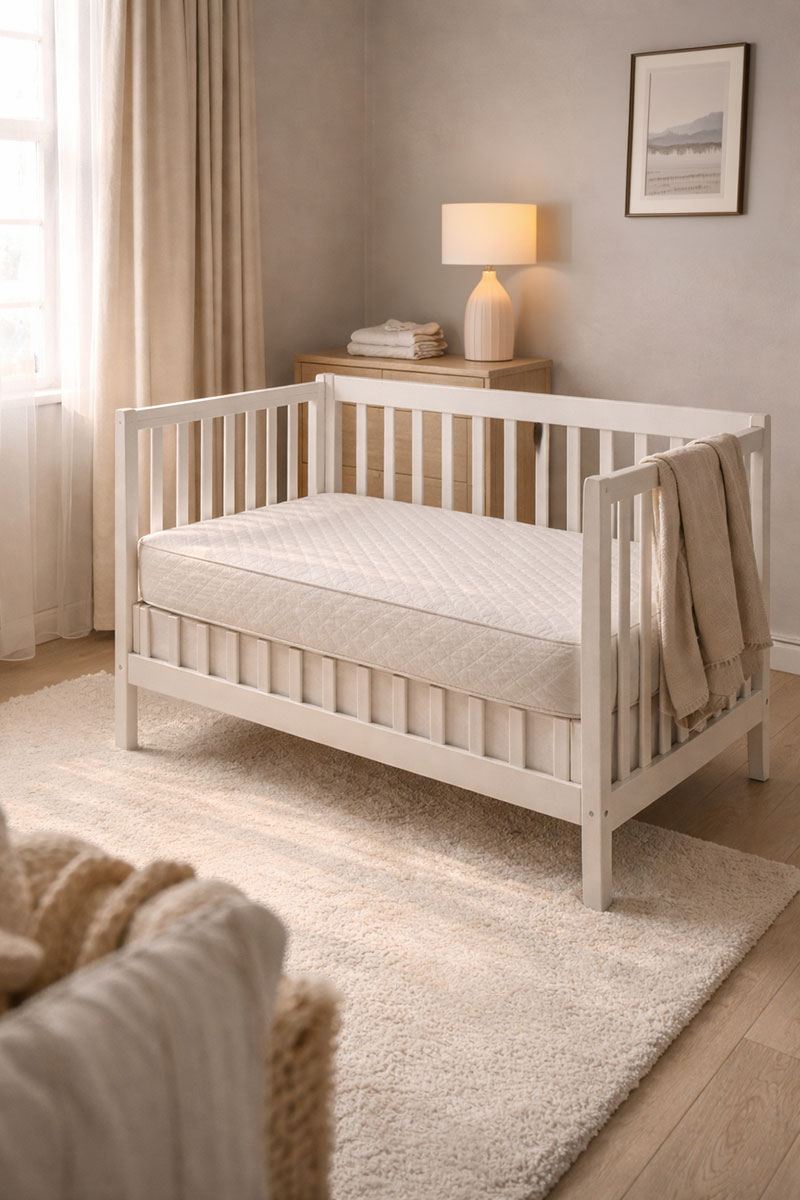
Parents want to know what are the different types of crib mattresses because knowing their options makes it much easier to choose a mattress that feels firm, fits the crib properly, and works well for both safety and daily use. The main types of crib mattresses are foam, innerspring, organic, dual-firmness, and breathable models, and each one has its own pros, cons, price range, and everyday advantages.
Trying to figure out which crib mattress type actually makes sense? Start here:
Jump to:
If you want to make comparisons first, start with my crib mattress guide. If you are already narrowing down real choices, visit best crib mattress. You can also go deeper into important details like crib mattress firmness, organic crib mattresses, and crib mattress gap problems.
Many parents start shopping for a crib mattress thinking it will be a quick decision, then realize the labels can be surprisingly confusing. One mattress says breathable. Another says organic. Another says two-stage or dual-sided. It can start to feel like every mattress is promising the same thing. In reality, the different crib mattress types are built differently, and those differences affect how heavy the mattress feels, how long it holds its shape, how easy it is to clean, and how well it fits your budget.
The good news is that once you understand the main crib mattress types, the decision gets much easier. You do not need to memorize every brand claim. You just need to understand what each type is trying to offer and whether that matches what matters most in your nursery.
Types of Crib Mattresses at a Glance
Here is a simple comparison of the main crib mattress types so you can quickly see how they differ before reading the details below.
| Type | Best For | Main Pros | Possible Drawbacks |
|---|---|---|---|
| Foam | Lightweight, budget-friendly use | Easy to lift, often affordable | Lower-quality versions may wear down faster |
| Innerspring | Longer-term durability | Supportive, often keeps shape well | Heavier, may cost more |
| Organic | Material-focused buyers | Natural-material appeal | Usually more expensive |
| Dual-firmness | Infant-to-toddler use | Two-stage design | Higher upfront cost |
| Breathable | Parents drawn to airflow features | Popular style, often easy to clean | Can be over-marketed or overpriced |
This quick chart makes one thing clear. There is no single best type for every family. The best crib mattress is the one that feels firm, fits the crib correctly, and matches your own priorities for convenience, durability, materials, and price.
Foam Crib Mattresses
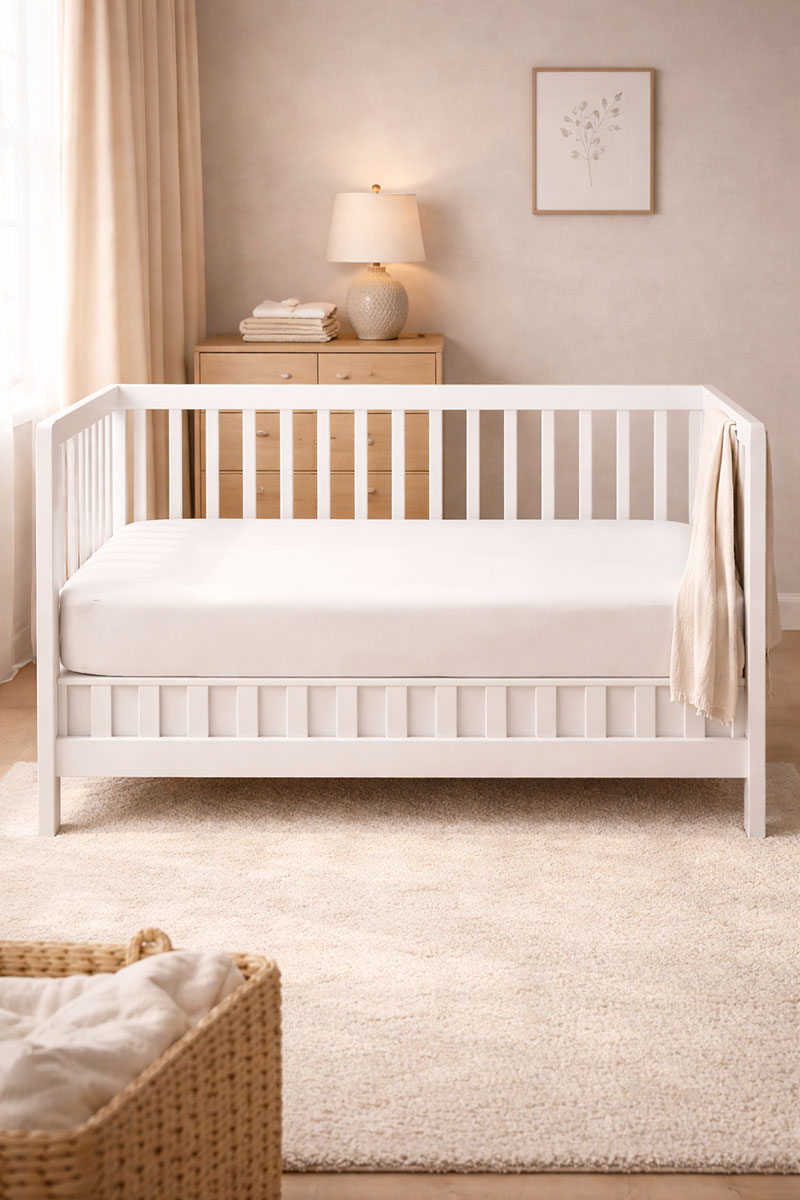
Foam crib mattresses are one of the most common choices because they are simple, widely available, and usually easy to handle. Instead of using coils, they use a solid foam core.
The biggest everyday advantage of foam is weight. A lighter mattress is easier to lift for sheet changes, and that matters more than many parents expect. When you are leaning over the crib fixing bedding during the night, a lighter mattress can make the whole job less frustrating.
Pros: Usually affordable, lightweight, easy to move, and often a practical choice for families who want something simple.
Cons: Lower-quality foam can lose shape faster, and some budget models do not feel as durable over time.
If you are considering foam, focus on firmness and fit before anything else. A firm foam mattress that fits snugly in the crib is much more important than a long list of marketing extras.
Innerspring Crib Mattresses
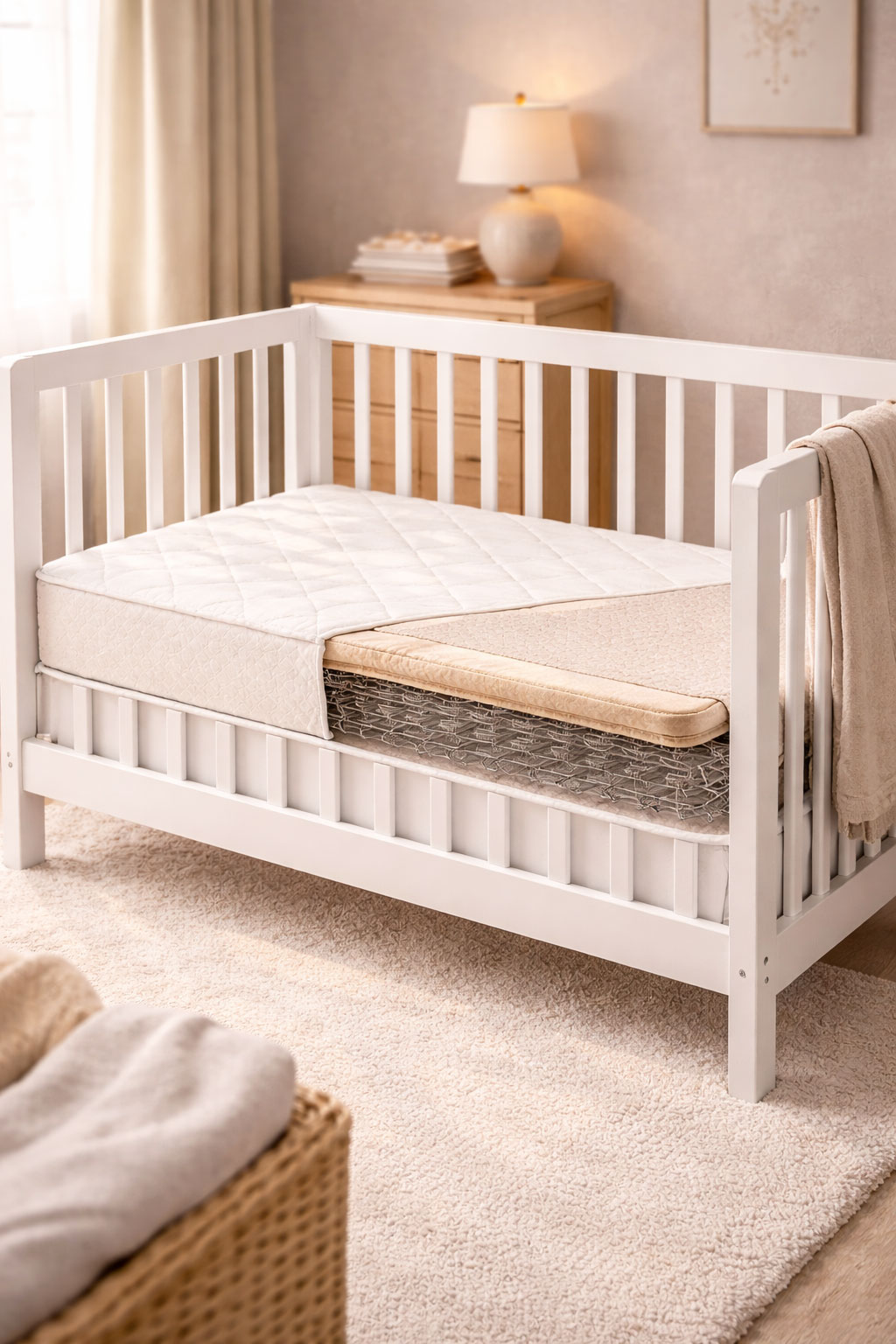
Innerspring crib mattresses use a coil system inside the mattress for support. This gives them a more traditional structure and usually makes them heavier than foam models.
Many parents choose innerspring when they want a mattress that feels sturdy and may hold its shape well over time. That can make it appealing for longer-term use, especially if durability is one of your top priorities.
Pros: Supportive, durable, and often a good option for parents who want a more substantial mattress feel.
Cons: Heavier to lift, sometimes more expensive, and a little less convenient during frequent sheet changes.
The main trade-off is simple. A heavier mattress may feel sturdier, but it also takes more effort to handle in daily life. That does not make innerspring the wrong choice. It just means convenience should be part of the decision too.
Organic Crib Mattresses
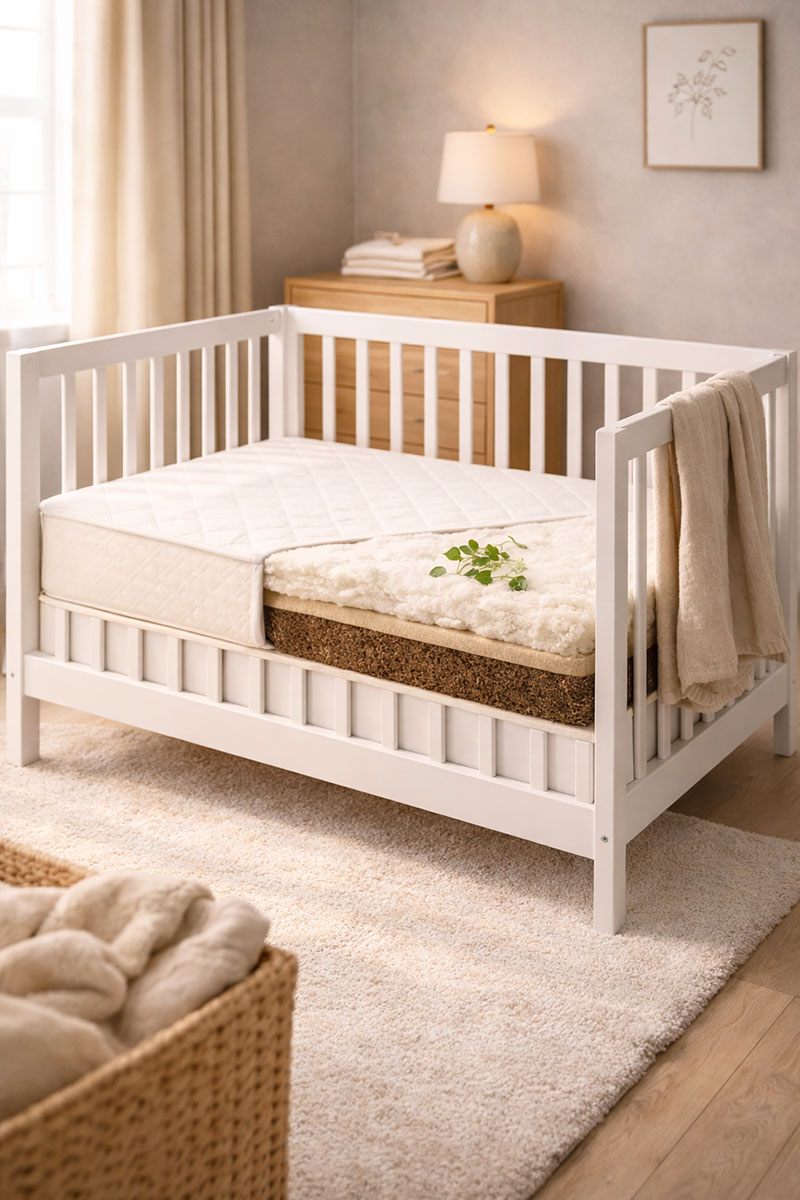
Organic crib mattresses are chosen by parents who care strongly about the materials inside the mattress. These may include organic cotton, wool, natural latex, or lower-chemical components compared with more conventional models.
This category can be harder to compare because not every brand uses the word organic the same way. Some mattresses highlight one organic layer, while others are built more fully around natural fibers and certifications. That is why it helps to look beyond the front label and read the material details carefully.
Pros: Appeals to parents who are focused on materials, natural fibers, or lower chemical exposure.
Cons: Usually more expensive, and label wording can vary from one brand to another.
If materials matter most to you, read more here: organic crib mattresses.
Dual-Firmness Crib Mattresses
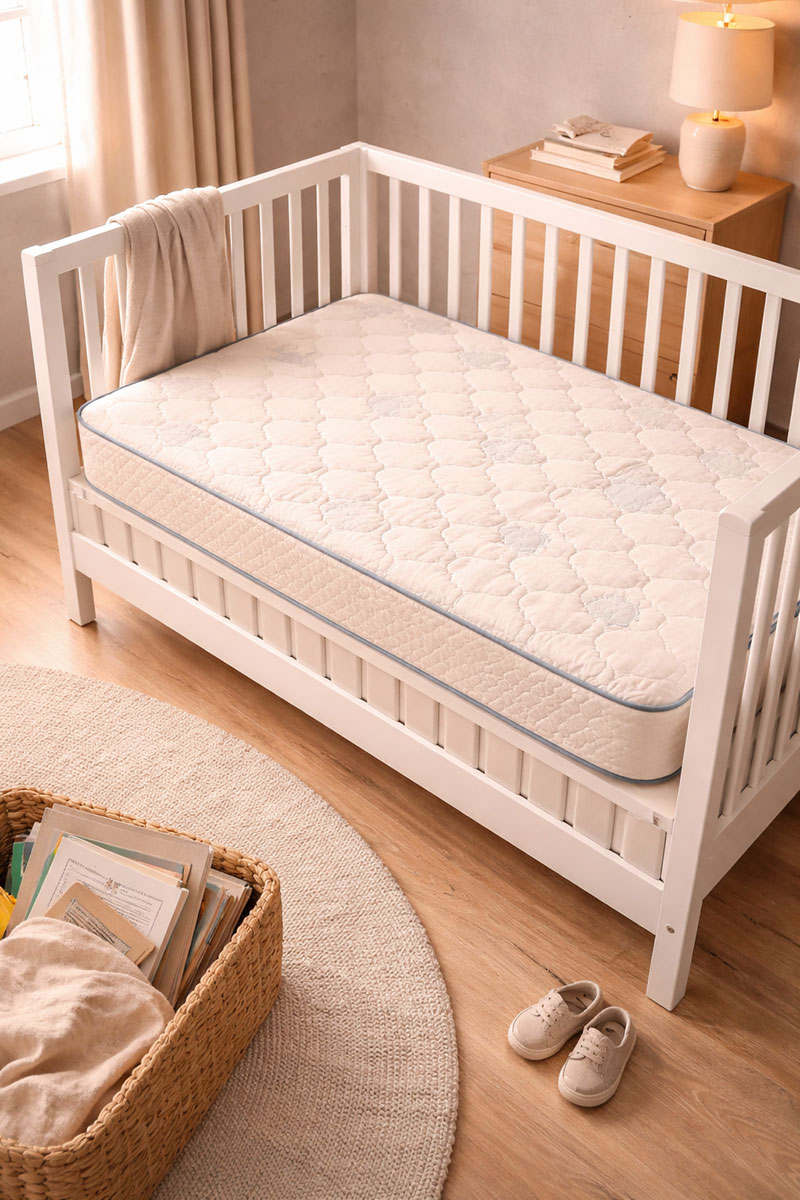
Dual-firmness crib mattresses are designed with two usable sides. One side is firmer for infants, and the other side is slightly softer for toddlers.
This type is popular because it feels practical. Many parents like the idea of buying one mattress that can work through more than one stage instead of replacing it later.
If you are trying to decide whether a two-stage mattress is worth the extra cost, see my crib mattress dual sided vs single sided comparison for a side-by-side breakdown of how the two designs differ.
Pros: Built for infant and toddler use, convenient two-stage design, and often a good fit for families who want longer value from one purchase.
Cons: Higher upfront cost, and you need to make sure the correct side is used at the correct stage.
For many families, the biggest benefit is reassurance. It removes some of the guesswork later when your child is older and you are wondering whether the same mattress still makes sense.
Breathable Crib Mattresses
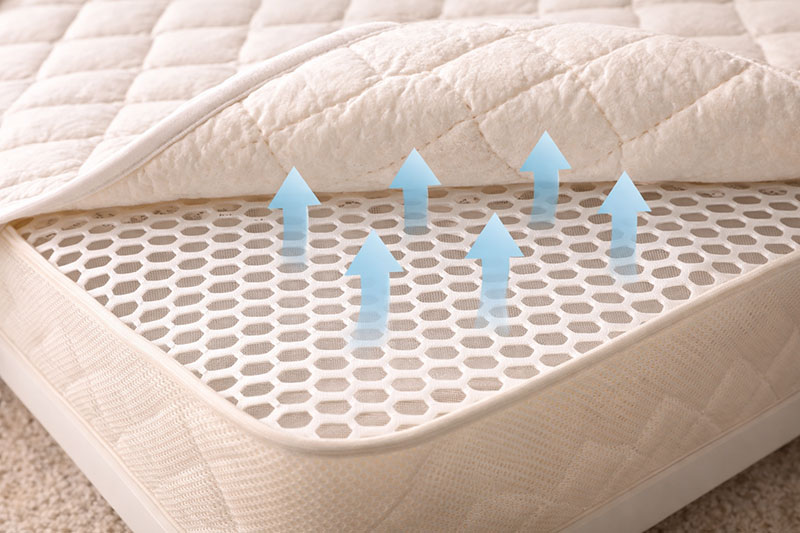
Breathable crib mattresses are one of the most talked-about options because airflow is such a powerful selling point for anxious, tired parents. These mattresses often use mesh surfaces or other airflow-focused construction.
Airflow can also affect how warm a mattress feels in daily use, so my crib mattress overheating guide explains how materials, covers, and bedding layers may influence heat retention.
It is important to keep this category in perspective. Breathability does not replace the basics. A crib mattress still needs to be firm, flat, and fit snugly inside the crib. Those basics matter more than any marketing claim.
Pros: Popular design style, often easy to clean, and appealing to parents who prefer airflow-focused construction.
Cons: Often expensive, and some models rely more on marketing than on overall value.
For general safe sleep guidance, see the American Academy of Pediatrics safe sleep recommendations.
How to Choose the Best Crib Mattress Type
The best crib mattress type is the one that fits your crib properly, feels firm, and works well for your everyday routine.
Choose foam if you want a lighter mattress that is easy to handle and often more affordable.
Choose innerspring if durability and structure matter more to you than weight.
Choose organic if your main focus is materials and you are comfortable spending more for that priority.
Choose dual-firmness if you want one mattress that can work from the infant stage into the toddler years.
Choose breathable if you like that style, but still judge it by firmness, fit, and overall value first.
Before buying any crib mattress, make sure it fits snugly inside your crib. If you are unsure what to watch for, read crib mattress gap problems.
It also helps to think honestly about real life. If you know you want the lightest mattress possible for easier sheet changes, that matters. If you would rather choose something heavier that may feel more substantial over time, that matters too. The best choice is not always the fanciest one. It is the one that fits your crib, your budget, and the way you actually use the nursery.
Once you understand the different types of crib mattresses, the decision becomes much less stressful. You are not just comparing labels anymore. You are choosing based on real differences that affect comfort, convenience, and long-term value.
If this page helped you narrow the field, the next step is comparing practical options on my best crib mattress page, or returning to the full crib mattress hub to explore the rest of the mattress cluster.
Frequently Asked Questions About Crib Mattress Types
What are the different types of crib mattresses?
The main types of crib mattresses are foam, innerspring, organic, dual-firmness, and breathable models.
What type of crib mattress is best?
The best type depends on your priorities. Some parents care most about weight and convenience, while others care more about durability, materials, or longer-term use.
Is foam or innerspring better for a crib mattress?
Foam is usually lighter and easier to handle, while innerspring is heavier and may hold its shape well over time. The better choice depends on what matters most to you.
Are breathable crib mattresses safer?
Breathable mattresses are popular, but the most important basics are still a firm, flat mattress that fits snugly inside the crib.
Do I need a dual-firmness crib mattress?
No, but it can be a helpful choice if you want one mattress that can work for both infant and toddler stages.
What matters most when choosing a crib mattress?
Firmness, proper fit, durability, everyday ease of use, and choosing a mattress type that matches your budget and priorities all matter more than flashy marketing language.
When you click on links to various merchants on this site and make a purchase, this may result in this site earning a commission. This does not affect the price you pay.

UBGI Gold Standard 2026
Reviewed under the site's
editorial checklist.
Photos, decorating ideas, party setups and reader submissions are shared for inspiration unless a page is specifically presented as a pattern, tutorial, reference guide or step-by-step project. Follow the instructions, measurements, safety guidance and manufacturer directions provided for the particular project or product.
About Jan | Contact | Baby Nursery Ideas (Blog) | Site Map | Privacy Policy | Disclosure Policy | Disclaimer | Affiliate Disclosure | Earnings Disclosure | Facebook | Pinterest
I am a participant in the Amazon Services LLC Associates Program, an affiliate advertising program designed to provide a means for us to earn fees by linking to Amazon. As an Amazon Associate I earn from qualifying purchases.
Copyright © 2006-2026. All Rights Reserved.