Crib Terminology Glossary (Baby Crib Parts + Safety Terms)
Crib terminology glossary: this page translates the words used in crib manuals, labels, parts lists, and recall notices so you can understand what a term means before comparing models, parts, or documentation.
Trying to decode crib terms before you order the wrong part or accessory? Check these first:
This page defines terms only. It does not approve repairs, confirm compatibility, or make safety determinations for any specific crib.
Definitions are provided for terminology reference and documentation clarity, not for product modification, repair decisions, or usage approval.
Quick scan tip: Use Ctrl+F (or Find on mobile) to jump directly to a term, or scroll by letter below.
If a crib has a drop-side or other movable-side design, it should not be used for infant sleep.
For visual identification of common fasteners, connectors, and hardware styles referenced in these terms, see the crib hardware identification reference.
Related reference:
Many of these terms became fixed in manuals and labels only after major rule changes, which is why the crib safety regulation timeline helps explain when and why specific crib parts, warnings, and documentation language became standardized.
For a consolidated explanation of how those federal requirements are defined and applied across crib models, see the U.S. crib safety standards reference page.
Because sizing language is part of that long-term standardization, the standard crib mattress size history page explains how crib mattress dimensions became established and why specific measurements continue to appear consistently across manuals, labels, and product listings.
When researching older or inherited cribs, the discontinued baby crib models archive provides historical context for crib model names, production eras, and why certain designs no longer appear in current manuals or listings.
Most confusion comes from different names being used for the same physical crib part.
Crib terminology glossary (definitions)
A
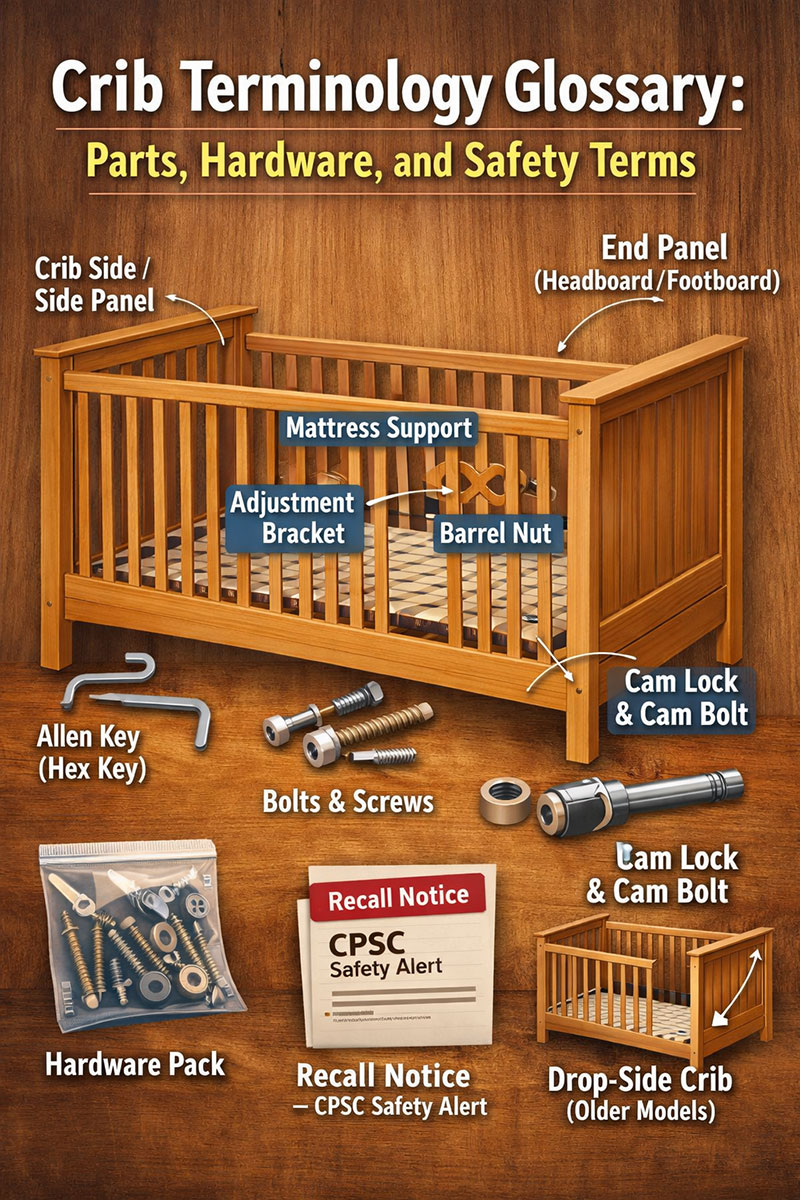
Adjustment bracket — A bracket that changes the height or position of the mattress support. Also called a height bracket or level bracket.
Allen key / hex key — An L-shaped tool used to tighten hex-head screws. Also called an Allen wrench or hex wrench.
Assembly hardware — The full set of bolts, screws, washers, and connectors supplied with a crib. Also called a hardware kit or hardware pack.
B
Barrel nut — A cylindrical nut with a threaded hole used with a long bolt. Also called a cross dowel or connector nut.
Base frame — The bottom structural section that supports crib panels. Also called the base assembly or bottom frame.
Bed rail — A term used for either a crib side panel or a conversion rail, depending on context.
Bolt — A threaded fastener that secures crib panels to posts or inserts.
C
Cam lock — A round locking connector that secures a cam screw when rotated.
Cam screw / cam bolt — A fastener designed to engage with a cam lock.
Conversion kit — Additional components used to convert a crib to another configuration, such as toddler or full-size bed.
Because conversion terminology often signals a change in crib configuration, this overview on when to switch from crib to toddler bed helps explain how and when those conversion stages are typically used.
Corner post — The vertical post at each corner of a crib where panels connect.
Crib end / end panel — The shorter panel at each end of a crib.
Crib side / side panel — The longer panel forming each side of a crib.
D
Dowel — A peg used to align crib components during assembly.
Drop-side — A crib design with a movable side panel found in older models. These designs are not considered safe for infant sleep and are no longer permitted in modern crib manufacturing.
F
Fastener — A general term for screws, bolts, washers, and nuts used in crib construction.
Footboard / headboard — Alternate terms sometimes used for crib end panels.
H
Hardware pack — The packaged set of fasteners included with a crib.
Hex screw — A screw tightened using a hex key.
M
Mattress support — The structure that holds the crib mattress. Also called a mattress frame, spring frame, or support platform.
Because mattress components and support systems experience wear over time, this reference on when to replace a crib mattress explains how age, material changes, and surface condition are commonly evaluated during crib use.
For terminology related specifically to mattress support positions and how height settings are described across crib models, see this reference guide: crib mattress height adjustment guide.
Mattress support spring — A term commonly used for older metal mattress support frames.
Model number — The identifying number assigned to a specific crib design.
R
Rail — A broad term that may refer to a crib side panel or a conversion rail.
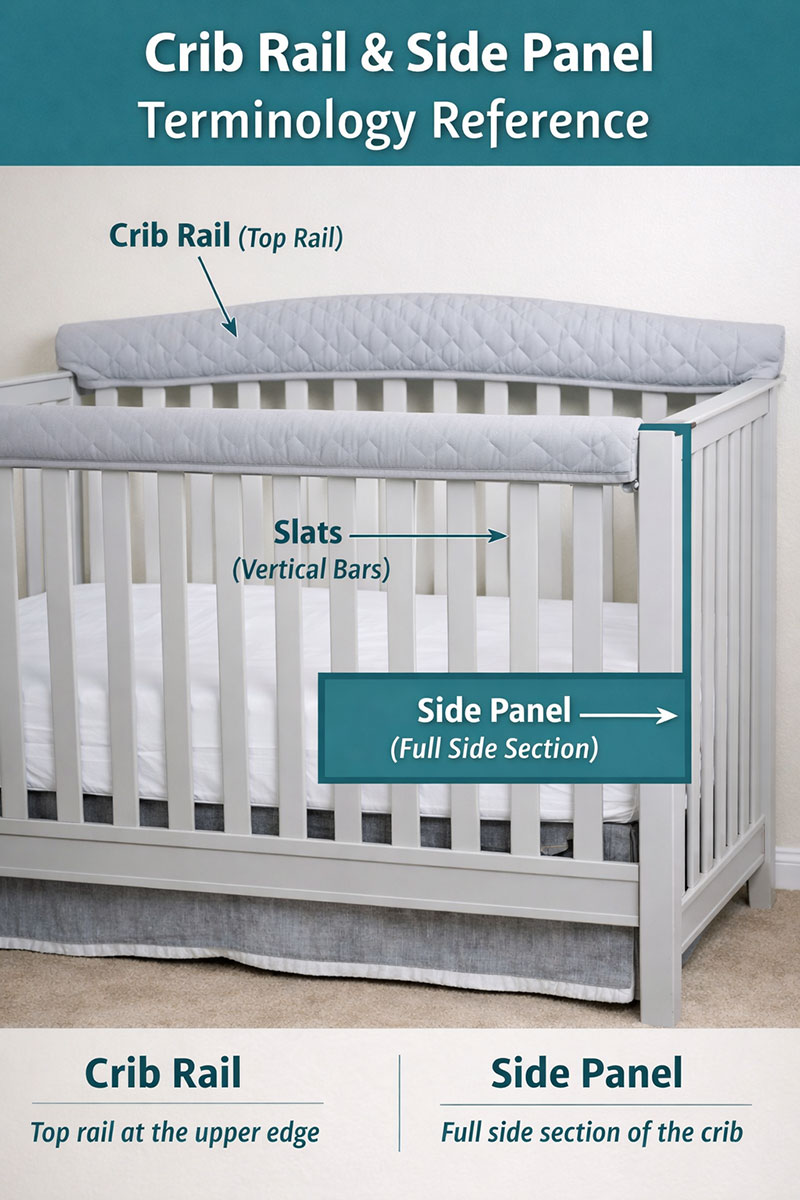
When reviewing our crib terminology glossary, parents researching why babies chew crib rails often encounter questions about rail surfaces, finishes, and how crib rails are described across manuals, parts lists, and reference materials.
Crib rail covers and alternative rail protection options are commonly mentioned alongside rail terminology because parents often encounter these terms when researching ways to reduce chewing wear or surface damage on crib side rails.
For a clear reference on which items are typically placed inside a crib versus which are usually kept out, this guide explains it plainly: what can go in a crib.
To clarify how rail-related terms differ from products meant to line the inside of the crib, this comparison breaks down the distinction in plain language: crib rail vs crib bumper.
For additional context on why rail wear and chewing are so commonly discussed in crib documentation, this page explains the typical developmental reasons behind the behavior: why babies chew crib rails.
Recall notice — An official notice issued by a manufacturer or safety authority about a specific product model.
U.S. Consumer Product Safety Commission recall listings
S
Side panel — The long vertical panel forming the side of a crib.
Slat — One of the vertical bars that make up crib sides and ends.
Spring hook — A hook-style connector found on some older mattress support frames.
W
Washer — A flat ring placed under a bolt or screw head to distribute pressure.
Wrench — A hand tool used to tighten nuts or bolts.
Where crib terminology appears
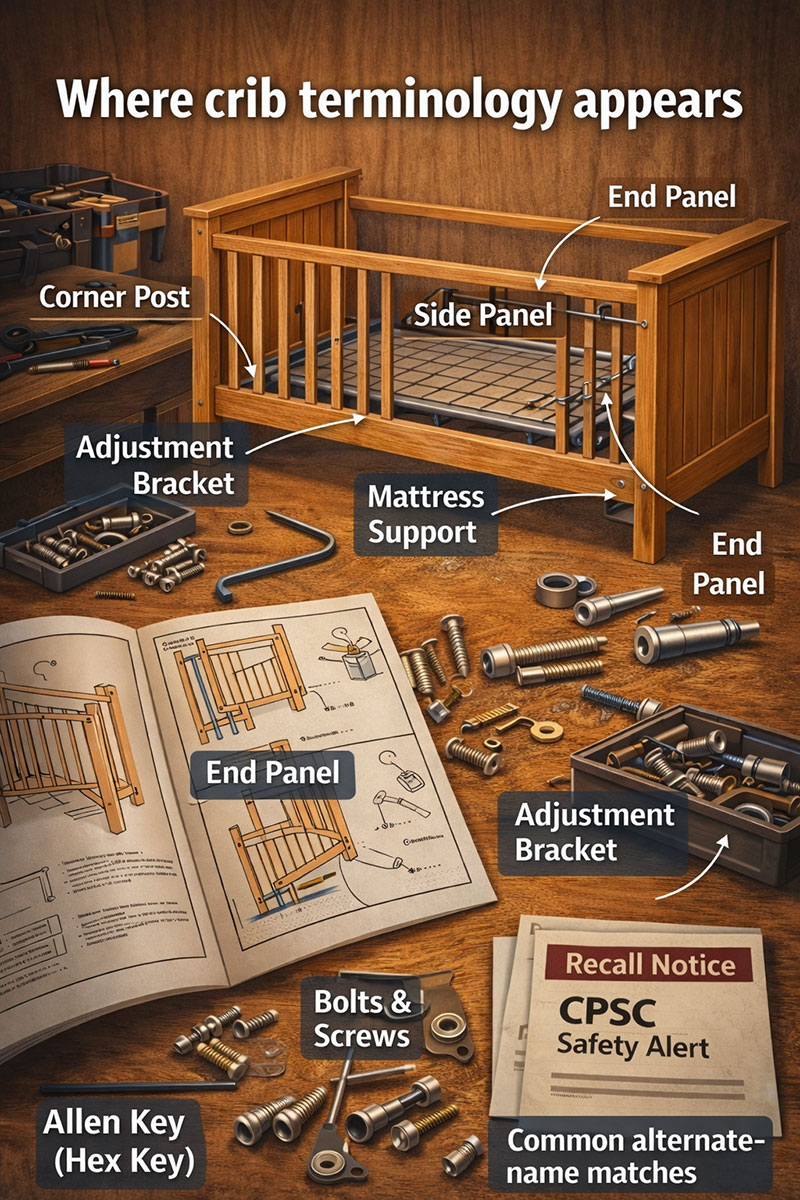
These terms most often appear on crib labels, instruction manuals, and parts diagrams. Related reference pages:
Crib instructions and manuals by brand
Crib replacement parts reference pages
Common alternate-name matches
Mattress support = spring frame = mattress frame
Barrel nut = cross dowel = connector nut
Hex key = Allen key = hex wrench
Side panel = side rail = crib side
Conversion rails = bed rails = full-size rails
Related reference pages
When you click on links to various merchants on this site and make a purchase, this may result in this site earning a commission. This does not affect the price you pay.

UBGI Gold Standard 2026
Reviewed under the site's
editorial checklist.
Photos, decorating ideas, party setups and reader submissions are shared for inspiration unless a page is specifically presented as a pattern, tutorial, reference guide or step-by-step project. Follow the instructions, measurements, safety guidance and manufacturer directions provided for the particular project or product.
About Jan | Contact | Baby Nursery Ideas (Blog) | Site Map | Privacy Policy | Disclosure Policy | Disclaimer | Affiliate Disclosure | Earnings Disclosure | Facebook | Pinterest
I am a participant in the Amazon Services LLC Associates Program, an affiliate advertising program designed to provide a means for us to earn fees by linking to Amazon. As an Amazon Associate I earn from qualifying purchases.
Copyright © 2006-2026. All Rights Reserved.