Crib Safety Regulation Timeline (U.S.): Major Rule Changes by Year
Crib safety regulation timeline (U.S.) shows how crib rules have changed over time to address safety concerns, recalls, and design risks, with each update responding to real-world incidents and evolving safety standards.
This timeline reflects crib safety regulations and enforcement history specific to the United States and does not cover international crib standards.
Modern crib safety rules exist because earlier designs caused repeated, documented failures.
Crib safety rules changed for a reason — and many parents never see the full timeline:
What modern crib safety standards now require
Why drop-side cribs disappeared from stores
The hidden crib dangers many families overlook
When an older crib quietly becomes unsafe
The simple crib safety checklist most people never fully complete
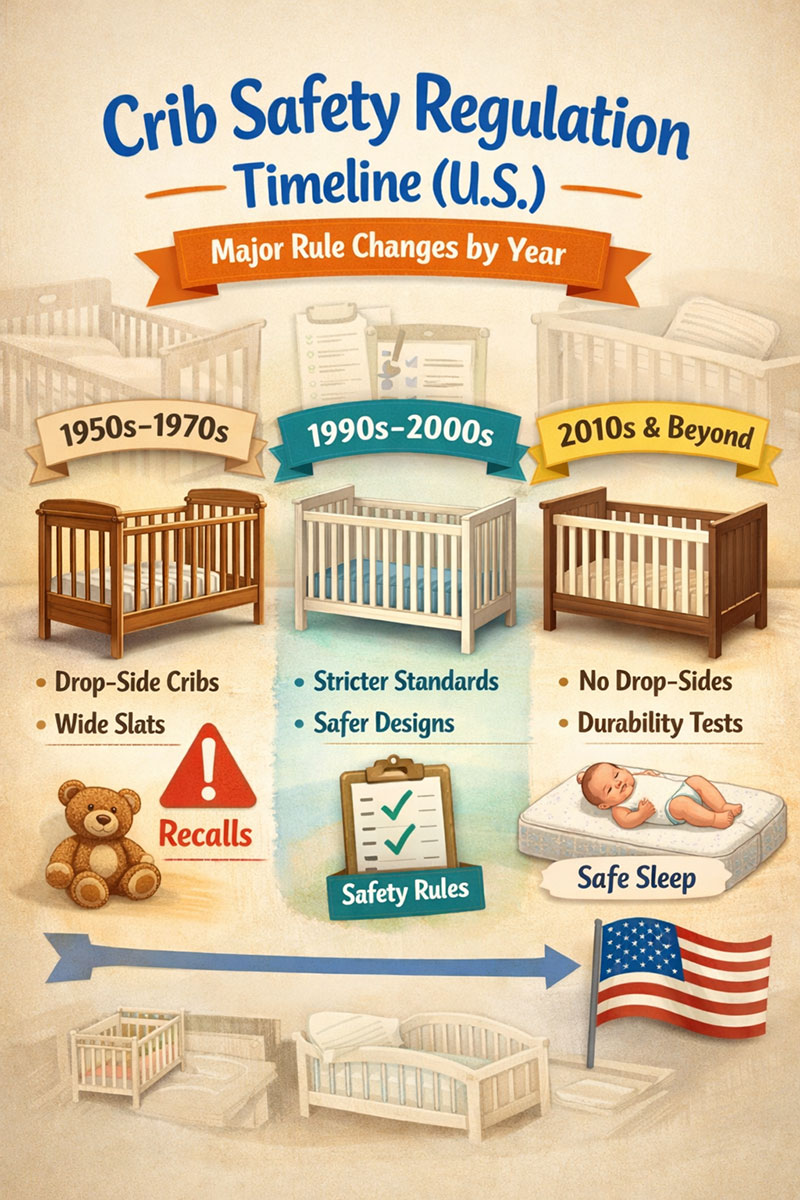
Why this matters today: Older cribs still circulate through secondhand sales, family hand-downs, and storage, which means understanding when safety rules changed helps explain why certain designs are no longer considered acceptable.
Knowing when rules changed helps parents and caregivers quickly recognize which crib designs raise questions and which ones reflect modern safety expectations.
How the Crib Safety Regulation Timeline Began in the U.S.
Crib safety regulation timeline (U.S.) developed as injuries, deaths, and repeated product failures revealed long-term problems with older crib designs. Early cribs were created before national safety oversight existed, which meant design decisions varied widely between manufacturers.
For many decades, cribs were sold with features that later proved unsafe, including movable sides, wide slat spacing, and decorative cutouts. When safety problems appeared, they were usually handled after the fact rather than prevented through regulation.
1950s–1970s: Minimal Oversight in the Crib Safety Regulation Timeline
During the mid-20th century, the crib safety regulation timeline shows almost no federal involvement. Cribs were built based on convenience, appearance, and cost rather than standardized safety testing.
Common features from this era included drop-side rails, loosely secured mattress supports, and wide spacing between slats. Product labeling was limited, and recall systems were still developing.
Many cribs produced during this time remain in circulation today, often passed down through families or found in storage. These designs reflect the lack of safety rules that existed at the time.
1980s–1990s: Early Warnings and Voluntary Standards
As crib-related injuries became more widely documented, consumer safety organizations began collecting data. This period marks the first noticeable movement within the crib safety regulation timeline toward shared safety expectations.
Voluntary guidelines encouraged narrower slat spacing and better mattress fit. However, because these recommendations were not legally required, manufacturers adopted them unevenly.
These early fit concerns eventually fed into standardized mattress dimensions, which is why the standard crib mattress size history traces how crib mattress measurements became formalized alongside evolving safety regulations.
Some companies updated designs, while others continued producing cribs that would later be recalled. This inconsistency highlighted the limits of voluntary safety standards.
2000s: Recalls Shape the Crib Safety Regulation Timeline
The early 2000s represent a major turning point. A series of large recalls drew public attention to structural failures, especially involving drop-side cribs and detached hardware.
Investigations showed that repeated use could cause rails to loosen or disengage, creating dangerous gaps. These findings accelerated calls for enforceable rules instead of optional guidelines.
During this period, recall databases expanded, and consumers became more aware of crib safety history when purchasing or inheriting older cribs.
2011 Mandatory Federal Crib Safety Regulations in the Crib Safety Regulation Timeline
In 2011, mandatory federal crib safety regulations went into effect in the United States. This moment represents the most significant milestone in the crib safety regulation timeline.
The new rules permanently banned drop-side cribs, established strict slat spacing limits, and required stronger mattress support systems. Cribs were also subjected to durability testing designed to simulate long-term use.
These regulations applied to both full-size and non-full-size cribs and were enforced before products could be sold to consumers.
In federal regulations, “full-size crib” refers to the standardized crib category subject to mandatory dimensional and performance requirements.
Post-2011 Updates in the Crib Safety Regulation Timeline
After the 2011 rule change, crib safety standards continued to evolve. Updates focused on hardware retention, warning labels, and documentation that remains attached to the crib over time.
Modern cribs must pass repeated stress tests and meet labeling requirements that help identify production dates and compliance status.
This phase of the crib safety regulation timeline emphasizes prevention rather than response, reflecting lessons learned from earlier decades.
Why Older Cribs Still Appear Despite Regulation Changes
Even with modern safety rules in place, older cribs remain common. Many were built before federal regulations existed and were designed to last for decades.
To see how specific crib brands and models fit into different regulatory eras, the discontinued baby crib models archive organizes older crib designs by brand, production period, and identification clues tied to major rule changes.
To identify older crib models that were produced before major regulation changes or later discontinued, the discontinued baby crib models archive provides historical context on designs, production eras, and why certain crib models are no longer supported.
When reviewing older crib designs, manuals, or labels from different eras, this crib terminology glossary helps clarify the parts, hardware terms, and safety language that appear across historical and modern crib documentation.
For visual identification of screws, fasteners, brackets, and connector styles referenced across older and newer crib documentation, see the crib hardware identification reference.
Alongside questions about older crib designs, mattress condition also becomes part of long-term crib use, which is why this reference on when to replace a crib mattress explains how age, wear, and material changes are commonly evaluated over time.
As families encounter older crib designs still in circulation, questions often extend beyond regulations to practical next steps—this overview on when to switch from crib to toddler bed outlines how timing and readiness are commonly evaluated once the crib stage ends.
These cribs often appear through family inheritance, estate sales, and secondhand listings. Their continued presence highlights why understanding the crib safety regulation timeline is important for historical context.
This timeline documents regulatory history and does not determine whether any specific crib, part, or mattress is compatible or appropriate for current use.
Historical Design Differences Explained by Regulation Changes
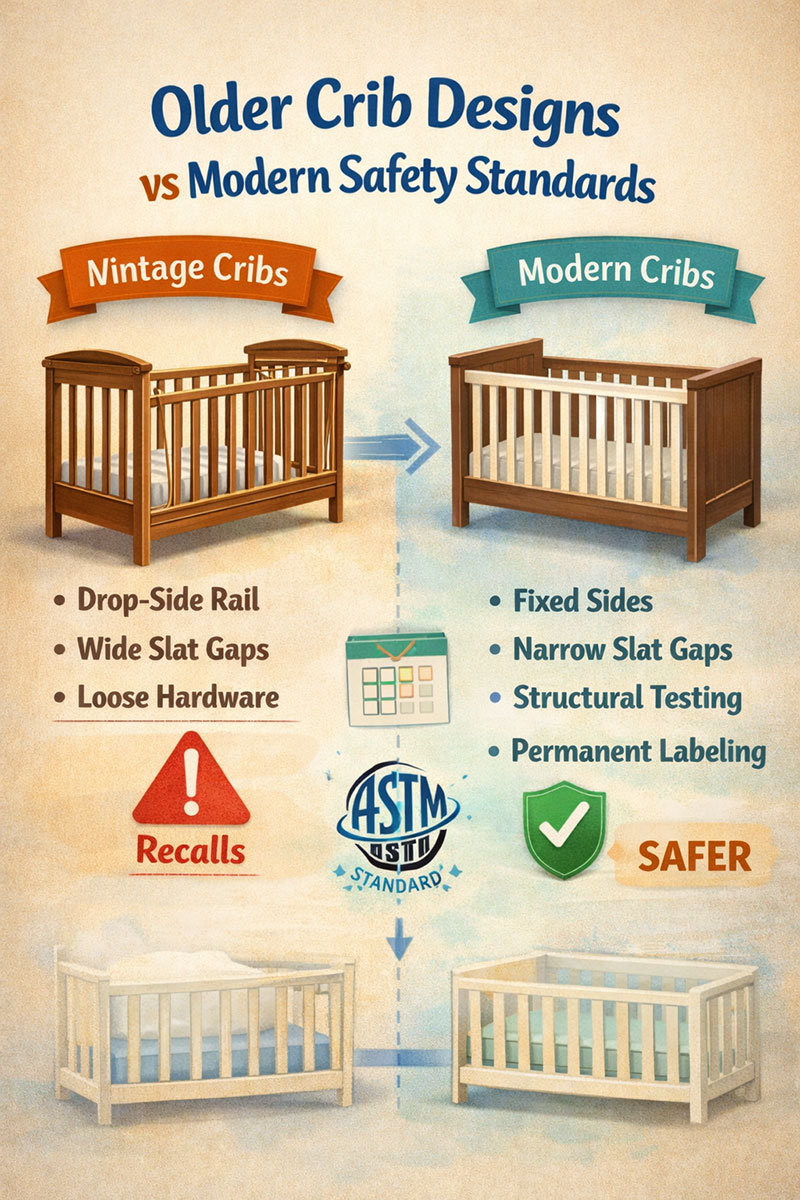
Older cribs often look different from modern ones because they were built under entirely different safety expectations. Fixed sides, tighter construction, and uniform slat spacing are direct results of regulation changes.
The U.S. Consumer Product Safety Commission maintains detailed records of crib standards, recalls, and safety rules that document how these changes occurred over time.
For authoritative reference information, see the crib safety standards and rule history published by the U.S. Consumer Product Safety Commission.
How This Crib Safety Regulation Timeline Is Used
By organizing crib design changes by decade, the crib safety regulation timeline also helps explain why safety language, labeling requirements, and construction details differ so sharply between older and newer cribs. Each regulatory shift reflects a response to documented risks rather than a single event, showing how safety standards developed gradually as data accumulated. Viewing crib history through this timeline makes it easier to understand how enforcement replaced voluntary compliance and why modern crib rules emphasize durability, fixed construction, and long-term performance rather than convenience features.
This crib safety regulation timeline is presented for historical and informational purposes. It explains when major rule changes occurred and why modern crib designs differ from older models.
The timeline helps place crib designs within their regulatory era, showing how safety expectations evolved in response to real-world outcomes rather than design trends alone.
When you click on links to various merchants on this site and make a purchase, this may result in this site earning a commission. This does not affect the price you pay.

UBGI Gold Standard 2026
Reviewed under the site's
editorial checklist.
Photos, decorating ideas, party setups and reader submissions are shared for inspiration unless a page is specifically presented as a pattern, tutorial, reference guide or step-by-step project. Follow the instructions, measurements, safety guidance and manufacturer directions provided for the particular project or product.
About Jan | Contact | Baby Nursery Ideas (Blog) | Site Map | Privacy Policy | Disclosure Policy | Disclaimer | Affiliate Disclosure | Earnings Disclosure | Facebook | Pinterest
I am a participant in the Amazon Services LLC Associates Program, an affiliate advertising program designed to provide a means for us to earn fees by linking to Amazon. As an Amazon Associate I earn from qualifying purchases.
Copyright © 2006-2026. All Rights Reserved.