Why Babies Chew Crib Rails: Teething, Timing, and Development
Why babies chew crib rails usually starts during teething and early standing stages, when babies pull up, drool more, and suddenly have direct access to the top rail. Most chewing is about gum pressure, sensory curiosity, or self-soothing. In most cases, it’s a short developmental phase not a crib defect.
This page explains common infant behavior patterns and timing related to crib use in the United States. It does not provide medical advice, treatment guidance, or product recommendations.
Wondering why baby keeps chewing the crib rail? Check these first:
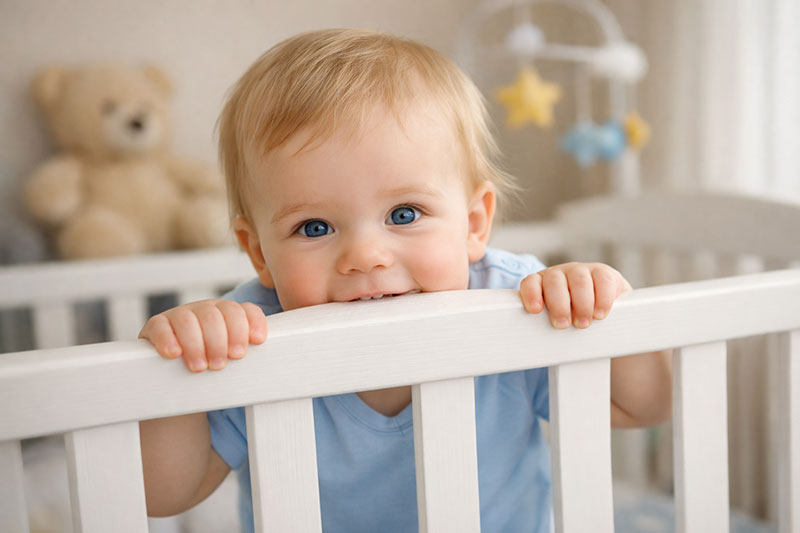
Parents begin to wonder why babies chew crib rails around the time a baby becomes more active in the crib. Mom and dad often notice small tooth marks, damp rail covers, or a baby standing at the rail with their mouth pressed right against the wood. While it can look surprising at first, crib rail chewing is a very common phase that tends to line up with teething, new motor skills, and growing curiosity about the world around them.
This behavior is part of how babies interact with cribs as they grow, which is why it fits within the broader context of how cribs are used and adjusted over time.
For a broader overview of how crib structure, safety standards, and common usage questions fit together, see the main crib safety guide, which pulls the bigger picture into one place.
Why babies chew crib rails (what it is, and why it shows up fast)
Crib rail chewing is exactly what it sounds like: a baby puts their mouth on the top rail and gnaws, rubs, or presses their gums there. Some babies do it for a few days. Others do it on and off for months. It usually starts right when a baby learns a new trick in the crib—pulling up, cruising, or bouncing with excitement like they just found their own tiny stage.
In my experience, the “why” is rarely just one thing. It’s often a mix: sore gums, brand-new teeth, extra drool, and a baby who now reaches the rail easily. The rail is right there, it’s steady, and it feels good to push against. That’s the short version. Now let’s get practical about what it can mean, what to check, and what to do next.
Once I understood the infant crib rail chewing phase better, it was easier to stop worrying and focus on keeping the crib comfortable and in good shape during that stage.
When parents begin to wonder why babies chew crib rails, they usually try to figure out whether what they’re seeing is normal or something that needs attention. In most cases, the behavior lines up with teething pressure and new movement skills, not a problem with the crib itself.
Parents are puzzled and wonder why babies chew crib rails but it is considered a normal developmental behavior during infancy and is most often linked to teething and new mobility rather than a safety issue with the crib.
Typical age range
Starts: often between 6 and 10 months, when pulling up begins.
Peaks: during active teething and early standing stages.
Fades: once teething pressure eases and new skills stabilize.
I hear the question why babies chew crib rails most often right after a baby learns to pull up. Once a baby can stand, the top rail becomes the closest solid surface at mouth level, and chewing often follows naturally.
Another reason why babies chew crib rails is simple timing. Teething discomfort, drooling, and crib exploration tend to overlap during the same few months, which makes rail chewing feel sudden even though it’s part of a bigger developmental phase.
Understanding why babies chew crib rails makes it easier to decide what to do next. Instead of guessing or changing the whole sleep setup, most families can focus on keeping the rail smooth, clean, and protected during this stage.
What to do next (right now)
Start by looking at where the chewing is happening and how intense it is. That quick check tells you whether this is a small, normal phase—or whether the rail needs attention so it doesn’t get rough, splintery, or sticky from drool.
Then decide what you want most: protect the rail, protect the finish, or protect your sanity. There are a few simple paths, and you don’t have to guess your way through them.
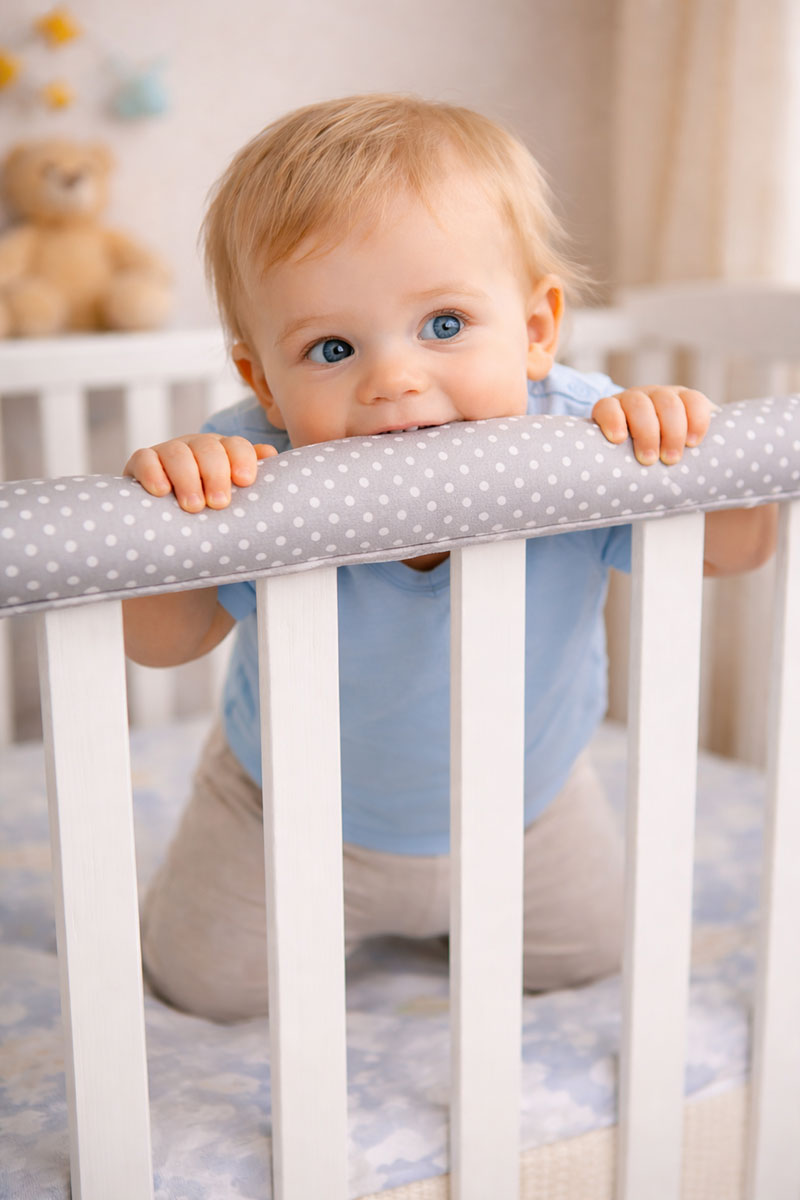
Common reasons this happens (teeth, feelings, and new skills)
The most common reason is teething pressure. Gums can feel tight and sore, and a firm rail can feel like relief. Babies don’t sit around thinking, “I need a teether.” They use what they can reach. The crib rail is often the easiest target.
Another big reason is timing. Many babies start pulling up in the crib around the same season they start getting teeth. So rail chewing can look like a teething problem, when it’s also a “I can stand now!” problem. Standing puts the mouth right at rail height, especially at the corners.
There’s also the “I’m bored / I’m excited / I’m mad about bedtime” piece. Some babies chew when they’re winding down. Some chew when they want you. Some chew when they’re working through a big leap and sleep feels messy for a while.
Quick fit check
Look at your crib mattress height and your baby’s reach. When the mattress is higher, the rail sits closer to the mouth, and chewing can get intense fast. If you want a simple reference for how families think about mattress height over time, see my page on crib mattress height adjustments as babies grow.
Also check the exact spots being chewed. Corner posts and the long side rails are the usual favorites. That helps you target protection instead of covering the whole crib like a winter coat.
What the chewing can tell you (without overthinking it)
Most rail chewing is a plain old phase. That said, the pattern can give you clues. If the chewing happens mostly during naps or bedtime, it often lines up with settling. If it happens during playtime, it can be more about exploring texture and practicing new mouth skills. Babies explore with their hands, eyes, and mouths, all at once.
Sometimes parents notice a jump in chewing right when a new tooth is cutting through. Other times the chewing shows up when drool is heavy, cheeks are rosy, and little fingers are in the mouth all day.
For a simple, parent-friendly overview of teething signs, I like the plain language over at HealthyChildren.org (AAP) on teething.
Did I buy right (a real-life crib rail reality check)
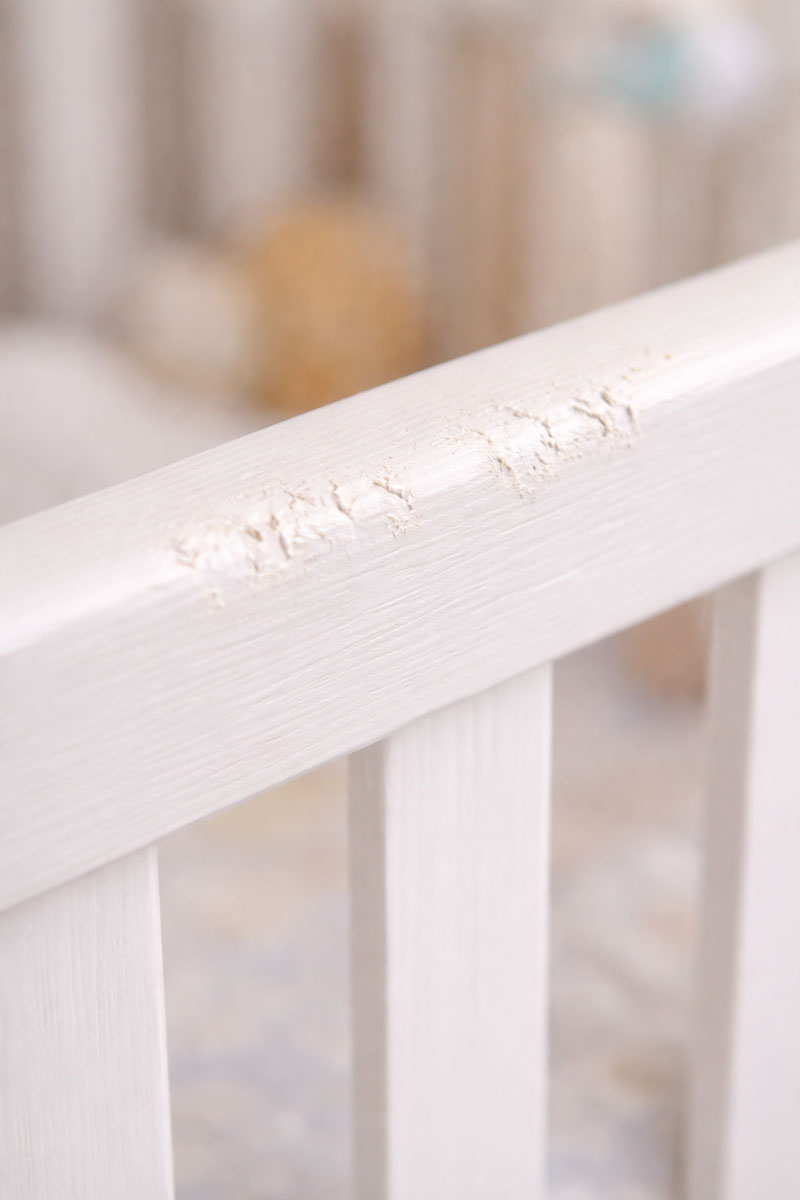
This is the part people don’t say out loud, but they feel it: “Is my crib okay if my baby is chewing on it?” I get it. Nobody wants a crib to start looking rough, and nobody wants mystery paint or finish rubbing off on wet little gums.
Here’s the honest answer: chewing doesn’t automatically mean anything is “wrong” with the crib. It often means the crib is being used exactly as babies use cribs. The question is whether the rail finish is holding up well and whether the surface stays smooth.
Run your hand along the chewed area when it’s dry. If you feel raised grain, sharp spots, or flaking finish, that’s your cue to address the rail surface. A rail that stays smooth is easier to keep clean, and it’s less likely to turn into a rough patch that catches drool and lint.

Most parents choose
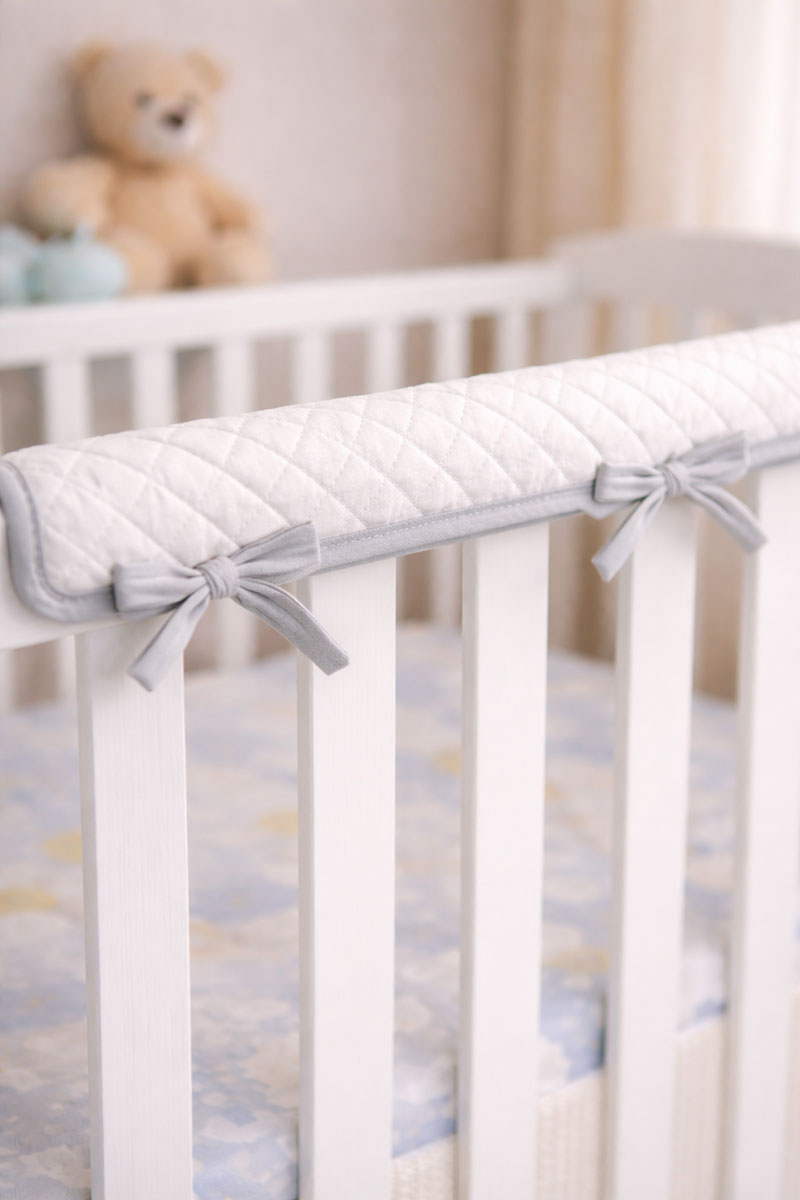
Most families I talk to do one of two things: they add a simple rail cover to stop the finish from getting wrecked, or they accept some tooth marks and focus on keeping the rail clean and smooth.
Crib rail covers and alternative protection options break down the most common ways parents protect crib rails during the chewing phase, including what works best for heavy chewers versus light, occasional gnawing.
When you want a clear comparison of cover styles and what people like about each one, my page on crib rail covers and other options lays it out in a way that’s easy to scan.
What to do now (clean, protect, and keep the crib comfortable)
Rail chewing comes with drool. Drool turns into a sticky film. And sticky film can make a rail look dull or feel grimy. So one “do now” step that actually helps is keeping the rail surface clean in a simple, regular way. I keep a dedicated page on cleaning crib sleep surfaces and keeping mess under control, because the same mindset works here: gentle, consistent, and not fussy.
Another “do now” step is taking a quick look at what else is in the crib. When babies are chewing rails, parents sometimes add extras out of desperation. A calmer approach is to keep the sleep space simple and let the rail cover do the heavy lifting. My page on what families commonly place in a crib (and what they skip) can help you reset the vibe without turning bedtime into a big project.
If your crib has a rail that looks worn, make sure the top edge stays smooth and intact. I’m not talking about perfection. I’m talking about avoiding a rough edge that feels scratchy to the touch. That’s the kind of thing that turns an annoying phase into a constant problem.
Rail chewing vs. other “crib questions” people mix together
Rail chewing gets tangled up with other searches because it happens during the same season of life. People see chewing and start thinking about bumpers, rails, and “do I need something on the crib?” all at once.
One page that helps clear up confusion is crib rail vs. crib bumper (what people mean by each). When you can name the thing you’re dealing with, it gets easier to choose a simple fix without stacking random items in the crib.
Questions about chewing sometimes lead parents to consider add-on barriers designed for older beds, which is why this reference explains why those products are not interchangeable with cribs: can you use bed rails on a crib.
If you only remember one thing
If you only remember one thing, remember this: rail chewing is usually a short chapter, but a rough rail can linger. Keep the rail smooth, keep it clean, and choose one simple protection method instead of piling on extra stuff.
If you want a clean “next step” that takes five minutes, go to the chewed spot, feel it with your hand, and decide whether a cover solves your problem. That one decision clears up most of the stress.
When chewing is heavy (and the rail looks like it’s losing the battle)
Some babies chew like it’s their job. When that happens, the rail can start showing serious wear. This is where a focused solution shines: protect just the spot that’s getting hit the hardest.
Corner posts and the long front rail are the top targets. A targeted cover can keep the crib looking nicer, and it can cut down on that constant wet-wood look that makes parents feel like the crib is always “gross” no matter how often they wipe it.
If you find yourself staring at the crib and wondering whether the whole setup is the issue, take a breath and check the basics: the mattress fits well and sits level, the crib looks stable, and the rail surface stays smooth. For a quick reference on sizing and fit, I keep crib dimensions and standard sizes in one place.
What to do next (so this doesn’t become a daily stress)
Pick your path and keep it simple. Option one: accept the tooth marks and just keep the rail clean and smooth. Option two: add a rail cover where your baby chews most. Option three: do both, lightly, without turning it into a big “project.”
If you’re also dealing with a baby who chews and stands and looks ready to climb the minute you walk out, keep an eye on overall crib setup and routine. If you want more context on whether a crib is still the right sleep space as babies grow, my page on when families switch from crib to toddler bed can help you think through the timing without panic.
If you want one tiny action step today, choose the one spot that gets chewed the most and handle that first. That’s usually the fastest way to make the crib feel “normal” again.
When you click on links to various merchants on this site and make a purchase, this may result in this site earning a commission. This does not affect the price you pay.

UBGI Gold Standard 2026
Reviewed under the site's
editorial checklist.
Photos, decorating ideas, party setups and reader submissions are shared for inspiration unless a page is specifically presented as a pattern, tutorial, reference guide or step-by-step project. Follow the instructions, measurements, safety guidance and manufacturer directions provided for the particular project or product.
About Jan | Contact | Baby Nursery Ideas (Blog) | Site Map | Privacy Policy | Disclosure Policy | Disclaimer | Affiliate Disclosure | Earnings Disclosure | Facebook | Pinterest
I am a participant in the Amazon Services LLC Associates Program, an affiliate advertising program designed to provide a means for us to earn fees by linking to Amazon. As an Amazon Associate I earn from qualifying purchases.
Copyright © 2006-2026. All Rights Reserved.