When to Switch From Crib to Toddler Bed
Parents often wonder when to switch from crib to toddler bed as mobility and height increase. This page reflects commonly referenced United States manufacturer guidelines, crib safety standards, and category definitions related to the crib-to-toddler-bed transition.
Crib mattresses and crib structures discussed here are regulated sleep products with defined size, construction, and use limits. This page provides category-level reference information only and does not offer product-specific instructions, safety approvals, sleep training methods, or behavioral guidance.
Wondering if it is really time to leave the crib stage? Check these first:
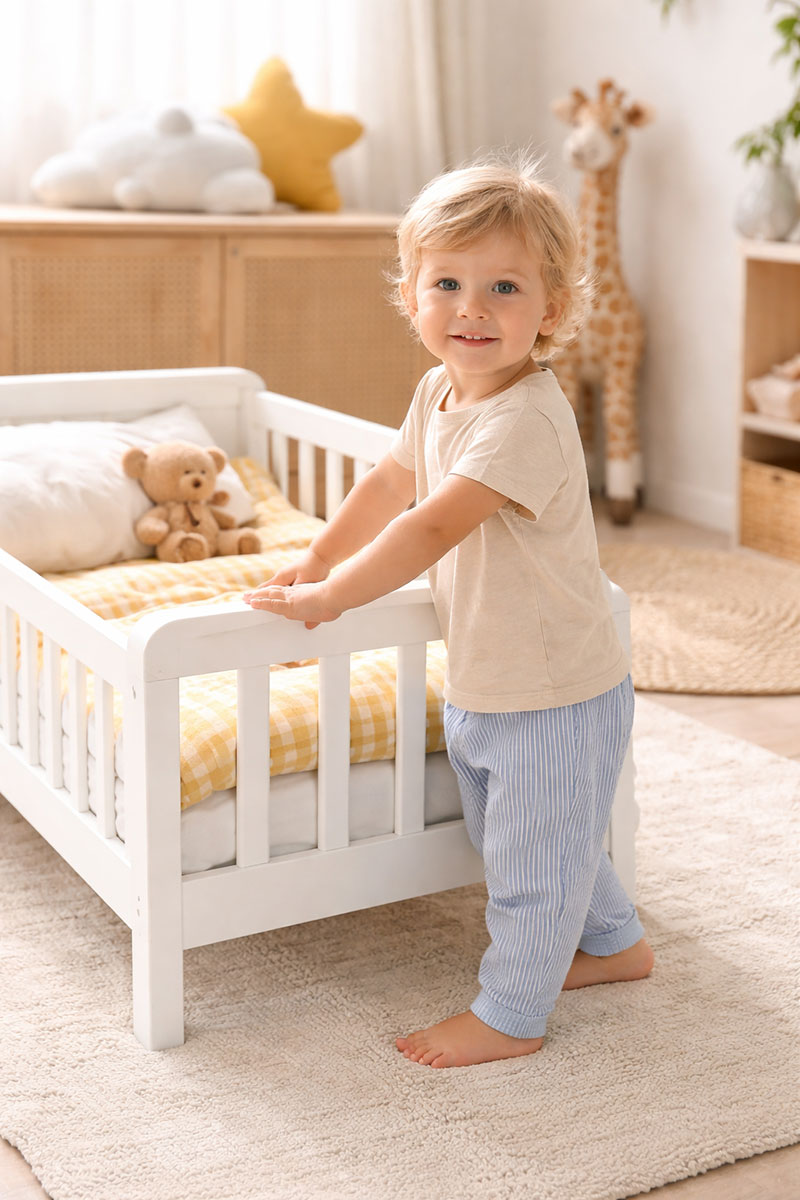
A crib should be replaced with a toddler bed when a child can climb out safely or when manufacturer height limits are reached.
What the Crib-to-Toddler-Bed Transition Really Means
The move from a crib to a toddler bed is not tied to a specific birthday. It usually happens when safety, size, or behavior begins to change. Some children remain comfortable in a crib well past age three, while others need to transition earlier due to climbing or height.
This change is less about milestones and more about observation. Once a child can climb out, the crib no longer functions as a contained sleep space. At that point, the surrounding room environment becomes just as important as the bed itself.
When containment becomes a concern, some parents start looking at products designed for older sleep setups, which is why this reference explains why those products are not interchangeable with cribs: can you use bed rails on a crib.
Typical Age Range for Switching From a Crib
Most children move from a crib to a toddler bed between 18 months and 3½ years. This wide range exists because children grow and develop independence at different speeds. Common patterns include:- Around 18–24 months if climbing begins early
- Between 2½–3 years for children who remain settled in a crib
- Later than 3 years when no climbing or escape behavior is present
When to Switch From Crib to Toddler Bed Based on Safety
When to switch from crib to toddler bed is often determined by safety rather than age. Certain behaviors strongly suggest that a crib may no longer be the safest sleep option. These include:- Repeated attempts to climb out of the crib
- Successfully climbing out, even once
- The mattress already set at the lowest position
- Leaning or shifting weight over the crib rail
Developmental Readiness vs Sleep Readiness
A child may be physically ready for a toddler bed before being emotionally ready for open sleep boundaries. Physical readiness involves height, strength, and coordination. Sleep readiness relates to staying in bed and settling after bedtime. Some children adjust quickly, while others test limits during the transition period. Temporary changes do not indicate a failed transition. Signs that often accompany stronger sleep readiness include:- Remaining in bed when placed down
- Familiarity with bedtime routines
- Growing independence during daily activities
Crib Height and Weight Limits
Most standard cribs list maximum weight limits between 35 and 50 pounds, depending on the model. Height is often the more important factor. When a child’s chest reaches the top rail while standing, the crib may no longer provide safe containment.
Because mattress height within the crib affects how standing height is measured and evaluated, this reference explains how crib mattress height adjustment positions are defined and described across crib models: crib mattress height adjustment guide.
Manufacturer guidelines for the specific crib model should always be followed when evaluating continued use. Safety standards referenced by organizations such as the U.S. Consumer Product Safety Commission outline general crib-use expectations and product limitations.
Toddler Bed vs Floor Bed Options
In this context, a toddler bed refers to either a standalone toddler bed frame or a crib converted using manufacturer-specific toddler conversion rails, both of which continue to use a crib-size mattress. These options are distinct from standard twin beds, which use a larger mattress and follow a different sleep-space category.
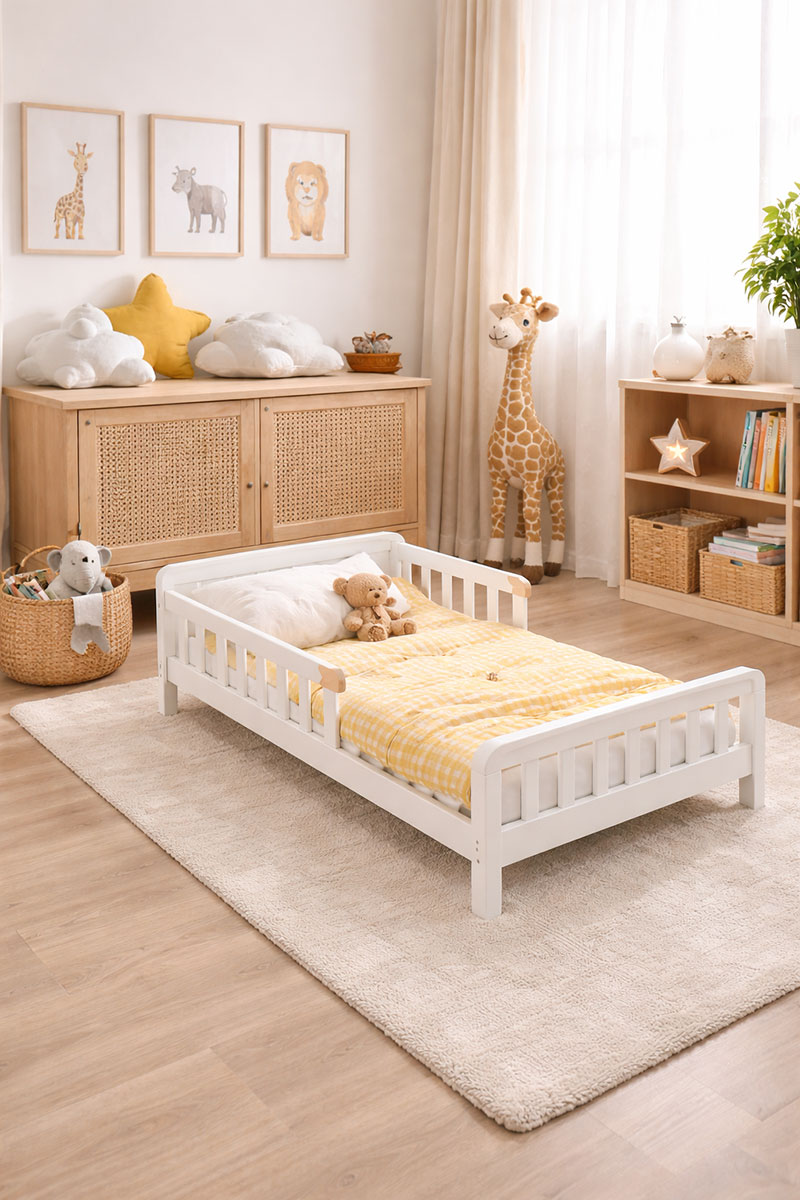 A toddler bed typically uses the same crib mattress and sits closer to the floor, often with partial side rails. A floor bed places the mattress directly on or very near the floor.
General differences include:
A toddler bed typically uses the same crib mattress and sits closer to the floor, often with partial side rails. A floor bed places the mattress directly on or very near the floor.
General differences include:
- Toddler beds offer structure and familiarity
- Floor beds reduce fall distance and allow free movement
Common Sleep Changes After the Switch
Temporary sleep disruptions are common after leaving the crib. These may include:- Getting out of bed repeatedly
- Longer time to fall asleep
- Earlier morning wake-ups
These changes typically settle as routines are reinforced and expectations become familiar again.
When Waiting Longer Can Be Appropriate
If a child shows no climbing behavior, sleeps well, and remains safely within crib limits, there is no requirement to rush the transition. Staying in a crib longer is not harmful when safety is maintained.
Delaying the switch can sometimes reduce unnecessary sleep disruption, especially during other developmental changes such as potty training or adjustments to a new home environment.
In some households, maintaining a familiar sleep setup for a little longer can support overall sleep consistency during periods of rapid growth or routine changes.
Quick decision check: is it time to switch?
For most families, the crib-to-toddler-bed decision compresses into a few observable factors rather than a fixed age.
- If climbing has started or the crib no longer contains the child safely, switching sooner reduces fall risk.
- If the child sleeps well, shows no escape behavior, and remains within crib height limits, waiting longer is usually appropriate.
- If the room is not yet child-proofed for overnight movement, delaying the switch may prevent new safety issues.
In short, the transition works best when the child’s physical abilities, sleep behavior, and room readiness align at the same time.
Preparing the Room Before the Transition
Once a child can move freely at night, the entire room effectively becomes the sleep space. Preparing the environment ahead of time helps reduce overnight risks.
The following items are commonly referenced in safety discussions and manufacturer materials as environmental considerations, not as step-by-step instructions.
Common preparation steps include:- Anchoring furniture securely
- Covering electrical outlets
- Securing cords and window coverings
- Using safety gates where needed
Frequently Asked Questions
Is it unsafe to keep a child in a crib past age three?Not necessarily. Safety depends on behavior, height, and crib condition rather than age alone.
Does switching earlier improve sleep independence?
Not always. Sleep independence develops gradually and varies by child.
Can a crib be converted instead of replaced?
Some cribs convert to toddler beds using manufacturer-specific conversion rails.
When you click on links to various merchants on this site and make a purchase, this may result in this site earning a commission. This does not affect the price you pay.

UBGI Gold Standard 2026
Reviewed under the site's
editorial checklist.
Photos, decorating ideas, party setups and reader submissions are shared for inspiration unless a page is specifically presented as a pattern, tutorial, reference guide or step-by-step project. Follow the instructions, measurements, safety guidance and manufacturer directions provided for the particular project or product.
About Jan | Contact | Baby Nursery Ideas (Blog) | Site Map | Privacy Policy | Disclosure Policy | Disclaimer | Affiliate Disclosure | Earnings Disclosure | Facebook | Pinterest
I am a participant in the Amazon Services LLC Associates Program, an affiliate advertising program designed to provide a means for us to earn fees by linking to Amazon. As an Amazon Associate I earn from qualifying purchases.
Copyright © 2006-2026. All Rights Reserved.