Free Crochet Basket Patterns for XXL Nursery and Toy Storage
By Jan Bay
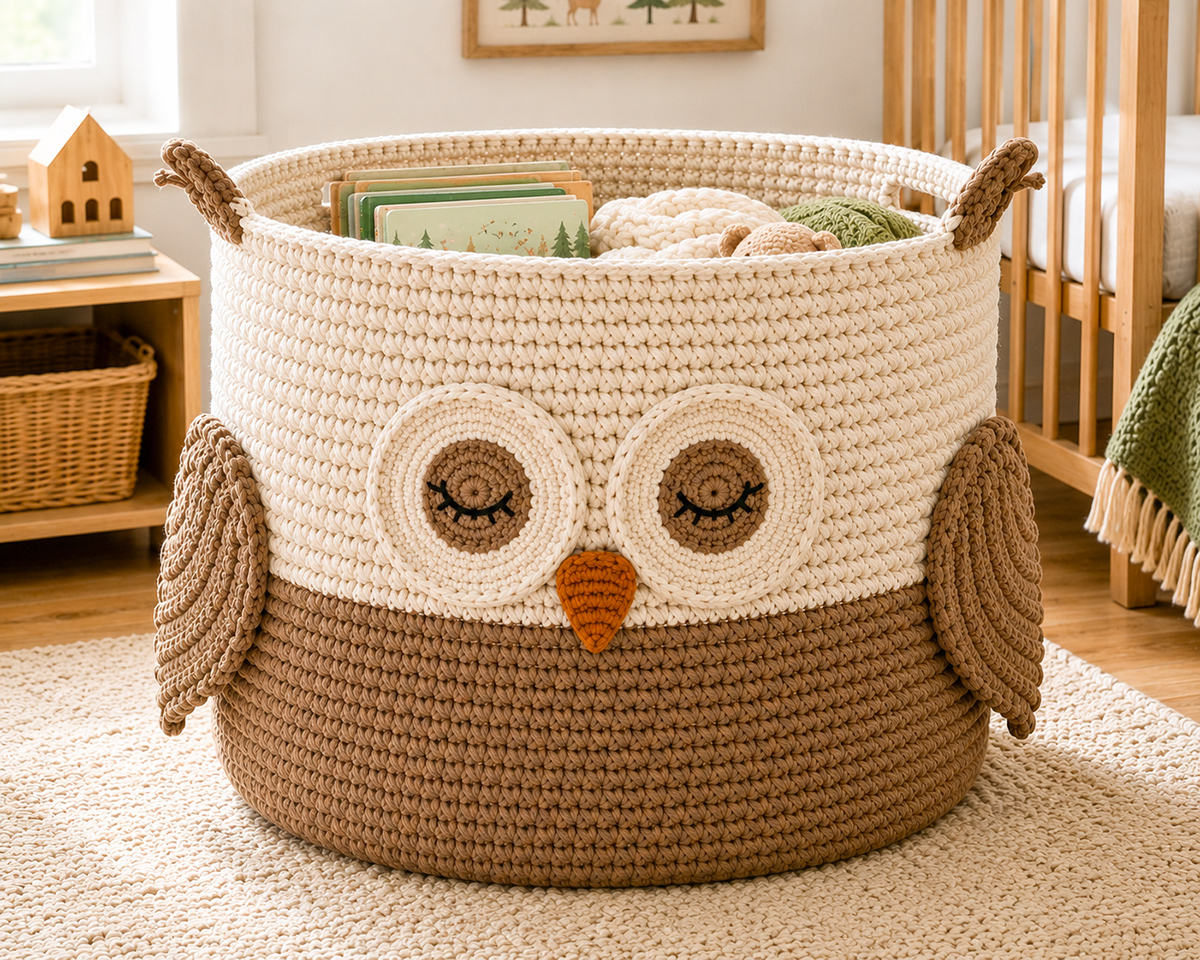
Free crochet basket patterns are only useful when the finished basket can handle the job you made it for. This collection begins with one complete XXL round basket pattern with a reinforced double base, sturdy single crochet walls, a firm upper rim and raised handles. It then adds separate owl, bunny and fox feature patterns so you can change the character without relearning the structural basket. I have also included the cord, hook, sizing and troubleshooting details I would want before ordering hundreds of yards of material.
Start With the Correct Pattern
This is the collection hub, not the complete round-by-round basket pattern.
- Use the free large crochet basket pattern with handles to make the reinforced base, walls, upper rim and two raised handles.
- Continue with the owl basket pattern, bunny basket pattern or fox basket pattern for the separate character pieces, placement measurements and assembly instructions.
Recommended Cord for the XXL Master Basket
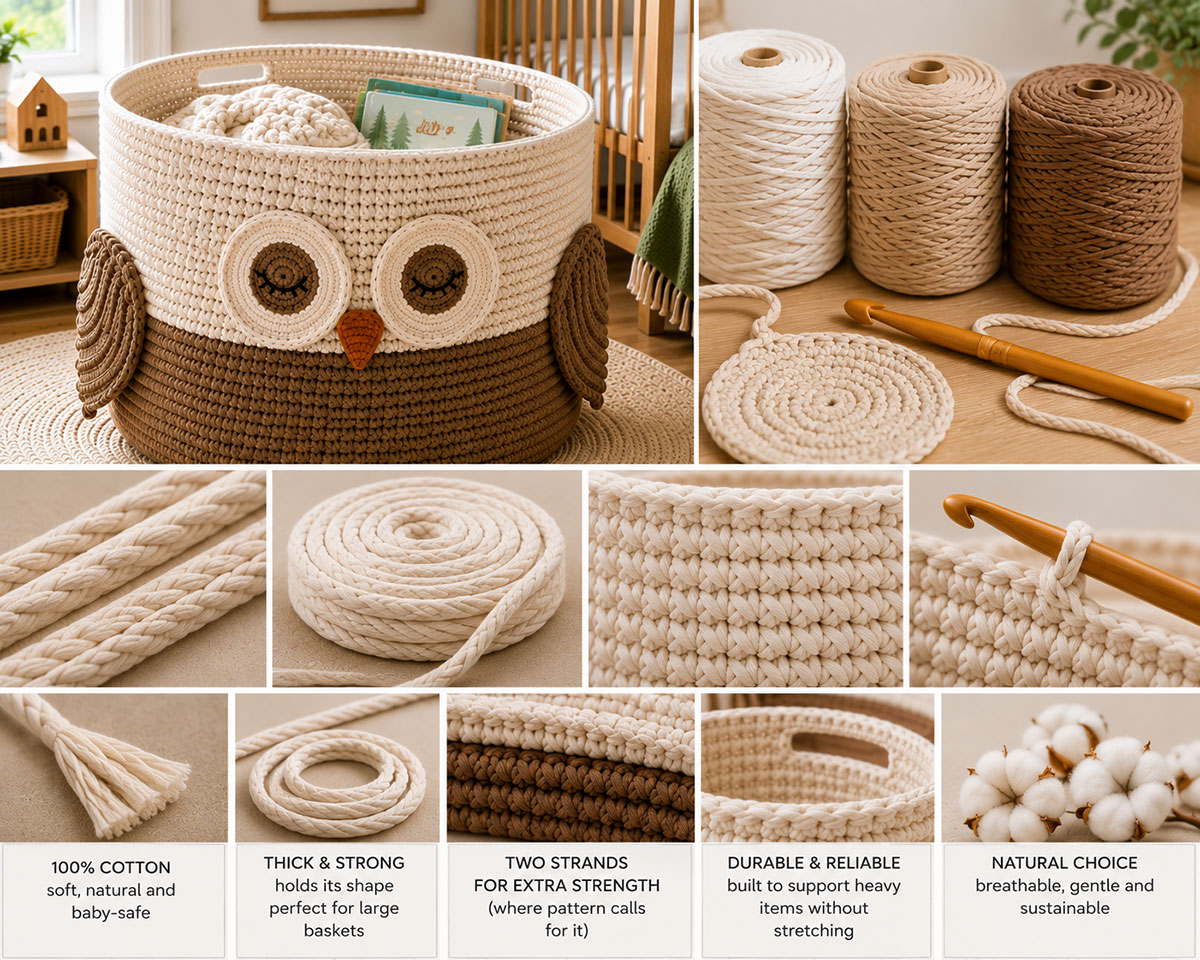
The master pattern uses one strand of firm 5 mm braided cotton cord, with approximately 700–800 yards needed for the two base circles, walls, upper rim and raised handles. Begin with a 10 mm crochet hook and confirm that the cord produces approximately 8 single crochet stitches and 8 rows per 4 inches before ordering the full quantity.
How to Use This Crochet Basket Pattern Collection
Use this page to choose a design, compare materials and understand how the structural basket and decorative feature patterns work together.
Begin with the complete free large crochet basket pattern with handles. That master pattern contains the reinforced double base, base-to-wall transition, straight sides, firm upper rim, raised oval handles, stitch counts, measurements and structural finishing instructions.
After completing the master basket, continue with the owl basket pattern, bunny basket pattern, fox basket pattern or crochet bear basket pattern. Each character page provides the separate animal features, placement measurements and assembly instructions needed to turn the finished basket into the selected design.
One master basket followed by one character feature pattern keeps the structural instructions in a single reliable place and prevents stitch counts or construction details from changing between designs.
Square, rectangular, oval, hanging and smaller baskets require different shaping and do not use this XXL round foundation.
The owl, bunny and fox designs all begin with the same completed XXL round basket. Once the reinforced base, walls, rim and raised handles are finished, only the separate character features and their placement change.
Why Some Crochet Baskets Stand Up While Others Collapse
Many free crochet basket patterns are designed for yarn, sewing supplies or a few lightweight objects on a shelf. Nursery storage asks more of the finished basket. Blankets, books and toys press against the walls and add weight to the base, so the structure must be planned before the first round is crocheted.
The prettiest basket in the nursery is no bargain if it folds flat the first time you add board books. I prefer to build firmness into the crochet itself with low-stretch cord, compact stitches, a reinforced base and a substantial upper rim rather than depend on a stiffening product to rescue soft fabric later.
How to Crochet a Basket from the Base Up
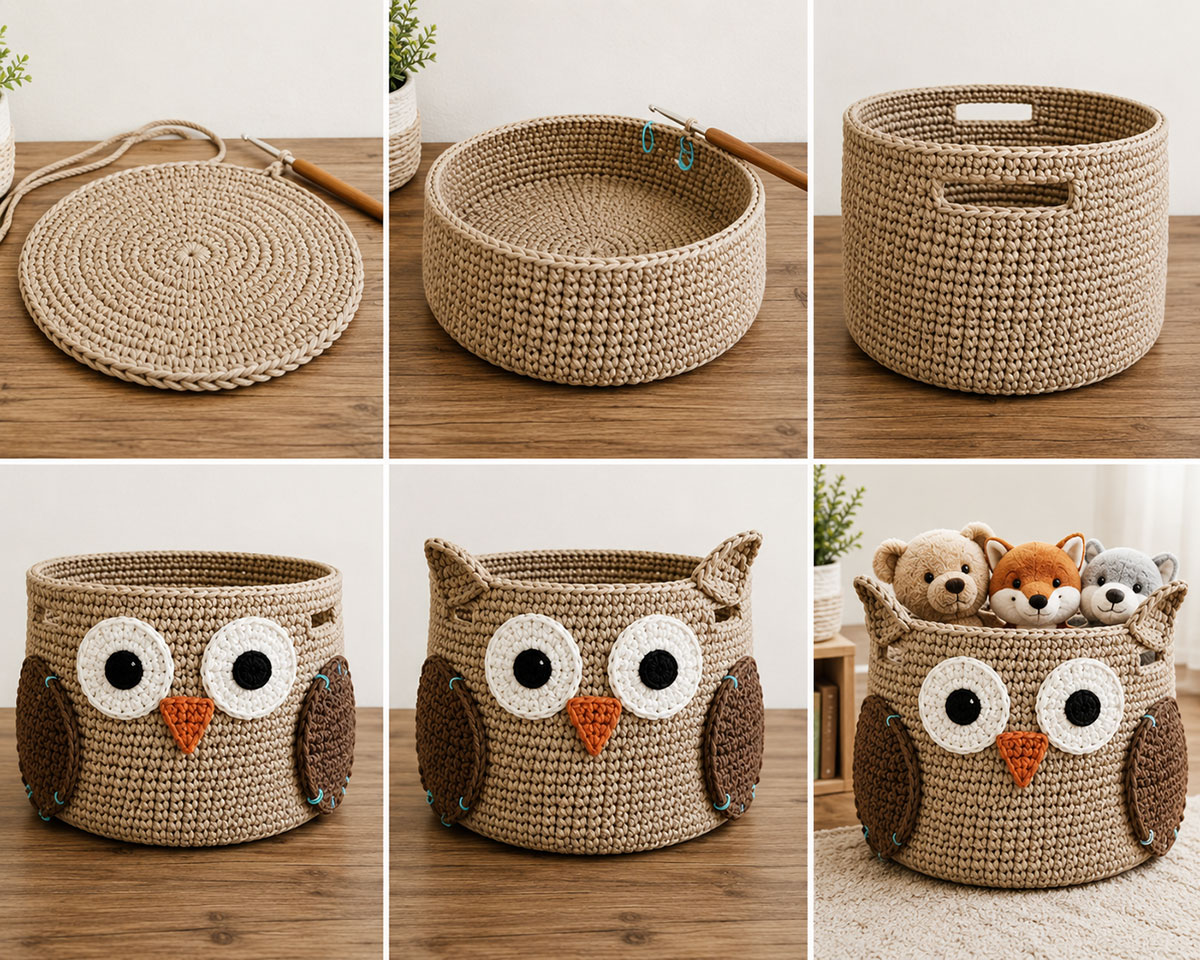
A crochet basket is built in a logical order: establish a flat base, turn the work upward, keep the walls even and finish the opening with enough structure to hold its shape. Each step affects the one that follows, so small shaping problems are easier to correct before the basket becomes tall.
1. Crochet a Flat Base
Begin with the shape required by the pattern. Round baskets use evenly spaced increases, while square, rectangular and oval designs require different increase placement. Lay the work on a flat surface every few rounds. A base that cups has too little circumference, while a rippling base has too much.
2. Reinforce the Base
The XXL master basket uses two matching crocheted base circles. Both pieces should lie flat and match before they are joined. A second layer adds thickness beneath blankets, toys and books while keeping the exterior fully crocheted.
3. Create the Base-to-Wall Turn
A defined transition changes the direction of the work from horizontal to vertical. Follow the loop placement and turning instructions in the XXL master crochet basket pattern rather than substituting a general method from another project.
4. Build the Walls Evenly
Once the base is complete, the wall stitch count should remain consistent unless the pattern specifically calls for shaping. Mark the beginning of each round and count regularly. One accidental increase can create a noticeable flare, while a missed stitch can pull the wall inward.
5. Complete the Upper Rim
The final structural rounds stabilize the opening and support the handle attachment area. A firm rim helps the basket remain round and reduces stretching along the top edge.
6. Add the Raised Handles
The XXL animal basket uses two separately crocheted raised oval handles positioned directly opposite one another. They are sewn securely to the reinforced upper section after the basket body is complete.
Measure the base and walls as you work. A small difference that looks harmless while the project is flat can become a visibly leaning wall after many rounds have been added.
Choosing a Crochet Hook for Basket Cord
There is no single hook size that works for every basket material. Cord diameter, construction, stitch choice and personal tension all affect the result.
Begin with the hook specified in the individual pattern, then make a swatch with the exact cord you plan to use. The stitches should sit close together without becoming so tight that the hook must be forced through the fabric.
A smaller hook can produce denser crochet, but reducing the size too far may split the cord, distort the stitches or place unnecessary strain on your hands. A larger hook may feel easier to use, although it can create softer walls and more space between stitches.
The correct hook is the one that produces the pattern gauge, compact stitches and a fabric you can work comfortably for many rounds.
Choosing the Best Cord for a Large Crochet Basket
The cord has more influence on the finished structure than almost any decorative choice. A well-written pattern cannot compensate for material that stretches easily or creates fabric too soft to support tall walls.
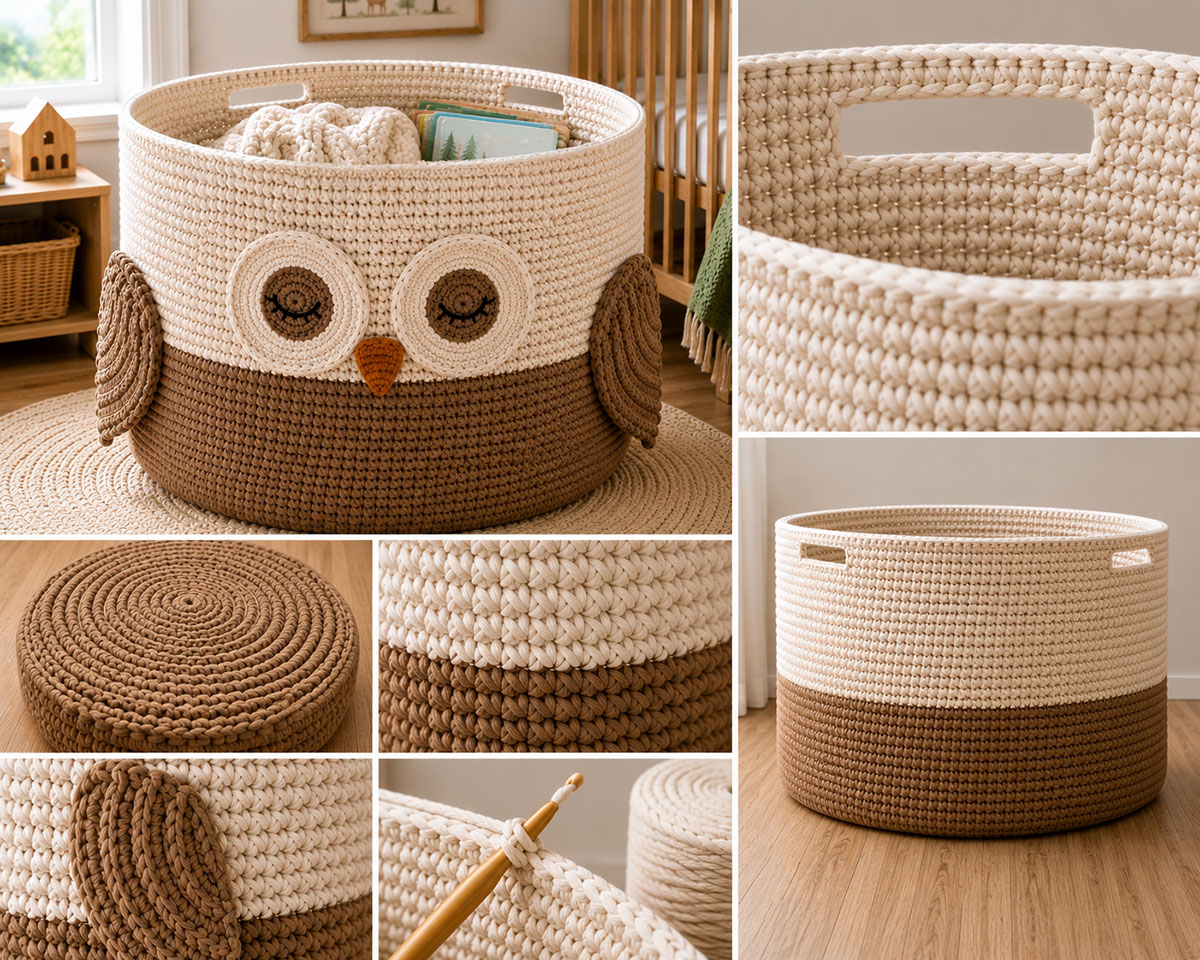
Firm braided cotton cord, cotton rope yarn and low-stretch recycled cotton cord can all be suitable when they produce the required gauge. Look for material that feels dense, resists stretching and passes through the hook without splitting or untwisting.
I would rather change the cord after one small swatch than try to rescue soft walls after several hundred yards of crochet.
Always check the manufacturer's care instructions before purchasing a large quantity. Two cords described with the same thickness can differ significantly in yardage, weight, firmness, dye behavior and washing requirements.
Natural cotton shades work especially well with the projects in my woodland nursery patterns and the rooms featured in my woodland nursery ideas.
Materials for the XXL Master Crochet Basket
This supply list covers the reusable structural basket. The owl, bunny and fox pages provide the additional yarn colors, embroidery supplies and tools needed for their individual character features.
- Basket cord: Firm braided cotton cord or another low-stretch rope yarn that meets the master-pattern gauge
- Quantity: Purchase the yardage specified in the complete large crochet basket pattern
- Crochet hook: Use the pattern size unless a gauge adjustment is required
- Locking stitch markers: For marking the beginning of rounds, measurement points and handle placement
- Large tapestry needle: For joining the base layers, securing cord ends and attaching handles
- Sharp scissors: Choose a pair capable of cutting thick cord cleanly
- Flexible measuring tape: For checking the base diameter, wall height and handle position
- Optional sewing clips: Useful for aligning the two base layers before joining
- Optional enclosed base support: Use only the smooth-edged material and installation method described in the master pattern
Do not order a large quantity of unfamiliar cord before making a swatch. A material that looks sturdy on the spool may become surprisingly soft once it is worked into single crochet.
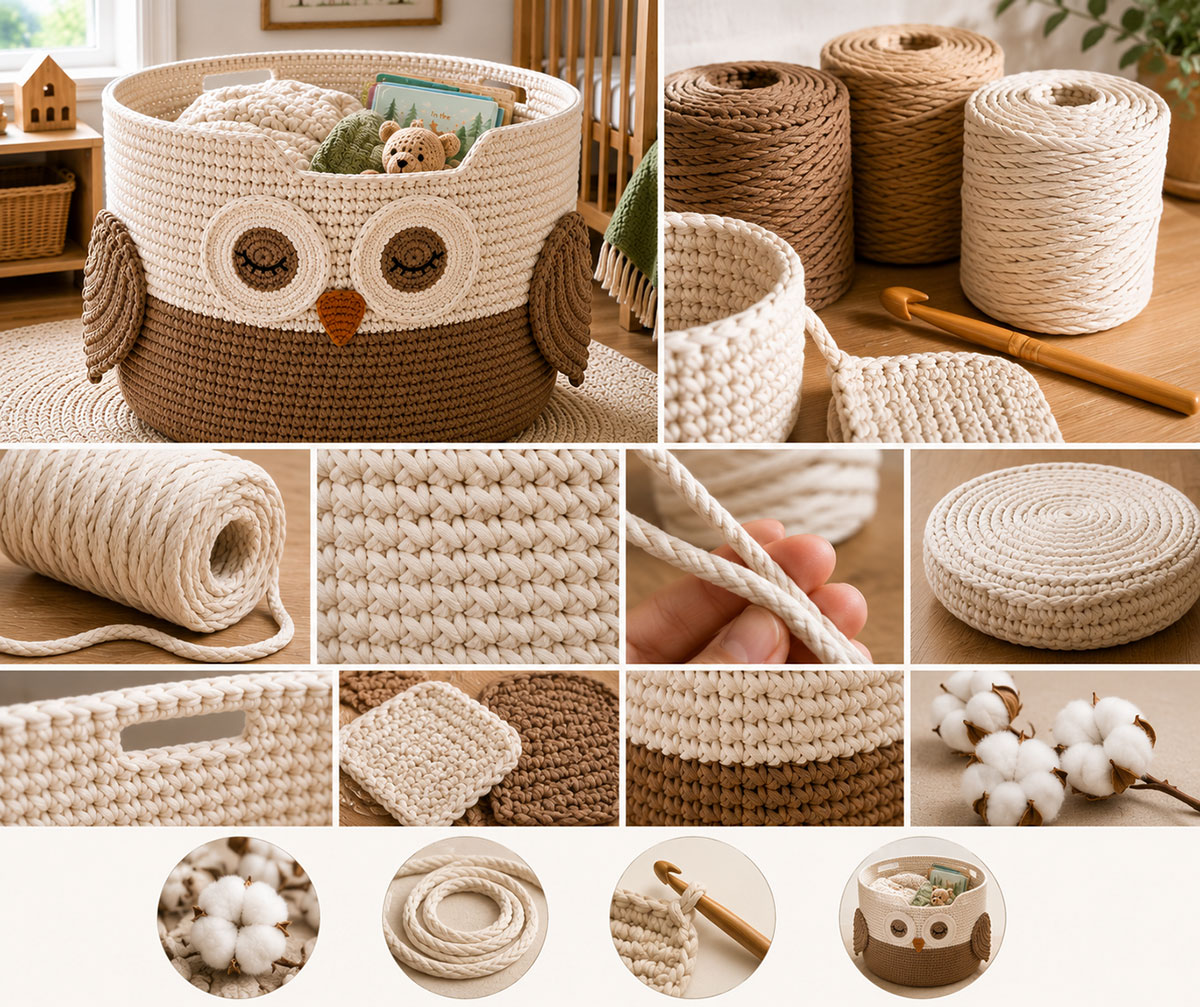
How to Test Cord and Hook Size Before Starting
A swatch can prevent an expensive mistake. An XXL basket uses far more cord than a tabletop organizer, and the fabric must support tall walls without becoming so rigid that the project is painful to crochet.
- Use the exact cord and hook planned for the basket.
- Crochet a square large enough to measure accurately through the center.
- Compare the stitch and row measurements with the gauge listed in the pattern.
- Stand the swatch on one edge and gently press the top.
- Notice whether it folds immediately, bends gradually or resists light pressure.
- Pull the fabric from side to side to check for excessive stretch.
- Work the hook back through several completed stitches to judge whether the combination will remain comfortable through many rounds.
The best swatch will feel dense and substantial without becoming hard. Small spaces between stitches are acceptable, but the fabric should not behave like a soft scarf or blanket.
Change only one factor at a time. Try a different hook size or a firmer cord, then make another swatch. Changing the hook, cord and tension together makes it difficult to identify which adjustment corrected the problem.
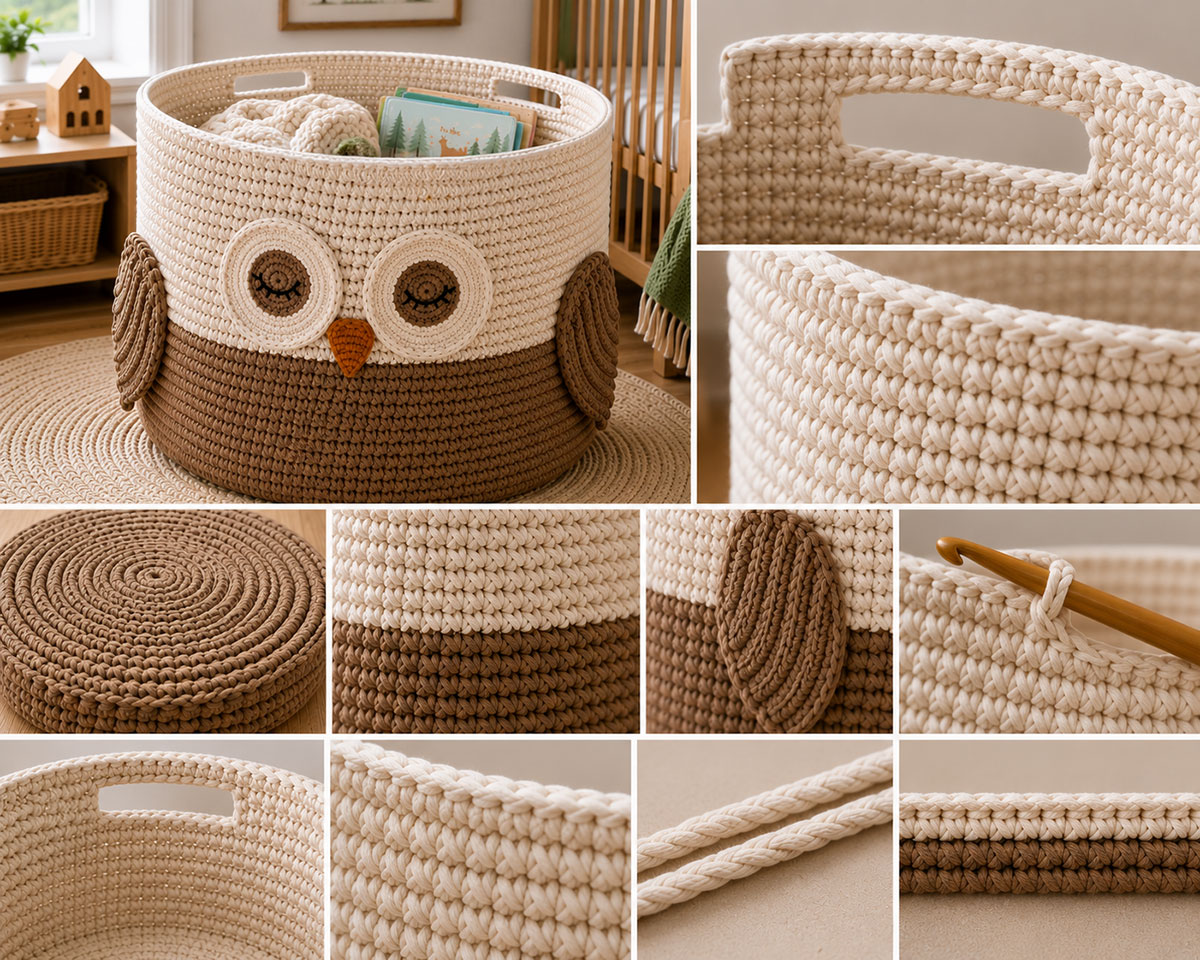
The Four Structural Elements Behind the XXL Master Basket
Four parts work together to help the completed basket remain useful for lightweight nursery storage. None can compensate completely for a weakness in the others.
1. A Flat Reinforced Base
The base supports the walls and everything placed inside the basket. Two matching crocheted layers add thickness and reduce sagging across the center.
2. Dense Single-Crochet Fabric
Single crochet creates a smooth, durable surface while remaining approachable for most crocheters. Consistent tension matters more than forcing every stitch as tightly as possible.
3. A Firm Upper Rim
The rim supports the opening much like the top rail of a traditional basket. Reinforcing this area helps the basket retain its round shape and provides a stronger location for attaching the handles.
4. Secure Raised Handles
The two handles should match in size, sit directly opposite one another and be sewn through the reinforced upper section. Use them only when the basket is empty or holding lightweight items, and support the base when moving a heavier load.
Together, these details create storage that can remain part of the nursery décor instead of slumping into an unrecognizable container beside the dresser.
Planning the Right Basket Size for Your Nursery
Think about what the basket will store and where it will sit before choosing a size. A container for washcloths has very different requirements from a floor basket intended for blankets and plush toys.
| Basket Size | Useful For |
|---|---|
| Small | Bibs, washcloths, baby socks and changing-table supplies |
| Medium | A few board books, folded receiving blankets and everyday nursery essentials |
| Large | Stuffed toys, larger blankets and general room organization |
| XXL master basket | Lightweight toy collections, multiple folded blankets and oversized plush toys |
The current owl, bunny and fox designs use the same XXL round foundation because the wide front wall provides room for character features while the large opening makes cleanup easy.
In a compact room, compare the available floor space with the basket's finished measurements before starting. You may find that several smaller containers work better than one oversized basket. See my nursery storage ideas for small rooms, nursery storage ideas and baby room organization guide for layout help.
Reinforcing the Base of a Large Crochet Basket
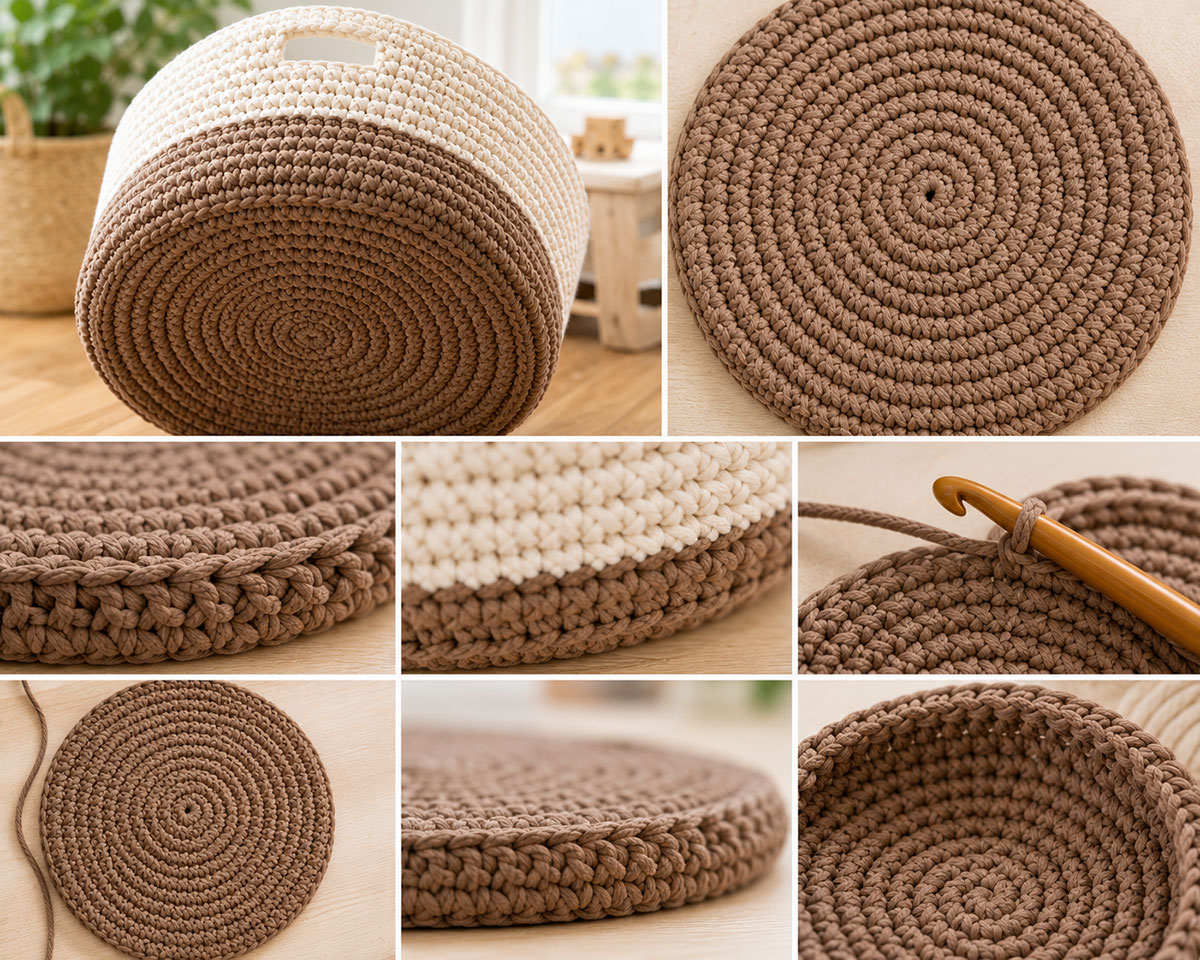
A wide basket needs a bottom that stays flat and supports the walls without sagging badly through the center. The XXL master pattern uses two matching crocheted circles joined into one double-thickness base.
Match the Two Base Circles
Use the same cord, hook, stitch count and tension for both pieces. Lay them together before joining and check the diameter at several points.
Do not join a flat circle to one that cups or ripples. The second layer will not correct the shaping; it will preserve the problem inside the finished basket.
Use an Optional Enclosed Insert Correctly
An optional smooth-edged insert can add firmness between the two base layers when installed according to the master pattern. Round every edge and keep the material completely enclosed so it cannot shift, protrude through the stitches or become accessible.
An enclosed base insert is not removable, and it does not correct walls made from overly soft cord. A separate fitted fabric liner is a different construction choice.
Check the Base Before Building Upward
Measure again after joining the layers and before beginning the wall transition. A small variation across a wide base can become much more noticeable after the walls have been added.
Cotton Cord, Blanket Yarn and Regular Yarn
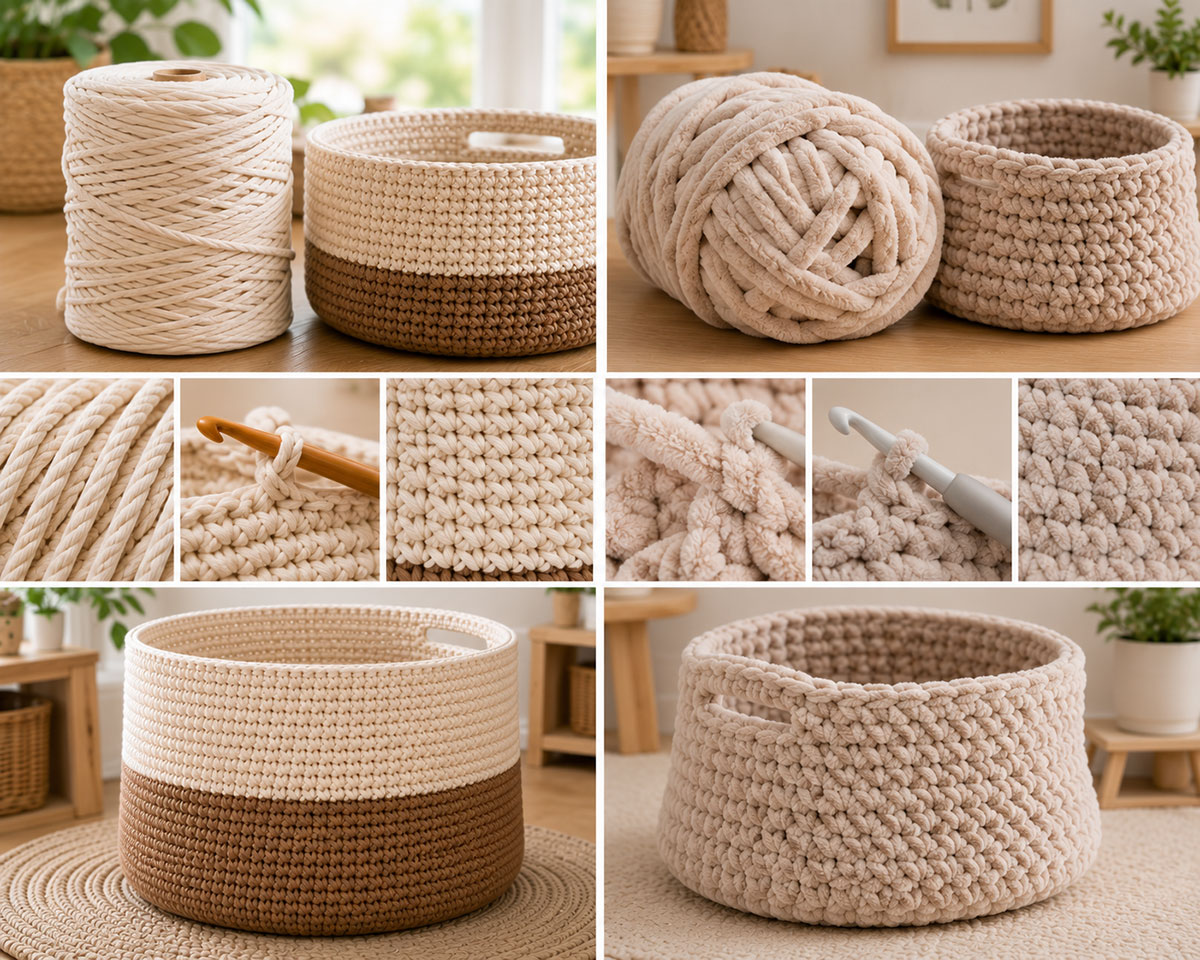
Different fibers serve different purposes. Blanket yarn is designed to feel soft and drape comfortably, while an oversized storage basket needs enough body to support itself before anything is placed inside.
Braided cotton cord and cotton rope yarn generally stretch less than plush yarn. When combined with compact single crochet, a reinforced base and a firm rim, they produce cleaner sides and better shape retention.
Blanket yarn can still work for small decorative baskets where softness is part of the design. Standard yarn can also produce attractive organizers for baby socks, washcloths or craft supplies. Neither is a direct substitute for the structural cord specified in the XXL master pattern.
| Material | Best Uses | What to Expect |
|---|---|---|
| Firm braided cotton cord | Large and XXL storage baskets | Dense fabric and limited stretch when the cord matches the pattern gauge |
| Cotton rope yarn | Large nursery baskets | A softer appearance, although firmness varies by product |
| Recycled cotton cord | Storage baskets and organizers | Weight, stretch and density can vary significantly |
| Tightly braided macramé cord | Possible basket substitute after testing | Must match the required gauge without splitting or stretching |
| Blanket yarn | Soft decorative baskets, blankets and loveys | More drape and less structural support |
| Standard acrylic yarn | Small lightweight organizers | May stretch or lean when used for oversized storage |
If you are making a soft nursery gift rather than a structural basket, browse my easy baby lovey crochet patterns and free baby crochet patterns.
What Can You Use to Stiffen a Crochet Basket?
The most reliable approach is to build firmness into the project from the beginning. Low-stretch cord, correct gauge, dense stitches, a flat reinforced base and a substantial rim contribute more than any product added after the basket is finished.
Use a Firmer Cord
A basket made from soft or stretchy material may continue to slump even after the rim is reinforced. For an XXL design, changing the cord is usually more effective than trying to stiffen finished walls.
Check the Gauge
Loose stitches create more movement between rows. A hook adjustment may help, but do not reduce the size so far that the cord becomes difficult or painful to work.
Reinforce the Base and Rim
The base supports the load while the rim controls the opening. Both influence the final shape, particularly in a tall basket.
Add the Correct Type of Internal Support
A smooth-edged insert enclosed between the base layers can strengthen the bottom. A fitted removable fabric liner with firm interfacing can support some basket designs from inside. These are separate methods and should not be described as interchangeable.
Reshape After Cleaning
Some cotton baskets can be shaped while damp. Follow the cord manufacturer's directions, avoid unapproved high heat and support the base and walls while the basket dries.
Spray starch and craft stiffeners may be useful for small decorative pieces, but I would not rely on them as the main support for an XXL toy basket. They can change the feel and care requirements of the fabric without providing enough strength for a large load.
Can You Crochet a Laundry Basket?
Yes, but a true laundry basket should be planned for a heavier and sometimes damp load. Wet towels, bedding and clothing place far more stress on the walls, rim and handles than lightweight nursery toys.
The XXL animal basket in this collection is intended primarily for lightweight nursery storage. It should not be treated as a heavy-duty hamper or carried by the handles when filled with wet laundry.
Before making any crochet laundry basket, check whether the cord can be washed, whether it shrinks or releases dye and whether an internal support changes the care method. A removable fabric liner can simplify routine cleaning in a purpose-built hamper.
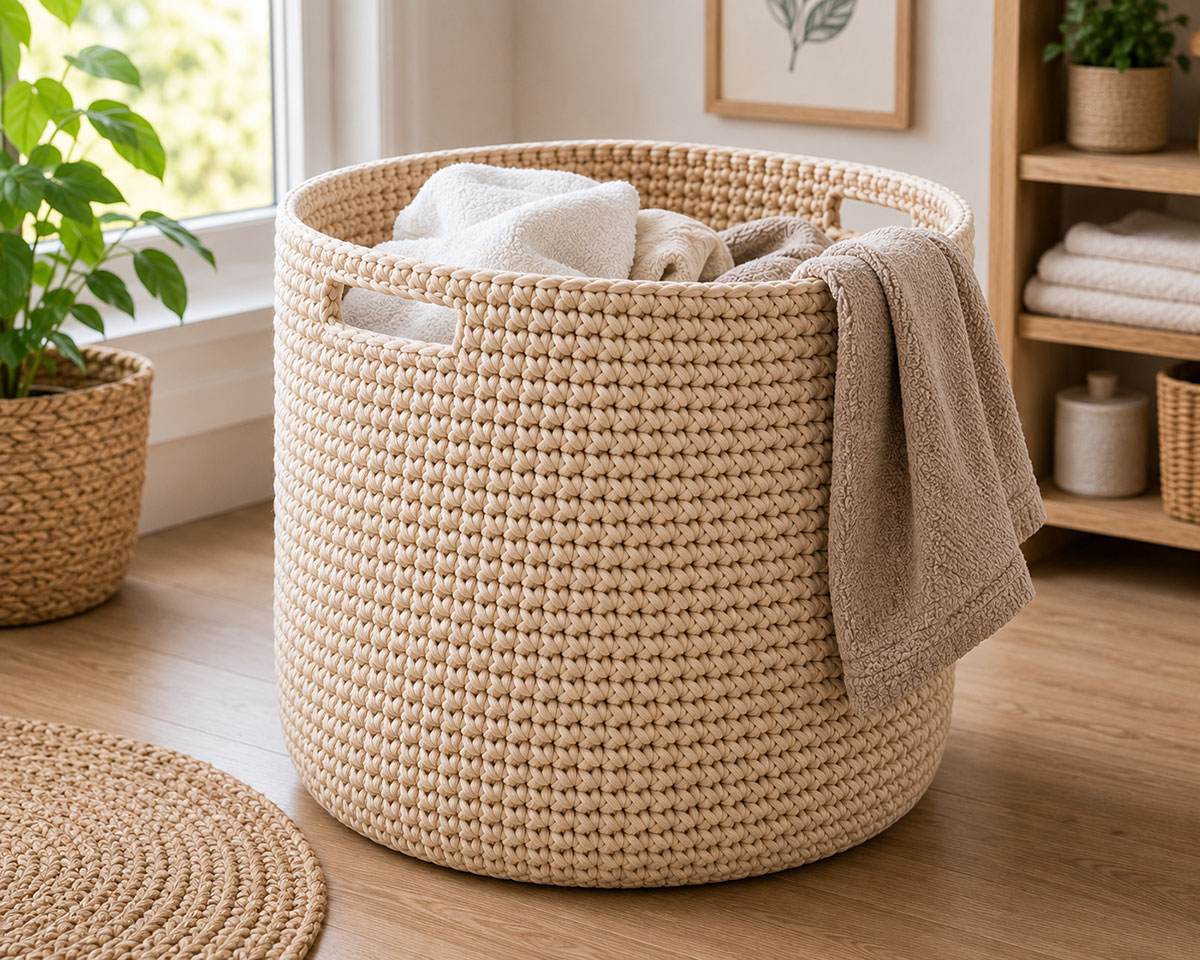
Can You Crochet a Basket with Macramé Cord?
Macramé cord can work, but the product name alone does not reveal how the crocheted fabric will behave. Some cords are tightly braided and firm, while others are soft, loosely twisted or designed to separate into fringe.
Before ordering enough for a large basket, test whether the cord:
- Creates compact stitches without oversized gaps
- Resists stretching under light pressure
- Passes through the hook without splitting or untwisting
- Matches the pattern gauge
- Remains comfortable to crochet for more than a few rows
Compare the total yardage and weight of each spool rather than relying only on the millimeter measurement printed on the label.
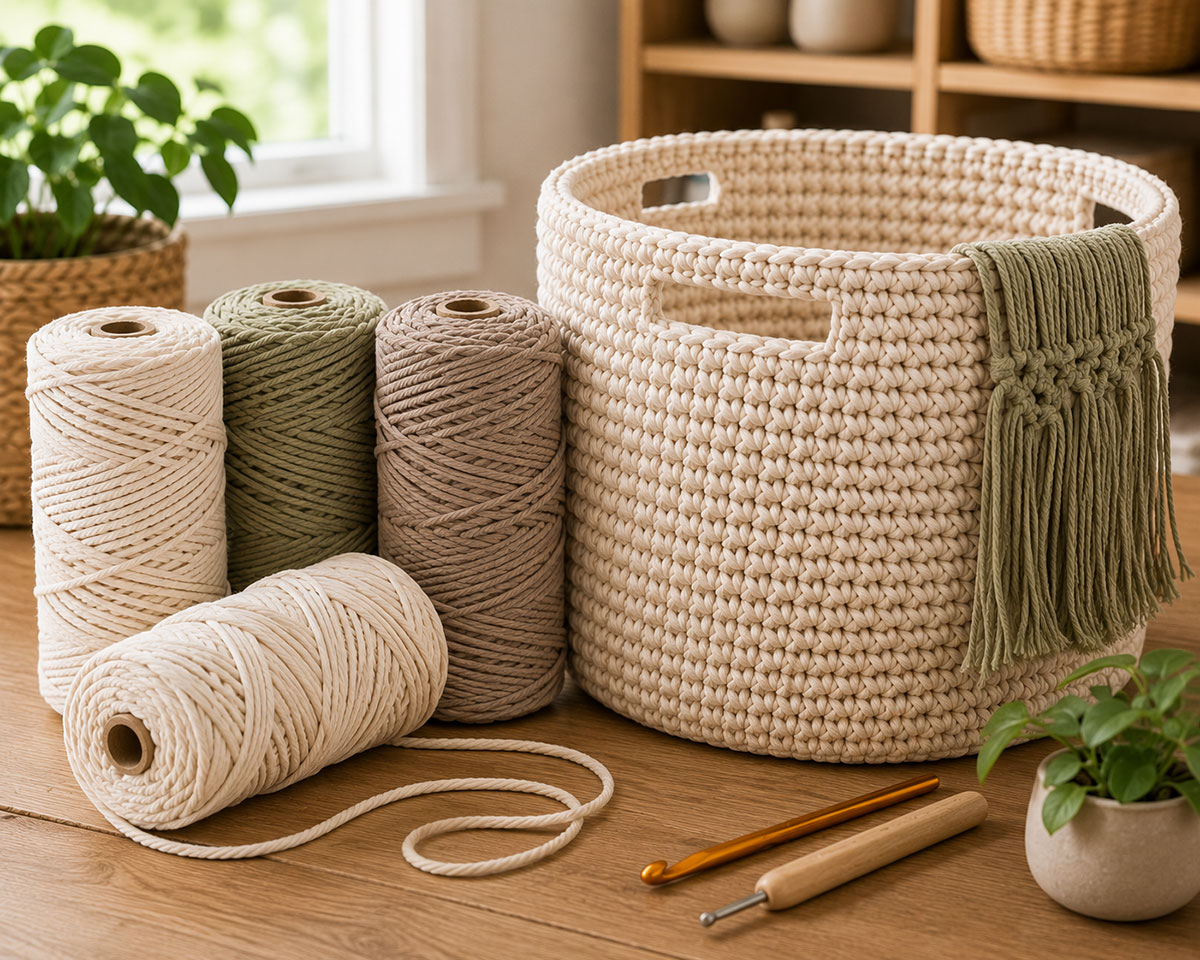
Are Crochet Baskets Sturdy Enough for Toy Storage?
They can be when the materials, size and construction match the intended load. Soft toys and folded blankets are easier on a basket than wooden blocks, heavy books or dense household objects.
For toy storage, the basket should stand upright while empty and retain its shape under light pressure. Use a flat reinforced base, firm cord, compact stitches and a rim designed to limit stretching.
Animal ears, wings, eye panels, cheek pieces and bows should be sewn securely with all ends hidden. Use embroidered facial details rather than plastic safety eyes, buttons or glued decorations on baskets placed where babies or young children can reach them.
A crochet basket is a storage container, not a climbing toy. Keep oversized baskets on the floor, do not place them where a child can pull them from a shelf and do not allow children to sit, stand or climb inside them.
Keep crochet storage baskets outside the crib, bassinet and every other infant sleep space. Position the basket where a baby cannot pull the handles, decorative pieces or stored objects through the crib slats. Review the U.S. Consumer Product Safety Commission's safe sleep guidance for current recommendations about keeping an infant's sleep space bare.
For more ways to organize blankets, books and everyday nursery supplies, see my baby room organization ideas.
Construction Order for the Animal Crochet Baskets
Use the following order for the owl, bunny and fox designs:
- Crochet the two matching base pieces from the master pattern.
- Add any optional enclosed base support specified in that pattern.
- Join the base layers.
- Work the base-to-wall transition.
- Crochet the basket walls while maintaining the required stitch count.
- Complete the reinforcing rounds and level upper rim.
- Crochet and attach the two matching raised oval handles.
- Return to the selected animal page and make its separate decorative pieces.
- Add embroidered details before attachment when directed.
- Position and sew each feature using the measurements provided on the character page.
- Weave in every end and complete the final shape, measurement and attachment checks.
Do not attach the decorative pieces while the structural basket is still growing. The completed rim, handle positions and center-front point provide the reference lines needed to place the ears, face pieces, wings or bow evenly.
How the Animal Features Are Added to the Master Basket
Complete the free large crochet basket pattern with handles before beginning the character pieces.
The owl basket pattern adds layered eye panels, a beak, pointed ears, side wings and embroidered details.
The bunny basket pattern adds tall reinforced ears, contrasting inner-ear panels and a crocheted bow.
The fox basket pattern adds pointed ears, contrasting inner-ear panels, cream facial pieces and embroidered features.
Each character page contains the feature materials, stitch instructions, measurements, placement guidance and assembly order. The structural base, walls, rim and handles remain controlled by the master pattern.
The owl basket also pairs naturally with my crochet owl baby lovey pattern, woodland nursery patterns and woodland nursery ideas.
Raised Handles for the XXL Master Basket
Handles are often the first part of a large crochet basket to show wear, so their construction and placement deserve the same care as the base and walls.
The XXL master basket uses two matching raised oval handles crocheted separately and attached after the basket body is finished. Position them directly opposite one another using the measurements in the master basket pattern.
Check each handle from the front, back and sides before fastening off. Uneven placement can make the basket appear twisted even when the wall rounds are correct.
The raised design preserves the continuous front surface needed for animal features. It also avoids cutting handle openings through the wall fabric.
Use the handles only when the basket is empty or holding lightweight nursery items. Support the reinforced base with both hands whenever the basket contains a heavier load.
How to Keep an XXL Crochet Basket from Losing Its Shape
Shape retention begins with the swatch, not the final round. A firm low-stretch cord, correct gauge, even wall count, reinforced base and substantial rim all support one another.
If the empty basket collapses despite matching the stated gauge, the cord may be too soft for the design. Adding more rim rounds will not reliably correct unsupported wall fabric.
Store lightweight toys, folded blankets and nursery textiles rather than dense objects. Long-term heavy loads can stretch the base and pull against the handle attachments.
After cleaning, reshape the base and opening while the basket is damp and allow it to dry with the walls supported. Follow the care instructions for both the cord and any enclosed material.
Should You Crochet a Round, Square or Rectangular Basket?
The best shape depends on where the basket will be used and what it needs to store.
Round baskets distribute pressure evenly and provide a continuous wall for animal faces, ears, wings and other features. They also work well as roomy floor storage.
Square baskets fit neatly into cubbies and make efficient use of shelf space, although the corners require separate shaping.
Rectangular baskets are useful for folded blankets, books and long shelves. Oval designs provide extra length while retaining softer curved ends.
| Basket Shape | Works Well For |
|---|---|
| Round | General nursery storage and animal character baskets |
| Square | Cube shelving, closets and compact organizers |
| Rectangular | Folded blankets, changing supplies and wide shelves |
| Oval | Receiving blankets, plush toys and longer accessories |
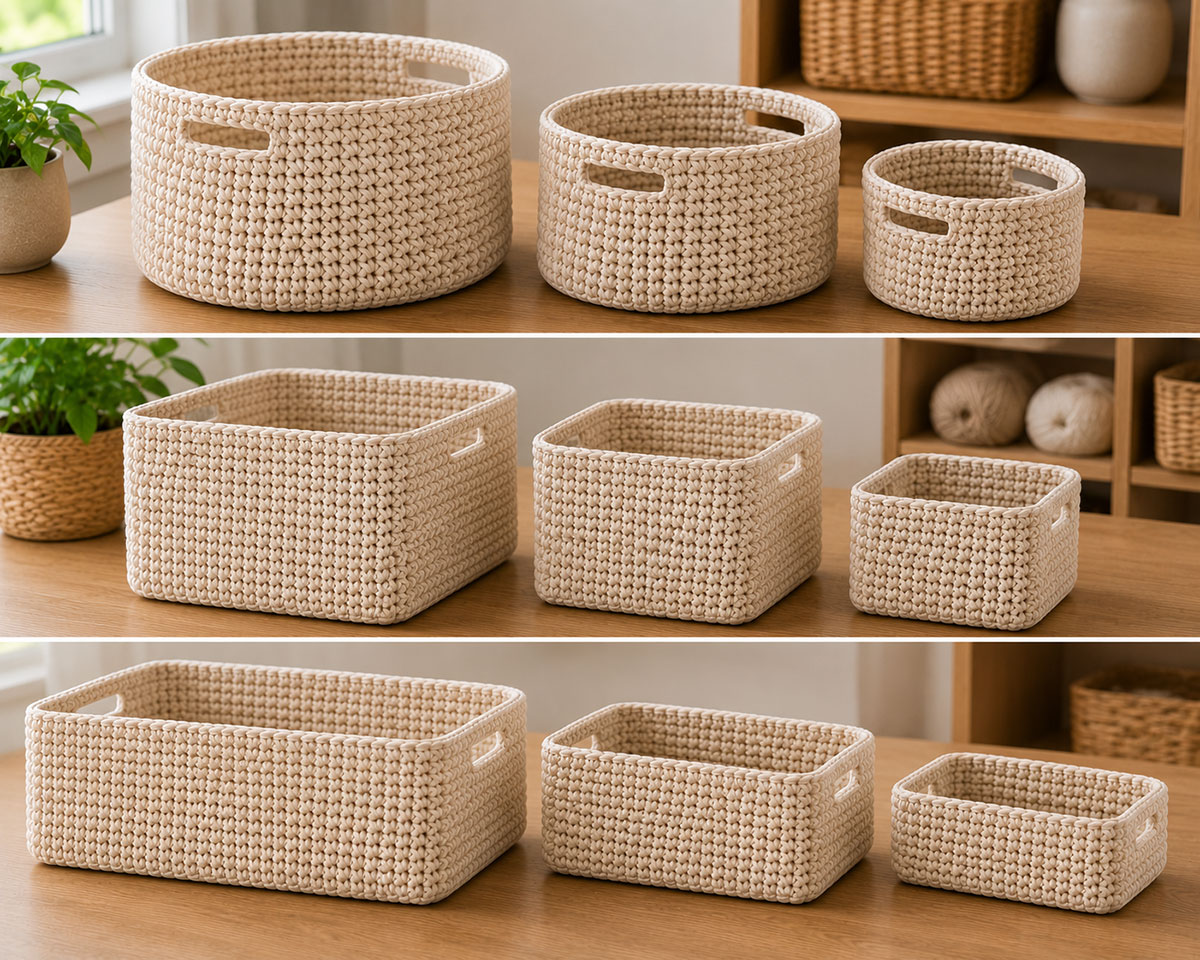
The owl, bunny and fox feature patterns are designed specifically for the round XXL master basket. Square, rectangular, oval, hanging and smaller projects need their own shaping instructions.
XXL Free Crochet Basket Patterns for Nursery Storage
Choose the master basket first, then continue with one character pattern.
XXL Master Crochet Basket Pattern With Handles
Use this pattern first. It contains the complete base, wall, rim and raised-handle construction for the reusable round basket.
XXL Woodland Owl Crochet Basket Pattern
Use this feature pattern for the layered eye panels, beak, pointed ears, side wings, embroidered markings and placement instructions.
XXL Crochet Bunny Basket Pattern
Use this feature pattern for the reinforced ears, contrasting inner-ear panels, crocheted bow and placement instructions.
XXL Woodland Fox Crochet Basket Pattern
Use this feature pattern for the pointed ears, inner-ear panels, contrasting facial pieces, embroidered details and assembly instructions.
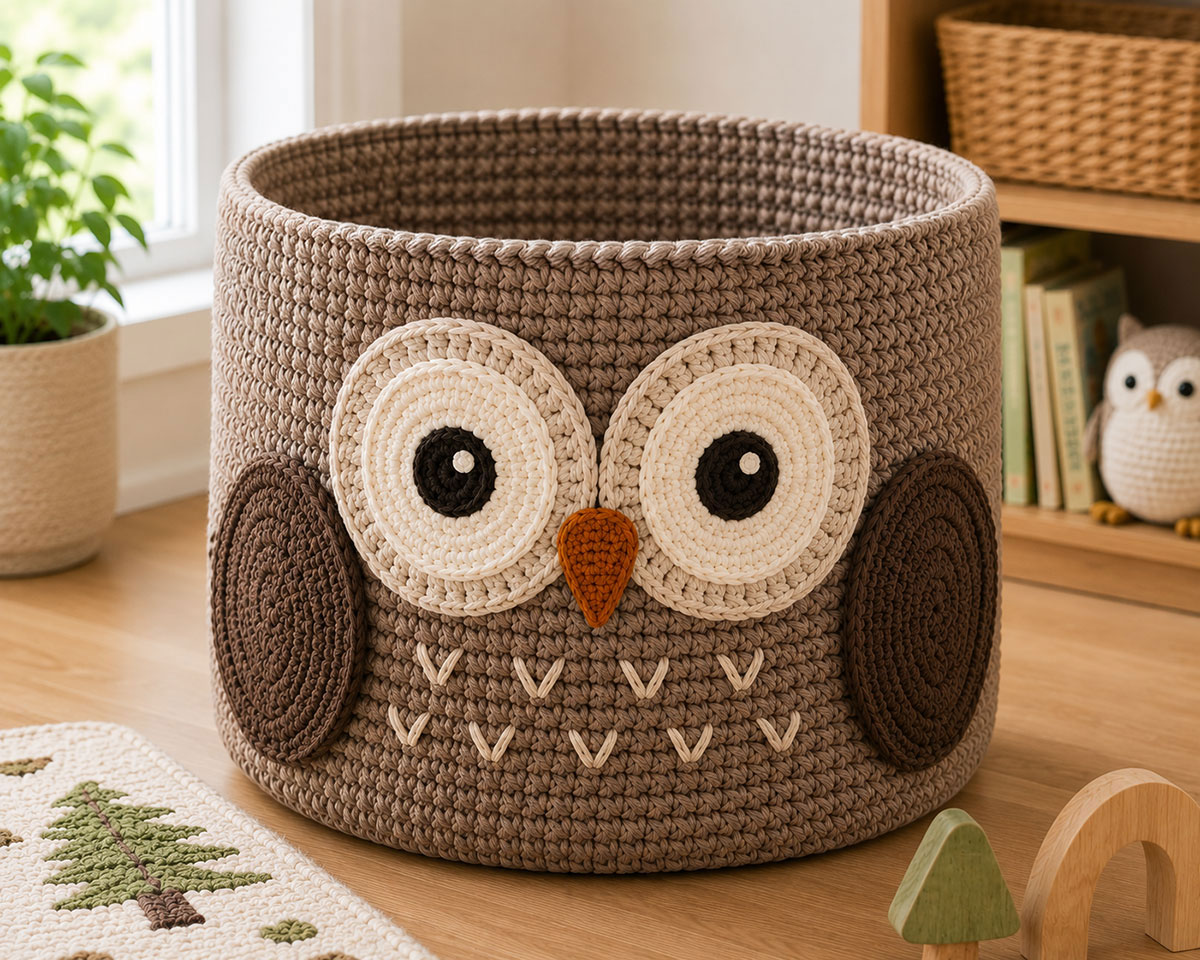
One master basket followed by one character feature pattern keeps the structural stitch counts in a single reliable place and allows each animal page to concentrate on the details that make that design different.
Where to Use Crochet Storage Baskets in a Nursery
After years of looking at nursery storage as both a practical problem and part of the decorating plan, I have learned that a basket must earn the floor space it takes up. It should keep frequently used items within reach while adding texture and personality to the room.
If you want a few more unique handmade pieces, browse my DIY nursery decor ideas for quilts, wall decor, painted furniture, mobiles and other projects that can work with the baskets.
Beside the Rocking Chair
Use a large basket for lightweight blankets, bedtime books and favorite loveys. Keeping those items together makes the reading corner easier to reset at the end of the day.
Next to the Dresser
A basket can hold extra crib sheets, burp cloths or folded seasonal clothing that does not fit neatly inside the drawers.
Near the Toy Area
A wide opening makes cleanup straightforward because soft toys can be returned to one roomy container. An animal basket also becomes part of the room rather than looking like generic plastic storage.
In a Reading Corner
A basket can hold a small rotating selection of picture books beside a child-sized chair. Avoid overloading an XXL crochet basket with a large collection of heavy books.
Inside an Open Closet
Use floor-level or low-shelf baskets for folded blankets, swaddles and other lightweight nursery textiles. Do not place an oversized basket where a child can pull it down from above.
For additional room-planning ideas, see my nursery storage ideas, baby room organization guide and woodland nursery ideas.
Frequently Asked Questions About Crochet Basket Patterns
What is the best stitch for a sturdy crochet basket?
Single crochet is a practical choice because it creates compact, durable fabric without requiring an advanced stitch. Cord firmness, hook size, gauge, base reinforcement and rim construction are just as important as the stitch itself.
Should I use one strand or two strands of cord?
The XXL master basket uses one strand of firm 5 mm braided cotton cord. Changing to two strands alters the gauge, yardage, finished measurements, weight and handle proportions.
How do I stop the base of a crochet basket from curling?
Check the increase pattern, stitch count and gauge. A base that cups may have too little circumference, while a rippling base usually has too much. Correct the shaping before joining the base layers or starting the walls.
Why are the sides of my crochet basket flaring outward?
Accidental increases, loose tension or an incorrectly worked base-to-wall transition can cause flaring. Mark the beginning of every round and compare the current stitch count with the master pattern.
Is the XXL crochet storage basket suitable for beginners?
It is best classified as an intermediate project. The stitches are familiar, but the large matching base pieces, continuous counting, thick cord, wall transition, raised handles and precise assembly require more control than a small beginner basket.
How much cord does a large crochet basket require?
The XXL master basket requires approximately 700–800 yards of firm 5 mm braided cotton cord. Purchasing approximately 800 yards, or one additional matching spool when possible, helps cover the gauge swatch, remade sections, long securing tails and differences in personal tension.
Can a crochet basket be machine washed?
Only when the cord manufacturer permits it and every internal support or decorative material is compatible with the same care method. Some baskets should be spot cleaned or hand washed and reshaped while damp.
Can I add a fabric liner?
Yes. A closely fitted removable liner can be added to some basket designs. Secure it so it does not sag, bunch or create loose fabric where a young child can reach it.
Are crochet baskets suitable for books and wooden toys?
They can hold a limited number, but dense objects add substantial stress to the base and handles. Use smaller containers for heavy books or blocks and support the bottom when moving a loaded basket.
Can I change the size of the XXL master basket?
Changing the base rounds affects the final stitch count, wall circumference, handle placement and scale of every animal feature. Use the published measurements unless you are prepared to recalculate all connected parts.
Are the owl, bunny and fox pages complete patterns?
They are complete character-feature patterns designed to be used with the master basket. Each contains the materials, stitch instructions, measurements, placement and assembly required for that animal, while the master page contains the full structural basket construction.
When you click on links to various merchants on this site and make a purchase, this may result in this site earning a commission. This does not affect the price you pay.

UBGI Gold Standard 2026
Reviewed under the site's
editorial checklist.
Photos, decorating ideas, party setups and reader submissions are shared for inspiration unless a page is specifically presented as a pattern, tutorial, reference guide or step-by-step project. Follow the instructions, measurements, safety guidance and manufacturer directions provided for the particular project or product.
About Jan | Contact | Baby Nursery Ideas (Blog) | Site Map | Privacy Policy | Disclosure Policy | Disclaimer | Affiliate Disclosure | Earnings Disclosure | Facebook | Pinterest
I am a participant in the Amazon Services LLC Associates Program, an affiliate advertising program designed to provide a means for us to earn fees by linking to Amazon. As an Amazon Associate I earn from qualifying purchases.
Copyright © 2006-2026. All Rights Reserved.