Nursery Storage Ideas for Small Rooms That Really Work
Nursery storage ideas for small rooms can make a tiny baby room feel calmer, less cluttered, and much easier to use every single day.
Planning a small nursery? These guides can help you choose the right storage, furniture, and layout before the room starts feeling crowded.
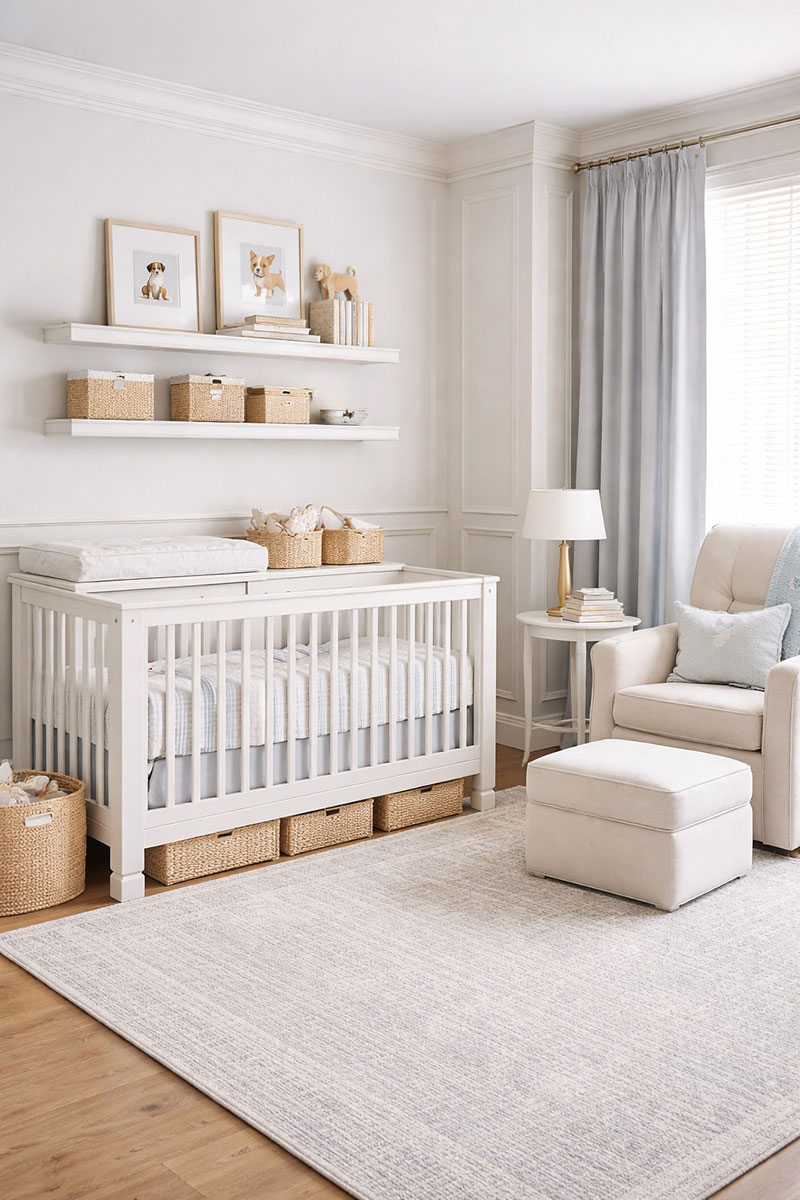
Jump to a section:
Nursery storage ideas for small rooms that work in real life
Nursery storage ideas for small rooms work best when they make daily baby care easier, not just prettier. In a tiny nursery, the smartest storage choices usually include a dresser that can double as a changing station, a few wall shelves, baskets inside drawers, and simple bins that keep the floor clear. That combination gives you more room to walk, more places to hide clutter, and less visual mess. A small nursery can feel calm and beautiful when each storage piece has one clear job.
Quick answer: The best nursery storage ideas for small rooms use vertical wall space, closed drawer storage, and double-duty furniture so baby essentials stay easy to reach without making the room feel crowded.
That is the whole goal. Make the room easier to use.
Small nurseries fill up fast because baby things are tiny, but there are so many of them. Diapers, wipes, sleepers, bibs, socks, burp cloths, swaddles, creams, blankets, and books all need a home. If they do not have one, the room starts feeling busy even when it is clean. Good storage fixes that by giving your everyday items a simple place to live.
If you want the bigger layout picture first, start with small 8x10 nursery layout.
Use vertical space without making the room feel cramped
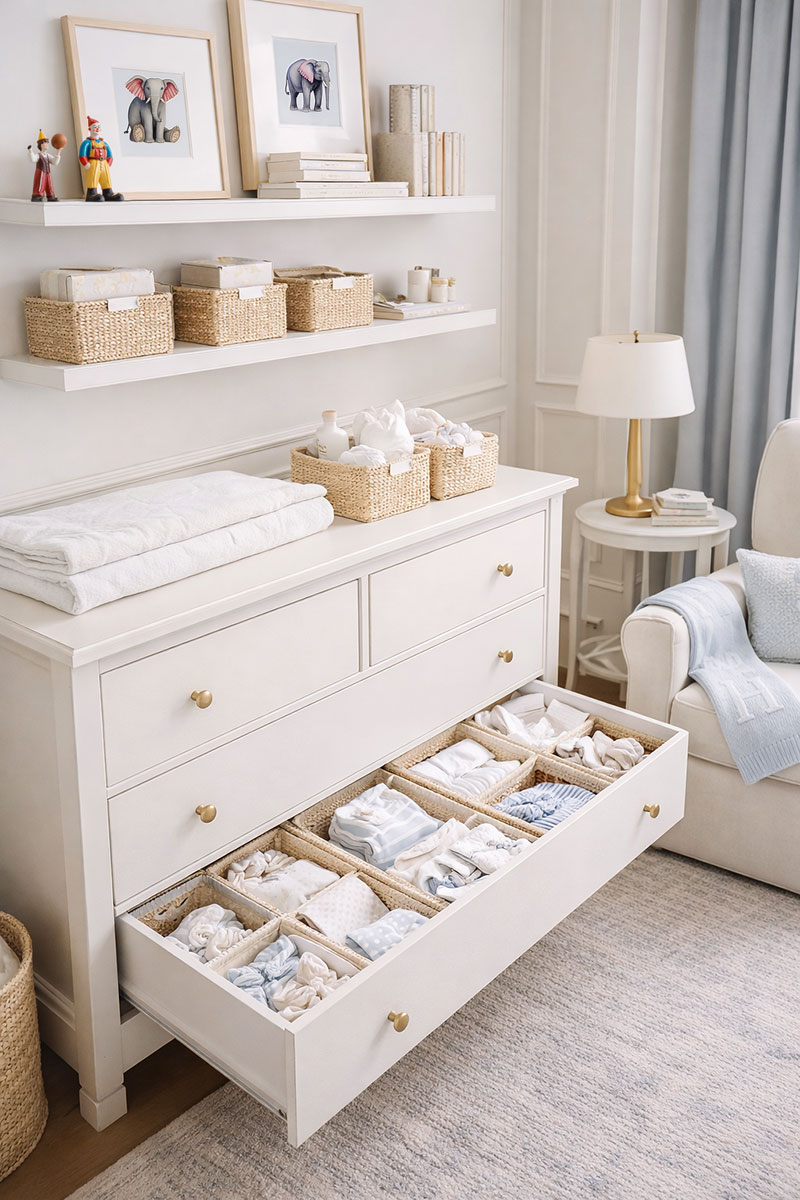
When floor space is tight, walls become part of your storage plan. A pair of floating shelves, slim picture ledges, or a neat row of hooks can hold a surprising amount without taking up the footprint you need for walking, diaper changes, or getting to the crib. The trick is to use wall storage with restraint. One or two shelves usually look polished. Too many start to feel heavy.
Wall shelves work well for things that are helpful but not bulky. Think extra diapers in lidded baskets, folded burp cloths, a few bedtime books, and framed art that makes the room feel finished. If you like that look, nursery wall shelves can give you more focused ideas for styling and function together.
Keep heavier storage low and decorative storage higher. That balance makes the room safer and easier on the eyes. It also helps the nursery feel professionally decorated instead of packed with random organizers.
For closets, hanging organizers can do a lot of work in a very small footprint. Sweaters, shoes, folded blankets, and backup supplies can all fit inside soft hanging shelves. My baby closet organizer page is useful if you need more help making a tiny nursery closet function better.
To take that a step further, this small nursery closet organizer system shows how to double your hanging space and keep baby items easy to find without crowding the closet.
Choose furniture that does more than one job
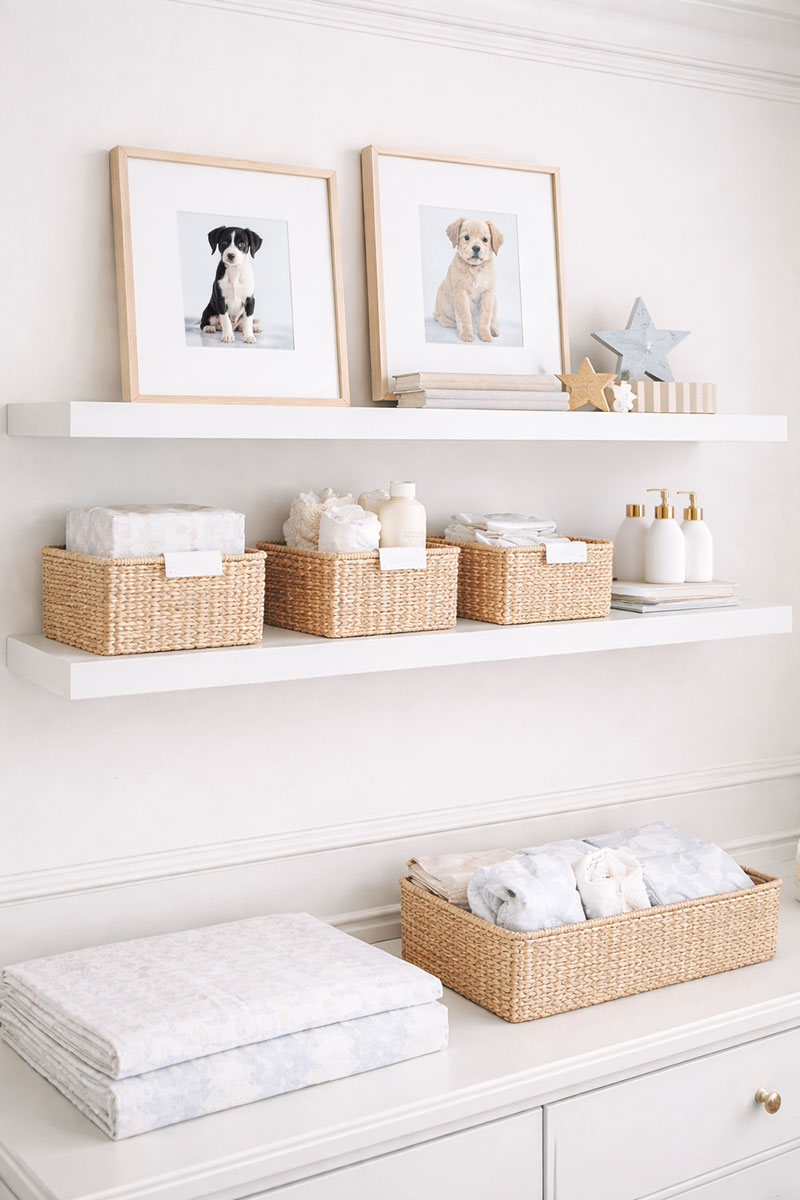
The best furniture for a tiny nursery usually earns its place twice. Choosing a crib that fits the room properly is part of that same strategy, and this guide to space-saving mini cribs for small rooms shows which compact options work best without taking over the nursery. A dresser with a changing pad on top is almost always a better use of space than a separate dresser and changing table.
A crib with open space underneath may leave room for low bins. To see bin styles, clearance tips, and storage safety, visit my under-crib storage solutions page that shows how to use that hidden space and get the most use out of every square inch.
A compact bookcase can hold books, diaper baskets, and folded blankets all in one narrow spot.
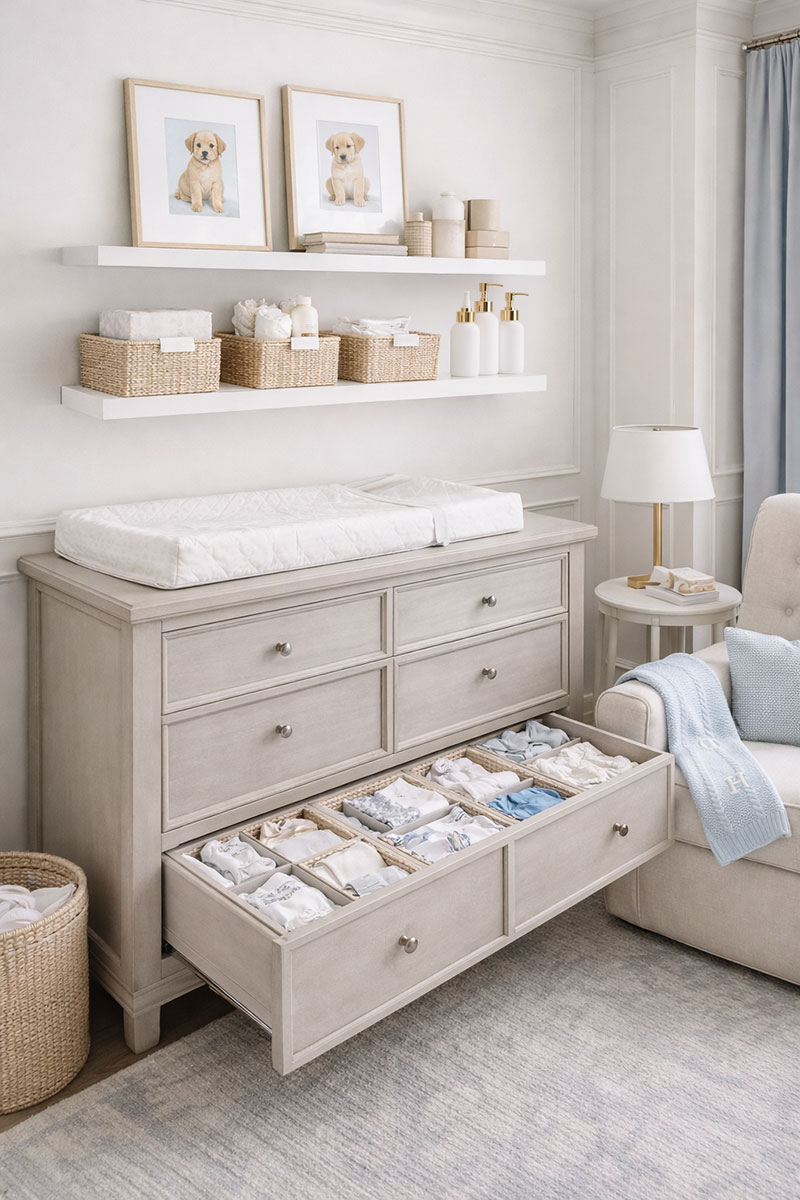
That is why small-room storage is less about adding pieces and more about choosing better ones. A good dresser can hide a huge amount of clutter behind clean drawer fronts. Inside those drawers, small fabric bins or dividers help keep socks, onesies, and diapering supplies from sliding into one messy pile.
If you are still deciding on your main furniture, these pages pair especially well with this one: best dressers for a small nursery, changing table dresser, and cribs for small spaces.
One of the easiest wins in a small nursery is putting daily care supplies where you actually use them. Keep diapers, wipes, creams, and backup pajamas near the dresser or changing spot. Keep books and feeding extras near the chair. Store less-used items higher up or farther away. That one change alone can make a room feel much more under control.
Organize drawers, closets, and hidden spots
Closed storage is your friend in a small nursery. Open shelves can be beautiful, but too much open storage makes a room look busy very quickly. Drawers, closet bins, and lidded baskets hide the little things that create visual clutter. That is what helps a small room feel restful.
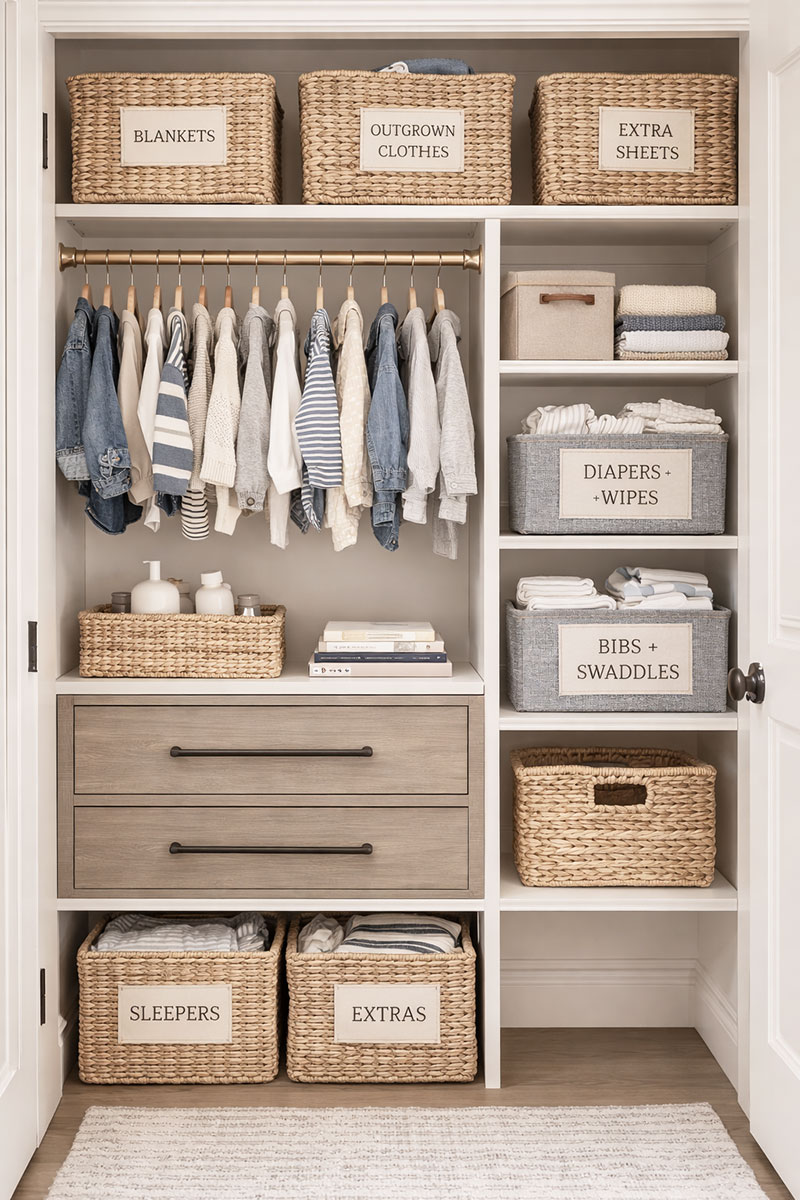
A good system is to divide storage into zones. One drawer for diapers and care supplies. One for sleepers and onesies. One for bibs, burp cloths, and swaddles. One shelf or basket for blankets. One closet bin for clothes in the next size up. When each area has one job, it becomes much easier to keep the room tidy without thinking hard about it.
Under-used space matters too. The top closet shelf can hold labeled bins for future sizes. The back of the closet door can hold light organizers. The lower part of a dresser can hide deep drawers full of folded essentials. Even a narrow gap beside a dresser can sometimes hold a slim basket for extra blankets or changing supplies.
If you are planning the room as a whole, the clearest next pages to read are nursery layout ideas, nursery layout for a 10x10 room, and baby room organization. Together, those pages can help you connect layout, furniture choice, and everyday storage.
For safe nursery setup guidance and home organization basics around babies, the American Academy of Pediatrics offers dependable information at HealthyChildren.org.
Keep the room calm and easy to use
The best small-room storage does not call attention to itself. It quietly supports the way you live in the room. That usually means fewer containers, fewer surfaces covered in baby gear, and fewer decorative items fighting for space with everyday essentials.
Here is a simple rule that helps. Keep open storage pretty. Keep closed storage practical.
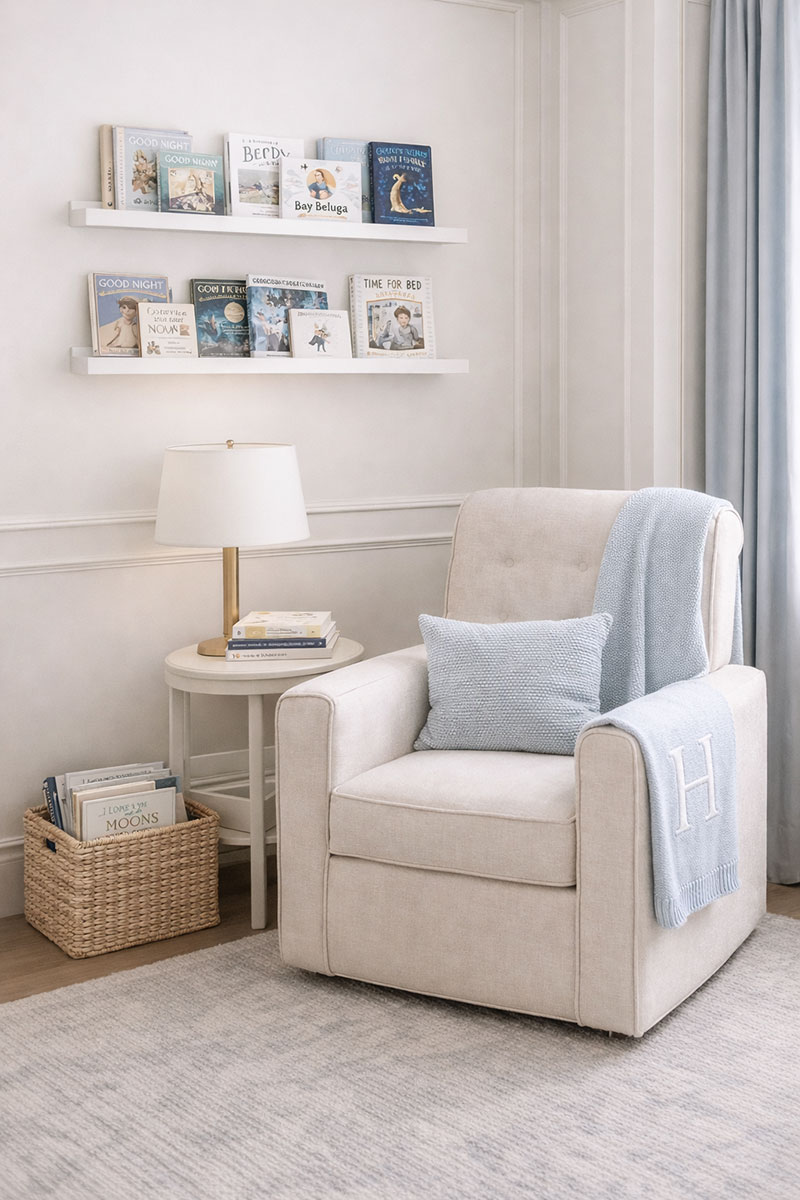
Use open shelves for a small stack of books, framed art, or one beautiful basket. Use drawers and bins for wipes, lotions, extra sheets, changing pad covers, and all the little things that do not need to stay on display. That mix keeps the nursery warm and inviting without looking cluttered.
It also helps to rotate what is visible. Only keep the current clothing size easy to reach. Store the next size nearby, but out of sight. Keep only a few books out at once. Leave breathing room on top of the dresser. Empty space is useful in a small room. It lets the room feel calm.
If you want more ideas after this, the next pages to read should focus on nursery layout, closet storage, and dresser organization for small rooms. Together, those topics can help you connect room setup, furniture choice, and everyday storage.
Simple storage plan to copy
If you want a simple setup that works for most small nurseries, use this. Choose one dresser with drawers. Add a changing pad on top. Use drawer dividers inside. Install one or two shelves above the dresser. Put a hanging organizer in the closet. Store future-size clothes in labeled bins. Keep books in one basket or slim ledge. Leave the crib area clear and simple. That is enough for most families.
Nursery storage ideas for small rooms do not need to be complicated to work well. They just need to support real life. The best systems save your steps, reduce clutter, and make the room feel calmer every time you walk in. When storage is planned well, even a tiny nursery can feel polished, peaceful, and easy to use every day.
Small nursery storage questions
Where should storage go in a small nursery?
Storage should stay closest to where you use it. Keep diapering supplies near the changing area, books near the chair, and extra clothes in drawers or closet bins so the room stays easy to move through.
Are wall shelves a good idea in a small nursery?
Wall shelves can work very well in a small nursery because they use vertical space instead of floor space. They are most useful for light items, books, and baskets that help keep everyday supplies organized.
What kind of dresser works best in a small nursery?
A dresser with deep drawers and a top that can hold a changing pad usually works best. It gives you one main storage piece that can handle clothes, diapering supplies, and daily essentials without adding another bulky table.
How do you keep a small nursery from looking cluttered?
The easiest way is to keep most supplies in closed storage and leave only a few useful or decorative items out in the open. A small room looks calmer when shelves are simple and the dresser top is not overloaded.
Clean summary: The smartest nursery storage ideas for small rooms use a dresser as the main storage piece, add limited wall shelving, hide clutter inside drawers and bins, and keep only the most-used baby items close at hand so the room stays functional and calm.
When you click on links to various merchants on this site and make a purchase, this may result in this site earning a commission. This does not affect the price you pay.

UBGI Gold Standard 2026
Reviewed under the site's
editorial checklist.
Photos, decorating ideas, party setups and reader submissions are shared for inspiration unless a page is specifically presented as a pattern, tutorial, reference guide or step-by-step project. Follow the instructions, measurements, safety guidance and manufacturer directions provided for the particular project or product.
About Jan | Contact | Baby Nursery Ideas (Blog) | Site Map | Privacy Policy | Disclosure Policy | Disclaimer | Affiliate Disclosure | Earnings Disclosure | Facebook | Pinterest
I am a participant in the Amazon Services LLC Associates Program, an affiliate advertising program designed to provide a means for us to earn fees by linking to Amazon. As an Amazon Associate I earn from qualifying purchases.
Copyright © 2006-2026. All Rights Reserved.