Baby Dressers for Nursery Rooms: Storage, Changing Table Combos & DIY Ideas
Baby dressers are practical nursery furniture pieces that store clothing, blankets, and everyday baby essentials while often doubling as a changing station. In the United States, safety standards and anti-tip requirements make stability and wall anchoring especially important in a nursery. When choosing a baby dresser, most parents look for sturdy construction, smooth drawers, good storage space, and a design that will continue working long after the diaper stage.
What Is a Baby Dresser for a Nursery? A baby dresser for a nursery is a stable storage unit designed to hold infant clothing and essentials, often used with a secured changing pad on top and anchored to the wall to help reduce tip-over risk.
On This Page:
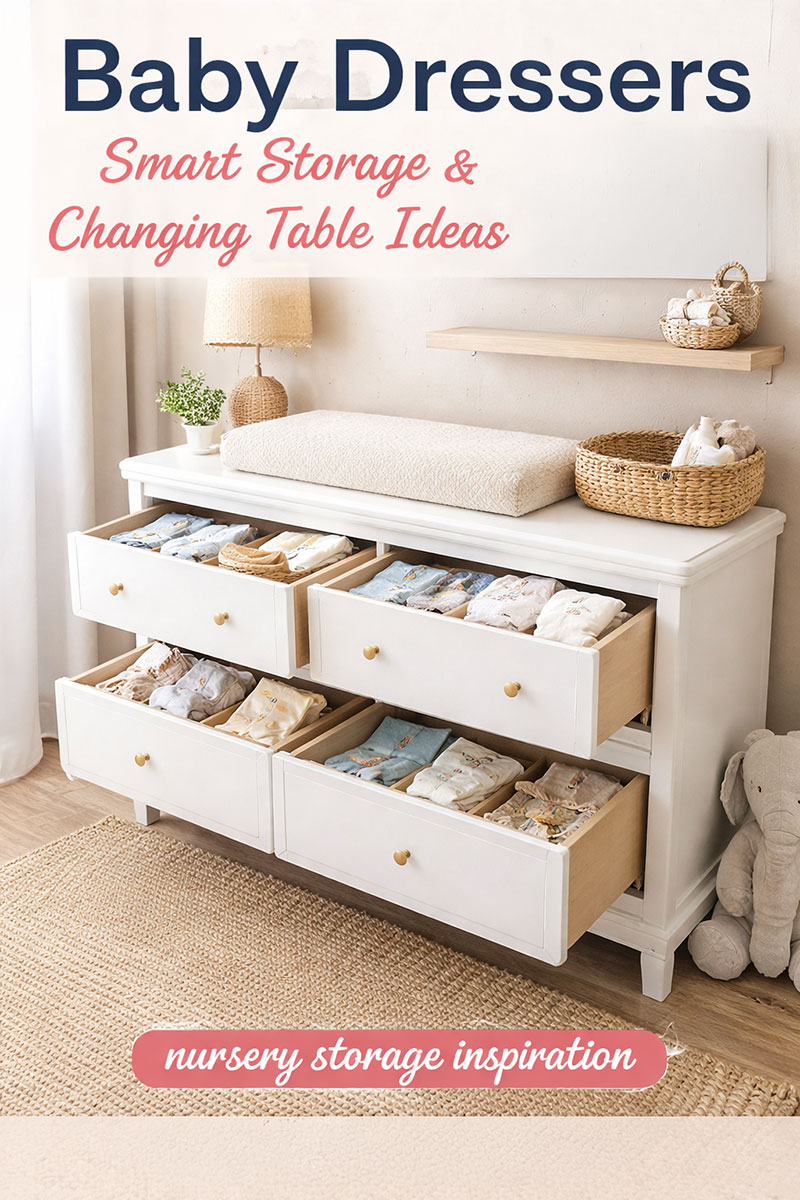
When planning a nursery layout, the baby dresser often becomes the quiet workhorse of the room. It stores daily clothing changes, swaddles, sleep sacks, burp cloths, and backup sheets in one organized location. Unlike open shelving, drawers keep clutter hidden and make the space feel calm and finished. In smaller rooms, a well-sized dresser can replace the need for extra storage bins or bulky furniture pieces.
Most nursery dressers range from three to six drawers. Wider models offer more surface space for a changing pad, basket storage, or decorative elements like framed prints and soft lighting. Taller, narrower dressers take up less floor space and work well in compact layouts where crib placement is the priority. Before purchasing, measure wall width and walking clearance to ensure the dresser does not interfere with door swings or crib access.
Longevity is another reason many parents invest in a quality baby dresser. After the diaper stage ends, the same piece transitions easily into a toddler or child’s bedroom. Neutral finishes such as white, soft gray, natural wood, or muted tones allow the furniture to adapt as themes change. Choosing classic hardware instead of novelty knobs also increases long-term usability.
This balance between safety, storage, and long-term use is what makes the nursery dresser one of the most important furniture decisions in the room.
To see how dresser size and placement affect the rest of the room, explore my nursery furniture layout ideas for practical ways to arrange storage, crib space, and walking paths together.
Whether you prefer a coordinated nursery set or a refinished vintage piece, the goal remains the same: secure construction, functional storage, and a layout that supports daily routines safely and efficiently.
Baby dressers that come as part of your nursery furniture collection give the room a classy look. On this page we will check out the latest styles in combo changers and dressers as well as DIY dresser ideas shared by creative parents that recycled, painted and transformed old furniture into something fabulous for their baby's room.
Baby Dressers as Part of a Nursery Furniture Plan
Baby dressers are often purchased as part of a coordinated nursery furniture collection, but they can also stand alone as a practical storage solution. Whether part of a matching set or selected individually, the most important considerations are stability, storage layout, and long-term usability in a child’s room.
Before selecting a finish or decorative detail, evaluate how the dresser will function daily. Drawer depth, glide quality, and overall footprint matter more than appearance alone.
Changing Table and Dresser Combos
A baby dresser and changing table combination is designed to save space by combining diapering and clothing storage into one unit. These pieces typically feature a flat top surface suitable for a secured changing pad and drawers underneath for easy access to clothing and essentials.
This format reduces the need for separate furniture while keeping daily items within reach. The key factor is stability. A changing surface must remain secure when drawers are opened.
Space-saving combinations are especially helpful in smaller nursery layouts where floor area is limited.
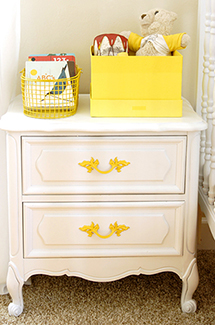
DIY Chic White and Yellow Wooden Nursery Furniture
Smaller wooden nightstands or compact dressers can also function well in a nursery, especially when space is tight. Even simple updates like refinishing or replacing drawer pulls can refresh an older piece.
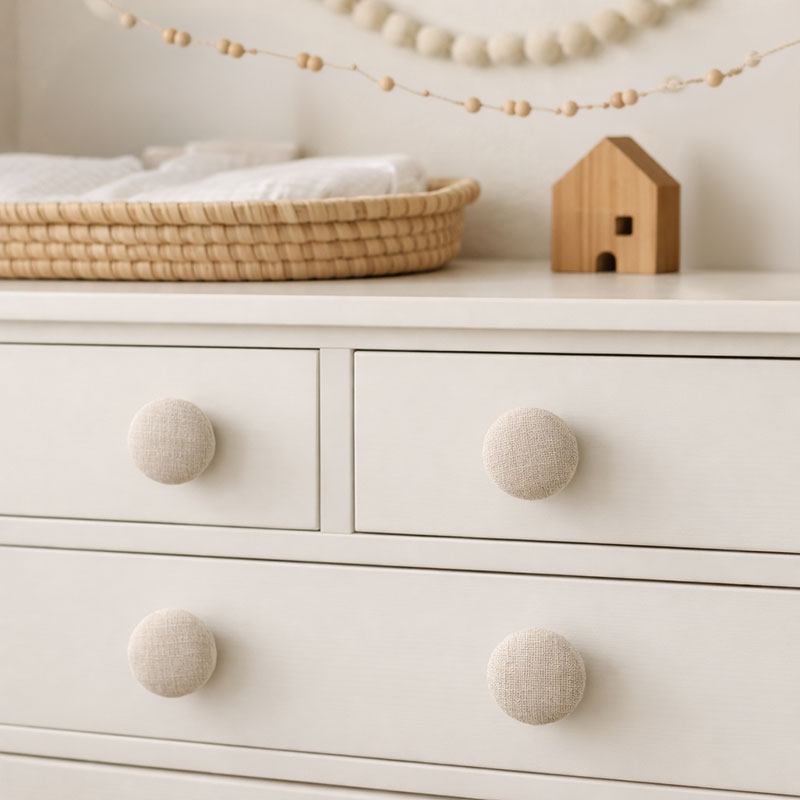
Make Your Own DIY Dresser Drawer Pulls
Personalizing drawer pulls is one of the simplest nursery upgrades. Knobs and hardware are available in countless finishes, and custom options allow parents to coordinate with a baby boy nursery, a baby girl nursery, or a gender neutral nursery theme.
DIY Painted Baby Dressers
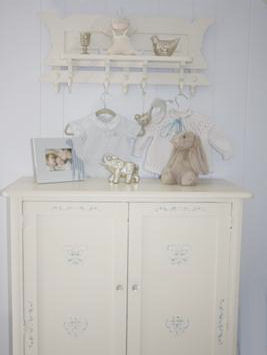
Ideas for Vintage Painted Nursery Furniture
Repainting secondhand furniture remains a popular nursery trend. Vintage pieces can be sanded, primed, and refinished to coordinate with modern nursery themes. When refinishing furniture for a baby’s room, allow paint to fully cure and ensure the piece remains structurally stable.
Paint Ideas for Nursery Furniture
Paint selection often reflects a nursery’s color palette. Neutral tones, soft pastels, or bold accent colors can transform a simple dresser into a focal point. Regardless of style, finishes used in a nursery should be appropriate for indoor residential environments.
Painting Ideas for Dressers
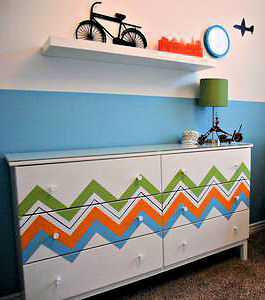
Chevron Stripes in a Cityscape Nursery
Patterns such as stripes or stenciled designs allow parents to customize a nursery dresser without replacing it.
DIY Painted Baby Dresser Ideas
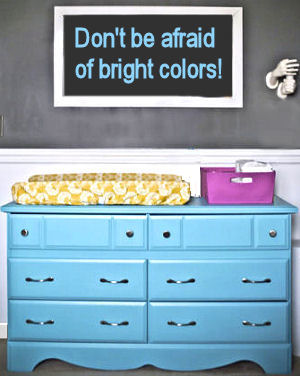
A Recycled Dresser Painted Blue
Thrifted furniture can be refinished in bright or muted tones to match a nursery theme.
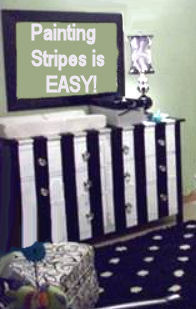
Striped Nursery Dresser for Twins
Bold patterns work particularly well in themed nurseries or shared sibling rooms.
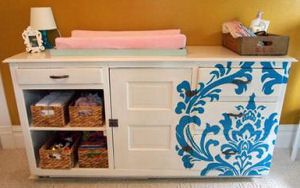
White and Paradise Blue Painted Nursery Dresser
Stenciling provides a structured way to add detail without advanced painting skills.
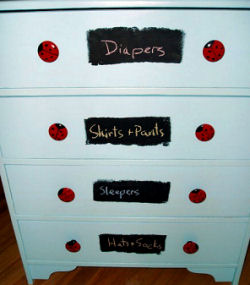
Safety Considerations for Baby Dressers
All nursery dressers should be securely anchored to wall studs using appropriate anti-tip hardware. Guidance from the U.S. Consumer Product Safety Commission emphasizes that unsecured furniture can tip when drawers are opened or climbed on. Drawers that extend fully can shift weight forward, increasing tip risk if not anchored.
Do not rely on weight alone to prevent tipping. Even heavier furniture can become unstable when multiple drawers are opened at once.
Changing surfaces should include safety rails or be used with a secured changing pad and strap. Drawer latches may also be added to reduce access once a child becomes mobile.
Built-In Combinations and Matching Sets
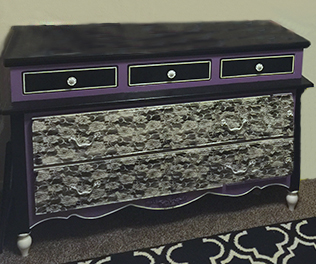
This purple and black nursery dresser example demonstrates how customized finishes can coordinate with bold themes.
Some nursery furniture lines include cribs with attached dressers or storage units. These integrated designs aim to consolidate space and simplify layout planning.
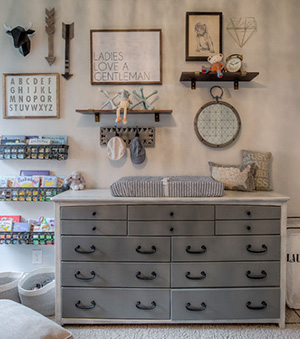
Grey Black and White Nursery Dresser
A bold neutral palette can make a dresser both functional and visually striking.
Many manufacturers offer dresser-changing table combinations with drawers instead of open shelving. Drawers provide enclosed storage for clothing and supplies while maintaining a clean appearance.
Always prioritize structural integrity and anchoring over decorative appeal.
Buying New vs. Refinishing Existing Furniture
While refinishing furniture is a creative option, purchasing nursery furniture specifically designed for children’s rooms may offer added stability features and child-focused design elements.
- Non-toxic materials suitable for residential interiors
- Child-appropriate drawer pulls and hardware
- Storage layouts designed for baby clothing and essentials
Woodworking enthusiasts may also explore dresser construction plans from established woodworking communities such as Ana White. Any custom-built piece intended for nursery use should be structurally sound and securely anchored once installed.
For additional nursery furniture planning guidance, visit baby cribs and furniture or explore more guides at Unique Baby Gear Ideas.


When you click on links to various merchants on this site and make a purchase, this can result in this site earning a commission. Affiliate programs and affiliations include, but are not limited to, Amazon and the eBay Partner Network such as the ones to your left on this page. Please see our Affiliate Disclosure page for more information.
More UBGI: RSS Feed | Facebook
About Jan | Contact | Baby Room Ideas (Blog) | Site Map | Privacy Policy | Disclaimer | Affiliate Disclosure | Earnings Disclosure
I am a participant in the Amazon Services LLC Associates Program, an affiliate advertising program designed to provide a means for us to earn fees by linking to Amazon.
Copyright © 2006-2026. All Rights Reserved.