DIY Woodland Deer Nursery Projects and Patterns
By Jan Bay
DIY woodland deer nursery projects make decorating the baby's nursery fun, and you can be proud that so much of the room was made by hand. This collection brings together my deer quilt, crochet mobile, loveys, appliqués, wall art and other DIY projects to show you how to use one or two favorites to coordinate the look, or place several handmade pieces throughout the room. There are so many items you can make yourself, and the best part is enjoying them twice, first while you are making them and again when guests notice the special details.
Explore More Woodland Deer Projects
Woodland Deer Family Quilt Pattern
Crochet Deer Baby Mobile Pattern
Winter Woodland Deer Lovey Pattern
Helpful for Woodland Nursery Projects
Jump to a Section
Begin Your DIY Woodland Deer Nursery Projects with the Quilt
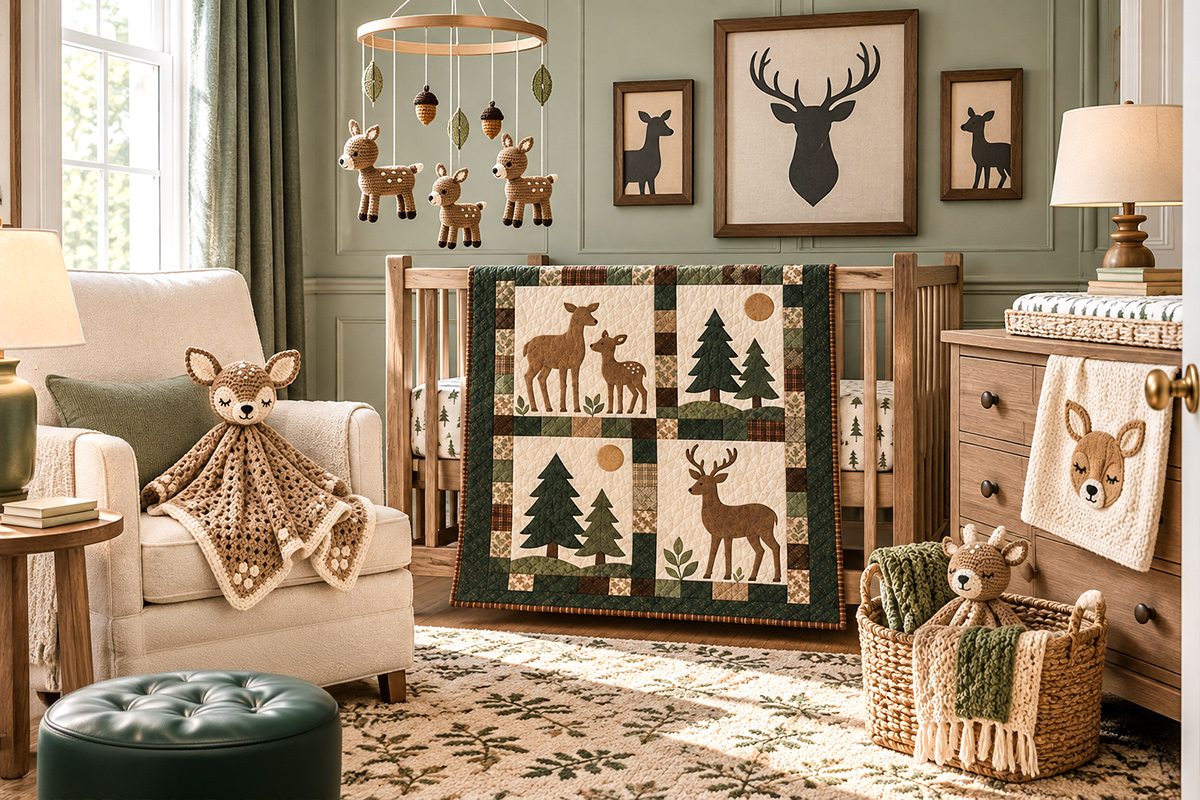
If you're in the process of putting the whole room together and don't know where to start, I'd choose the quilt first and let it establish the colors for everything else to follow. The Woodland Deer Family Quilt Pattern gives you several colors to work with without locking you into one exact shade. The deep woodland green, warm brown, ivory and small touches of rust work especially well with medium or dark wood furniture.
The quilt also does more decorating work than a small accessory can. It has a doe and fawn in one panel, a buck in another, two evergreen scenes and a patchwork border, so there's already plenty going on visually. If you choose to stop right there that would be just fine. You don't need deer on every wall for the room to be complete.
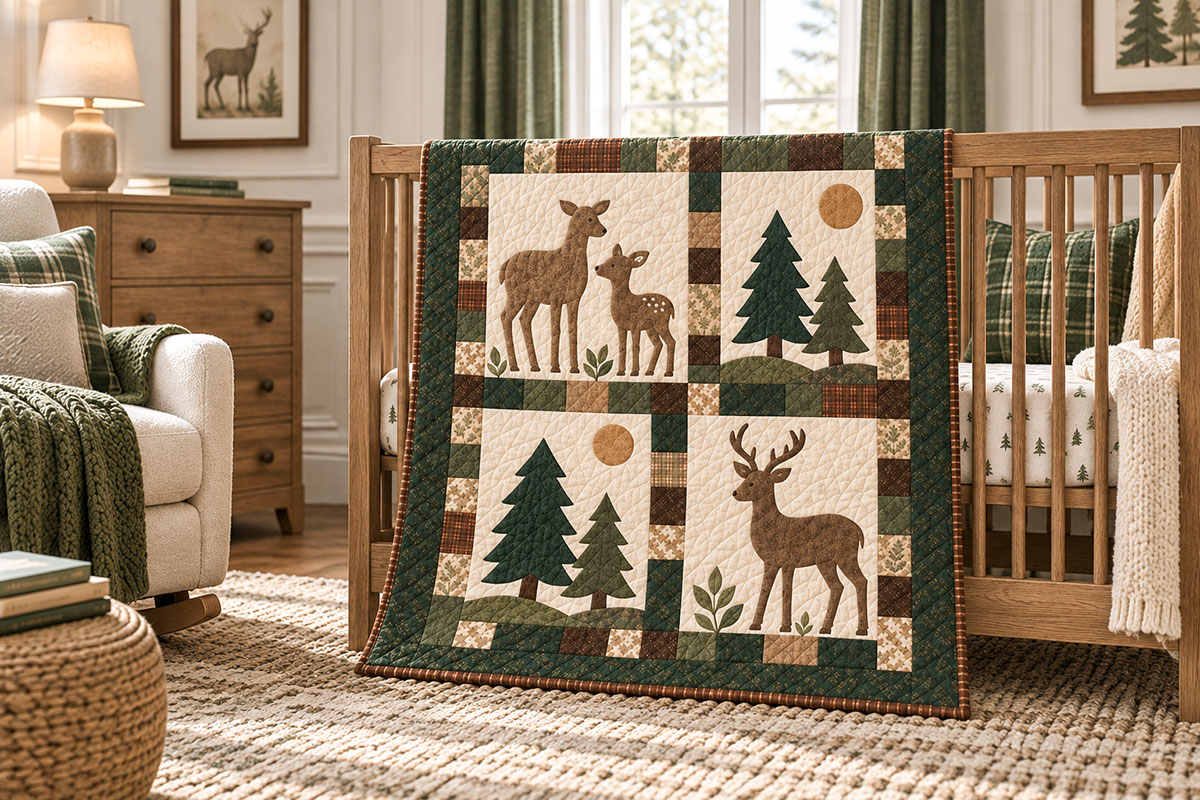
I would pull two or three colors from the quilt for the rest of the nursery rather than trying to match every fabric. A green wall, brown wood furniture and cream upholstery are enough to connect the room to the quilt. Then the smaller deer projects can repeat those colors here and there.
Where you display the quilt matters, too. Draped over the outside of the crib for a photograph, folded over a quilt ladder or chair, or displayed on the wall, it becomes one of the largest decorative pieces in the room. If you want it close at hand for snuggles in the nursery glider, keep it on the chair or in a basket when the crib is being used for sleep. Keep quilts, blankets and other loose bedding out of an infant's sleep area. The Safe to Sleep program has current guidance for setting up a baby's sleep space.
If you only make one of the larger projects on this page, the quilt would be my first choice. Then you can decide how far you want to take the deer theme with the smaller pieces.
Add the Crochet Deer Baby Mobile Above the Nursery Display
The crochet deer baby mobile is one of the easiest ways to carry the woodland theme upward instead of putting everything at furniture level. It has three crocheted deer along with leaves and acorns, so it coordinates nicely with the quilt without looking like a copy of it.
I would hang the mobile where it can be seen as part of the room arrangement, then let the wall behind it stay fairly simple. If the quilt is already busy, you don't need a mural, several framed prints and a mobile all competing in the same small area.
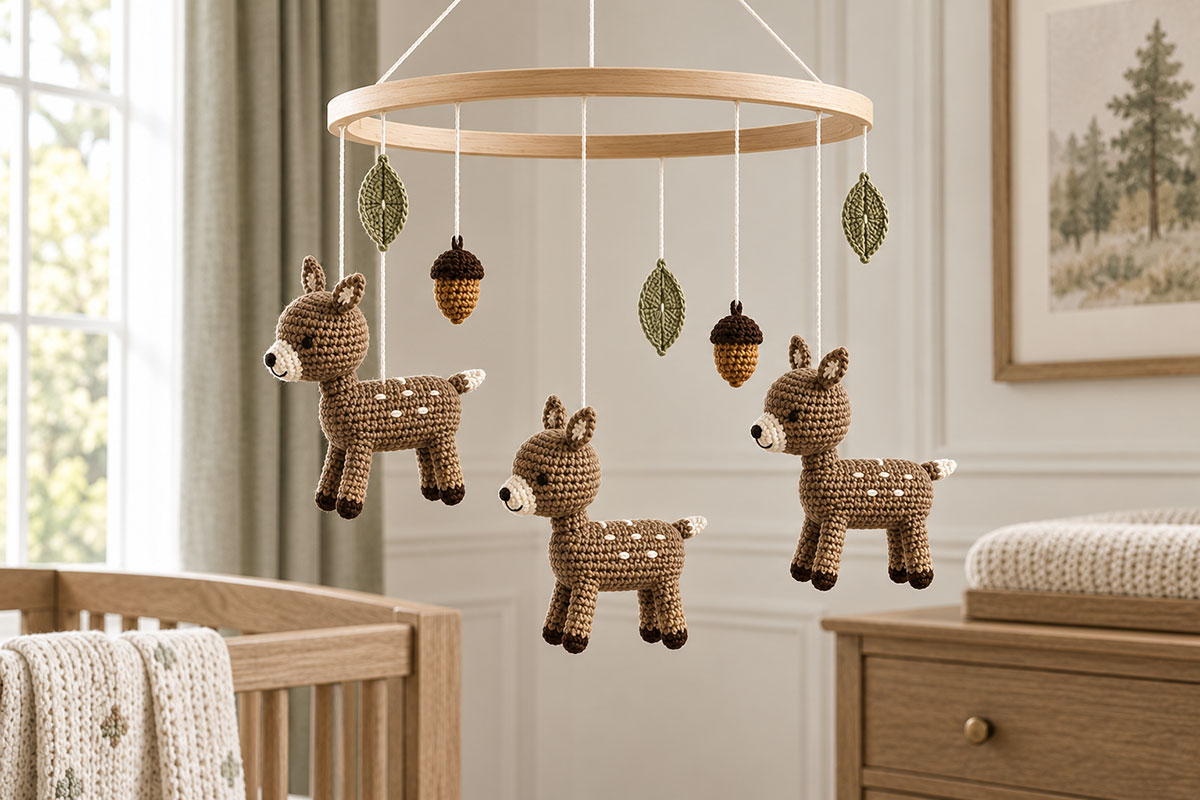
The browns and olive greens in the mobile are easy to repeat elsewhere. A brown picture frame, green throw on a chair or one small woodland basket is enough. You don't have to keep adding deer just because you're decorating a deer nursery.
Keep any hanging mobile and its cords completely out of baby's reach. The U.S. Consumer Product Safety Commission advises removing crib toys with hanging cords when a baby begins to push up on hands and knees or reaches five months of age, whichever comes first. See the CPSC crib-toy safety guidance.
Use Deer Loveys and Snugglers as Smaller Coordinating Pieces
You have several choices here, and I would not use every one of them in the same nursery. Pick the one that fits the room best.
The crochet deer lovey pattern gives you the softer doe and fawn look. I especially like that direction if the nursery already has the family quilt because the two projects feel related without being identical.
If you want something with a little more woodland character, the winter woodland deer lovey works well with deeper green, cream and brown. The crochet buck deer snuggler gives you another option if you prefer a more traditional buck.
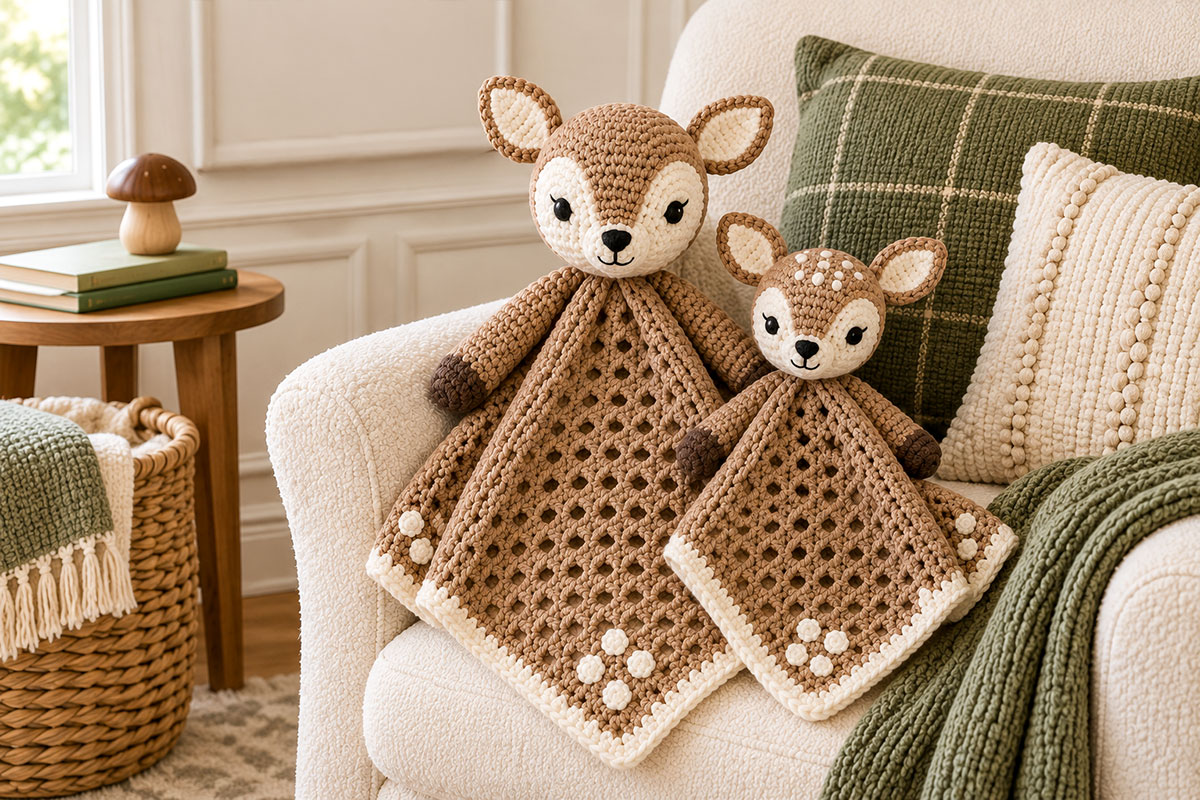
For decorating, I'd place one on a chair, changing table or shelf for the photograph and then put it wherever it belongs during everyday use. The point is to repeat the deer shape in a softer form, not to cover every surface with crochet animals.
This is also an easy place to change the feel of the room. A cream and light brown lovey keeps things softer. Deeper brown with dark green feels more like a woodland cabin. You can change quite a bit without changing the basic deer theme at all.
Use the Deer Appliqué for One Small Custom Detail
The crochet deer appliqué pattern is useful when you want a handmade deer detail without making another large project. Add it to something that already belongs in the room instead of creating another object just to have somewhere to put it.
A quilted wall hanging, storage piece or decorative textile can all work. I'd choose one. The appliqué is small enough that repeating it on several items can start to feel more themed than coordinated.
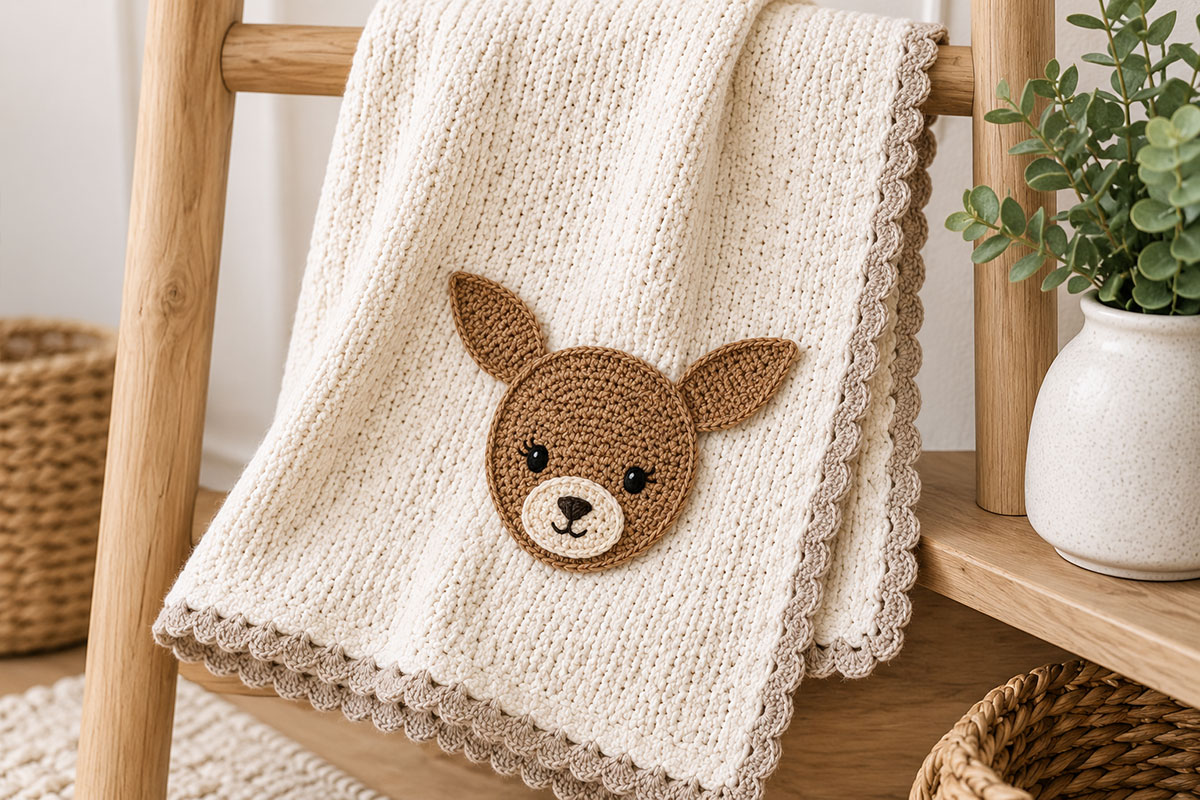
You can also use the appliqué to bring the deer theme into a part of the room that doesn't have one of the larger projects. That might be across the room from the quilt or near the changing area. A small repeat like that helps the nursery feel connected without making the arrangement too literal.
Bring the Deer Theme Up Onto the Walls
Once the larger handmade pieces are chosen, I would look at the walls. This is where you can repeat the deer theme without adding another bulky item to the room.
The DIY deer art ideas give you a way to add a larger focal point, while the DIY deer nursery wall sign works when you want something smaller and more contained. You can also use the ideas on the deer wall decals page if you want the wall itself to carry more of the woodland scene.
I would choose between a large wall treatment and a grouping of smaller framed pieces instead of doing both in the same spot. If you already have a deer mobile hanging nearby, keep the wall behind it simpler. If that side of the room is otherwise plain, then the wall art can do more.
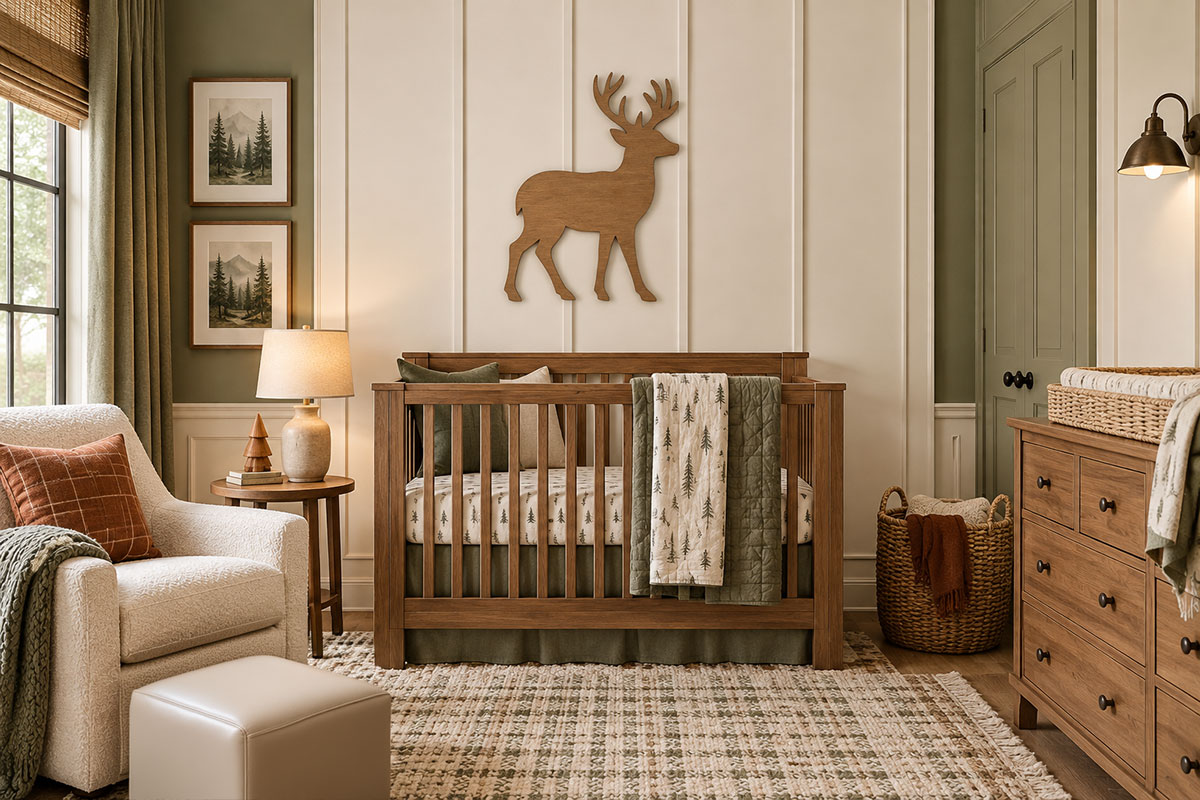
One larger buck silhouette with two smaller deer pieces can make a very nice arrangement because the sizes are different but the subject still connects. Keep the frames related in color or finish. They don't have to match exactly.
If you use decals or a mural-style woodland scene, I'd let that be the wall feature. You don't need to cover it with several framed deer pictures afterward. Give the bigger idea room to show.
Pull the Woodland Deer Nursery Together Without Using Deer Everywhere
By this point you may already have a quilt, mobile, lovey and wall piece. That's plenty. The rest of the room can support the woodland look without adding another deer to every corner.
I would repeat the colors and materials instead. Medium wood, deep green, warm brown, ivory and a smaller amount of rust all work with the projects shown here. If your favorite deer project uses a lighter palette, you can soften those same ideas with cream, pale wood and muted green.
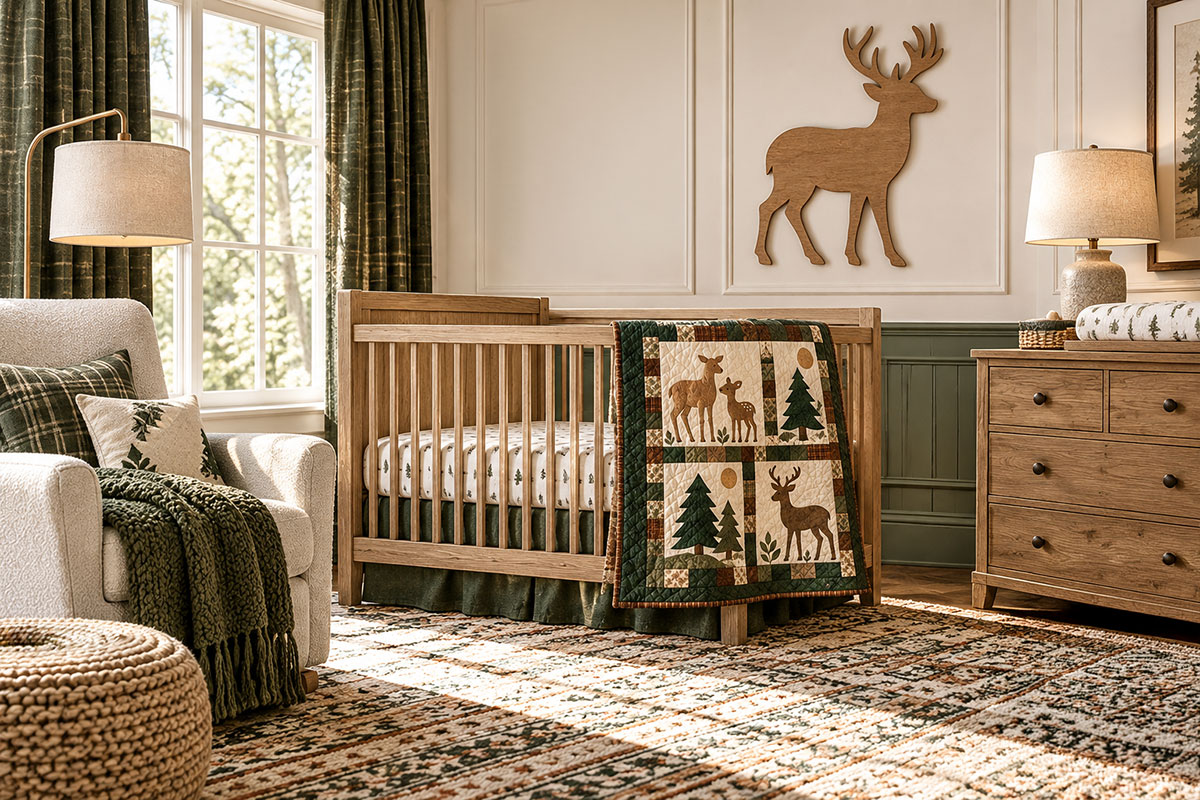
Texture helps, too. A woven basket, tailored chair, quilted fabric, crochet and wood all give you different surfaces without introducing more motifs. That is especially useful in a room with several handmade projects because each piece can stand out instead of disappearing into a pile of similar decorations.
I would also leave some plain areas. If the quilt is detailed, let the chair beside it be mostly solid. If the wall has a large woodland scene, keep the dresser top simple. If the mobile is directly above a focal area, you probably don't need another hanging decoration beside it.
For more room arrangements, color directions and deer decorating examples, see my deer-themed nursery ideas. That page is where I would go for the decorating inspiration. This one is for deciding which of the handmade projects you want to use to build the room.
Choose the Projects Before You Start Decorating
You do not need to make everything on this page. I would choose one large project, one medium project and one small detail first.
For example, you might use the woodland deer family quilt as the main piece, add the crochet deer mobile, then finish with one piece of DIY deer wall art. That's already enough to establish the theme.
Or skip the quilt and build the room around wall decor and crochet. A deer mobile, one lovey and a larger wall treatment can carry the theme just as well if you prefer fewer patterned textiles.
The easiest way to keep the room from looking too busy is to decide which project gets to be the focal point. Let that one have the most detail. The other pieces can repeat its colors, shapes or woodland feeling without trying to compete with it.
That's also why I like using projects from several different crafts on the same page. A quilt, crochet mobile and piece of wall art don't look like three versions of the same thing. They coordinate, but each one still has its own job.
Try a Softer Deer Nursery Palette
The woodland version does not have to be dark green and brown. If you want something lighter, the deer theme works just as well with soft pink, ivory, pale wood and small touches of muted green.
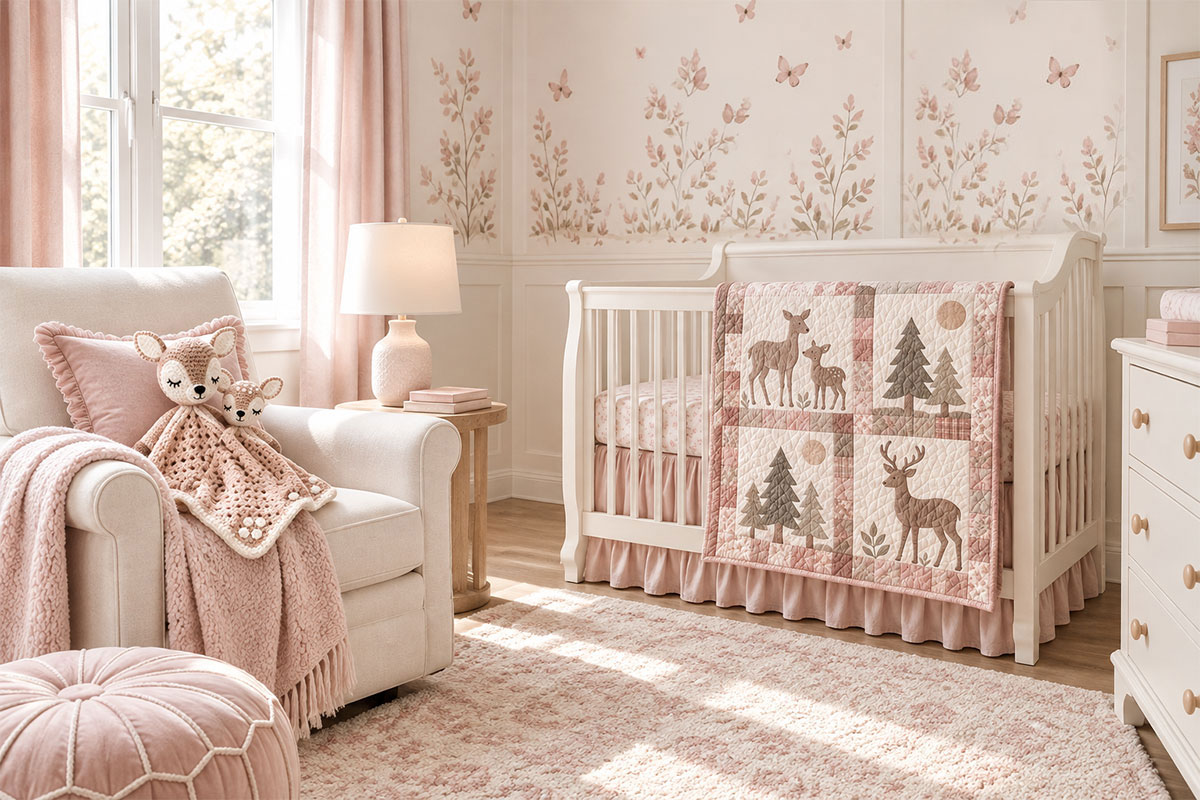
I would still keep the deer themselves in natural brown, taupe or cream, but the handmade projects do not have to stay in the forest palette. The quilt can be worked in blush, dusty rose, soft mauve, ivory and taupe instead of deep green and rust. The doe and fawn loveys can use the same softer colors in their blankets while the faces remain natural deer shades.
That gives you a feminine version of the same project collection rather than a completely different nursery. You are changing the palette, not losing the woodland character. Add the pink through the quilt fabrics, crochet, curtains, rug and a few smaller details and stop before every surface turns pink.
Keep the Handmade Pieces Looking Like a Collection
The projects on this page were not designed as one matching set, and I actually prefer that. A nursery is more interesting when the pieces look collected rather than copied from one exact design.
You can still make them feel related. Repeat two or three colors. Use similar wood tones in frames and furniture. If one project has olive green, bring a little of that color into another part of the room. If your quilt has rust or dark brown, one small repeat is enough.
Try not to make every deer face, tree and leaf identical. The quilt can be more graphic, the crochet can be softer and the wall art can be simpler. They only need enough in common to belong in the same room.
And stop when it looks finished. You can always make another project later.
If the room already has a quilt, mobile, wall piece and one soft handmade project, I'd call it finished. You can always make another deer project later because you love the project, not because the nursery still needs one.
When you click on links to various merchants on this site and make a purchase, this may result in this site earning a commission. This does not affect the price you pay.

UBGI Gold Standard 2026
Reviewed under the site's
editorial checklist.
Photos, decorating ideas, party setups and reader submissions are shared for inspiration unless a page is specifically presented as a pattern, tutorial, reference guide or step-by-step project. Follow the instructions, measurements, safety guidance and manufacturer directions provided for the particular project or product.
About Jan | Contact | Baby Nursery Ideas (Blog) | Site Map | Privacy Policy | Disclosure Policy | Disclaimer | Affiliate Disclosure | Earnings Disclosure | Facebook | Pinterest
I am a participant in the Amazon Services LLC Associates Program, an affiliate advertising program designed to provide a means for us to earn fees by linking to Amazon. As an Amazon Associate I earn from qualifying purchases.
Copyright © 2006-2026. All Rights Reserved.