Travel Crib vs Pack and Play: What Parents Should Know
Comparing a travel crib vs pack and play is a common decision parents make when planning a vacation and choosing a safe place for a baby to sleep away from home. While both are portable sleep spaces designed for travel and temporary setups, they are built differently and are used in slightly different situations. Understanding how travel cribs and pack and play playards compare in size, structure, portability, and everyday use helps parents decide which type fits their routine, travel habits, and available space.
Many parents buy one of these thinking it replaces the other — until real life proves otherwise:
Why some travel cribs become everyday sleep spaces
These baby sleep setups work very differently in real homes
The cribs that actually work in tight rooms
The mattress sizing issue that catches many parents off guard
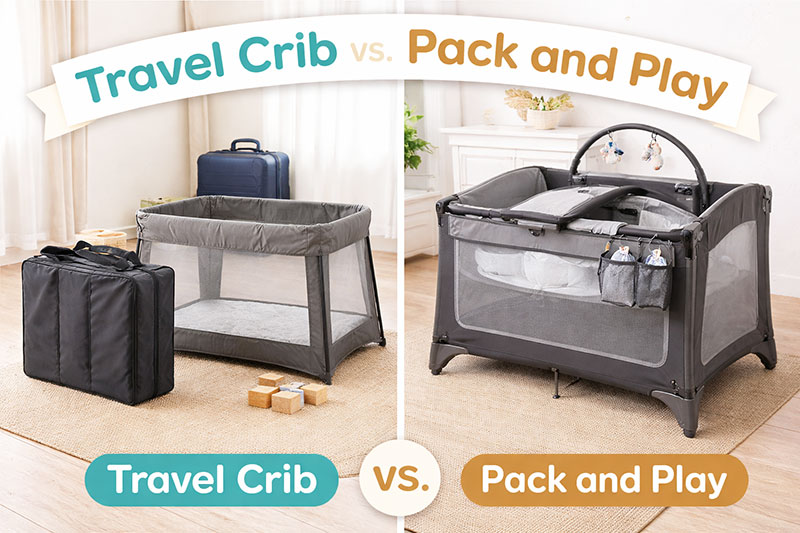
If you want to compare a popular option while reading, this is one example many parents look at for travel sleep setups:
Jump to:
Travel Crib vs Pack and Play Differences Parents Notice First
Quick answer: A travel crib is built mainly for sleeping and folds into a compact bag for trips. A pack and play is a portable play yard system that includes a sleep space but is designed to serve several functions in one setup.
Many parents notice the difference during the first overnight trip with a baby. The car is unpacked, the diaper bag is open, and the sleep space needs to be assembled. What seemed similar in store photos can suddenly feel very different once the frame is opened inside a guest room.
A travel crib normally focuses on one purpose. Portable sleep during trips. The structure folds smaller and the mattress sits near the base of the frame.
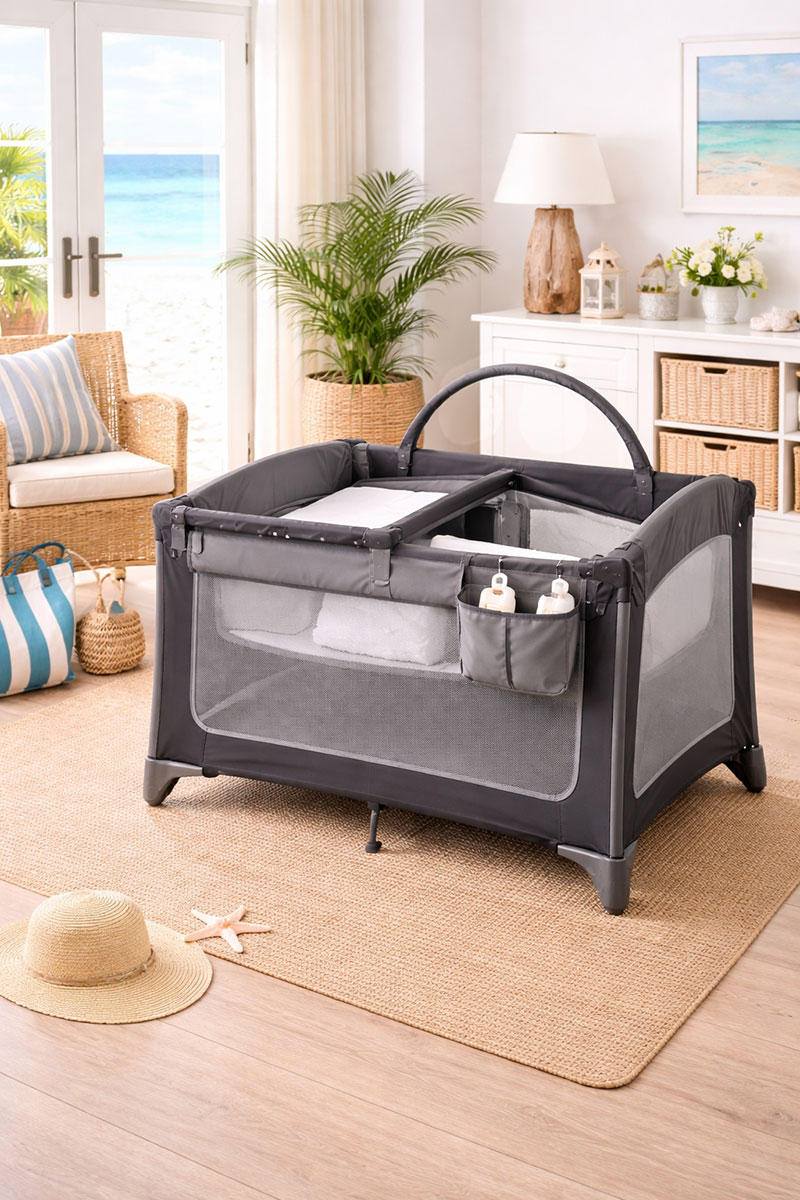
A pack and play usually acts as a portable baby station. Many models include a bassinet insert, storage pockets, or a diaper changing surface.
Both options can provide a safe temporary sleep space when used correctly. The main difference is portability and how many roles the product is expected to perform.
This difference becomes clear the first time parents try to fit everything inside a small hotel room.
Travel Crib vs Pack and Play Size and Portability Differences
Portability is the main reason travel cribs developed as their own category.
Parents often notice this during their first trip with a baby when the trunk fills quickly with gear. Space suddenly becomes important.
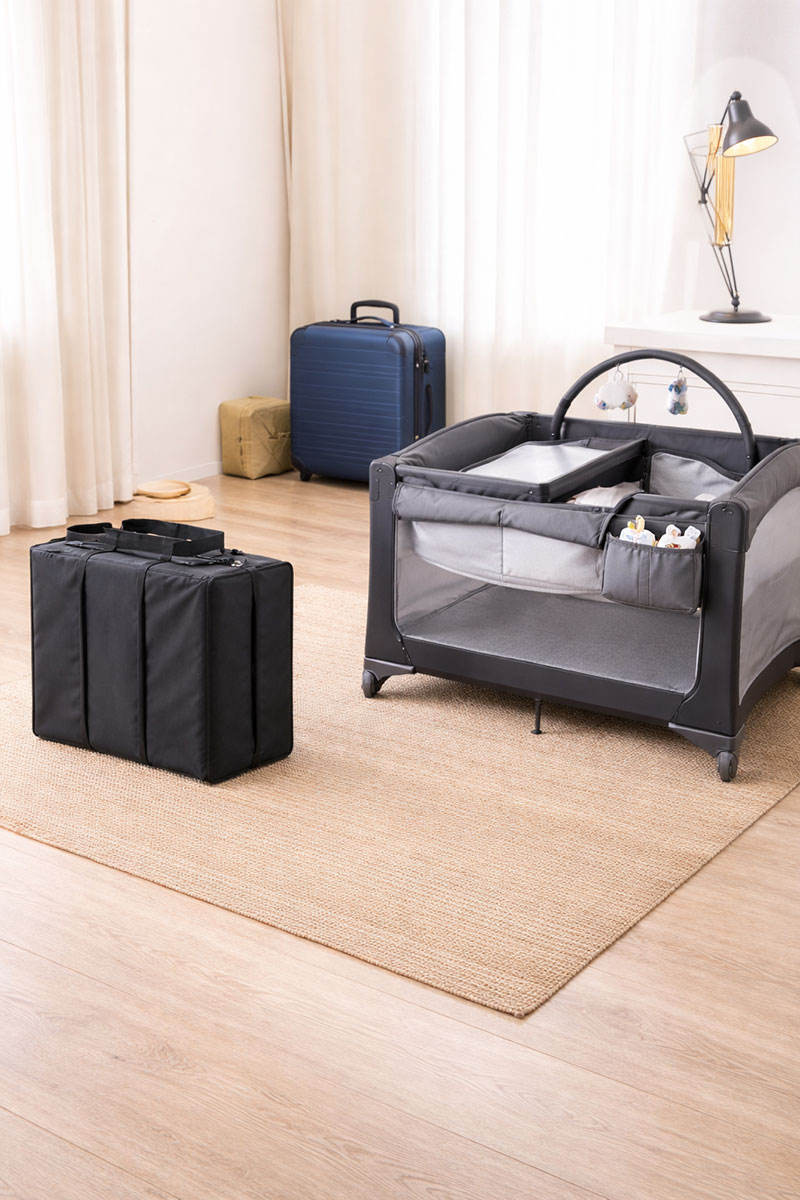
Travel cribs are designed to collapse into compact carry bags. Many weigh under fifteen pounds and can fit beside luggage or airline carry bags.
Pack and play units usually fold into longer rectangular travel bags and weigh more. They still transport well in a car, but they require more storage space.
This difference matters most for families who travel often or fly with baby equipment.
For a broader overview of portable sleep structures, see portable baby cribs.
Many parents also review comparisons of travel models in best travel crib options to see how folding systems differ.
Play yard designs are explained in baby play yard and Graco baby play yard, which show the larger portable enclosure style.
Sleep Space Layout in Travel Crib vs Pack and Play Designs
The sleep surface design is another difference parents often notice.
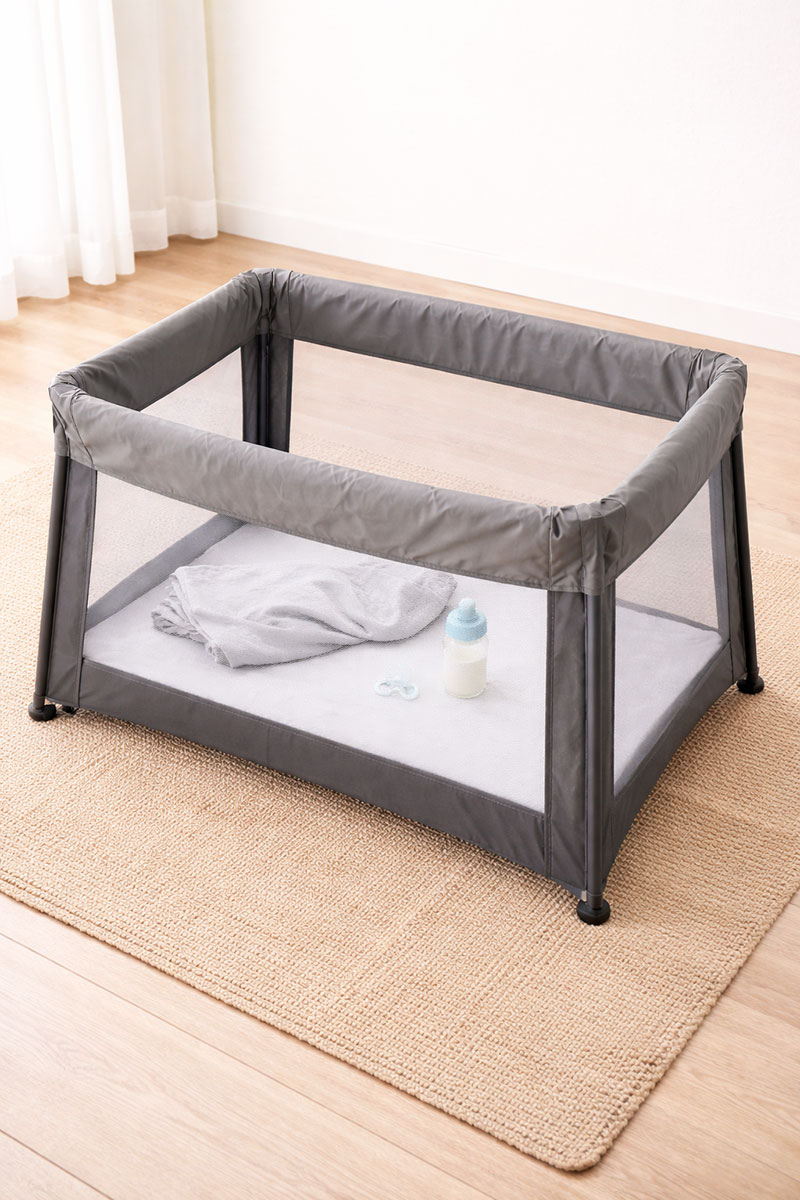
Travel cribs usually position the mattress close to the base of the frame. This creates deeper side walls which help contain movement as babies grow.
Pack and play units usually begin with a raised bassinet insert for newborn use. This allows parents to place a baby down without bending as far.
When babies begin rolling or pushing up, the insert is removed and the mattress drops to the lower level.
This transition usually happens between four and six months.
Parents often notice the change the first time a baby rolls during sleep.
A detail that many guides do not explain is mattress structure. Travel crib mattresses are sometimes thicker than play yard pads because the design focuses on sleep rather than play activity.
However, safety guidance remains clear.
Only the mattress included with the product should be used.
Extra padding or aftermarket mattresses should never be added.
For a deeper explanation of mattress safety and fit, see crib mattress fit, crib mattress thickness and firmness, and do all crib mattresses fit all cribs.
When Parents Choose Travel Cribs vs Pack and Play Setups
Each product type fits different daily routines.
A travel crib is commonly chosen for trips between homes, hotel stays, or vacations where space is limited.
A pack and play is often used inside the home as a temporary sleep space or daytime enclosure.
Some families use both during the early years. A play yard may stay in the living area while a travel crib becomes the sleep space packed for trips.
This approach keeps the baby’s sleep environment familiar even when the location changes.
Families comparing travel crib designs sometimes look at examples like the BabyBjorn travel crib to see how compact folding frames work.
Portable Baby Sleep Safety Guidance in the United States
Both travel cribs and pack and play products sold in the United States must meet federal safety standards.
These standards are regulated by the Consumer Product Safety Commission and apply to crib and play yard structures.
The rules cover frame stability, mesh ventilation panels, and mattress support systems.
Parents sometimes assume all portable baby beds follow the same rules.
They do not.
Products marketed as loungers or travel nests are not regulated under crib or play yard safety standards.
Official guidance can be reviewed through the U.S. Consumer Product Safety Commission safe sleep guidance.
Additional safety references are explained in crib safety standards, crib safety checklist, and crib slat spacing rules.
For a complete overview of crib types and designs, see the main guide to baby cribs.
Which Is Better. Travel Crib or Pack and Play
The best choice depends on how the product will be used.
If the goal is compact travel and overnight sleep away from home, a travel crib usually works better.
If the goal is a portable enclosure that allows sleep and daytime use, a pack and play usually fits that role.
Parents often discover the right option during their first overnight trip with a baby.
The setup that fits in the car easily, assembles quickly, and allows the baby to sleep normally is usually the one that stays in regular use.
Families also compare portable sleep setups with nursery crib types in guides such as crib vs bassinet vs mini crib.
Frequently Asked Questions About Travel Cribs and Pack and Plays
Can babies sleep overnight in a travel crib?
Yes. Travel cribs designed for infant sleep can be used overnight when assembled correctly with the included mattress.
Is a pack and play the same as a crib?
No. A pack and play is a portable play yard system that includes a sleep area but is not the same as a full nursery crib.
Which is easier to travel with?
Travel cribs are usually easier to transport because they fold smaller and weigh less.
Do babies sleep better in travel cribs?
Some babies sleep longer in travel cribs because the mattress structure focuses on sleep support rather than play space.
How long can babies use a pack and play?
Most play yards can be used until a child reaches the manufacturer height or weight limits.
When you click on links to various merchants on this site and make a purchase, this may result in this site earning a commission. This does not affect the price you pay.

UBGI Gold Standard 2026
Reviewed under the site's
editorial checklist.
Photos, decorating ideas, party setups and reader submissions are shared for inspiration unless a page is specifically presented as a pattern, tutorial, reference guide or step-by-step project. Follow the instructions, measurements, safety guidance and manufacturer directions provided for the particular project or product.
About Jan | Contact | Baby Nursery Ideas (Blog) | Site Map | Privacy Policy | Disclosure Policy | Disclaimer | Affiliate Disclosure | Earnings Disclosure | Facebook | Pinterest
I am a participant in the Amazon Services LLC Associates Program, an affiliate advertising program designed to provide a means for us to earn fees by linking to Amazon. As an Amazon Associate I earn from qualifying purchases.
Copyright © 2006-2026. All Rights Reserved.