Crib Slat Spacing Rules: What Is Safe and What Is Not?
Crib slat spacing rules in the United States require that the space between crib slats must not exceed 2 3/8 inches (6 centimeters). Any gap wider than this measurement increases the risk of infant entrapment and does not meet current federal crib safety standards. This measurement applies to full-size cribs manufactured for sale in the United States.
Checking crib slat spacing and not sure what else could make a crib unsafe? Start here:
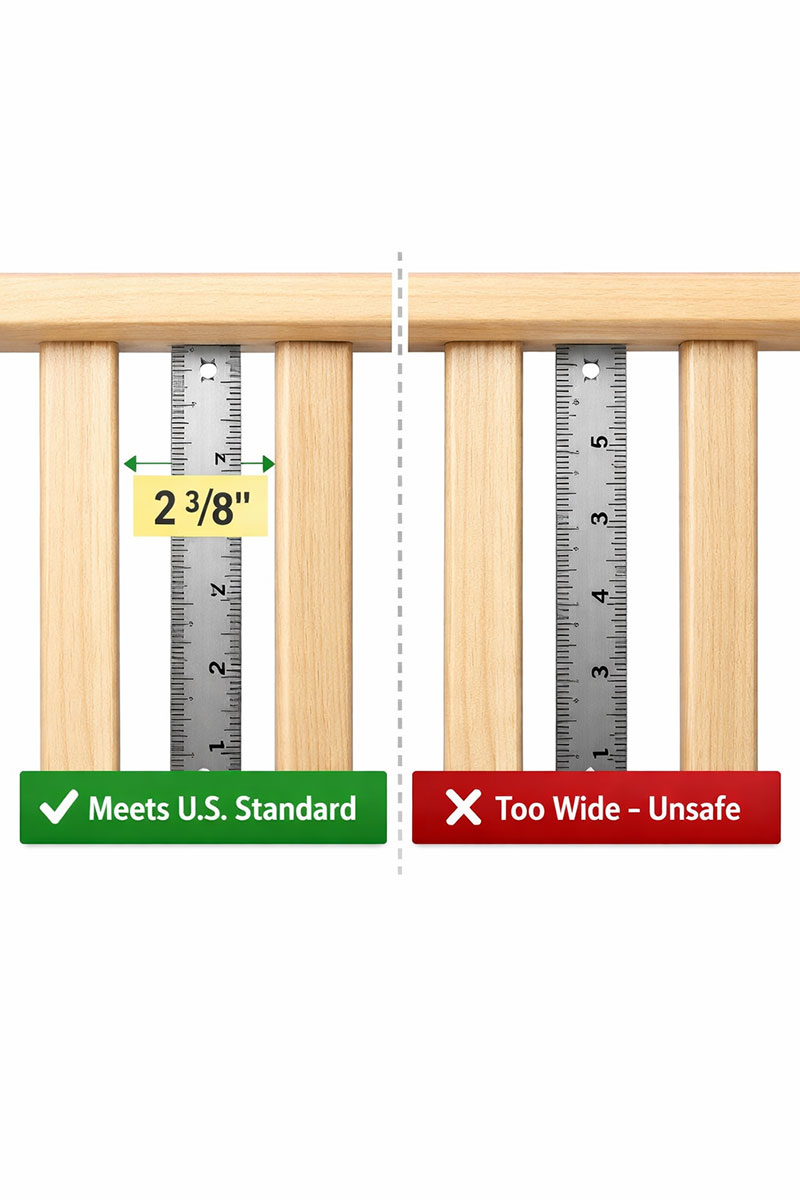
3-Step Spacing Check
1. Measure the widest gap between crib slats along the side rails.
2. Confirm the space is 2 3/8 inches or less at every point.
3. If any single gap exceeds that limit, treat the crib as non-compliant for infant sleep.
Next step: review crib mattress fit rules to confirm the second major spacing risk.
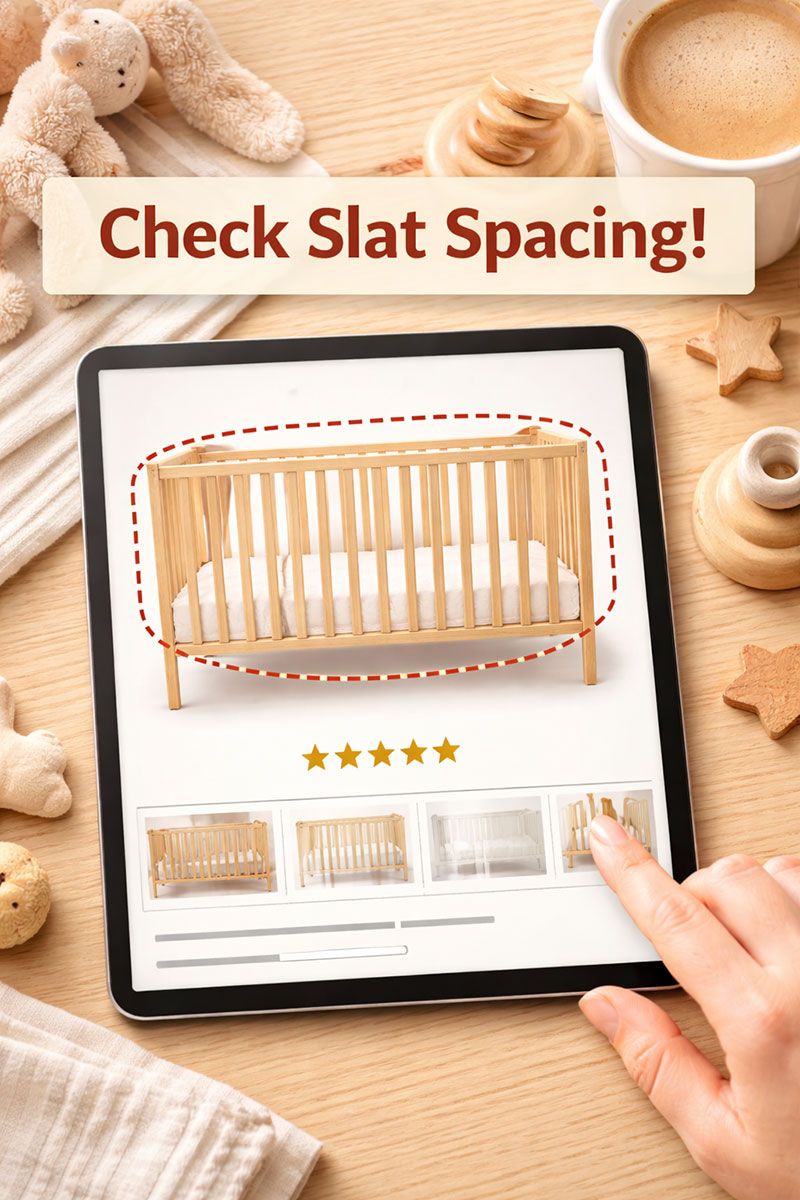
Visual Gap Guide
|
✔ SAFE ZONE Slats appear close and uniform. No visible wide openings. |
✖ RISK ZONE One slat looks farther apart. Gap visually stands out from the rest. |
Crib Slat Spacing Rules: the one number that matters
Crib slat spacing rules come down to one fixed limit: the space between crib slats must not exceed 2 3/8 inches (about 6 cm) under current crib safety standards in the United States. That single measurement determines whether the crib rails meet modern federal expectations. It does not vary by brand, finish, or style.
This page explains general safety standards and how to understand them in real nurseries, not product-specific instructions for any individual crib.
Crib slat spacing rules exist because crib side rails are a containment barrier. The vertical slats are meant to prevent a baby’s head or body from slipping through a gap. When the gap is wider than allowed, the barrier fails its purpose.
What to do next: confirm the widest gap along the side rails and decide whether the crib aligns with the standard before thinking about décor or bedding.
For a structured walkthrough that combines spacing, mattress fit, hardware, and stability in one place, use the step-by-step crib safety checklist to review the full setup systematically.
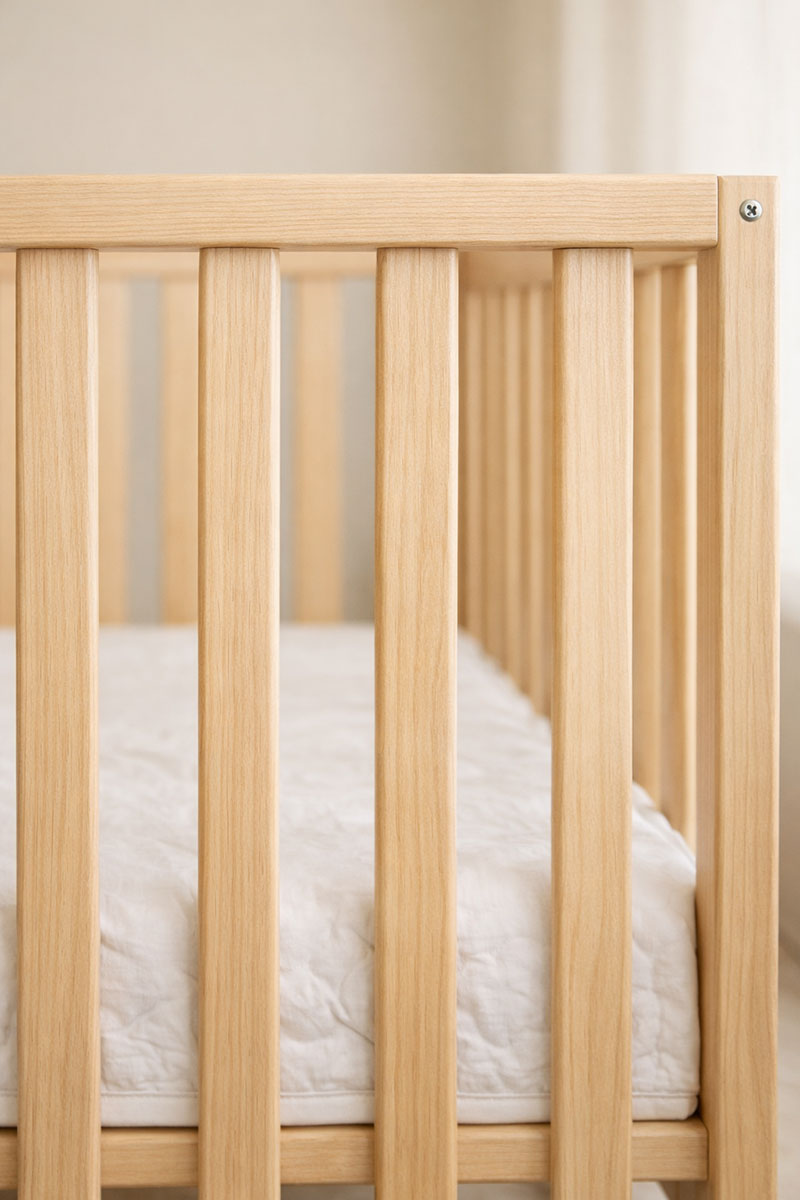
Quick Fit Confirmation
Within the spacing limit: every gap between crib slats measures 2 3/8 inches or less across the entire rail.
Exceeds the spacing limit: any single gap measures wider than 2 3/8 inches, even if the rest appear narrower.
If this sounds picky, it is—and for a reason.
Why Crib Slat Spacing Rules Exist
The purpose behind crib slat spacing rules is prevention of infant entrapment. A wide gap can allow a baby’s body to slip partway through the rail. When a baby cannot reposition independently, that situation can escalate quickly.
Spacing is a clear pass-or-fail measurement. There is no middle category. The widest gap anywhere along the crib side determines compliance.
For a full explanation of how this measurement fits into broader federal requirements, review the federal crib safety standards overview.
That’s the part that trips most parents up.
Sturdy construction and beautiful design do not override measurement. A crib can feel solid and still fall outside the crib slat spacing rules. Stability and spacing are separate safety factors.
For a broader review of related hazards, see crib safety violations parents miss. That guide connects slat spacing to mattress fit, hardware issues, and overall crib safety standards.
If You Only Remember One Thing
Crib slat spacing rules exist to prevent a baby from entering a gap that should never accept a baby’s body.
In most cases, a crib with slat spacing wider than 2 3/8 inches should not be used as a baby sleep space.
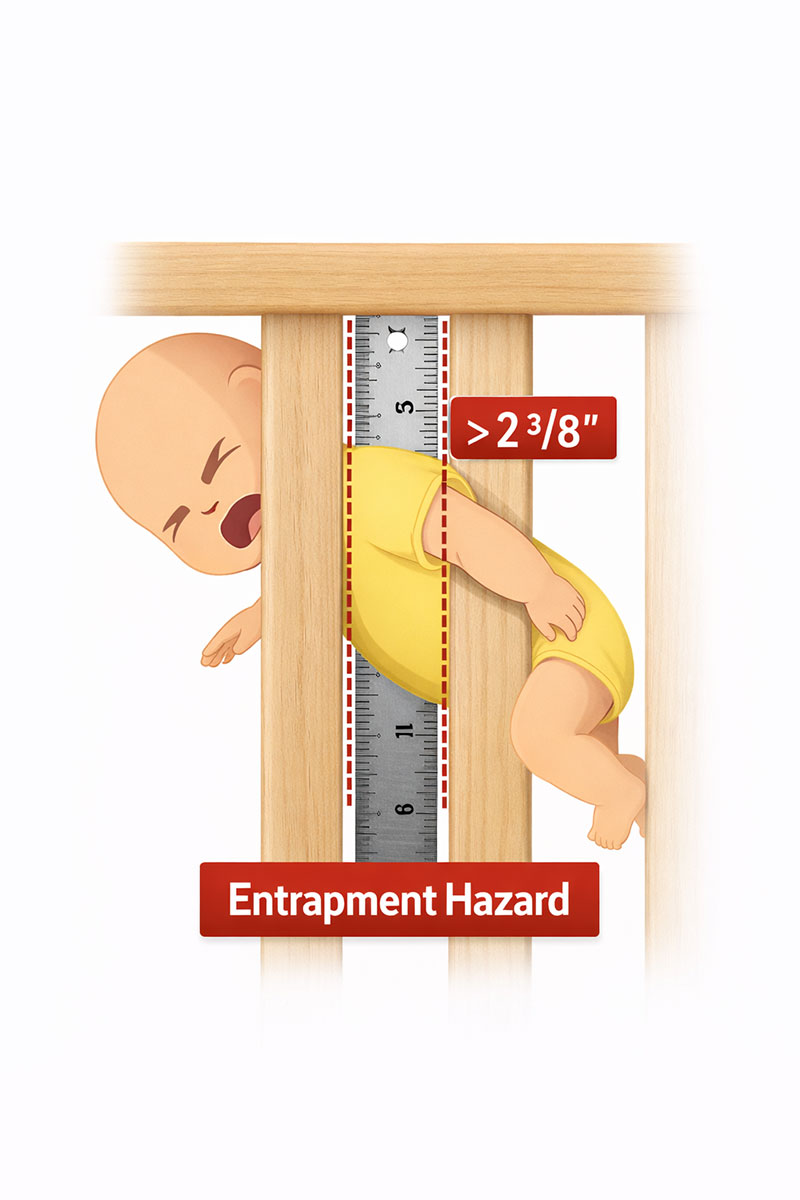
Common Spacing Problems
When crib slat spacing rules are not met, the risk is entrapment. A baby may slip partway between slats and become unable to reposition.
Uneven spacing matters. One compliant section does not cancel out one wide section. The single widest gap determines whether crib slat spacing rules are satisfied.
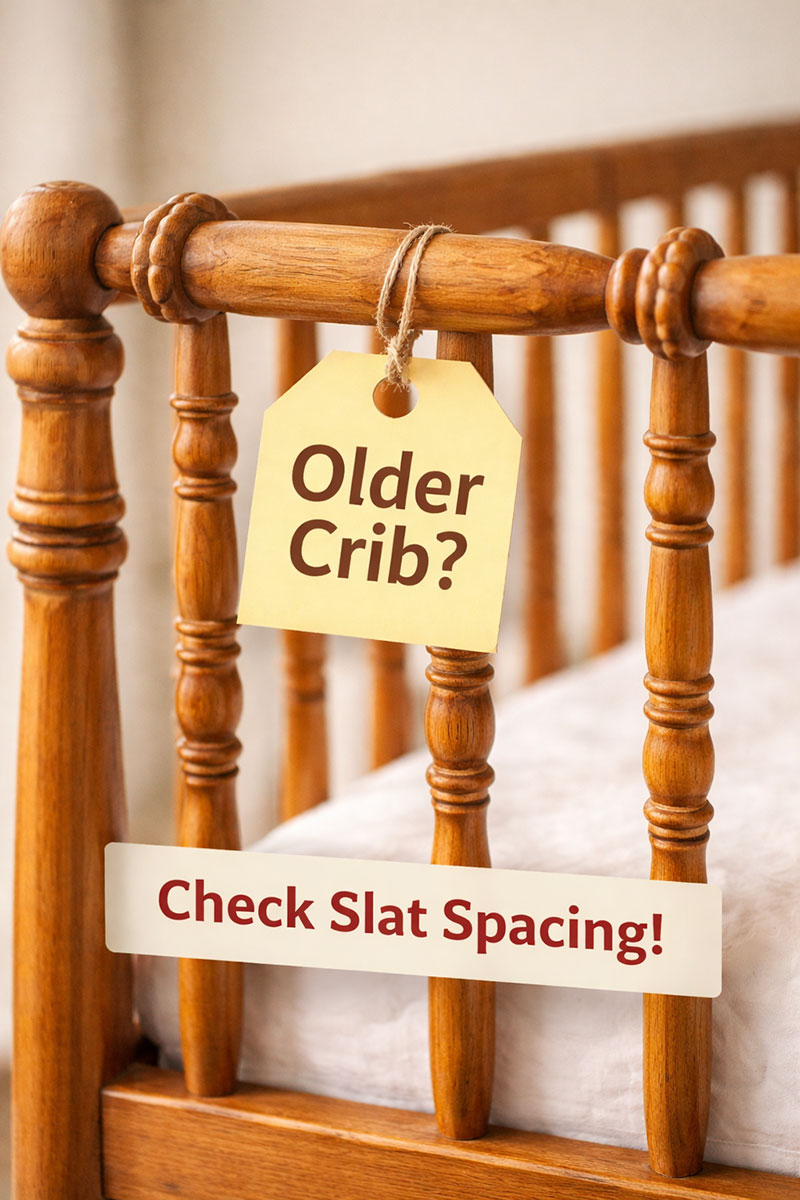
Older or Secondhand Cribs
Older cribs and secondhand cribs are more likely to fall outside modern crib slat spacing rules. Manuals may be missing. Standards may have changed.
For a closer look at the condition markers that signal a crib has progressed from minor spacing concerns to broader structural risk, review the key signs a crib becomes unsafe based on overall frame integrity.
Identify the model, confirm the gap measurement, and avoid improvised alterations or modifications.
Did I Choose the Right Crib?
The evaluation remains simple. Measure the widest gap between slats along the side rails. Compare that number to the 2 3/8-inch limit defined by crib slat spacing rules.
If the gap is within the limit everywhere, the rail spacing portion matches the spacing requirement. If any gap exceeds that limit, the crib does not match crib slat spacing rules.
Related search terms such as crib rail spacing, crib slat gap measurement, crib bar distance safety, and crib rail safety standard all refer back to the same measurement threshold.
Decision Paths
Path A: Confirm spacing compliance and continue evaluating mattress fit and recall status.
Path B: Determine that spacing exceeds the limit and treat the crib as unsuitable for infant sleep.
What Should Happen Next?
When crib slat spacing rules are met, continue reviewing mattress fit and overall crib stability. Mattress fit is explained separately in crib mattress fit rules, because spacing and mattress compression are different safety categories.
When spacing exceeds the standard, the protective decision is to treat that crib as decorative furniture or storage, not as a baby sleep environment.
For formal regulatory language and current crib requirements, consult the Consumer Product Safety Commission crib safety information.
More UBGI: Baby Cribs | Crib Safety Checklist | Crib Mattress Fit Rules | Crib Safety Violations Parents Miss
When you click on links to various merchants on this site and make a purchase, this may result in this site earning a commission. This does not affect the price you pay.

UBGI Gold Standard 2026
Reviewed under the site's
editorial checklist.
Photos, decorating ideas, party setups and reader submissions are shared for inspiration unless a page is specifically presented as a pattern, tutorial, reference guide or step-by-step project. Follow the instructions, measurements, safety guidance and manufacturer directions provided for the particular project or product.
About Jan | Contact | Baby Nursery Ideas (Blog) | Site Map | Privacy Policy | Disclosure Policy | Disclaimer | Affiliate Disclosure | Earnings Disclosure | Facebook | Pinterest
I am a participant in the Amazon Services LLC Associates Program, an affiliate advertising program designed to provide a means for us to earn fees by linking to Amazon. As an Amazon Associate I earn from qualifying purchases.
Copyright © 2006-2026. All Rights Reserved.