Cribs Twins: Layout Options and Standards Information
When choosing cribs twins, nursery planning often becomes more complex earlier than expected. Fitting two cribs into one room raises practical questions about space, timing, and how different layouts function in everyday homes. This page looks at common twin crib layouts as they appear in real nurseries, focusing on space use and placement patterns rather than idealized designs. The information reflects crib layout practices and standards commonly referenced in the United States.
This page provides descriptive layout information only and does not offer safety guidance, sleep recommendations, or product approval.
Cribs twins: common layout considerations
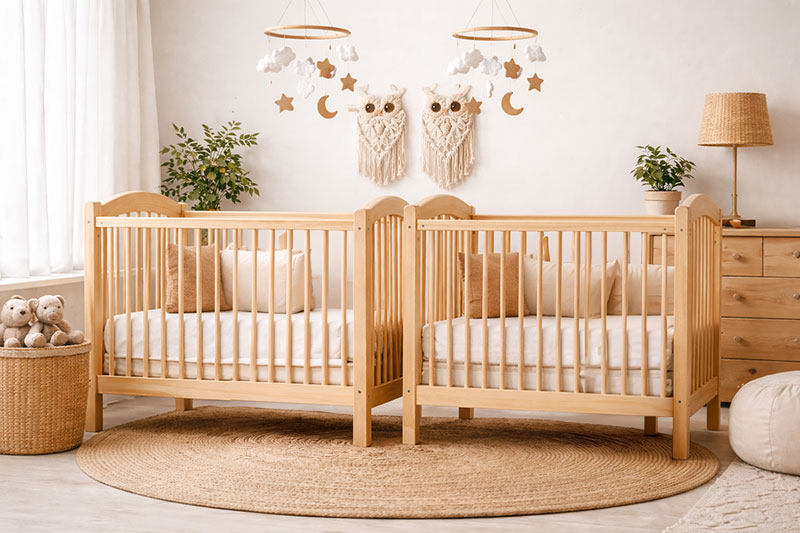
This section presents descriptive information related to cribs twins, including room size constraints, spacing patterns, and crib placement formats observed in shared nursery environments. The layouts shown across different rooms reflect variations in wall length, doorway placement, and furniture clearance. These configurations are presented using standards information for reference.
Room dimensions and usable wall length frequently influence crib placement. Floor area, door swing paths, closet access, and circulation space all affect how a layout appears once furniture is in place. In many rooms, the physical structure establishes clear limits on crib arrangement, regardless of visual style. A layout that appears open in diagrams can appear more compact once storage and seating elements are included.
Cribs twins: single-stage and phased layouts
Observed cribs twins layouts generally fall into two categories: complete initial arrangements and phased arrangements. In some rooms, a single crib is present early, with space reserved for a second placement. In other rooms, two cribs are positioned from the outset. Both configurations appear across real homes and are shaped primarily by room dimensions and furniture footprint.
Phased layouts often include a reserved wall section or open area where a second crib is positioned later. These rooms typically appear less dense at first, with later changes reflected as placement adjustments rather than full rearrangements. This pattern is commonly observed in rooms that also contain desks, beds, or storage furniture.
Spatial fit overview
Two full-size cribs with circulation space can occupy most of a small-to-medium room. In narrower rooms, the same configuration reduces clearance near drawers, closets, or windows. In wider rooms, a central aisle remains visible. These differences explain why cribs twins layouts vary across homes with similar square footage. Wall openings, window placement, and door alignment influence which walls can accommodate full-size crib frames.
Recurring twin nursery layout patterns
Several layout patterns appear repeatedly in twin nurseries. Side-by-side crib placement is common in wider rooms with extended wall space. L-shaped layouts appear when one wall is insufficient for two frames but two corners remain available. Some rooms maintain an open wall section early and fill it later, preserving circulation space in tighter environments.
Fixed room elements often limit layout flexibility. Radiators, outlets, window placement, and closet doors affect crib positioning. A layout that appears balanced in staged images can appear crowded in standard bedrooms. For this reason, multiple real-room configurations are often compared to understand how different placements function within fixed architectural boundaries.
Twin nursery layouts from real homes
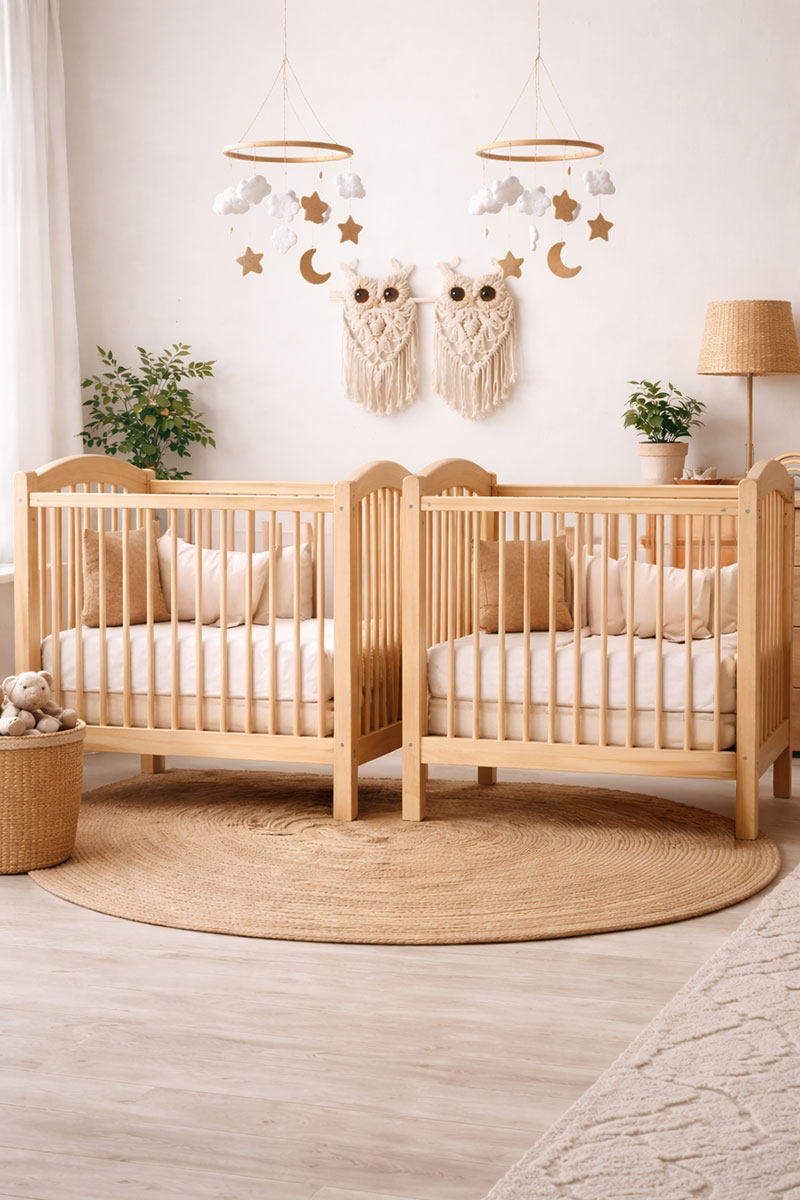
Open-center room pattern
Many twin nurseries retain an open central area rather than filling all wall space. This pattern appears in both smaller and larger rooms and supports clear movement paths. Visual density is reduced even when two cribs are present. In rooms with dressers, gliders, or changing surfaces, open center space keeps circulation routes visible. The same pattern appears in tighter rooms through fewer large pieces and increased vertical storage.
Matching and mixed crib formats
Matching cribs are frequently used in twin nurseries and create visual consistency along shared walls. In other rooms, mixed crib profiles appear where space constraints favor slimmer frames. In these cases, finishes and bedding colors remain coordinated. Differences between layouts are typically related to frame footprint and clearance rather than decorative elements.
Across both formats, clearance and spatial footprint remain the primary distinguishing factors. Slimmer frames reduce wall-to-wall density in narrower rooms. Matched frames present the room as a unified set. In both cases, layout geometry has greater visual impact than crib styling alone.
Baby crib styles and size formats
Second crib placement timing patterns
In phased layouts, a second crib is added once space use within the room changes. When a reserved location is already defined, the addition appears as a placement adjustment rather than a structural change. Rooms with planned second placements typically show minimal disruption to existing storage or circulation paths.
Additional room adjustments may occur alongside second placement, including minor furniture shifts. These changes are usually incremental and reflect the increased spatial footprint created by two full-size cribs.
Layout continuity note
Twin nursery layouts that preserve spacing flexibility tend to remain functional over time. Reserved space and clear access paths reduce the need for major rearrangements. These characteristics appear across both matching and mixed-crib formats and across a range of room sizes. In practice, flexibility is expressed through spacing rather than added furnishings.
Related twin nursery topics
After crib layout review, related pages commonly address decorative coordination and visual balance. These topics focus on repeated colors, surface treatments, and storage placement rather than additional large furniture.
Twin nursery themes and decor formats
Background material
For general background material related to twins and sleep environments, the National Sleep Foundation (For general background context only) provides descriptive information summarizing commonly referenced sleep-related topics.
Summary
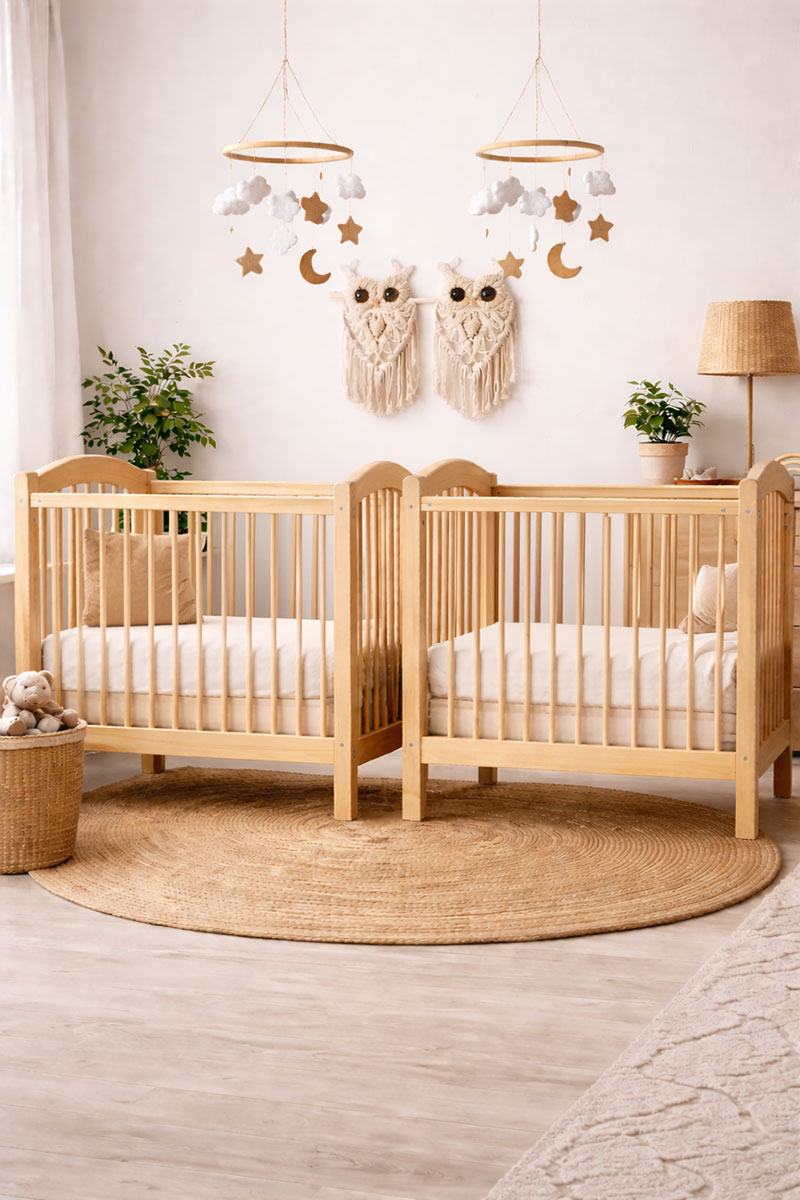
Cribs twins layouts appear across a wide range of room sizes and structural conditions. Differences reflect spacing limits, access points, and fixed architectural features such as doors and windows. Symmetrical layouts are common in images, while everyday rooms frequently emphasize open circulation paths. These patterns repeat consistently across observed twin nursery configurations.
Additional related content is available across Unique Baby Gear Ideas, including crib style references and twin nursery layout examples linked above.


About Jan | Contact | Baby Nursery Ideas (Blog) | Site Map | Privacy Policy | Disclosure Policy | Disclaimer | Affiliate Disclosure | Earnings Disclosure | Facebook | Pinterest
I am a participant in the Amazon Services LLC Associates Program, an affiliate advertising program designed to provide a means for us to earn fees by linking to Amazon. As an Amazon Associate I earn from qualifying purchases.
Copyright © 2006-2026. All Rights Reserved.