Fall Nursery Room Ideas for a Warm, Cozy Space for Baby
By Jan Bay
A fall nursery room is one of my favorites because you can bring in richer colors and cozy details. These fall nursery room ideas use rust, muted orange, moss green, warm brown and soft ivory, whether you want a few simple autumn accents or a complete pumpkin, woodland or farmhouse nursery theme.
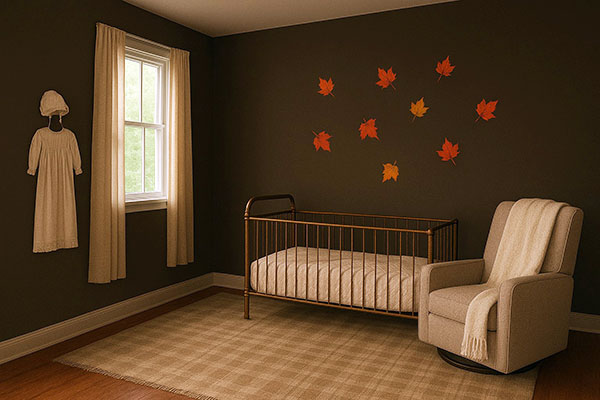
See fall nursery wall decor options here
Jump to:
Fall Nursery Room Ideas: Start with the Color Palette
You don't have to paint the nursery orange to make it feel like fall. In fact, I wouldn't. I prefer to start with a color that can stay in the room after the season changes, then bring in the deeper autumn shades through smaller pieces.
If your walls are already ivory, warm white, soft taupe or another neutral, you may not need to paint at all. Add one deeper anchor color such as moss green or warm brown, then choose one or two fall accents such as rust, cinnamon, muted pumpkin or mustard. That's plenty.
Some combinations I'd use are:
- Moss green + rust + warm ivory for a woodland nursery.
- Muted pumpkin + soft brown + ivory for a harvest look that doesn't feel too bright.
- Rust + muted peach + warm wood for a softer fall nursery.
- Olive + mustard + cream if you want autumn color without making pumpkins the theme.
- Cinnamon + taupe + dark wood for a more rustic room.
I would choose two or three of those colors and repeat them around the room rather than trying to use every shade associated with fall. A rust throw on the nursery chair, moss green curtains and a quilt that picks up both colors can do more than a room full of little seasonal decorations.
For another collection of warm seasonal palettes and forest-inspired rooms, browse my autumn baby nursery ideas.
If you're still deciding on the overall direction of the room, take a look through my baby nursery theme ideas before buying the smaller pieces. It's easier to add fall to a room that already has a clear decorating direction.
You can also see another approach to seasonal colors in this autumn color palette guide. I would still narrow the final nursery palette down to the colors you actually want to live with every day.
Pumpkin and Harvest Nursery Ideas Without Decorating the Whole Room in Pumpkins
Pumpkins are an easy way to make a nursery feel seasonal, but I wouldn't make every piece in the room pumpkin themed. Pick a few places where the motif will be noticed and let the colors carry the rest of the look.
A small pumpkin print on the wall, a fabric pumpkin on a high dresser or shelf and one handmade fall piece are enough to establish the theme. Then repeat pumpkin orange or rust in something practical such as curtains, a rug or the upholstery on the nursery chair.
If you like handmade decor, the raised pumpkin baby blanket pattern gives you a much more interesting fall accent than filling the room with purchased pumpkin signs. Display a handmade blanket over the back of a chair, on a quilt rack or folded in a basket when it isn't being used.
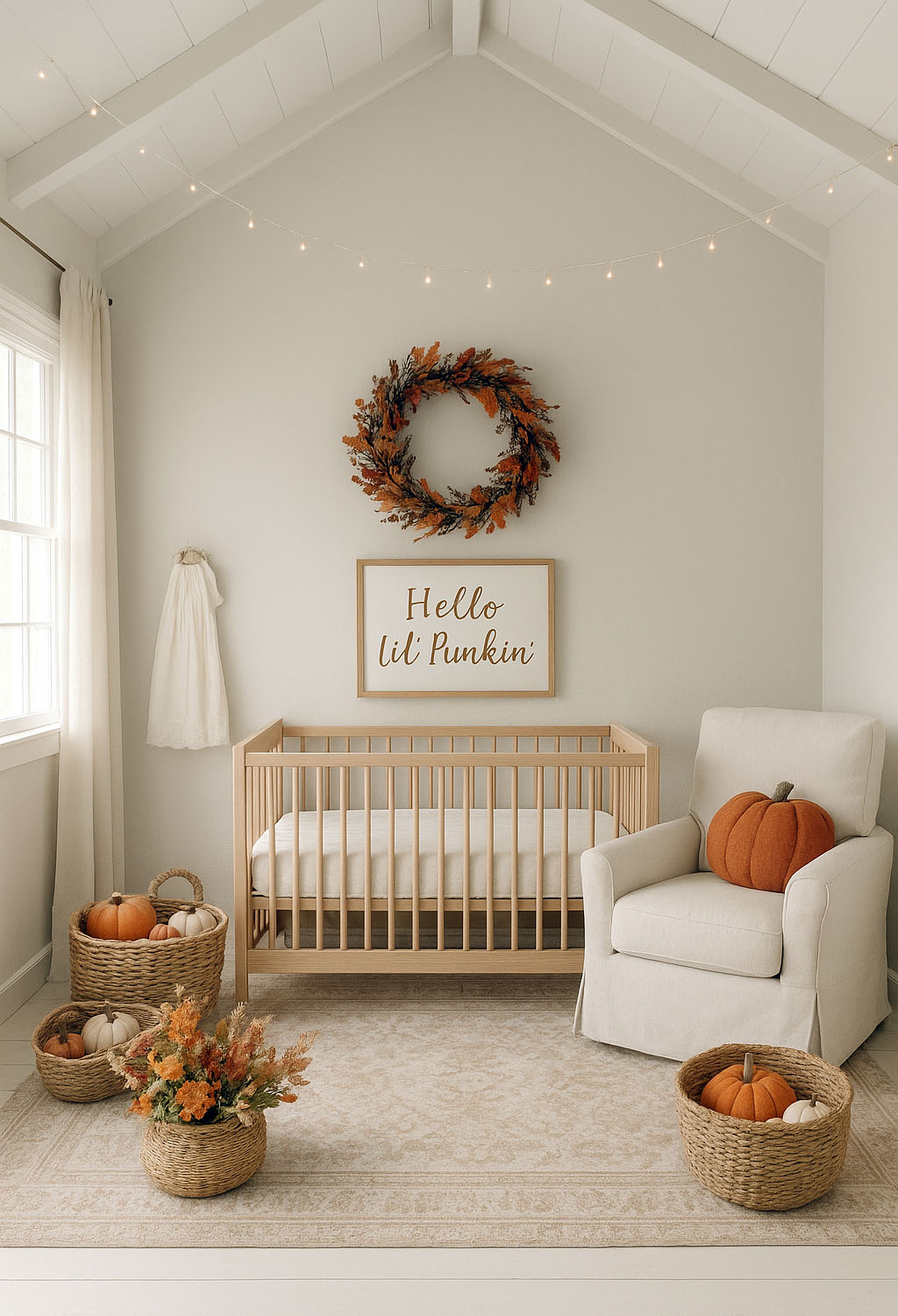
Shop fall nursery decor for a similar look here.
I also like the harvest theme because you can take it farther than pumpkins. Acorns, maple leaves, wheat tones and warm patchwork fabrics all fit without making the room look like Halloween decorations were moved into the nursery.
That makes the theme easier to use from early fall through Thanksgiving. When the season is over, remove the obvious pumpkins and leaves. The rust, green, brown and ivory pieces can stay.
Woodland Fall Nursery Ideas That Can Stay After Autumn
If you want a fall nursery that doesn't need to be taken apart in November, woodland is probably the direction I'd choose. Forest animals, warm wood and earthy colors already belong together, so you only need a few autumn details to shift the room into fall.
Start with the pieces that can stay all year. A wood crib or dresser, moss or olive green textiles, forest artwork and a few animal details give you the permanent room. Then add rust, acorns, maple leaves or pumpkins for the season.
Foxes, deer and bears work especially well because they don't lock you into one holiday. My Forest Friends nursery ideas show a softer version of this look, while the rustic woodland nursery ideas take it in a warmer, more woodsy direction.
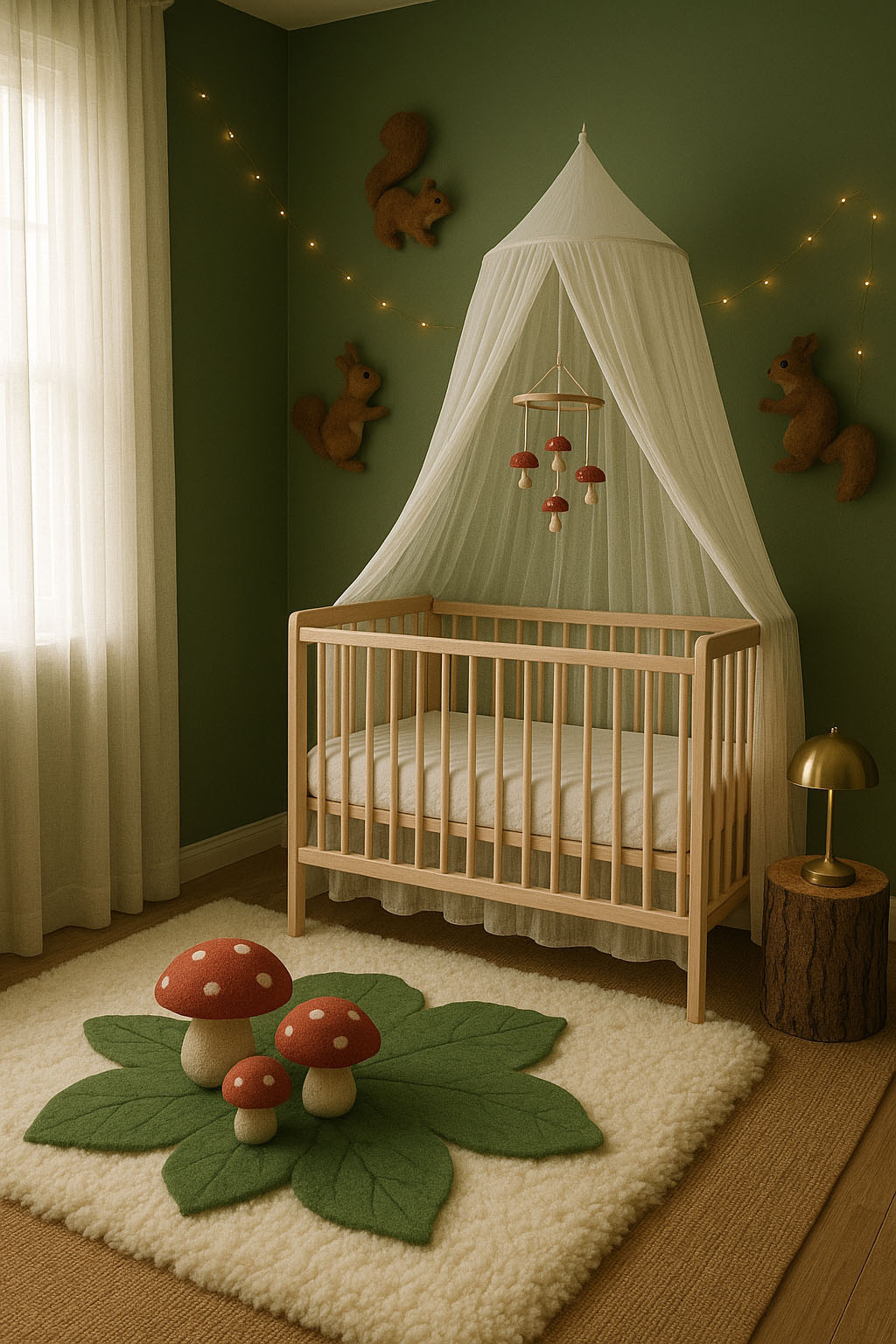
For the color balance, I'd keep the largest surfaces fairly quiet. Warm ivory walls, medium wood furniture and a moss green rug or curtain give you plenty of room to use rust and pumpkin as accents.
If the walls are already painted, don't assume you need to change them. A neutral nursery can become woodland very quickly with artwork, textiles and a few well-chosen details. The woodland animal nursery has more ideas for building the animal side of the theme.
I would also skip trying to represent every animal in the forest. Choose two or three, repeat them lightly, and stop there. The room will still read as woodland.
Cozy Fall Nursery Details and What I'd Put Where
The easiest way to add that cozy fall feeling is through the parts of the nursery that aren't the baby's sleep space. Think about the nursery chair, floor, windows, walls, dresser and storage baskets first.
I'd put the softer fall details in places like these:
- A rust, olive or brown washable rug on the floor.
- A textured throw over the back of the adult nursery chair.
- Warm-toned curtains that can stay after fall.
- A seasonal quilt folded on a quilt rack or displayed away from the crib.
- Fabric pumpkins, acorns or leaves on a high shelf or dresser where they are out of baby's reach.
- A basket holding extra diapers, burp cloths or other nursery supplies in one of the room's accent colors.
If you want a little October personality without turning the nursery into a Halloween room, a handmade piece can do it. The crochet ghost lovey pattern fits nicely with a friendly fall or Halloween display when it is used outside the baby's sleep space.
Lighting can change the room too. I prefer a warm table lamp or properly installed nursery light to strands of decorative lights around the crib. If you'd like something handmade for the room, my nursery lantern and star ceiling mobile tutorial has another decorative lighting idea.
Keep the crib itself simple. Decorative pillows, quilts, throws, stuffed items and other soft decor belong outside an infant's sleep space. The U.S. Consumer Product Safety Commission recommends a bare crib, bassinet or play yard with a fitted sheet only. You can read the current CPSC safe sleep guidance here.
That doesn't mean the whole nursery has to be bare. It just means I would put the decorating effort around the crib rather than inside it.
Farmhouse Fall Nursery Ideas With Warm Wood and Patchwork
A fall farmhouse nursery doesn't need mason jars, signs on every wall or a room full of distressed furniture. I'd take the parts of farmhouse style that work well in a nursery and leave the rest.
Warm wood furniture is a good starting point. Add ivory, rust, brown or muted olive fabrics, then bring in patchwork, checks or another simple traditional pattern. A darker wood dresser beside an ivory wall can give the room plenty of character without adding more decorative objects.
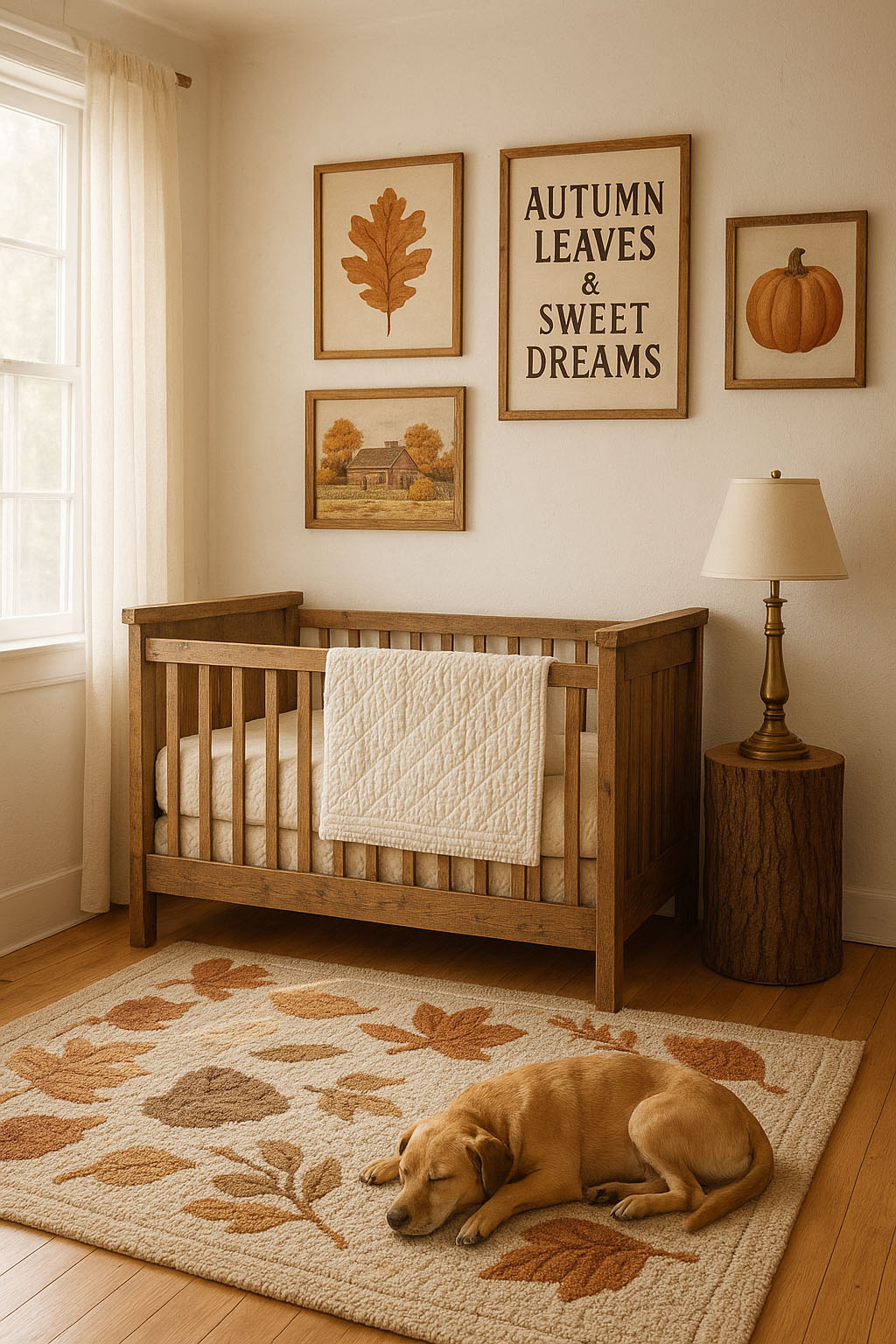
Patchwork is where I'd have some fun with this theme. The free Fall Harvest quilt pattern combines pumpkin, acorn and maple leaf blocks in one seasonal quilt. If you prefer a repeated motif, there is also a free pumpkin quilt pattern and a free acorn quilt pattern.
I would use a seasonal quilt as one of the main decorative pieces rather than adding several smaller farmhouse decorations around it. Fold it over a quilt rack, display it on the wall with a secure quilt-hanging system or keep it folded where it can be enjoyed outside the crib.
I would also be careful with the word vintage when it comes to the crib itself. Vintage-looking decor is one thing. An old crib is another. If you're considering a secondhand crib, check my guide to whether it's safe to buy a used baby crib before choosing one just because it fits the farmhouse look.
You can get the old-fashioned feeling through the dresser, quilt, colors, artwork and wood finishes without making the sleep space the vintage piece.
Fall Nursery Wall Decor That Doesn't Take Over the Room
Wall decor is where I'd add the most obvious seasonal pieces because it's easy to change later. You don't have to replace furniture, repaint the room or buy another set of nursery textiles when winter arrives.
Instead of scattering a dozen small fall signs around the nursery, choose one wall and give it a job. It might be the wall over the dresser, beside the nursery chair or another open area where the artwork can actually be seen.
A few directions that work well are:
- One larger maple leaf, woodland or harvest print.
- A group of two or three coordinating prints in rust, olive and warm brown.
- A securely displayed handmade quilt.
- A baby's name print with a subtle leaf or woodland detail.
- A moon and stars design using warmer fall colors instead of the usual blue nursery palette.
If you like that last direction, see the moon and stars nursery with fall colors. It's a good example of taking a nursery theme that isn't specifically seasonal and changing the mood through color.
I would keep the wall directly around the crib fairly simple and make sure anything mounted nearby is securely installed. Cords from monitors, window coverings and other nursery equipment also need to stay well out of a baby's reach.
The nice part about doing fall this way is that the room doesn't collapse when you remove the seasonal pieces. Take down the maple leaves or pumpkins and you still have a nursery with warm wood, good color and a clear decorating style.
How Much Fall Decor Does a Nursery Really Need?
Not much.
If I were putting one together, I'd choose the permanent nursery first and add fall on top of it. That might mean a woodland room with rust accents, a farmhouse nursery with a seasonal quilt, or a neutral room with pumpkin and maple leaf artwork for a few months.
A useful rule is to choose one fall color combination, one seasonal motif and one handmade or decorative focal piece. Repeat the colors a few times around the room and you're done.
You don't need pumpkin bedding, pumpkin curtains, pumpkin wall art, pumpkin pillows and pumpkin accessories all in the same nursery. One or two obvious references to the season will get the idea across.
And if you like changing the room as the seasons move along, keep an eye on the Baby Room Ideas Blog. That's where I add new nursery designs, decorating ideas and seasonal room inspiration.
Fall Nursery Decorating Questions
What are the best colors for a fall nursery?
Rust, muted pumpkin, moss or olive green, warm brown, cinnamon, mustard and warm ivory all work well. I would choose two or three rather than trying to use the whole autumn palette in one room.
Can I decorate a nursery for fall without using pumpkins?
Absolutely. Use maple leaves, acorns, woodland animals, warm wood, patchwork or simply a fall color palette. A room can feel like autumn without having a single pumpkin in it.
How can I make fall nursery decor last beyond the season?
Spend the money on pieces that aren't specifically seasonal, such as the rug, curtains, furniture and storage. Use pumpkins, leaves and other obvious fall motifs on smaller pieces that are easy to put away later.
Can I put a fall quilt or decorative pillow in the crib?
No. Keep quilts, blankets, pillows, stuffed items and other soft decor out of an infant's sleep space. Display handmade fall pieces elsewhere in the nursery and keep the crib bare except for the fitted sheet.
When you click on links to various merchants on this site and make a purchase, this may result in this site earning a commission. This does not affect the price you pay.

UBGI Gold Standard 2026
Reviewed under the site's
editorial checklist.
Photos, decorating ideas, party setups and reader submissions are shared for inspiration unless a page is specifically presented as a pattern, tutorial, reference guide or step-by-step project. Follow the instructions, measurements, safety guidance and manufacturer directions provided for the particular project or product.
About Jan | Contact | Baby Nursery Ideas (Blog) | Site Map | Privacy Policy | Disclosure Policy | Disclaimer | Affiliate Disclosure | Earnings Disclosure | Facebook | Pinterest
I am a participant in the Amazon Services LLC Associates Program, an affiliate advertising program designed to provide a means for us to earn fees by linking to Amazon. As an Amazon Associate I earn from qualifying purchases.
Copyright © 2006-2026. All Rights Reserved.