Free Crochet Diaper Cover Patterns for Babies
By Jan Bay
These free crochet diaper cover patterns bring my baby diaper cover projects together in one place, including a simple multi-size cover for newborns through 12 months, ruffled designs and a tutu-style cover for supervised baby photos and handmade gift sets. These are decorative crochet baby accessories rather than waterproof cloth diaper covers.
Explore More Free Crochet Baby Patterns
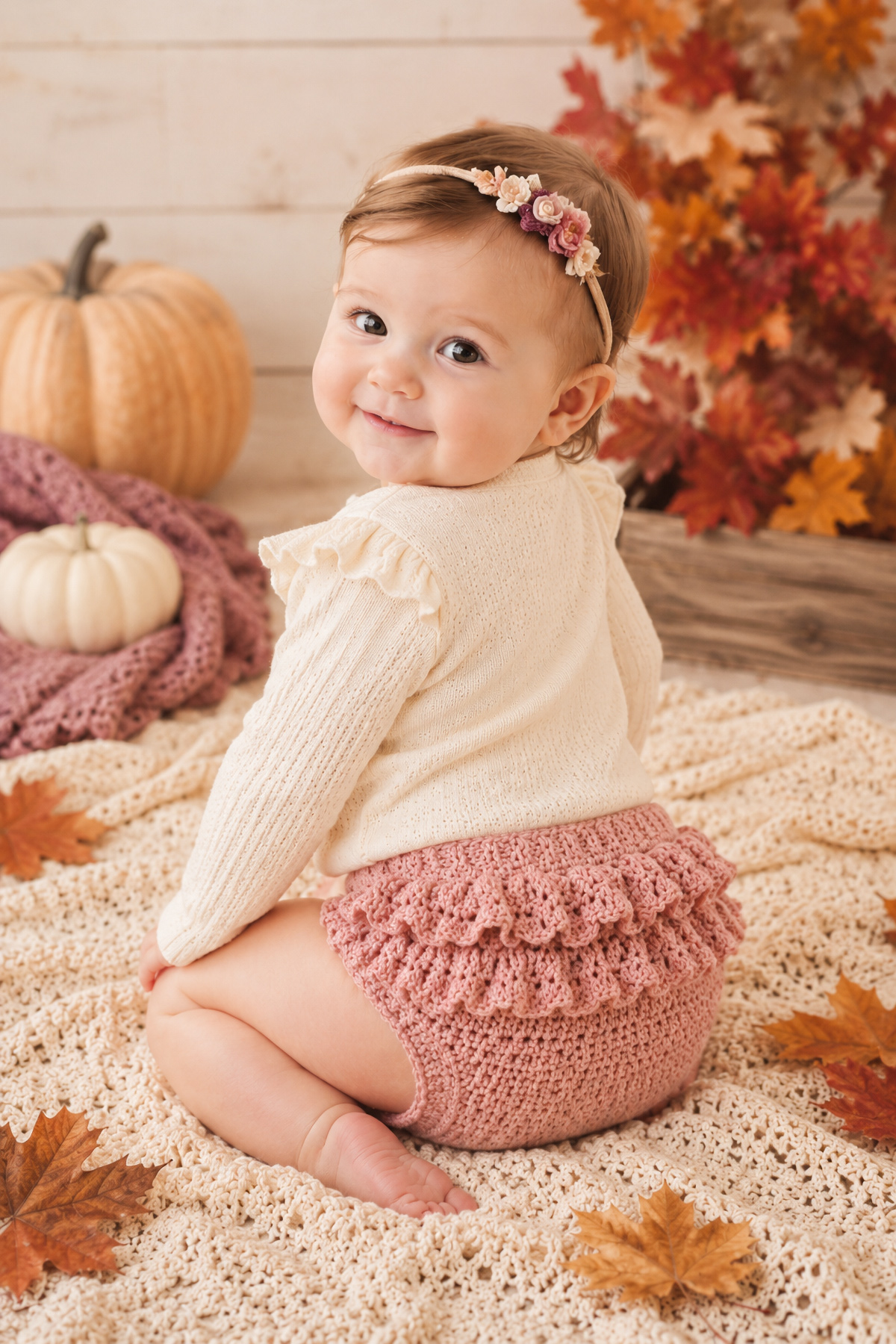
Soft Baby Yarn for Crochet Diaper Covers
Jump to:
Free Crochet Diaper Cover Patterns for Babies: Start Here
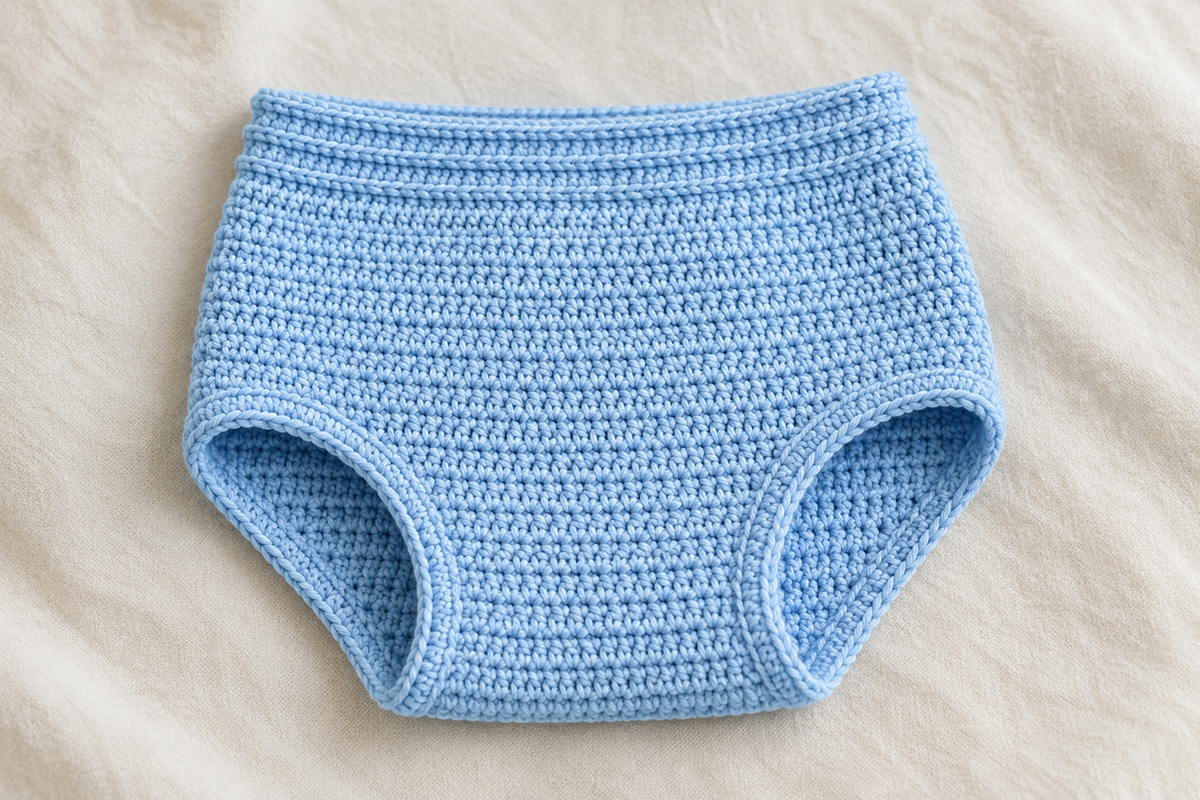
If you want one diaper cover that gives you the best place to start, use my free crochet diaper cover pattern first. It is the plain, basic version in this collection, with sizing from newborn through 12 months. Once you have the fit you want, you can decide whether to keep it simple or move on to ruffles and a tutu-style cover.
I like that order because the fit needs to be right before you add any decoration. Get the waistband, rise and leg openings right first. Several rows of ruffles won't fix a cover that's already too large or too short.
The basic pattern includes separate instructions for newborn/0–3 months, 3–6 months and 6–12 months, along with finished measurements and stitch counts for each size. Check the gauge before you start, especially if you're making the cover for a particular baby rather than as a general baby shower gift.
Which diaper cover should you make?
Basic diaper cover: Start here if you want the simplest construction, need several baby sizes or plan to add your own small embellishment later.
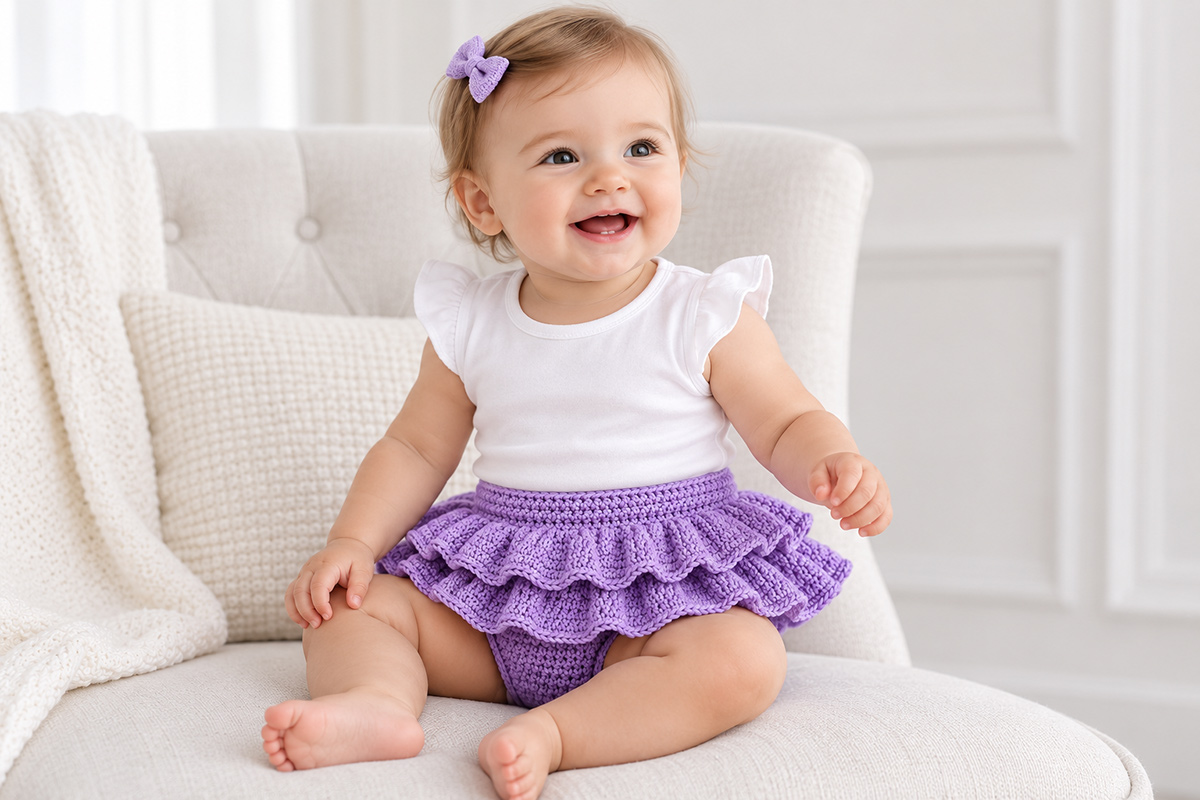
Ruffled diaper cover: Choose this one when the ruffles are the main feature and you want a more decorative cover for supervised baby photos or a special gift set.
Tutu diaper cover: Choose the tutu version when you want a comfortable photo-prop outfit with much more volume around the back of the cover. It is the most decorative of the three, so I would keep the rest of the outfit simple.
You don't need three completely different diaper-cover constructions just to get three different looks. A nicely shaped basic cover gives us the useful starting point. The ruffled and tutu patterns can then concentrate on the details that actually make those versions different and a little fancier.
If you're putting together a coordinated baby gift, the cover can also be paired with one of my free baby crochet hat patterns or a pair from the crochet baby booties patterns collection. I would repeat the same yarn color in two pieces rather than trying to load the set with a lot of different colors at once.
Crochet Diaper Cover Sizes from Newborn to 12 Months
Baby age is useful for choosing a starting size, but I would not rely on age alone if you can get an actual measurement. Two babies the same age can have very different waist, hip and thigh measurements, and the diaper underneath changes the fit too.
The basic pattern in this collection is divided into newborn/0–3 months, 3–6 months and 6–12 months. Those size names make the pattern easier to follow, but the finished measurements are what really matter.
Newborn vs. 0–3 Month Crochet Diaper Cover Sizing
In this basic pattern, newborn and 0–3 months are one combined size rather than two separate stitch counts. That works as a useful starting range, but a very small newborn and a baby nearing three months may not have the same measurements. If you are making the cover for a particular baby, compare the finished waist and rise below with measurements taken over the diaper the baby will actually wear.
Do not try to make the combined newborn/0–3 month size fit a smaller baby simply by pulling the waistband tighter. The waist, rise, crotch and leg openings need to work together. If the finished measurements are not suitable for the baby, the shaping needs more attention than just a tighter waist.
Crochet Diaper Cover Size Chart
| Pattern Size | Expected Relaxed Waist | Full Rise | Crotch Width |
|---|---|---|---|
| Newborn / 0–3 months | About 15 1/2 in. | About 14 1/2 in. | About 3 1/8 in. |
| 3–6 months | About 17 1/4 in. | About 16 in. | About 3 3/8 in. |
| 6–12 months | About 18 7/8 in. | About 17 5/8 in. | About 3 3/4 in. |
These are expected finished measurements calculated from the gauge and stitch counts in the basic diaper cover pattern. They are not measurements taken from a physically test-crocheted sample, so checking your gauge before relying on the finished size matters.
A cover worn over a trim disposable diaper does not need the same amount of room as one worn over a bulky cloth diaper. If you're using a cloth diaper that requires a separate waterproof outer cover, don't forget that this crochet diaper cover does not replace it. If you are making one for cloth-diaper use, measure with the diaper and waterproof cover on. Do not assume that moving up one age size automatically gives you the right proportions.
I would also avoid making the waistband extremely tight in an attempt to keep the cover in place. The pattern should fit because the waist, rise and leg shaping work together, not because the waistband has been pulled tight. Cinching a baby's tummy doesn't make for a comfortable wearing experience. That is never a good idea.
The finished-size chart on the individual pattern page gives you the actual numbers to compare before you begin. That is the chart I would use rather than choosing entirely by the baby's age.
Ruffled Crochet Diaper Cover Pattern
If you want more decoration without turning the cover into a costume, a ruffled diaper cover is the next pattern I would choose. The ruffles add most of the interest across the back while the front can stay relatively simple.
My ruffled crochet diaper cover pattern has its own instructions because the ruffle placement changes the finished cover enough to deserve a separate pattern. I didn't want it to be just a paragraph telling you to add ruffles to the basic cover.
The useful decision is how many ruffles you actually want. Several closely spaced rows create a very full back. Fewer rows give you the same idea without making the cover bulky. For a baby photo outfit, I prefer to let the ruffles be the decorative feature and leave the waistband and front uncluttered.
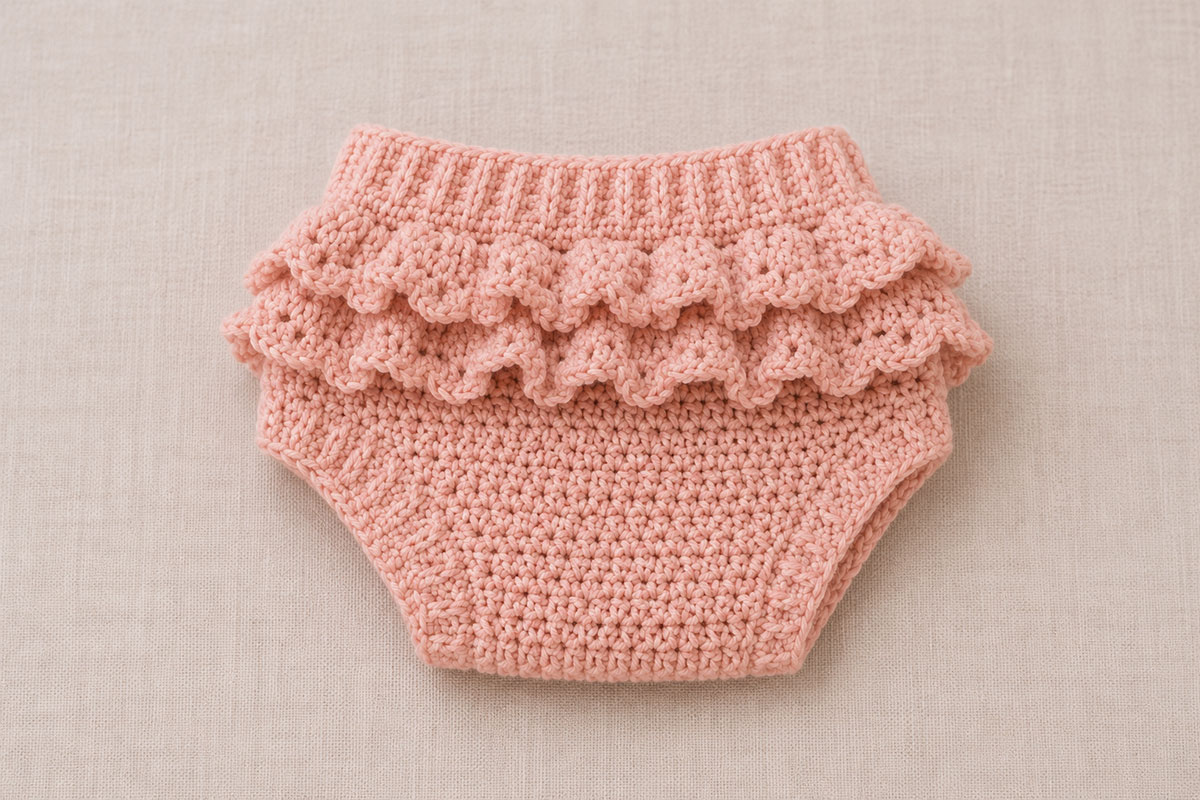
Ruffles also affect how the finished cover behaves when the baby is lying down. Very thick embellishment across the entire back adds unnecessary bulk, so I would keep the ruffle layers soft and flexible rather than making them stiff or heavily packed.
Crochet Tutu Diaper Cover Pattern
The crochet tutu diaper cover pattern is the dressier option in this collection. Instead of making the crochet itself extremely elaborate, the idea is to start with a fitted diaper cover and add the tutu detail around it.
This one makes the most sense as a supervised photo outfit. A tutu adds volume around the waist and seat, so I would not treat it as an everyday baby garment or something intended for sleep.
You can make the tutu effect very full, but you do not have to. A shorter, lighter layer keeps the diaper cover visible and makes the outfit easier to handle. If you add a coordinating hat or headband, I would keep that piece simple. The tutu has already done the decorating.
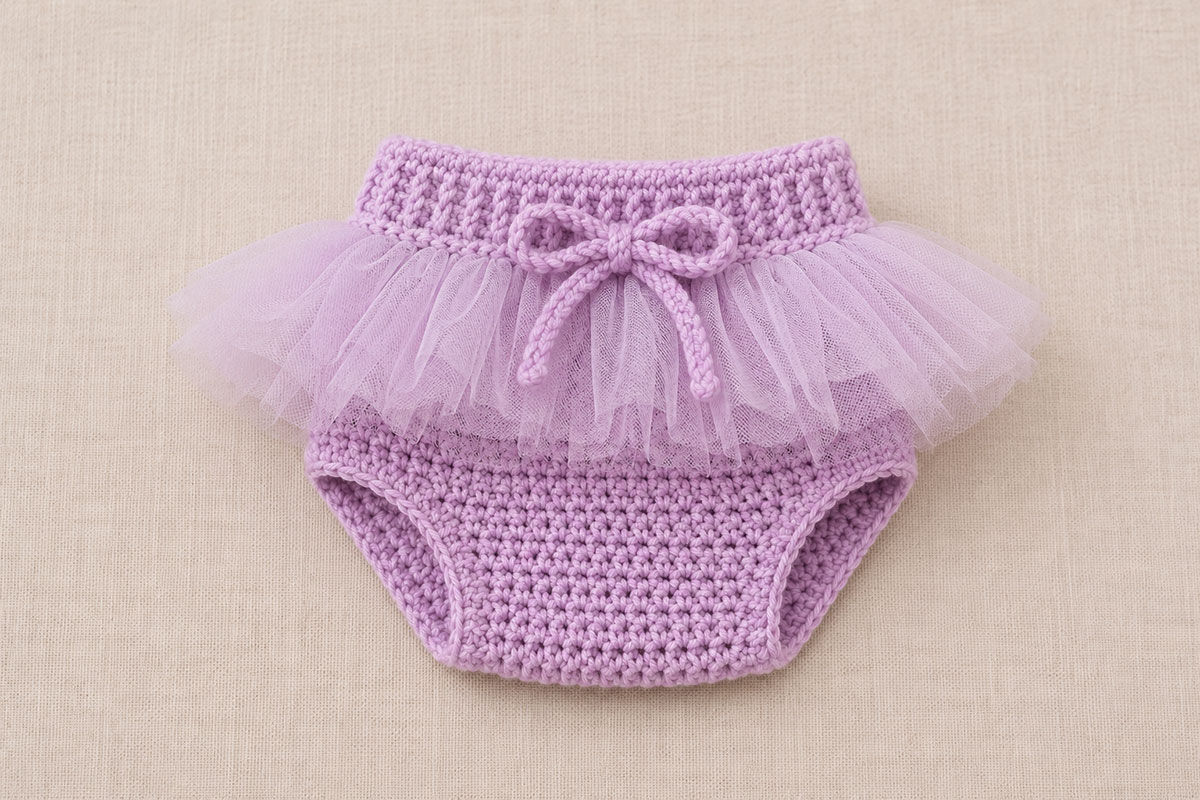
For the actual construction, use the dedicated tutu pattern rather than trying to guess placement from a finished picture. The base cover still needs the same sensible fit through the waist, rise and leg openings before anything decorative is attached.
Best Yarn and Hook Size for Crochet Diaper Covers
I would choose a smooth, soft yarn that gives you clear stitches without making the diaper cover stiff. You need enough structure for the waistband and leg openings to hold their shape, but this is still something being worn against baby clothing and close to the skin.
For most of these patterns, a smooth light worsted or worsted weight yarn is the practical choice. It is easy to see while you work, gives the cover enough body and is available in plenty of washable baby-friendly fibers.
For the basic multi-size diaper cover, use a smooth worsted weight number 4 yarn with a US H/8, 5 mm crochet hook, or the hook size needed to match the pattern gauge of 14 half double crochet stitches and 10 rows in 4 inches. The gauge matters more than the number printed on the hook. If you change yarn, adjust the hook until the gauge is correct before making the cover.
The ruffled and tutu diaper covers have their own materials and gauge instructions, so use the hook specified on the individual pattern page when making one of those versions rather than assuming every cover in this collection uses the same hook.
If you substitute a much heavier yarn, the cover can become bulky very quickly. A much thinner yarn changes both the finished measurements and the amount of coverage unless you recalculate the stitch counts. I would use the yarn weight specified on the individual pattern the first time you make it.
The Craft Yarn Council yarn weight system is useful if you need to compare the numbered yarn weights on different labels.
Texture matters too. Fuzzy yarn can hide shaping and make it harder to see where a waistband or leg opening actually begins. Save the novelty yarn for a small decorative detail if you really want to use it. The main cover is easier to make and easier to size in a smooth yarn.
For washable baby projects, check the yarn label before choosing a fiber. A pretty yarn that requires special handling may not be the best choice for something likely to be used during a baby photo session or included in a practical gift set.
Crochet Diaper Cover Fit and Measurements
A diaper cover has three measurements I would pay the closest attention to: the waist, the rise and the leg openings. If those three are sensible, the rest of the shaping has a much better chance of sitting where it should.
Waist
Measure around the baby where the top of the diaper cover will sit. If the waistband has stretch, the finished cover can be somewhat smaller than the body measurement, but it should not depend on being stretched hard to fit.
Rise
The rise runs from the front waist, down through the crotch and up to the back waist. A cover with too little rise will pull down at the waist or cut into the legs. Too much rise leaves extra fabric through the crotch and seat.
If you are measuring for a specific baby, take the rise measurement over the diaper the cover will actually be worn with. That gives you a much more useful number than measuring over bare clothing.
Leg Openings
The leg openings should sit close enough to keep the cover in place without digging into the upper thighs. This is an area where simply adding or removing stitches without checking the rest of the shaping can create a problem, because the front, back and crotch all meet here.
Seat Room
The back needs enough width and depth to go over the diaper without pulling the waistband downward. Cloth diapers can add considerably more bulk than a trim disposable diaper, so measure the actual combination you plan to cover whenever possible.
Before you choose a size
Measure the waist over the diaper.
Measure the full rise from front waist to back waist.
Check the upper thigh where the leg opening will sit.
Then compare those measurements with the finished measurements given on the individual pattern page.
How to Adjust Crochet Diaper Cover Fit
The basic diaper cover is not designed with buttons, drawstrings or elastic cord for tightening the waist. The safest way to adjust the fit is to start with the correct gauge, choose the size that gives the baby enough rise and seat room, and compare the finished measurements with measurements taken over the diaper.
If the cover is coming out noticeably too large or too small, check the gauge before changing stitch counts. A different hook size may be all that is needed to bring your crochet back to the stated gauge.
If the baby falls between sizes, I would give priority to enough rise, seat room and comfortable leg openings rather than choosing the smaller size just for a tighter waist. Do not resize the whole cover by adding or removing a few stitches only at the waistband. The waist, crotch width, rise and leg shaping work together, so changing only one part can create a different fit problem somewhere else.
If you are making the cover as a gift and cannot measure the baby, use the age range as a practical starting point and avoid making the fit extremely snug. A little room is more useful than a cover that cannot be worn at all.
Crochet Diaper Covers for Baby Photos
A crochet diaper cover can make a very simple baby photo outfit because the handmade texture does most of the work. You do not need a pile of accessories around it.
For a newborn photo, I would use the basic cover with one coordinating piece, such as a simple crochet hat. For a more decorative setup, choose either the ruffled cover or the tutu cover and stop there. Adding a large hat, heavy ruffles, a tutu and several other accessories at once can hide the actual crochet work.
Keep photo use supervised and remove the decorative outfit when the session is finished. These crochet covers are not sleepwear and they are not substitutes for a waterproof cloth diaper cover.
That distinction is worth keeping clear. A decorative crochet diaper cover is made to cover the diaper and complete an outfit. A functional cloth-diaper cover is designed to manage moisture. Those are two different jobs.
If you are looking for the practical cloth-diaper side of the subject rather than a decorative crochet cover, follow the instructions for the particular diaper system you are using. This crochet pattern collection is about decorative diaper covers and photo outfits, not waterproof diapering covers.
Putting Together a Crochet Diaper Cover Set
If you want to turn one of these covers into a baby gift set, keep the pieces related. A diaper cover, a small hat and a pair of booties are plenty.
Use the same yarn family or repeat one main color so the pieces look intentional together. They do not need matching decorations on every surface. If the diaper cover has several rows of ruffles, for example, I would make the hat plain rather than adding another large ruffle treatment.
You can browse the free baby crochet patterns collection if you want another project to coordinate with the cover.
For a newborn gift, I would also pay attention to season. A heavy hat plus booties plus a thick diaper cover may be more than you need for warm-weather photos. The pieces can coordinate without all being worn at once.
Which Crochet Diaper Cover Pattern Should You Make First?
If you have not made a diaper cover before, start with the basic pattern. It gives you the cleanest way to understand the waist, crotch shaping, rise and leg openings without having ruffles or tutu details in the way.
Once the fit makes sense, the decorative versions are much easier choices.
Choose the basic cover if sizing and simplicity matter most.
Choose the ruffled cover if you want decoration concentrated across the back.
Choose the tutu cover if you are making a fuller supervised photo outfit.
You can stop with one. There is no need to make every version before you know which style you actually like.
More Free Baby Crochet Patterns
The diaper cover collection is only one part of my baby crochet patterns. You can also make crochet baby booties, choose from the free baby crochet hat patterns, or go back to the main free baby crochet patterns page to browse the full collection.
If the diaper cover is the project you came for, I would start with the basic multi-size pattern and get the fit settled first. Then the ruffles and tutu are easy directions to explore next.
When you click on links to various merchants on this site and make a purchase, this may result in this site earning a commission. This does not affect the price you pay.

UBGI Gold Standard 2026
Reviewed under the site's
editorial checklist.
Photos, decorating ideas, party setups and reader submissions are shared for inspiration unless a page is specifically presented as a pattern, tutorial, reference guide or step-by-step project. Follow the instructions, measurements, safety guidance and manufacturer directions provided for the particular project or product.
About Jan | Contact | Baby Nursery Ideas (Blog) | Site Map | Privacy Policy | Disclosure Policy | Disclaimer | Affiliate Disclosure | Earnings Disclosure | Facebook | Pinterest
I am a participant in the Amazon Services LLC Associates Program, an affiliate advertising program designed to provide a means for us to earn fees by linking to Amazon. As an Amazon Associate I earn from qualifying purchases.
Copyright © 2006-2026. All Rights Reserved.