Waterproof Crib Mattress Protector Guide: Keeping Baby’s Mattress Fresh and Dry
A good waterproof crib mattress protector choice is essential to keeping baby’s mattress fresh and dry by blocking leaks, spit-up, and everyday moisture before it soaks in. The best options fit snugly, stay quiet under the sheet, and protect without changing the firmness of the sleep surface.
More crib mattress help:
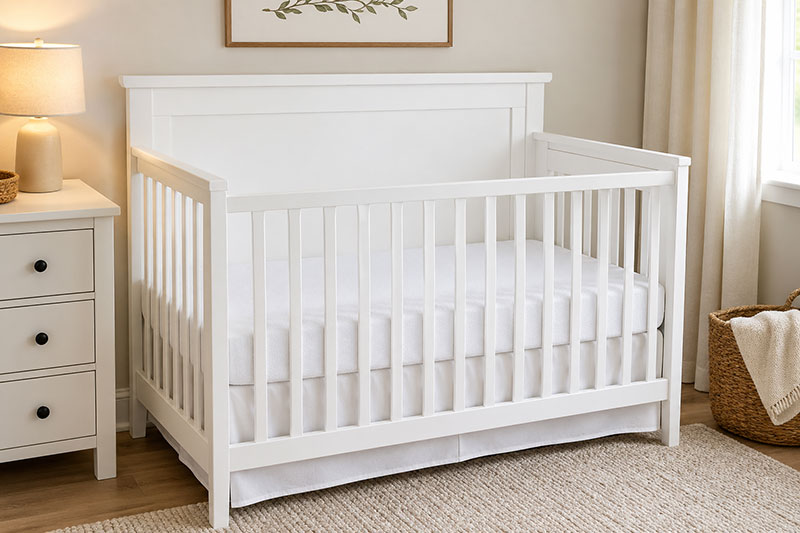
See waterproof crib mattress protector options here
Quick crib mattress protector help:
What a waterproof crib mattress protector does
The fit detail that matters most
Protector, pad, and cover differences
What a Waterproof Crib Mattress Protector Actually Does
Quick answer: A waterproof crib mattress protector is a fitted layer placed under the crib sheet that blocks leaks, spit-up, and moisture so they do not soak into the mattress, while still keeping the sleep surface firm and flat.
It usually starts with a moment most people do not expect. The sheet looks clean, the crib is set up right, and then one small overnight leak leaves a damp spot that does not fully disappear the next day. That is when the role of a waterproof layer becomes clear.
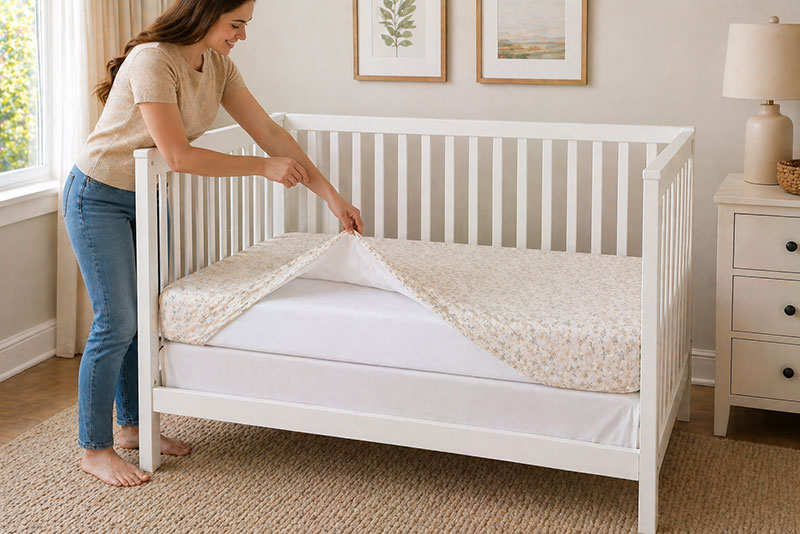
A proper setup keeps everything simple. Mattress on the frame, protector pulled tight over it, then a fitted sheet. When done right, the surface still looks flat from edge to edge with no bunching or shifting.
For parents comparing whether protection should come from the mattress itself or a separate fitted layer, my crib mattress with waterproof protection guide explains the difference before you buy.
For a full overview of how the mattress itself fits into the setup, see crib mattress guide.
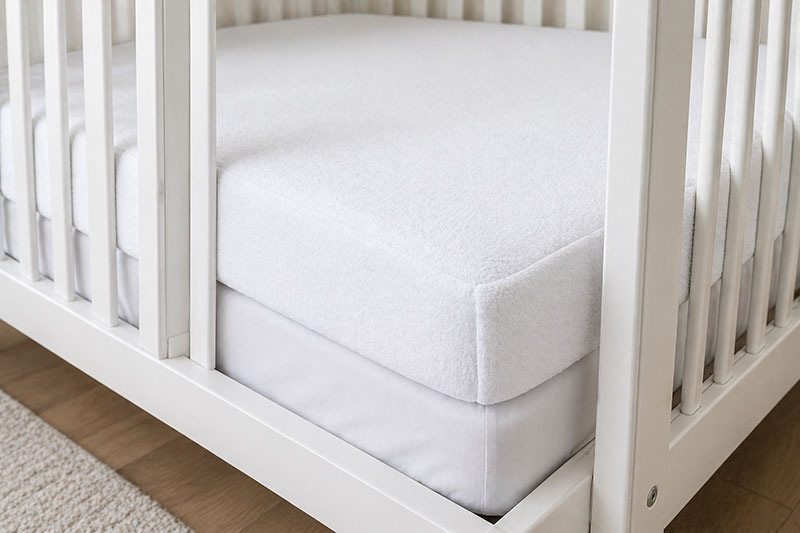
The Fit Detail That Changes Everything
The fit determines whether the protector helps or creates problems.
A waterproof crib mattress protector should stay smooth once the sheet is on. If the corners pull loose or the middle wrinkles when pressure is applied, the layer underneath is interfering with the sleep surface.
I’ve learned this shows up after the crib is made, not before. A protector can look fine while putting it on, but once the sheet is stretched across, small ridges appear and the surface stops feeling even.
That matters because babies sleep directly on that surface. The protector should not change firmness or create raised areas.
For a deeper look at mattress fit and sizing, see crib mattress fit.
U.S. safe sleep guidance recommends a firm, flat surface with no loose layers. More details can be found at the U.S. Consumer Product Safety Commission safe sleep guidance.
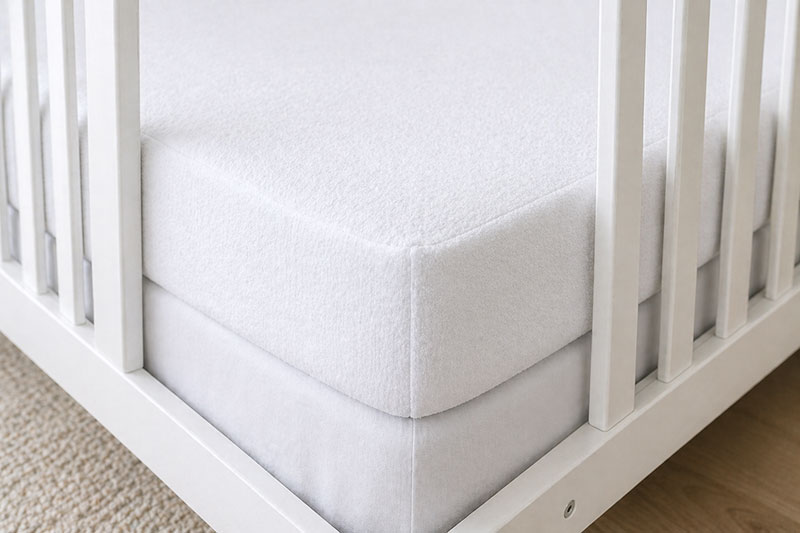
Protector vs Pad vs Cover Explained Clearly
The wording causes confusion during shopping.
A protector is usually a thin fitted layer designed to block moisture. A pad can sometimes include extra thickness. A cover may refer to anything from a protector to a zippered encasement.
Because those labels are often used interchangeably in product listings, this crib mattress pad vs protector comparison guide explains which products are meant to stay thin and which ones start adding extra surface padding.
This is where people often end up with something thicker than intended. A product labeled as a pad may look helpful but adds slight lift under the sheet.
I believe the simplest approach works best here. Choose a fitted waterproof protector that does one job without adding extra bulk.
If you need the exact sizing details for matching bedding correctly, see standard crib mattress size.
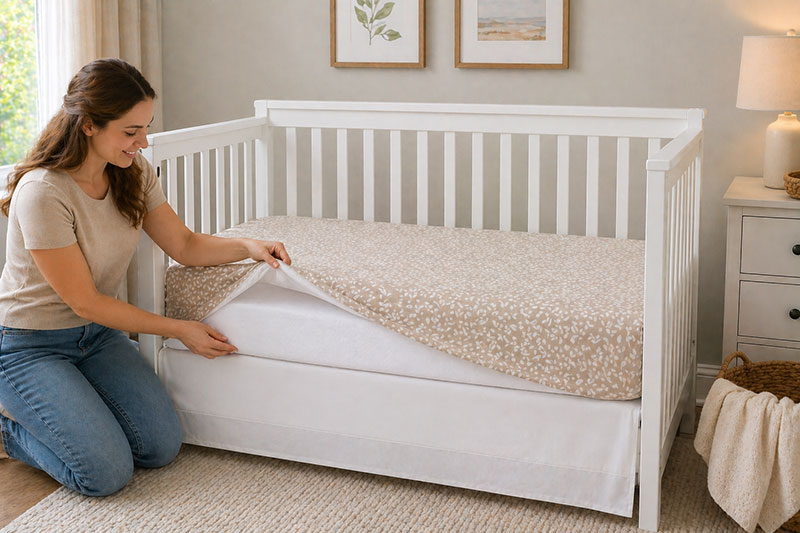
What to Avoid Under a Crib Sheet
Skip anything that changes the surface.
This includes thick pads, folded layers, extra blankets, or anything that causes the sheet to sit unevenly across the mattress.
That concern is one reason many parents research whether crib mattress toppers are safe for babies before adding extra cushioning underneath a fitted crib sheet.
Many setups drift this way after the first accident. Someone adds an extra layer for protection, then another, and suddenly the sheet does not sit flat anymore.
The safer setup stays simple. One waterproof protector. One fitted sheet. Nothing else underneath.
Also watch how the protector holds up after washing. If it starts to curl, separate, or feel stiff, it is no longer performing correctly.
For cleanup when moisture reaches the mattress, see how to clean a crib mattress.
Check waterproof crib mattress protector choices here
Why Two Protectors Work Better Than One
Having two protectors makes everyday use easier.
One stays on the mattress while the other is being washed. This avoids the need to layer products or delay cleanup after a leak.
I notice this becomes important during the first few weeks when changes happen quickly and having a backup ready keeps the crib setup consistent.
If the mattress itself shows signs of wear or trapped moisture, review when to replace a crib mattress.
Common Waterproof Crib Mattress Protector Questions
Do you need a waterproof crib mattress protector?
It helps prevent moisture from reaching the mattress, which can be difficult to fully clean once absorbed.
Is it safe?
Yes, when it fits tightly, stays flat, and does not add padding or loosen the fitted sheet.
Where does it go?
It goes under the fitted crib sheet, not directly under the baby.
How many should you have?
Two is usually enough to rotate during washing.
Quick Answer: If it changes the firmness or creates bunching, it does not belong in the crib.
When you click on links to various merchants on this site and make a purchase, this may result in this site earning a commission. This does not affect the price you pay.

UBGI Gold Standard 2026
Reviewed under the site's
editorial checklist.
Photos, decorating ideas, party setups and reader submissions are shared for inspiration unless a page is specifically presented as a pattern, tutorial, reference guide or step-by-step project. Follow the instructions, measurements, safety guidance and manufacturer directions provided for the particular project or product.
About Jan | Contact | Baby Nursery Ideas (Blog) | Site Map | Privacy Policy | Disclosure Policy | Disclaimer | Affiliate Disclosure | Earnings Disclosure | Facebook | Pinterest
I am a participant in the Amazon Services LLC Associates Program, an affiliate advertising program designed to provide a means for us to earn fees by linking to Amazon. As an Amazon Associate I earn from qualifying purchases.
Copyright © 2006-2026. All Rights Reserved.