Vintage Nursery Ideas for a Baby Room With Character
By Jan Bay
A vintage nursery has decor that has been collected rather than bought on one trip to the big box store. The best rooms feature items with personal history alongside a few old fashioned details blended with practical modern pieces, whether you love storybook prints, floral wallpaper, classic toys, painted furniture or family treasures. The trick is choosing elements that give the room character and depth that a roomful of new items simply can't compete with.
Explore More Vintage Nursery Ideas
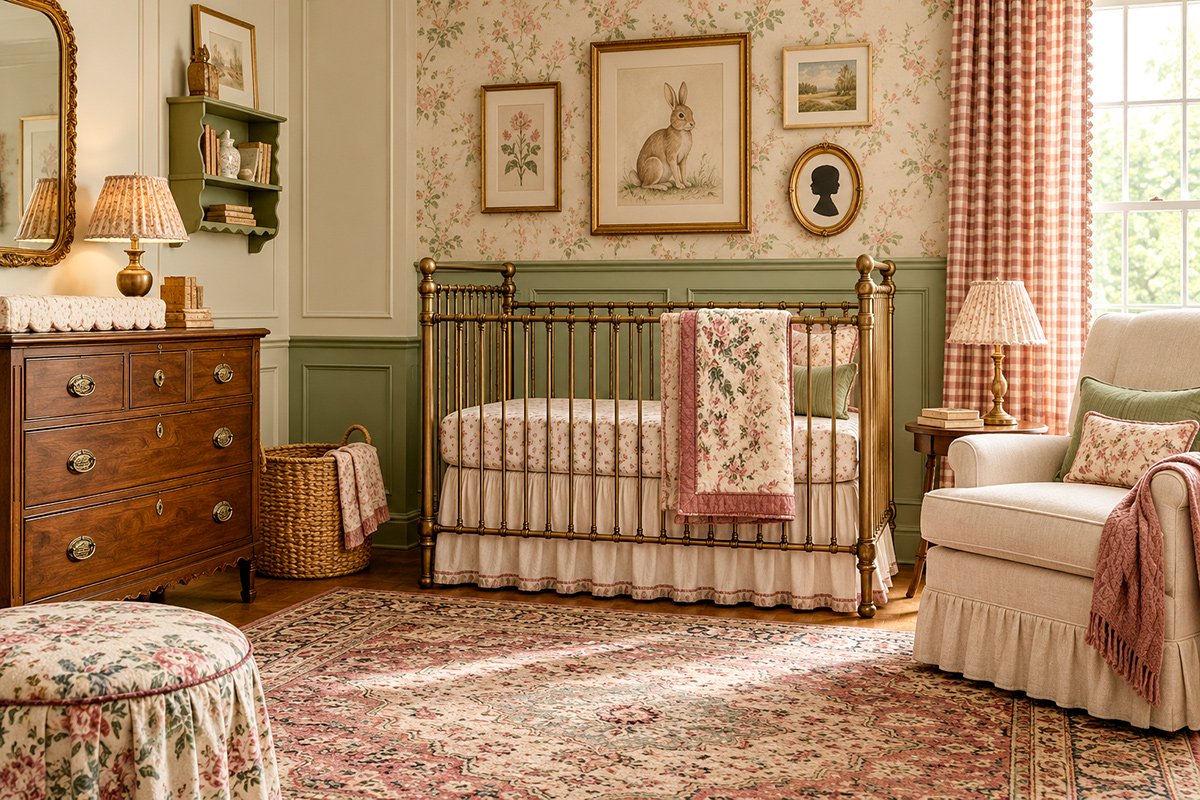
Shop the Vintage Nursery Look
On This Page
How to Create a Vintage Nursery
Vintage Nursery Ideas for Girls and Boys
How to Create a Vintage Nursery Without Making It Look Like an Antique Shop
If you're starting with an empty room, don't try to buy an entire "vintage nursery" in one afternoon. Pick one piece that gives you some direction first. It might be an old dresser, a quilt, a framed illustration, a piece of floral fabric, a family rocking chair or even one really good wallpaper pattern.
Then build around it.
I would rather see one beautiful old dresser with a little wear on the finish than a room filled with brand new furniture that's been artificially distressed to make every piece look old. The age doesn't have to match either. A 1950s dresser can sit comfortably with Victorian-style artwork and a newer spindle crib if the colors and shapes make sense together.
The easiest way to keep the room from becoming cluttered is to choose where you want the vintage character to come from. I'd usually pick two or three of these:
Furniture: a dresser, rocker, side table, bookshelf or small cabinet with an older shape or finish.
Walls: wallpaper, framed prints, silhouettes, photographs, needlework or vintage-style illustrations.
Textiles: quilts, gingham, ticking stripes, florals, eyelet, lace or curtains with an older pattern.
Decorative pieces: books, baskets, framed baby clothes, old toys or a few family keepsakes.
You don't need all four categories competing for attention. If the wallpaper is busy, keep the furniture and textiles simpler. If you've got a wonderful quilt with several colors and patterns, let that lead the room instead.
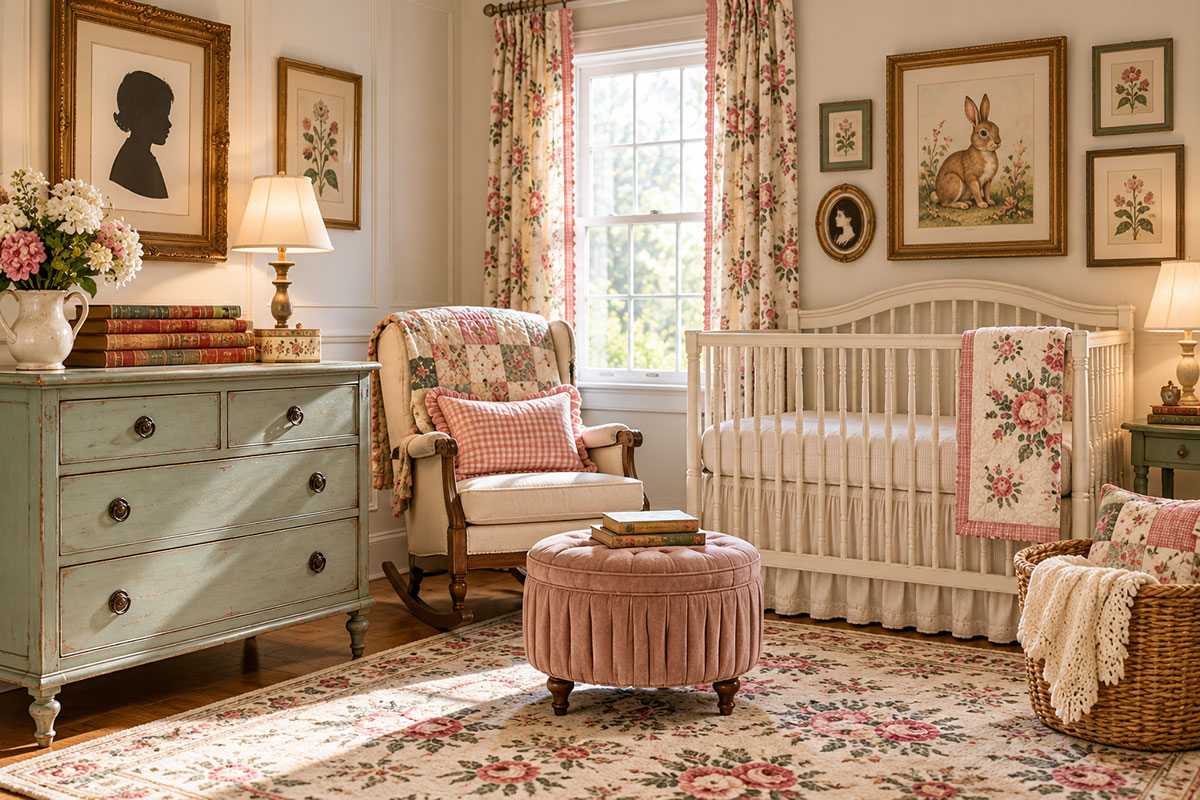
Personal history is what can make this style especially good. A photograph of a grandparent as a baby, an embroidered piece from the family, an old book or a small dress in a shadowbox adds something a matching set from a store can't.
The silhouette portrait is another detail that fits naturally into an older room. If you'd like to make one from your own photograph, my DIY silhouette wall art from a photo tutorial shows how to create the classic profile look without having to find an antique portrait.
Vintage Nursery Themes That Give You Something to Build Around
You don't have to choose a theme at all, but it can make decisions much easier if you're staring at an empty room and don't know where to begin.
A good vintage nursery theme should guide the room rather than take it over. You don't need ten rabbits to create a storybook nursery or airplanes hanging from every available surface to make a travel room. Pick a few recognizable details and leave some space around them.
If you want to compare more directions before choosing one, I've collected them on my Vintage Nursery Themes page. A few are especially easy to build without making the room feel costume-like.
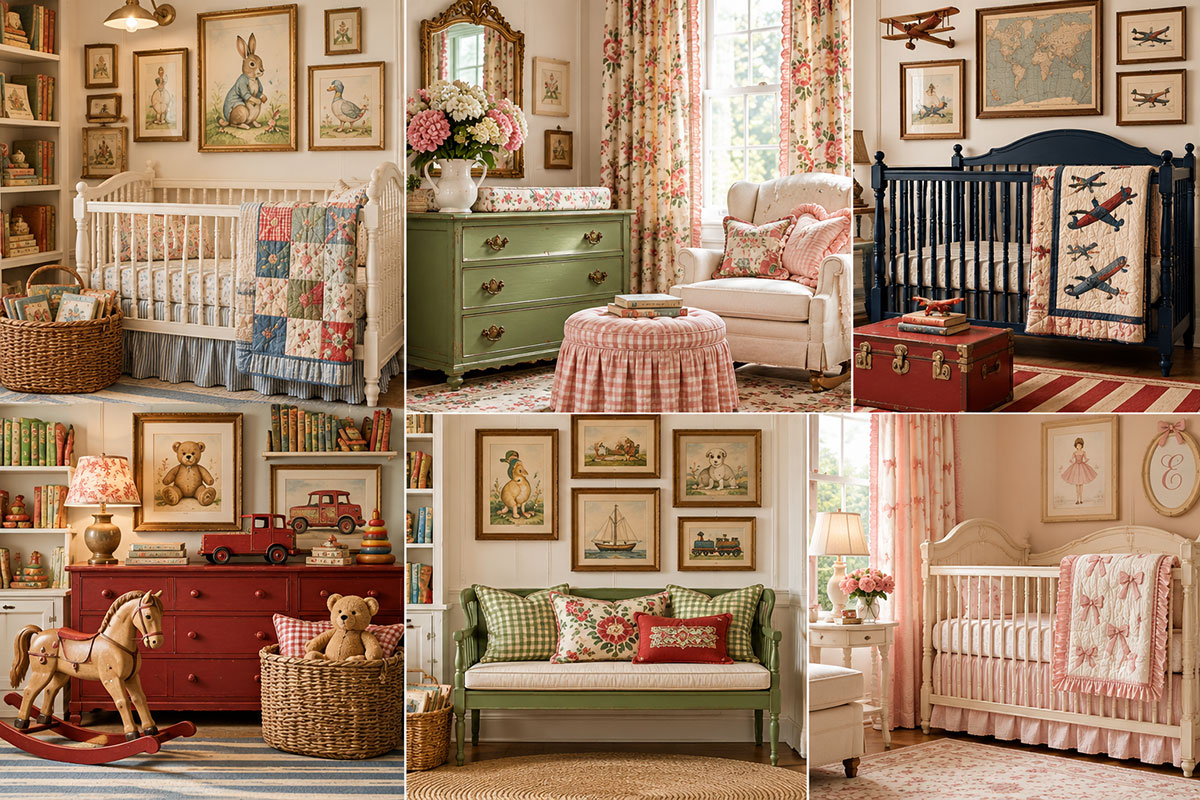
Vintage storybook: Old-fashioned illustrations, framed book pages, classic lettering and a shelf of children's books can carry most of the theme. The room doesn't need to reproduce one particular story.
Vintage floral: Start with wallpaper, curtains or one floral textile. Then pull two or three colors from it for the rest of the room. If the floral is large and detailed, I'd keep the bedding and rug much quieter.
Vintage travel: Maps, old luggage shapes, transportation prints and destination artwork fit easily into a nursery without looking childish. You can see one finished example in the Vintage Travel Baby Nursery.
Vintage cars: This works especially well with old automobile prints, road maps, metal signs and a restrained red, navy, green or warm neutral palette. There's a full room direction on my Vintage Car Baby Boy Nursery page.
1950s nursery: Mid-century furniture, cheerful color, old children's illustrations and simple geometric prints can give you the decade without turning the room into a museum. My 1950s Baby Nursery Ideas page goes deeper into that look.
Classic toy nursery: A few old toys can be wonderful decor, particularly on shelves that are out of baby's reach. Don't line every wall with them. A small collection looks intentional. A huge collection can take over the room. You'll find more ideas on my Vintage Toys for the Nursery page.
Vintage Nursery Ideas for Girls, Boys and Rooms That Don't Need a Label
A vintage room doesn't have to start with pink for a girl or blue for a boy. Older decorating styles give you plenty of other places to begin, including green, cranberry, mustard, lavender, faded red, warm wood tones and traditional black and white.
If you're decorating for a baby girl and you do love pink, I'd look beyond the very pale blush that shows up everywhere. Dusty rose, faded raspberry, pink with brown, pink with green or pink paired with an old floral print has much more depth. My Vintage Baby Girl Nursery Ideas page has more examples, including rooms that aren't built around one shade of pink.
There's also an older pink and aqua room on the Vintage Pink and Aqua Nursery page. That combination has enough contrast to keep the room from disappearing into one soft color.
For a vintage baby boy nursery, I'd start with the subject before the color. Cars, airplanes, travel, sports, western details, old animal illustrations and classic children's books all give you somewhere to go. Then choose the colors from the artwork or textiles instead of deciding that the room has to be blue first.
A room that isn't specifically styled for a girl or boy can be even easier. Green, red, yellow, warm brown, black, ivory and natural wood all work well with vintage pieces. Storybook animals, maps, alphabet art, gingham, quilts and old illustrations don't need a gender attached to them.
And don't be afraid of darker wood. Not every vintage nursery needs white painted furniture. A walnut dresser or an old oak rocker can anchor a room beautifully, especially if the walls and textiles are lighter.
The broader Baby Nursery Themes hub has more decorating directions if you decide vintage is only one piece of the room rather than the whole theme.
Vintage Nursery Art and Wall Decor That Looks Collected
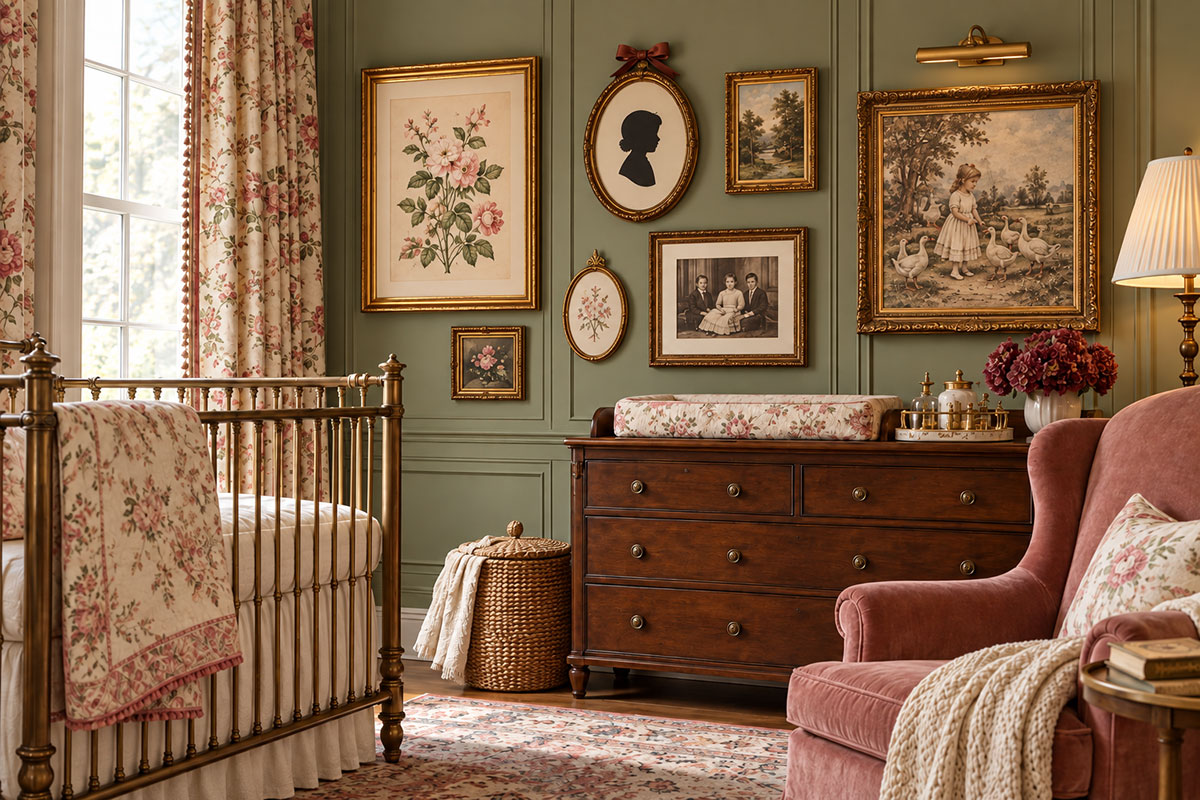
Wall art is one of the easiest places to add vintage character because you can mix genuine old pieces with newer artwork that has the right look. I wouldn't buy a perfectly matched set of six prints unless you really love the set. A collected wall usually has more personality when the pieces aren't identical in size, subject or frame.
Start with one piece you want to keep looking at. That might be a silhouette, an old alphabet print, a botanical illustration, a nursery rhyme picture, a map, a family photograph or a framed piece of needlework. Then add around it slowly.
Frames don't have to match, either. You can mix painted wood, darker wood and simple metal if there's something tying the group together. Repeating one color from the artwork is usually enough.
If you're using family pieces, don't hide them away just because they weren't made as nursery decor. An old photograph, christening gown, embroidered handkerchief or tiny baby dress can make a wonderful display when it's framed or placed in a shadowbox.
Repurposed mirrors and frames fit beautifully here, too. A frame with good shape can be painted, left worn or fitted with a photograph, silhouette or initial instead of being discarded because the original artwork isn't right for the room.
I'd keep anything breakable, heavy or easy to pull down well away from the crib and changing area. The prettiest gallery wall in the world isn't worth putting something questionable within reach.
Vintage Nursery Wallpaper Without Letting the Pattern Run the Room
Wallpaper can do most of the decorating for you, which is exactly why I'd choose it before buying the rug, curtains and artwork.
If you fall in love with a floral paper, pull the other colors from that pattern rather than trying to match it after the room is half finished. The same goes for toile, stripes, small geometrics, storybook prints or an older botanical design.
Large patterns make a bigger statement, so they need less help. A detailed floral on all four walls might only need simple curtains and a plain painted dresser. A quieter pattern gives you more room for a quilt, gallery wall or patterned rug.
You also don't have to paper the whole nursery. One wall, the inside of a bookcase or the upper portion of a wall above molding can be plenty if the pattern is busy.
I would skip the urge to match the wallpaper exactly with coordinating bedding and curtains. That's the opposite of the collected look we're after. Pull a color or two from it and move on.
Vintage Nursery Furniture: Where Old Pieces Make Sense and Where They Don't
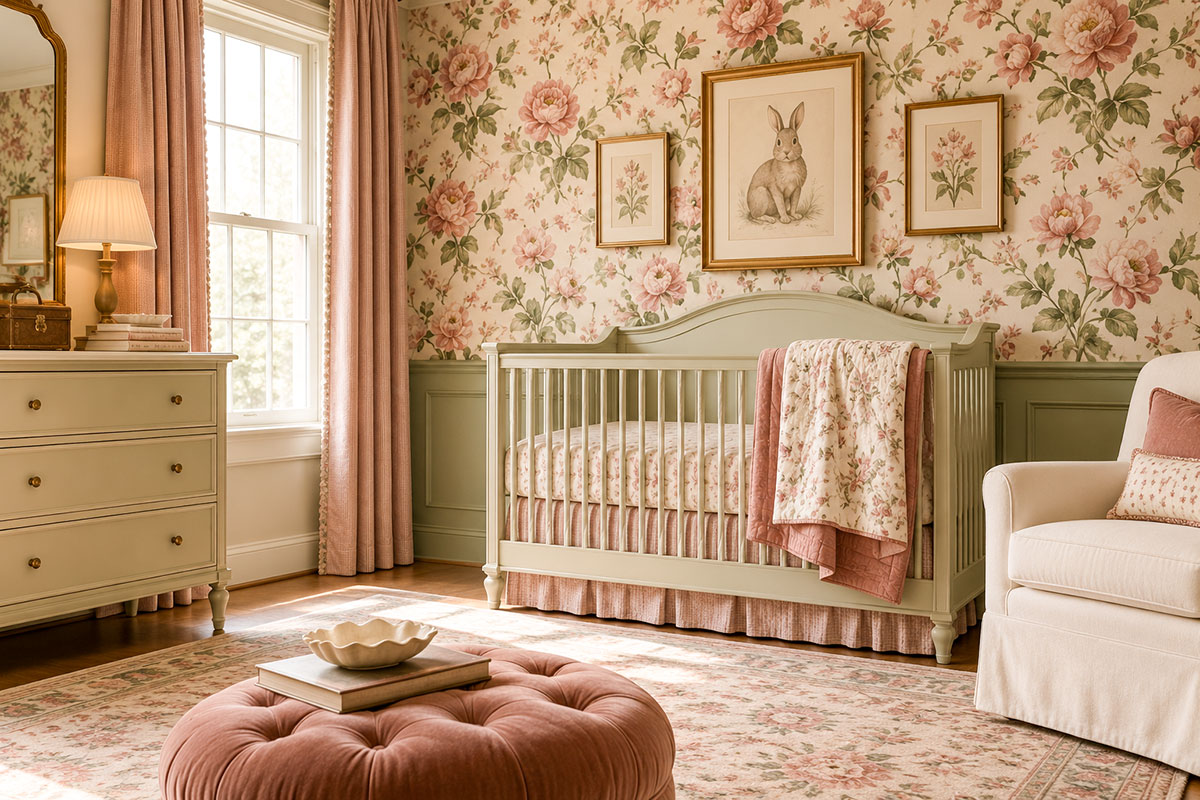
An old dresser, rocker, bookshelf, side table or cabinet can give a nursery more character than an entire matching furniture set. Those are the pieces I'd look for first at estate sales, antique stores, flea markets or within the family.
A dresser is especially useful because it can become the visual anchor of the room without requiring everything else to be old. Leave a beautiful wood finish alone if it's in good condition, or paint a less special piece if the existing finish isn't worth saving.
Rocking chairs are another natural fit. A chair made or used by one of baby's relatives is exactly the kind of piece worth building around when it's still sturdy and suitable for use.
Cribs are different.
I would use a current crib that meets today's safety requirements and let the surrounding furniture provide the age and history. The U.S. Consumer Product Safety Commission says full-size cribs sold in the United States are subject to federal safety requirements covering areas such as structural strength, hardware and mattress support. You can check the current CPSC crib safety information before buying or reusing one.
That doesn't mean the nursery has to look new. A simple spindle crib can sit beautifully beside an older dresser, family rocker and vintage artwork.
Save the antiques for the places where age is part of the charm, not the safety equipment.
Use Quilts, Curtains and Fabric to Tie the Room Together
Textiles are where mismatched vintage pieces can suddenly start looking like they belong in the same room.
You don't need everything made from one fabric. In fact, I wouldn't do that. Pick one pattern with several colors in it, then repeat two or three of those colors around the room.
A floral curtain can work with a striped rug. A patchwork quilt can sit beside plain curtains. Gingham can be mixed with old-fashioned florals. The trick is varying the scale so every fabric isn't shouting at the same volume.
If your quilt is detailed, keep the curtains simpler. If the curtains are the feature, a solid or very small print elsewhere gives your eye somewhere to rest.
Older crib bedding sets often included bumpers, pillows, quilts and other pieces intended to decorate the sleep space. For an infant sleep area, keep those decorative textiles out of the crib. CPSC's current safe-sleep guidance recommends a bare sleep space with only a fitted sheet.
You can still use a beautiful quilt in the nursery. Hang it securely as wall decor, fold it over a chair when the chair isn't being used, or store it in a basket until it's appropriate to use elsewhere.
Old Toys, Books and Family Treasures Make Better Decor in Small Doses
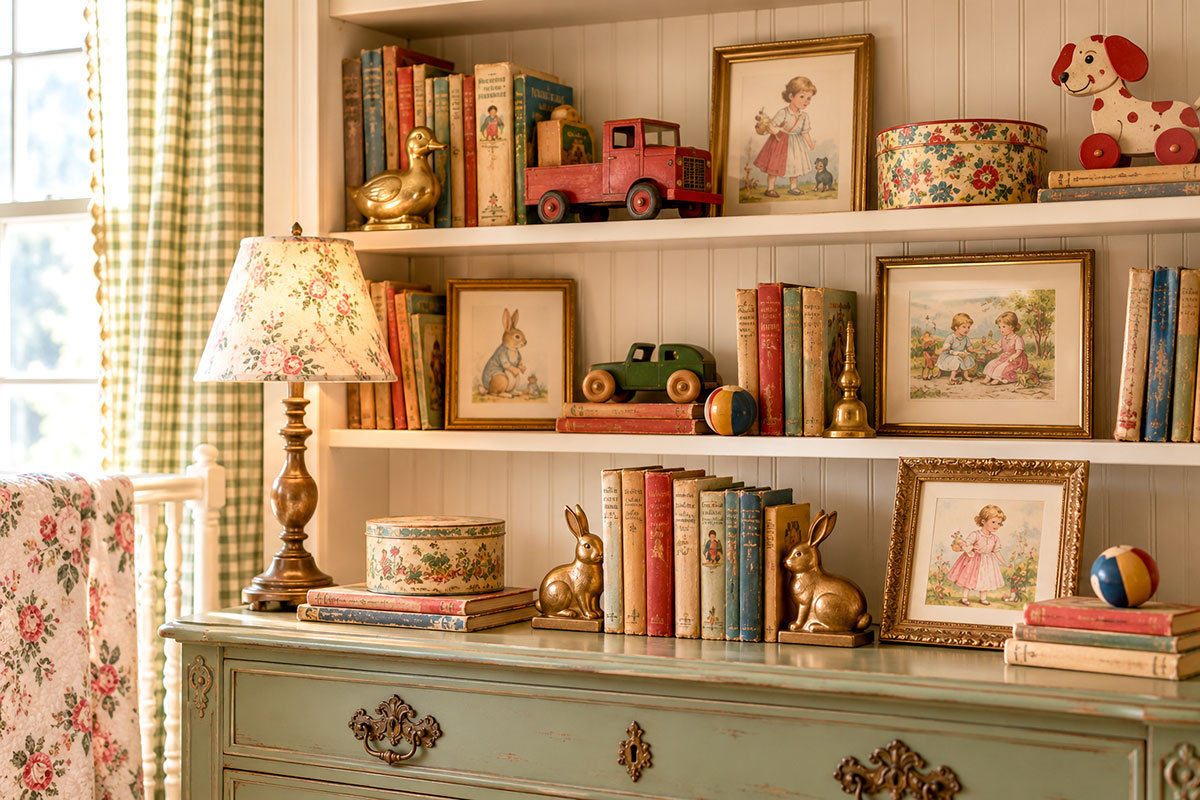
Vintage toys can be wonderful nursery decor, but I'd treat them as display pieces rather than trying to fill every shelf.
A wooden pull toy, an old tin, a few children's books or a small collection of dolls can be enough. Grouping a handful together generally looks more intentional than scattering one little thing on every surface.
Thrift stores, garage sales, antique shops and estate sales are good places to find pieces that don't look as though they arrived in one shipping box.
Just be selective. An object doesn't earn a place in the room simply because it's old.
Look for good shape, useful color, personal meaning or a subject that belongs with the room. If it doesn't add any of those, leave it behind.
My Vintage Toys and Nursery Decor page has more ideas for using old toys as decoration rather than turning the nursery into a toy shop.
Real Vintage Nursery Rooms With Ideas Worth Borrowing
Real nursery rooms can show something staged inspiration photos can't always show: how individual pieces actually come together over time. Several readers shared their vintage nurseries here, and they're worth browsing for ideas you can adapt rather than copy.
Naomi's Vintage Nursery uses flea market finds and is a good example of letting collected pieces do the work instead of relying on a matching set.
Ellie's Romantic Vintage Nursery shows a different direction with pink, brown and soft old-fashioned details.
If budget is keeping you from trying the look, the Vintage Nursery Theme for Less Than $200 is worth a look. A collected room doesn't require expensive antiques. Paint, secondhand furniture, family pieces and a few carefully chosen accessories can do a lot.
The lesson I'd take from all of them is the same: don't copy the whole room. Borrow the one idea that solves a problem in yours.
A Few Finishing Touches Are Plenty
Once the furniture, wall treatment and textiles are in place, stop and look at the room before adding more.
Vintage decorating can go from layered to cluttered pretty quickly because there are so many interesting little things you could add.
I would finish with just a few pieces that have some meaning or visual weight. Maybe that's an old book on a shelf, a framed baby dress, one basket, a family photograph and a lamp with an older silhouette.
You don't need a vintage version of every object in the room.
The modern diaper pail can just be a diaper pail.
If you're planning a celebration around the same look, there are also ideas for a vintage baby shower. I'd keep that separate from the nursery itself, but it can be useful if you're carrying the style into the shower.
If you want more room styles before settling on this one, browse the Baby Nursery Themes hub. If vintage is definitely the direction you're taking, the Vintage Nursery Themes page is the next place I'd go.
SHARE IDEAS - PICTURES of VINTAGE NURSERY THEME DECOR
Do you have a great set of baby bedding or a picture of a nursery that you decorated vintage style or theme? Share it!
VINTAGE NURSERY THEME DECORATIONS, PICTURES and DECORATING IDEAS
Click below to see the latest vintage theme bedding and nursery decor.
Delightful Vintage Nursery for $200 
What would you say if I told you that we decorated this delightful vintage nursery for $200? My goal was to decorate the baby's nursery using furniture …
Retro Baby Nursery
I found and bought many of the items for my retro baby nursery used at different secondhand stores, thrift stores and fleamarkets. Some of the items that …
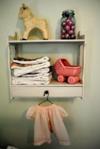
Naomi's Vintage Nursery
As I began to describe Naomi's vintage nursery I heard the phrase "meaningful beauty" and I thought, that's it, that's what I want my home and my baby …
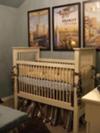
Vintage Travel Nursery Theme
The inspiration for Cole's room were the vintage airline posters that we found online with scenes from Chicago, San Francisco as well as Braniff.
The …
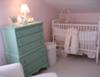
Vintage Inspired Nursery Theme
The bedding that we used for our baby's
vintage inspired nursery theme was made from House Inc. fabrics. I bought some of the things from House Inc., …
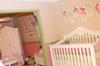
Sweet Baby Hannah's Pretty Pink and Green Nursery
Decorating our sweet Baby Hannah's Pretty Pink and Green Nursery wasn't nearly as easy as you might think. It all started with an idea that I had one …

Vintage Cars Route 66 Baby Nursery Theme 
Dads, moms, NASCAR fans, virtually all car enthusiasts will love this vintage Route 66 baby nursery theme! When I showed these baby boy nursery pictures …

Vintage Bicycle Nursery Theme
Planning our Baby's Vintage Bicycle Nursery Theme, Phase I
Immediately upon getting the news that we were expecting a baby boy the gears started turning …


When you click on links to various merchants on this site and make a purchase, this may result in this site earning a commission. This does not affect the price you pay.

UBGI Gold Standard 2026
Reviewed under the site's
editorial checklist.
About Jan | Contact | Baby Nursery Ideas (Blog) | Site Map | Privacy Policy | Disclosure Policy | Disclaimer | Affiliate Disclosure | Earnings Disclosure | Facebook | Pinterest
I am a participant in the Amazon Services LLC Associates Program, an affiliate advertising program designed to provide a means for us to earn fees by linking to Amazon. As an Amazon Associate I earn from qualifying purchases.
Copyright © 2006-2026. All Rights Reserved.