Ladybug Nursery Rugs for Baby Girl Rooms
A ladybug nursery rug instantly adds color, softness and personality to a baby girl's room while creating a cozy place for tummy time, reading and play. Whether you prefer a cheerful red-and-black ladybug rug, a whimsical floral design or a subtle garden-inspired pattern, the right rug helps tie your entire ladybug nursery together while adding warmth and comfort underfoot.
Explore More Ladybug Nursery Ideas
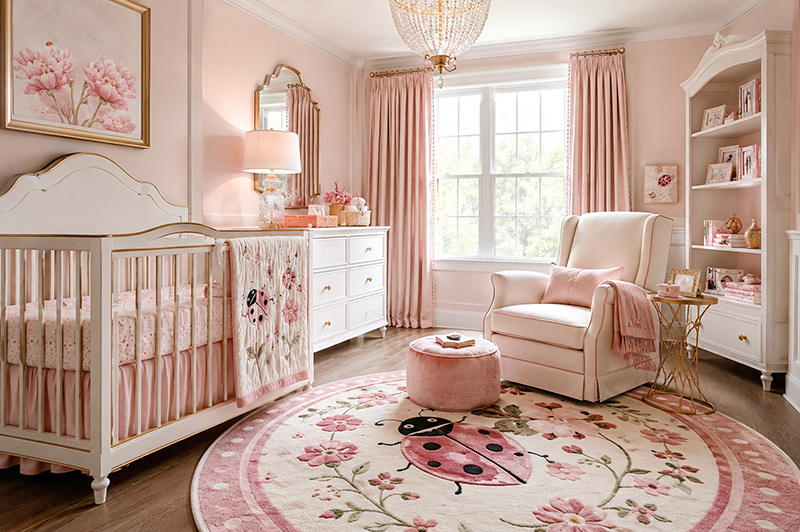
A ladybug nursery rug adds a cheerful focal point while helping define the play or reading area.
Quick answer: Choose a ladybug nursery rug that fits the open floor area without crowding the crib, dresser or doorway. A low-pile, nonslip design is easier to clean and less likely to create a tripping edge than a thick or loosely woven rug.
Choosing a Ladybug Nursery Rug
Begin with the size and layout of the room rather than the novelty shape. Measure the open floor space, the crib footprint and the path between the doorway and changing area. A rug should make the nursery easier to use, not force you to step around curled corners or squeeze furniture into an awkward position.
In a small nursery, one compact round or oval rug can add the ladybug motif without covering most of the floor. A larger rectangular rug may work better in a spacious room because it can visually connect the crib, dresser and chair. The rug does not need to sit beneath every piece of furniture. It only needs to look intentional and remain stable.
Avoid placing a loose rug where it can interfere with the door or create an uneven surface beside the crib. Check the edges regularly and use a rug pad that is designed for your flooring. The pad should fit beneath the rug rather than extend beyond it.
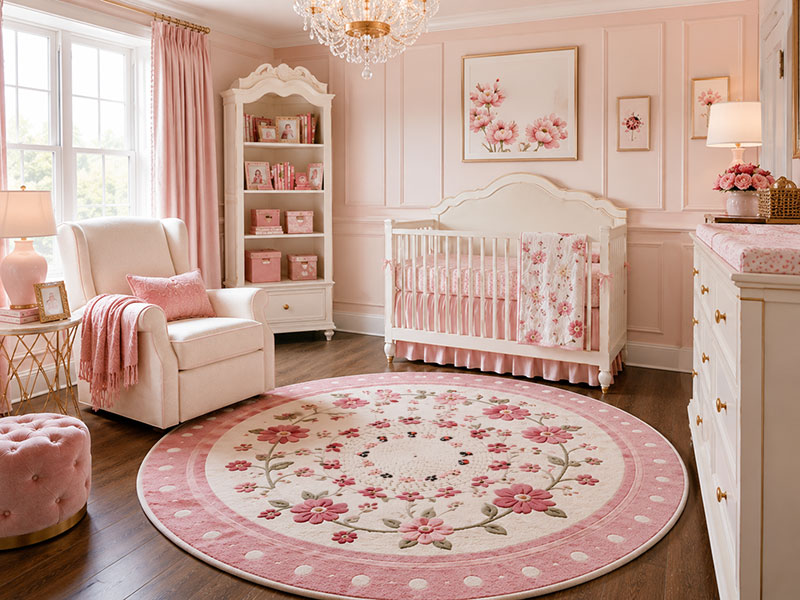
Measure the room before buying so the rug fits the open floor area without blocking doors or crowding furniture.
Match the Rug to the Bedding and Color Scheme
A bold ladybug rug already carries plenty of pattern. Pair it with simpler crib sheets, curtains and larger fabric surfaces so the nursery does not become visually busy. Solid white, soft blush, muted green, red or black accents can support the theme without repeating ladybugs on every item.
The ladybug baby bedding may be the starting point for the room. Pull one or two colors from the bedding and repeat them in the rug, artwork or window treatment. The pieces do not need to match exactly. They need a clear color connection.
For example, a red-and-black ladybug rug can sit comfortably in a mostly white room with small red accents. A pink ladybug rug may suit a softer garden nursery with rose, ivory and leafy green details. Brown, coral and muted raspberry can also work when you want something less literal than bright primary red.
Price does not determine whether the room looks coordinated. An inexpensive rug can look polished when its scale and colors suit the nursery. A costly rug will still look misplaced when it competes with heavily patterned bedding, curtains and wallpaper.
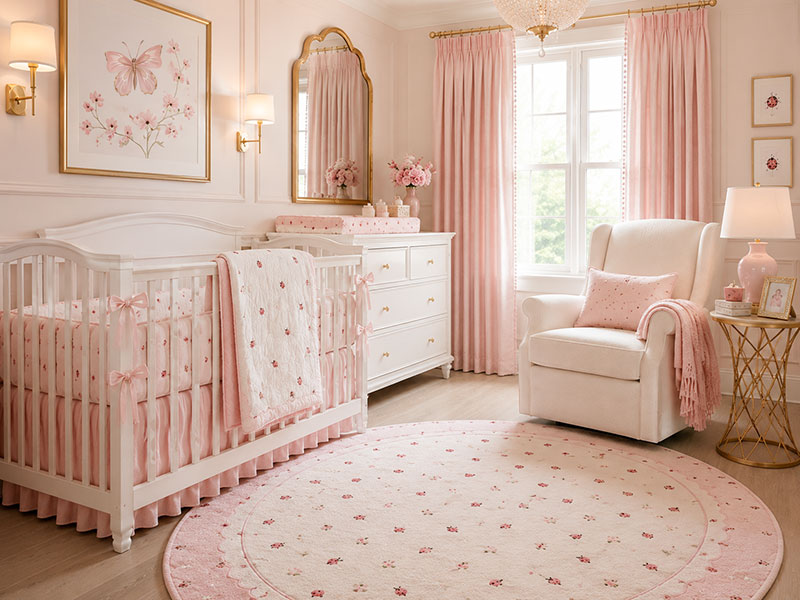
Simple bedding lets a patterned ladybug rug serve as the main decorative feature.
Ladybug Rug Shapes and Styles
A shaped ladybug rug is the most playful option. It can work beside a reading chair, near a low bookcase or in the center of a clearly defined play area. Because the outline is already decorative, the surrounding floor and furniture should remain fairly simple.
Traditional round, oval and rectangular rugs are easier to place beneath or beside furniture. These designs may feature one large ladybug, a repeated insect pattern, flowers, leaves, dots or a garden border. A round ladybug rug is especially useful when the room contains several straight furniture lines and needs a softer shape.
A children’s ladybug rug does not have to copy the insect’s natural coloring. Pink, coral, plum and floral versions can still read clearly as ladybug designs. Choose the variation that supports the rest of the nursery rather than adding a completely separate palette.
A shaped ladybug rug adds a clear theme accent without requiring ladybug prints on every surface.
Building the Ladybug Theme Around the Floor
Once the rug is chosen, distribute the remaining ladybug details around the room instead of grouping everything in one corner. Repeat a small amount of red, pink or black at different heights through artwork, bedding and one or two accessories. This gives the eye a path through the nursery.
The ladybug nursery wall decorations can echo the floor design with decals, garden artwork or a simple border. Butterflies, dragonflies, flowers and leaves can expand the room into a garden theme without requiring every object to feature another ladybug.
For a handmade addition, older children may enjoy making supervised ladybug crafts that can be displayed on a shelf or framed for the wall. You can also use wall stickers to add flowers, leaves or small insects without painting an elaborate mural.
Wallpaper cutouts and garden-themed artwork also coordinate well with a ladybug nursery theme. Keep the designs away from the crib’s immediate sleep area and avoid adding loose decorations within a baby's reach.
Practical Materials for a Nursery Rug
A nursery rug needs to tolerate spills, dust and regular cleaning. Check the care label before purchasing. Machine-washable rugs are convenient, but only when the rug size fits the washing instructions and your available machine. Spot-clean designs may be suitable when the surface is tightly woven and easy to vacuum.
Low-pile rugs generally allow furniture to sit more evenly and make it easier to remove crumbs or lint. Thick shag rugs can hide small objects and may be harder to clean. Look closely at stitched features, attached decorations and raised trim. A baby-room rug should not have loose buttons, beads, pom-poms or pieces that can detach.
The backing matters too. A rubberized or nonslip backing can help, but it must also be compatible with the flooring beneath it. Some backings can mark delicate hardwood or vinyl, so read the manufacturer’s instructions and use the correct rug pad where necessary.
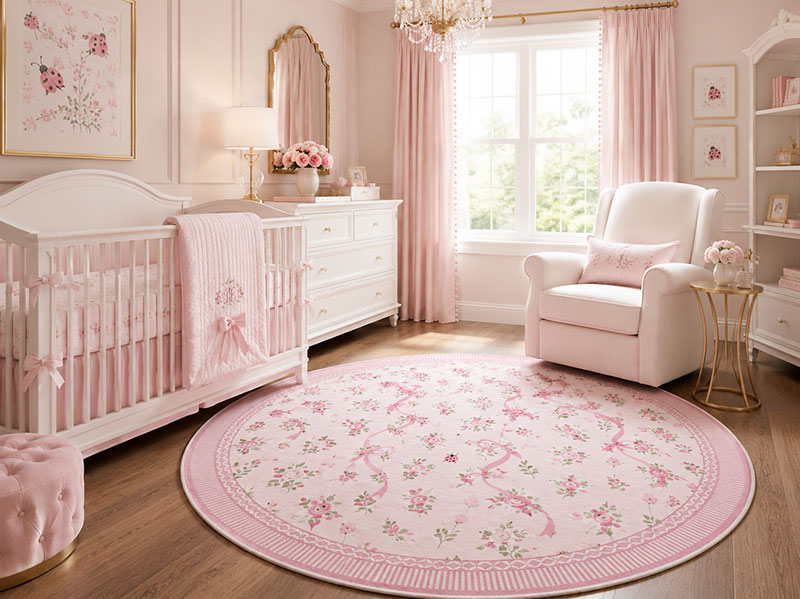
A low-pile rug with secure edges is easier to vacuum and use around nursery furniture.
Ladybug Nursery Rug Placement Ideas
Place a small ladybug rug beside a chair to define a reading corner, but keep the rug flat beneath the front chair legs so it cannot slide. A round design may also sit in the center of an open floor area where its shape can be seen clearly.
A larger area rug can extend beneath the front portion of the crib and dresser, provided the furniture remains level and the rug does not create unstable footing. Do not rely on the crib alone to hold a lightweight rug in place.
Several tiny rugs usually create more edges and more visual clutter than one appropriately sized area rug. One rug is also easier to vacuum, straighten and inspect. In a narrow nursery, a compact oval or runner-style rug may be more practical than a wide rectangular design.
Frequently Asked Questions
What size ladybug rug works in a small nursery?
A compact round or oval rug often works well in a small nursery. Measure the open floor area and leave a clear walking path between the crib, dresser and doorway.
Should a nursery rug go under the crib?
It may extend partly beneath the crib when the rug and furniture sit flat and stable. It does not need to cover the entire crib footprint. Avoid placements that create raised or curled edges near the crib.
Can I use a bright red ladybug rug with patterned bedding?
Yes, but keep the remaining large surfaces simple. Solid crib sheets, plain curtains and restrained wall decorations will prevent the room from looking too busy.
Are shaped ladybug rugs harder to decorate with?
They require a little more open floor space because the outline should remain visible. They work best as one main novelty accent rather than part of a room filled with competing shapes and prints.
What should I look for in a baby-room rug?
Choose a low-pile rug with secure edges, durable construction and cleaning instructions that suit your household. Avoid loose decorations or raised pieces that could detach.
A well-chosen ladybug nursery rug can become the centerpiece of the room without controlling every other decorating decision. Start with the correct size, add simple coordinating fabrics and repeat the ladybug colors through a few carefully selected accessories. Browse the main nursery rugs guide for more help choosing rug sizes, materials and placements, or visit the home page for additional nursery decorating ideas.


About Jan | Contact | Baby Nursery Ideas (Blog) | Site Map | Privacy Policy | Disclosure Policy | Disclaimer | Affiliate Disclosure | Earnings Disclosure | Facebook | Pinterest
I am a participant in the Amazon Services LLC Associates Program, an affiliate advertising program designed to provide a means for us to earn fees by linking to Amazon. As an Amazon Associate I earn from qualifying purchases.
Copyright © 2006-2026. All Rights Reserved.