Ladybug Baby Bedding Ideas for Cribs and Baby Girl Nurseries
I was asked recently if all ladybug baby bedding has a black and red color scheme. The answer to that question is that ladybug bedding and baby stuff has come a long way from that limited color combination. We have recently seen the addition of dragonflies and butterflies along with ladybugs decorating crib comforters and quilts. It’s now very easy to find cute ladybug crib bedding sets in all of the bright, cheery colors of the rainbow!
Explore More Ladybug Nursery Ideas
You might worry that butterflies, dragonflies and other garden creatures could distract from the ladybug theme, but a few carefully chosen accents can make the room more interesting. Keep the ladybugs as the main motif, then use flowers, leaves and smaller insects to support the garden setting without competing with the bedding.
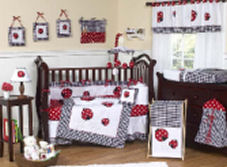
Ladybug Baby Bedding Color Combinations
Look at how a ladybug stands out against a green leaf and you have an easy starting point for the nursery palette. Classic red-and-black ladybug baby bedding works especially well with quieter background colors that keep the room from looking too busy.
Good supporting colors include:
- Sage green for a soft garden-inspired look
- White or ivory for a clean, bright nursery
- Soft gray for a more modern color scheme
- Warm taupe or brown for a cozy, traditional room
You can also mix ladybug prints with simple coordinating patterns. Small gingham checks, narrow stripes, subtle plaids and restrained polka dots can add variety without competing with the main motif.
Keep one print dominant and use the others in smaller amounts. For example, pair a ladybug quilt with a solid crib sheet, a narrow striped valance and one gingham storage basket. This creates a layered look while allowing the ladybug design to remain the focal point.
For a softer baby girl nursery, replace bright red with blush, rose or raspberry and combine it with muted green, white and small black accents. The ladybugs will still be easy to recognize, but the overall room will look more elegant and less like a novelty theme.

Ladybug baby bedding can combine tiny insect motifs, flowers and blush-pink fabrics without making the nursery look overly themed.
Are Ladybugs Always Red and Black?
Ladybugs in nature may be best known for their classic red wings and black spots, but ladybug baby bedding does not have to follow that exact color combination. The familiar rounded shape, contrasting spots and tiny antennae make the insect easy to recognize even when the fabric features pink, coral, green or plum ladybugs.
Changing the colors can make a ladybug nursery easier to coordinate with the rest of your home. A bright red-and-black crib sheet creates a playful, graphic look, while blush pink and deep raspberry produce a softer baby girl nursery. Muted rose, white and leafy green can turn the same theme into an elegant garden room.
The best palette depends on which part of the room you want to feature. When the bedding has a large, colorful print, keep the rug, curtains and walls quieter. When the crib sheet has only tiny ladybug motifs, you can introduce a bolder ladybug nursery rug or larger wall decorations without making the room look too busy.

Pink, raspberry and leafy green give ladybug bedding a softer garden-inspired look.
Ladybug Baby Bedding Color Combinations
Start with two main colors and one smaller accent color. This keeps the nursery connected while allowing the ladybug print to remain the decorative focus. Too many unrelated colors can make the bedding, rug and wall art look as though they came from different rooms.
These ladybug color combinations are easy to build around:
- Blush pink, raspberry and white: Soft and feminine without relying on bright red.
- Pink, black and white: Crisp, graphic and easy to coordinate with simple furniture.
- Rose, green and ivory: A garden-inspired palette that works well with floral prints.
- Coral, black and cream: Warm and cheerful with a less traditional ladybug color.
- Red, black and pale pink: A classic ladybug combination softened for a baby girl's room.
- Plum, rose and muted green: A richer palette for a more sophisticated nursery.
Some floral crib sheets include very small ladybugs tucked between blossoms, leaves and vines. These patterns support a garden nursery without turning every surface into an insect display. Butterflies, bees and dragonflies can also appear in small amounts, provided the ladybugs remain the main repeating motif.
Use the same restraint when choosing ladybug wall decals. A few decals near framed artwork or above a dresser can repeat the bedding design. Covering every wall with insects would compete with a detailed crib sheet or quilt.
How to Coordinate Ladybug Bedding With the Nursery
Choose the bedding before buying numerous accessories. The crib sheet or handmade quilt usually contains the clearest version of the room's palette, making it easier to select the rug, curtains, storage baskets and artwork afterward.
Pull one light color and one deeper color from the bedding. For example, a blush sheet with tiny raspberry ladybugs could be paired with white curtains, a raspberry-edged rug and two small pieces of garden artwork. The colors connect the room even when the individual pieces do not come from the same collection.
Ladybug patterns should not appear on every object. Mix the themed bedding with solid fabrics, simple stripes, dots or a restrained floral print. This gives the eye a place to rest and makes each ladybug detail easier to notice.
The same principle applies to ladybug nursery accessories. Choose a few useful pieces, such as a storage basket, lamp, framed print or changing-pad cover, rather than filling every shelf with matching novelty items.

Simple curtains and solid-colored accents allow detailed ladybug bedding to stand out.
Can I Use a Handmade Ladybug Crib Quilt?
A handmade appliquéd quilt can become one of the most personal parts of a ladybug nursery. You can choose the exact fabrics, change the number and size of the ladybugs and add flowers, leaves or patchwork blocks that coordinate with the room.
Simple quilt layouts often show the appliqué more clearly than complicated patterns. A basic block quilt, wide border design or easy log cabin layout can provide a clean background for several ladybug shapes. Black-and-white dots can be used sparingly for wings or borders, while blush, rose and green fabrics soften the traditional red-and-black theme.
Before cutting the fabric, place the different prints beside one another. Large floral patterns, bold dots and oversized ladybugs may compete when they are used in equal amounts. Select one main print, one smaller supporting print and several solids or low-volume fabrics.
Use leftover quilt fabric for small coordinated projects. A simple valance, fabric storage bin, framed appliqué or dresser-runner accent can repeat the quilt colors elsewhere in the room. Avoid making loose crib pillows, padded bumpers or other items intended to remain in an infant's sleep space.

A handmade ladybug quilt can coordinate with the nursery while remaining a special keepsake.
How to Display a Ladybug Quilt Safely
A decorative baby quilt can be displayed over the back of a nursery chair, folded inside a closed-front cabinet or mounted securely as wall décor when it is not being used. A quilt hanger allows the full appliqué design to be seen and turns the quilt into a large piece of textile artwork.
Keep any wall-hung quilt, rod or hanger well away from the crib and securely attached to the wall. Do not drape quilts, comforters or loose blankets over the crib rail while a baby is in the crib.
For infant sleep, the U.S. Consumer Product Safety Commission recommends a bare sleep space with a fitted sheet only and no blankets, quilts, pillows or other soft items. A handmade quilt can still be enjoyed during supervised use or displayed as nursery décor, then stored outside the crib before sleep. Visit the CPSC Safe Sleep guidance for current recommendations.
Choosing Crib Sheets and Everyday Bedding
A fitted crib sheet is the most practical place to introduce the ladybug motif into the actual sleep area. Check that the sheet is made for the mattress size and fits smoothly without loose fabric or corners that lift away.
Consider buying two or three fitted sheets rather than an elaborate coordinated set filled with pieces you may not use. One ladybug print, one solid color and one subtle floral or dotted sheet can provide variety while keeping the palette consistent.
Washable cotton or cotton-blend sheets are practical for everyday use. Examine decorative stitching, appliqués and attached trims before buying. The sheet surface should remain smooth and should not include bows, buttons, beads or raised decorations where the baby sleeps.
Finishing the Ladybug Nursery Theme
Once the bedding is selected, add the remaining details slowly. A ladybug rug can anchor the open floor area, while a few pieces of ladybug nursery wall décor can carry the theme upward. Browse the ladybug nursery pictures for more examples of how colors and motifs can be distributed around the room.
A handmade crochet ladybug lovey can also be included in a nursery gift basket or displayed outside the crib until it is appropriate for supervised use.
The goal is not to buy every ladybug item available. Begin with the bedding, repeat its colors in a few intentional places and let the remaining furniture and fabrics provide a calm background. Visit the main ladybug baby nursery theme page for more ideas covering rugs, accessories, wall decorations and room styling.


About Jan | Contact | Baby Nursery Ideas (Blog) | Site Map | Privacy Policy | Disclosure Policy | Disclaimer | Affiliate Disclosure | Earnings Disclosure | Facebook | Pinterest
I am a participant in the Amazon Services LLC Associates Program, an affiliate advertising program designed to provide a means for us to earn fees by linking to Amazon. As an Amazon Associate I earn from qualifying purchases.
Copyright © 2006-2026. All Rights Reserved.