What Kind of Baby Fabrics Should You Use for Baby Blankets, Quilts and Clothes?
What kind of baby fabrics should you use for baby blankets, quilts and clothes? The safest answer is usually soft, washable fabric that fits the project: cotton flannel for receiving blankets, quilt-weight cotton for crib quilts, muslin for lightweight swaddles, and absorbent cotton for bibs and burp cloths.
Plan your baby sewing project:

Cotton flannel, muslin and quilt-weight cotton are useful for different baby blankets, crib quilts, clothes, bibs and nursery sewing projects.
Helpful fabric starting point:
See cotton, flannel, muslin and quilting fabric options for baby sewing projects
Always check fiber content, washing instructions and manufacturer details before using any fabric for baby blankets, clothing, bibs or nursery projects.
Quick Answer: For most baby sewing projects, 100% cotton is the safest starting point. Use quilt-weight cotton for crib quilts, cotton flannel for receiving blankets, muslin for lightweight swaddles, and absorbent cotton fabric for bibs and burp cloths.
A baby fabric choice can look perfect in the store and turn disappointing after the first wash. I have seen nursery projects lose their shape, pill at the edges, or come out of the dryer feeling nothing like the fabric that went in. That is why I choose fabric by job first, then color and print second.
If you are choosing a themed print after settling on the right fabric type, my Disney fabric ideas cover character prints for quilts, curtains and other nursery sewing projects.
The fabric matters more than the pattern.
If the project will touch baby’s skin, be washed often, or be dragged from the nursery to the car seat and back again, choose fabric that can handle that kind of life. If you are planning a quilt, start with these baby quilt patterns after you know which fabric belongs in the top, backing, and binding.
What Fabric Is Best for Baby Blankets?
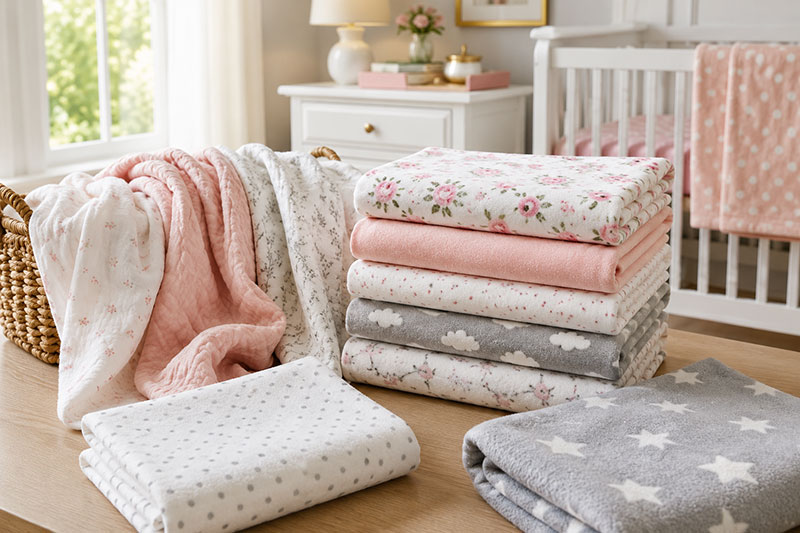
A practical baby blanket fabric should wash cleanly, fold easily, and keep its shape after repeated use.
For baby blankets, cotton flannel and muslin are the fabrics I reach for first. Flannel is nice for receiving blankets because it has a brushed surface and enough weight for cooler rooms. Muslin is better for lightweight swaddles because it breathes well and does not feel bulky when folded.
Many blanket problems begin when the fabric is too thick. A heavy blanket may look expensive on a gift table, but it can be awkward in a real nursery drawer. It takes up space, dries slowly, and may not fold neatly into a diaper bag.
For everyday use, I would rather have three washable cotton blankets than one fancy blanket that makes a parent hesitate before using it. Baby items should not be so precious that they become shelf decorations.
For sleep, follow current safe sleep guidance and keep loose blankets out of an infant sleep space. The American Academy of Pediatrics explains safe sleep recommendations at HealthyChildren.org.
Best Fabric for Baby Crib Quilts
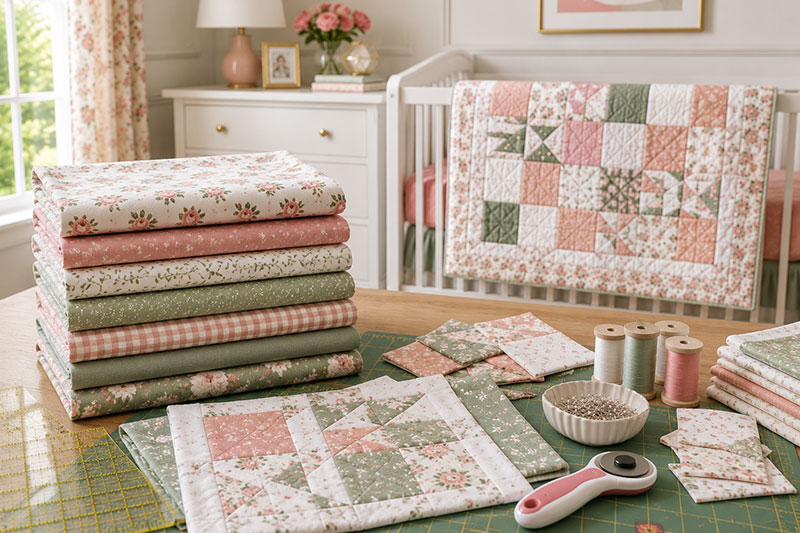
Quilt-weight cotton gives a baby crib quilt a cleaner pieced look and helps the seams press neatly.
For a baby crib quilt, quilt-weight cotton is the cleanest choice. It is easier to cut, easier to press, and easier to sew in accurate seams than stretchy knits, fleece, velvet, or decorator fabrics. A crib quilt has many seams, so a fabric that behaves under the needle saves frustration.
I notice this most when mixing fabrics. A cotton square beside a stretchy square can pull the quilt top out of shape before the backing is even attached. That tiny mismatch becomes very obvious after quilting.
If you are using a novelty print, check the scale before cutting. Large characters and big motifs can disappear into seams. Smaller prints, tone-on-tone patterns, checks, dots, and simple florals often work better in patchwork because each piece still looks intentional after trimming.
For more finished project ideas, browse the free baby patterns page, this fox quilt pattern, and the jungle baby quilts guide if you are matching animal prints to a nursery theme.
Solid and small-print quilt-weight cottons also work well in my free apple appliqué quilt pattern, which provides the fabric requirements, cutting guide and printable pieces for a complete baby-size quilt.
Choosing Fabric for Baby Clothes
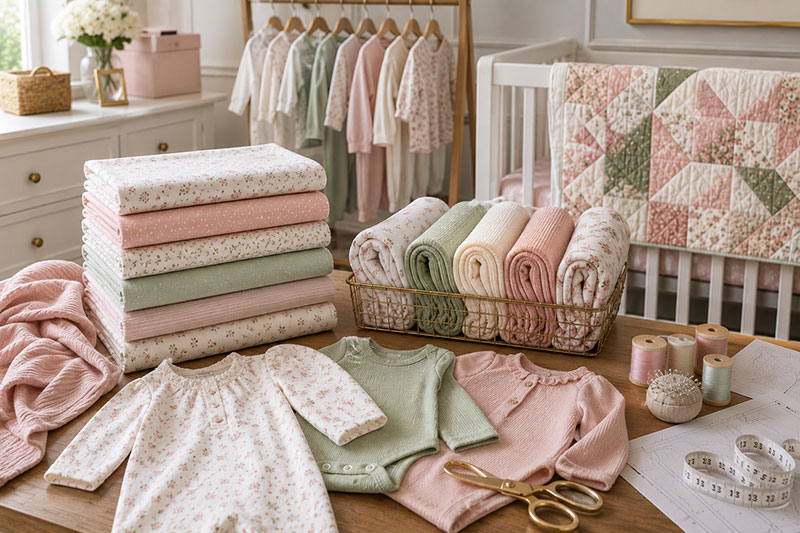
Baby clothes need fabric that moves, washes well, and does not become scratchy around necklines or cuffs.
Baby clothes are different from blankets because movement matters. A woven cotton can work for simple dresses, bloomers, bonnets, and little tops, but cotton knit is often better for sleepers, gowns, leggings, and anything that needs stretch.
Read fabric labels carefully when sewing clothing. In the United States, children’s sleepwear has flammability rules, and some fabric bolts are marked not intended for children’s sleepwear. The Consumer Product Safety Commission explains fabric and sleepwear requirements under the children’s sleepwear regulations.
For personal sewing, I still treat that warning with respect. A cute print is not enough reason to turn the wrong fabric into pajamas. If a fabric says it is not for children’s sleepwear, use it for a quilt top, nursery bunting, a tote, or a decorative project instead.
For handmade gift ideas that are not sleepwear, the crochet baby shower gifts page may help you pair a sewn item with a small handmade present.
Best Fabric for Bibs and Burp Cloths
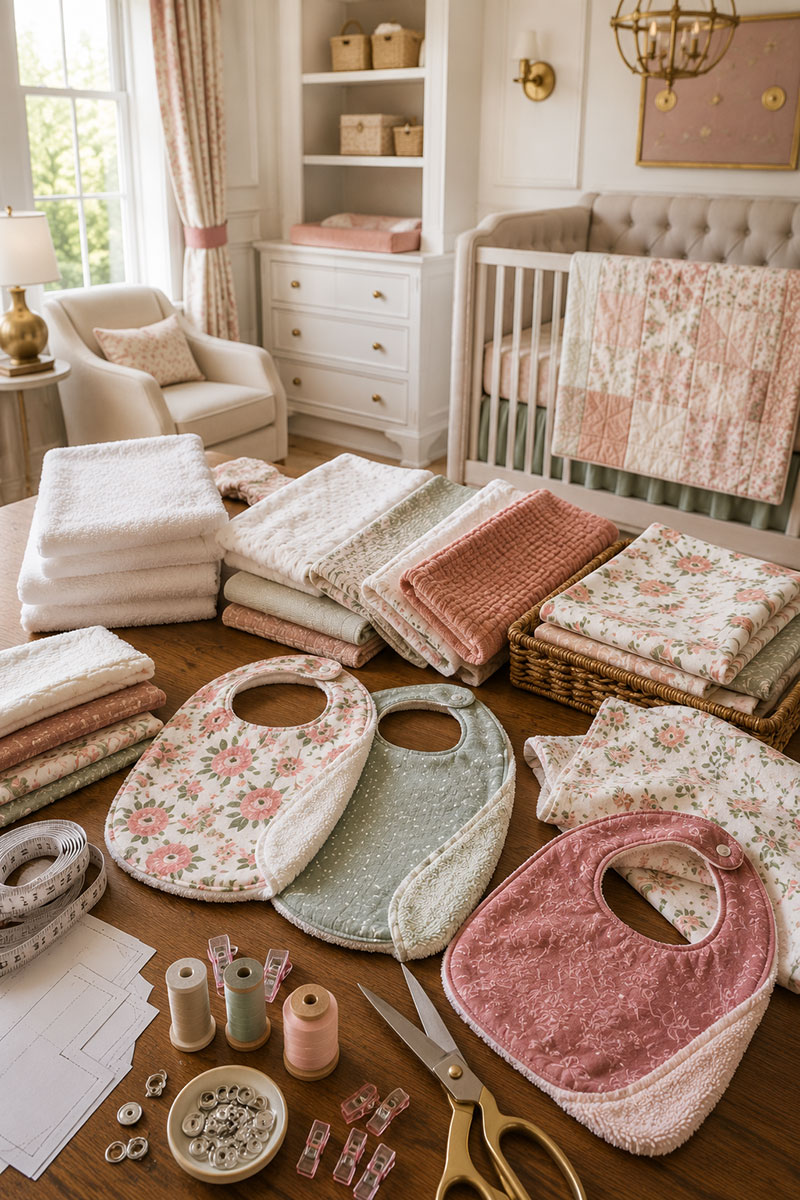
Bibs and burp cloths need absorbent fabric more than decorative fabric.
Bibs and burp cloths are the place where pretty fabric can trick you. The front can be cute cotton, but the back needs to do the real work. Cotton terry, cotton chenille, flannel, or birdseye cotton are better choices than thin decorative fabric alone.
A burp cloth that looks darling but does not absorb anything will be abandoned fast. Parents find out during the first messy feeding, not after reading a fabric description.
For bibs, avoid stiff fabric around the neck. The finished edge should sit comfortably and survive repeated washing. If I am making a baby gift, I like a cotton print on the front and a more absorbent cotton layer on the back. It looks finished but still earns its drawer space.
If you are building a larger handmade gift basket, combine bibs or burp cloths with a small blanket and a simple project from DIY nursery decor ideas.
Fabrics to Avoid for Baby Projects
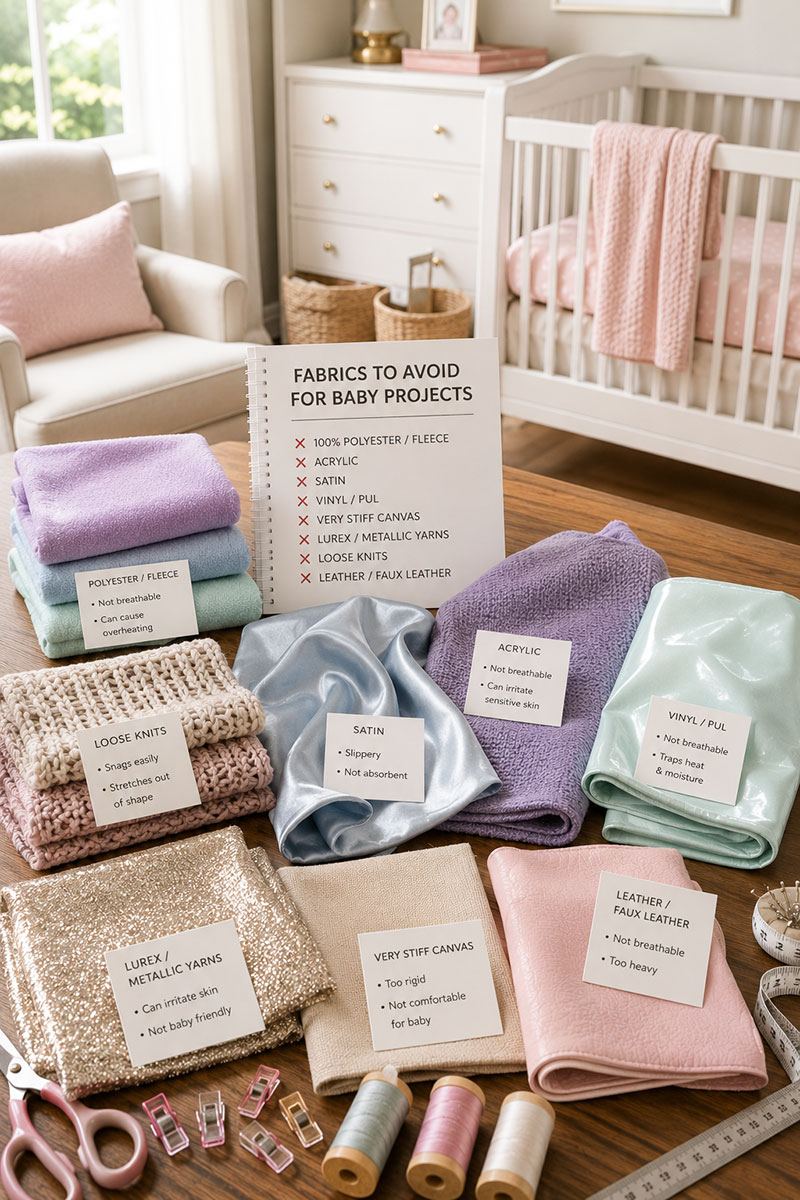
Decorative fabrics are not always suitable for baby blankets, clothing, bibs, or crib quilt backs.
Some fabrics are better left out of baby projects. I would avoid scratchy trims, loose sequins, glitter fabric, stiff upholstery material, heavily textured decorator cloth, and anything that sheds fibers after handling. Those materials may photograph well, but they are not practical for items that will be washed, handled, and used around a baby.
Fleece deserves a closer look. Some fleece is useful for stroller blankets or supervised floor time, but many fleece fabrics are polyester. Polyester can hold warmth, which is not always what you want in a warm nursery or layered outfit.
Prewash fabric before sewing unless the pattern specifically says not to. I have seen cotton shrink enough to wrinkle a quilt backing after the first wash. Prewashing also tells you whether the color bleeds, whether the texture changes, and whether the fabric still looks worth your time.
A fabric that cannot survive the laundry should not become a baby essential.
Should You Use Fabric Softener on Baby Clothes?
Fabric softener is one of those laundry questions that comes up fast once baby clothes start piling up. I would skip regular fabric softener on baby clothes, blankets, bibs and burp cloths unless the product label clearly says it is appropriate for baby laundry and your pediatrician has not advised otherwise.
Some fabric softeners leave residue behind, and that residue can build up on absorbent fabrics. That matters most with bibs, burp cloths, cloth diapers, washcloths and receiving blankets because those items need to absorb, not repel moisture.
If baby has sensitive skin, eczema, unexplained redness or frequent irritation, fragrance-free detergent and an extra rinse cycle are often a better starting point than adding another laundry product. I believe baby fabric should come out clean before it comes out perfumed.
For handmade baby gifts, I like to wash the finished item once with fragrance-free detergent before giving it. It removes lint, shows whether the seams behave, and tells me whether the fabric still looks gift-worthy after real laundry.
Easy Baby Blanket Material List
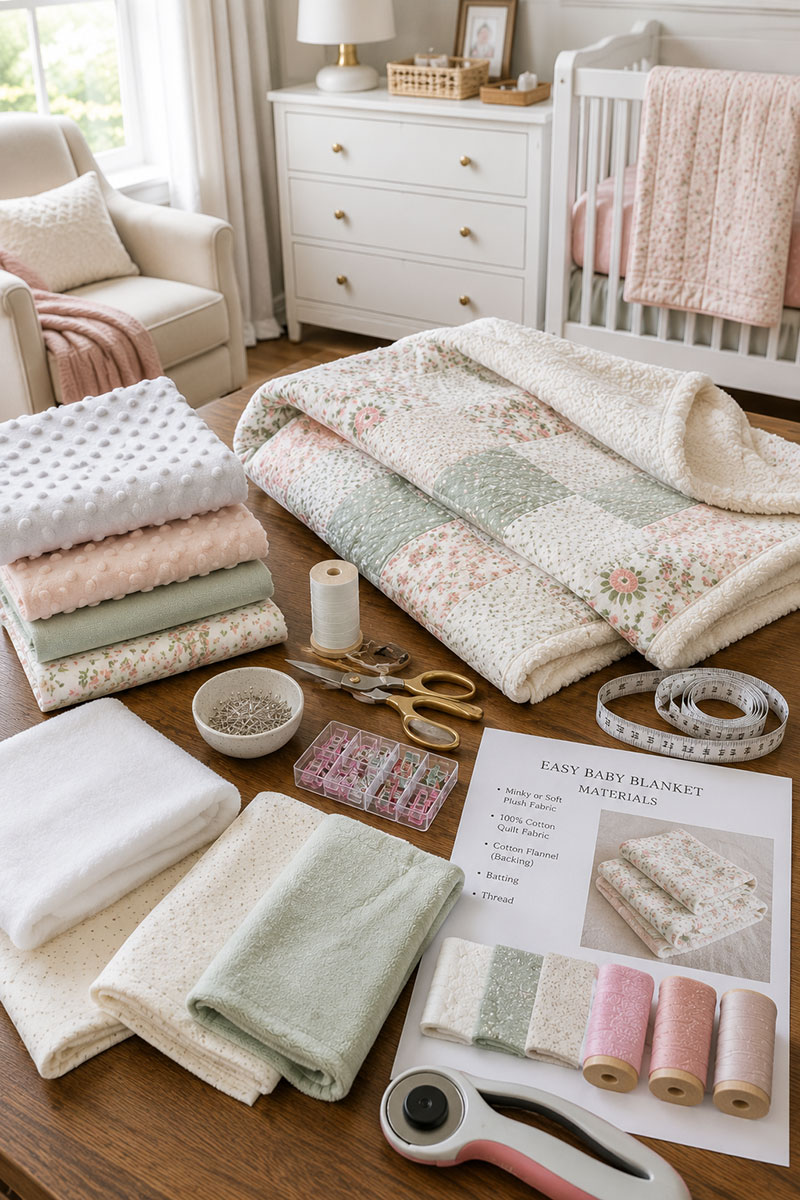
A simple cotton flannel baby blanket is a good first project because the fabric is forgiving and useful.
A simple flannel baby blanket is a good starter project if you want something useful without a complicated pattern. Choose two cotton flannel fabrics that coordinate without copying a licensed character design. If you are inspired by a designer print, change the color mix, scale, border, and layout so the finished blanket is clearly your own.
Materials:
- 1 yard cotton flannel for the front
- 1 yard cotton flannel for the back
- Cotton thread
- Sewing clips or pins
- Fabric scissors or rotary cutter
- Measuring tape
- Iron
Steps:
- Prewash and dry both pieces of flannel.
- Press the fabric so the edges lie flat.
- Trim both pieces to the same size.
- Place the fabrics right sides together.
- Pin or clip around the edges.
- Sew around the blanket with a half inch seam allowance, leaving a small opening for turning.
- Trim the corners without cutting the stitching.
- Turn the blanket right side out.
- Press the edges flat.
- Topstitch around the entire blanket, closing the opening as you sew.
I've learned that a plain edge often lasts longer than an overly decorated one. Ruffles, ribbons, and extra trim can look charming at first, but simple stitching is easier to wash and easier to live with.
Baby Fabric Questions Parents Ask
What is the best fabric for baby blankets?
Cotton flannel is a good choice for receiving blankets, while muslin works well for lightweight swaddles. Quilt-weight cotton can be used for pieced blanket tops, especially when the blanket is made like a small quilt.
What fabric should I use for a baby quilt?
Use quilt-weight cotton for the quilt top and binding. It cuts cleanly, presses well, and holds its shape better than stretchy or bulky fabrics.
Is fleece good for baby blankets?
Fleece can be useful for supervised use, stroller blankets, or floor time, but many fleece fabrics are polyester. Check the fiber content and avoid using loose blankets in an infant sleep space.
What fabric is best for baby bibs?
Cotton terry, flannel, chenille, and birdseye cotton are useful for bibs because they absorb moisture. A cotton print can be used on the front if the back has a more absorbent layer.
Should baby fabric be prewashed?
Yes, prewashing helps reveal shrinkage, bleeding, texture changes, and lint before you spend time sewing the project.
When you click on links to various merchants on this site and make a purchase, this may result in this site earning a commission. This does not affect the price you pay.

UBGI Gold Standard 2026
Reviewed under the site's
editorial checklist.
Photos, decorating ideas, party setups and reader submissions are shared for inspiration unless a page is specifically presented as a pattern, tutorial, reference guide or step-by-step project. Follow the instructions, measurements, safety guidance and manufacturer directions provided for the particular project or product.
About Jan | Contact | Baby Nursery Ideas (Blog) | Site Map | Privacy Policy | Disclosure Policy | Disclaimer | Affiliate Disclosure | Earnings Disclosure | Facebook | Pinterest
I am a participant in the Amazon Services LLC Associates Program, an affiliate advertising program designed to provide a means for us to earn fees by linking to Amazon. As an Amazon Associate I earn from qualifying purchases.
Copyright © 2006-2026. All Rights Reserved.