Crochet Fish Pattern to Make an Adorable Fish
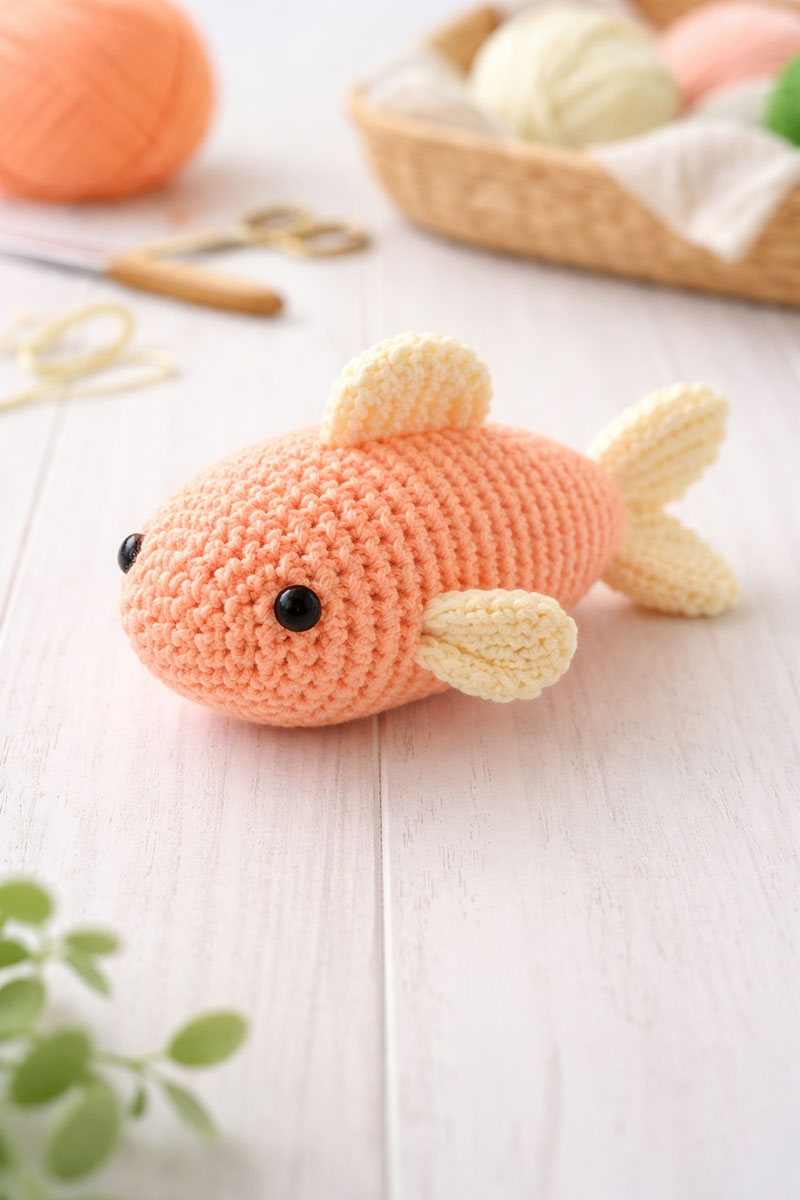
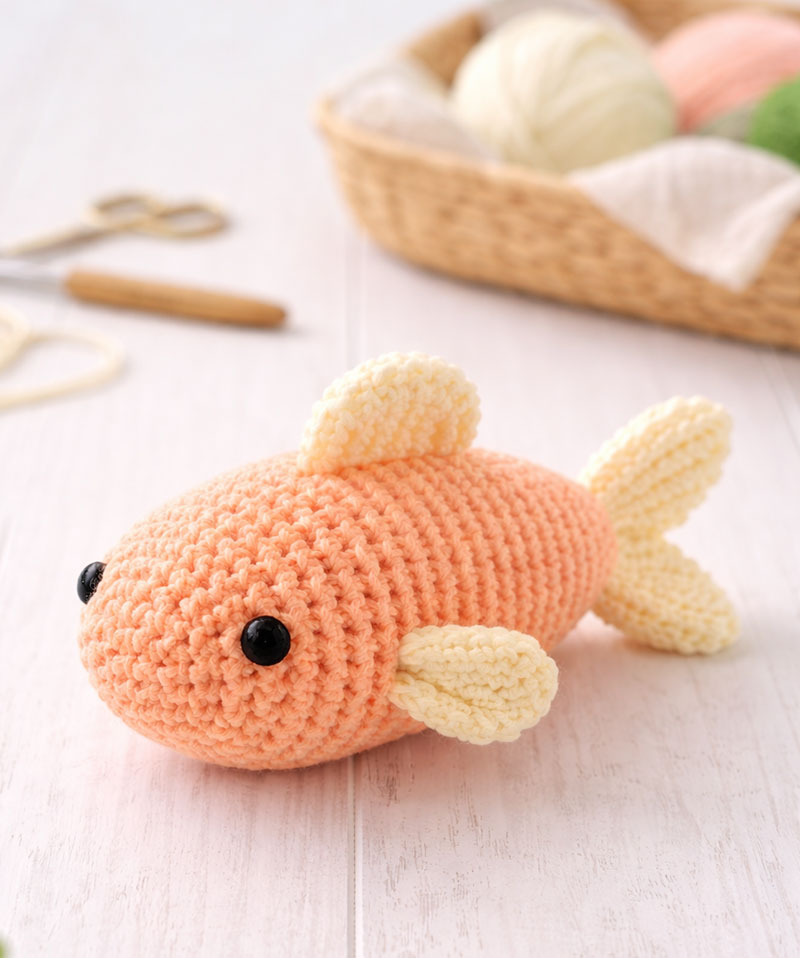
This crochet fish pattern helps you make a fish that actually looks like a fish when you finish it. The shape stays fuller near the head, narrower through the middle, and tapered at the tail, so it does not turn into a round little blob halfway through. The crochet stitches are beginner-friendly, while the embroidery, placement, and assembly make the complete project best suited to an advanced beginner.
More Crochet Patterns and Nursery Ideas
Jump to what you need
Small crochet animals can go wrong fast. One extra increase and the body turns round when you wanted a clean fish shape. This crochet fish pattern keeps the form narrow through the middle, fuller near the head, and tapered at the tail so the finished piece actually reads as a fish the second you pick it up.
The best part is what happens after this one is done. Once you understand how the shaping works, it gets much easier to make a variety of ocean-dwelling sea creatures that can be used as toys as well as room decor.
That same idea also displays well in a nursery setting, especially with these fish theme baby bedding ideas that mix fish crib sheets, koi-inspired accents, fishing decor, and layered ocean colors without making the room feel overly themed.
To see how these ocean animals compare with other soft toy styles, these crochet animal lovey patterns show how the same idea carries across different animals and designs.
To use those pieces as decorations above the crib, my ocean crib mobile ideas show how to arrange fish and other sea creatures so they hang evenly and feel balanced.
That’s where the crochet jellyfish pattern, crochet sea turtle pattern, crochet seahorse lovey pattern, crochet octopus pattern, crochet starfish lovey pattern, crochet whale pattern, and crochet otter lovey pattern can work together as a handmade under-the-sea set for nursery shelves, baby gift baskets, mobile displays, and ocean-themed room decor.
My sea creature crochet pattern collection keeps the fish, jellyfish, octopus, turtle, whale, starfish, and other ocean animals together so the whole set is easier to plan, while the larger free baby crochet patterns collection and under the sea nursery ideas page give you more ways to carry the same look through the room.
Quick answer: This crochet fish pattern is built by increasing only at the head, holding the middle rounds steady, then decreasing in a controlled way into the tail while placing fins and features using fixed stitch positions for a consistent final result.
Do not use plastic safety eyes on a fish meant for a baby.
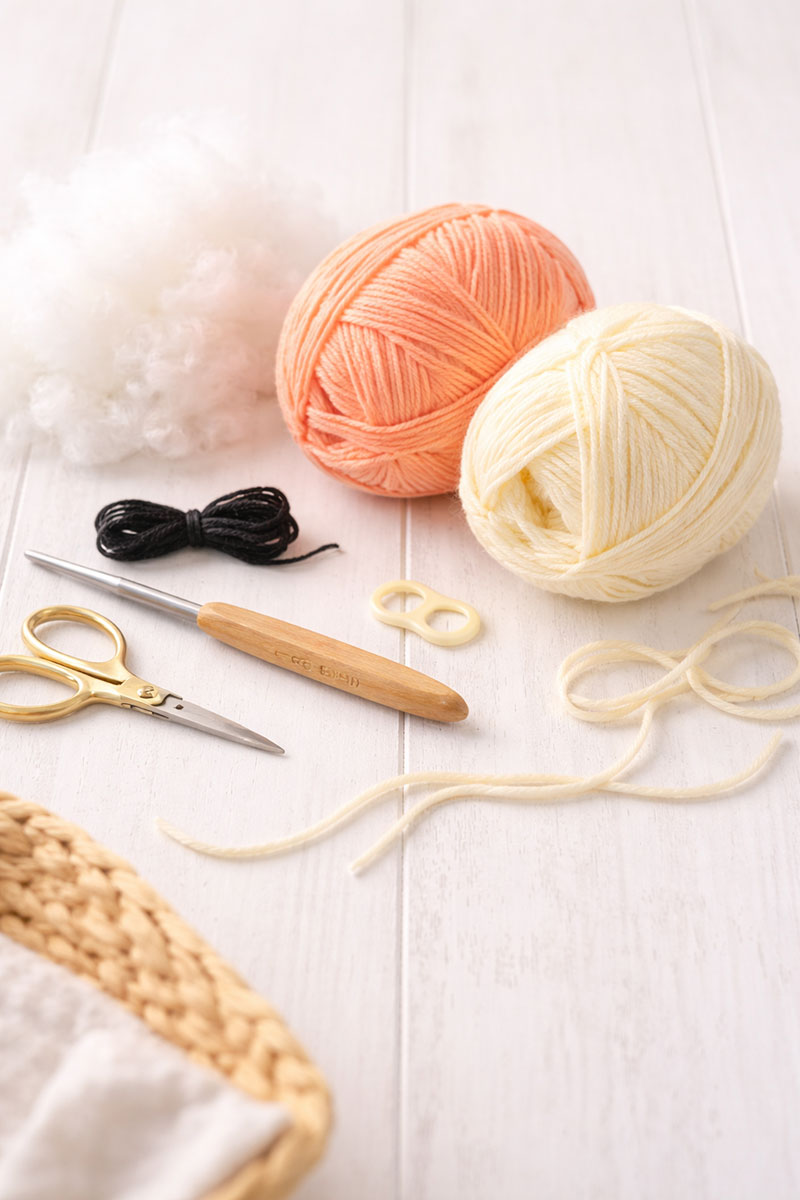
Supplies for the crochet fish pattern
Small material choices affect the final shape more than expected. Yarn that holds structure keeps the fish from collapsing once handled, and a slightly smaller hook helps maintain tight stitches.
Skill level: Advanced beginner. The crochet stitches are basic, but the project also requires continuous rounds, decreases, embroidery, placement, and sewing small pieces securely.
Gauge: Exact gauge is not required. Use firm amigurumi tension so the stitches do not spread and the stuffing does not show between them.
Finished size: Approximately 5 inches long and 2 inches wide when made with worsted-weight yarn and a 3.5 mm hook. The finished size will vary with yarn, hook, tension, and stuffing.
Materials:
Worsted weight yarn in main color
Optional contrast yarn for the top fin, side fins, and tail lobes
Black yarn or black embroidery floss for embroidered eyes
3.5 mm crochet hook
Polyfill stuffing
Yarn needle
Stitch marker
Removable stitch markers or a short strand of contrasting yarn for marking the top center
Scissors
Terminology: This pattern uses standard US crochet terms.
Abbreviations:
MR = magic ring
ch = chain
sc = single crochet
hdc = half double crochet
dc = double crochet
inc = 2 sc in one stitch
dec = single crochet 2 stitches together
sl st = slip stitch
The ch 1 at the beginning of each top-fin row is a turning chain and does not count as a stitch. The slip stitch used to join a side fin or tail lobe also does not count toward the stated stitch total.
Leave at least a 6-inch starting tail on every separate piece. Unless a starting tail is specifically reserved for sewing, weave it securely back and forth through the piece before assembly and trim it only after it cannot pull free.
Work the fish body in continuous rounds. Do not join or turn unless an instruction specifically tells you to do so.
Place a stitch marker in the first stitch of each round and move it up as you work. Use this marker only to count the rounds. Because continuous rounds form a spiral, the beginning of the round will drift and should not be treated as a straight top-center line.
How to crochet a fish step by step
Round 1: 6 sc in MR. 6
Round 2: inc in each stitch. 12
Round 3: sc, inc around. 18
Round 4: 2 sc, inc around. 24
Round 5: 3 sc, inc around. 30
Round 6: 4 sc, inc around. 36
Pull the magic ring closed firmly. Keep the starting tail inside the body. Before stuffing, thread that tail onto the yarn needle, weave it under the backs of several stitches around the center, then weave back in the opposite direction through several more stitches. Trim only after the center is secure and cannot loosen.
Rounds 7–10: sc in each stitch. 36
Round 11: 4 sc, dec around. 30
Round 12: sc in each stitch. 30
Round 13: 3 sc, dec around. 24
Round 14: sc in each stitch. 24
Round 15: 2 sc, dec around. 18
Begin stuffing the head firmly at this stage. Add enough stuffing to hold the rounded shape, but stop before the stitches spread or the stuffing shows between them.
Round 16: sc in each stitch. 18
Round 17: sc, dec around. 12
Round 18: sc in each stitch. 12
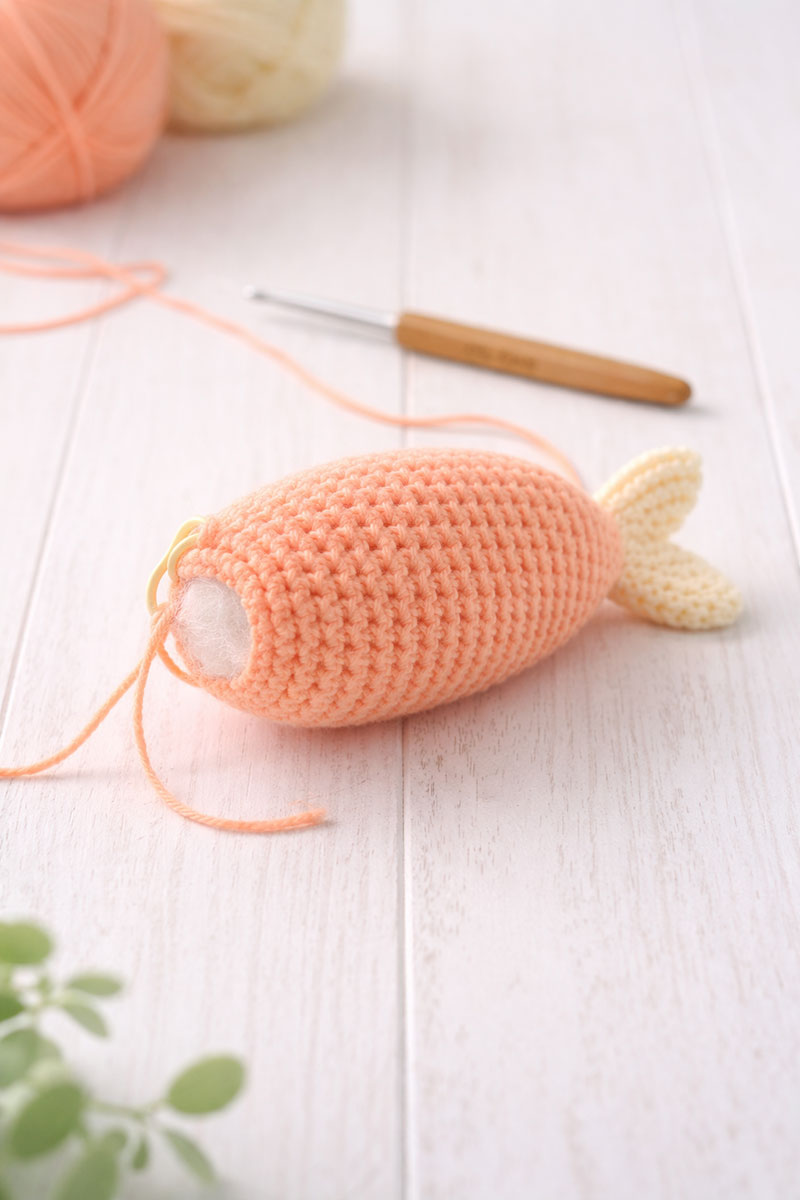
Add enough stuffing to hold the fish shape, but leave enough room to reach inside through the 12-stitch opening. Keep the head firm and the narrowing tail section lightly filled.
Fasten off after Round 18, leaving an 18-inch yarn tail. Do not close the opening yet. The eyes, top fin, and side fins will be attached before the final stuffing and tail closure.
How to shape the fish body and fins
Top fin, make 1:
Leave a 12-inch starting tail for sewing, then ch 7.
Row 1: Starting in the 2nd chain from the hook, sc in each chain across. 6
Row 2: Ch 1 and turn. Dec, sc in the next 2 stitches, dec. 4
Row 3: Ch 1 and turn. Dec twice. 2
Row 4: Ch 1 and turn. Dec. 1
Fasten off and weave in the ending tail. Use the 12-inch starting tail at the foundation-chain edge to sew the fin to the fish. The six-stitch foundation edge is the edge that will be attached.
Side fins, make 2:
Ch 7. Do not turn. The fin is worked around both sides of the foundation chain.
Starting in the 2nd chain from the hook, sl st in the first chain, sc in the next chain, hdc in the next chain, dc in each of the next 2 chains, and work 5 dc in the final chain.
Continue along the opposite side of the foundation chain. Dc in each of the next 2 chains, hdc in the next chain, sc in the next chain, and sl st in the final chain. Join with a sl st to the first sl st. 15 stitches
Fasten off, leaving a 12-inch yarn tail. The end containing the first and final slip stitches is the narrow base. The end containing the 5 dc group is the rounded outer tip.
Tail lobes, make 2:
Ch 6. Do not turn. The tail lobe is worked around both sides of the foundation chain.
Starting in the 2nd chain from the hook, sl st in the first chain, sc in the next chain, hdc in the next chain, dc in the next chain, and work 5 dc in the final chain.
Continue along the opposite side of the foundation chain. Dc in the next chain, hdc in the next chain, sc in the next chain, and sl st in the final chain. Join with a sl st to the first sl st. 13 stitches
Fasten off, leaving a 12-inch yarn tail at the narrow slip-stitch base for assembly. Do not weave in this tail yet. The slip-stitch end is the narrow base that will be inserted into the body opening.

Placement and assembly guide for this crochet fish pattern
Mark the top and sides:
Lay the lightly stuffed body horizontally with the magic-ring end at the front of the fish and the open 12-stitch end at the tail. Look at the fish from the front and mark a straight visual center along the top with removable pins or a strand of contrasting yarn. Do not use the beginning-of-round marker as the top line because that marker drifts in continuous rounds.
Eye placement:
At Round 6, choose the stitch centered directly beneath the marked top line as the top-center reference stitch. Do not count the reference stitch itself. Count 9 stitches clockwise for one eye and 9 stitches counterclockwise for the other eye. This places the eyes 18 stitches apart around the 36-stitch circumference.
Safety eyes caution for baby gifts
Use black yarn or embroidery floss to make several secure satin stitches for each eye. Secure the yarn ends inside the body while the tail opening is still accessible. Do not use plastic safety eyes for a fish intended for a baby.
Use the finished fish only with adult supervision. Keep it out of cribs, bassinets, and other infant sleep spaces. Inspect it regularly and stop using it if a seam loosens, a yarn end becomes exposed, or stuffing can be reached.
Top fin placement:
Place the six-stitch foundation edge of the top fin along the marked top center. Position the front of the fin at Round 8 and the back at Round 13. Sew one section of the foundation edge to each adjacent body round so the base lies flat without gathering or stretching.
Side fin placement:
At Round 10, choose the stitch centered directly beneath the marked top line as the top-center reference stitch. Do not count the reference stitch itself. Count 9 stitches clockwise for one fin and 9 stitches counterclockwise for the other. Center each narrow slip-stitch base across the space between Rounds 10 and 11 at those two positions so the fins sit directly opposite one another. Angle the rounded tips slightly toward the tail.
Sew through the narrow base and the surrounding edge stitches several times. Keep the rounded portion free so the fin projects from the body. Secure and bury all sewing tails inside the fish through the open tail end.
Assembly and finishing steps
Finish stuffing the body after the eyes, top fin, and side fins have been attached. Keep the head firm, the middle evenly filled, and the final tail section lightly filled.
Thread the 18-inch body yarn tail through the front loops of all 12 remaining stitches, but do not tighten the opening completely.
Insert the narrow slip-stitch end of each tail lobe approximately 1/4 inch into the opening. Keep both flat lobes in the same vertical plane, with their broad faces pointing toward the left and right sides of the fish. Position one rounded end toward the top and the other toward the bottom so the tail fans apart vertically without either lobe twisting sideways.
Use each tail lobe’s 12-inch yarn tail to sew its narrow base to the inside edge of the body opening with 2 or 3 small stitches. Secure and bury both yarn tails inside the body before tightening the opening with the body yarn tail.
Pull the body opening snug around both tail-lobe bases. Before closing completely, pass the body yarn tail through both tail bases and through the body stitches on the opposite side at least three times. This secures the tail lobes rather than relying only on the gathered opening.
Pull the opening closed. Pass the needle through the center twice to lock the closure, then weave the yarn tail through the stuffed body for at least 2 inches before trimming.
Check every fin and tail lobe by pulling gently at the base. No attachment should lift away from the body or expose a loose yarn loop.
Crochet fish pattern tips that improve the result
Keep the stitch marker in the first stitch of each round and move it up as you work.
Maintain consistent stitch tension across all rounds.
Do not overstuff the tail section.
Match yarn thickness across all parts.
To build a coordinated nursery theme, this fish pairs naturally with sea turtle nursery and ocean themed nursery ideas.
More crochet patterns and nursery ideas
Continue with free baby crochet patterns, or try another shape like fox crochet pattern or crochet bunny lovey pattern.
FAQ about this crochet fish pattern
Is this crochet fish pattern beginner friendly?
The crochet stitches are beginner-friendly, but the embroidery, placement, and assembly make the complete project best suited to an advanced beginner.
Can I change the size?
Yes. Use thicker yarn and a larger hook.
What yarn works best?
Worsted weight yarn provides the best structure.
Can I sell finished items?
Yes. Handmade items from this pattern can be sold.
When you click on links to various merchants on this site and make a purchase, this may result in this site earning a commission. This does not affect the price you pay.

UBGI Gold Standard 2026
Reviewed under the site's
editorial checklist.
Photos, decorating ideas, party setups and reader submissions are shared for inspiration unless a page is specifically presented as a pattern, tutorial, reference guide or step-by-step project. Follow the instructions, measurements, safety guidance and manufacturer directions provided for the particular project or product.
About Jan | Contact | Baby Nursery Ideas (Blog) | Site Map | Privacy Policy | Disclosure Policy | Disclaimer | Affiliate Disclosure | Earnings Disclosure | Facebook | Pinterest
I am a participant in the Amazon Services LLC Associates Program, an affiliate advertising program designed to provide a means for us to earn fees by linking to Amazon. As an Amazon Associate I earn from qualifying purchases.
Copyright © 2006-2026. All Rights Reserved.