Baby Blankets Guide: Types, Sizes, Safety and Patterns
By Jan Bay
Baby blankets come in many forms, from lightweight receiving and swaddling blankets to handmade crochet, knitted and quilted keepsakes. This guide will help you compare common types, sizes, materials and uses, then lead you to detailed patterns, yarn advice, gift ideas and important safe sleep information.
Explore Sizes, Materials and Handmade Projects
Blanket Size and Measurement Chart
Baby Crib Quilt Patterns and Appliqué Projects
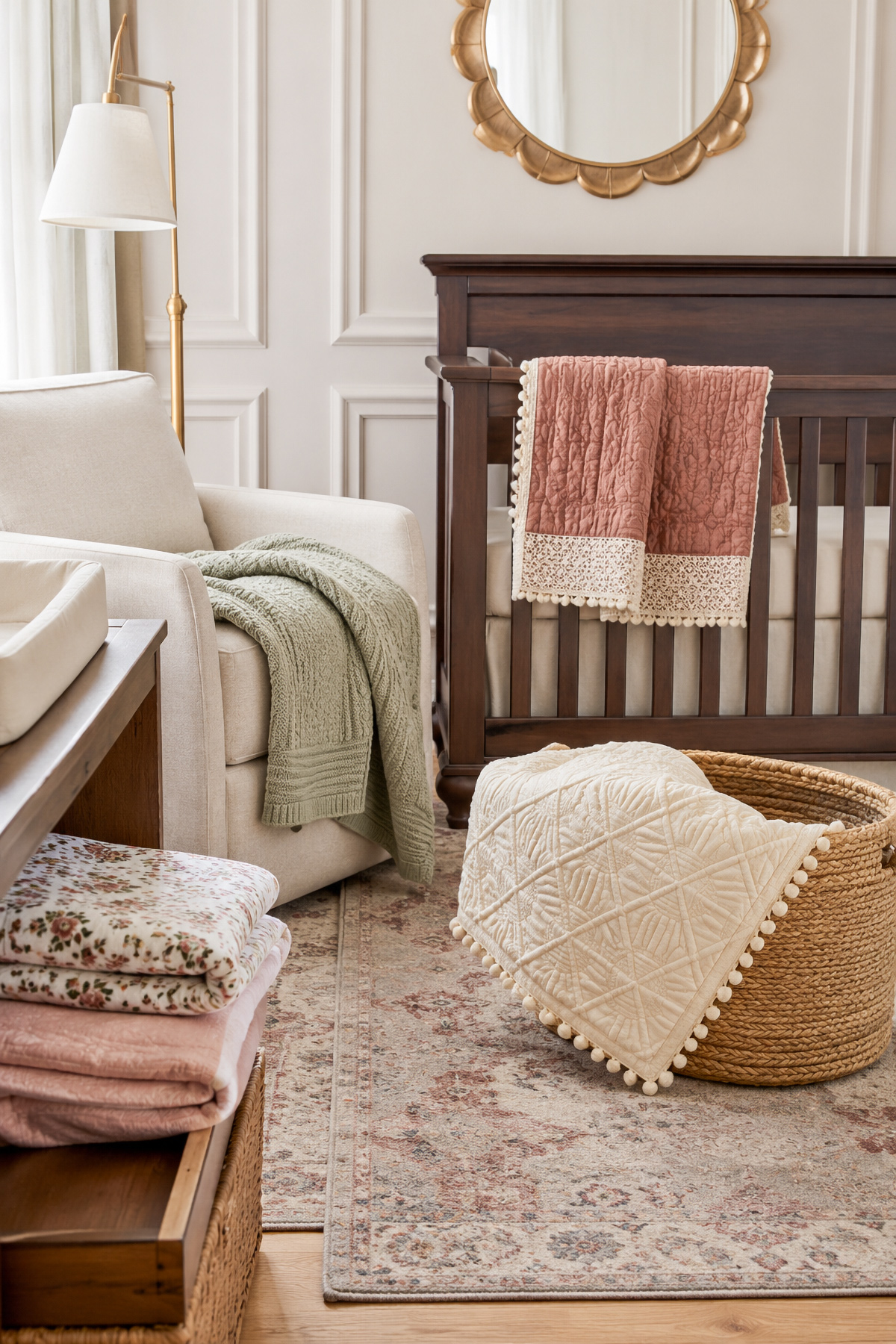
Soft Cotton Muslin Receiving Blankets
Blanket Types and What Each One Is For
A thin receiving cloth, a large muslin swaddle, a fitted wearable sleep sack and a handmade quilt serve different jobs. Decide where and how the item will be used before choosing its size, fabric or pattern.
An important note about infant sleep
Keep loose blankets, quilts, comforters, pillows and other soft items out of an infant’s crib, bassinet and play yard. The sleep space should have a firm, flat mattress covered by a fitted sheet and nothing else. For warmth, choose suitable sleep clothing or a correctly fitted, non-weighted wearable blanket rather than placing a loose blanket over the baby.
Current federal and pediatric guidance is summarized in the dedicated safety section below.
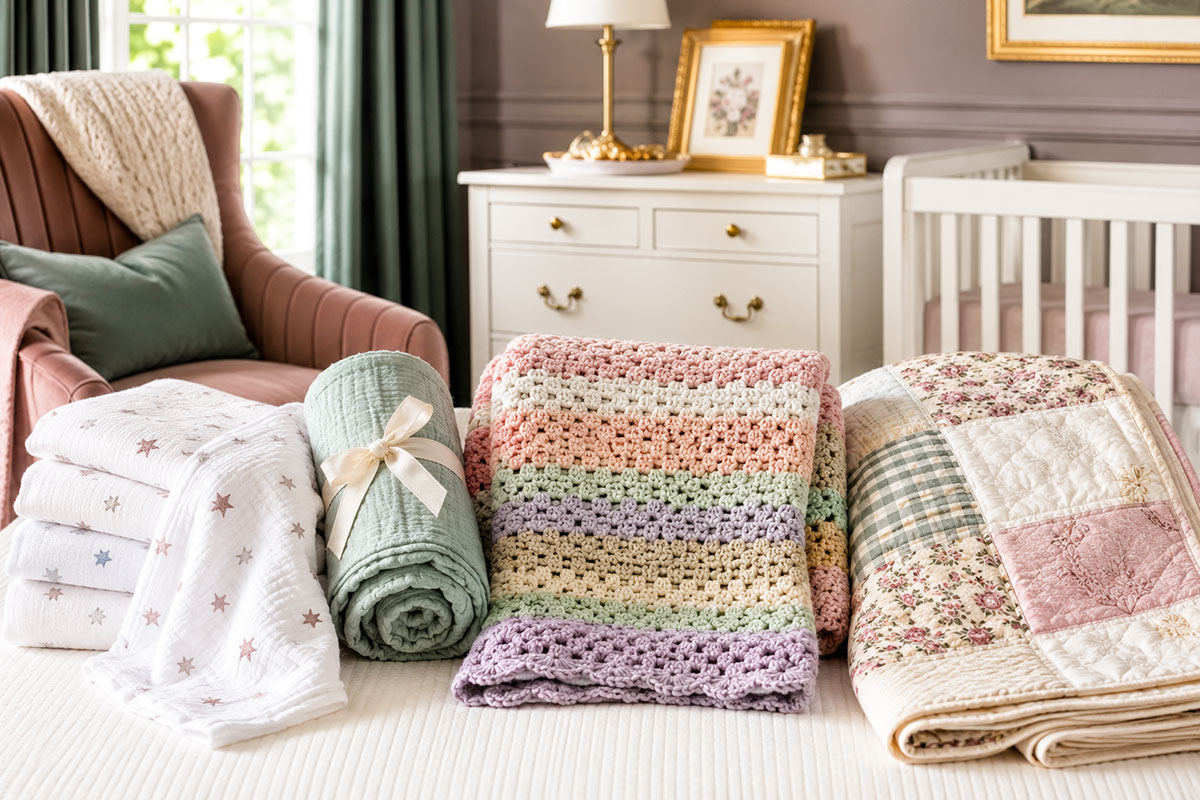
Receiving Blankets
Receiving blankets are lightweight, washable and easy to tuck into a diaper bag. They can be used during supervised cuddling, as a clean surface for changing a baby, over an adult’s shoulder during burping, or across a baby’s lap while the adult remains nearby.
They are often made from flannel, cotton or muslin. Although the name sounds as though every newborn needs a stack of them, a few practical sizes and fabrics are more useful than a drawer full of nearly identical blankets.
Swaddling Blankets
A swaddling blanket is generally larger and lighter than a traditional receiving blanket. The extra width allows the fabric to wrap around the baby without creating a thick bundle.
Swaddling must be used carefully and stopped as soon as a baby shows signs of trying to roll. The blanket should remain away from the face, allow room for natural hip movement and never be weighted. Swaddling fabrics, shapes and safe-use considerations are covered in more detail later in this guide.
Stroller Blankets
A stroller blanket is intended for outings rather than unattended sleep. It may be placed across a baby’s legs while an adult is watching, provided the blanket stays away from the face, wheels and moving parts.
A small or medium blanket is often easier to manage than a large crib-size design. It is less likely to drag on the ground, and it can be folded into a diaper bag without taking over the entire compartment.
Wearable Blankets
A wearable blanket, sometimes called a sleep sack, is worn like clothing and does not lie loose in the sleep space. Correct sizing matters because the neck and arm openings must fit as the manufacturer intends.
A wearable blanket should not be weighted. It should also be appropriate for the room temperature so the baby does not become too warm.
Security Blankets and Loveys
A security blanket or lovey is much smaller than a receiving blanket. Some are simple fabric squares, while others have a crocheted or sewn animal head attached.
These little comfort items make sweet handmade gifts and can be enjoyed during supervised awake time. They should not be left loose in an infant’s sleep space. Handmade versions often include animal heads, textured corners or small fabric panels.
Crocheted, Knitted and Quilted Baby Blankets
Handmade blankets range from lightweight cotton designs to textured winter afghans. Their usefulness depends on the yarn, fabric, stitch pattern and finished size rather than the craft method alone.
A lacy crochet blanket may be lovely for a christening photograph or supervised cuddling, while a washable knitted blanket may become the one that travels in the car for years. A carefully made quilt can later serve as a floor blanket, toddler cover or nursery keepsake.
A beautiful blanket should not require a family meeting before anyone knows whether it belongs in the stroller, on the floor or in a keepsake box.
Baby Blanket Sizes for Different Uses
There is no single standard baby blanket size. A receiving blanket may be small enough to fold into a diaper bag, while a handmade toddler blanket may be large enough to cover a child well beyond the baby years. The best dimensions depend on how the blanket will be used.
These common ranges are helpful when buying a blanket, choosing a pattern or planning a handmade gift:
| Blanket Type | Common Size Range | Useful For |
|---|---|---|
| Lovey or security blanket | 12 x 12 to 18 x 18 inches | Supervised comfort, travel and handmade gifts |
| Receiving blanket | 30 x 30 to 36 x 36 inches | Burping, changing, supervised cuddling and outings |
| Swaddling blanket | 40 x 40 to 48 x 48 inches | Wrapping a young baby when swaddling is still appropriate |
| Stroller blanket | 30 x 36 to 36 x 40 inches | Supervised outings without excessive fabric |
| Crochet or knitted baby blanket | 36 x 36 to 40 x 48 inches | Cuddling, floor play, stroller use and keepsake gifts |
| Toddler blanket | 40 x 50 to 45 x 60 inches | Older children who have moved beyond infant sleep guidance |
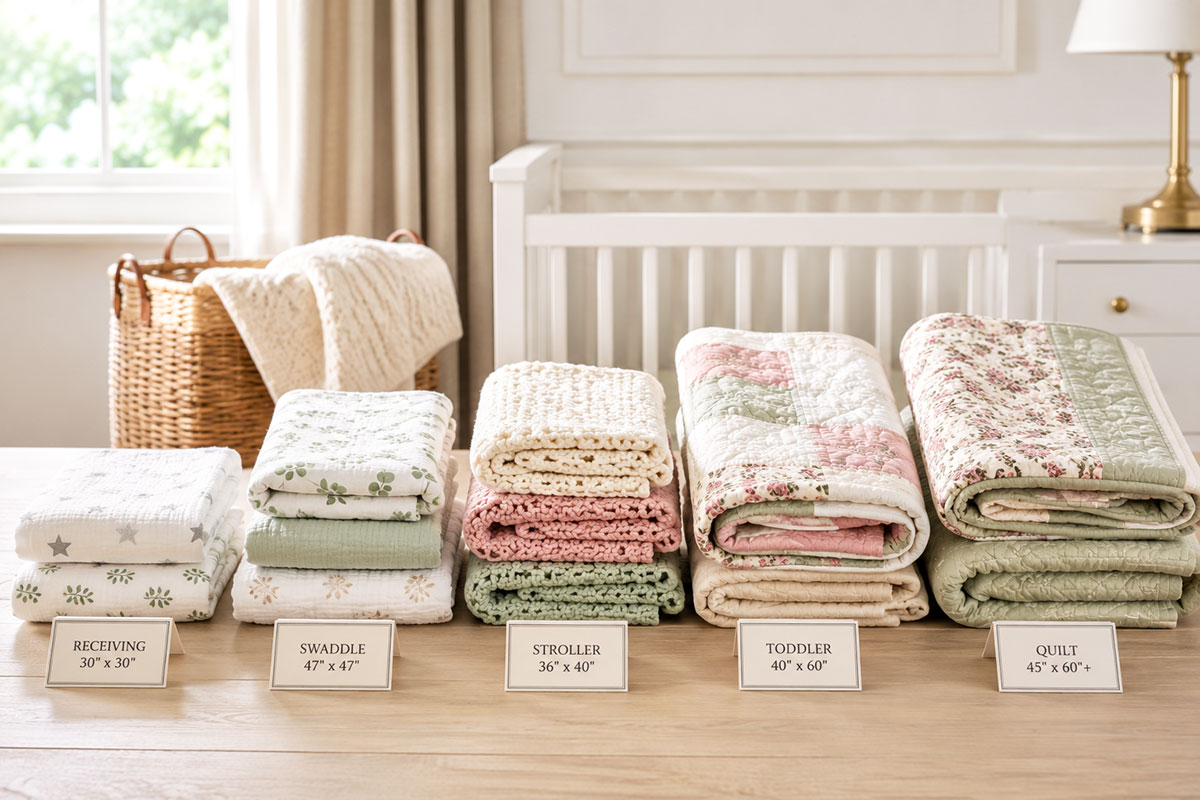
Blanket measurements do not need to match an exact number to be useful. A finished size that is an inch or two different may simply reflect the yarn, fabric width, stitch pattern or washing method.
For crochet and knitting projects, make a gauge swatch before deciding how many chains, stitches or rows to use. A dense stitch and bulky yarn can produce a much wider blanket than the same stitch count worked with lightweight yarn.
Quilt makers also need to allow for seam allowances, quilting and shrinkage. Washing the fabric before cutting can prevent a finished blanket from becoming smaller or uneven after its first trip through the laundry.
The handmade baby blanket size chart gives more guidance for planning crochet, knitted, sewn and quilted projects.
I believe the most useful handmade gift is large enough to remain practical for a while, but not so large that it becomes awkward in a stroller or diaper bag.
How to Choose a Baby Blanket That Will Be Useful
A beautiful blanket may catch your eye first, but its intended use should guide the final choice. A blanket for supervised floor play needs different features from one carried in a diaper bag, presented at a christening or made as an heirloom gift.
Begin with the baby’s age, the season and the setting where the blanket will be used. Then consider how often it will need washing, how bulky it will be when folded and whether the family prefers simple everyday pieces or decorative keepsakes.
After writing about nursery gear and handmade projects for a very long time, I keep coming back to one practical question: will the family know exactly when and how to use it?
Choose the Purpose Before the Fabric
A lightweight cotton or muslin blanket can be practical for warm-weather outings, burping and supervised cuddling. A warmer knitted or crocheted blanket may be better suited to a chilly stroller ride or an older child’s reading chair.
Decorative blankets with lace, loose fringe, buttons, beads or raised embellishments need extra care. They may be suitable for display, photographs or closely supervised use, but they are not appropriate as loose bedding in an infant sleep space.
A blanket does not have to serve every purpose. In fact, a small collection of clearly different blankets is often more useful than several that are nearly the same.
Think About Washing Before Buying or Making
Baby blankets are likely to meet milk, formula, diaper leaks, crumbs and whatever happened to be on the stroller wheel. An everyday blanket should have washing instructions that fit the family’s routine.
Machine-washable cotton, acrylic blends, washable wool and many modern baby yarns are convenient choices. Delicate fibers, embroidered details and loosely worked stitches may require hand washing, reshaping or flat drying.
When making a blanket, wash and dry a sample swatch before beginning the full project. This reveals whether the yarn sheds, stretches, pills, stiffens or changes size. The guide to choosing the best yarn for a baby blanket compares fiber, weight, softness, care and seasonal use.
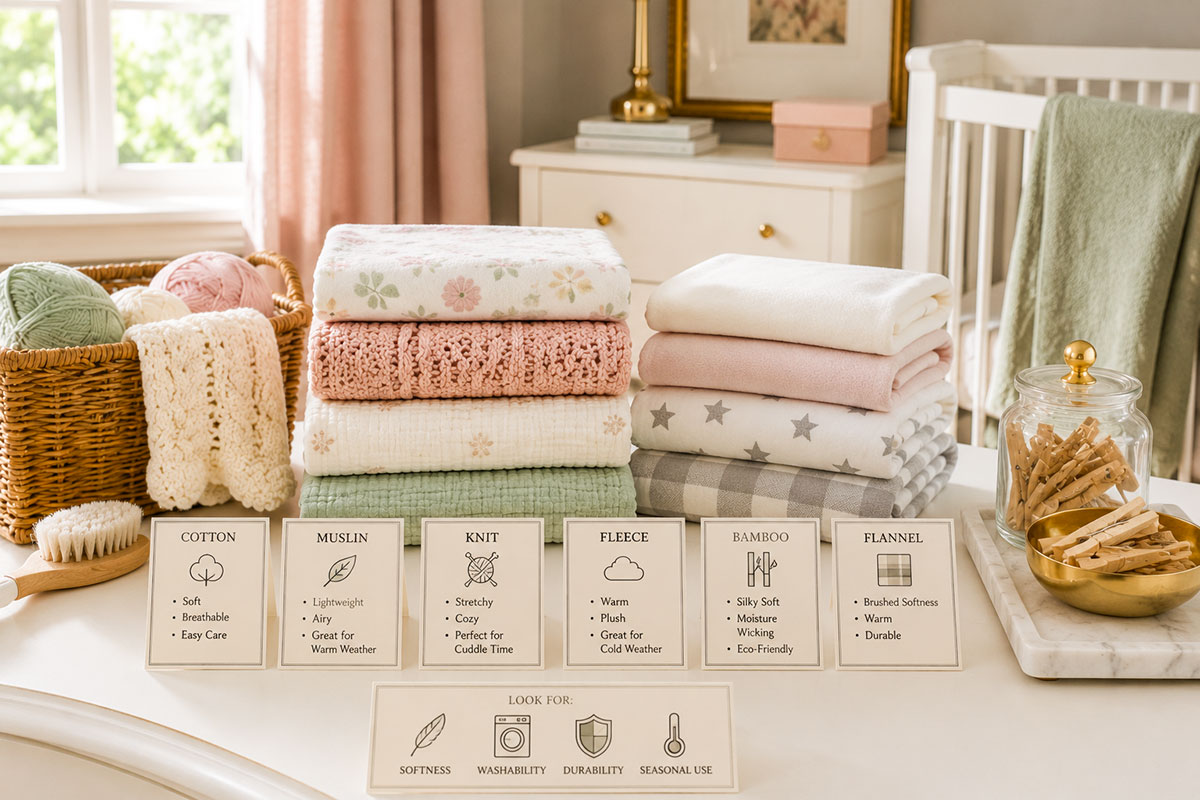
Check the Weight and Warmth
Softness is important, but warmth should match the room, weather and activity. A thick chenille blanket can feel inviting in winter and far too warm during a summer outing.
Fabric labels and yarn names do not always tell the whole story. A tightly woven cotton blanket may feel heavier than an open crochet design, while a bulky yarn can create considerable warmth even when the stitch pattern contains spaces.
For infants, avoid weighted blankets and weighted swaddling products. Extra weight is not needed to make a blanket comforting, and weighted products are not recommended for infant sleep.
Look Closely at Construction
Inspect seams, bindings, appliqués and decorative edges. They should be securely attached, with no loose threads, broken stitching or pieces that can be pulled free.
For a handmade crochet or knitted blanket, weave in yarn ends carefully and check the project again after washing. Long loops, loose fringe and large decorative attachments can catch on fingers, toes or nearby objects.
A quilt should have secure stitching across the layers so the batting does not shift into heavy lumps. A sewn blanket should have smooth seams and corners without pins, rough edges or exposed elastic.
Consider How Long the Blanket May Be Used
A tiny newborn blanket is charming, but a slightly larger design may remain useful for supervised floor time, stroller outings and the toddler years. Larger is not always better, though. An extra-large blanket can be cumbersome in a diaper bag and may drag near stroller wheels.
For a handmade gift, choose dimensions that suit the pattern and intended use rather than trying to make the biggest blanket possible. The baby blanket size chart can help match the measurements to receiving, stroller, crochet, knitted and toddler blankets.
Choose Everyday or Keepsake Details
Simple blankets often become daily favorites because they are easy to wash and carry. Keepsake blankets may include embroidery, hand quilting, heirloom lace or a carefully chosen color palette.
A personalized baby blanket can mark a birth, baptism or dedication, while cashmere baby blankets are better suited to families prepared for more delicate care.
I believe a successful blanket gift should suit the family’s real life as well as the nursery. The loveliest design will spend more time in use when its size, care and weight make sense for the people receiving it.
Baby Blanket Materials Compared
The fabric or yarn determines much more than how a baby blanket looks. It affects warmth, weight, softness, drying time, care and how easily the blanket fits into a diaper bag. A silky surface may feel luxurious, while a plain cotton blanket may be the piece that gets washed twice a week and used for years.
There is no single material that is best for every blanket. The sensible choice depends on whether the blanket is meant for everyday spills, warm-weather outings, a handmade project, special photographs or an heirloom gift.
| Material | What It Is Like | Best Suited To |
|---|---|---|
| Cotton | Breathable, washable and available in many weights | Receiving blankets, quilts, crochet projects and everyday use |
| Muslin | Lightweight, airy and easy to fold | Warm-weather outings, receiving blankets and swaddling while appropriate |
| Flannel | Soft, lightly brushed and warmer than plain woven cotton | Receiving blankets, burp cloths and cooler weather |
| Fleece | Warm, quick drying and resistant to fraying | Stroller blankets, simple sewn projects and supervised outdoor use |
| Acrylic yarn | Affordable, widely available and often machine washable | Crochet and knitted blankets that will receive frequent washing |
| Wool | Warm and resilient, with care requirements that vary by yarn | Cool-weather handmade blankets and special gifts |
| Chenille or minky | Plush, soft and heavier than muslin or flannel | Cuddling blankets, stroller use and decorative gifts |
| Cashmere | Very soft, lightweight and more delicate to clean | Christening gifts, heirloom blankets and special occasions |
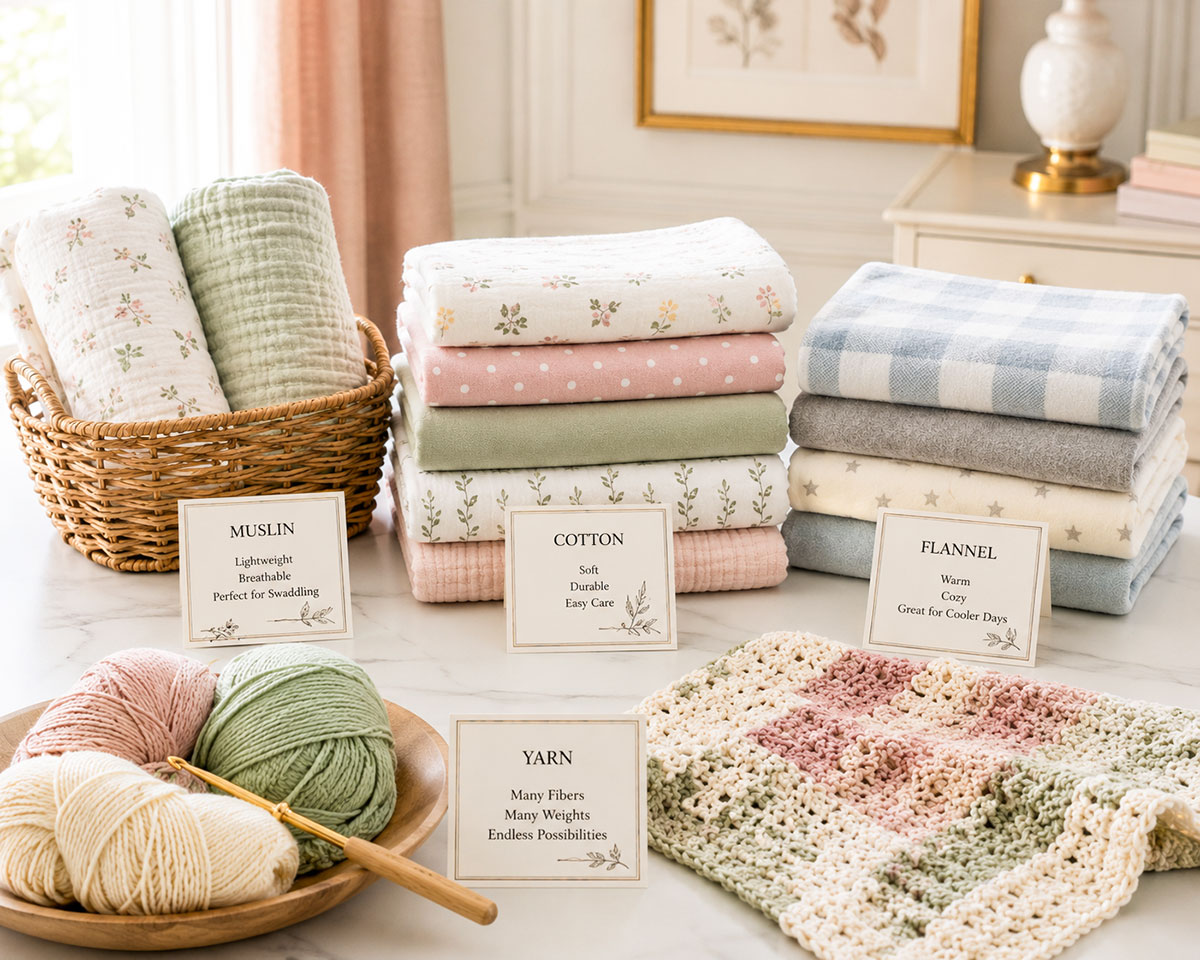
Cotton and Muslin Blankets
Cotton is one of the easiest materials to match to everyday family life. It can be woven into light muslin, brushed into flannel, quilted into several layers or spun into yarn for crochet and knitting.
Muslin folds into a small bundle and dries fairly quickly. It is a practical choice for warm weather, although a very thin blanket may not provide enough warmth during a chilly outing. Layering suitable clothing is often more manageable than carrying one very heavy blanket.
The word “cotton” does not guarantee that two blankets will feel alike. Check the weave, number of layers, weight and washing instructions rather than relying on the fiber name alone. The baby fabric guide has more information for sewn blankets, quilts and other nursery projects.
Flannel Receiving Blankets
Flannel has a familiar, gently brushed surface that feels warmer than lightweight muslin. It works well for receiving blankets because it is easy to cut, sew, fold and wash.
Prewash flannel before sewing because cotton fabric may shrink. Wash coordinating fabrics together before cutting so one layer does not contract more than another after the blanket is finished.
Fleece and Minky Blankets
Fleece is popular for quick blanket projects because the cut edges do not unravel like woven fabric. It is warm for its weight and dries quickly, but some fleece can develop static or pill after repeated washing.
Minky has a velvety pile and a soft, plush finish. It can shift and stretch while being sewn, so clips and careful pinning help keep the layers aligned. A minky-backed blanket may feel considerably warmer and heavier than a single layer of cotton.
Both materials are better suited to supervised cuddling, stroller outings and older children than to use as loose infant bedding.
Acrylic and Blended Baby Yarns
Acrylic yarn is often chosen for handmade baby blankets because it comes in many colors, weights and price ranges. Many varieties can be machine washed, which is useful for a blanket intended to leave the gift box and become part of daily life.
Quality varies. Some acrylic yarns feel smooth and flexible, while others feel stiff or develop fuzz after washing. Make a swatch, wash it according to the label and rub the surface gently to see how it behaves before committing to a large project.
Blended yarns combine fibers to balance softness, durability and care. A cotton-acrylic blend, for example, may feel lighter than a dense acrylic yarn while requiring less delicate handling than some natural fibers.
Wool and Washable Merino
Wool can make a warm blanket without the heavy, bulky feeling of some synthetic yarns. It also springs back into shape nicely after use.
Not every wool yarn belongs in a baby project. Check for softness against the inside of your wrist and read the care label carefully. Some yarns require hand washing, while washable merino yarns are treated to make laundering easier.
Families who avoid animal fibers or prefer uncomplicated machine washing may be happier with cotton or a soft acrylic blend.
Chenille and Plush Yarns
Chenille yarn creates a thick, velvety surface that looks inviting in photographs and gift baskets. It can also make stitch definition difficult to see, especially for a beginner trying to count chains or locate the next stitch.
Test the yarn for shedding before making the full blanket. Pull lightly across the strand, crochet or knit a sample, and wash it. If fibers continue to loosen, choose another yarn for a baby project.
Cashmere and Other Delicate Fibers
Cashmere blankets are often chosen for christenings, keepsakes and formal gifts rather than everyday diaper-bag duty. They are light, warm and exceptionally soft, but they may require hand washing, careful storage and protection from snagging.
The cashmere baby blanket guide explains what to consider before choosing a luxury blanket that will need more attention than cotton or acrylic.
How to Test a Material Before Making a Blanket
For a sewn, knitted or crocheted project, prepare a sample large enough to reveal how the material behaves. A tiny scrap will not always show stretching, puckering or shedding.
- Wash and dry the sample according to the care label.
- Measure it before and after washing to check for shrinkage.
- Rub the surface against a contrasting cloth to look for lint or loose fibers.
- Stretch the sample gently and check whether it returns to its original shape.
- Examine the edges, seams or yarn ends for fraying and loosening.
- Feel the washed sample against the inside of your wrist, not only with your fingertips.
A material that passes this small test is far less likely to cause an unpleasant surprise after hours of sewing, knitting or crochet. For detailed yarn weights, fiber comparisons and estimated yardage, continue to the best yarn for a baby blanket guide.
When Can a Baby Sleep With a Loose Blanket?
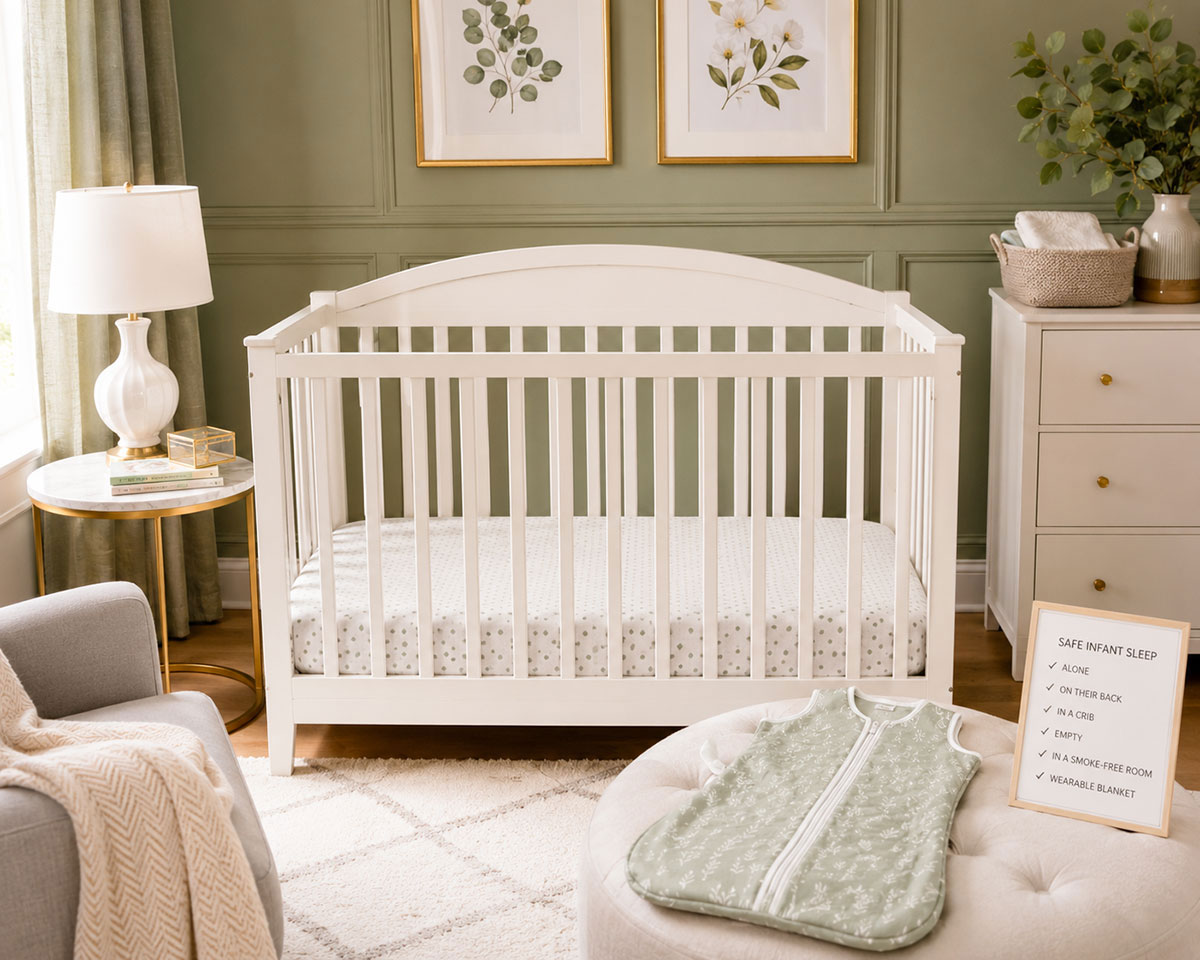
A loose blanket does not belong in an infant sleep space. Keep blankets, quilts and other soft bedding out of a crib, bassinet, portable crib and play yard during the first 12 months. Use a firm, flat sleep surface with a fitted sheet and keep the rest of the space empty.
For readers in the United States, this section follows guidance from the U.S. Consumer Product Safety Commission and the American Academy of Pediatrics. A correctly sized, non-weighted wearable blanket may provide warmth, but loose bedding should be removed before every nap and nighttime sleep.
A receiving cloth, crochet design or quilt may still be enjoyed during supervised cuddling, floor play, photographs or outings.
Quick answer
Research has not identified a precise age when soft objects become completely risk-free. The American Academy of Pediatrics reports that experts generally consider them to present little risk to healthy children after 12 months.
Development, health and sleeping arrangements differ, so ask the child’s healthcare professional when there is any uncertainty.
What Should a Baby Wear Instead of Using a Blanket?
Dress the baby in sleep clothing that suits the room temperature. A correctly sized, non-weighted wearable blanket can provide warmth without adding loose fabric to the crib.
Follow the manufacturer’s height and weight guidance rather than choosing a larger size for the baby to grow into. The neck opening should not be wide enough to slip over the baby’s face, and the garment should allow comfortable movement through the hips and legs.
Check the baby’s chest or the back of the neck for warmth. Sweaty skin, damp hair, flushed cheeks or a hot chest may indicate that the baby is too warm. Hands and feet may feel cooler than the rest of the body and are not always a reliable guide.
Are Weighted Baby Blankets Safe?
Do not use weighted blankets, weighted swaddles, weighted sleep sacks or other weighted sleep products for babies. Added weight can make breathing and movement more difficult.
Current federal and pediatric guidance advises against weighted blankets, weighted swaddles, weighted sleep sacks and other weighted sleep products for infants.
Can a Baby Sleep With a Crochet or Knitted Blanket?
A handmade blanket is still loose bedding, regardless of the fiber, stitch or amount of space between the stitches. An open crochet pattern does not make a blanket suitable for infant sleep.
Use handmade blankets during supervised awake time and remove them before naps and nighttime sleep. They can still serve beautifully as stroller blankets, floor blankets, nursery keepsakes and later as covers for an older child.
When Should Swaddling Stop?
Stop swaddling as soon as a baby shows signs of trying to roll. Do not wait for the baby to complete a full roll. Signs may include rocking onto one side, twisting the hips or repeatedly trying to turn over.
A swaddling blanket that loosens can become loose bedding, so the wrap must remain secure and away from the face. The baby should always be placed on the back, with enough room for the hips and legs to bend naturally.
Swaddling must end when rolling attempts begin. You can compare fabrics, shapes and practical uses in the site’s swaddling blanket guide.
What About Blankets in a Stroller or Car Seat?
A small blanket may be placed across a baby’s legs during a supervised stroller outing, provided it remains below the chest and cannot reach the face, wheels or moving parts. Check frequently because babies kick and fabric shifts.
Do not drape a blanket over the entire stroller or infant carrier. Covering the opening can reduce airflow and trap heat, even when the blanket appears lightweight.
In a car seat, avoid placing a thick blanket, coat or bunting underneath the harness. Buckle the baby securely according to the car seat instructions, then place a light blanket over the fastened harness if warmth is needed. Remove it if the baby becomes warm.
Safe Ways to Enjoy a Baby Blanket
- Spread it on the floor for supervised play while the baby is awake.
- Place it across the baby’s lap during a supervised stroller outing.
- Use it while holding and cuddling the baby, then remove it before sleep.
- Include it in photographs while an adult remains within reach.
- Display an heirloom blanket in the nursery without placing it inside the crib.
- Save a larger handmade blanket for the toddler years.
The safest infant sleep space may look plain, but a blanket does not lose its usefulness simply because it stays out of the crib. It can still be part of outings, playtime, family photographs and years of supervised cuddling.
Baby Blanket Patterns to Crochet, Knit and Quilt
A baby blanket is a satisfying handmade project because the finished piece can be practical, decorative or saved as a family keepsake. Before choosing a pattern, check the finished measurements, yarn or fabric requirements, care instructions and skill level. A pretty stitch pattern is only part of the decision.
Blankets made for supervised cuddling and outings can include more texture than an everyday receiving blanket. Decorative lace, raised stitches and appliqués need secure finishing, while simple washable designs are often easier for a busy family to use.
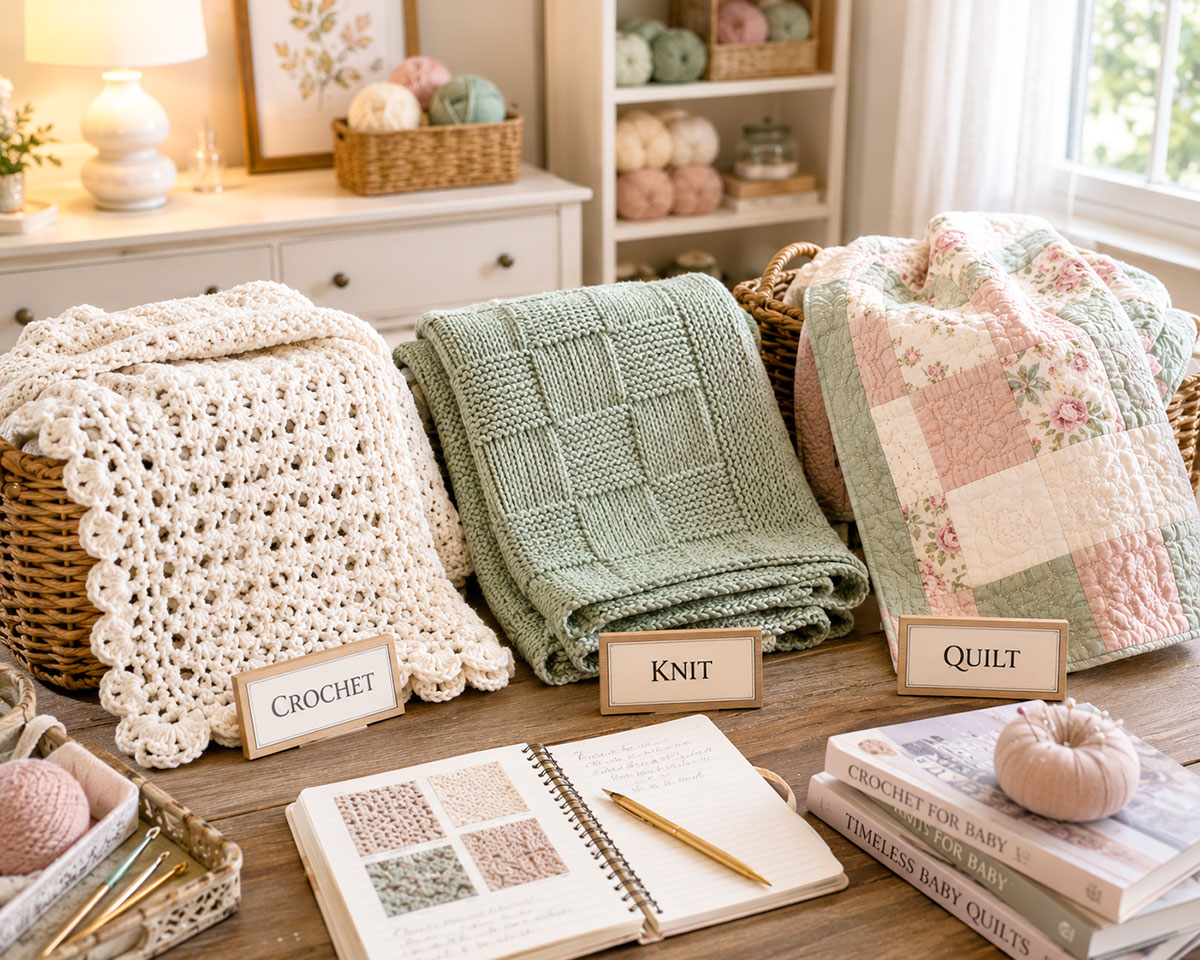
Crochet Baby Blanket Patterns
Crochet blankets can be worked in simple rows, textured stitches, picture designs or shaped motifs. Beginners may prefer a repeating stitch that makes it easy to see where each row begins and ends.
One of my shaped projects is this free crochet star baby blanket cocoon pattern, which makes a five point cocoon with a pointed hood and overlapping opening for supervised cuddles and photos.
The lightweight crochet pattern is a good place to begin when a less bulky result is preferred. The hooded crochet design creates a warmer project for supervised stroller use and cuddling.
For a straightforward project worked in rows, compare the quick one-row-repeat blanket, the easy ribbed crochet blanket and the warmer fast chunky baby blanket.
More lightweight, textured, hooded, animal and seasonal projects are organized in the crochet baby blanket pattern collection.
Knitted Baby Blanket Patterns
Knitting creates anything from a smooth, lightweight blanket to a deeply textured cable design. Look at the stitch repeat before beginning. A wide repeat may be harder to resize than a simple pattern worked over two or four stitches.
The easy knit baby blanket pattern uses knit and purl stitches, a three-row eyelet repeat and adjustable sizing. The very easy knitting pattern offers another straightforward project, while the diamond design adds a more defined surface.
Additional simple, smocked, cabled and textured projects can be found with the free baby knitting patterns.
Quilted and Sewn Baby Blankets
A sewn blanket can be as simple as two layers of washable cotton or as detailed as a pieced and quilted nursery design. Quilts offer the most freedom for appliqué, color placement and keepsake fabrics, but all pieces must be stitched securely.
The baby quilt patterns include ideas for handmade nursery blankets and appliqué projects.
Quick Beginner Project: Two-Layer Flannel Blanket
This beginner project makes a washable covering for supervised cuddling, stroller outings, floor play or gifting. It is not intended as loose infant bedding.
Skill level: Beginner
Finished size: Approximately 35 x 41 inches
Seam allowance: 1/2 inch
Materials
- One piece of cotton flannel measuring 36 x 42 inches for the front
- One piece of cotton flannel measuring 36 x 42 inches for the back
- Coordinating all-purpose sewing thread
- Sewing machine
- New universal sewing-machine needle
- Fabric scissors or rotary cutter and cutting mat
- Straight pins or sewing clips
- Measuring tape or quilting ruler
- Washable fabric marker or tailor’s chalk
- Iron and ironing board
- Point turner or a clean wooden chopstick
Before You Begin
Wash and dry both pieces of flannel using the same method that will be used for the finished blanket. Press the fabric and trim both pieces to the same 36 x 42-inch rectangle.
Step-by-Step Instructions
- Place the two fabric pieces right sides together, with the printed or finished sides facing each other. If either print is directional, position both tops at the same end before matching the edges. Smooth out any wrinkles.
- Pin or clip around all four sides. Mark an opening approximately 6 inches wide along the middle of one short edge. This opening will be used to turn the blanket right side out.
- Sew around the blanket with a 1/2-inch seam allowance. Begin at one end of the marked opening and stop at the other end. Backstitch at both ends so the seam does not pull apart during turning.
- Trim the four corners diagonally without cutting through the stitching. This removes bulk and helps the corners lie flat.
- Turn the blanket right side out through the opening. Use a point turner or a clean wooden chopstick to ease out the corners. Do not push hard enough to pierce the fabric.
- Press the blanket carefully. At the opening, fold the raw edges inward by 1/2 inch so they line up with the sewn edge. Pin or clip the opening closed.
- Topstitch around the entire blanket approximately 1/4 inch from the edge. The topstitching will close the opening and help the blanket keep its shape after washing.
- Add a second line of topstitching approximately 1/2 inch inside the first line if a more finished border is desired.
- Trim all thread tails, then wash and dry the completed blanket according to the fabric care instructions. Examine every seam, corner and line of stitching after laundering before giving it to a family or placing it into use.
The blanket may be resized by cutting both fabric layers to the same dimensions. Remember that a 1/2-inch seam allowance on every side will reduce the finished width and length by about one inch.
Measure twice before cutting. Fabric is forgiving in many ways, but it has yet to learn how to grow back.
How Much Yarn Is Needed for a Baby Blanket?
The amount of yarn needed for a baby blanket depends on five things: the finished size, yarn weight, stitch pattern, hook or needle size and personal tension. A small lovey worked in bulky yarn may take only a few hundred yards, while a lightweight knitted blanket with a textured pattern can require well over a thousand.
Skein count alone can be misleading because one skein may contain 100 yards and another may contain 500. Compare the total yardage or meterage on the labels rather than counting balls of yarn.
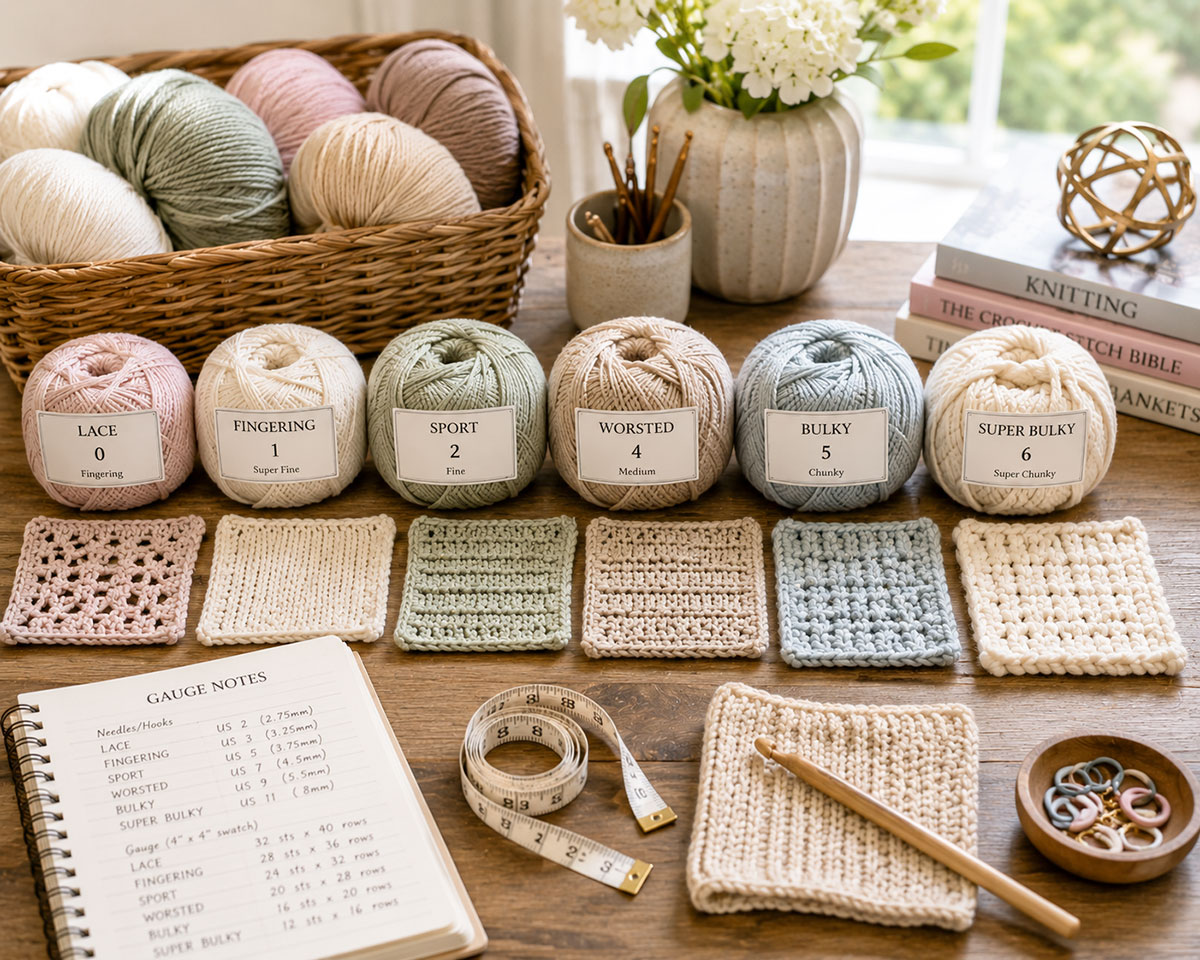
Estimated Yarn for a Medium Baby Blanket
The following ranges are reasonable starting estimates for a blanket measuring about 36 x 40 inches. A dense stitch, cables, bobbles or a wide border may require more.
| Yarn Weight | Estimated Yardage | General Result |
|---|---|---|
| Lightweight or category 3 | 1,000 to 1,500 yards | Lighter fabric with smaller stitches |
| Worsted weight or category 4 | 800 to 1,200 yards | Versatile medium-weight blanket |
| Bulky or category 5 | 600 to 900 yards | Thicker blanket that works up more quickly |
| Super bulky or category 6 | 450 to 700 yards | Very thick fabric with considerable warmth and bulk |
Purchase approximately 10 to 15 percent more yarn than the estimate when the dye lot must match. Extra yarn allows for swatching, joins, a border and the occasional row that needs to be pulled out and worked again.
The complete baby blanket yarn guide compares fibers, yarn weights, washability and seasonal warmth.
How Many Skeins Will You Need?
Divide the estimated yardage for the project by the number of yards in one skein.
Example
A pattern requires 1,000 yards, and each skein contains 220 yards.
1,000 ÷ 220 = 4.55 skeins
Round up to five skeins. Purchasing a sixth skein may be sensible when the blanket includes a border, several colors or yarn from a dye lot that may be difficult to match later.
When several colors are used, divide the pattern by color rather than assuming each shade requires the same amount. A narrow accent stripe needs far less yarn than the main background color.
How Many Chains Are Needed for a Crochet Baby Blanket?
There is no dependable chain number that fits every crochet baby blanket. The starting chain changes with the yarn, hook, stitch repeat and desired width.
Make a gauge swatch with the actual yarn and stitch before beginning the blanket.
- Crochet a swatch at least 6 inches wide using the planned stitch pattern.
- Wash and dry the swatch according to the yarn label.
- Measure the number of stitches across 4 inches in the center of the swatch.
- Divide that number by four to find the stitches per inch.
- Multiply the stitches per inch by the desired blanket width.
- Adjust the total to fit the stitch repeat stated in the pattern.
- Add any turning chains required by the pattern.
Crochet width example
The washed swatch measures 14 stitches across 4 inches.
14 ÷ 4 = 3.5 stitches per inch
For a 36-inch blanket:
3.5 x 36 = 126 stitches
If the stitch pattern uses a multiple of four plus two stitches, adjust 126 to the nearest suitable number required by that pattern.
Do not rely on the starting chain from another blanket unless the yarn, hook, stitch and gauge are the same. Two projects can begin with the same number of chains and finish several inches apart.
How Many Knitting Stitches Should Be Cast On?
The knitting calculation follows the same basic method. Work and wash a gauge swatch, count the stitches per inch and multiply that number by the planned width.
If the swatch has 18 stitches across 4 inches, the gauge is 4.5 stitches per inch. A 36-inch-wide blanket would begin with approximately 162 stitches before adjusting for the pattern repeat and border stitches.
Patterns with cables, ribbing or lace may draw inward or spread after blocking. Use the featured stitch in the swatch rather than testing plain stockinette and expecting the same width.
How Many Rows Make a Baby Blanket?
Row count depends on row height, just as starting stitches depend on width. Measure the washed swatch vertically and calculate the number of rows per inch.
A blanket does not need to end at an exact row count unless the design includes a picture, matching border or shaped section. For a repeating pattern, continue until the blanket reaches the planned length, then finish the final repeat neatly.
Planning Stripes, Borders and Several Colors
Sketch the color order before starting. A simple drawing can reveal whether an accent color appears once, repeats evenly or leaves an awkward partial stripe at the end.
Reserve yarn for the border before using the last skein in the main body. A wide crochet border can consume more yarn than expected, particularly when it travels around all four sides for several rounds.
Use the finished measurements and gauge calculations together before purchasing yarn. This is especially important when changing the yarn weight, hook, needles or border from those listed in a pattern.
A few minutes spent on gauge and yardage can save an unfinished blanket from waiting in a basket for one elusive matching skein.
Gift Ideas That Fit the Family
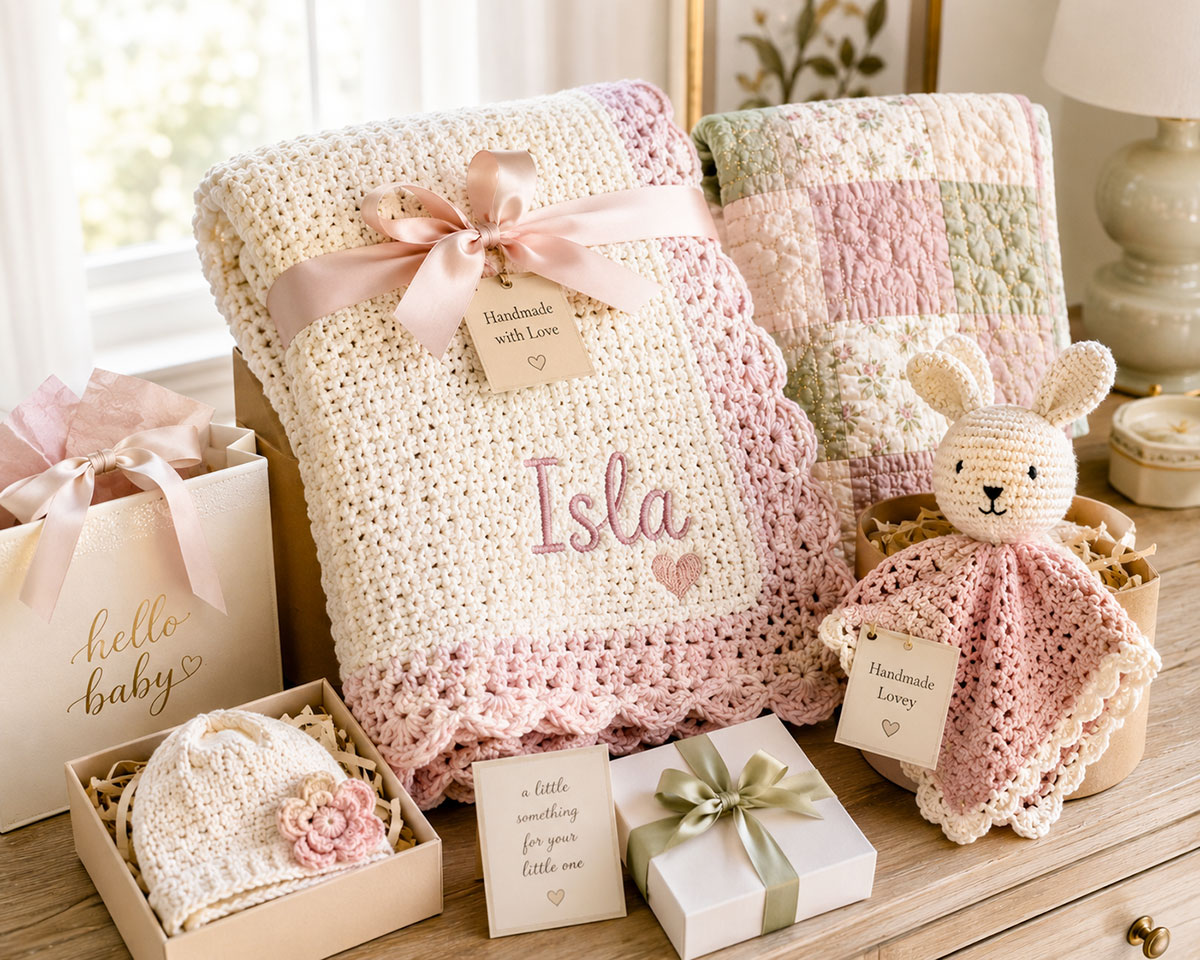
A baby blanket can be an everyday helper, a handmade keepsake or a special-occasion gift. The best choice depends less on how elaborate it looks and more on whether the size, fabric and care instructions suit the family receiving it.
For a baby shower, I would choose a washable blanket that can be used during supervised cuddling, floor play or outings. For a baptism, dedication or family keepsake, embroidery, hand quilting and finer fibers may be more appropriate.
I would rather give one washable, well-sized blanket with clear care instructions than three delicate pieces that are too much trouble to use.
Practical Baby Shower Blankets
An everyday blanket should be easy to wash, simple to fold and suitable for more than one season. Cotton flannel, muslin, washable crochet and lightweight knitted blankets are all useful choices.
Before buying, look at the actual dimensions rather than trusting words such as newborn, crib or stroller. Product names are not consistent, and a blanket described as large by one maker may be smaller than expected.
A gift becomes more useful when the recipient knows what it is for. Include a small note that identifies it as a stroller blanket, supervised floor blanket, receiving blanket or keepsake rather than leaving the purpose unclear.
Personalized Baby Blankets
A name, monogram or birth date can turn a simple blanket into a family keepsake. The lettering should be securely stitched, smooth on the reverse side and positioned where it will not rub against a baby’s face.
Check every spelling and date before placing a custom order. Also ask how the personalization affects washing, because some embroidery threads, vinyl designs and decorative trims require gentler care than the blanket itself.
The personalized baby blanket guide includes ideas for names, monograms, birth details and presentation.
Handmade Crochet and Knitted Gifts
A handmade blanket carries the time and care of the person who made it. That does not mean it must be complicated. A neatly finished blanket in a washable yarn can be more useful than an elaborate design that requires special storage and delicate cleaning.
Include a yarn label or handwritten care card with the gift. The card should explain the fiber content, washing method and whether the blanket should be dried flat or placed in a dryer.
Choose a pattern that suits the maker’s skill level and include the finished dimensions and care instructions with the gift.
Baby Quilts as Keepsakes
A handmade quilt can serve as a supervised floor blanket during the baby years and later become a toddler cover, reading blanket or wall display. Secure quilting across the entire surface helps keep the batting evenly distributed through repeated washing.
Quilts made with nursery fabrics, family clothing or appliqué designs can be especially meaningful. Avoid loose buttons, beads, long ribbons and other pieces that may detach.
Pieced and appliquéd designs offer many ways to coordinate a quilt with the nursery while keeping every decorative piece securely stitched.
Luxury and Special-Occasion Blankets
Cashmere, fine wool, silk-edged blankets and detailed christening designs are usually chosen for ceremonies, photographs and keepsakes rather than everyday spills. Read the care label before purchasing, and make sure the family is comfortable with hand washing or professional cleaning.
A delicate blanket can be lovely without becoming infant bedding. It may be used while the baby is held, displayed in the nursery or saved for family photographs and future generations.
More information about fiber quality, care and gift presentation is included in the cashmere baby blanket guide.
Seasonal and Nursery-Themed Blankets
A themed blanket can coordinate with the nursery without matching every item in the room. Animal motifs, ocean designs, flowers and seasonal patterns give a handmade gift personality while still allowing it to be used elsewhere in the home.
Pumpkins work well for fall, while dinosaur, ocean, woodland and floral designs can coordinate with year-round nursery themes.
What to Include With a Handmade Blanket
- Fiber or fabric content
- Washing and drying instructions
- Finished dimensions
- Suggested use, such as supervised cuddling, stroller outings or floor play
- A reminder that loose blankets should stay out of an infant sleep space
- A small amount of matching yarn or fabric for future repairs, when available
Do not be afraid to give a useful blanket rather than the fanciest one in the shop. A soft, washable piece that fits easily into daily life has every chance of becoming the blanket the family remembers.
Frequently Asked Questions About Baby Blankets
What is the most useful baby blanket size?
A blanket measuring about 36 x 40 inches is useful for supervised cuddling, stroller outings and floor play without being too bulky to carry. The ideal dimensions still depend on the intended use.
What is the difference between a receiving blanket and a swaddle blanket?
A receiving blanket is generally smaller and may be used for burping, changing, outings and supervised cuddling. A swaddle blanket is usually larger and lighter so it can wrap around a young baby without creating thick layers.
Swaddling must stop as soon as the baby shows signs of trying to roll. Swaddle size, fabric and fit should always be appropriate for the baby’s stage of development.
Can a baby sleep with a loose blanket?
Loose blankets should remain out of a baby’s crib, bassinet and play yard throughout the first year. Use suitable sleep clothing or a correctly fitted, non-weighted wearable blanket for warmth instead.
Handmade quilts, crochet blankets and receiving blankets can still be enjoyed during supervised awake time, outings and cuddling.
What material is best for an everyday baby blanket?
Washable cotton, flannel, muslin and soft acrylic blends are practical for frequent use. The best choice depends on the season, desired warmth and the family’s laundry routine.
Before making a blanket, wash a sample of the yarn or fabric to check for shrinkage, shedding, pilling and changes in texture.
What yarn is best for a crochet or knitted baby blanket?
Choose yarn that feels comfortable after washing, holds its shape and has care instructions the family can manage. Cotton, washable acrylic, cotton-acrylic blends and washable merino can all work well for different projects.
Compare fiber, yarn weight, warmth, washability and estimated yardage before choosing the final material.
How many skeins of yarn are needed for a baby blanket?
A medium blanket may require approximately 800 to 1,200 yards of worsted-weight yarn, but the exact amount depends on the finished size, stitch pattern and gauge. Divide the required total yardage by the yardage in one skein, then round up.
Buying one extra skein is sensible when the blanket includes a border or when matching the dye lot later may be difficult.
How many chains should I start for a crochet baby blanket?
The starting chain must be calculated from the yarn, hook, stitch pattern and desired width. Make and wash a gauge swatch, calculate the stitches per inch, and adjust the result to match the stitch repeat.
Using a chain count from another project without checking gauge can produce a blanket that is several inches wider or narrower than planned.
Are crochet blankets with open stitches safe for infant sleep?
No loose crochet blanket is appropriate for infant sleep, including designs with open or lacy stitches. Open spaces do not remove the risks associated with loose bedding.
These blankets can be used for supervised cuddling, stroller outings, floor play, photographs and later during the toddler years.
Should baby blanket fabric be washed before sewing?
Yes. Prewashing reveals shrinkage, color bleeding and changes in texture before the fabric is cut. Wash all layers and coordinating fabrics using the same method so they are less likely to shrink at different rates after sewing.
What makes a baby blanket a good shower gift?
A useful shower gift should have a practical size, secure construction and care instructions that suit the family. Receiving blankets, handmade crochet designs, quilts and personalized keepsakes can all be thoughtful choices.
Include a care card and a brief note explaining whether the blanket is intended for supervised cuddling, stroller use, floor play or keepsake display.
Can a handmade baby blanket become an heirloom?
Yes, particularly when it is made with durable materials, secure stitching and clear care instructions. Save a small amount of matching yarn or fabric for repairs and store the clean blanket in a dry, breathable container when it is not being used.
A baby blanket may begin as a shower gift, spend several years beside a reading chair and eventually return as a keepsake for another generation. That long usefulness is part of what makes these projects so rewarding.
Choose a project suited to your materials, skill level, available time and the way the finished piece will be used.
Choose the Blanket by the Job It Needs to Do
There is still room in a baby’s collection for more than one blanket, but each one should have a clear purpose. A muslin receiving blanket belongs in the diaper bag. A small stroller blanket is easier to manage during outings. A handmade quilt may spend the early months on the floor during supervised play and return later as a toddler blanket.
Before buying yarn, cutting fabric or ordering a personalized design, check the finished size, material, washing instructions and intended use. Decorative details should be securely attached, and loose blankets should always be removed from an infant’s sleep space.
Before You Buy or Make a Baby Blanket
- Decide whether it is for receiving, outings, supervised play, gifting or later toddler use.
- Confirm the finished measurements rather than relying only on the product or pattern name.
- Choose a weight that suits the season and setting.
- Check that the fabric or yarn can be cleaned in a practical way.
- Inspect seams, yarn ends, bindings, appliqués and decorative pieces.
- Keep loose blankets out of an infant’s crib, bassinet and play yard.
A useful blanket does not need to be fussy. It needs to feel pleasant, wash well and fit the moment when the family reaches for it.
Additional nursery essentials and practical buying guides are organized on the baby gear hub.


When you click on links to various merchants on this site and make a purchase, this may result in this site earning a commission. This does not affect the price you pay.

UBGI Gold Standard 2026
Reviewed under the site's
editorial checklist.
About Jan | Contact | Baby Nursery Ideas (Blog) | Site Map | Privacy Policy | Disclosure Policy | Disclaimer | Affiliate Disclosure | Earnings Disclosure | Facebook | Pinterest
I am a participant in the Amazon Services LLC Associates Program, an affiliate advertising program designed to provide a means for us to earn fees by linking to Amazon. As an Amazon Associate I earn from qualifying purchases.
Copyright © 2006-2026. All Rights Reserved.