Free Winter Woodland Animal Crochet Lovey Patterns
By Jan Bay
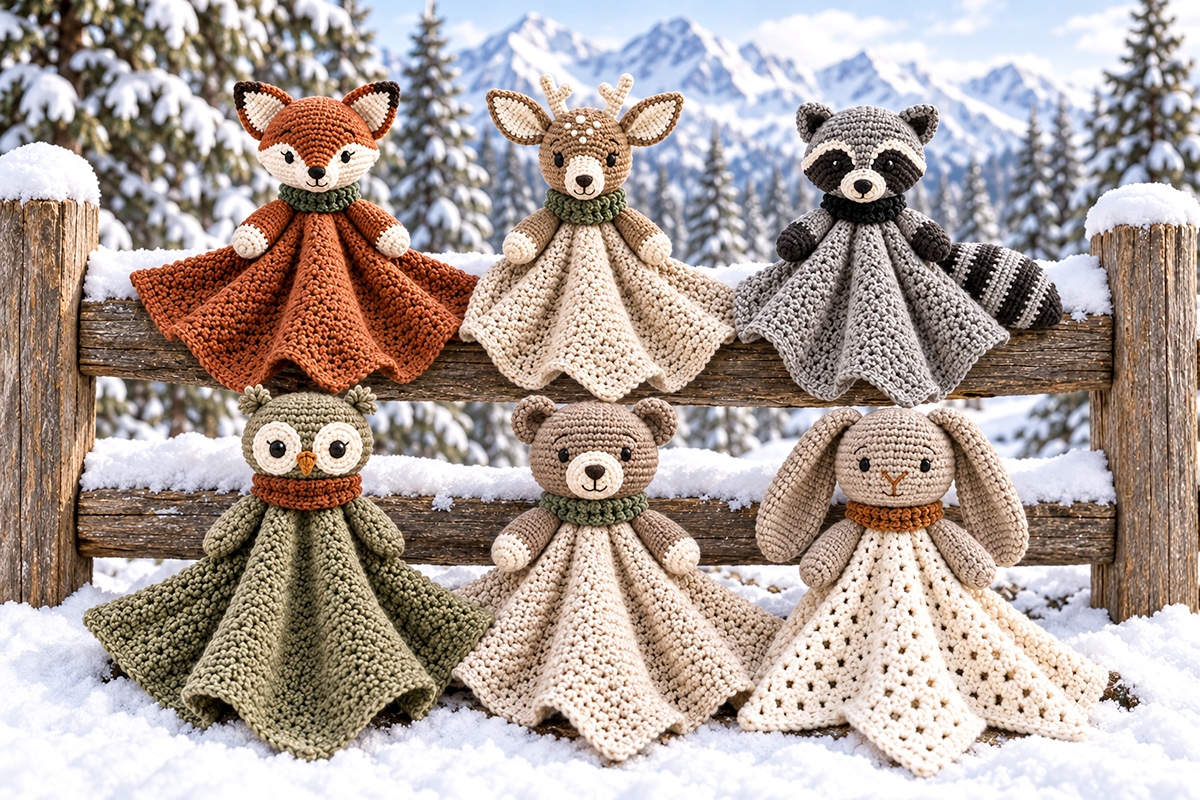
This collection of six winter woodland animal crochet lovey patterns is designed to look and feel like a coordinated set. The forest creatures include a bunny, bear, fox, deer, owl and raccoon, each with its own soft blanket body and colors from nature with warm touches perfect for chilly weather. Each forest creature has its own complete free pattern page linked below, so you can choose one or work through the whole collection.
Explore More Free Crochet Baby Patterns
Helpful Crochet Supply
Choose a Winter Woodland Lovey Pattern
Winter Woodland Animal Crochet Lovey Patterns at a Glance
I wanted these six forest creatures to look like they belonged together, not like six unrelated patterns gathered onto one page. The fox brings in the warm rust, the deer and bear add soft woodland browns, the raccoon gives the group its charcoal gray, the owl adds muted green, and the bunny lightens the whole set with cream and soft taupe.
The construction ties them together, too. Each lovey has an animal head at the top, small arms or wings and a soft blanket-style body that falls into loose points around the bottom. That repeated shape is what makes the collection look coordinated even though the faces, ears, antlers, wings, masks and other details are different.
I kept the winter touches fairly restrained. You’ll see little crocheted collars and warmer accent colors, but I didn’t turn the animals into Christmas characters. That means you can make them during the colder months without having to pack them away when the holidays are over.
The facial details are embroidered rather than made with plastic safety eyes or buttons. I prefer that cleaner handmade look for a baby project, and it also keeps all six animals visually consistent.
You can make one animal on its own, but the collection really starts to show its personality when you put two or three together. Because the body shape, scale and colors relate to one another, you can mix the fox with the deer, pair the bunny with the bear or make the whole set without having the finished pieces look mismatched.
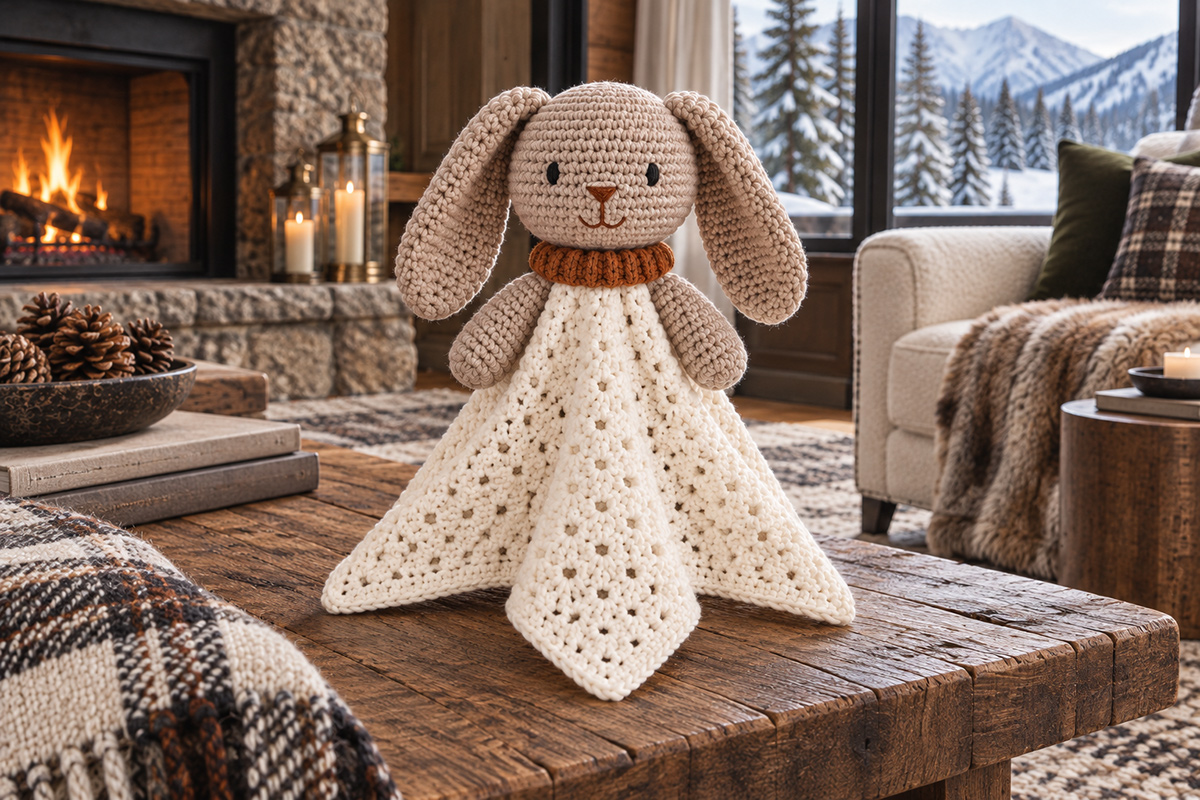
Woodland Bunny Lovey
The bunny is the lightest member of the collection, with soft taupe and cream keeping it from disappearing beside the darker forest animals. Long floppy ears give it the familiar bunny shape, while the simple embroidered face keeps the look quiet and handmade.
I like the bunny here because it gives the collection some breathing room. If every animal were rust, brown and charcoal, the group would get drab and heavy fast. The lighter blanket body and ears break up those deeper colors without taking the bunny out of the winter woodland palette.
This is also the smooth-yarn woodland bunny, so it has a very different look from a fuzzy faux-fur bunny. It belongs with the rest of this set because the yarn texture, blanket shape and overall scale stay consistent.
Make the Woodland Bunny Lovey with the full free pattern.
Winter Bear Lovey
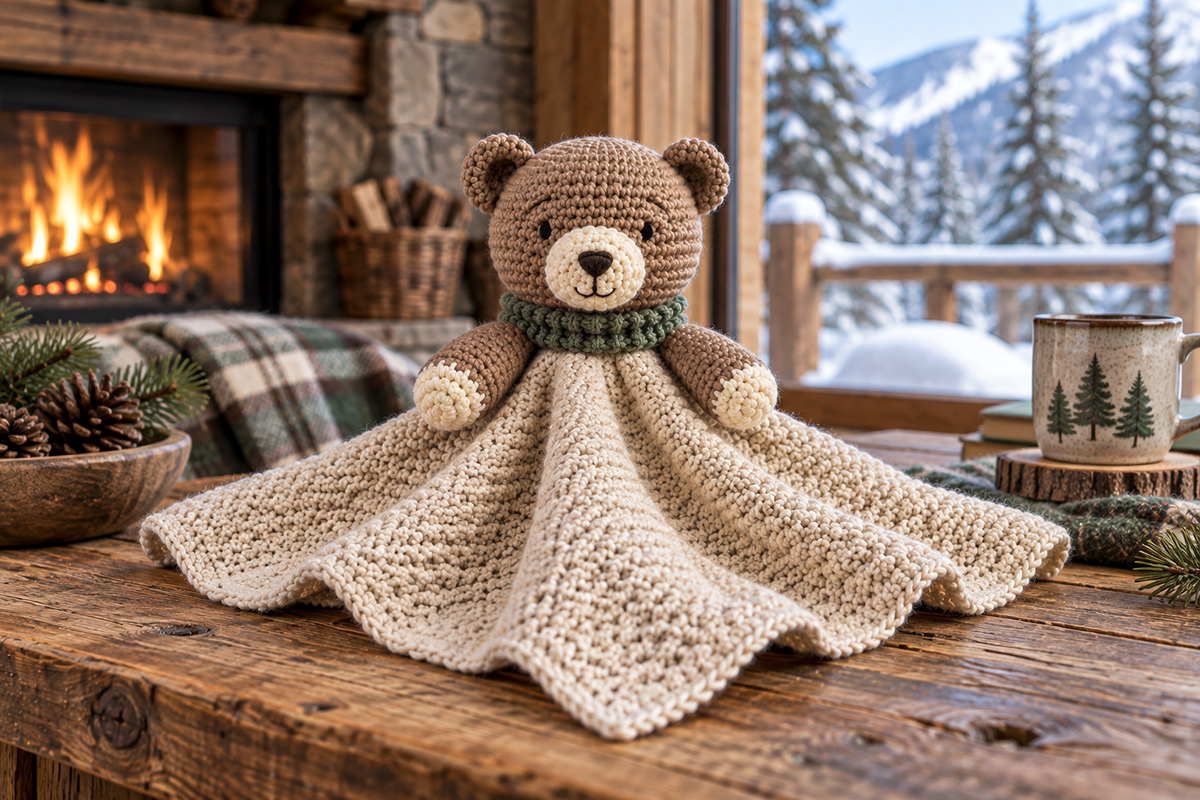
The bear keeps things simple with warm woodland brown, a lighter muzzle and a soft cream blanket body. Round ears and uncomplicated facial shaping make the character easy to recognize without adding a lot of extra pieces.
Its winter look comes mostly from the color combination and small neck detail rather than anything strongly seasonal. I prefer that here. The bear still looks right beside the fox, deer and raccoon in a snowy collection, but it doesn't turn into a Christmas bear once December arrives.
If you like the idea of this collection but don't want to begin with lots of layered face pieces, the bear is one of the less fussy-looking choices. The finished character depends more on clean placement and proportion than on extra decoration.
Make the Winter Bear Lovey with the full free pattern.
Winter Fox Lovey
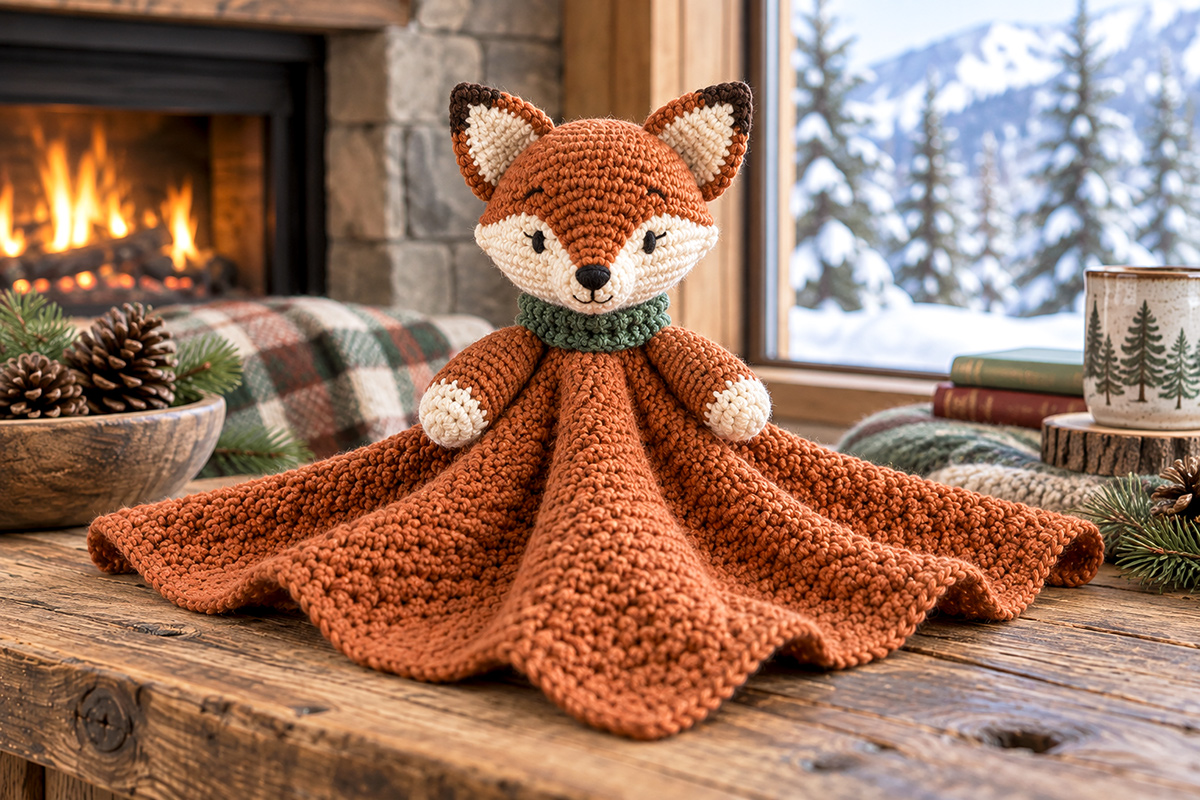
The fox brings the richest color into the group. Burnt rust stands out against the cream face details and darker ear tips, which gives the whole collection a warmer focal point without pushing it into bright holiday red.
Pointed ears and the lighter muzzle do most of the work here. The fox doesn't need a pile of added details to read clearly as a fox. I would keep the color placement neat, though, because those cream sections around the face are what separate the features and keep the head from becoming one block of rust yarn.
The draping blanket body follows the same general collection style, so even with its stronger color the fox still looks like part of the set rather than the odd one out.
Make the Winter Fox Lovey with the full free pattern.
Winter Woodland Deer Lovey
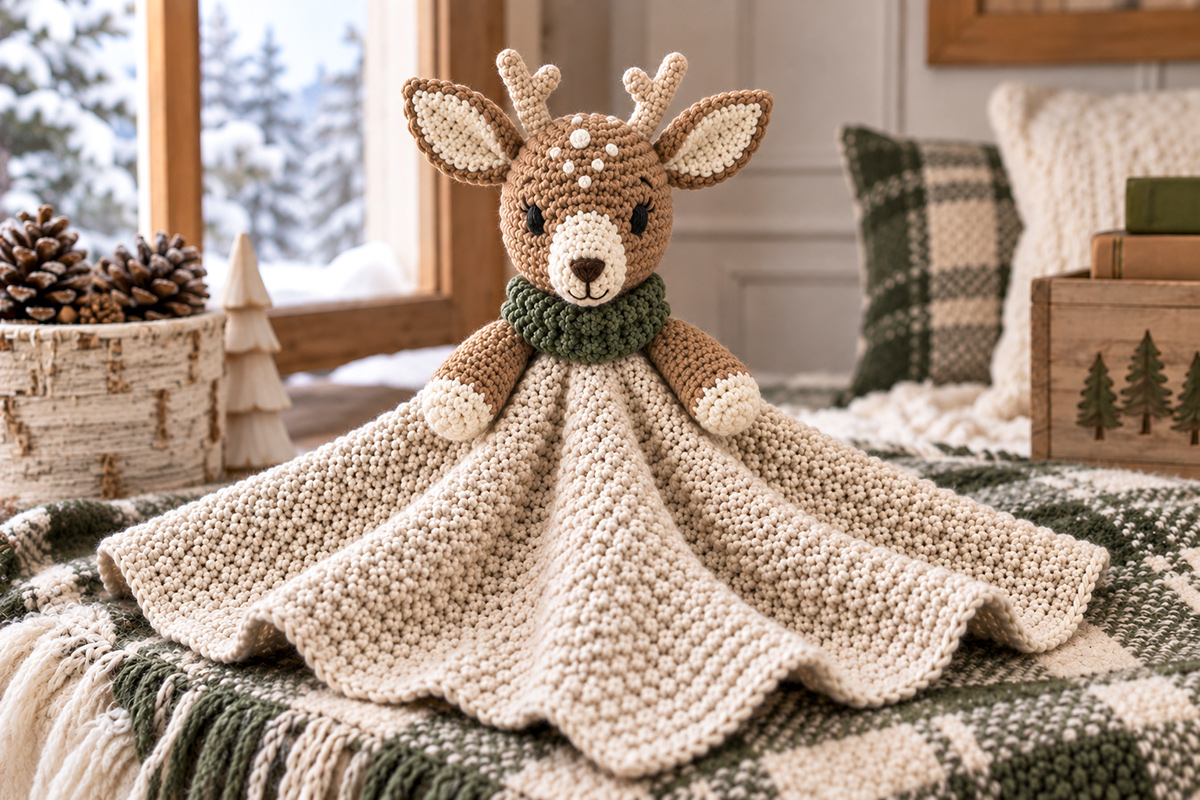
The deer leans into softer fawn and taupe shades with cream details, small antlers and the face markings that give it a little more woodland character. Those antlers are intentionally modest. Huge antlers would change the scale of the head and make the deer feel less connected to the other loveys.
This one has a little more going on around the head than the bear or bunny. Ear placement, antler placement and the small facial details all need to work together. None of those pieces should compete with the face.
I also wanted this deer to stay separate from the site's reindeer and buck-style patterns. It belongs in this collection as a winter woodland deer, with natural colors and restrained seasonal details rather than a Christmas costume.
Make the Winter Woodland Deer Lovey with the full free pattern.
Winter Woodland Owl Lovey
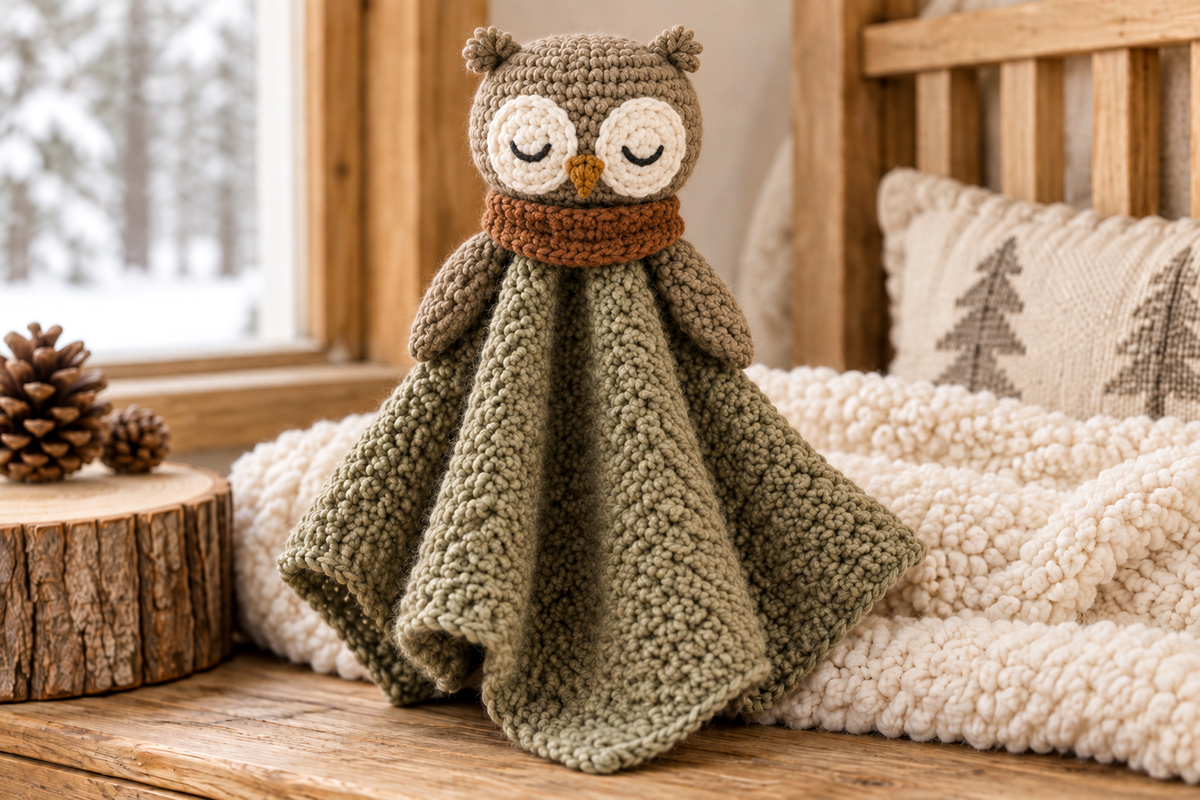
The owl changes the silhouette of the collection without changing the basic lovey idea. Instead of ears and small arms, it has layered facial pieces and compact wings, which gives you a very different forest creature while keeping the same soft draping body underneath.
Muted olive and cream work especially well here because they add another natural color without introducing something bright just for the sake of variety. The large eye circles are the part I would take my time with. Even a small shift in placement can change the expression, so it is worth getting those pieces centered before sewing them down.
The eyes themselves stay embroidered in black rather than using plastic safety eyes. That matches the rest of the collection and keeps the face looking handmade rather than toy-store shiny.
Make the Winter Woodland Owl Lovey with the full free pattern.
Woodland Raccoon Lovey
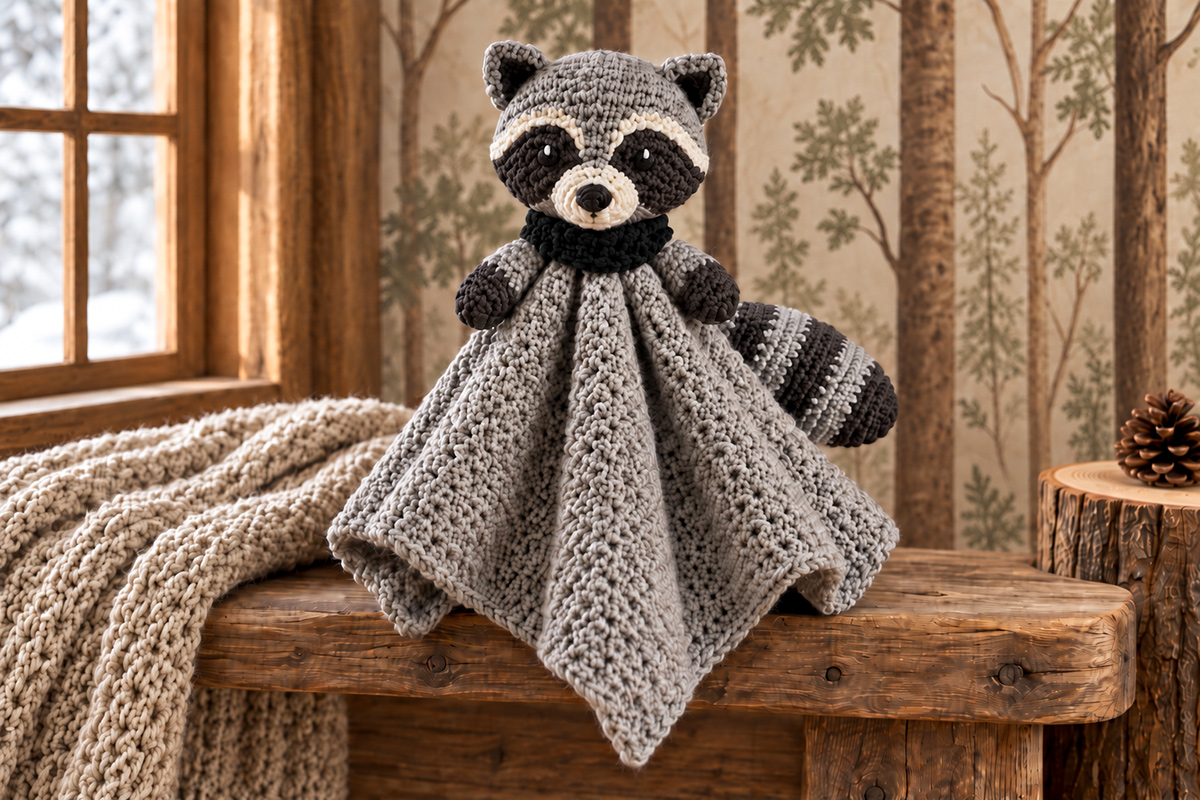
The raccoon is the darkest animal in the set, with gray, charcoal and cream giving the collection some needed contrast. The dark eye mask does most of the character work, while the striped tail keeps the raccoon easy to identify even when it is displayed beside the other five.
This is one where placement matters more than adding extra decoration. The mask needs to sit evenly around the embroidered eyes, and the stripes on the tail need enough contrast to show without looking harsh against the softer woodland colors.
It is also quite different from the site's seated amigurumi raccoon. This one was designed specifically as part of the lovey collection, with the same soft blanket-body idea used throughout the set.
Make the Woodland Raccoon Lovey with the full free pattern.
How the Winter Woodland Collection Coordinates
The animals don't need identical heads or markings to look like a set. What connects them is the repeated lovey shape underneath all of those character details. Each one starts with the same general idea: an animal head above a soft draping blanket body, with small arms or wings worked into the design.
That lets the fox keep its pointed ears, the deer its antlers, the owl its layered face, the raccoon its mask, the bear its round ears and the bunny its long floppy ones. Those differences matter. If I made every head too similar just to force the collection to match, we'd lose the very features that make each forest creature recognizable.
The colors do some of the coordinating, too. Rust, mushroom brown, fawn, cream, muted green, charcoal and gray all come from the same woodland direction. I kept the brighter color concentrated on the fox and used the quieter neutrals around it, so the complete group has contrast without looking scattered.
The little neck details are another place where the set connects. They add that chilly-weather feeling without covering the animals in hats, ornaments or Christmas decorations. I wanted winter woodland animals for this group, not six holiday characters; those can come later.
If you're making several of them, I would also keep the finished scale reasonably close from one lovey to the next. They look much more intentional displayed together when one animal doesn't suddenly appear twice the size of another.
Yarn and Color Planning for More Than One Lovey
If you're planning the whole collection, don't shop for six completely separate color palettes. Several of the quieter shades can do more than one job.
Cream or oatmeal can move from muzzles and face markings into paws, inner ears and lighter blanket sections. Taupe and mushroom shades can work through the bunny, bear and deer. Charcoal can cover raccoon details as well as some of the embroidery and darker accents. Muted green and warm rust can repeat in the winter neck details without appearing on every animal.
That repetition is useful visually, but it can also keep you from ending up with a separate partly used skein for every tiny detail. Check the individual pattern before buying yarn, though. Each full pattern gives you the materials for that animal, and I wouldn't substitute one shared yardage estimate for six different projects.
I would choose the main animal colors first, then fill in the shared neutrals. In this set, that means deciding on your fox rust, deer fawn, raccoon gray, owl green, bear brown and bunny taupe before worrying about every cream muzzle or small accent.
Keep the shades a little softened rather than extremely bright. The collection gets its winter warmth from the mix of earthy colors, cream and deeper accents. It doesn't need bright Christmas red or shiny metallic yarn to look seasonal.
Which Lovey Should You Make First?
You don't have to start with the bunny just because it appears first in the collection. I'd choose according to how much shaping and detail placement you want to deal with on the first one.
Start with the bear if you want a character with a straightforward silhouette and fewer layered facial pieces. Its round ears and simple muzzle let the proportions do most of the work.
Choose the bunny if you like a familiar animal shape and don't mind taking a little extra care with the long ears. The lighter colors also make the stitches easy to see while you're working.
Try the fox if color placement is part of the fun for you. The contrast between the rust yarn and cream facial areas is what gives this one so much of its character.
Save the deer for when you're ready for more small pieces. The ears, antlers and face details all have to sit in the right places for the head to stay balanced.
The owl is a good choice if you enjoy careful face assembly. Its layered eye pieces are different from the other animals, and their placement makes a noticeable difference in the finished expression.
The raccoon asks for the most attention to markings. The dark mask and striped tail need clean placement, so I wouldn't rush those parts.
None of that means you have to make the whole set in an order. Pick the animal you actually want to crochet first. If that one turns into two or three, the shared colors and blanket-body style will take care of the collection look.
Lovey Safety and Use
The facial features on these loveys are embroidered rather than made with plastic safety eyes or buttons. Small details should be attached securely, and the finished piece should be checked regularly for loose yarn, seams or embellishments.
A lovey is still a soft object, even when every detail is carefully handmade. For babies, keep loveys, blankets and other soft items out of the sleep space. The National Institute of Child Health and Human Development's Safe to Sleep guidance recommends a firm, flat sleep surface with only a fitted sheet and specifically includes loveys among the items that should stay out of an infant's sleep area.
That makes these better suited to supervised awake-time cuddling, play and display rather than crib sleep.
Make One Forest Creature or Build the Whole Collection
Each animal has its own complete pattern page, so there's no reason you have to commit to all six. Make the fox because you love that rust color. Make the raccoon because you want something less common. Or pair the bunny and bear for a quieter little woodland set.
If you do decide to make all six, I would resist the urge to give every animal a different accent yarn just because you can. Repeating a few of the same creams, greens, rusts and deeper neutrals is what helps the finished group look planned.
The collection page is here to show how those separate patterns fit together. The actual stitch-by-stitch instructions stay on the six individual pattern pages, where there's room to deal properly with each animal's shaping, assembly and finishing.
More Crochet Loveys and Woodland Patterns
If you'd rather browse beyond this six-animal set, my crochet animal lovey patterns page brings together loveys in many different styles and animal themes.
You can also explore my woodland nursery patterns for a broader mix of crochet, quilts and handmade woodland projects. That collection isn't limited to loveys, so it's the better place to go if you're putting several kinds of forest-themed projects together.
If these six are the look you want, stay with the Winter Woodland collection. The matching body style, natural colors and individual forest-creature details are what make this particular group belong together.
When you click on links to various merchants on this site and make a purchase, this may result in this site earning a commission. This does not affect the price you pay.

UBGI Gold Standard 2026
Reviewed under the site's
editorial checklist.
Photos, decorating ideas, party setups and reader submissions are shared for inspiration unless a page is specifically presented as a pattern, tutorial, reference guide or step-by-step project. Follow the instructions, measurements, safety guidance and manufacturer directions provided for the particular project or product.
About Jan | Contact | Baby Nursery Ideas (Blog) | Site Map | Privacy Policy | Disclosure Policy | Disclaimer | Affiliate Disclosure | Earnings Disclosure | Facebook | Pinterest
I am a participant in the Amazon Services LLC Associates Program, an affiliate advertising program designed to provide a means for us to earn fees by linking to Amazon. As an Amazon Associate I earn from qualifying purchases.
Copyright © 2006-2026. All Rights Reserved.