Where to Put a Crib in a Nursery for Safe Placement and Smart Room Layout
Where to put a crib in a nursery for safe placement and smart room layout starts with one clear rule: place the crib on a solid interior wall away from windows, cords, and climbable furniture. Crib placement should protect the sleep space first, then support clear walkways and practical daily movement around the room. When the crib is positioned safely, the rest of the nursery layout can be arranged around it with far less guesswork.
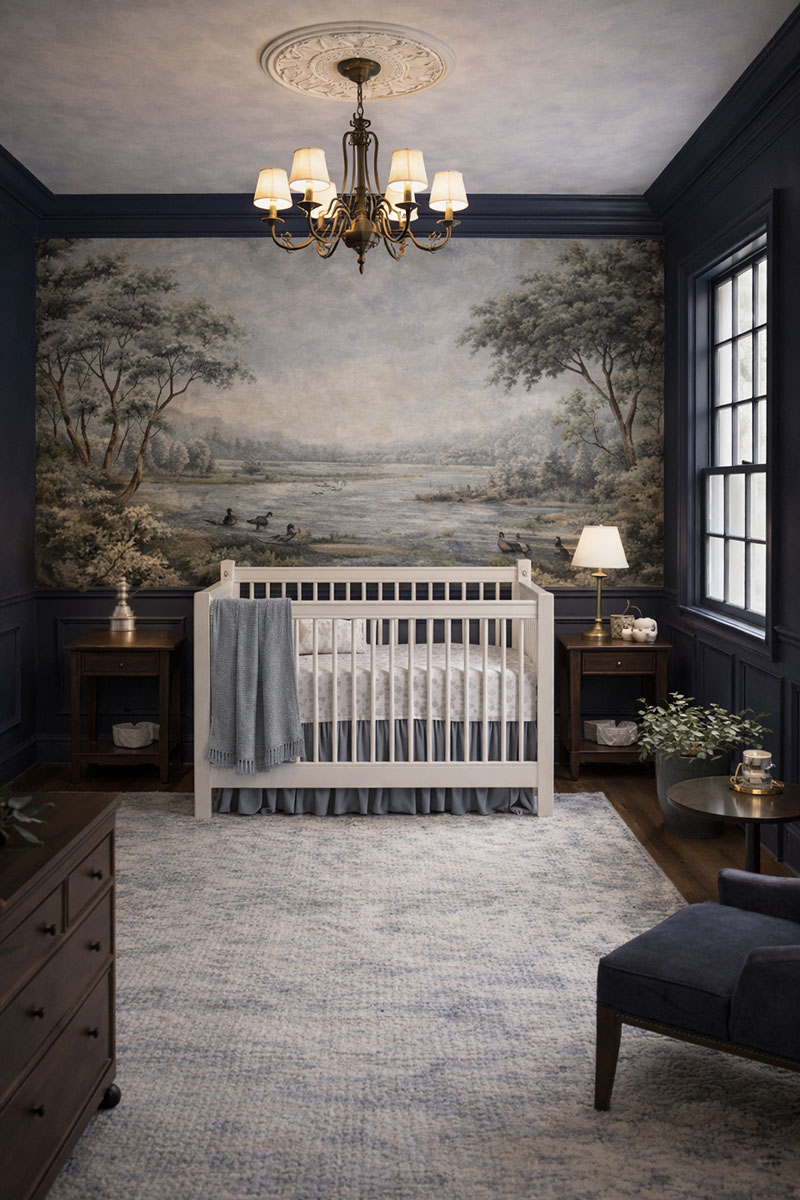
If your nursery is 10x10, long and narrow, or heavy with windows, see the pictures of room-specific layout guides below.
Quick answer: In most nurseries, the best place for the crib is on a solid interior wall, away from windows, cords, and anything a baby could pull into the sleep space.
When parents ask where to put a crib in a nursery, they are usually trying to balance safety, walking space, and daily routine in one small room.
Different crib styles and formats are outlined on my Baby Cribs overview page, which gives broader context before final placement decisions are made.
This page is about crib placement in a baby's room under general United States safety standards, not product-specific instructions for any one crib model.
Where to Put a Crib in a Nursery — What Parents Need to Know
When parents search where to put a crib in a nursery, they are usually asking one thing: “Where can the crib sit so the baby’s sleep space stays clear and the room still works?”
We are talking about the crib and the empty sleep space inside the crib. Not décor. Not styling. Just placement that reduces common hazards and keeps daily care simple.
This is where most parents get confused.
People think the “best” spot is the prettiest wall. Or the wall with the big window light. But crib placement is not a design decision first. It is a safety decision first.
Where to put a crib in a nursery for safe placement and smart room flow
The safest place for a crib in a nursery is usually an interior wall that does not share space with window cords, hanging decor, shelves, or furniture a baby could climb. In a small nursery layout, that same rule still applies, you just work the rest of the room around it.
So when you are deciding where to put a crib in a nursery, the safest wall will always matter more than symmetry or decoration.
For a broader view of how the crib, dresser, and chair should work together after you choose the safest crib wall, see my nursery furniture layout guide for practical room arrangement ideas.
Safe Crib Placement Rules at a Glance
- Place the crib on a solid interior wall whenever possible.
- Keep the crib away from windows, blind cords, and hanging décor.
- Avoid nearby furniture that could be used for climbing.
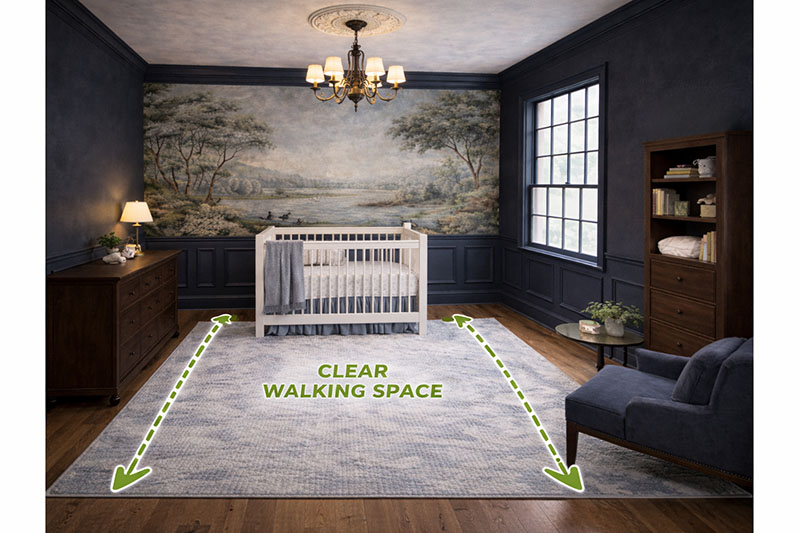
- Maintain clear walking space around at least one side of the crib.
- Keep the sleep space inside the crib empty and simple.
I’m going to use the words crib placement here so we don’t get tangled up. Some people say crib position or nursery layout. It all means the same thing and that is where the crib sits in the room.
Most parents choose this
Crib placement on an interior wall, with open space on at least one side for daily access, is the most common choice in real homes.
It keeps the crib away from window hazards and keeps a clear path for nighttime care. Calm. Practical. Normal.
For lighting that helps you move through the room at night without fully waking your baby, see nursery night light placement ideas for overnight care and how to keep the path softly lit.
If you only remember one thing
Keep the sleep space empty and keep the area around the crib boring.
Anything “cute” that hangs, drapes, or dangles near the crib is not cute at 2 a.m. That part matters more than people think.
Why crib placement matters more than the nursery wall décor
Cribs are built to be used with a firm, tight-fitting crib mattress and a clear sleep surface. Placement affects what ends up within reach. That is the real issue.
In most homes, the biggest everyday placement problems usually come from cords, gaps, soft items, and climbable surfaces nearby. Not the crib itself. The stuff around it.
Good crib placement protects the sleep space from creeping clutter. The chair blanket. The extra pillow. The things we set down and forget when we’re tired.
That’s why I like a clean wall and a clean zone around the crib. It keeps the room honest.
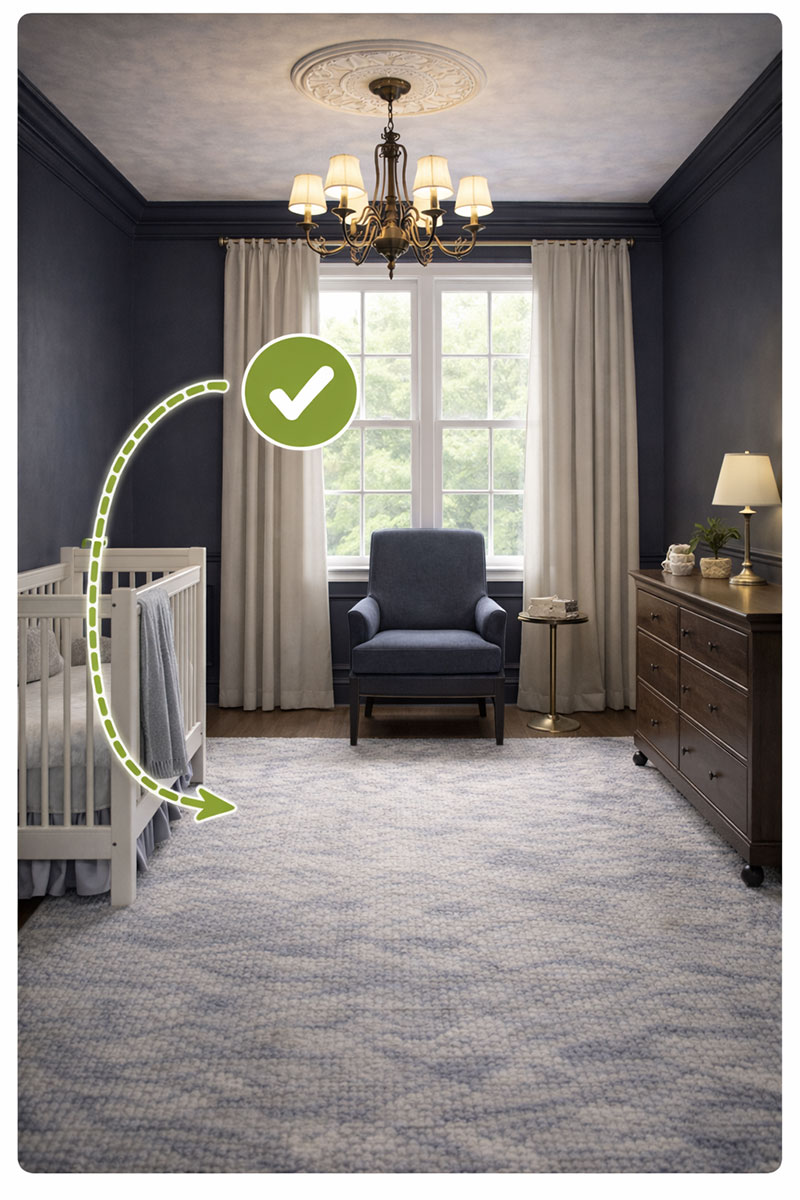
It’s worth looking outward from the crib rails and noticing what sits within reach.
What goes wrong with crib placement in a nursery
The most common mistakes are not dramatic. They are normal-room mistakes.
A crib under a window because it “fits.” A corded blind that hangs close. A shelf right above the crib because it looks balanced. A nightstand placed so close a baby can use it later as a step.
That last one surprises people. Babies grow fast. A nursery crib layout that looks safe with a newborn can become risky with a mover and climber.
As your child grows and becomes more active, it also helps to understand the manufacturer’s stated crib weight limits, since placement decisions and stop-use timing often intersect.
If this sounds picky, it is—and for a reason.
Quick check for common hazards
Cords, drapes, wall hangings, shelves, floating book ledges, and nearby furniture that could function like a ladder are the most common issues around a crib.
Heaters, vents, and strong direct airflow are also worth noting. Comfort matters, but clutter or nearby hazards should never compromise the sleep space.
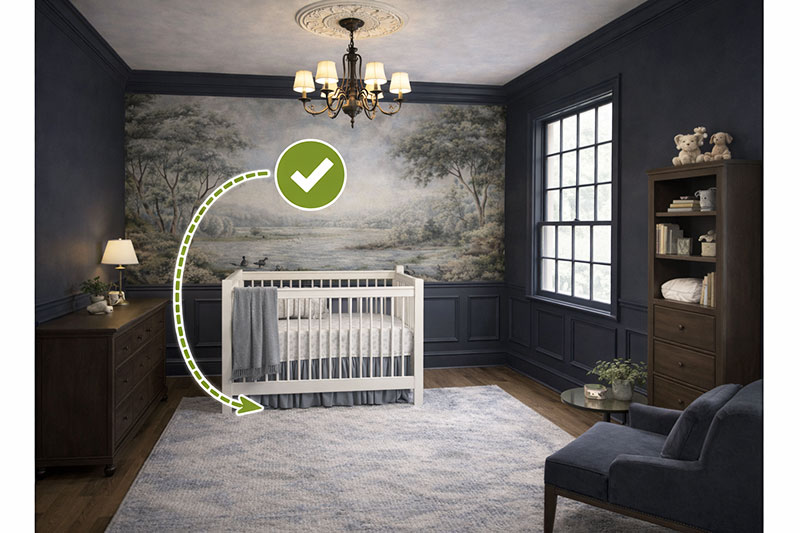
Did I buy right for the space I have?
Sometimes the crib is fine. The layout is the problem. Or the room is fine and the “extras” make it hard.
A standard crib footprint can feel big in a tight nursery room design. That can push the crib toward the window wall or into a corner you didn’t want. This is where choices like a slimmer dresser, a smaller chair, or a different storage plan matter.
For a detailed look at dresser sizes, depth profiles, and safety considerations before rearranging your room, see my baby dressers guide.
The crib itself does not usually create placement problems. The room layout does. A standard crib takes up real space, and in a small nursery that can push it toward a window wall or too close to other furniture. Understanding crib dimensions and room scale helps you see where the crib can sit without crowding the space.
For a deeper safety overview, I keep my main standards page here: Crib safety standards in the United States.
Parents who are still in the planning stage often ask about timing as well, so I break that down clearly on when to set up a nursery, including how room readiness and crib placement decisions fit together.
Most parents worry about the wrong thing
Parents worry about “is the crib too close to the wall?”
What matters more is what is close to the crib. Cords. Curtains. Shelves. Soft items. Climbable furniture. That’s the list that keeps showing up.
Situations Parents Sometimes Ask About
Older cribs, secondhand cribs, and hand-me-down nursery furniture can come with missing manuals, missing parts, or unknown history.
If anything is unclear, the safest move is to identify the exact model and year and use manufacturer and US safety agency resources for reference. No workarounds. No “close enough” parts.
For model identification context, these pages can help you understand what you’re looking at: Crib instructions manuals and documentation hub and Is it safe to use a used crib?.
What should I do now?
Decide on one safe crib placement first: solid wall, away from windows and cords, with a clear zone around the crib. Then keep the sleep space empty. That’s the heart of it.
If you’re deciding between two walls, choose the wall that keeps cords, curtains, and climbable furniture the farthest away. That choice holds up as your baby grows.
We don’t get a perfect room every time. We get a safer room. That is the win.
What to do next
After the crib is placed, it helps to notice how the room feels at night when the lights are low. In smaller rooms, mini chandeliers for nurseries can provide soft overhead light without crowding the crib area or disrupting the layout.
Then keep the crib zone simple on purpose. Boring is good here.
For broader safety context beyond room layout, see Crib Safety Standards for a full overview of current United States crib safety requirements.
For one authoritative external reference on US rules and guidance, see the US Consumer Product Safety Commission crib information here: CPSC crib safety information.
Note: This page is part of my nursery planning and crib safety coverage for the United States. It explains crib placement, nursery layout decisions, and common hazards without offering repair, modification, or product-specific instructions.
When you click on links to various merchants on this site and make a purchase, this may result in this site earning a commission. This does not affect the price you pay.

UBGI Gold Standard 2026
Reviewed under the site's
editorial checklist.
Photos, decorating ideas, party setups and reader submissions are shared for inspiration unless a page is specifically presented as a pattern, tutorial, reference guide or step-by-step project. Follow the instructions, measurements, safety guidance and manufacturer directions provided for the particular project or product.
About Jan | Contact | Baby Nursery Ideas (Blog) | Site Map | Privacy Policy | Disclosure Policy | Disclaimer | Affiliate Disclosure | Earnings Disclosure | Facebook | Pinterest
I am a participant in the Amazon Services LLC Associates Program, an affiliate advertising program designed to provide a means for us to earn fees by linking to Amazon. As an Amazon Associate I earn from qualifying purchases.
Copyright © 2006-2026. All Rights Reserved.