What Are Room Darkening Curtains and Are They Good for a Nursery?
Room darkening curtains can make a nursery easier to use for naps and bedtime by reducing bright window glare, but they are not always the same as blackout curtains. The right choice depends on how much light you need to block, whether the curtains can be washed, how safely they hang near a crib, and whether you also want help with heat, privacy, and everyday nursery style.
Nursery Ideas Nursery Window Treatments Nursery Curtains Blackout vs Room Darkening Curtains Window Valance Ideas Small Nursery Layout Ideas When to Start Decorating the Nursery
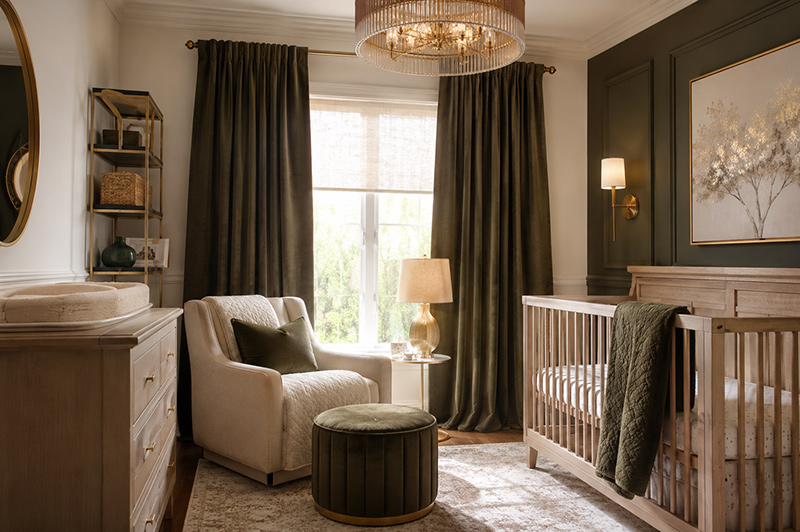
Room darkening curtains can reduce bright nursery window glare while still keeping the baby room polished and practical.
What room darkening curtains actually do Room darkening curtains vs blackout curtains What to look for before buying Which curtains are easiest to clean Heat, privacy, and see through fabric Nursery curtain safety near cribs Room darkening curtain questions
Quick Answer: Room darkening curtains reduce incoming light but do not block 100% of it. They can help babies sleep, improve privacy, reduce glare, and may help with temperature control. Blackout curtains are designed to block substantially more light.
Not every nursery needs blackout curtains.
The real trouble is often not the curtain fabric at all. In many nurseries, the brightest spot is not the window itself. It is the strip of light reflected off a nearby wall, dresser, or changing table. That reflected light can reach the crib even when the window appears covered.
Another problem is the bright strip of light sneaking around the sides of the window, hitting the crib rail, the rocker, or the wall right when you are trying to settle a sleepy baby.
What Room Darkening Curtains Actually Do
Room darkening curtains are fabric panels made to reduce daylight, porch lights, street lights, and early morning glare. They are not meant to turn the nursery pitch black. That can be a good thing when you still need enough shadow to check the crib, find a pacifier, or cross the room without turning on a lamp.
I believe room darkening curtains are often the better first choice for a nursery with normal daylight but not brutal sun all day. They take the glare down without making the room look closed off at noon.
In a real nursery, the curtain has to work during more than one moment. It needs to help at nap time, look decent when the room is open during the day, and not become another thing that has to be fussed with every time the baby sleeps.
I have seen parents pin a blanket over a nursery window for one desperate afternoon nap, then realize the real fix was not more fabric. It was better side coverage, safer hardware, and curtains that could stay in place every day.
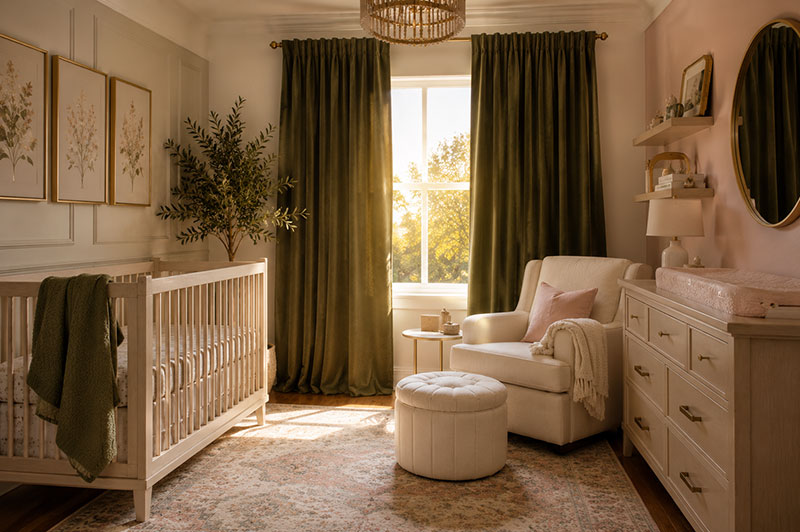
Afternoon sun is often the reason a nursery that worked in the morning becomes harder to use later in the day.
Room Darkening Curtains vs Blackout Curtains
Room darkening curtains and blackout curtains are not the same. Room darkening curtains reduce light. Blackout curtains are made to block much more light, often with a liner, coated backing, or heavier weave.
For a closer side-by-side comparison before buying, see my guide to blackout curtains vs room darkening curtains.
I once saw a nursery where the west facing window looked harmless before lunch. By three o’clock, the sun bounced across the changing table and landed on the wall beside the crib. The room did not need a dramatic makeover. It needed better window coverage.
That is where room darkening curtains make sense. They are useful when the problem is glare, privacy, or too much daytime brightness. Blackout curtains make more sense when a streetlight shines into the room, summer bedtime is too bright, or the baby wakes the moment daylight hits the wall.
If your nursery clearly needs more complete light blocking, this guide to blackout curtains for nursery rooms explains which features make the biggest difference for naps, early mornings, and bright windows.
If you are still deciding between curtains, shades, or layered window coverings, my page on nursery window treatments gives you the wider view without pulling this page away from room darkening curtains.
How to Choose Room Darkening Curtains
The package label matters, but the way the curtains are hung matters just as much. A narrow panel mounted only to the window edge can leave bright lines on both sides. A wider rod lets the curtain overlap the wall and cover those leaks.
A top treatment can also help the window look more finished, and my window valance ideas page shows ways to add shape above the nursery curtains without changing the full window setup.
- Light control: Check whether the product gives a light blocking percentage or describes the level of darkness clearly.
- Fabric: Lined panels and dense woven fabric usually reduce glare better than thin single layer material.
- Washability: Nursery curtains collect dust, fingerprints, and mystery marks, so read the care label before buying.
- Thermal help: Some lined panels can reduce heat near a sunny window and lessen cold drafts.
- Rod width: Mounting the rod several inches beyond the frame can improve the result more than choosing a darker color.
- Length: Floor length panels look finished, but fabric should not puddle where a baby or toddler can grab it.
- Color: Deeper colors often darken a room more, but lined lighter panels can still work well.
- Safety: Keep curtains, cords, tiebacks, and furniture away from the crib.
My practical opinion is that rod placement is one of the most missed details. I have seen a nursery look and work better just because the curtain finally covered the window edges instead of stopping exactly at the frame.
If the nursery is tight on space, the ideas on small nursery layout ideas can help you think through window walls, crib placement, and walkways before you settle on curtain length.
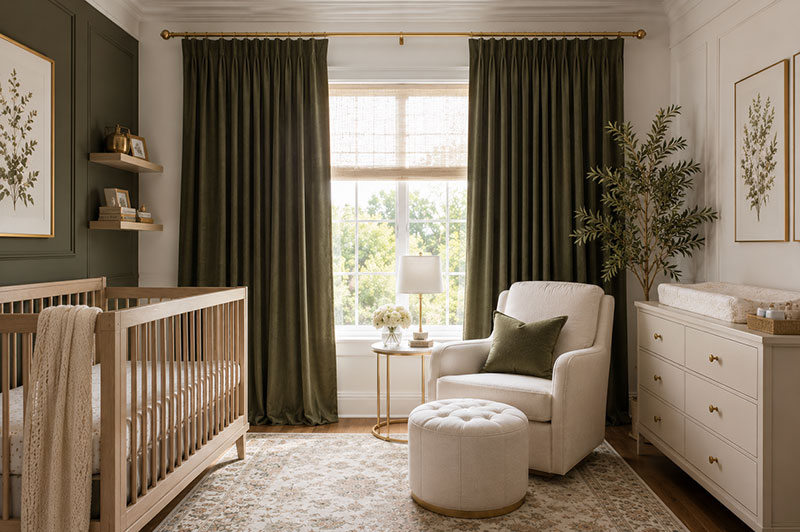
A wider curtain rod helps cover the bright edge light that slips around the sides of a nursery window.
Which Room Darkening Curtains Clean Easiest?
Machine washable polyester panels are usually the easiest room darkening curtains to clean and maintain. They tend to dry faster than heavy fabrics, resist wrinkling, and handle ordinary nursery dust better than fussy materials.
Do not assume every panel can go into the washer. Some room darkening curtains have a coated backing or liner that needs cold water, a gentle cycle, line drying, or spot cleaning. The care label is worth reading before the first wash.
In a nursery, washable fabric is not a small detail. Curtains get touched after snack time. Dust gathers near the sill. A humidifier can make the room need more regular cleaning. A curtain that looks nice but cannot be cleaned without worry is not my favorite choice for a baby room.
If you already know you want fabric panels rather than shades, my nursery curtains page goes deeper into curtain length, fabric, and window styling.
If you're still deciding on the overall look, my page of nursery curtain ideas compares popular styles, fabrics, colors, and layouts before you choose specific room darkening panels.
Heat, Privacy, and See Through Curtains
Room darkening curtains may help keep some heat out when the window gets direct sun, especially if the curtains have thermal lining. They will not fix a hot room by themselves, but they can make the area near the window less harsh during naps.
A simple test helps. Stand beside the nursery window during the brightest part of the day. If the chair, wall, or floor near the window feels hot to the touch, a lined room darkening curtain may help reduce that heat gain.
I have also seen changing pads warm up under a nearby window even when the curtain looked closed from across the room. That is the kind of small nursery detail you only catch when you stand where the baby gear actually sits.
Are room darkening curtains see through? Good room darkening curtains should not be see through in normal daylight. At night, privacy depends on the fabric weight, lining, and how bright the nursery light is inside.
The most popular nursery curtain colors include white, ivory, gray, sage green, dusty blue, blush, taupe, and greige. I would not choose color by trend alone. Hold the fabric near the actual window if you can, because a pale panel in a shaded room behaves very differently from the same panel in hard afternoon sun.
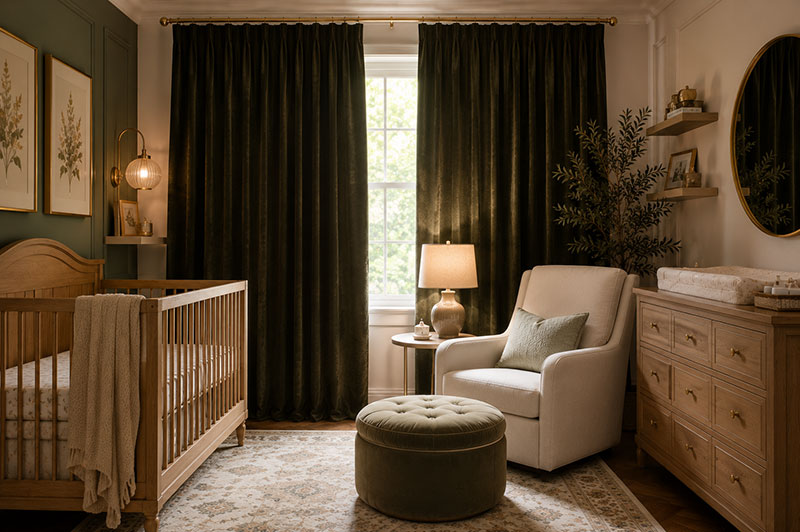
Closed curtains should reduce glare and privacy concerns while keeping the nursery practical to use.
Room Darkening Curtain Safety Near Cribs
Nursery window treatments need safety built into the decision. The U.S. Consumer Product Safety Commission recommends cordless window coverings in homes where young children are present and warns that accessible cords on blinds, shades, draperies, and other window coverings can create strangulation hazards. You can read their guidance here: CPSC Window Covering Cord Safety.
Keep the crib, changing table, toy storage, and climbable furniture away from windows. Curtains should not hang where a baby or toddler can reach them from the crib. Avoid long tiebacks, looped cords, loose strings, and anything that invites pulling.
That may sound plain compared with choosing a color, but it is the detail that matters when the room is dark and everyone is tired. A pretty window is not worth a reachable cord.
If you are still early in the room setup, when to start decorating the nursery can help you time paint, furniture, and window decisions before the last minute rush.
Most Popular Room Darkening Curtain Colors for Nurseries
Color affects more than appearance. It changes how the room handles light throughout the day.
Darker curtain colors often reduce more brightness, but that does not automatically make them the right choice. I have walked into nurseries where charcoal panels blocked light very well but looked heavy against the rest of the room. In another nursery, lined sage green curtains gave plenty of light control while keeping the space balanced from morning through bedtime.
The colors I see used most often in nurseries include:
Blush remains one of the most requested nursery colors, and I have collected many helpful pink nursery curtain ideas that show how well soft pink panels work with room darkening fabrics to help parents make choices. If you're decorating around a timeless storybook theme, these Winnie the Pooh nursery curtains show how character prints can still create a calm, softly lit nursery without overwhelming the room.
- White
- Ivory
- Gray
- Sage green
- Dusty blue
- Blush pink
- Taupe
- Greige
The direction of the window matters more than trends. A nursery facing intense afternoon sun can handle a deeper curtain color. A room with limited natural light may benefit from a lighter lined panel instead.
Best choice for most nurseries: A washable lined room darkening curtain mounted on a rod that extends beyond the window frame often provides enough light control for naps without the complete darkness of blackout curtains.
Try to match the curtain undertone to something already in the room. Wood furniture, flooring, wall color, or area rugs often provide a better guide than whatever color happens to be popular this year.
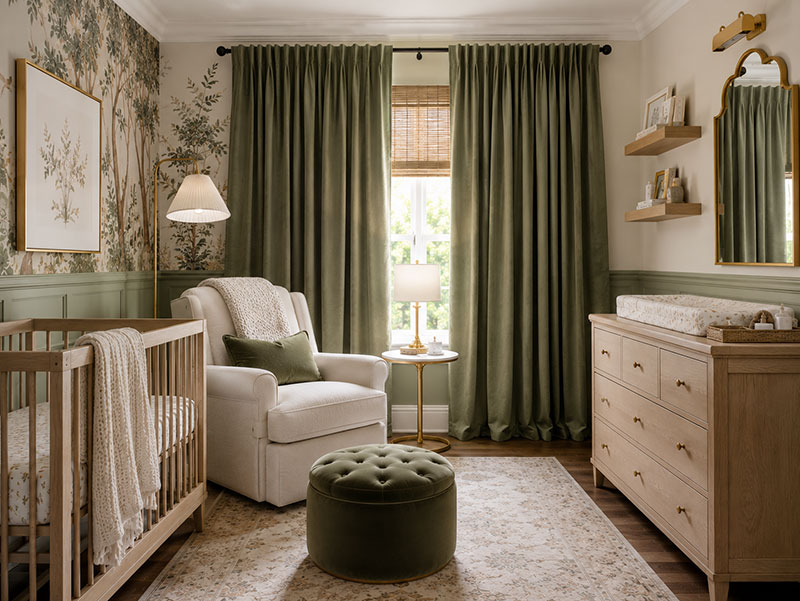
Curtain color affects both light control and how the nursery looks throughout the day.
Room Darkening Curtain Questions Parents Ask Most Often
Can room darkening curtains be washed?
Many can, especially polyester versions. Always check the care label before washing because some lined or coated curtains require different cleaning methods.
Will room darkening curtains keep heat out?
They can reduce solar heat gain from direct sunlight, particularly if they include thermal backing. They are helpful, but they are not a substitute for proper insulation or climate control.
Are room darkening curtains see through?
Quality room darkening curtains generally provide privacy during the day. At night, visibility depends on fabric thickness, lining, and indoor lighting conditions.
Which room darkening curtains are easiest to clean and maintain?
Machine washable polyester panels tend to require the least maintenance while holding up well to normal nursery use.
What are the key features to look for in room darkening curtains?
Look for adequate width, washable fabric, a quality lining, cordless safety features nearby, thermal benefits if needed, and proper coverage beyond the window frame.
Are room darkening curtains and blackout curtains the same?
No. Room darkening curtains reduce incoming light. Blackout curtains are designed to block significantly more of it.
What the Finished Nursery Should Look Like
When room darkening curtains are working properly, you should not notice the curtains first.
You notice that the bright patch on the floor is gone. The chair near the window is more comfortable. The crib area stays consistent throughout the day. The room works better.
That is the outcome worth chasing.
A successful nursery does not depend on buying the darkest fabric available. It depends on controlling where light enters the room and how it behaves once it gets inside.
That is why I keep coming back to rod placement, curtain width, and window direction. Those details affect daily life more than most product descriptions ever mention.
My Practical Take on Room Darkening Curtains
Room darkening curtains are a smart choice when a nursery needs better sleep conditions, reduced glare, added privacy, and more consistent lighting throughout the day.
They work especially well when paired with proper installation. A wider rod, adequate curtain width, and thoughtful placement often solve problems that people mistakenly blame on the curtain fabric itself.
The biggest takeaway is simple.
Watch the light before you buy the curtains.
Spend a day paying attention to where sunlight enters the nursery, where it lands, and when it becomes disruptive. That quick observation tells you more about what the room needs than any product listing ever will.
Quick Summary: Room darkening curtains reduce incoming light, improve privacy, and can help create better sleep conditions in a nursery without fully blacking out the room. They differ from blackout curtains by allowing some light transmission. For the best results, focus on curtain width, rod placement, washable materials, thermal benefits, and safe installation away from cribs and reachable cords.
If your nursery still seems bright after installing curtains, the problem may not be the fabric at all. It may be the window layout, furniture placement, or the direction the room faces. My small nursery layout ideas page can help you look at those problem spots before buying another set of panels.
For more room planning beyond the window, visit nursery ideas, or continue with Nursery Window Treatments for curtains, shades, blinds, and layered options.


About Jan | Contact | Baby Nursery Ideas (Blog) | Site Map | Privacy Policy | Disclosure Policy | Disclaimer | Affiliate Disclosure | Earnings Disclosure | Facebook | Pinterest
I am a participant in the Amazon Services LLC Associates Program, an affiliate advertising program designed to provide a means for us to earn fees by linking to Amazon. As an Amazon Associate I earn from qualifying purchases.
Copyright © 2006-2026. All Rights Reserved.