Nursery Window Treatments Ideas and Patterns
I have lots of ideas for nursery window treatments, baby nursery curtains and valances that you can make yourself that will complement many popular nursery themes and color combinations. The parents that visit this website have uploaded lots of pictures and shared sewing tips and decorating advice that will make it easy not only for you to find attractive draperies, curtains and valances for your baby's room but to sew them yourself.
When parents buy their crib set online or from a store chances are that matching baby room curtains are available in the same fabrics and pattern included in the collection. The problem is that often the curtain panels aren't long enough or the windows are not a standard size.Before you buy baby bedding, check to see if the window treatments will fit the windows in your nursery or if you can buy fabric for sale by the yard.
Visitors That Like This Page Also Enjoy:
|
Nursery Valances
Blackout Nursery Curtains Fabric for Nursery Curtains |
Even if they have a set in the correct size, the design might not fit your room's decor. If you love the pattern and colors, buy several yards of coordinating fabric and make your own curtains or have a seamstress make your custom draperies according to your specifications.
DIY Nursery Window Treatments
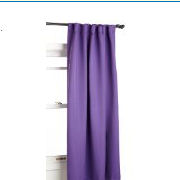 |
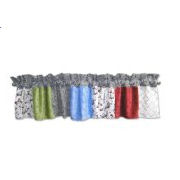 |
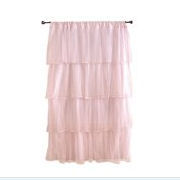 |
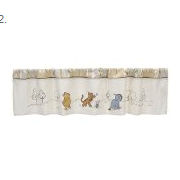 |
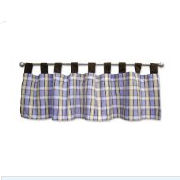 |
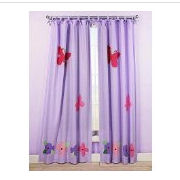 |
 |
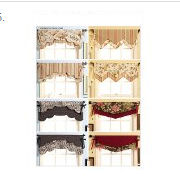 |
HOW TO MAKE YOUR OWN NURSERY WINDOW TREATMENTS, VALANCES and CURTAIN PANELS
How to Make an Upholstered Black and White Nursery Window Topper
If you can't find curtains that you like in the stores; make your own!
Making a cornice board is an easy afternoon DIY project and covering it yourself with fabric that coordinates with the baby's bedding, crib quilt or furniture upholstery.
Here's your chance to save big money and be proud of yourself for having made your own nursery curtains while getting an exact color match and fit for the window. Here are some step-by-step directions for how to go about sewing nursery window treatments that will make you proud.
- Determine which type of window treatments are best for the space. For example do you want window valances or toppers or full length curtain panels? Would a tailored style work or would you prefer to start out sewing simple, gathered curtains?
- Determine the height where the curtain rods for your window treatments will be hung. Will the curtains be inside or outside the window frame?
- Make accurate measurements and record them after making all of the above decisions
- Find a free or commercial curtain pattern. If this is your first project choose something easy unless you plan to hire a professional seamstress. There are plenty of free nursery curtain patterns online with detailed sewing instructions to get you started. Gathered pole top curtains are an easy sewing project for a beginner that call for sewing straight seams.
- Now you are ready for the fun part, shopping for nursery curtain fabric that will coordinate with your baby bedding set and wall paint color. Check that the weight and light blocking capabilities of the fabric are appropriate for the project.
Baby Nursery CURTAIN IDEAS TIPS & TECHNIQUES
Here are some creative ideas for nursery window treatments for your baby's room:
- Use an inexpensive raffia hula skirt to make a window valance for an Hawaiian nursery theme or a surfing theme room
- Hang colorful bandanas across the top of the window frame for a western cowboy or cowgirl themed room
- Drape artificial vines with silk leaves over the tops of the windows in a jungle or rainforest theme nursery
- Tie knots in a length of rope to use as a nursery window treatments for a kid's pirate theme room. Position a pirate hat as a medallion in the center of the valance
- Enhance a pair of sheer curtains by attaching tiny ladybugs, dragonflies or butterflies (out of baby's reach for safety)
No Sew Curtain Options
For those who don't own or don't know how to operate a sewing machine, here are a few no-sew options. For example, you can sew a coordinated cowboy or cowgirl themed window valance for less than $10! Visit the "everything for a $1" store and buy some bright bandanas in whatever color you prefer and then use your hot glue gun to attach them in a "handkerchief hem" style to a cornice board. The same technique can be used for the grass skirt topper.
There are many pictures of homemade curtains featured in our photo gallery. The examples that you see there will help you to make curtains, baby bedding, window treatments and accessories as well as decorations using the free tutorials and patterns.
Go to our main page of baby nursery themes to find ideas on ways to coordinate your curtains with your decor. Please make plans to visit us often to see the latest nursery ideas and techniques for decorating fashionable nurseries for modern babies.
When you click on links to various merchants on this site and make a purchase, this may result in this site earning a commission. This does not affect the price you pay.

UBGI Gold Standard 2026
Verified for performance, SEO,
and accessibility compliance.
Photos, decorating ideas, party setups, and reader submissions are shared for inspiration only and are not intended as step-by-step decorating, construction, or DIY instructions.
About Jan | Contact | Baby Room Ideas (Blog) | Site Map | Privacy Policy | Disclaimer | Affiliate Disclosure | Earnings Disclosure
I am a participant in the Amazon Services LLC Associates Program, an affiliate advertising program designed to provide a means for us to earn fees by linking to Amazon.
Copyright © 2006-2026. All Rights Reserved.