Homemade Wood Baby Gate Ideas, Designs, and Planning Considerations
A homemade wood baby gate is usually considered when a standard gate doesn’t fit the opening or doesn’t fit the home. I see this most often in older houses, wide stairways, and main living areas where a temporary-looking gate feels out of place. The goal isn’t just blocking a space — it’s creating something that looks intentional, works day after day, and doesn’t feel like a compromise the moment it’s installed.
What people usually mean by a homemade wood baby gate
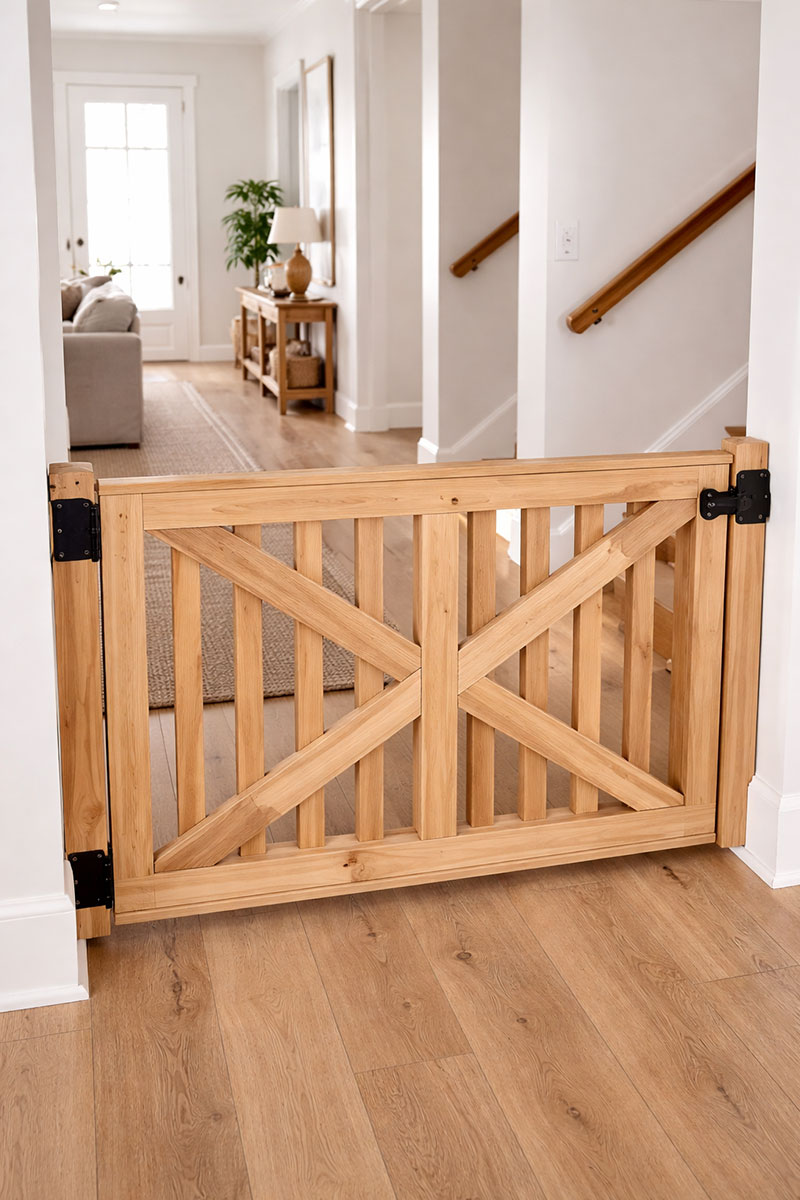
When someone searches for a homemade wood baby gate, they’re usually trying to solve a very specific problem. The opening isn’t standard. The space is visible from the main living area. The white pressure-mounted gate they bought online technically works, but it looks temporary and out of place. I’ve been there. This is one of those spots in a home where function and appearance collide.
A wood baby gate typically means a fixed, hinged gate built to match existing trim, railings, or flooring. It’s often wider than off-the-shelf options, finished to blend in, and installed once rather than moved around. What most people really want is something that feels intentional instead of improvised.
What to do next, early on, is pause and decide whether you’re solving a fit problem, a visual problem, or both. That answer shapes everything that follows.
Homemade wood baby gate design ideas that actually work in real homes
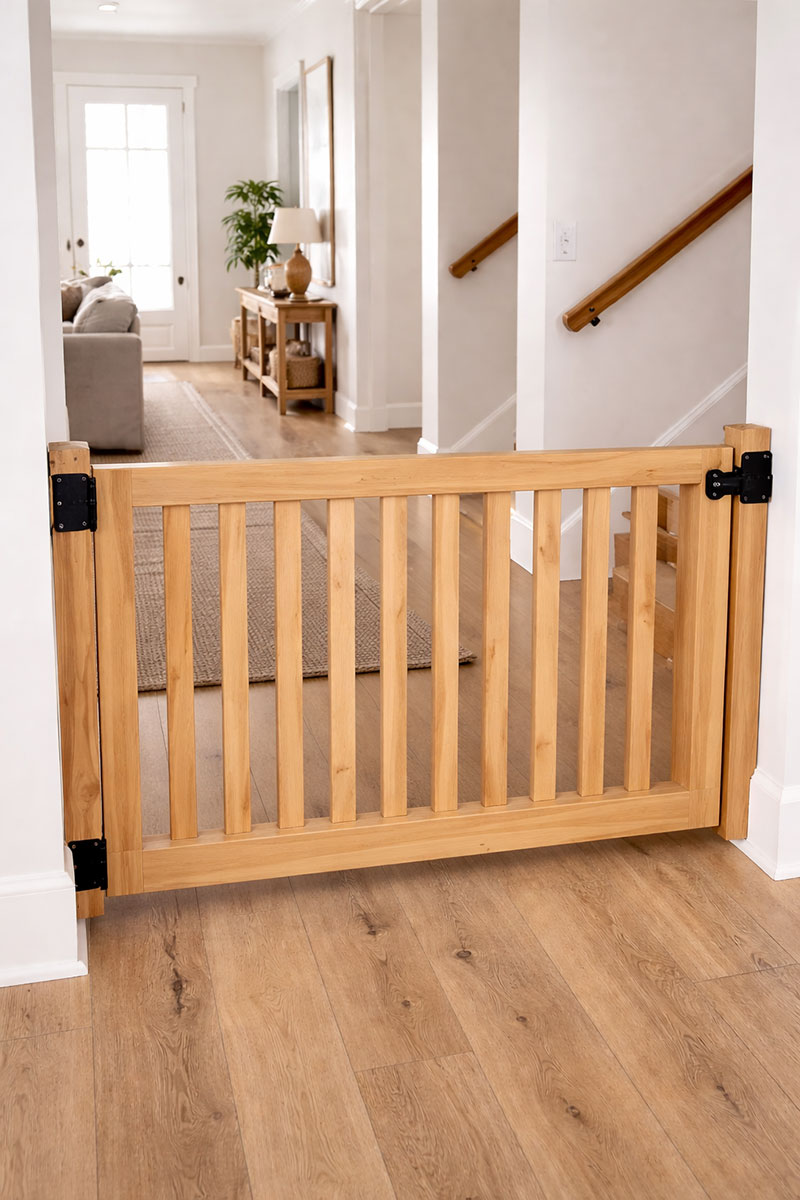
The best homemade wood baby gate designs borrow from doors, stair railings, and furniture rather than toys or nursery décor. Simple vertical slats, Shaker-style frames, and flat-panel designs tend to age well. I’ve noticed that gates built to echo nearby elements fade into the background, which is usually the goal.
Rustic styles using reclaimed boards can be beautiful, but they require more finishing patience than most people expect. Smooth edges, consistent spacing, and a predictable swing matter more than decorative details. A gate that looks charming but catches on socks or fingers becomes annoying fast.
Quick fit check
Measure the opening in three places: top, middle, and bottom. Old houses and stairways are rarely square. If those numbers aren’t identical, the design needs to allow for adjustment, not force everything into a straight rectangle.
What building a homemade wood baby gate really involves
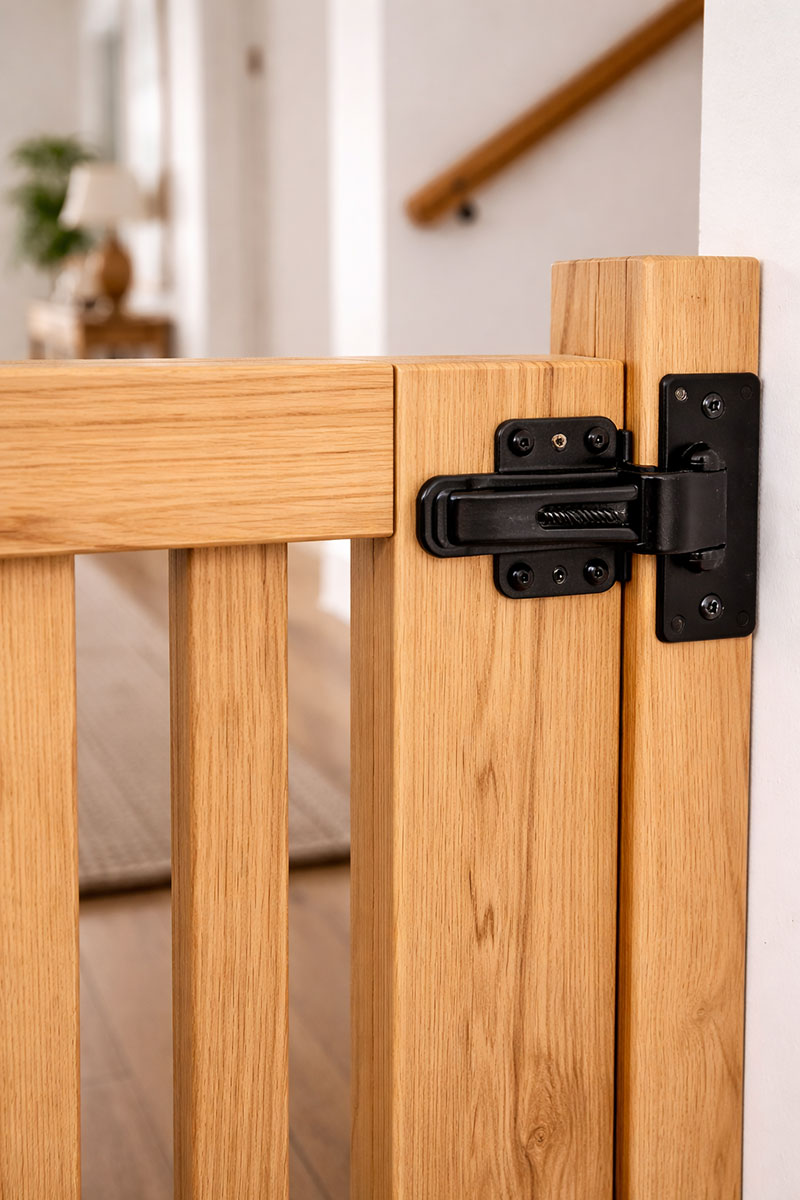
Most plans make it sound straightforward: cut wood, assemble frame, attach hinges. In practice, the work is in the details. Squareness matters. Latch alignment matters. Swing clearance matters. These are the parts that separate a gate that feels solid from one that feels fiddly.
This is also where expectations need a reset. Building a gate doesn’t usually save time. It sometimes saves money, sometimes doesn’t, and it almost always trades speed for customization. That trade can be worth it, but it helps to be honest about why you’re doing it.
If you’re early in the process, what to do next is sketch the opening and write down what you need the gate to do day-to-day. One-handed operation, quiet closing, and clear sightlines tend to rise to the top once the novelty wears off.
View a popular ready-made wood gate option for comparison
If you only remember one thing
A homemade wood baby gate behaves more like a door than a product. Thinking of it that way early makes the rest of the decisions easier.
Tools, finishes, and the hidden decisions
Even simple designs require clean cuts and consistent spacing. That usually means access to a miter saw, drill, clamps, and sanding tools. Finishes matter too. Clear coats highlight flaws. Painted finishes forgive more but show wear differently.
I’ve seen people stall out at this stage because they underestimated drying time, ventilation needs, or how much prep unfinished wood really takes. None of this is difficult, but it does reward patience.
Most parents choose this path
Most people who start researching homemade gates either pivot to a finished wood gate or hire a local carpenter once they price tools and time. That isn’t failure. It’s a decision made with clearer information.
Comparing homemade gates to finished wood gates
Finished wood gates have improved a lot over the years. Many are adjustable, visually neutral, and built with consistent tolerances. The main limitation is width and mounting flexibility. When those match your space, buying can be the simpler option.
Homemade gates shine when openings are unusual or when visual continuity matters more than speed. Neither choice is inherently better. They simply serve different priorities.
What to do after you decide
Once you’ve chosen a direction, commit to it fully. If you’re building, finish the plan before cutting wood. If you’re buying, confirm measurements and mounting surfaces before ordering. Half decisions are where frustration creeps in.
If you’re still uncertain, it can help to look at how gates are used beyond infancy. Many remain in place for years as pet barriers or visual dividers. That longer view often clarifies whether the extra effort feels worthwhile.
Final decision compression
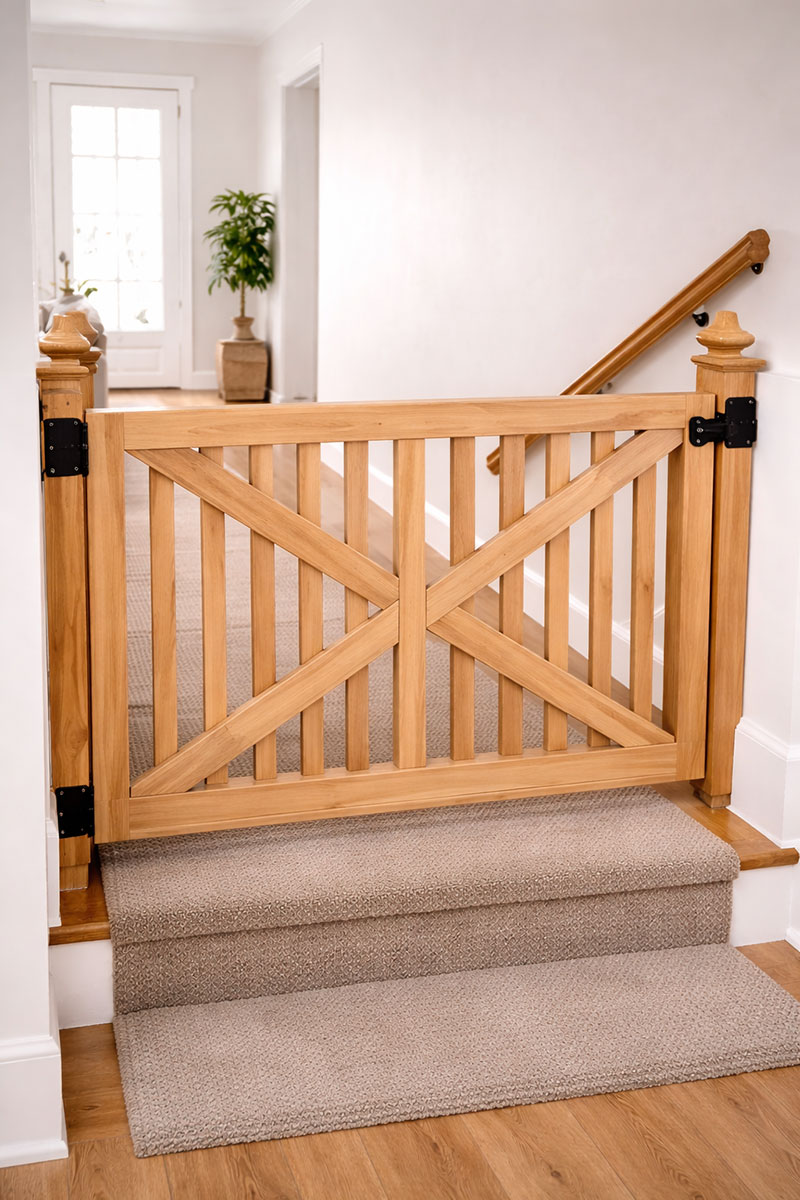
If the opening is standard and the look works, buy a finished gate. If the opening is odd or highly visible, a homemade wood baby gate can make sense. Both choices are valid when they’re intentional.
Where to look next
If you’re exploring broader options, my overview of wood baby gate styles and finishes walks through what different designs look like once installed. For general child safety standards and product guidance, the Consumer Product Safety Commission is a solid reference point.
No matter which route you choose, clarity upfront saves time later. That’s usually the quiet win in projects like this.
When you click on links to various merchants on this site and make a purchase, this may result in this site earning a commission. This does not affect the price you pay.

UBGI Gold Standard 2026
Reviewed under the site's
editorial checklist.
Photos, decorating ideas, party setups and reader submissions are shared for inspiration unless a page is specifically presented as a pattern, tutorial, reference guide or step-by-step project. Follow the instructions, measurements, safety guidance and manufacturer directions provided for the particular project or product.
About Jan | Contact | Baby Nursery Ideas (Blog) | Site Map | Privacy Policy | Disclosure Policy | Disclaimer | Affiliate Disclosure | Earnings Disclosure | Facebook | Pinterest
I am a participant in the Amazon Services LLC Associates Program, an affiliate advertising program designed to provide a means for us to earn fees by linking to Amazon. As an Amazon Associate I earn from qualifying purchases.
Copyright © 2006-2026. All Rights Reserved.