Wood Baby Gate Style Ideas for Nurseries and Homes
Parents begin to search for wood baby gate style ideas during the planning phase of the nursery or reworking shared spaces in their home. I’ve found that the real question usually isn’t whether a gate belongs somewhere, but how to choose one that feels intentional instead of temporary. This page is here to help you think through wood baby gate styles from a visual and practical standpoint, so you can decide what fits your home, confirm whether a choice makes sense, and know what to consider next without getting pulled into instructions or technical details.
Why wood baby gate styles remain so popular
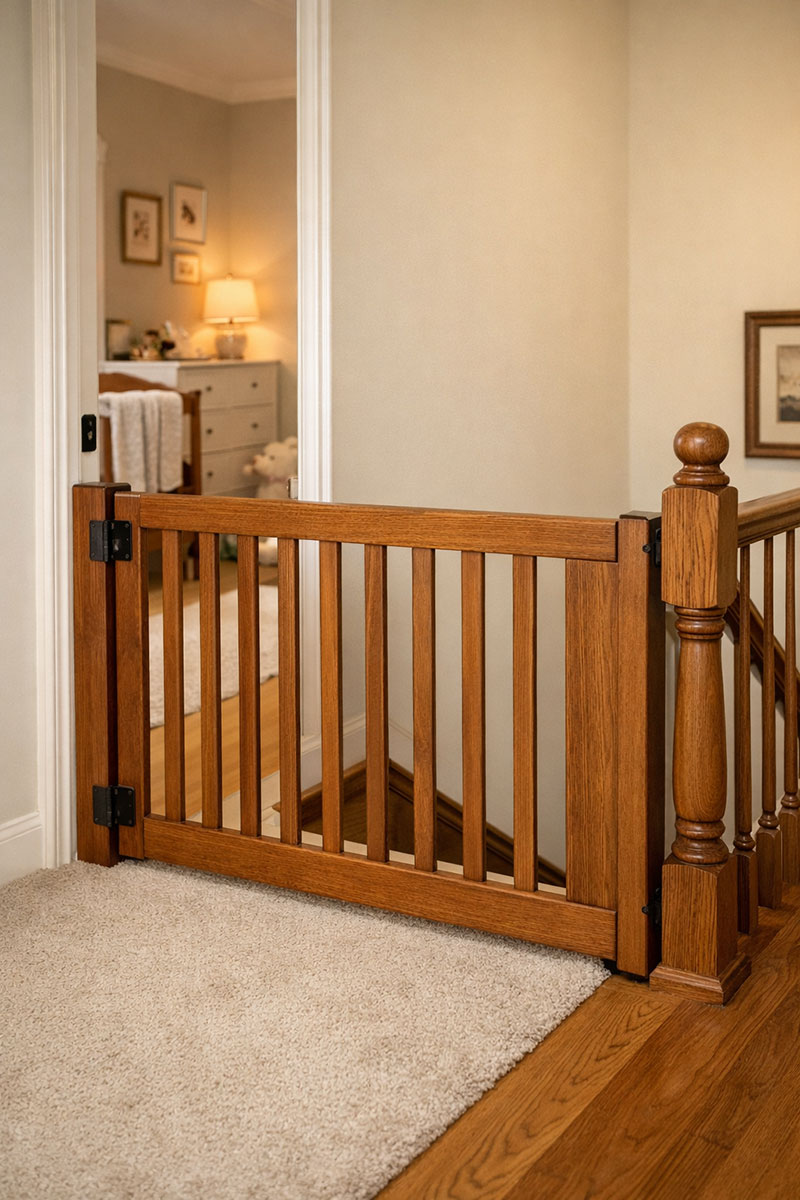
When I hear from parents who are redesigning a nursery or updating an older home, wood baby gate styles almost always come up early in the conversation. The question usually isn’t whether a gate is needed somewhere — it’s how to choose one that doesn’t feel like an afterthought once it’s in place. Wood gates tend to surface because they look intentional. They read as part of the room instead of something temporary tacked on at the last minute.
If you’re here because you’ve already bought a gate and are second-guessing whether it fits your space, or because you’re trying to decide between wood and metal before purchasing, you’re in the right spot. This page is meant to help you orient yourself visually and practically before you move forward.
What to do first
I always suggest starting by looking at the areas where a gate might live — not measuring yet, just noticing finishes, trim, and how visible that opening really is. That context matters more than most people expect and helps narrow choices quickly.
Wood baby gate styles that blend into real homes
Wood baby gate styles vary far more than most store listings suggest. Some lean traditional, some modern, and others fall somewhere in between. What they tend to share is texture — grain, finish, and weight — which can either complement nearby woodwork or clash with it.
In homes with visible stair rails, exposed beams, or wide baseboards, a wood gate often feels more cohesive than plastic or metal. I’ve seen gates disappear visually when the finish echoes nearby trim, and I’ve also seen them stand out when the tone or profile is off. Those visual cues are usually what parents respond to first, even if they don’t articulate it that way.
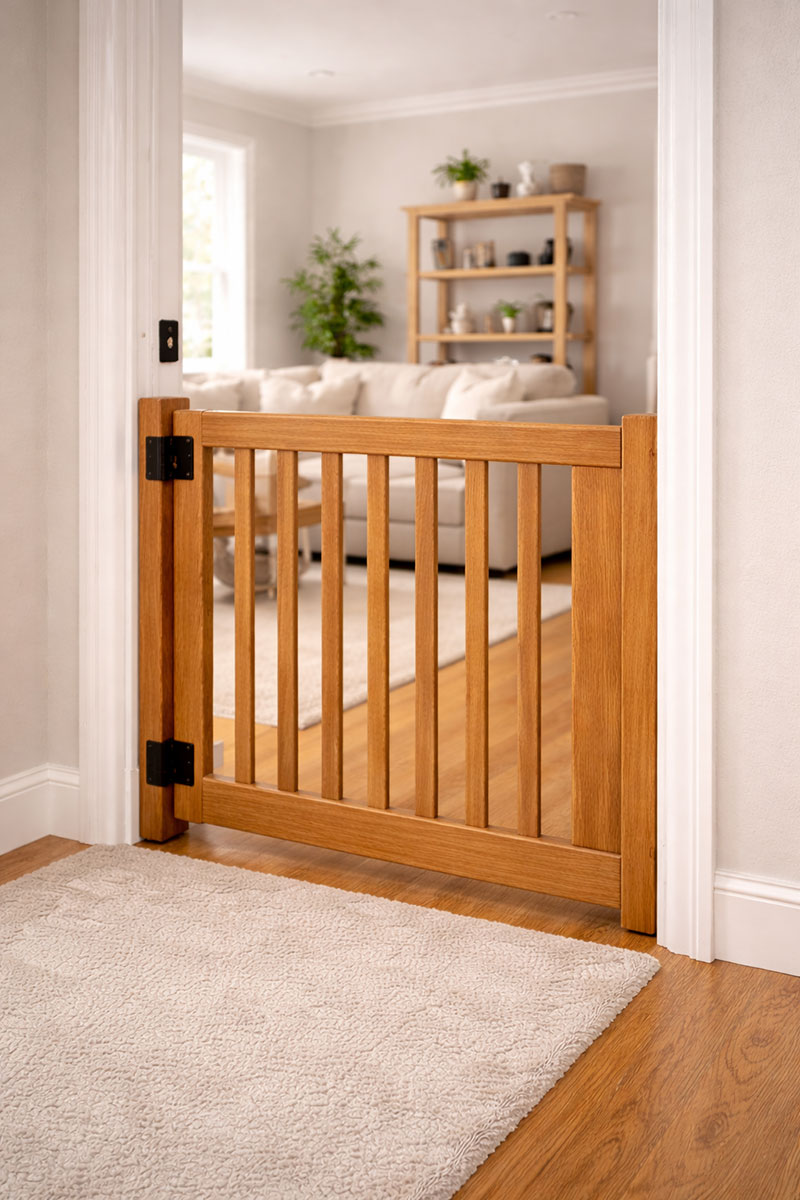
Once you’ve noticed those details, it becomes easier to sort styles into categories that make sense for your home rather than scrolling endlessly through product grids.
See wood baby gate styles parents commonly compare
Quick visual fit check
A fast way to rule options in or out is to ask whether the gate looks like it belongs there when it’s open. Wood gates are often more noticeable in the open position, so imagining that moment helps narrow styles quickly.
Popular looks parents gravitate toward
Some parents gravitate toward clean, painted finishes that feel almost built-in. Others prefer visible grain and natural tones that match floors or banisters. Neither approach is better; they simply signal different priorities in how the nursery connects to the rest of the home.
Painted and light-finish wood gates
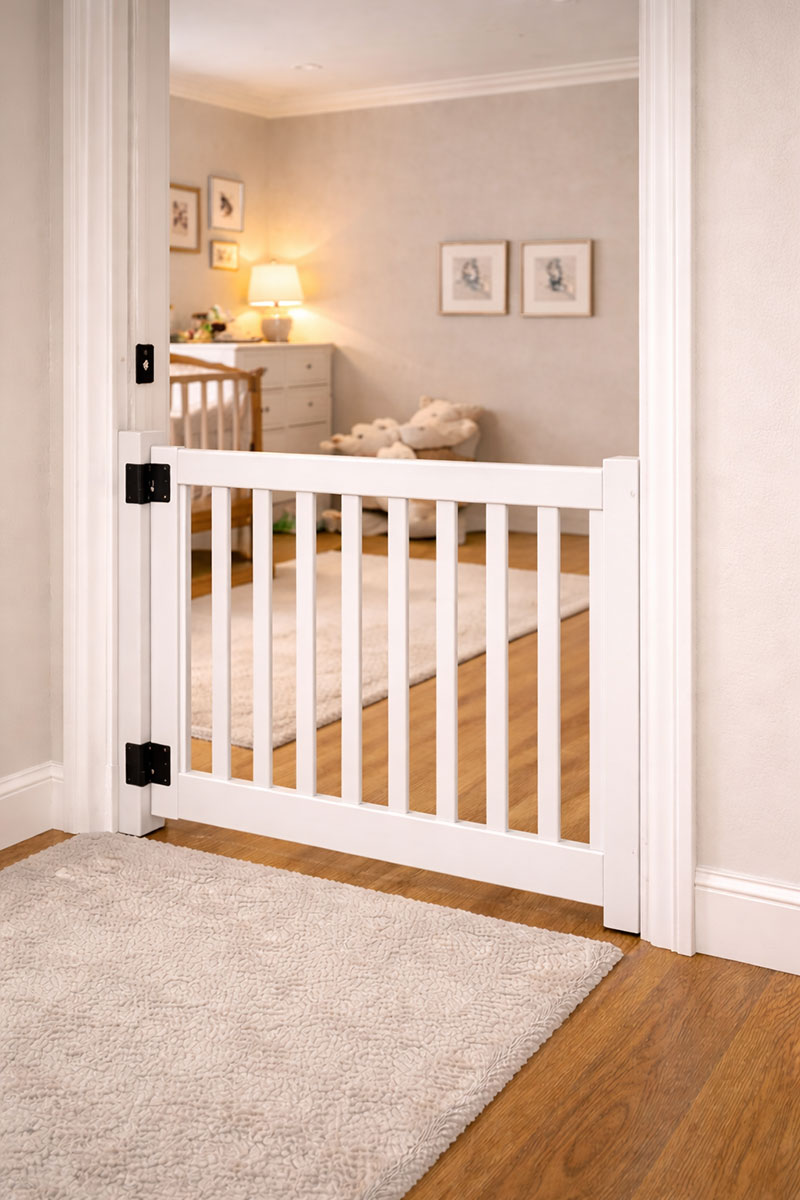
Painted wood gates often appeal in nurseries that already lean soft or neutral. Whites, creams, and pale washes tend to recede visually, especially when nearby trim shares a similar tone. These styles are frequently chosen when the gate will be visible from multiple rooms.
Natural and rustic wood gates
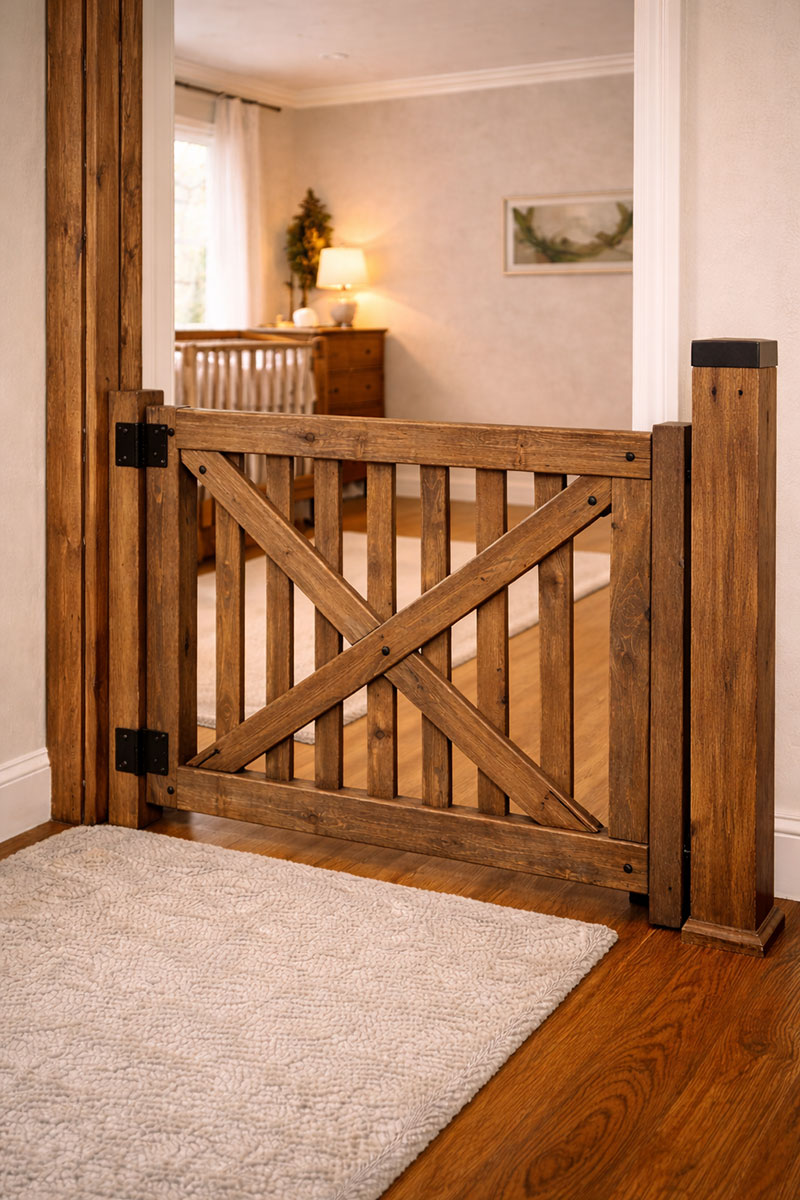
Natural finishes tend to feel more architectural. I often see these chosen in older homes or spaces where exposed wood already plays a role. They read less like a nursery accessory and more like a custom element, which is why they’re popular in open stairways and shared living areas.
Most parents choose this when unsure
When parents aren’t sure which direction to go, mid-tone wood with a simple profile tends to be the safest visual compromise. It doesn’t disappear completely, but it also doesn’t dominate the space.
From “did I buy right?” to “what should I do now?”
It’s very common to land on this page after a purchase, wondering whether the style you chose will age well as the nursery evolves. In my experience, regret usually comes from visual mismatch rather than function. A gate that looks out of place tends to draw attention long after the nursery phase passes.
If that feeling is creeping in, step back and compare the gate’s finish to permanent elements like flooring, rails, or door casings. Those anchors change slowly, if at all, and are usually the best guide for whether a gate will still feel right later.
If you only remember one thing
Choose a style that feels appropriate for the home first and the nursery second. Babies grow quickly, but architectural choices linger.
How wood baby gates fit into the bigger nursery picture
A gate rarely exists in isolation. It usually sits alongside other baby gear decisions, from furniture placement to traffic flow. I’ve found it helpful to think of gates the same way I think about doors — as part of how the home functions day to day.
If you’re still planning the overall layout, it can help to look at how other parents think through nursery transitions and room boundaries. I’ve gathered related planning ideas in the baby gate overview section, which gives broader context without focusing on a single style.
What to do next
Once you’ve settled on a style direction, the next step is usually narrowing finish and proportion. That’s the point where side-by-side photos and real-world examples matter more than specs.
Important scope note
This page focuses on visual styles, layout considerations, and how parents typically think through wood baby gate choices. It does not provide instructions, assessments, or guidance related to installation, modification, or use.
For general background on consumer product oversight related to baby gates and similar household products, parents may consult information published by the U.S. Consumer Product Safety Commission .
Closing thoughts
Wood baby gate styles sit at an interesting intersection of function and design. When the choice feels right visually, parents tend to stop thinking about the gate altogether — and that’s usually the best outcome. My goal here is to help you reach that point with fewer second guesses and clearer next steps.
When you click on links to various merchants on this site and make a purchase, this may result in this site earning a commission. This does not affect the price you pay.

UBGI Gold Standard 2026
Reviewed under the site's
editorial checklist.
Photos, decorating ideas, party setups and reader submissions are shared for inspiration unless a page is specifically presented as a pattern, tutorial, reference guide or step-by-step project. Follow the instructions, measurements, safety guidance and manufacturer directions provided for the particular project or product.
About Jan | Contact | Baby Nursery Ideas (Blog) | Site Map | Privacy Policy | Disclosure Policy | Disclaimer | Affiliate Disclosure | Earnings Disclosure | Facebook | Pinterest
I am a participant in the Amazon Services LLC Associates Program, an affiliate advertising program designed to provide a means for us to earn fees by linking to Amazon. As an Amazon Associate I earn from qualifying purchases.
Copyright © 2006-2026. All Rights Reserved.