Baby Nursery Window Valance Ideas
Baby nursery window valance ideas can still work beautifully when they are used as a soft finishing layer above blinds, shades or curtains rather than as fussy old-fashioned window dressing. The best nursery valances today are simple, safe, washable and scaled to the window so they frame the room without blocking light control or crowding the crib area.
Nursery Ideas
Baby Nursery Themes
Nursery Window Treatment Ideas
Nursery Curtains
Room Darkening Curtains for Nurseries
Blackout Curtains vs Room Darkening Curtains
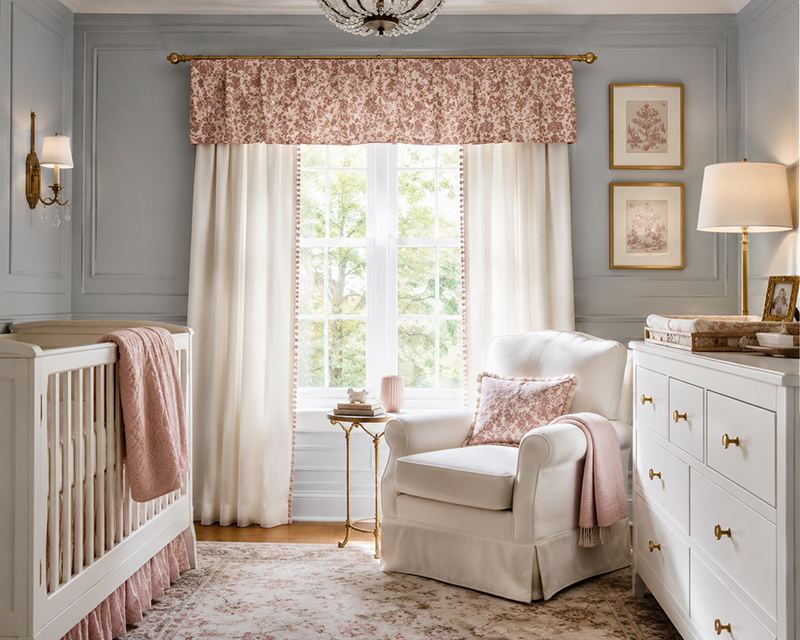
Simple nursery window valance ideas can soften blinds, shades or curtains without making the room look dated.
See Top-Rated Nursery Window Treatments
Jump to:
Are Window Valances Still in Style?
Are Nursery Valances Worth It?
Best Window Valance Ideas for a Nursery
Using Valances With Blackout Curtains
Best Materials for Nursery Valances
How to Measure a Nursery Valance
Window Valance Ideas for a Finished Nursery
Quick answer: A nursery window valance is a short fabric or structured treatment placed across the top of a window. It is used to hide hardware, finish the upper wall, and help curtains, shades, or blinds look intentional. The best nursery valance ideas are simple, washable, safely mounted, and scaled to the room.
A valance should solve a window problem, not create another decorating problem.
Looking at the window from the nursery doorway instead of standing directly underneath it often makes the right choice much more obvious.
Simple window valances work best when they finish the top of the nursery window without competing with the crib wall, rug, or curtain panels.
That is the test I would use before buying one. If the window already looks complete, skip it. If the curtain rod looks bare, the blinds look builder basic, or the top of the window seems unfinished, a valance may be exactly what the room needs.
Are Window Valances Still in Style?
Yes, window valances are still in style when they are tailored, simple, and used with a real purpose. The outdated look usually comes from heavy gathers, shiny fabric, oversized bows, or too many matching pieces.
In a nursery, the cleanest look is often a straight valance above curtains, cordless shades, or blinds. It gives the window a finished top edge without making the room look busy.
The best nursery window valances look intentional from the doorway and still leave the main light-control layer easy to use.
This becomes most obvious in nurseries with one plain window on a blank wall. Without something at the top, the window can look forgotten. With the right valance, that same wall suddenly looks planned.
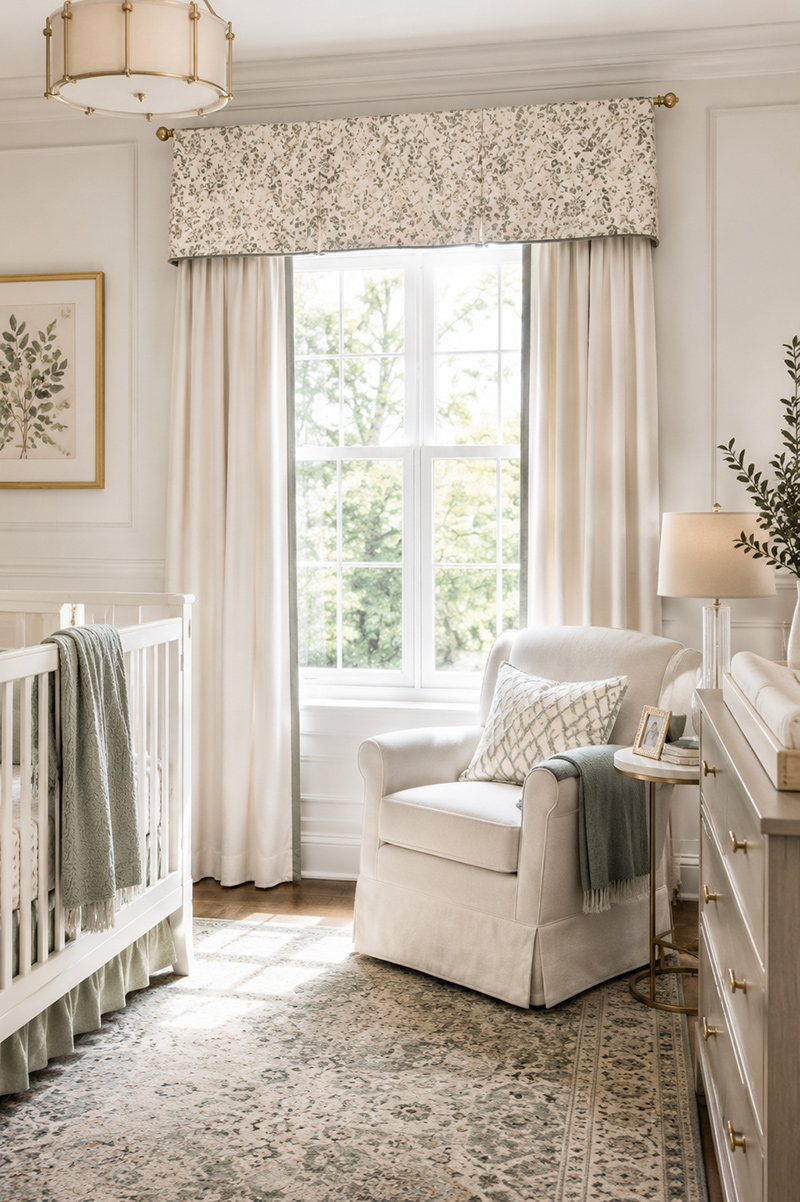
A straight valance can make a plain nursery window look more finished without adding clutter.
Are Nursery Valances Worth It?
Nursery valances are worth it when they finish the room, hide hardware, or help connect the window to the rest of the decor. They are not worth it when they are added only because a bedding set included one.
Years ago, matching crib bedding often came with a window topper, and people used it whether the room needed it or not. That is where many dated nursery windows came from. Today, I would choose the valance separately and make it earn its place.
A valance can be a good choice if the nursery has short windows, visible curtain brackets, plain blinds, or a wall that needs a little height. It can also be helpful when you want color or pattern but do not want full patterned curtains.
For small nurseries, nursery window valances can add color or shape without using full length curtain panels.
The best payoff comes when the valance repeats one detail already in the room. It might echo the crib skirt, wall color, quilt, rug, or artwork. It should not introduce a brand new idea that has no connection to anything else.
Best Window Valance Ideas for a Nursery
The nursery valance ideas that hold up best are the ones that do not try too hard.
When comparing valance ideas for windows, skip anything that adds bulk without solving a real problem in the room.
- Tailored valance: A flat or lightly pleated fabric topper that works with many nursery styles.
- Box pleat valance: A more structured option that looks neat above curtain panels.
- Fabric cornice: A covered board that hides hardware and gives the window a custom look.
- Rod pocket valance: A simple fabric panel that slips over a curtain rod.
- Relaxed valance: A casual fabric treatment with a little curve across the bottom.
- Roman shade with valance: A shade that includes a finished top section.
For a baby room, I prefer smaller patterns over giant prints. A tiny check, narrow stripe, mini floral, or quiet geometric pattern is easier to live with than a large novelty print that shouts from across the room.
If the nursery already has a theme, use restraint. A woodland nursery does not need trees on the walls, animals on the bedding, forest curtains, and a forest valance. One repeated idea is enough.
For more room theme direction, visit baby nursery themes before choosing fabric. If you're decorating a baby girl's room, these pink nursery curtains pair especially well with simple tailored valances.
For more room theme direction, visit baby nursery themes before choosing fabric. If you're decorating a baby girl's room, these pink nursery curtains pair especially well with simple tailored valances. For a themed baby's room, these ideas for Winnie the Pooh nursery curtains add classic storybook charm without overwhelming the space.
Best Nursery Valance Style by Decorating Style
| Valance Style | Best For |
|---|---|
| Tailored Valance | Modern, contemporary, and minimalist nurseries |
| Box Pleat Valance | Traditional and transitional nursery designs |
| Fabric Cornice | Custom and luxury nursery rooms |
| Relaxed Valance | Cottage, vintage, and tea party themed nurseries |
| Roman Shade Valance | Small nurseries where fewer layers are preferred |
| Rod Pocket Valance | Budget-friendly and beginner decorating projects |
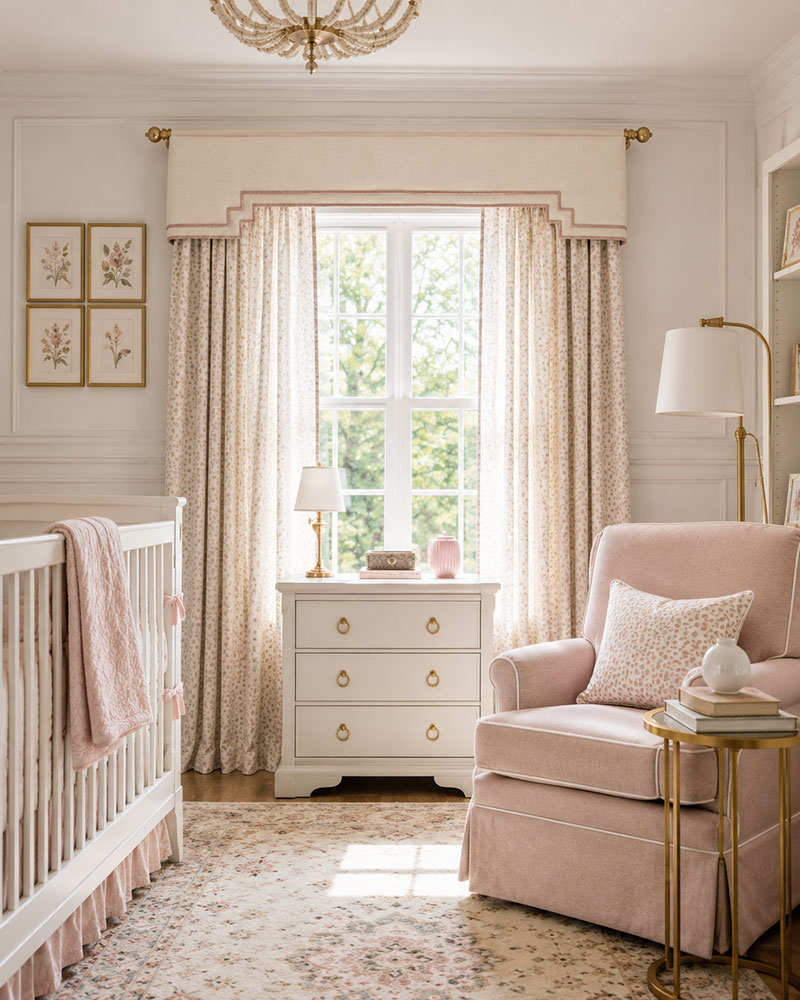
A tailored fabric topper works best when it repeats colors already used in the nursery.
Using Valances With Blackout Curtains
Valances pair especially well with blackout curtains because blackout panels are practical but not always pretty at the top. A valance can hide the rod, rings, brackets, and the little gap where light often sneaks through.
That gap matters more than people expect. You may not notice it when decorating during the day, but you will see it when the room is supposed to be dark for a nap.
A valance will not turn regular curtains into blackout curtains, but it can help the whole setup look more complete. It can also make basic blackout panels look more custom.
If your main problem is light control, compare blackout curtains vs room darkening curtains before buying. If you want less darkness but still need privacy, room darkening curtains for nurseries may be enough.
A nursery that needs true nap-time darkness may require nursery blackout curtain ideas beneath the valance so the topper finishes the window while the panels handle the light control.
If you want to hide curtain hardware or complete the upper portion of the window without adding another full layer, a simple tailored valance can make the entire nursery window look more finished.
Valance vs Curtains: Which Nursery Window Treatment Works Best?
| Feature | Window Valance | Curtains |
|---|---|---|
| Main Purpose | Decorative finishing touch | Light control and privacy |
| Blocks Light | Very little | Moderate to excellent depending on fabric |
| Installation | Usually simple | Slightly more involved |
| Cost | Generally lower | Generally higher |
| Best Use | Finishing the top of a window | Sleep, privacy, and room darkening |
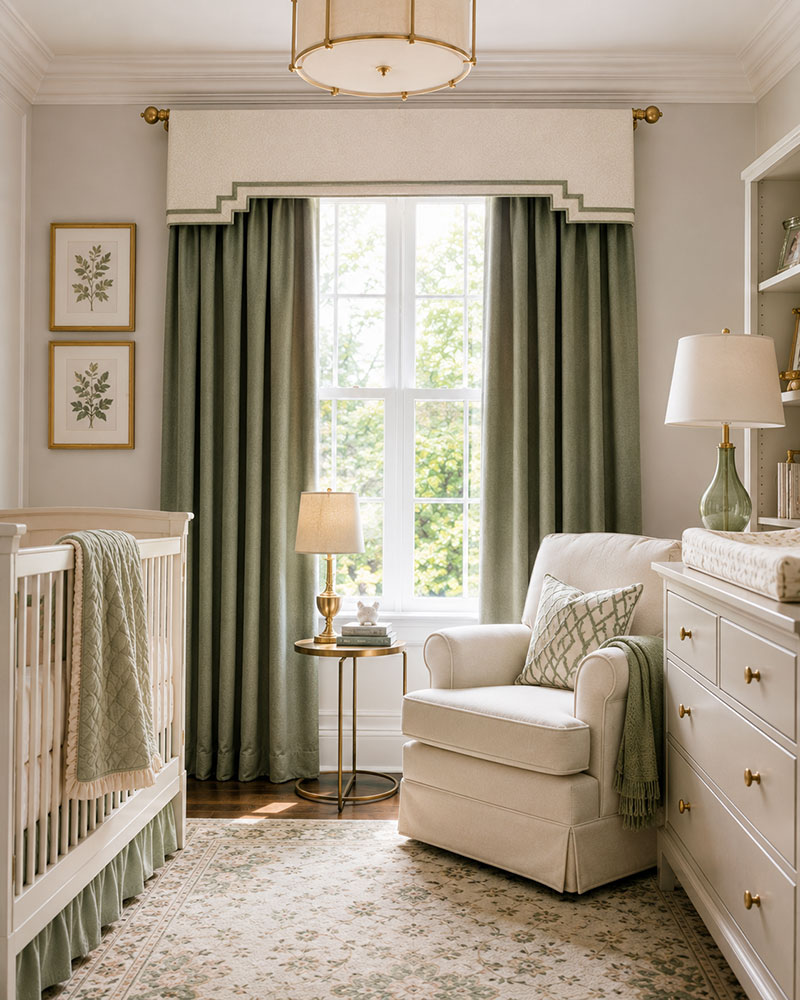
A valance above blackout curtains can hide hardware and make sleep-friendly panels look more custom.
Best Materials for Nursery Valances
Fabric choice matters because nursery windows collect dust, sunlight, humidity, and everyday wear. A valance that looks great in a showroom may not hold up nearly as well in a room that is actually being used.
Cotton remains one of the easiest materials to work with because it is widely available, washable, and comes in thousands of patterns.
Linen blends add texture and work especially well in cottage, vintage, tea party, and farmhouse nurseries. The tradeoff is that they wrinkle more easily.
Polyester blends tend to hold their shape better and often require less maintenance.
Canvas and duck cloth are useful when you want a more structured appearance without building a full cornice board.
One detail that rarely gets mentioned is what the valance looks like from underneath. In many nurseries, adults see the underside every time they stand near the window. A lined valance often looks much more finished than one with exposed seams.
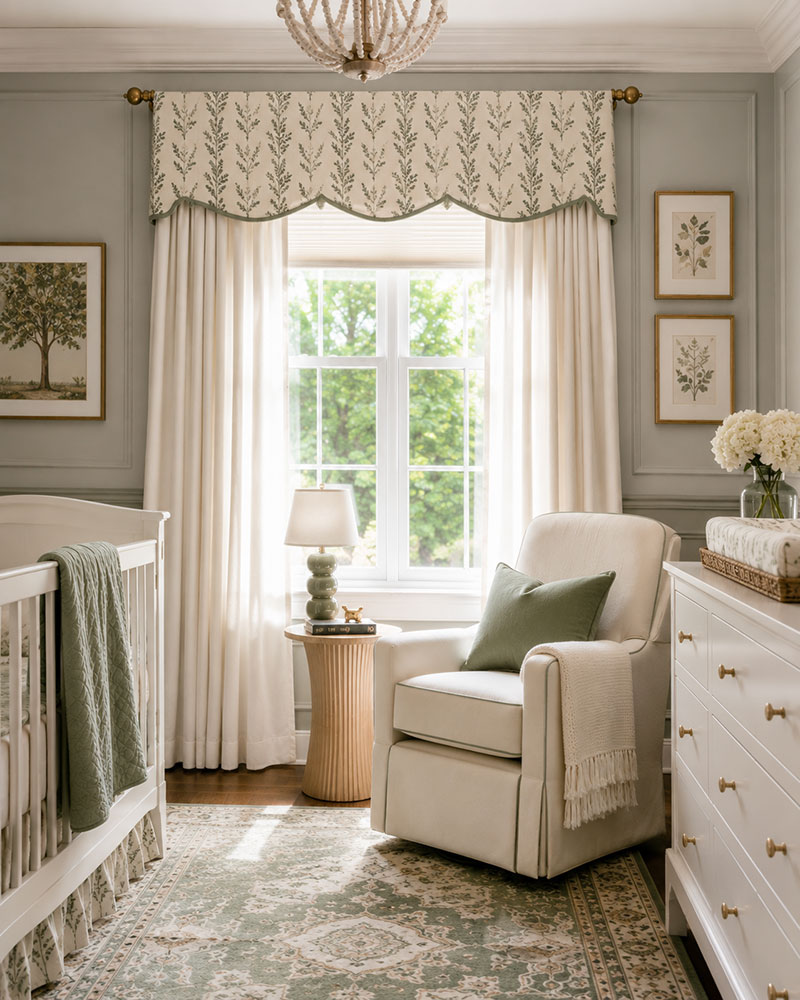
Washable fabrics generally hold up best in a room that gets daily use.
How to Measure a Nursery Valance
Start by measuring the entire window including trim.
Most valances extend beyond the frame on each side. This creates a wider appearance and helps the window feel more balanced within the room.
Height matters just as much as width. Hanging a valance several inches above the window often makes the opening appear taller.
Standing directly in front of the window can be misleading. The doorway view tells the truth. Before mounting anything, stand where someone first enters the nursery and look at the entire wall.
If there is a dresser beneath the window, pay attention to the visual space between the furniture and the valance. Too little separation can make the wall appear crowded even when every measurement is technically correct.
Easy Valances to Install
Rod pocket valances are usually the easiest option for beginners.
Slide the fabric onto a curtain rod, install the brackets, and the project is essentially complete.
Another simple option is a fabric covered cornice purchased ready-made. It costs more than a fabric topper but often creates a custom appearance without requiring construction skills.
Many nurseries run into this issue because decorating deadlines suddenly feel very real once the crib arrives. A straightforward installation is often better than an ambitious project that never gets finished.
The easiest solution is often the one that actually gets installed.
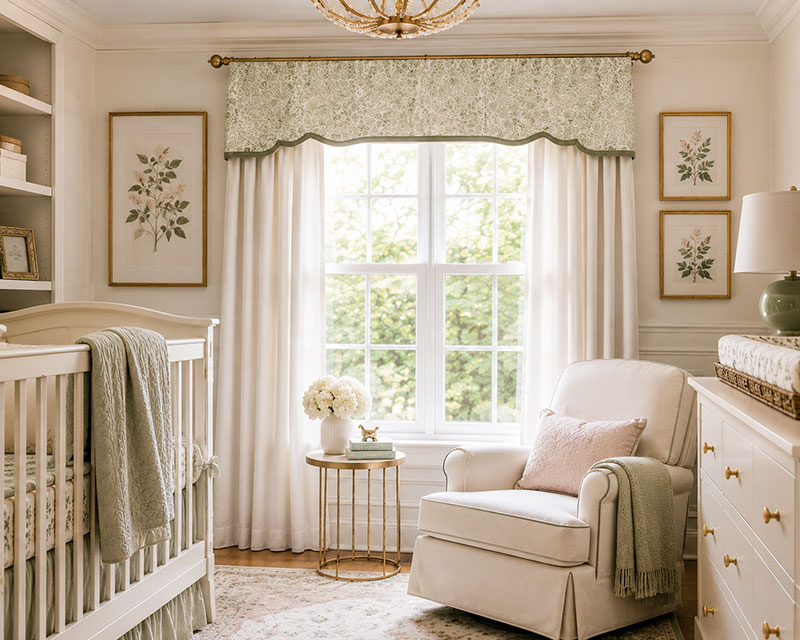
Simple installations are often easier to clean and update later.
How to Keep Nursery Valances Looking Fresh
A nursery valance can stay attractive for years if it is cleaned regularly.
Dust tends to collect along folds, pleats, and upper edges where it is easy to miss during routine cleaning.
Flat designs are generally easier to maintain than heavily gathered styles.
Flat or lightly tailored window valances are usually easier to clean than gathered styles with deep folds.
If the fabric is machine washable, cleaning becomes much simpler. If not, occasional vacuuming with a brush attachment can help remove dust before it becomes visible.
Sunlight can also affect fabric over time. Windows that receive direct afternoon sun may cause some materials to fade more quickly than others.
This is one reason I often recommend selecting patterns and colors that will still look good even if they soften slightly with age.
Nursery Window Safety Comes Before Style
No nursery decorating decision is more important than safety.
Keep cribs, bassinets, and other climbable furniture away from windows whenever possible.
Choose cordless blinds or shades when available.
Many of the safest options are covered in my guide to nursery window treatments, including curtains, shades, blinds, and layered window solutions.
Secure curtain rods, brackets, and mounting hardware according to the manufacturer's instructions.
The Consumer Product Safety Commission recommends cordless window coverings for homes with young children.
Babies grow faster than nursery layouts change. A setup that seems out of reach today may become reachable much sooner than expected.
Mistakes That Date a Nursery Fast
The quickest way to make a nursery window look old is to overdecorate it.
- Oversized swags and excessive gathers.
- Shiny fabric that competes with everything else in the room.
- Too many patterns on one wall.
- Mounting the valance too low.
- Choosing a matching bedding valance without considering the room.
- Ignoring light control needs.
- Selecting materials that cannot be cleaned easily.
One of the nicest nursery windows in my career featured plain white blackout panels, a simple striped valance, and nothing else. The room looked intentional because every element had a purpose.
That experience changed my opinion about window treatments. More fabric rarely creates a better nursery.
If you're still deciding between curtains and other coverings, my guide to nursery curtains may help narrow the options. You'll also find more decorating inspiration in these nursery curtain ideas, including layered treatments, fabrics and styles that work with nursery valances.
Before You Buy a Nursery Valance
Ask yourself one question.
What problem is the valance solving?
If it hides hardware, adds height, balances the wall, introduces a needed color, or finishes the room, it may be a worthwhile addition.
If it is being added simply because a bedding set included one, pause before spending the money.
The best decorating decisions are the ones that continue making sense a year from now.
Sometimes the smartest purchase is the one you decide not to make.
These window valance ideas work best when the topper solves a real nursery window problem instead of adding fabric just to fill space.
These baby nursery window valance ideas work best when the topper solves a real nursery window problem instead of adding fabric simply to fill space.
When I compare window valance ideas for nurseries, the ones that age best are simple, washable, and tied to something already in the room.
Frequently Asked Questions About Nursery Window Valances
Are nursery window valances outdated?
No. Simple, tailored styles remain popular and work well with curtains, shades, and blinds.
Do nursery valances block light?
Not significantly. Their primary purpose is decorative rather than functional.
What is the easiest nursery valance to install?
A rod pocket valance is usually the easiest option because it slides directly onto a curtain rod.
Should a nursery valance match the crib bedding?
Not necessarily. Coordinating with the room often works better than exact matching.
Can I use a valance without curtains?
Yes. Many nurseries use a valance above shades or blinds without side panels.
How high should a nursery valance be mounted?
Mounting it several inches above the window frame often creates a taller appearance.
Are cornices better than fabric valances?
Cornices provide a more structured appearance. Fabric valances are generally easier to remove and clean.
What fabric works best for nursery valances?
Cotton and cotton blends remain among the most practical choices because they are easy to maintain and widely available.
Final Thoughts on Nursery Window Valance Ideas
Nursery window valances continue to earn their place when they solve a real decorating problem rather than simply add more fabric to the room.
The best examples hide hardware, help connect the window to the rest of the nursery, and support practical layers such as blackout curtains, shades, or blinds.
Start with function. Add the finishing touches afterward.
That approach rarely goes out of style.
SHARE WINDOW VALANCE IDEAS
Do you have an idea for how to make a cute valance or a super fabric resource? Share it!
WINDOW VALANCE IDEAS PICTURES and FABRIC SUGGESTIONS from our FRIENDS
Click below to see contributions from other visitors to this page...
Easy Pink Valance Design for a Baby Girl Princess Nursery Not rated yet
Here is a "sew" easy pink valance design for a baby girl nursery that is made from gray, pink and white cotton fabric. The colors of the stripes coordinate …


About Jan | Contact | Baby Nursery Ideas (Blog) | Site Map | Privacy Policy | Disclosure Policy | Disclaimer | Affiliate Disclosure | Earnings Disclosure | Facebook | Pinterest
I am a participant in the Amazon Services LLC Associates Program, an affiliate advertising program designed to provide a means for us to earn fees by linking to Amazon. As an Amazon Associate I earn from qualifying purchases.
Copyright © 2006-2026. All Rights Reserved.