Space Themed Nursery Ideas for a Sophisticated Celestial Room
These space themed nursery ideas show how to bring planets, stars, moons and rockets into a beautiful baby room without making every surface compete for attention. Begin with one celestial focal point, choose a clear color palette and repeat only a few space details through the wall decor, bedding, mobile and handmade pieces.
By Jan Bay
Explore More Celestial Nursery Ideas
Modern Nursery Decorating Ideas
Looking for Space Nursery Decor?
Jump to the Space Nursery Ideas You Need
- Space Nursery Styles
- Space Nursery Color Palettes
- Modern Space Nursery Ideas
- Vintage Space Nursery Ideas
- Ideas for Boys, Girls and Neutral Rooms
- Wallpaper, Murals and Wall Art
- Bedding, Rugs and Furniture
- Space Nursery Mobiles
- Handmade Space Nursery Decor
- Decorating and Display Safety
- Space Nursery FAQ
Quick answer: A space themed nursery feels more polished when the room begins with one clear direction, such as a realistic solar system, vintage astronomy, a modern galaxy or a softer moon and stars design. Choose three main colors, select one large celestial feature and let the smaller decorations support it.
Space Themed Nursery Styles That Give the Room a Clear Direction
A space nursery can be imaginative without looking like a collection of unrelated rockets and planets. Decide what kind of sky belongs in the room before choosing the bedding, artwork or mobile. That single decision helps every later purchase make sense.
A solar system nursery places the planets at the center of the design. Saturn, Earth and the moon are easy to recognize, while smaller stars and orbit lines can fill the background. This direction works especially well with a handmade planet mobile, an astronomy print or a ceiling feature.
A modern space nursery uses cleaner shapes and fewer objects. Deep blue, charcoal, white and muted gold can create a crisp celestial room without relying on cartoon characters. Keep the planets large enough to be noticed and leave open wall space around them.
A vintage astronomy nursery can include old star charts, observatory inspired artwork, faded celestial maps and warm wood furniture. Colors such as ink blue, tobacco brown, muted rust and antique gold give the room a collected character.
A moon and stars nursery is the softer choice. Crescent moons, scattered stars and cloud details can feel gentle without losing the celestial theme. My moon and stars nursery ideas show how this quieter direction can work in blue, gold, white and other flexible palettes.
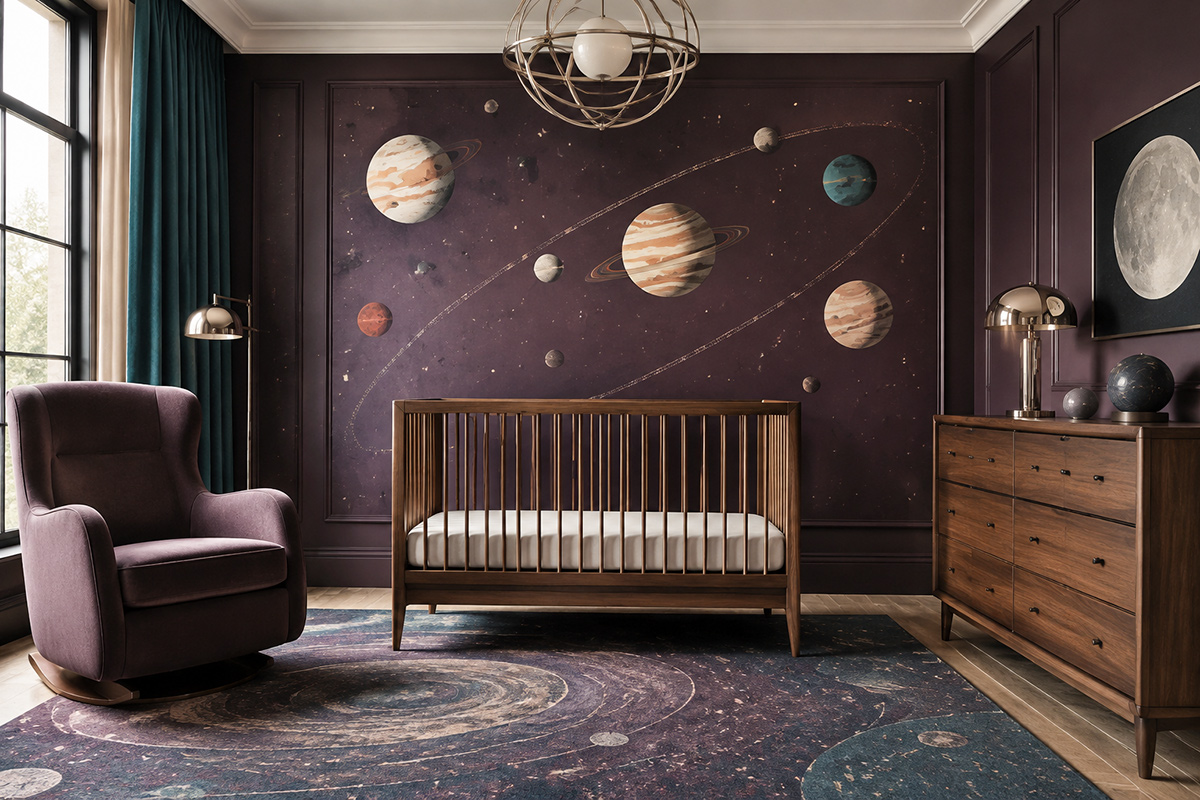
A galaxy nursery uses deeper color and more movement. Nebula inspired shades of violet, indigo, teal and dusty rose can be beautiful on one feature wall, but repeating the full galaxy effect on the rug, bedding and curtains can make the room feel crowded. Let one broad surface carry the drama.
I believe the best starting point is the detail you would still want in the room after the smaller accessories were removed. If that is a painted solar system, an antique star chart or a beautiful planet mobile, build the rest of the nursery around it.
Space Nursery Color Palettes Beyond Basic Navy
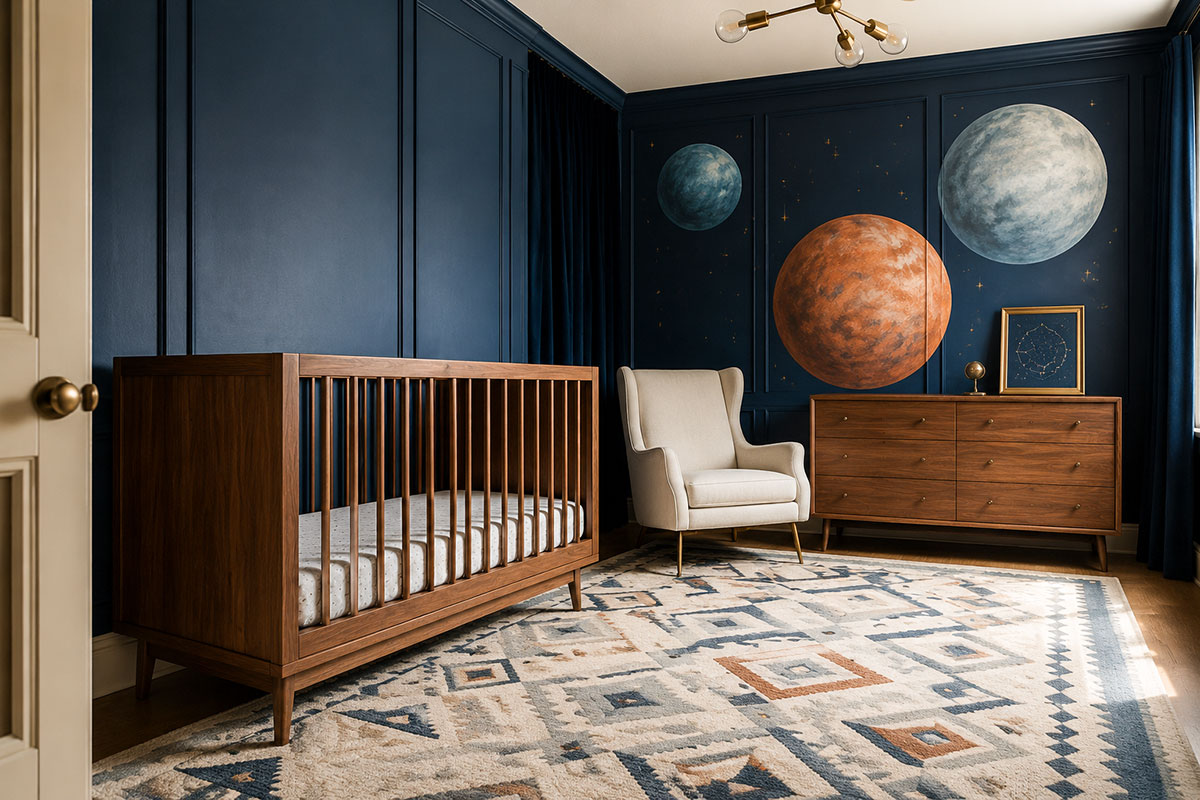
Navy is a natural choice for a space nursery, but it does not have to cover every wall. A deep color carries more visual weight than a pale one, so even a single navy wall can establish the night sky effect while the remaining walls keep the room bright.
Begin with three parts: a background color, a lighter balancing color and one accent. You can add small variations within those colors, but the room will be easier to coordinate when the main palette stays clear.
Navy, White and Muted Gold
This combination creates a defined night sky with enough contrast to keep planets and stars visible. Use navy on one wall or in the rug, white on the larger furniture and muted gold in small celestial details. The gold should appear in a few deliberate places rather than on every star. More examples are included in my navy blue nursery ideas.
Blue Gray, Walnut and Rust
Blue gray walls provide a softer background for a vintage space room. Walnut furniture adds warmth, while muted rust can appear in Mars inspired artwork, quilt pieces or a single planet on the mobile. This palette has enough color to feel memorable without turning the nursery into a primary color classroom.
Charcoal, White and Mineral Blue
Charcoal works well in a modern space nursery when it is limited to a feature wall, ceiling detail or large rug. White keeps the furniture easy to see against the darker background. Mineral blue can connect the bedding, artwork and storage without repeating an exact shade everywhere.
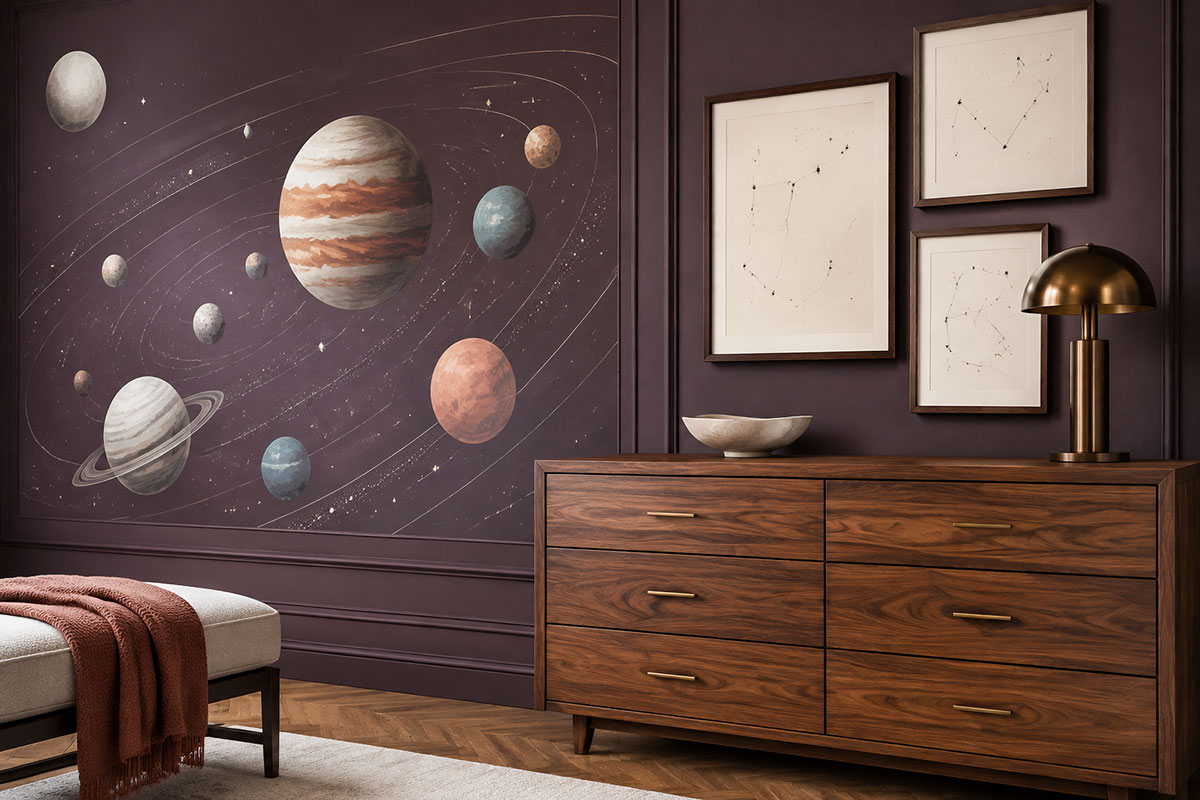
Plum, Dusty Rose and Midnight Blue
A space themed nursery for a girl does not need to abandon dark sky colors. Midnight blue gives the room depth, while plum and dusty rose suggest nebula clouds and distant galaxies. Use the warmer colors in artwork, a quilt or curtains instead of coating the entire room in pink.
Sage, Cream and Deep Teal
Sage creates an unexpected base for a solar system nursery. Deep teal adds enough contrast for the celestial details, while cream keeps the overall palette light. This combination also fits naturally among the flexible colors shown in my gender neutral nursery themes.
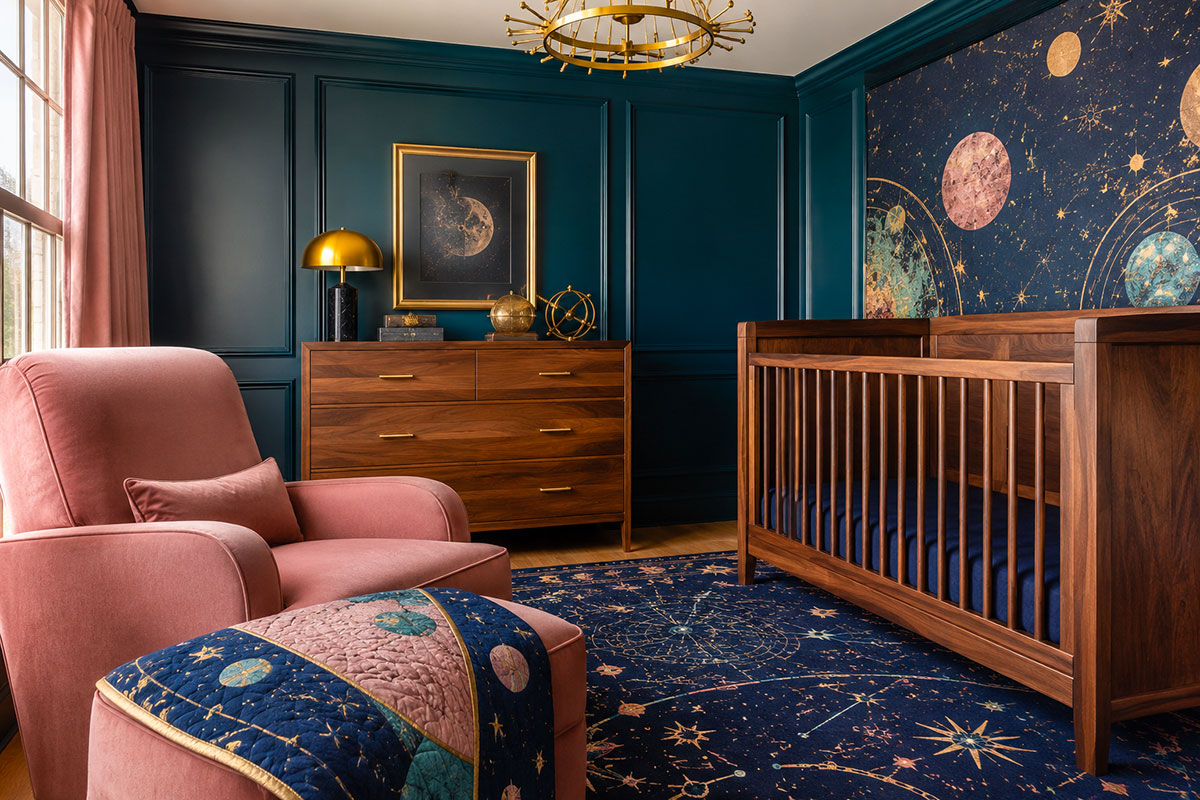
Carry the palette through materials as well as paint. A walnut dresser, brushed brass light, cotton quilt and painted mural can share a color story without looking like pieces from one matching set.
Modern Space Nursery Ideas with Clean Celestial Details
A modern space nursery needs fewer decorative objects than you might expect. The theme can be established with one large planet feature, a limited palette and two or three smaller details placed where they can be seen without competing.
Start with the crib wall. A painted planet mural, oversized Saturn artwork or celestial wallpaper panel can provide the room’s main visual moment. Keep the crib itself clear and place artwork, shelves and other wall objects according to their mounting instructions and safely away from the sleep space.
Choose furniture with simple lines and repeat its finish elsewhere. A white crib might be paired with a white dresser and pale wood frames. A walnut crib can connect with a wood ceiling light, frame or curtain rod. Repeating the finish twice is enough to make the choice look intentional.
Modern rooms also benefit from differences in scale. One oversized moon looks more purposeful than twelve tiny moon accessories scattered around the nursery. Pair that large shape with a smaller mobile and a restrained pattern in the rug or curtains.
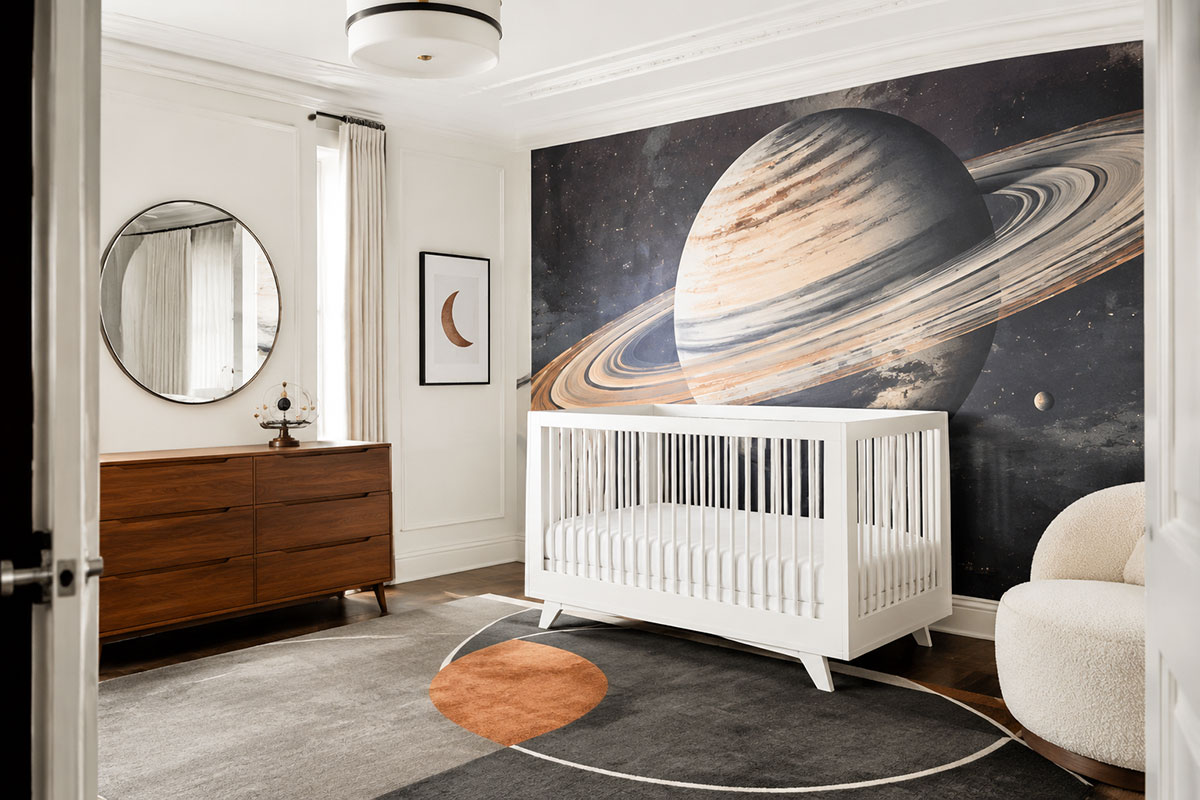
Lighting can continue the idea without turning into another decoration. A round ceiling fixture can suggest a moon, while a small shaded lamp can provide practical evening light. Avoid relying on decorative string lights or projection effects as the room’s only useful light source.
If you like contemporary rooms but have not settled on the final space details, browse these modern nursery decorating ideas for furniture, color and layout inspiration. Then return to the celestial theme and choose only the pieces that fit that room direction.
Give the planets room to breathe. Empty wall space is not unfinished space when it helps the focal feature look deliberate.
Vintage Space Nursery Ideas with Astronomy Character
A vintage space nursery feels less like a themed set and more like a room assembled around curiosity. Old observatory drawings, celestial maps, rocket sketches and astronomy book illustrations can provide the space connection without filling the nursery with cartoon planets.
Begin with artwork that has an aged paper background or a limited ink palette. A large star chart above the dresser can become the focal point, while two smaller framed moon phase or constellation prints can carry the idea to another wall. Choose reproductions with clear details rather than artificially distressed lettering that is difficult to read.
Warm furniture keeps the room from feeling too cold or technical. Walnut, medium oak and painted black finishes pair naturally with ink blue, olive, tobacco brown, muted rust and antique gold. A vintage inspired room can still use a new crib that meets current requirements. The character should come from the surrounding finishes and decorative pieces.
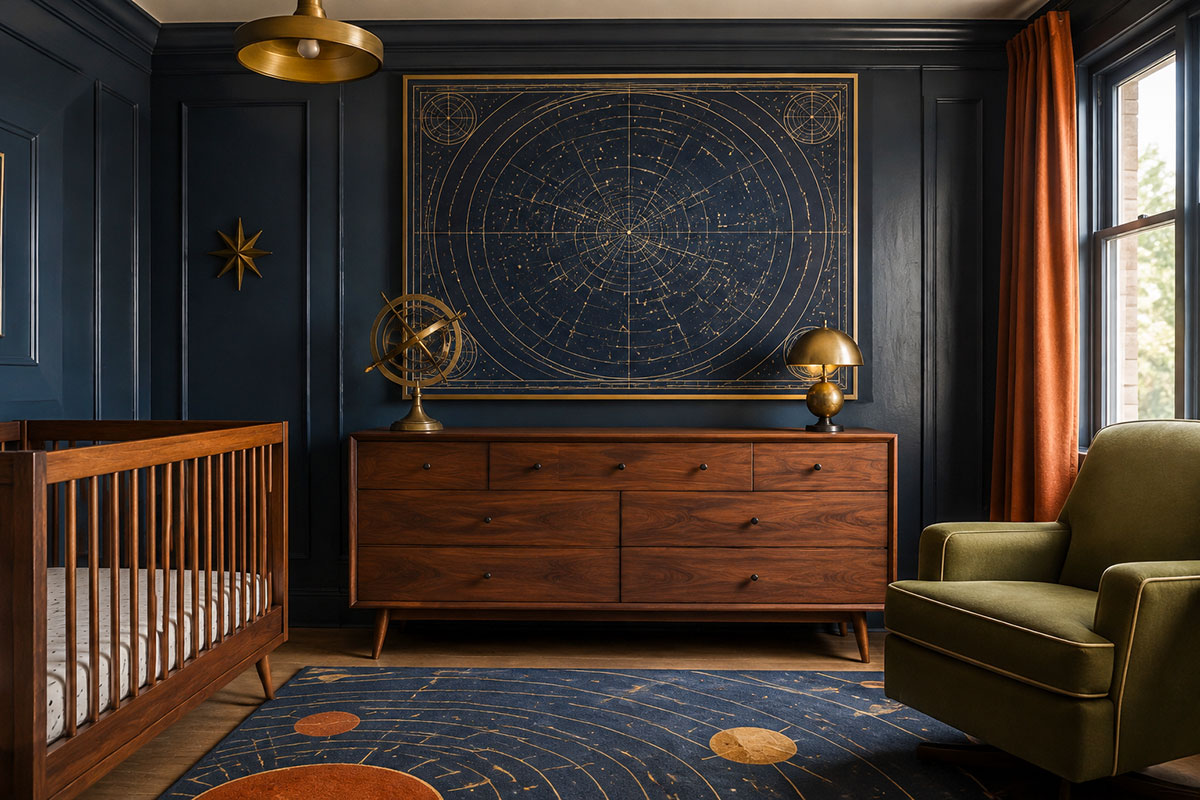
A globe shaped ceiling light, framed rocket diagram or carefully chosen model can reinforce the astronomy theme. Keep display pieces on secured furniture or mounted shelves away from the crib. Fragile models and small removable parts belong where a child cannot reach them.
Textiles can soften the scientific details. Look for a quilt with orbit lines, small stars or curved planet shapes instead of a fully illustrated bedding set. Curtains in a solid color give the eye somewhere to rest, especially when the walls already hold detailed charts.
The result should suggest a small observatory prepared for a baby, not a museum display. Leave space for family photographs, books and useful nursery storage so the room still feels personal.
Space Nursery Ideas for Boys, Girls and Gender Neutral Rooms
The solar system does not belong to one nursery color or gender. Planets, stars, rockets and constellations can move easily among blue, plum, green, rust, gray and gold. The way those elements are styled matters more than the label placed on the room.
Space Nursery Ideas for a Boy
Deep blue, mineral gray, rust and warm wood create a space nursery with definition without depending on bright primary colors. A large planet mural can provide the theme, while solid curtains and simple crib textiles keep the room balanced.
For an adventurous direction, include a rocket in one prominent place rather than repeating rockets across every surface. A framed launch illustration, a handmade mobile or one shaped wall detail is enough to make the idea clear.
Space Nursery Ideas for a Girl
Dusty rose, plum, midnight blue and muted gold can create a richly colored celestial room. Nebula inspired artwork is especially useful because it introduces warmer color without replacing the planets and stars with unrelated decorations.
A girl’s space nursery can also be light and airy. Pale blue gray walls, white furniture and soft violet accents provide a quiet background for moon phase artwork or a gold constellation feature.
Gender Neutral Space Nursery Ideas
Sage, teal, clay, cream and natural wood give the solar system a warmer, earthier appearance. Charcoal and white offer a cleaner modern version. Both directions leave room to add a more personal accent color later.
The broader examples in my gender neutral nursery themes can help with furniture finishes, flexible color combinations and decorative details that are easy to update.
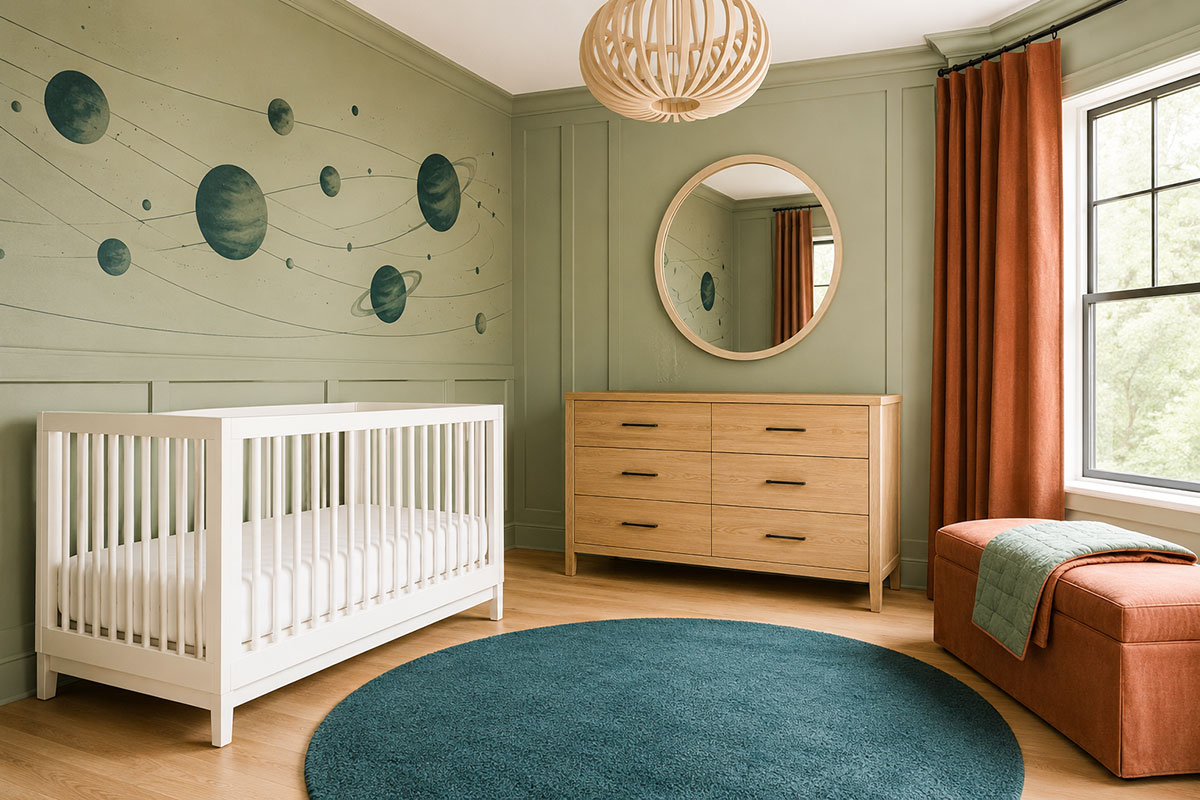
Choose the room according to the colors and celestial details you genuinely like. A space nursery becomes more distinctive when it reflects a clear design preference instead of following a standard blue or pink formula.
Space Nursery Wallpaper, Murals and Wall Art
The walls can establish a space theme before a single accessory enters the room. Choose one main treatment according to the size of the nursery, the amount of natural light and how much visual detail you want to see every day.
Solar System Wall Murals
A solar system mural works best on one broad wall where the planets have enough space to remain distinct. The planets do not need to be perfectly proportional, but their sizes should vary enough to avoid looking like a row of matching circles.
Dark backgrounds create drama, while pale blue, smoky gray and warm white make the same subject feel lighter. If the nursery is small or receives limited daylight, keep the deepest color behind the main planets instead of carrying it around the entire room.
Space Nursery Wallpaper
Wallpaper can introduce stars, orbit lines, rockets or scattered planets in a consistent pattern. Before choosing it, view the sample from several feet away. A print that looks delicate online may become much busier when repeated across a full wall.
Pair detailed wallpaper with solid curtains and quieter textiles. If the bedding also contains planets, choose a much smaller or larger pattern scale so the two surfaces do not appear to blur together.
Celestial Wall Art
Framed star charts, moon phases, constellation maps and astronomy illustrations suit nurseries where a permanent mural is not practical. Arrange a small group above the dresser or reading area rather than directly over the crib.
My nursery wall decor ideas include more ways to use framed art, murals and focal walls without filling every open area.
Ceiling Planets and Stars
A ceiling feature can make the room feel immersive, but it should not depend on loose pieces positioned above the sleep space. Painted stars, professionally installed wallpaper or a properly fitted light fixture provide a cleaner result than a crowded collection of small hanging objects.
For a colorful real room example, see this solar system ceiling and space nursery shared by Amy. The green walls, yellow accents and multicolored rug show that a planet room does not have to begin and end with navy.
You can also compare painted celestial treatments with the examples in my baby nursery mural ideas.
Space Nursery Bedding, Rugs and Furniture
Bedding and rugs cover broad areas, so their patterns can change the visual balance of a space nursery quickly. If the walls already feature large planets or detailed wallpaper, quieter textiles will keep the room from becoming a field of competing circles, stars and rockets.
Space Nursery Bedding
Choose fitted crib sheets that repeat one small part of the theme, such as scattered stars, tiny moons or simple orbit lines. A complete matching set is not necessary. Solid sheets in two colors from the room can be easier to combine with a planet mural or patterned rug.
A handmade solar system quilt can provide color and craftsmanship while the room is being used for play, photographs or supervised time. It can also be displayed on a secured quilt rack away from the crib. Keep quilts, comforters, pillows, bumpers and other soft items out of an infant’s sleep space.
A moon and stars variation can be softer than a full planet print. These moon and stars nursery ideas show how celestial bedding can guide the color palette without controlling every decorative choice.
Choosing a Space Nursery Rug
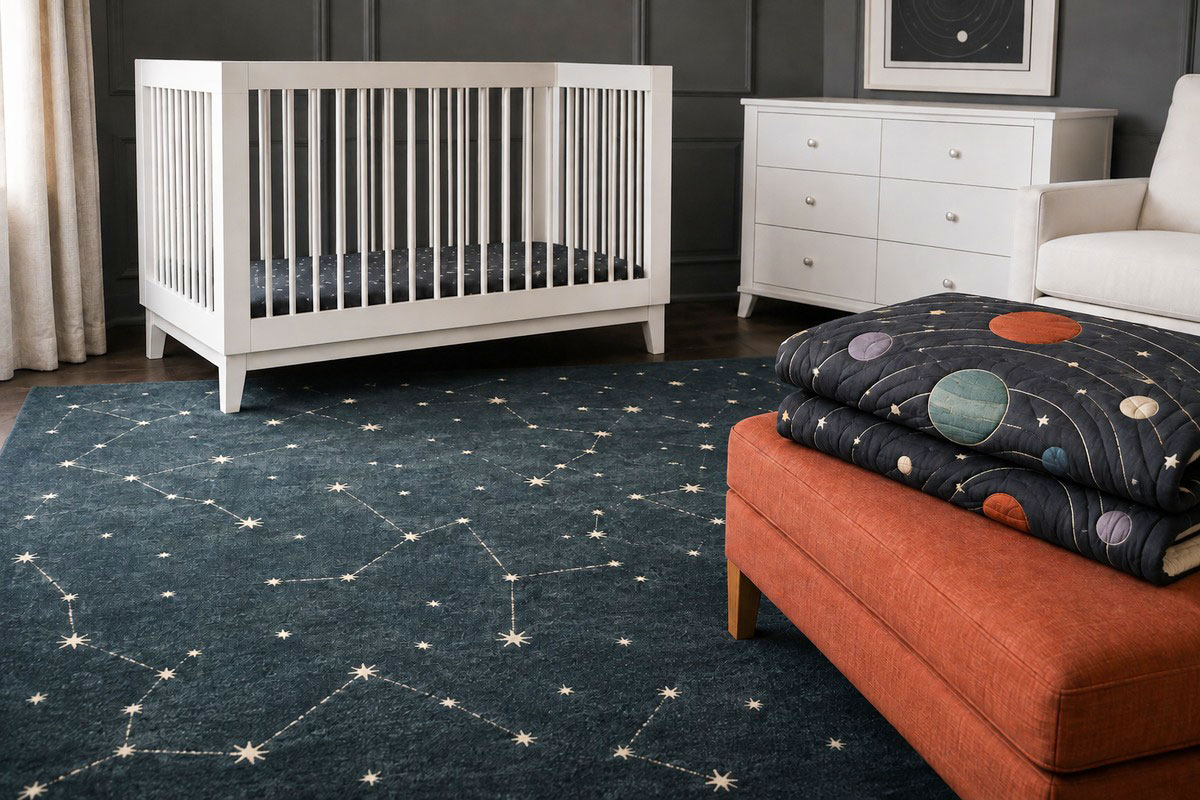
A rug can carry the largest pattern in the room when the walls are mostly solid. Look for orbit lines, constellations or an abstract galaxy pattern that remains readable after the crib and chair are placed over part of it.
Measure the furniture arrangement before ordering. Decide whether the rug will sit beneath the crib, define the chair area or cover most of the open floor. A small round planet rug may be charming beside a dresser, but it should not interrupt the main walking path.
If you would rather make an area rug yourself, my free crochet star rug pattern creates a large five-point star that fits naturally into a celestial or space themed nursery.
Furniture That Supports the Theme
The crib, dresser and chair do not need rocket shapes or celestial decorations. Simple furniture allows the walls, textiles and handmade pieces to carry the theme and gives the room more flexibility as the child grows.
White furniture creates clear contrast against navy, charcoal or teal walls. Walnut and medium oak warm up blue gray and vintage astronomy palettes. Black furniture can suit a modern galaxy room when the floor, curtains and larger wall areas provide enough lighter color.
Repeat the main furniture finish in one or two places, such as picture frames, a curtain rod or the mobile ring. That small connection makes separate pieces look as though they belong in the same room.
Space Nursery Mobiles with Planets, Moons and Stars
A mobile is a natural focal point for a space nursery because the hanging pieces already suggest planets moving through orbit. The design does not need every planet, moon and rocket to be recognizable. A smaller group with clear differences in size and color can produce a more graceful arrangement.
Crochet Solar System Mobiles
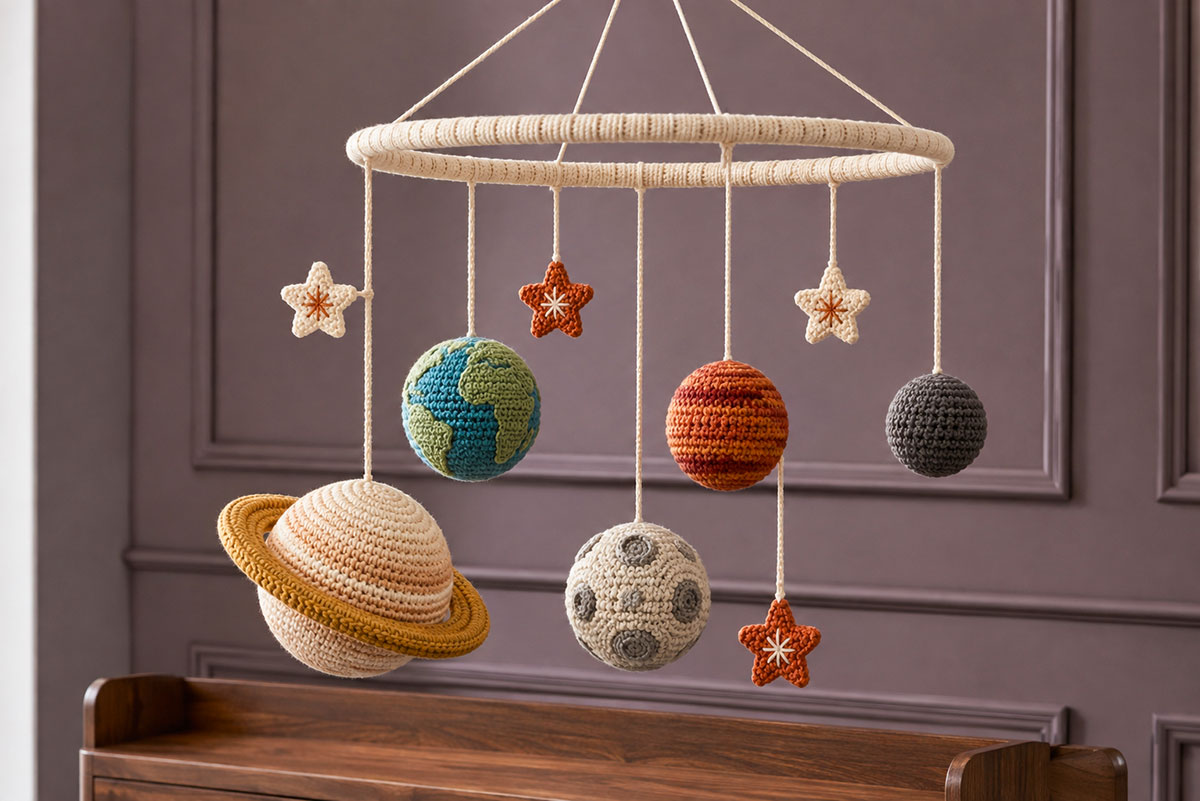
Crochet gives planets a soft, handmade shape that works well with both modern and vintage nurseries. Saturn’s ring, Earth’s blue and green surface and a small rust colored Mars make the theme readable without labels.
Keep the pieces lightweight and distribute them around the ring before attaching the final hanging strands. Large pieces should be balanced across from one another instead of gathered on the same side. The finished mobile should hang level before it is placed in the nursery.
For a softer celestial project with complete instructions, use my crochet moon and stars baby mobile pattern. It includes the crescent moon, stars, clouds, covered beads, hanging strands and balancing guidance.
Wood, Felt and Paper Space Mobiles
Wooden planets create clean silhouettes and suit rooms with simple modern furniture. Felt pieces can carry more color without becoming heavy. Folded paper stars are useful for a temporary decorative display, but each fold, knot and attachment point should be checked carefully before the mobile is hung.
Compare several construction styles in my collection of baby mobile ideas. If you want to browse handmade themes before choosing one project, visit the crochet baby mobile pattern collection.
A mobile is decoration rather than a crib toy. Mount it securely according to the hardware instructions, keep every part outside the baby’s reach and remove or relocate it when the baby can push up or reach toward the hanging pieces.
Handmade Space Nursery Decor That Feels Personal
Handmade details keep a space nursery from looking like a collection of matching products. A planet mobile, pieced solar system quilt, painted wall panel or embroidered constellation can become the piece that gives the room its own identity.
Choose one substantial project before making several small accessories. A quilt adds color and texture. A painted panel creates a wall focal point. A crochet mobile adds height and movement when it is mounted securely outside the baby’s reach. The rest of the room can remain simple.
My DIY nursery decor ideas include more ways to coordinate handmade wall art, mobiles, furniture and textiles with the room around them.
Easy Painted Solar System Wall Panel
This adult craft project creates a framed celestial panel that can be displayed above a dresser, reading chair or secured storage area. Make and seal the panel in a well ventilated work area away from the baby, then allow every coating to dry completely before bringing it into the nursery.
Materials
- One smooth wood art panel in the size you want
- Fine grit sandpaper
- Water based primer suitable for the panel
- Water based craft paint in one background color and several planet colors
- Round objects in several sizes for tracing
- Pencil
- Small and medium craft paintbrushes
- Painter’s tape
- Water based clear sealer compatible with the paint
- Picture hanging hardware rated for the finished panel’s weight
- Ruler and level
Step 1: Prepare the panel. Lightly sand rough areas and remove all dust. Apply the primer according to its label directions. Let it dry completely before painting the background.
Step 2: Paint the sky. Cover the front and visible edges with the chosen background color. Two thin coats generally create a cleaner surface than one heavy coat. Follow the stated drying time between coats.
Step 3: Plan the planet arrangement. Place the round tracing objects on the dry panel before drawing anything. Vary their sizes and leave open areas between them. Keep the largest planet away from the exact center for a more natural composition.
Step 4: Trace the planets. Draw lightly around each round object. Add Saturn’s ring with two curved pencil lines. Use a ruler to create one or two thin orbit paths if they fit the design.
Step 5: Add the color. Paint each planet separately. Let adjacent areas dry before adding rings, shadows or small surface details. Limit each planet to two or three colors so the finished panel remains clear from across the room.
Step 6: Paint the stars. Add a restrained scattering of small stars around the planets. Leave some of the background untouched. Open space helps the larger shapes remain easy to see.
Step 7: Seal the finished artwork. Allow the paint to dry for the full time stated on the label. Apply a compatible water based clear sealer according to its directions and let the panel cure completely.
Step 8: Install the panel securely. Attach hardware rated for the panel’s weight and suitable for the wall material. Use a level during placement. Display the finished art away from the crib and outside the child’s reach.
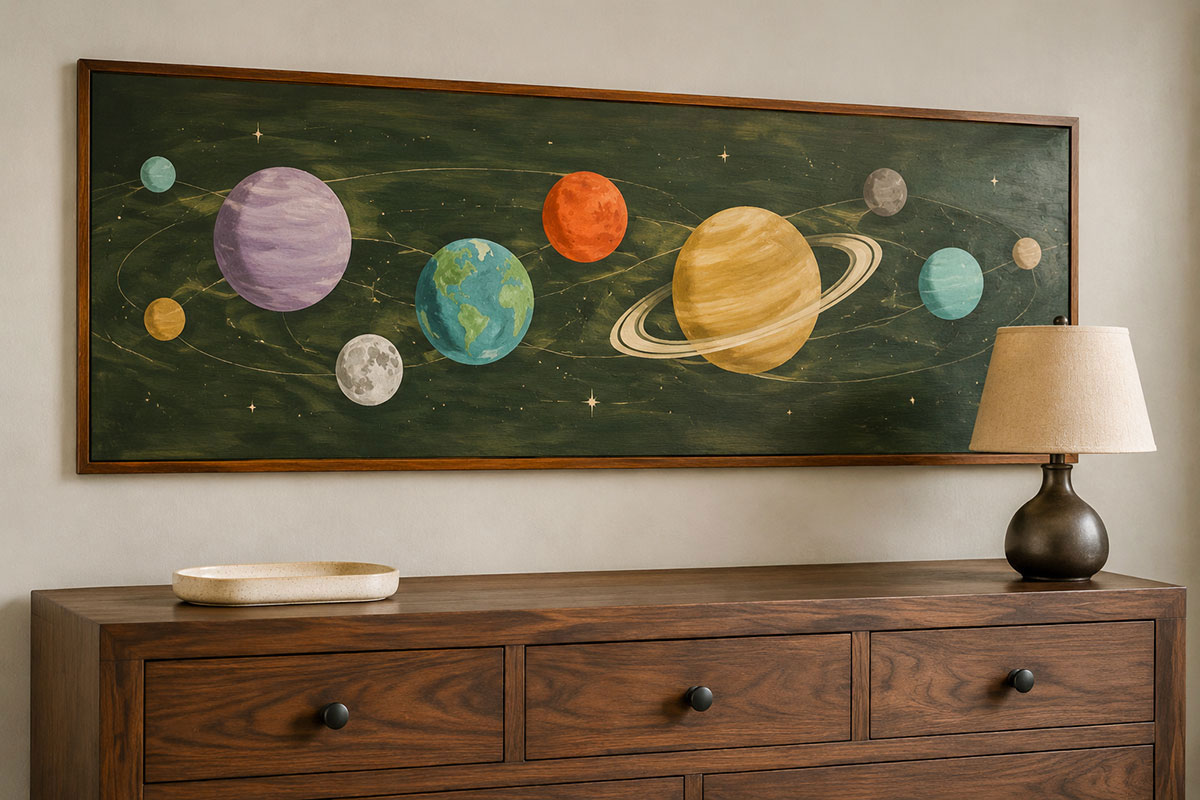
A handmade piece does not need perfect circles or scientifically exact colors to belong in the room. Consistent brushwork, a controlled palette and secure display matter more than adding every possible celestial detail.
Space Nursery Decorating and Display Safety
Plan the room around the crib as a sleep space first. Planets, quilts, mobiles and artwork can decorate the surrounding nursery, but they should not enter the area where the baby sleeps.
Keep the Crib Bare
Use a firm, flat sleep surface with a fitted sheet. Keep quilts, comforters, pillows, stuffed items, positioners and loose decorations out of the crib. The U.S. Consumer Product Safety Commission explains its current recommendations on the CPSC Safe Sleep page.
A solar system quilt can still be enjoyed during supervised use or displayed elsewhere in the room. Move it completely away from the crib before sleep.
Mount Wall Decor Securely
Follow the hardware instructions for the object’s size and weight. Select fasteners made for the wall material rather than relying on a lightweight adhesive strip for a heavy frame, shelf or wood panel.
Keep framed art, shelves, mirrors and other mounted objects away from the crib. Check the hardware periodically, especially after furniture has been moved or the child begins pulling up and exploring the room.
Use Nursery Mobiles as Temporary Decorations
Hang a mobile securely and keep every piece outside the baby’s reach. Check knots, strands, attachments and mounting hardware regularly. Follow the mobile manufacturer’s age and removal instructions.
CPSC guidance indicates that mobiles and similar suspended crib toys are no longer appropriate when a baby begins pushing up on hands and knees or sitting up, at about five months. Remove the mobile sooner if the baby can reach any part of it.
Keep Cords and Small Objects Out of Reach
Window covering cords, electrical cords and decorative light cords should remain inaccessible from the crib, chair and changing area. As the baby becomes mobile, reassess the whole room from floor level.
Models, decorative rockets and loose wooden planets may contain small or removable parts. Display them on securely anchored furniture or shelves where a child cannot reach them. They should not be treated as toys unless they were specifically designed and labeled for the child’s age.
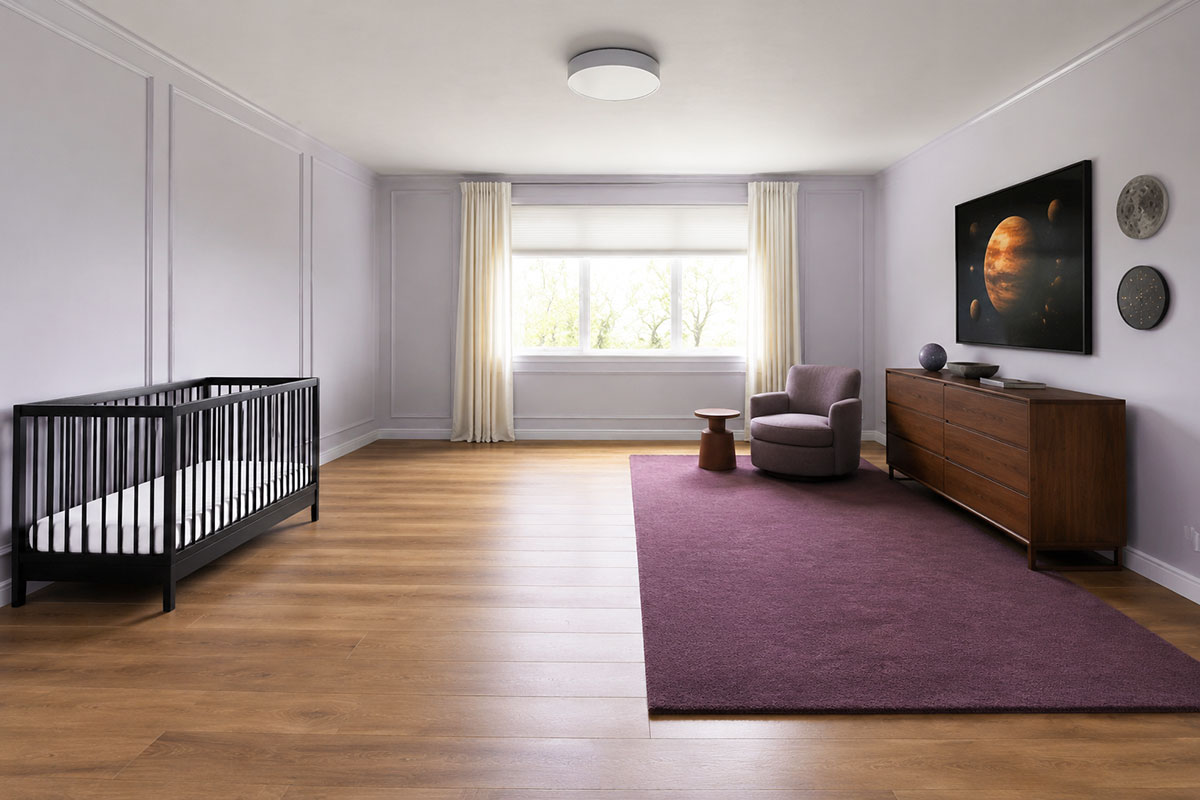
Recheck the arrangement as the baby grows. A decoration that was unreachable during the newborn stage may become accessible once the child can sit, pull up or climb.
Space Nursery Frequently Asked Questions
How do I create a space themed nursery without making it look like a classroom?
Choose one main celestial feature, three primary colors and a limited group of supporting details. For example, pair a large solar system mural with solid curtains, a small star pattern on the fitted sheet and one planet mobile. Avoid repeating detailed space prints on the walls, rug, bedding and window treatments at the same time.
What colors work well in a space nursery?
Navy, white and muted gold create a classic celestial palette. Blue gray, walnut and rust suit vintage astronomy rooms. Sage, teal, clay and cream offer a warmer gender neutral option. Plum, dusty rose and midnight blue work beautifully in a galaxy inspired nursery.
Does a space nursery have to be dark blue?
No. Pale blue, smoky gray, sage, warm white and even muted rose can provide the background. The room only needs enough contrast for the planets, stars or moon to remain visible. Dark color can be limited to one wall, a rug or several framed prints.
How can I make a space nursery look sophisticated?
Use fewer celestial objects in larger sizes. Choose artwork with clear details, repeat the furniture finish and allow open wall space around the focal feature. Vintage star charts, restrained planet murals and handmade textiles often have more character than a fully matched decorative set.
Can a space themed nursery be gender neutral?
Yes. Planets, stars, rockets and constellations work naturally in a gender neutral room. Sage, teal, charcoal, cream, clay and natural wood provide flexible colors that can be updated later without replacing the whole theme.
What should be the focal point in a solar system nursery?
A planet mural, celestial wallpaper panel, large astronomy print, handmade quilt or solar system mobile can serve as the focal point. Select one of those pieces first and let the smaller decorations repeat its colors rather than introducing several new directions.
Where should space nursery wall art be displayed?
Display securely mounted wall art above a dresser, reading area or another location away from the crib. Use hardware rated for the object’s weight and suitable for the wall material. Keep shelves, frames and other mounted objects outside the baby’s reach.
When should a nursery mobile be removed?
Follow the product manufacturer’s instructions and remove the mobile sooner if the baby can reach it. CPSC guidance indicates that mobiles and similar suspended crib toys are no longer appropriate when a baby begins pushing up on hands and knees or sitting up, at about five months.
Can I use a solar system quilt in the nursery?
A solar system quilt can be used for supervised floor time, photographs or secure display away from the crib. Keep quilts, comforters and other loose bedding out of an infant’s sleep space.
What is the difference between a space nursery and a moon and stars nursery?
A space nursery generally includes planets, rockets, constellations or solar system details. A moon and stars nursery focuses on a softer night sky design with crescent moons, stars and sometimes clouds. The two themes can overlap, but choosing one as the main direction keeps the room more cohesive.
When you are ready to compare this room with other decorating directions, return to my baby nursery themes. For a gentler celestial variation, continue with my moon and stars nursery ideas.
When you click on links to various merchants on this site and make a purchase, this may result in this site earning a commission. This does not affect the price you pay.

UBGI Gold Standard 2026
Reviewed under the site's
editorial checklist.
Photos, decorating ideas, party setups and reader submissions are shared for inspiration unless a page is specifically presented as a pattern, tutorial, reference guide or step-by-step project. Follow the instructions, measurements, safety guidance and manufacturer directions provided for the particular project or product.
About Jan | Contact | Baby Nursery Ideas (Blog) | Site Map | Privacy Policy | Disclosure Policy | Disclaimer | Affiliate Disclosure | Earnings Disclosure | Facebook | Pinterest
I am a participant in the Amazon Services LLC Associates Program, an affiliate advertising program designed to provide a means for us to earn fees by linking to Amazon. As an Amazon Associate I earn from qualifying purchases.
Copyright © 2006-2026. All Rights Reserved.