Round Cribs: Design Differences, Styles, and Pros and Cons
Round cribs are circular cribs made in limited models with non-standard mattress dimensions. Unlike rectangular cribs, they use model-specific mattresses and fitted sheets and cannot rely on universal sizing. Most discussions of round cribs focus on mattress compatibility, room placement, production limits, and federal compliance requirements in the United States.
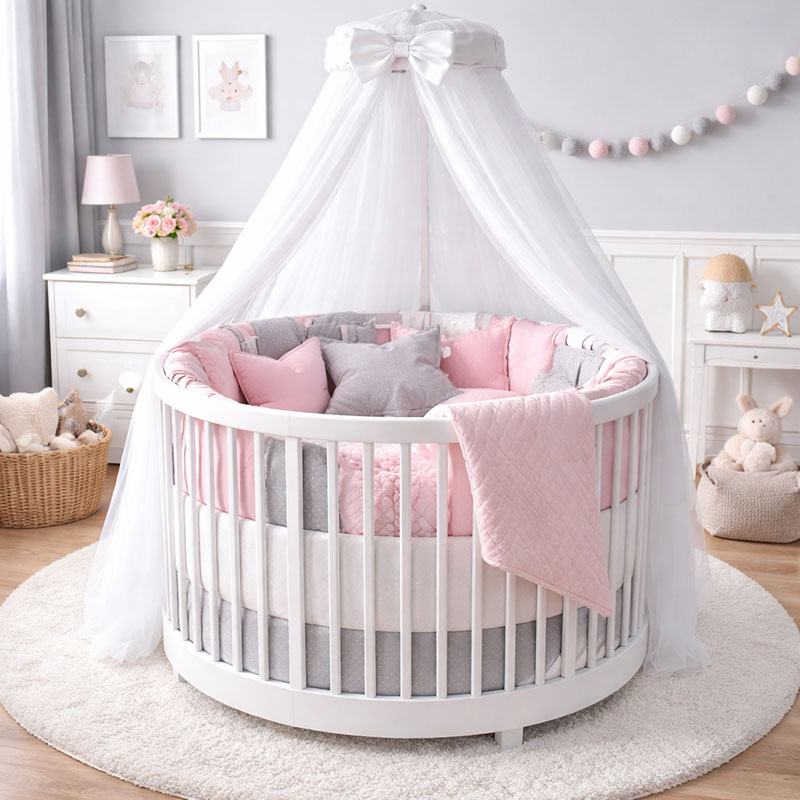
Round cribs differ from standard cribs in three measurable ways:
- Mattress shape and model-specific sizing
- Limited fitted sheet and bedding compatibility
- Room placement that typically prevents wall alignment
Typical dimensional differences include:
- Non-rectangular sleep surface requiring custom-cut mattress profiles
- No standardized interior length and width baseline across manufacturers
- Clearance and spacing requirements still governed by federal crib performance standards
Round cribs are a less common crib shape that differ from traditional rectangular cribs in size, layout, and construction. These cribs are produced in a limited number of models and typically use non-standard dimensions. Because of this, round cribs are often discussed alongside mattress fit limits, bedding availability, spacing dimensions, and crib model history in published materials and manufacturer listings.
Round cribs are usually selected for visual reasons rather than long-term furniture use. The circular shape stands out in a nursery and is often paired with themed décor, canopy frames, or decorative bedding sets. In many cases, the crib becomes the central visual element of the room rather than a background piece placed against a wall.
Round cribs are decorative furniture first and standardized sleep systems second.
Unlike standard cribs, round cribs do not use universal mattress sizes or standard fitted sheets. Mattresses and bedding are made for specific crib models, which limits replacement options. This difference is one of the most frequently noted characteristics when round cribs are compared to traditional crib designs in standards information published by retailers and manufacturers.
Round cribs are often described as statement furniture pieces. The circular frame changes how the crib fits within a room and how other furniture is arranged around it. Because the crib does not sit flush against a wall, it may occupy more usable floor space than expected, even if the overall footprint appears compact.
In square bedrooms especially, reviewing a nursery layout for a 10x10 room helps illustrate how a floating crib footprint can affect circulation paths and dresser placement.
Another commonly noted difference is longevity. Many round cribs are designed for a shorter use period and do not convert into toddler beds. As a result, discussions about round cribs frequently mention early transitions to other sleep setups compared to convertible rectangular cribs.
Design characteristics of round cribs
The defining feature of a round crib is its circular sleep surface. This shape requires curved rails, custom mattress dimensions, and bedding designed to follow the rounded edge. The frame construction varies by manufacturer, with some models using solid wood rails and others using metal or mixed materials.
Because of the curved design, accessory compatibility is limited. Replacement parts, fitted sheets, and mattress protectors are typically specific to the crib model. This is a recurring point in product listings and standards information provided by sellers.
Round cribs are often paired with decorative elements such as canopies, draped fabric, or themed nursery décor. These visual elements contribute to the overall look of the room but also influence how the crib is positioned and how surrounding furniture is arranged.
For a structured textile example that illustrates how bold color-blocked bedding can function as a focal element in specialty crib setups, see my modern rainbow crib quilt pattern reference page.
Mattress and bedding limitations
Mattress compatibility is one of the most frequently discussed aspects of round cribs. Standard crib mattresses are rectangular and are not designed to fit circular frames. As a result, round cribs require mattresses made specifically for the model in question.
Bedding options are similarly limited. Fitted sheets must match the exact mattress shape and size, which reduces the number of available styles and replacement options. This limitation is often cited in comparisons between round cribs and standard crib designs.
Because model-specific mattresses are used, routine care and surface cleanup questions often come up, which are outlined on the crib mattress cleaning information page.
For general mattress sizing and construction comparisons across crib types, see: crib mattress size and construction information.
Space and layout considerations
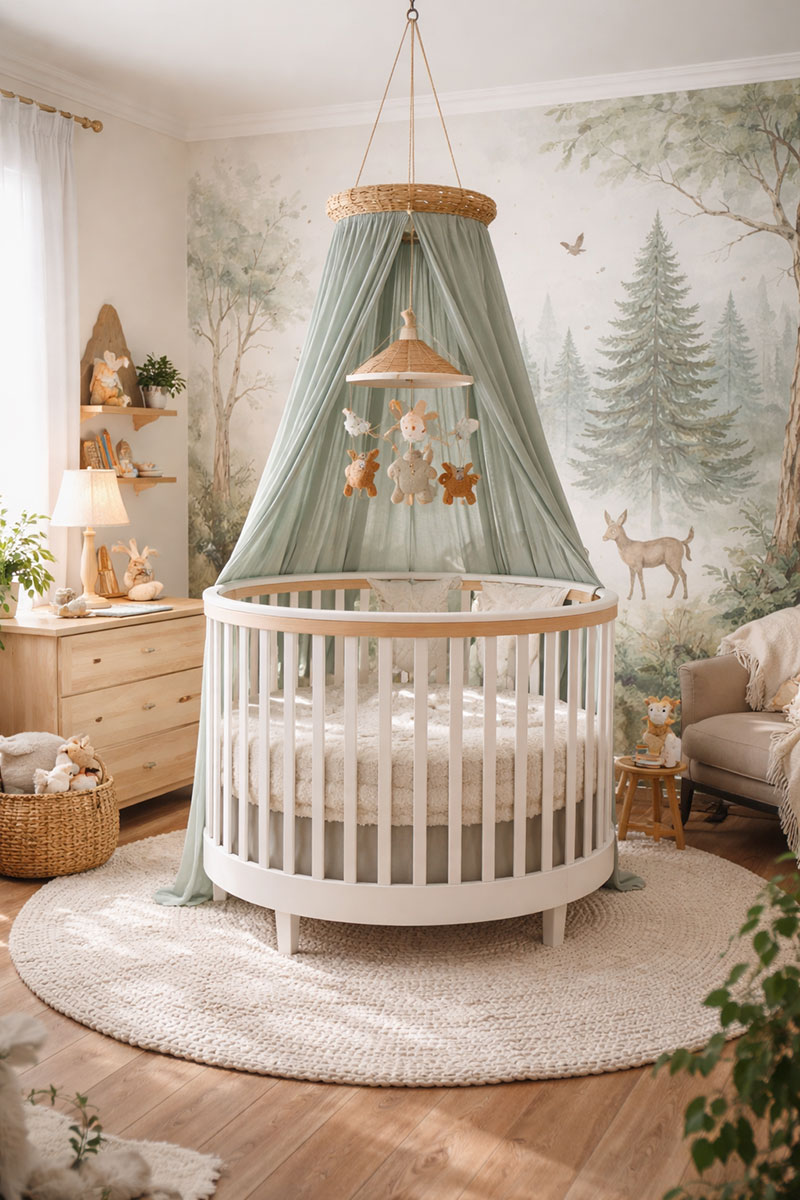
Round cribs change how space is used in a nursery. Because the crib is circular, it typically cannot be placed directly against a wall in the same way as a rectangular crib. This affects room layout and furniture spacing.
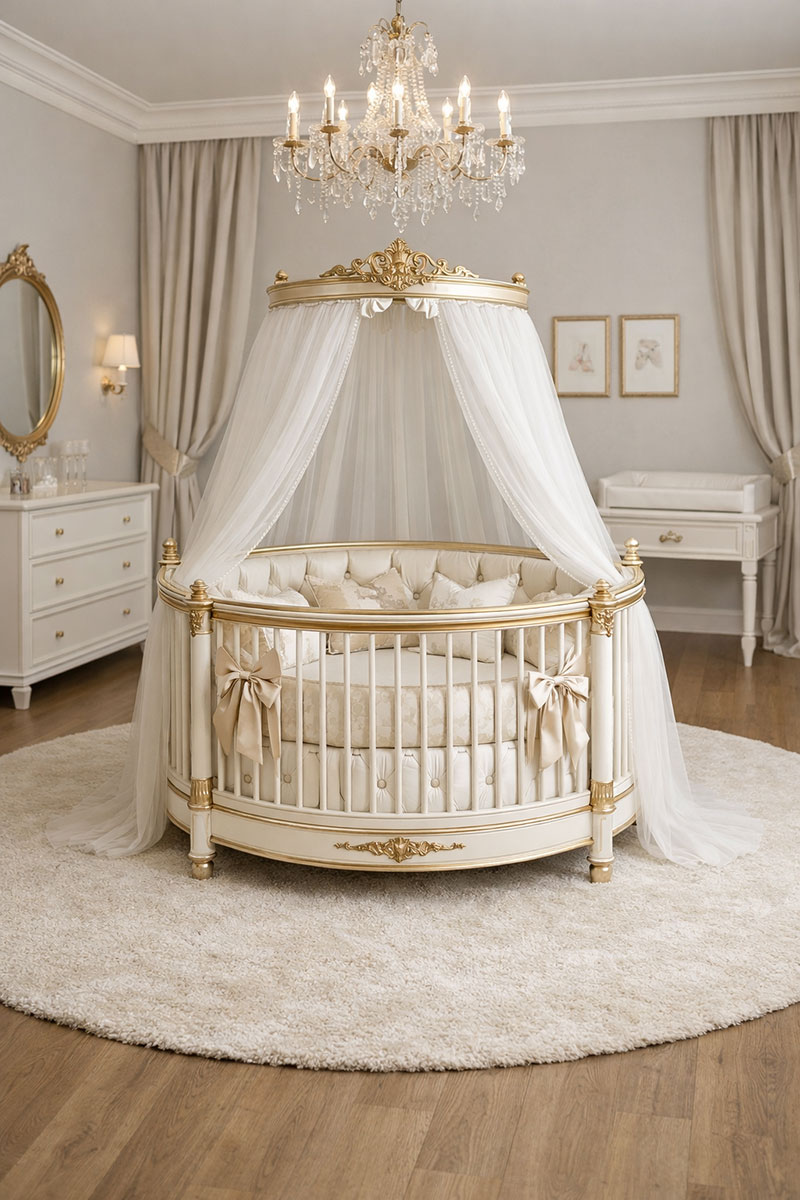
In smaller rooms, the round shape may reduce usable floor area even if the crib itself does not appear large.
Parents comparing specialty crib shapes with more practical nursery options may also want to review cribs for small spaces.
This characteristic is frequently mentioned in layout comparisons and room planning discussions that include round cribs.
For broader planning context and full-room design examples, see my complete nursery design ideas hub page.
For broader nursery layout ideas and furniture spacing examples, see: nursery layout ideas for small spaces.
Availability and replacement items
Round cribs are produced in smaller quantities than standard cribs. This affects availability of replacement parts, mattresses, and bedding over time. Some models are discontinued after short production runs, which can limit long-term accessory access.
Because of this, published materials often include notes about model-specific accessories and limited aftermarket options. This is a common point of contrast in standards information comparing round and rectangular cribs.
Cost range and purchasing patterns
The cost of a round crib often reflects its specialty design. Prices may be higher than standard cribs, particularly when custom mattresses and bedding are included. In many cases, the crib frame represents only part of the total cost.
Additional expenses typically include the mattress and fitted sheets made for the specific crib model. These items may have fewer price points compared to standard crib accessories.
Comparisons to standard crib designs
Round vs. Rectangular Cribs at a Glance:
- Mattress: Model-specific sizing vs. standardized full-size dimensions
- Bedding: Limited compatibility vs. widely available fitted sheets
- Placement: Central or floating layout vs. wall-aligned positioning
- Conversion: Rarely convertible vs. commonly designed to transition
- Replacement parts: Limited long-term availability vs. broader market support
When compared to rectangular cribs, round cribs stand out primarily for their appearance. Standard cribs offer broader compatibility with mattresses, sheets, and conversion kits. Round cribs offer a distinct look but fewer configuration options.
For an overview of common crib styles and formats, see: baby crib styles and format comparisons.
Regulatory notes and recall history
Like all cribs sold in the United States, round cribs are subject to federal crib regulations. Over time, some round crib models have appeared in recall notices related to specific design or manufacturing issues.
Federal crib standards in the United States apply regardless of crib shape.
For a structured explanation of how those requirements are defined and tested, see the U.S. federal crib safety standards overview.
Round cribs must meet the same structural integrity, slat spacing, mattress support, and performance requirements as rectangular full-size cribs. Compliance is determined by manufacturer certification and testing, not by geometry or aesthetic design.
Those federal performance requirements include clearly defined safe crib slat spacing measurements that apply to curved rail systems just as strictly as they do to traditional straight-sided frames.
Public recall notices provide model-specific information rather than general design assessments. An example of a past notice involving round cribs is available from the U.S. Consumer Product Safety Commission:
Round crib recall notice (CPSC)
Summary
Round cribs are a visually distinctive crib option with unique design characteristics. They differ from standard cribs in shape, mattress compatibility, bedding availability, and room placement. These differences are consistently noted in standards information, manufacturer listings, and product comparisons.
This page presents descriptive reference information about round crib designs and does not provide recommendations, safety guidance, purchasing advice, or instructions.


When you click on links to various merchants on this site and make a purchase, this can result in this site earning a commission. Affiliate programs and affiliations include, but are not limited to, Amazon and the eBay Partner Network such as the ones to your left on this page. Please see our Affiliate Disclosure page for more information.
More UBGI: RSS Feed | Facebook
About Jan | Contact | Baby Room Ideas (Blog) | Site Map | Privacy Policy | Disclaimer | Affiliate Disclosure | Earnings Disclosure
I am a participant in the Amazon Services LLC Associates Program, an affiliate advertising program designed to provide a means for us to earn fees by linking to Amazon.
Copyright © 2006-2026. All Rights Reserved.