Hunting Nursery Ideas for a Classic Outdoors Baby Room
By Jan Bay
My hunting nursery ideas can give a baby's room the warm, collected feel of a favorite cabin without turning the space into a trophy room. Start with natural wood, muted greens and browns, then layer in one or two outdoor themes such as vintage mallard ducks, deer, fishing, sporting dogs or subtle camouflage. The best hunting nursery decor feels personal and rustic while leaving plenty of light, open space and simple baby essentials.
Explore More Hunting and Woodland Nursery Ideas
Rustic Bear and Moose Nursery Ideas
Jump to Hunting Nursery Ideas
Hunting Nursery Colors and Materials
Vintage Mallard Duck Nursery Ideas
Hunting and Fishing Nursery Ideas
My rule: A hunting nursery should still look like a baby's room first and a hunting theme second.
Hunting Nursery Colors and Materials That Set the Look
A hunting nursery does not need a dark brown room or camouflage on every surface. I prefer to build the room from the colors you would actually find outdoors, then add the hunting references in smaller layers. Warm wood, forest green, mushroom brown, charcoal, cream and muted gray create an easy foundation for vintage duck art, deer details, plaid and cabin-inspired pieces.
Start with the largest surfaces. Walls in a light neutral, dusty green or muted warm gray help wood furniture and darker artwork stand out without making the room feel enclosed. A medium or dark wood crib can work beautifully here, but lighter oak also fits if you want the room to feel more open.
Then choose two or three supporting materials. Wood, woven storage, wool-look textiles, leather-look accents and aged metal finishes fit the theme without requiring literal hunting symbols. A room with a wood crib, plaid curtains and one framed wildlife print already has an outdoors character before you add a single antler or camouflage pattern.
It also helps to decide which hunting story you want the room to tell. Mallard ducks suggest marshes, decoys and vintage sporting art. Deer lean toward woodland and cabin style. Fishing brings in lakes, creeks and old tackle-inspired details. Sporting dogs add a traditional field-and-lodge look. You can mix them, but giving one theme the lead keeps the nursery looking collected rather than crowded.
If you want a gentler woodland direction, the animal and forest combinations on my forest friends nursery ideas page are easy to adapt to a hunting room.
Vintage Mallard Duck Nursery Ideas
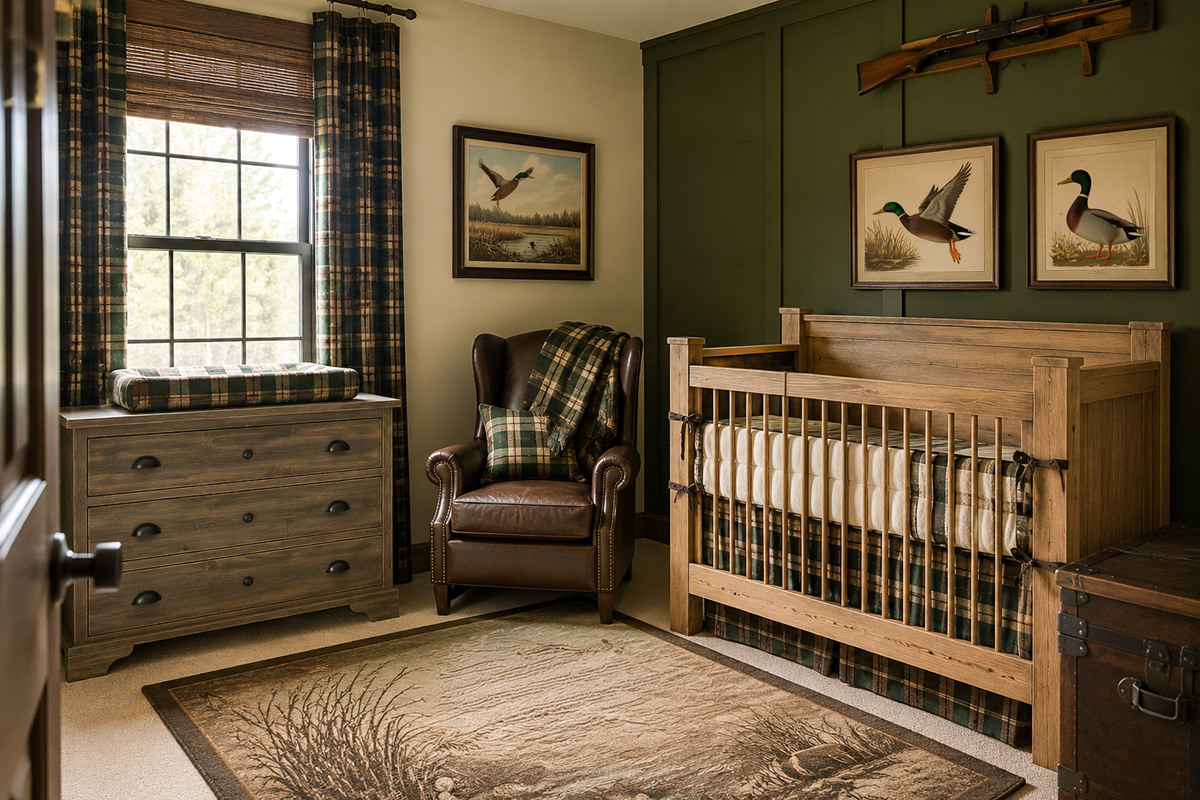
Vintage mallard ducks are one of my favorite ways to move a hunting nursery beyond the familiar deer-and-camo look. They bring in deep green, warm brown, weathered wood and marsh colors while still feeling traditional enough for a lodge or cabin-style room.
Start with the artwork rather than the bedding. A pair of vintage-style mallard prints, a marsh landscape or an old sporting-art look can establish the theme on one wall. From there, pull small amounts of green and brown into the room through a rug, blanket used outside the crib, curtains or storage baskets. The nursery does not need duck prints on every textile.
Decorative duck decoys can also fit the room, especially if they have a simple carved or vintage appearance. Keep them on a high shelf, bookcase or other secure adult display area rather than within a baby's reach. One or two have much more presence than a shelf full of them.
A mallard room can also borrow from traditional hunting lodges without becoming formal. Try a medium wood crib, an aged-look framed marsh print, checked fabric and a simple wool-look rug. A dark green accent can echo a mallard drake while brown, tan and cream keep the rest of the room easy to live with.
If you want both ducks and deer in the same nursery, use one animal for the larger artwork and the other in smaller details. For example, let mallard ducks lead the wall decor while deer appear on one blanket, small print or carved accent. That keeps each animal recognizable instead of turning the room into a general wildlife collection.
Deer Hunting Nursery Ideas
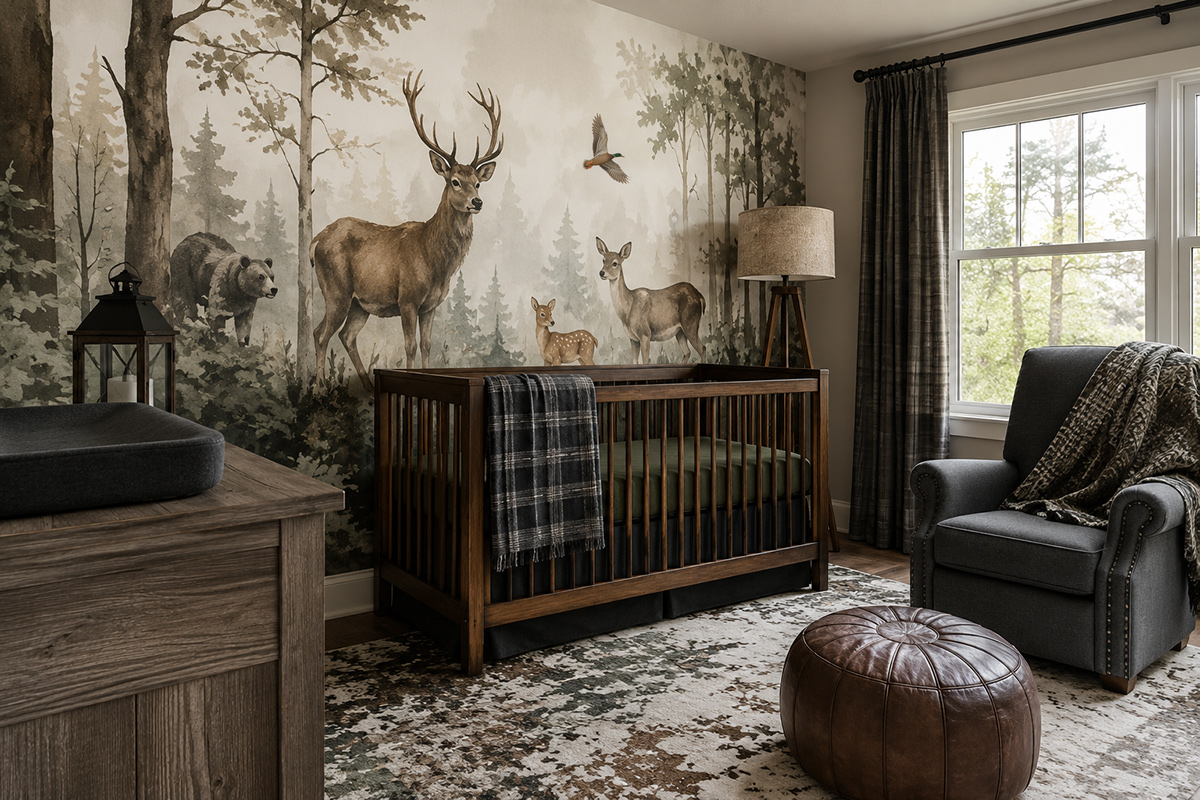
Deer still belong naturally in a hunting nursery, but they do not have to carry the entire room. A framed buck print, woodland scene or simple deer silhouette is often enough to connect the space to hunting while leaving room for other outdoors details.
For a deer-led room, I would keep the palette grounded in wood tones, green, cream and charcoal rather than trying to match every accessory to a brown deer print. Bedding and artwork become easier to change later when the furniture and larger surfaces remain versatile.
If deer will be the main theme, my deer nursery ideas page goes much deeper into woodland colors, wall decor and baby-room combinations built specifically around deer.
You can also use deer in a hunting room without making it the main theme. One large wildlife print above a dresser, a small group of deer silhouettes or a deer-patterned textile outside the sleep space can sit comfortably beside mallard, fishing or cabin details.
Handmade artwork works especially well with this style because it adds something personal without requiring another purchased theme accessory. My DIY deer art page has a rustic buck-and-doe idea that fits easily with a lodge-inspired nursery.
Hunting and Fishing Nursery Ideas
A hunting and fishing nursery gives you more room to work with lakes, marshes, streams and cabin details instead of relying entirely on forest animals. The two themes also share many of the same materials, so they can live together without looking like separate decorating ideas.
Choose a common setting to connect them. A lakeside cabin theme might include mallard ducks, a quiet lake print and a small vintage-style fishing illustration. A woodland lodge room could combine deer artwork with trout or creek scenes. A marsh-inspired room can pair ducks with weathered wood and subtle fishing references.
I would keep actual equipment out of a nursery display. Fishing hooks, lures, line, ammunition, knives and other sporting gear are not nursery decorations. You can get the same character from framed illustrations, carved wood pieces, photographs, reproduction signs and artwork that refers to the outdoors without introducing functional gear into the room.
Use the same wood tones, frame finishes and two or three room colors on both sides of the theme so the fishing references and hunting references feel like one room instead of two decorating ideas placed together.
Rustic Lodge and Cabin Nursery Ideas
If you like hunting decor but do not want the room centered on one animal, a lodge or cabin look is an excellent alternative. Instead of repeating deer or ducks, let the setting become the theme.
Wood furniture does much of the work. Add a simple plaid, a textured rug, framed landscape art and a few pieces that look collected rather than purchased as a matching nursery set. A weathered-looking frame, woven basket or old-fashioned wildlife illustration can add more character than another piece printed with the word "hunting."
Bear and moose can join this style too, particularly in a mountain or northern-lodge room. My bear and moose nursery ideas show another way to use rustic wildlife without relying only on deer.
For an updated lodge look, use one large landscape, mural or wallpapered wall and leave the remaining walls quieter. A single forest, marsh or mountain scene can supply enough cabin atmosphere that you do not need small hunting decorations scattered around every corner.
Sporting Dog Nursery Ideas
Sporting dogs give a hunting nursery a different personality from woodland animals. Labs, retrievers, setters and pointers connect naturally with ducks, field scenes and traditional lodge decor, so they work especially well in a vintage mallard nursery.
I would use sporting dogs through artwork rather than trying to build a complete dog-themed nursery. A framed retriever beside a marsh print, a vintage-style field scene or a simple dog silhouette can be enough. The result feels more like a family outdoors room and less like a collection of dog merchandise.
This theme also works well when a hunting dog is meaningful to the family. A photograph can become part of the room if you place it in a frame that suits the rest of the decor. Keep the surrounding pieces simple so the personal image remains the focus.
For a traditional duck-hunting look, pair a retriever image with mallard artwork and dark green accents. For an upland style, pointers or setters work nicely with warm wood, tan, cream, plaid and field landscapes.
Hunting Nursery Bedding Without a Matching-Set Look
Bedding can support a hunting theme, but it does not need to repeat every animal in the room. In fact, simple crib sheets often make the rest of the decor easier to arrange. A solid, small check or restrained woodland print can sit comfortably beneath much more detailed wall art.
If deer are the main feature, you can find additional combinations on my deer bedding ideas page. For a broader hunting room, I would choose one patterned textile and let the other fabrics stay simple.
Plaid works particularly well because it can suggest a cabin without being tied to a specific animal. Small checks, narrow stripes and muted woodland patterns also help connect wood furniture with green, brown and cream accents.
Toile can create the same continuous forest story without requiring a collection of separate hunting symbols. If you use a detailed woodland toile on one textile, keep the crib sheet and surrounding fabrics simpler so the small scenes remain easy to see.
Keep decorative quilts, pillows, throws and other loose textiles outside an infant's sleep space. Use them on an adult chair, securely stored display area or elsewhere in the room rather than inside the crib. For current infant sleep guidance, see the U.S. Consumer Product Safety Commission safe sleep information.
Hunting Nursery Wall Decor That Gives the Room Character
Wall decor is where a hunting nursery can become much more personal. You have enough wall space to establish the story without filling the crib, dresser and shelves with themed accessories.
Consider one main wall treatment first. That might be a marsh scene behind the dresser, a forest mural, vintage mallard prints, framed sporting-dog artwork or a grouping of deer illustrations. Once that wall is established, smaller pieces elsewhere in the room can be much simpler.
Removable decals are useful if you expect the theme to change later. Deer, trees and woodland scenery are especially easy to adapt as a baby room becomes a child's room. My deer wall decals page includes more examples for a forest or hunting-style nursery.
A mural does not need another layer of framed art placed over it. Let the wall treatment be the focal point, then use quieter surfaces around it so the forest scene has room to carry the theme.
Antlers need a little restraint. An illustrated antler motif or securely mounted decorative piece can make sense in a rustic room, but you do not need several versions of the same shape. If the nursery already has deer artwork, let the antler reference stay secondary.
Place frames, shelves and decorative objects where a baby cannot reach or pull them down. Secure heavier wall pieces carefully, particularly around the crib and changing area. The theme should never determine where something is placed. Safety and everyday use come first.
Using Camouflage in a Hunting Nursery
Camouflage can work in a nursery, but I would treat it like plaid rather than like a wall color. A little gives the room a hunting reference. Too many different camo patterns can quickly hide the more attractive parts of the design.
Try camouflage on one small textile, storage piece or framed print. Then surround it with solid green, brown, cream, charcoal or natural wood. This makes the pattern easier to see and keeps the rest of the room from becoming visually busy.
Traditional woodland camouflage is not the only option. Muted patterns with olive, tan and brown blend naturally with rustic decor, while simpler abstract camo can fit a more modern room.
If camouflage is going to be a noticeable part of the design, my camouflage nursery decor ideas give the pattern more room without forcing it into the rest of this hunting nursery.
I would avoid combining camouflage bedding, camouflage curtains, a camouflage rug and camouflage wall art in the same space. Pick the location where the pattern has the most impact, then let the surrounding surfaces give it some breathing room.
Creating a Hunting Nursery That Grows With Your Child
A hunting nursery has an advantage over many highly specific baby themes because much of the decor can stay useful later. Wood furniture, plaid, wildlife artwork, landscape prints and lodge-inspired storage do not automatically read as infant decor.
Put the theme into the pieces that are easiest to change. Wall art, crib sheets, curtains, baskets and small display pieces can be updated without replacing the main furniture. If a child later becomes interested in fishing, camping, birds or a particular animal, the room can shift in that direction without starting again.
I also like the idea of leaving a little space for something meaningful to arrive later. A family photograph from a favorite cabin, a framed map of a special lake, a vintage-style duck print or a small keepsake connected to an outdoors tradition can make the room more personal than buying every accessory at once.
As you edit the room, look at each piece on its own. Does it add to the hunting nursery, or does it simply repeat an animal or pattern that is already there? Removing the duplicate often makes the item you keep look more intentional.
If you want to explore a completely different nursery direction before making a final choice, my baby nursery themes page can help you compare hunting and woodland ideas with other styles.
Frequently Asked Questions About Hunting Nursery Ideas
What is a good color palette for a hunting nursery?
Forest green, warm brown, cream, charcoal, muted gray and natural wood all fit a hunting nursery. You do not need to use every color. Choose two or three main colors, then let wildlife artwork and textiles provide smaller accents.
Can I combine mallard ducks and deer in the same nursery?
Yes. Give one animal the larger visual role and use the other in smaller details. For example, vintage mallard duck artwork can lead the room while deer appear in one print or textile. Using the same wood tones and colors throughout helps the two themes belong together.
How can I make a hunting nursery look more vintage?
Use traditional wildlife artwork, marsh or woodland landscapes, plaid, medium or dark wood, simple carved pieces and frames with an aged appearance. Avoid filling the room with matching themed accessories. A few pieces that look collected create a more believable vintage lodge feeling.
Can a hunting nursery include fishing decor too?
Yes. Hunting and fishing work naturally together when they share the same setting, such as a lake cabin, forest lodge or marsh. Use artwork and decorative references rather than functional sporting equipment.
Does a hunting nursery have to be for a baby boy?
No. The theme can be styled for any baby. Mallard ducks, woodland animals, fishing scenes, natural wood, green, brown, cream and lodge details are not limited to one gender. Changing the artwork, fabrics and accent colors can shift the room in many directions.
How do I use hunting decor without making the room too dark?
Keep the larger surfaces lighter. Use darker green, brown and charcoal on artwork, textiles and smaller accents rather than covering every wall with them. Natural light, pale walls and visible areas of cream or warm neutral color help balance darker wood and lodge-inspired pieces.
What hunting decor should stay out of a baby's reach?
Keep decorative decoys, frames, shelves and other display objects securely installed and away from the crib and changing area. Functional hunting or fishing equipment does not belong in a nursery display. Keep the infant sleep space bare except for a fitted sheet and follow current CPSC safe sleep guidance.


When you click on links to various merchants on this site and make a purchase, this may result in this site earning a commission. This does not affect the price you pay.

UBGI Gold Standard 2026
Reviewed under the site's
editorial checklist.
About Jan | Contact | Baby Nursery Ideas (Blog) | Site Map | Privacy Policy | Disclosure Policy | Disclaimer | Affiliate Disclosure | Earnings Disclosure | Facebook | Pinterest
I am a participant in the Amazon Services LLC Associates Program, an affiliate advertising program designed to provide a means for us to earn fees by linking to Amazon. As an Amazon Associate I earn from qualifying purchases.
Copyright © 2006-2026. All Rights Reserved.