Best Nursery Night Light That Won’t Wake Your Baby
The best nursery night light options give you just enough visibility for feeding, diaper changes, and quick checks without fully waking your baby. The right lighting makes nighttime care easier while keeping your nursery calm, dim, and sleep-friendly.
Explore more nursery lighting ideas:
Nursery lighting ideas for a complete setup
Nursery lamps for soft, calming light
Jump to what you need:
The first time you walk into your baby’s room at night, squinting in the dark or flipping on a light that feels too bright, you quickly realize you need a better solution. Most parents figure out within the first few nights that they need a nursery night light, one that gives just enough visibility for feeding, diaper changes, and quick checks without fully waking the baby.
Quick answer: A nursery night light should provide low, controlled visibility placed away from the crib, allowing you to complete overnight care without waking your baby or lighting up the entire room.
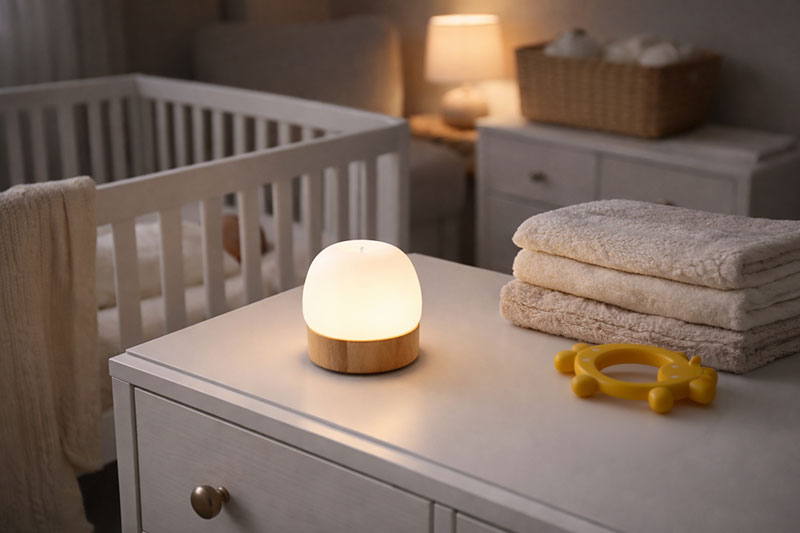
flip nursery night light for overnight care
I remember one night trying to change a diaper using the light on my cell phone because the lamp felt too harsh.
What Makes a Good Nursery Night Light Work at Night
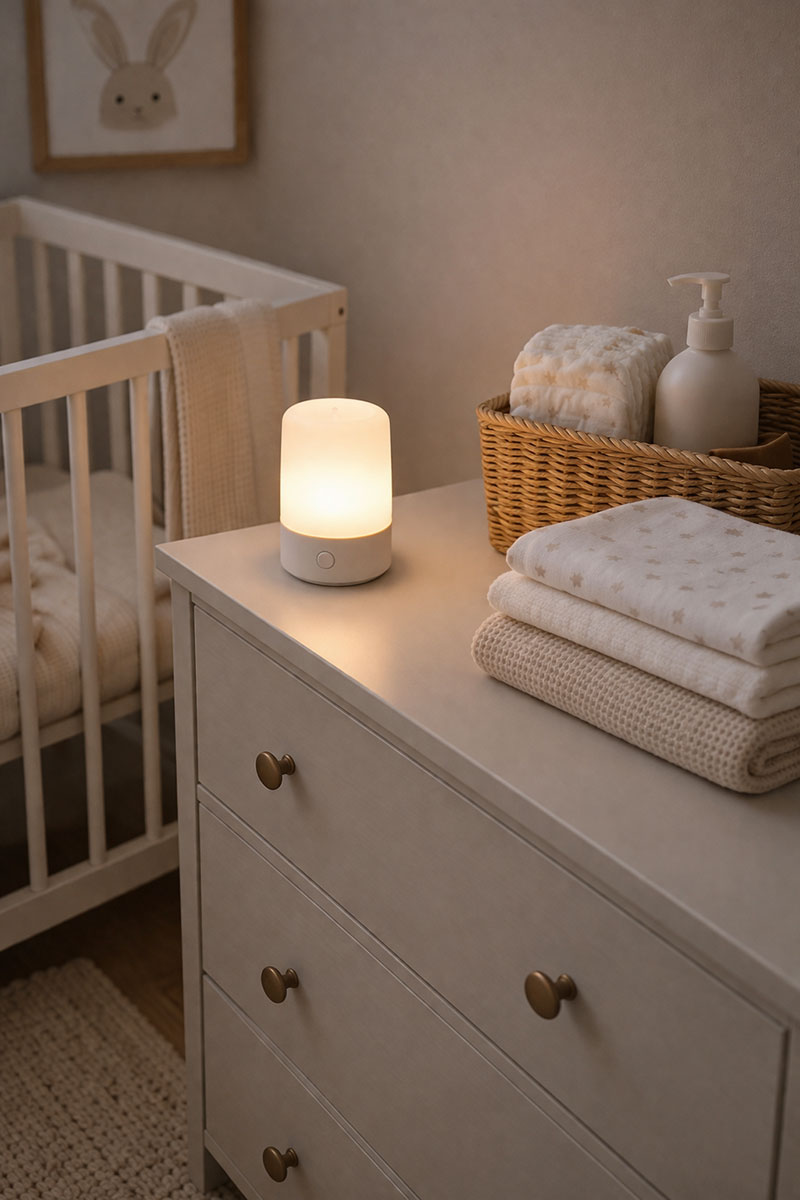
A nursery night light works best when it helps you move through the room without changing how the space feels. When bright light shines across the crib or walls, babies tend to stir and even wake completely up.
As far as night light features are concerned, three things matter most. Brightness, placement, and direction. Lower output usually works better. Placement matters more than most people expect. A light near the changing area or along the path to the chair works better than one placed in the center of the room.
Do not point the light at the crib.
To see an ideal room setup, visit my nursery lighting ideas guide.
Best Nursery Night Light Types That Work in Real Homes
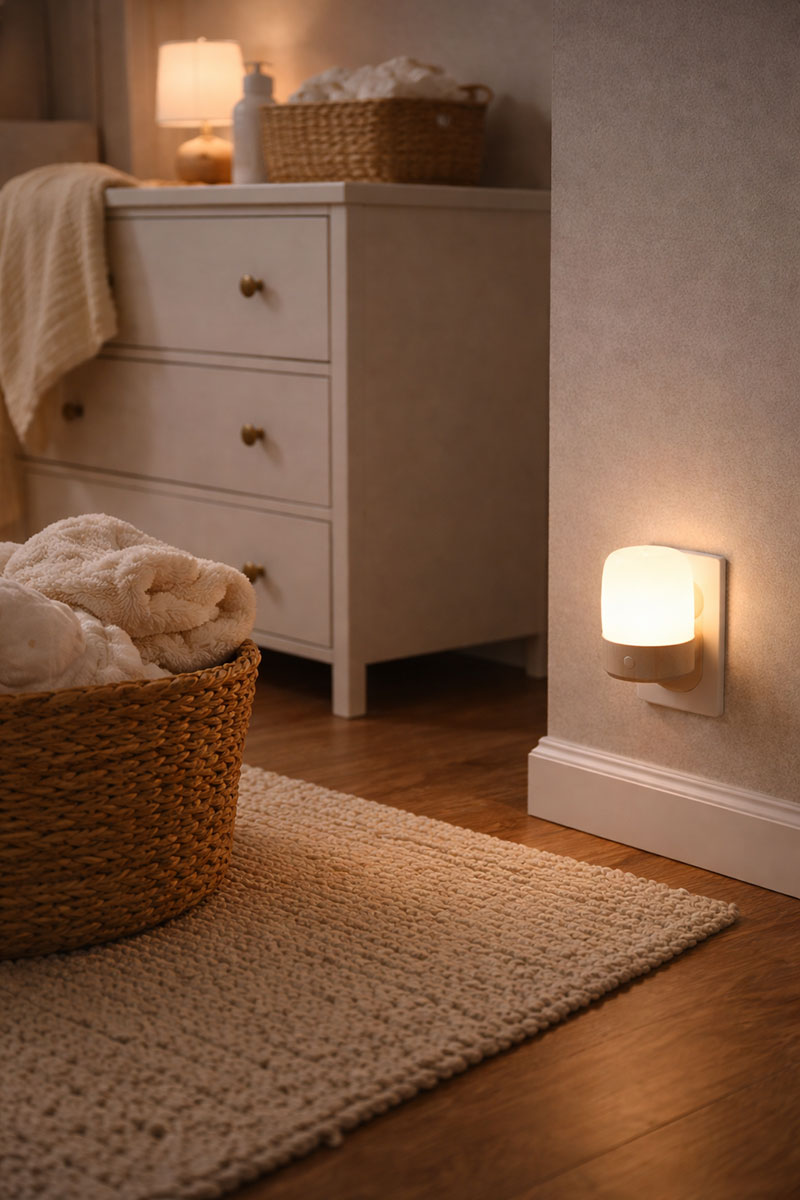
Plug in night lights work well when placed low along a wall. Portable lights help if you move between rooms. Bright white light is usually not ideal because it makes the room feel active.
Many parents also end up using a nursery night lamp alongside a night light. A dimmable lamp helps during longer feeds.
See my suggestions for nursery lamps for low evening light and nursery floor lamps with dimmable options if you aren't sure which lighting is the best for your particular situation.
Nursery Night Light vs Lamp for Feeding and Diaper Changes
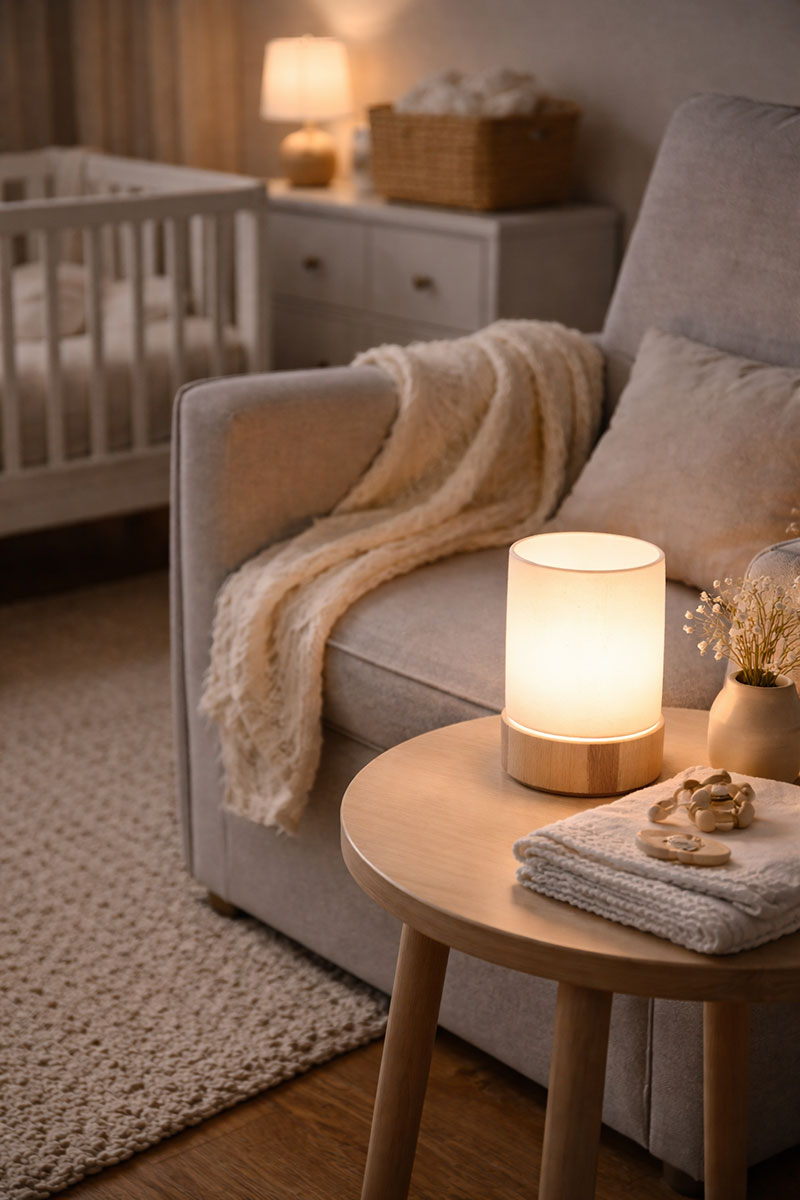
A nursery night light works for quick tasks. A lamp works better when you are sitting for a while.
Another thing I've noticed is that lamps placed too high spread light across the entire room. A shaded lamp pointed toward a wall keeps things more subdued.
Where to Place a Nursery Night Light for Better Flow
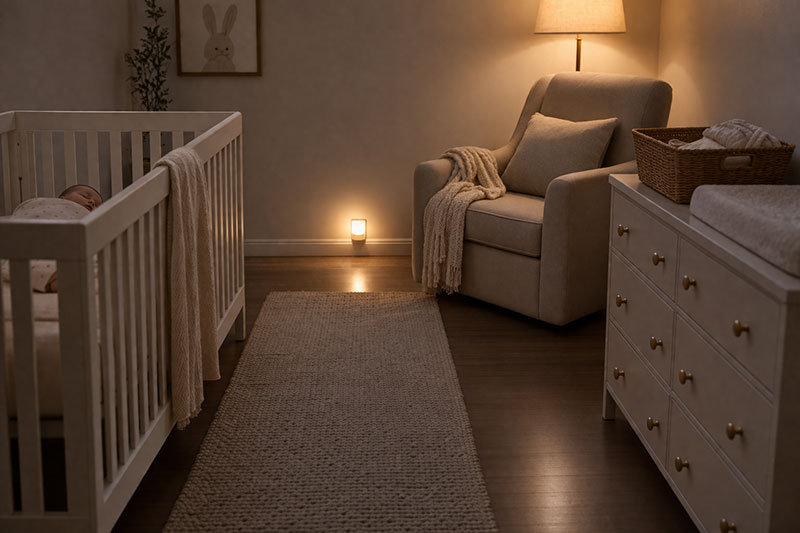
In most nurseries, light along the path, near the changing area, and beside the chair is just right.
- Place the light low along a wall
- Keep it out of direct crib view
- Light the path, not the room
For safety basics, see the U.S. Consumer Product Safety Commission safe sleep guidance.
Common Nursery Night Light Mistakes That Disrupt Sleep
Using a light that is too strong is the most common issue. Relying on an overhead ceiling light at night is another.
To learn more about daytime lighting and main fixture choices, my nursery ceiling light guide compares overhead options that work with a lower night light instead of fighting against it.
Parents often notice this when the baby settles quickly, but they feel fully awake. That usually points back to lighting.
A Simple Nursery Night Light Setup That Works Night After Night
Keep it simple.
- One nursery night light near the path
- One dim lamp near the chair
- Overhead light for daytime only
Devoting time to finding the best nursery night light setup for overnight care is time well spent. Being able to see clearly without disrupting baby's sleep is a very good thing.
The best setups do not feel bright. They feel controlled, predictable, and easy to use, so you can move through the room without disrupting your baby’s rest.
How to Adjust Your Nursery Night Light as Your Baby Grows
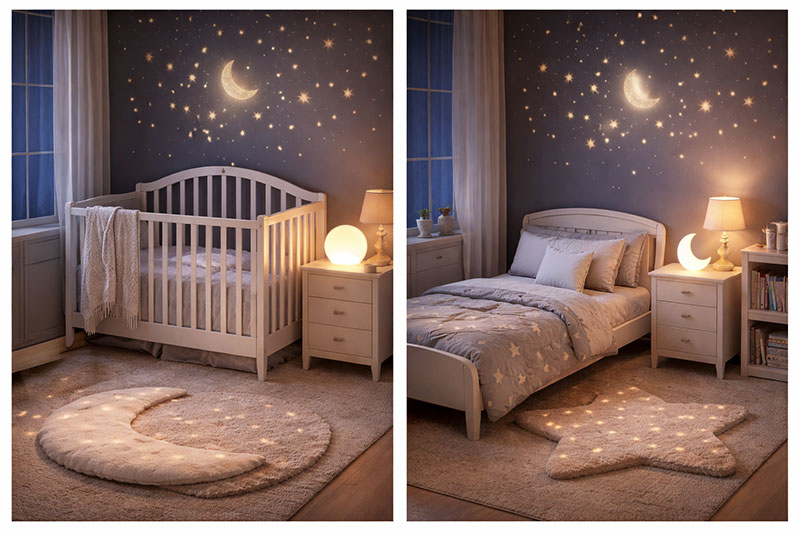
One fact rarely discussed is that your nursery night light setup will not stay the same for long. In my experience, what works in the first few weeks often needs a small adjustment as your baby becomes more aware of the room.
In the early stage, the focus is on helping you move through the space quietly. The light is there for your hands and your path, not for your baby to see. As time passes, babies become more aware of where light is coming from. That is usually when placement becomes even more important.
Many parents notice this around the time their baby starts looking around more during nighttime wake-ups. A light that was once ignored suddenly becomes something they stare at. When that happens, shifting the light slightly lower or farther from the crib can make a big difference.
This is also when a nursery night lamp becomes more useful. Instead of relying on one light source, you can separate your setup into two roles. One for quick movement, one for longer tasks. That simple change keeps the room predictable.
I was happiest with a setup that was flexible...easy to change. A light that is not fixed in one spot that can move as your routine changes is an excellent investment. It will keep the room functional instead of frustrating.
The best setups do not feel bright. They feel controlled, predictable, and easy to use, so you can move through the room without disrupting your baby’s rest.
FAQ About the Best Nursery Night Light
Is a nursery night light necessary?
It is not required, but it helps avoid turning on stronger lighting at night.
Where should it go?
Near the changing area, path, or chair, not aimed at the crib.
Is a lamp better?
A night light works for quick tasks. A lamp works for longer ones.


About Jan | Contact | Baby Nursery Ideas (Blog) | Site Map | Privacy Policy | Disclosure Policy | Disclaimer | Affiliate Disclosure | Earnings Disclosure | Facebook | Pinterest
I am a participant in the Amazon Services LLC Associates Program, an affiliate advertising program designed to provide a means for us to earn fees by linking to Amazon. As an Amazon Associate I earn from qualifying purchases.
Copyright © 2006-2026. All Rights Reserved.