Elegant Nursery Chandeliers That Put the Finishing Touches on a Room
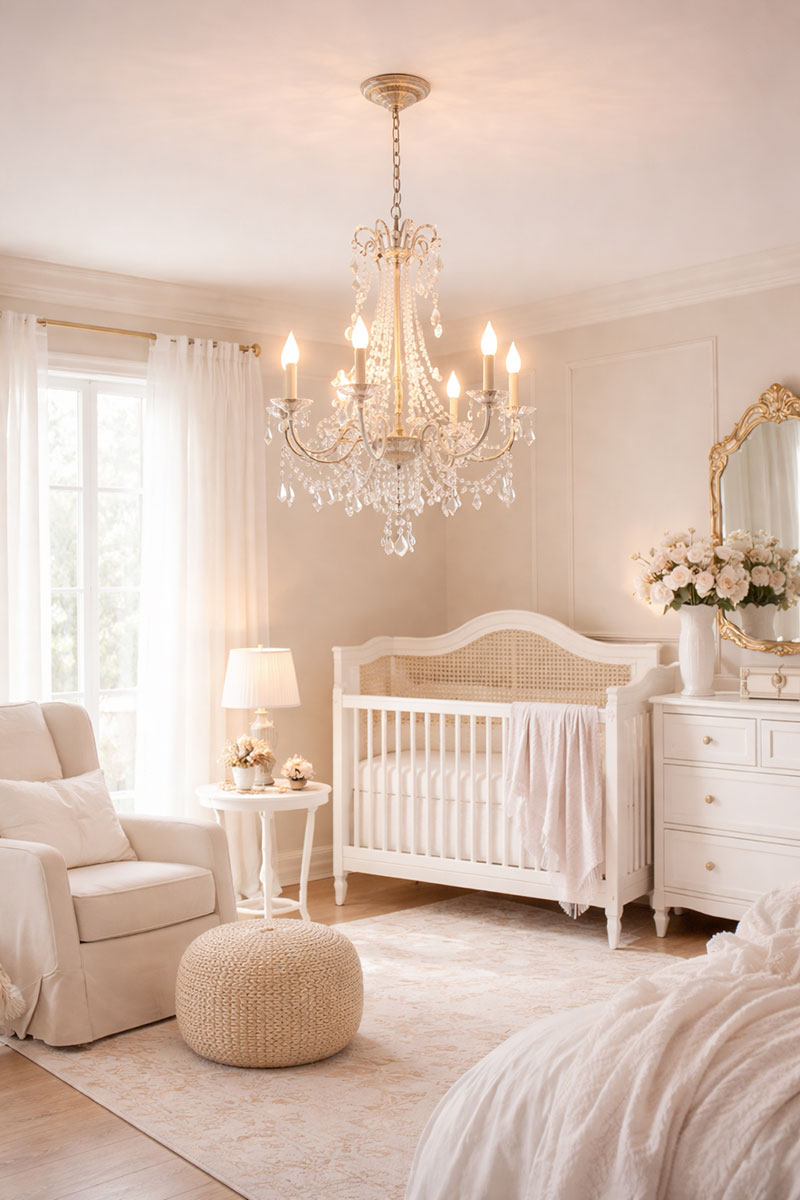
Elegant nursery chandeliers have a way of finishing a room in a way you do not fully notice until it is there. I have stood in nurseries where everything was technically “done,” but the ceiling still felt empty, and the light from a basic fixture made the room feel flat and a little cold at night. Then a chandelier goes in, and suddenly the same walls, the same crib, the same rug feel softer and more settled, especially during those late-night feeds when the light is dim and everything needs to feel calm instead of bright and sharp.
Before you choose a nursery chandelier, these pages may change what you notice first:
The lighting mistake that too many make
What the chandelier has to match in the nursery
When a smaller chandelier looks better and more expensive than a big one
Jump to what you need:
Chandelier styles that work in nurseries
Where to place a chandelier safely
Quick answer: Elegant nursery chandeliers work best when they fit the room size, support layered lighting, and visually balance the crib wall instead of competing with it. In real nurseries, the right chandelier is usually the detail that makes the room feel complete the moment you walk in.
For more room inspiration beyond lighting, visit my nursery ideas page .
compact nursery chandelier options available
Elegant nursery chandelier styles that actually work in real rooms
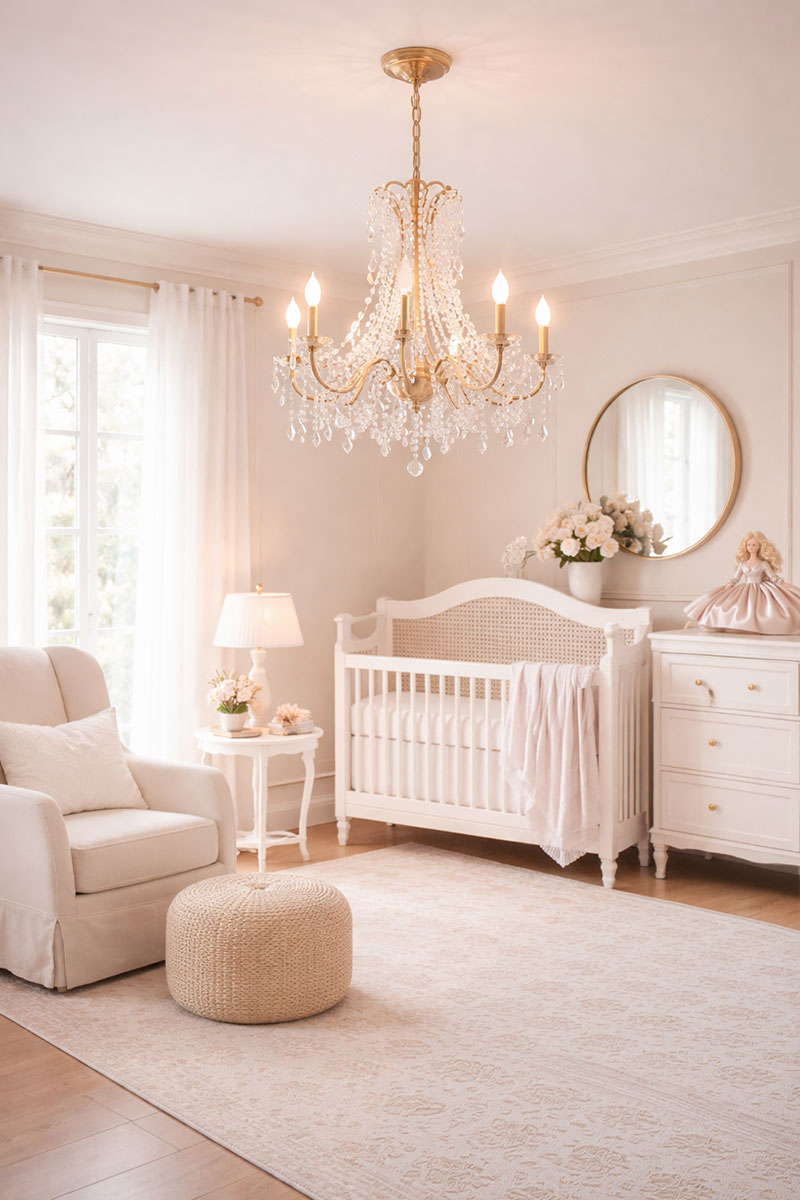
Here’s the thing. A chandelier that looks perfect in a product photo can feel completely different once it is hanging above a real crib with blackout curtains pulled and a stack of folded clothes sitting nearby. Most parents notice this the first time they turn the light on at night and realize the fixture is now part of how the room feels, not just how it looks.
The styles that hold up best are the ones with clear structure. Open frames, drum styles, or simple bead designs tend to work because they give the ceiling shape without crowding it. In one nursery, swapping a detailed fixture for a simpler one immediately made the room feel more settled without changing anything else.
This is where it starts to come together. The best chandelier quietly repeats something already in the room. The curve of the crib. The tone of the drawer pulls. The finish on the mirror. When that happens, the room feels finished without trying too hard.
If you are decorating around a specific color palette, see pink chandeliers for nurseries.
To coordinate your lighting with the full room look, see baby nursery themes.
How to choose the right nursery chandelier size without guesswork
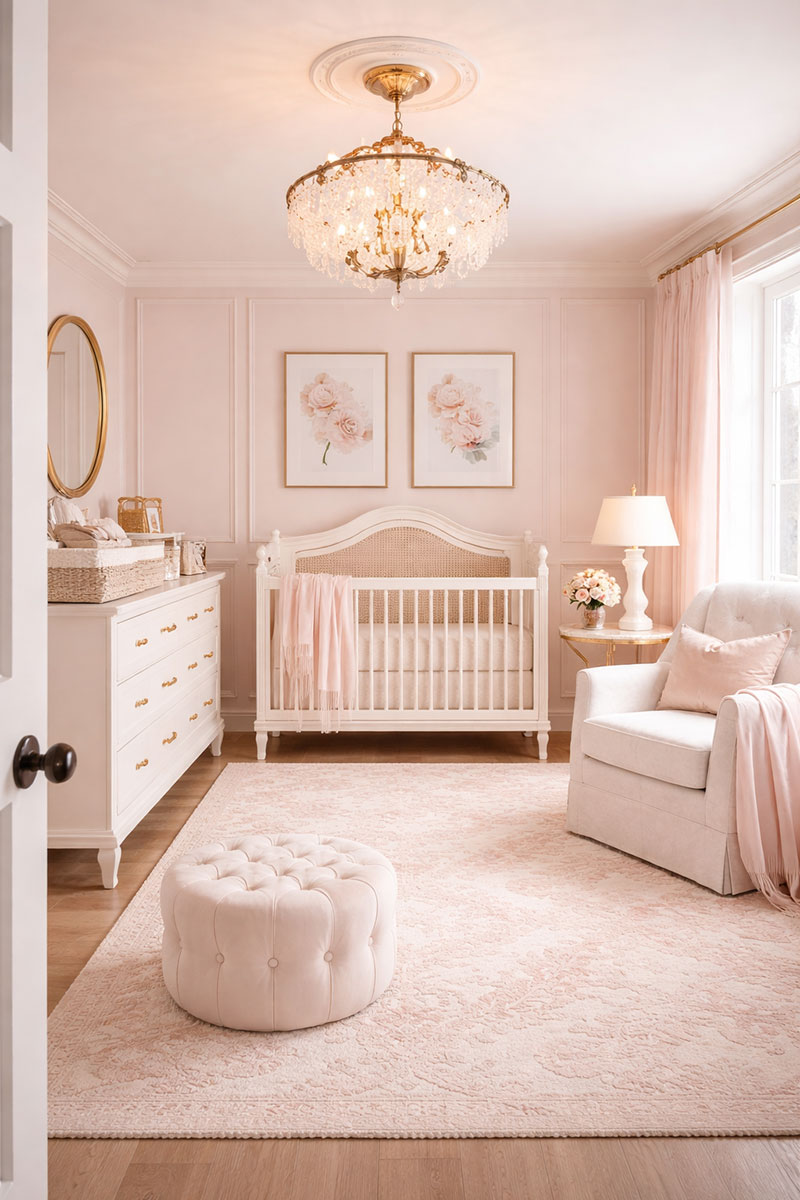
Size determines whether the room feels finished or slightly off.
Many nurseries run into this after a few weeks. What looked like open space fills up fast with a chair, side table, and everyday items that were not part of the original plan. A chandelier that seemed fine at first can suddenly feel oversized.
A good approach is to choose a fixture that fills the ceiling without pushing into the visual space of the crib or curtains. Smaller rooms benefit from narrower designs. Larger rooms can handle more width, especially when viewed from the doorway.
For smaller layouts or tighter rooms, see mini chandeliers for nursery spaces.
One detail that is rarely mentioned is the doorway test. Standing at the entrance during a quiet check shows instantly whether the size works. If it looks balanced from there, it will usually feel right everywhere else.
Where to place a nursery chandelier so the room feels balanced
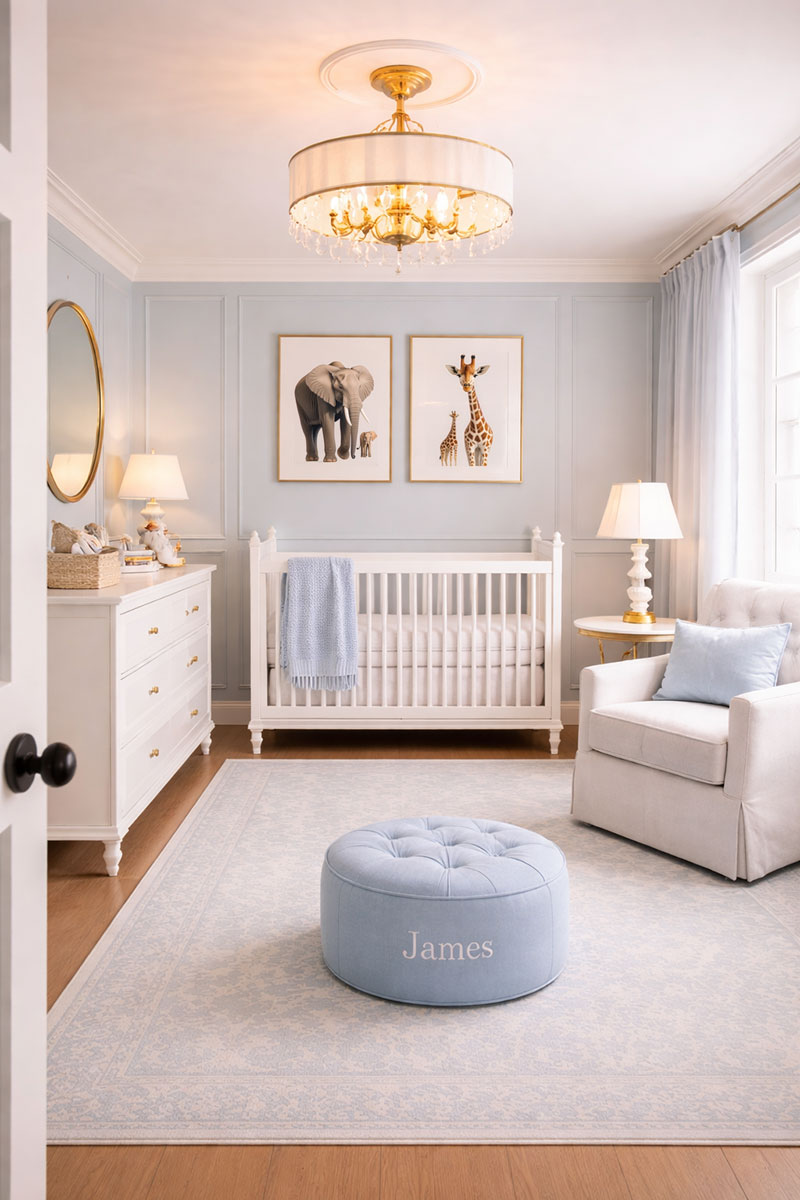
Most nurseries are not arranged around the ceiling box. The crib goes where it works best. The chair goes where it is comfortable. That means the chandelier often has to adapt to a layout that was not designed around it.
In real rooms, chandeliers usually feel better when they are centered to the room or open floor area instead of directly over the crib. This creates a more natural balance.
I have seen rooms where the chandelier lined up with curtain rods and cords from the chair angle, making the ceiling feel cluttered even though everything was technically centered. That is the kind of detail you only notice once the room is being used every day.
For installation and electrical guidance, refer to the National Fire Protection Association.
Best bulbs for nursery chandeliers during real nighttime use
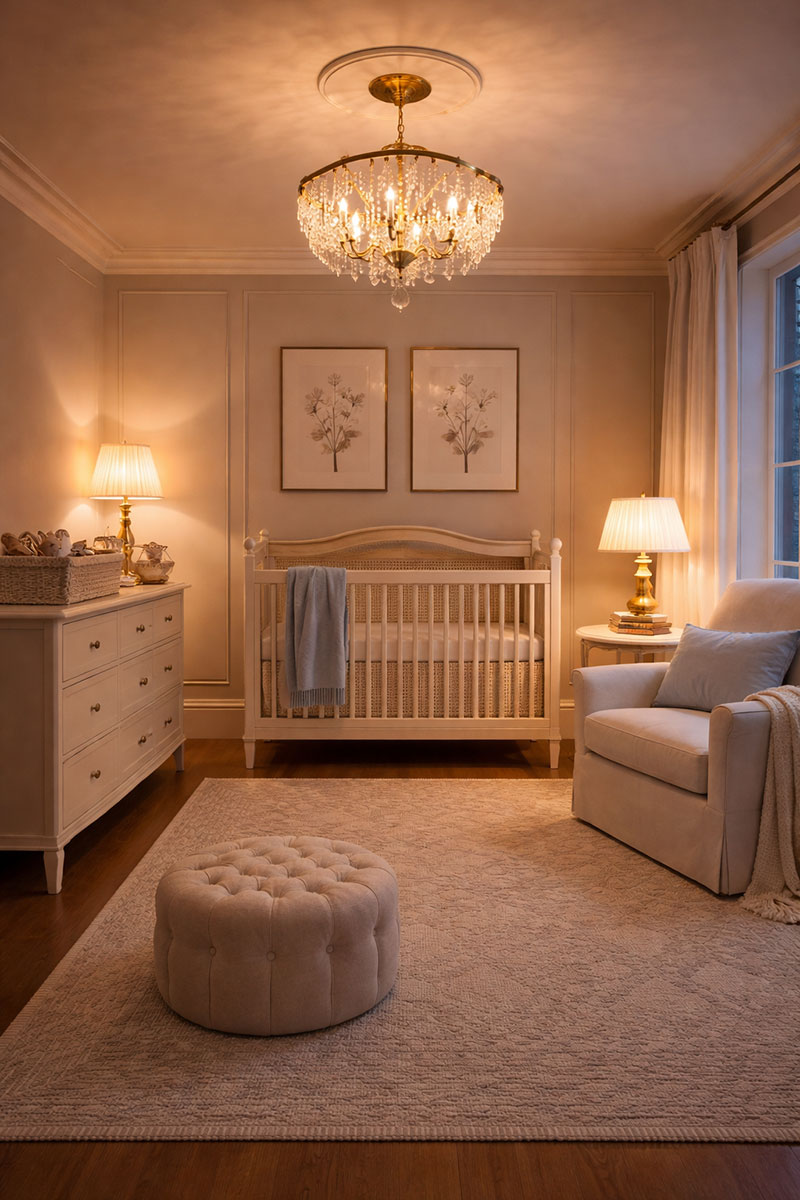
This usually becomes obvious after a few nights. In smaller layouts, mini chandeliers for nurseries can give you the same soft overhead light without overwhelming the space. A chandelier that looks good during the day can feel too bright or harsh at night.
The best approach is layered lighting. The chandelier handles general light, while a softer source supports nighttime routines. Dimmable bulbs make a clear difference.
For the softer lighting most parents rely on during overnight care, see my guide that has nursery night light ideas that won’t wake your baby and tips for how to use them alongside overhead fixtures.
Warm light tends to work better in nurseries. In one room, simply changing the bulb color made the space feel completely different at night.
For a complete lighting plan, see nursery lighting ideas.
For a more practical overhead-light comparison, my nursery ceiling light guide explains when a flush mount, pendant, chandelier, or lamp setup would be better for the size and shape baby room you have.
Elegant nursery chandelier ideas that make the room feel finished
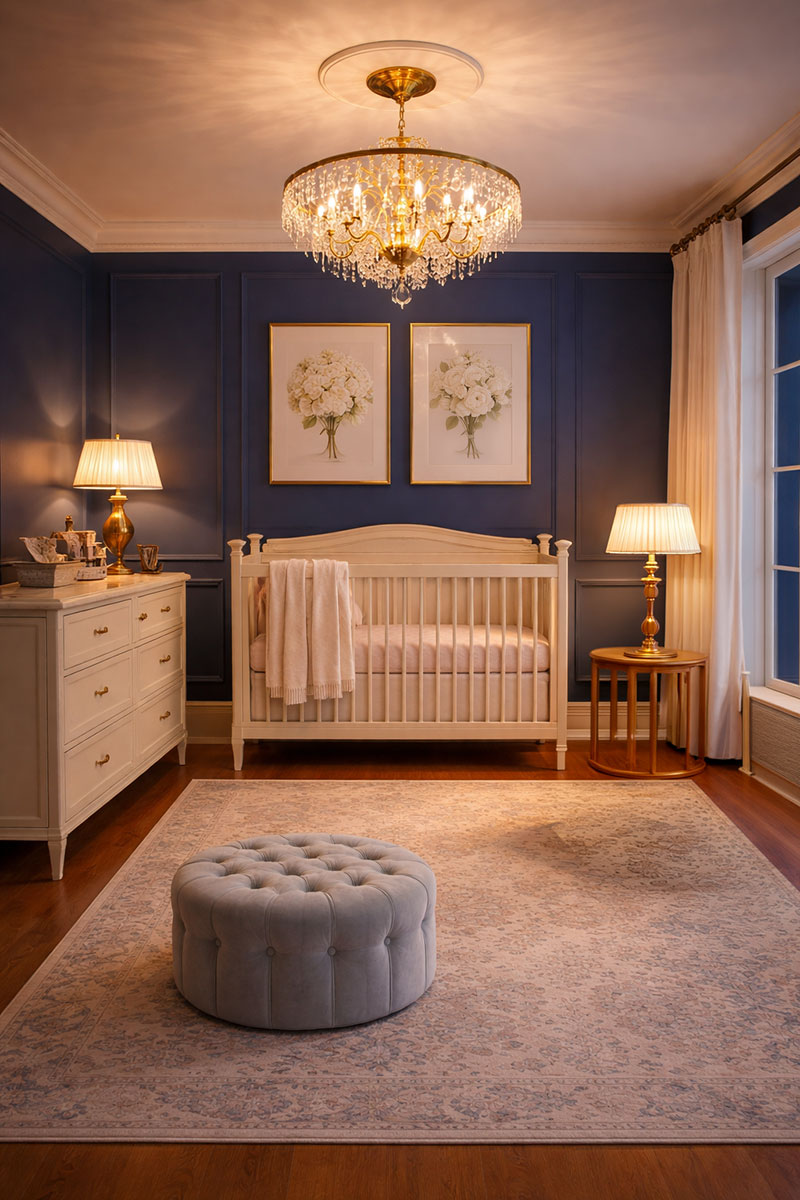
Many nurseries reach a point where everything is in place, but the ceiling still feels empty. That is when the room feels almost finished but not quite settled.
A chandelier solves that by giving the space a center. In patterned rooms, simpler fixtures usually work better. In minimal rooms, slightly more detail can add structure.
One useful trick is to close the blackout curtains during the day and check how the chandelier looks in that light. Nurseries spend a lot of time dimmed, and some fixtures lose their balance without daylight.
For finishing touches around the room, see nursery wall decor ideas.
Simple nursery chandelier checklist before you buy
Style: Matches the room.
Size: Works with real furniture in place.
Placement: Fits the actual layout.
Lighting: Supports dimmable bulbs.
View: Looks complete from the doorway.
The doorway view is the test that decides everything.
Frequently asked questions about nursery chandeliers
Can you use a chandelier in a nursery?
Yes. Nursery chandeliers work well when they match the room size and support layered lighting.
Should it hang over the crib?
Not necessarily. Most rooms feel better when centered to the space instead.
Do chandeliers provide enough light?
They usually need additional lighting for nighttime use.
What style works best?
Structured, simple designs tend to work best in real nursery setups.
Summary: Nursery chandeliers are not just decorative fixtures. They shape how the room feels during everyday use, especially at night, which is why size, placement, and lighting matter more than style alone.


About Jan | Contact | Baby Nursery Ideas (Blog) | Site Map | Privacy Policy | Disclosure Policy | Disclaimer | Affiliate Disclosure | Earnings Disclosure | Facebook | Pinterest
I am a participant in the Amazon Services LLC Associates Program, an affiliate advertising program designed to provide a means for us to earn fees by linking to Amazon. As an Amazon Associate I earn from qualifying purchases.
Copyright © 2006-2026. All Rights Reserved.