Newborn and Infant Halloween Costumes for Baby’s First Halloween
By Jan Bay
Choosing a Halloween costume for a newborn or young baby is a little different from dressing an older child. The best infant Halloween costumes are comfortable, easy to put on and simple enough for diaper changes, naps, being carried and short first Halloween outings.
Explore More Baby Halloween Ideas
Baby Halloween Costumes and Ideas
Baby Halloween Crafts and Keepsakes
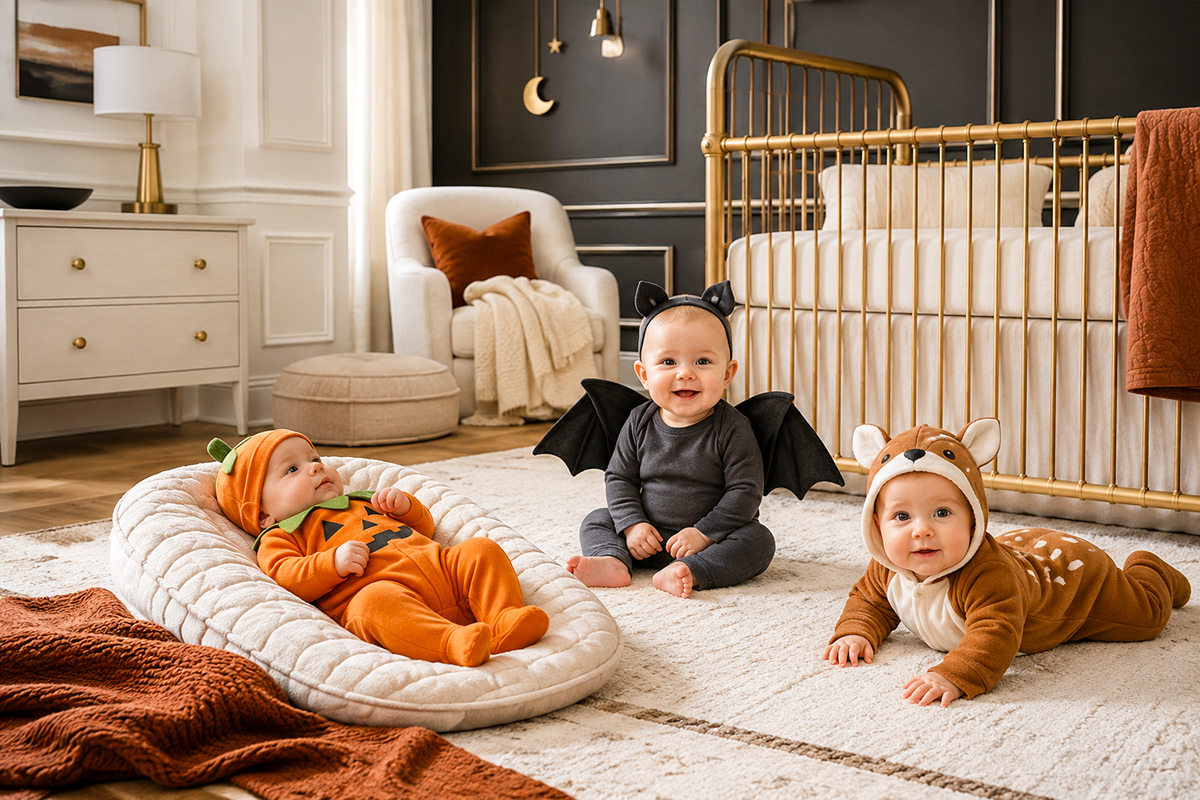
See infant Halloween costumes here
Jump to:
0 to 3 Month Halloween Costumes
3 to 6 Month Halloween Costumes
6 to 12 Month Halloween Costumes
Baby's First Halloween Costume Ideas
Costumes for Carried, Sitting and Crawling Babies
Halloween Costumes for Warm or Cold Weather
Costumes That Make Diaper Changes Easier
Photo-Friendly Infant Halloween Costumes
Newborn Halloween Costumes That Keep Things Simple
A newborn does not need a complicated costume to look unmistakably dressed for Halloween. In fact, the simpler ideas are often the most practical. A soft sleeper, bodysuit or one-piece outfit in the right colors can create the whole look without adding stiff fabric, dangling pieces or layers that have to be rearranged every time the baby needs changing.
For the earliest weeks, I would choose the outfit first and the costume idea second. Look for soft fabric against the skin, easy access to the diaper and a neckline that does not need to be pulled or fastened tightly around a tiny baby's head. A pumpkin, little black cat, woodland animal or simple bat-inspired outfit can be recognizable with very little added to ordinary baby clothing.
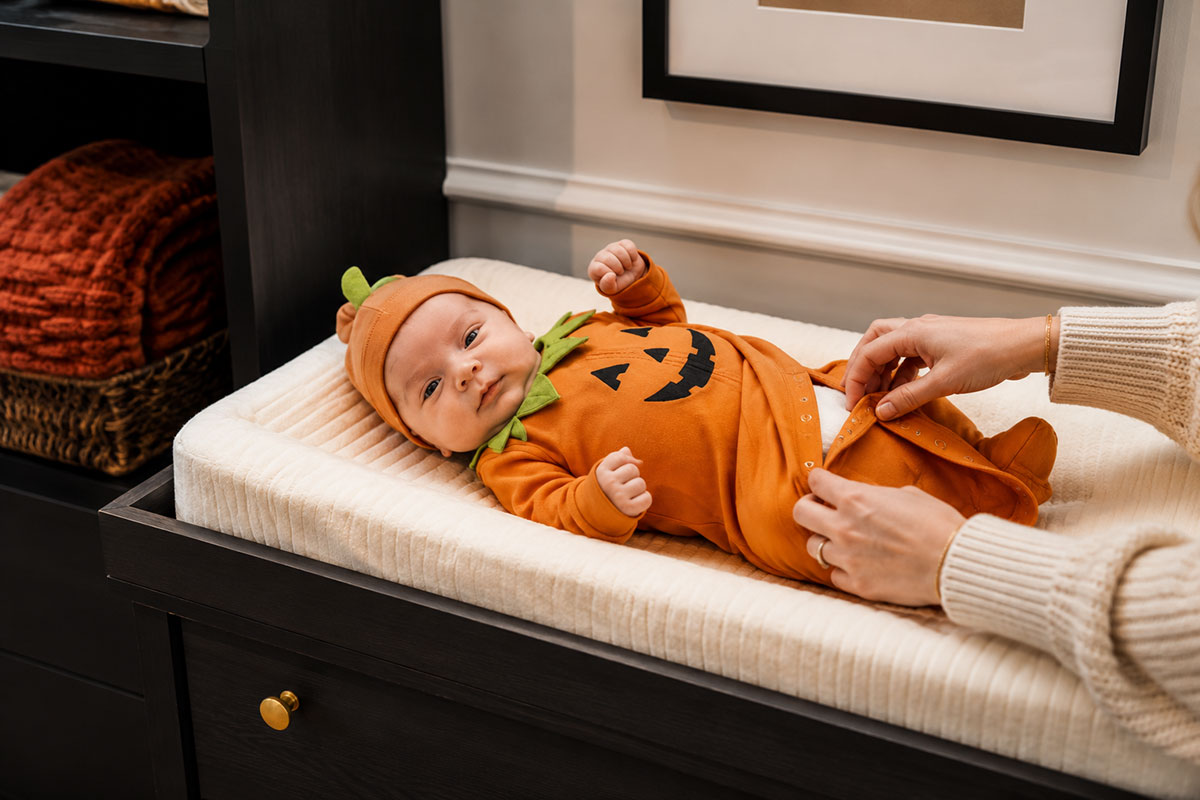
Newborn costumes also work best when they can be removed quickly. Halloween at this age may mean a few photographs, visiting grandparents or joining the family for a short outing rather than wearing a costume for an entire evening. There is no reason to make a baby stay dressed in an elaborate outfit once the cute part of the occasion is over.
Good newborn costume choices include:
- Soft sleepers in pumpkin, animal or Halloween-inspired colors
- Simple bodysuit and hat combinations
- One-piece outfits with snaps or zippers that leave diaper access easy
- Lightweight hooded outfits with nothing tight around the face or neck
- Simple layered looks that can be adjusted as the temperature changes
For photographs, a costume does not have to include every detail of the character. A tiny orange outfit and soft coordinating cap can suggest a pumpkin without surrounding the baby with bulky padding. The same idea works for a fox, bunny, bear, bat or other familiar Halloween look.
If you want to make the pumpkin cap yourself, use my free crochet pumpkin hat pattern.
0 to 3 Month Halloween Costumes
By the time you are choosing a Halloween costume for a baby in the 0 to 3 month range, comfort still matters more than costume detail. Babies this age spend a great deal of time being held, fed, changed and settled, so an outfit that looks adorable while lying against your shoulder can be far more useful than one designed mainly for standing or walking.
Think about how the costume will behave when the baby is picked up. Large wings, stiff skirts, bulky backs and long tails can bunch between you and the baby or make a simple cuddle awkward. A softer costume that keeps the back fairly flat is easier to manage for family visits, photographs and short Halloween outings.
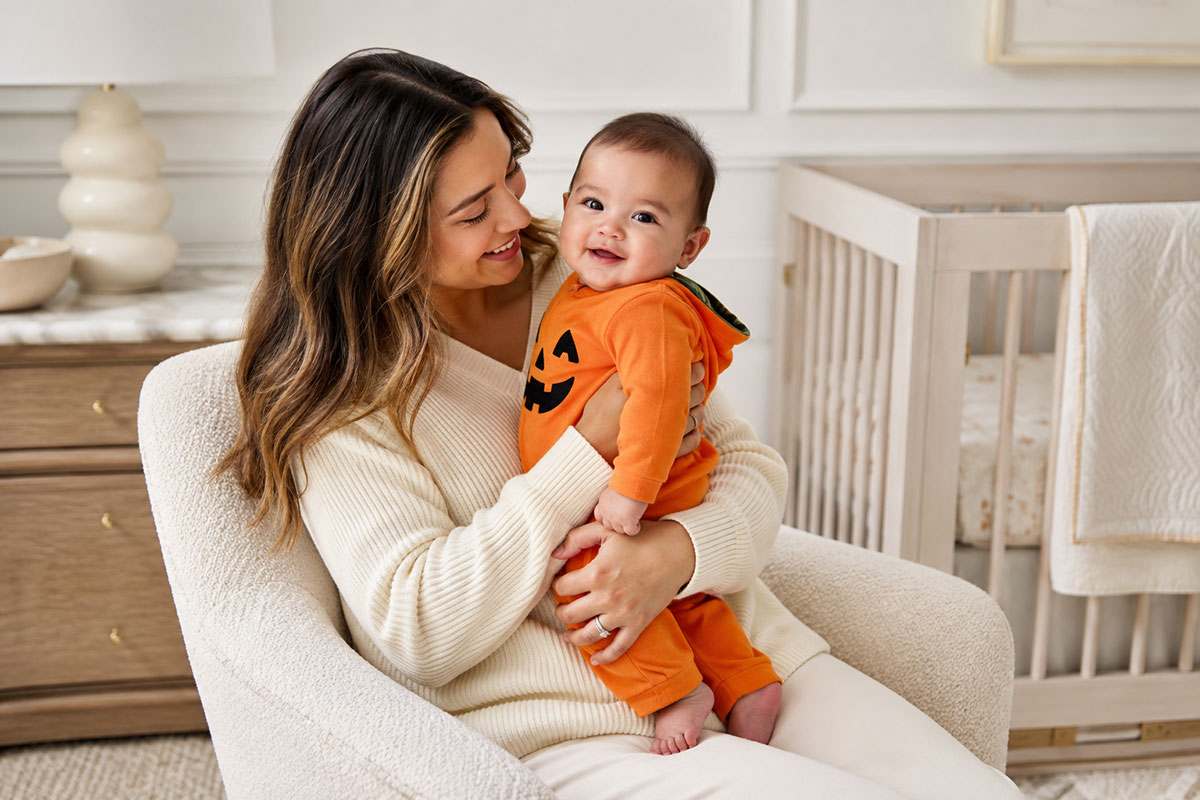
A costume built around regular baby clothes can be especially useful at this age. Start with a bodysuit, sleeper or footless one-piece and add just enough color or shape to make the idea clear. Black and gray can become a little bat, orange can become a pumpkin, and warm brown can suggest a woodland animal without adding a complicated costume shell.
If the outfit includes a hood or soft hat, check the fit whenever the baby changes position. Anything that slips toward the eyes or bunches around the neck should come off. Decorative pieces should also stay well away from little hands and mouths.
For a 0 to 3 month old baby, look for:
- Soft fabric with no scratchy trim against the skin
- Snaps, zippers or openings that make diaper changes straightforward
- A fairly flat back for a baby who will spend much of Halloween being carried
- Short or securely attached costume details instead of dangling pieces
- Layers that can be added or removed without rebuilding the whole costume
- Hands and feet that are not squeezed inside tight costume pieces
If you are still deciding on the overall theme, the broader Baby Halloween Costume Ideas page has more costume directions to explore. Once you choose one, bring the idea back to what will actually be comfortable for a very young infant.
3 to 6 Month Halloween Costumes
From about 3 to 6 months, some babies are spending more time looking around, holding their heads up and beginning to roll. That opens the door to costumes with a little more shape, but the outfit still needs to move with the baby rather than hold the baby in place.
A soft animal costume, pumpkin romper, little witch-inspired outfit or woodland look can work well at this stage. I would still avoid anything with a stiff body, heavy padding or pieces that make tummy time, being held or lying on the floor uncomfortable.
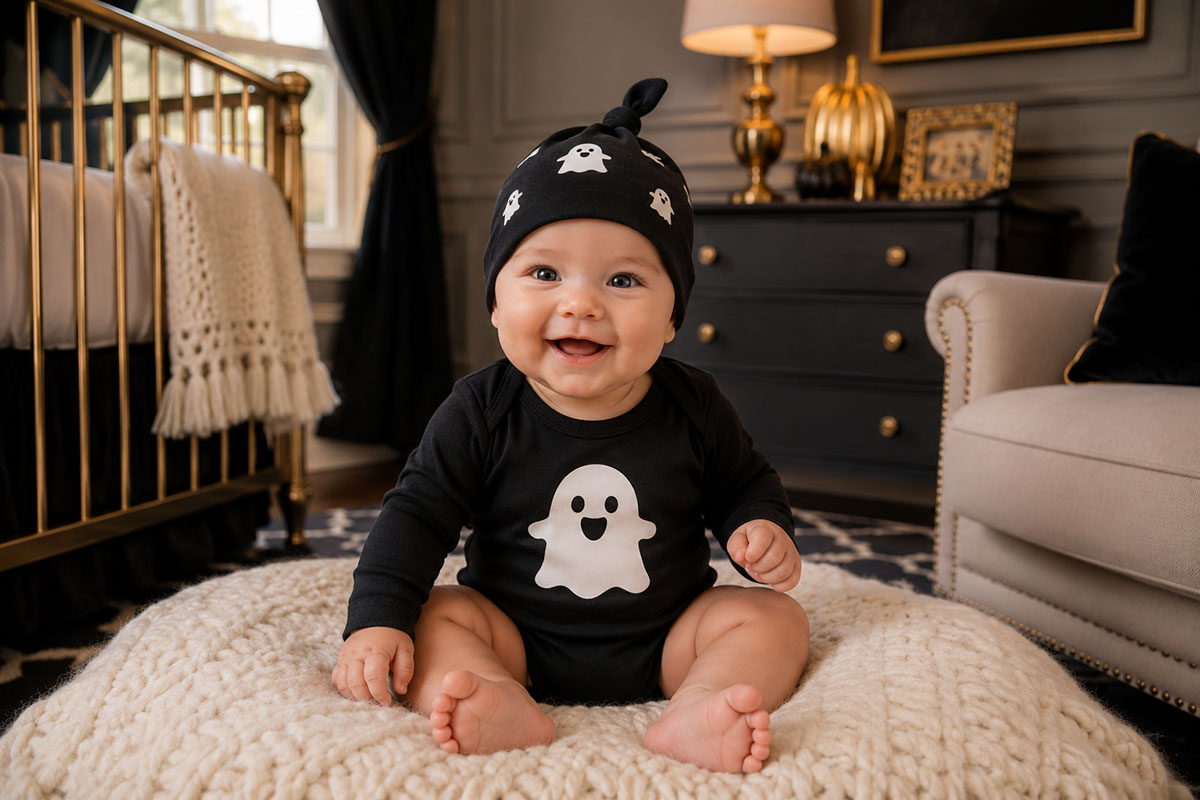
Costumes that look good from the front are especially useful for this age because babies are often photographed reclining, propped safely with an adult nearby or being held. A simple hood, contrasting tummy panel or small fabric ears can make the costume recognizable without adding a lot of bulk.
Good choices for a 3 to 6 month old include:
- Soft rompers with a clear costume shape or color
- Lightweight hooded animal outfits
- Bodysuit costumes with simple fabric details
- Footless one-piece costumes that leave room for kicking
- Costumes that can be opened quickly for feeding or diaper changes
If your baby is beginning to roll, pay extra attention to what is attached to the back of the costume. Wings, tails and decorative panels should not create a hard lump underneath the baby or catch beneath an arm or leg. A flatter design is often easier for both playtime and photographs.
This is also a good age for a costume that can become ordinary clothing once a hat or lightweight outer piece comes off. That gives you the Halloween look for pictures without committing the baby to wearing the full costume for the rest of the outing.
6 to 12 Month Halloween Costumes
By 6 to 12 months, Halloween costumes have to keep up with a much more active baby. Some babies may be sitting, scooting, crawling, pulling up or moving from one activity to another. The exact timing varies, so choose the costume for what your baby is doing now rather than what the size tag suggests should be happening.
For a mobile infant, I would keep the lower half of the costume especially simple. Long hems, oversized feet, loose tails and fabric that bunches around the knees can get in the way when a baby tries to crawl or pull up. A romper or bodysuit-based costume leaves far more room for movement.
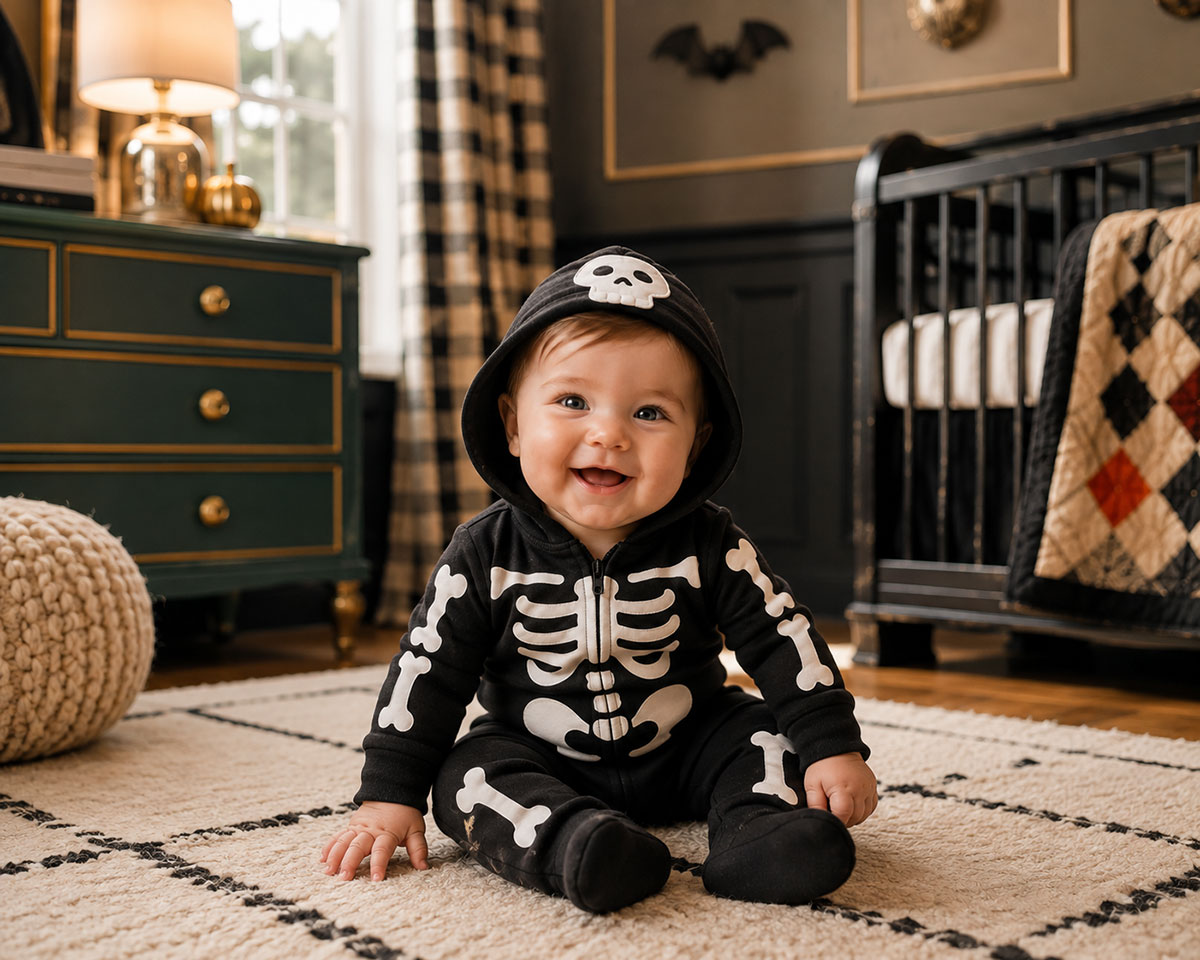
Costume details also become more interesting to little hands at this age. Skip loose decorations, detachable pieces and anything a baby can easily pull toward the mouth. If ears, wings or other details are part of the look, they should be lightweight, securely attached and positioned where they do not interfere with movement.
Practical costume ideas for babies from 6 to 12 months include:
- Short rompers with animal ears or simple fabric details
- Soft pumpkin or woodland outfits without bulky padding
- Bodysuit costumes paired with comfortable leggings
- Lightweight one-piece costumes with unrestricted arms and legs
- Simple character-inspired outfits made from ordinary baby clothes
Footwear deserves a quick check too. A costume does not need oversized novelty feet to look finished. For a baby who is crawling or beginning to stand, soft socks, bare feet indoors when appropriate, or the baby's usual well-fitting footwear may be much easier to manage than decorative costume shoes.
If the costume still looks good after the hat, hood or extra layer comes off, that is a useful sign. Babies this age can change their minds about clothing very quickly, and a costume that can be simplified in seconds makes Halloween easier for everyone.
Baby's First Halloween Costume Ideas
A baby's first Halloween does not need an elaborate costume to feel special. For a newborn or young infant, a simple outfit that photographs well and can come off easily is often a better choice than a full costume with several separate pieces.
Start with the part the baby will actually wear comfortably. A soft orange romper can become a pumpkin, a black bodysuit with simple fabric wings can suggest a bat, and a brown or rust-colored sleeper can form the base of a woodland animal costume. The Halloween idea should come through without asking the baby to tolerate a heavy costume just for the sake of the picture.
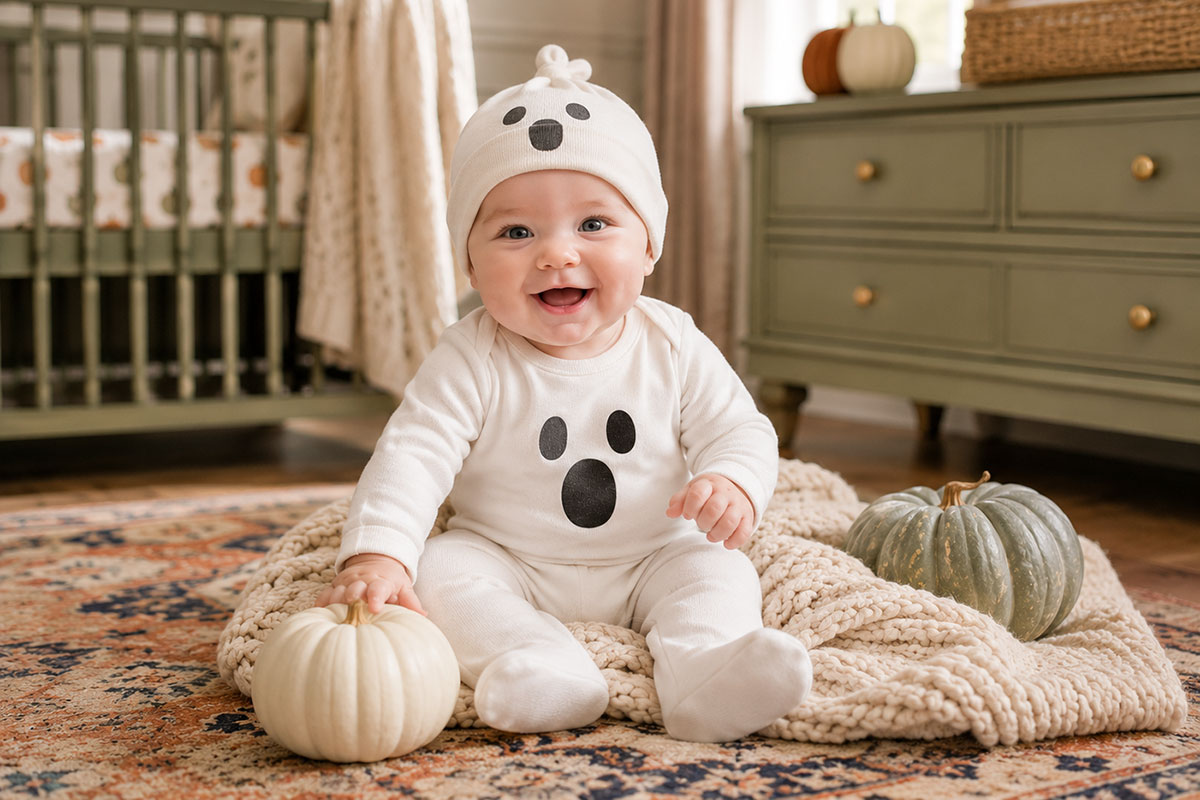
Easy first Halloween ideas include:
- A soft pumpkin romper or sleeper
- A little black cat outfit with simple fabric ears
- A lightweight bat-inspired bodysuit
- A fox, deer or other woodland animal look
- A tiny witch-inspired outfit made from soft baby clothing
- A simple old-fashioned costume built around comfortable everyday clothes
If you want something with more personality than the usual pumpkin, the Old Lady Baby Costume Ideas page has a playful direction that can still be adapted around soft, comfortable clothing.
For a first Halloween photograph, choose one or two costume details that read clearly in the picture rather than adding everything at once. A recognizable color, a soft hat or a simple outer layer can be enough. Keep the baby's face visible and let the expression be the part everyone remembers.
You can also plan the costume in two stages. Take the photographs while the full look is together, then remove the hat, hood or decorative layer and let the baby spend the rest of the visit in the comfortable clothing underneath.
Costumes for Babies Who Are Carried, Sitting or Crawling
The way your baby will spend Halloween matters almost as much as age. A costume that is easy while a baby is being carried may become awkward on the floor, while a cute crawling costume may have details that bunch up when the baby is held.
For a baby who will be carried most of the time, keep the back of the costume fairly flat. Thick shells, large wings and bulky decorations can end up pressed between the baby and the person holding them. Soft rompers, sleepers and simple animal outfits are much easier to reposition when it is time for feeding, changing or a different set of arms.
If baby wearing will be part of the evening, these baby carrier Halloween costume ideas show how the parent, baby and carrier can work together without changing the carrier’s normal fit.
For a baby who is sitting, look at the costume from the seated position before Halloween. Full skirts can gather around the waist, stiff tummy panels may fold upward and oversized hoods can shift when the baby looks down. A costume that leaves the hips and waist free to bend tends to sit more naturally.
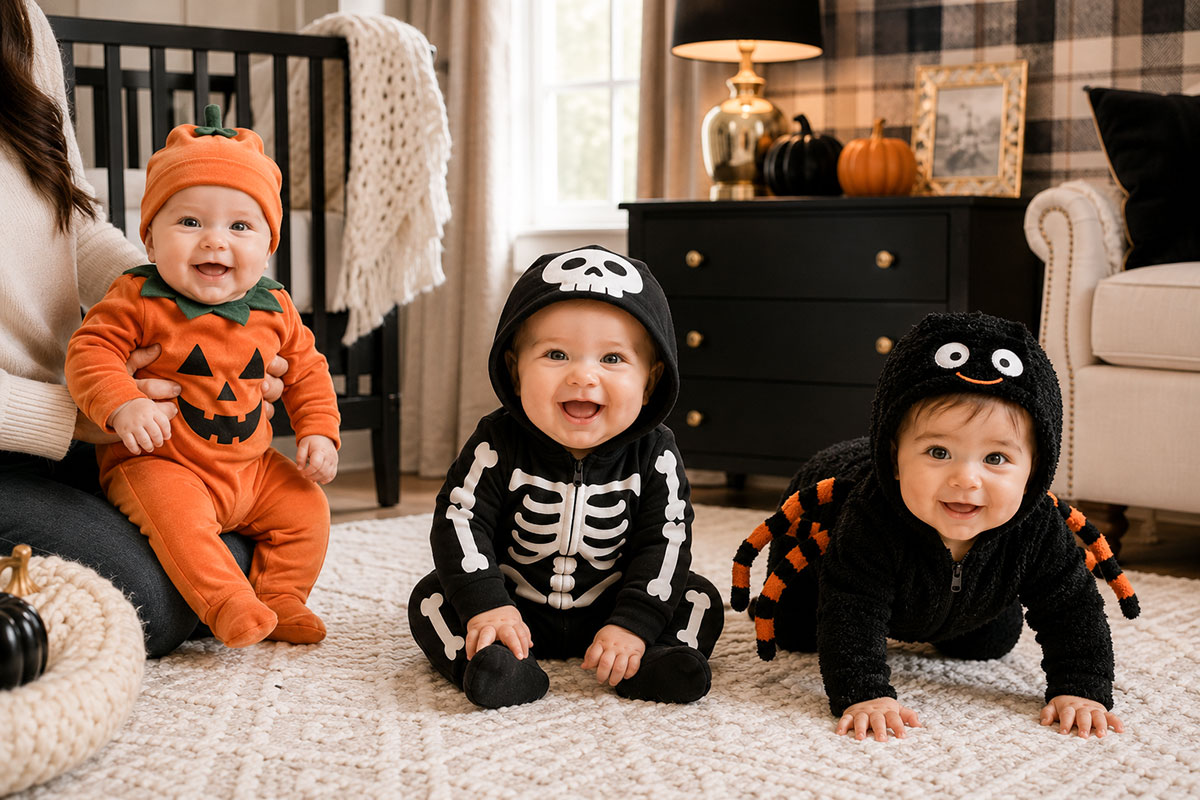
For a crawling baby, pay close attention to anything near the hands, knees and feet. Long capes, trailing skirts, loose tails and oversized costume feet can end up underneath the baby. Keep decorative pieces short and out of the path the baby uses to move.
You can test an outfit before the holiday without making a production of it. Dress the baby in the complete costume for a few minutes at home and let them move the way they normally do. If you keep stopping to straighten, lift or remove pieces, simplify the costume before Halloween.
A good infant costume should still let the baby act like a baby. Sitting, reaching, kicking and crawling are much more important than keeping every costume detail perfectly arranged.
Baby Halloween Costumes for Warm or Cold Weather
Halloween weather can change the costume plan completely. A padded costume may look perfect on the hanger and feel miserable indoors, while a thin bodysuit costume may not be enough for an evening outside. I would choose a costume that can be adjusted in layers instead of relying on one heavy outfit.
For cooler weather, start with comfortable baby clothing underneath the costume. A thin long-sleeve bodysuit, leggings or a soft sleeper can add warmth without changing the look very much. If more warmth is needed outdoors, use an appropriate jacket or blanket once the costume portion of the outing is finished rather than trying to build every cold-weather layer into the costume itself.
Avoid assuming that a thick plush costume solves the problem. Babies can move between a warm house, a cool sidewalk and a heated car within a short period of time. Layers are easier to remove as conditions change.
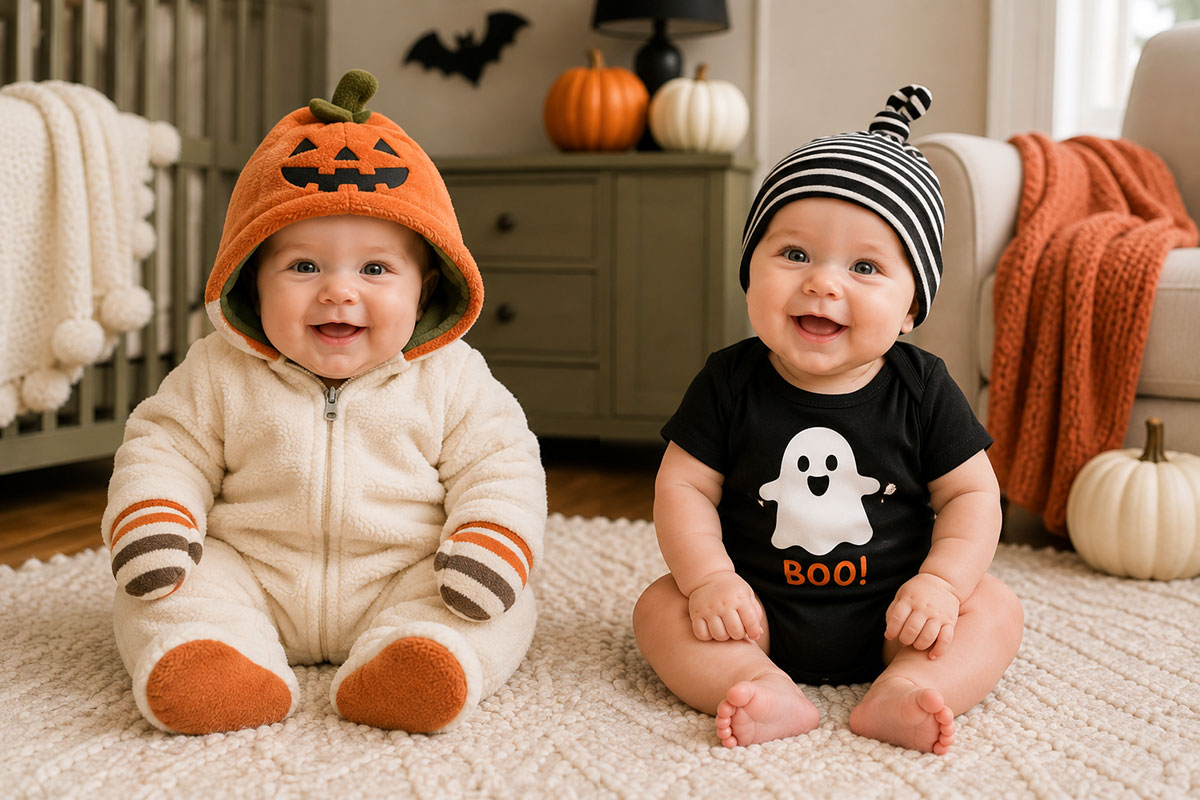
For warm weather, keep the costume light. Short-sleeve bodysuits, breathable rompers and simple fabric costume details can create a complete look without adding unnecessary layers. Heavy fleece, thick padding and full head coverings may be better left for photographs indoors rather than worn through a warm evening.
It also helps to think about where Halloween will actually happen. A baby spending most of the evening inside at a family gathering needs a different outfit from one going outdoors in a stroller. Plan for the longest part of the outing, then make the decorative pieces easy to add or remove.
A practical layering plan can be as simple as:
- Comfortable baby clothing as the base layer
- A lightweight costume layer over it
- A removable hat, hood or decorative piece for pictures
- An ordinary weather-appropriate outer layer when the costume itself is not enough
The costume does not have to stay perfectly assembled from the first photograph until bedtime. If the temperature changes or the baby becomes uncomfortable, the easiest answer is often to remove part of the costume.
Costumes That Make Diaper Changes Easier
A Halloween costume can look wonderful until the first diaper change turns it into a puzzle. For a newborn or infant, easy access matters because you may be opening and closing the outfit several times during the evening.
Look for snaps, zippers or openings that let you reach the diaper without taking off the entire costume. A romper with snaps along the legs, a sleeper with a full-length zipper or a bodysuit-based costume is much easier to manage than a one-piece novelty suit that has to come completely off.
Another practical approach is to make the Halloween costume from baby clothes that already fit comfortably and provide familiar snaps or zipper openings.
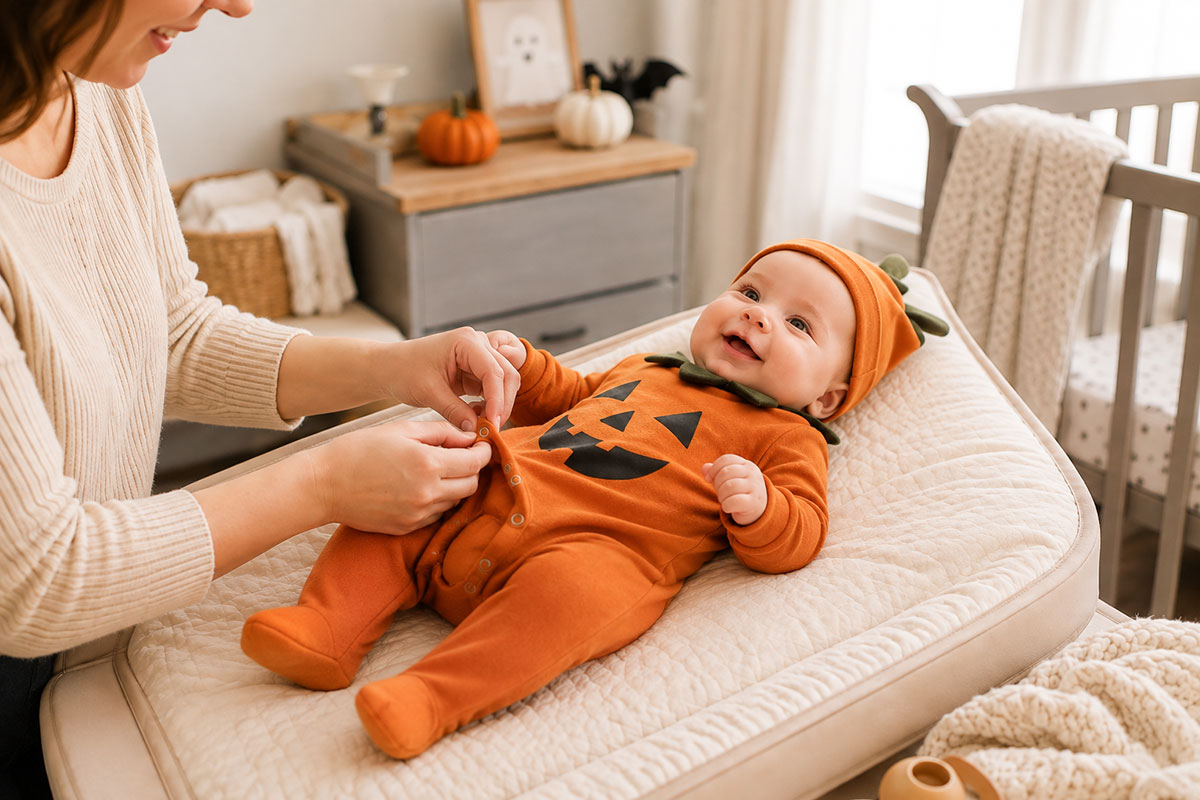
I would also check how many layers have to be moved before you can reach the diaper. Tights under a bodysuit, followed by a costume romper and another decorative layer, may look charming in a photograph but become tedious very quickly. Fewer layers around the waist and legs usually make the outfit more practical.
Helpful costume features include:
- Snap openings along the crotch or legs
- Zippers that open far enough to reach the diaper easily
- Separate tops and bottoms that can be moved without undressing the baby
- Costume pieces that lift out of the way instead of wrapping tightly around the waist
- Simple accessories that do not have to be removed and rebuilt after every change
Do one practice diaper change before Halloween. If you have to turn the costume inside out, remove several pieces or wrestle the baby's legs through narrow openings, the outfit may be more trouble than it is worth.
A costume should make Halloween more fun, not make you dread the changing table.
How to Choose a Photo-Friendly Infant Halloween Costume
A costume can look wonderful in person and still disappear in photographs. For a newborn or infant, the best photo-friendly costumes have a clear shape, a few easy-to-read colors and details that stay visible without crowding the baby's face.
Start by thinking about the angle you are most likely to photograph. Newborns are often photographed lying down or being held, while older infants may be sitting or crawling. A costume that depends on a large decoration across the back will not show well in a front-facing picture, and a tall hat may be the first thing to fall out of place.
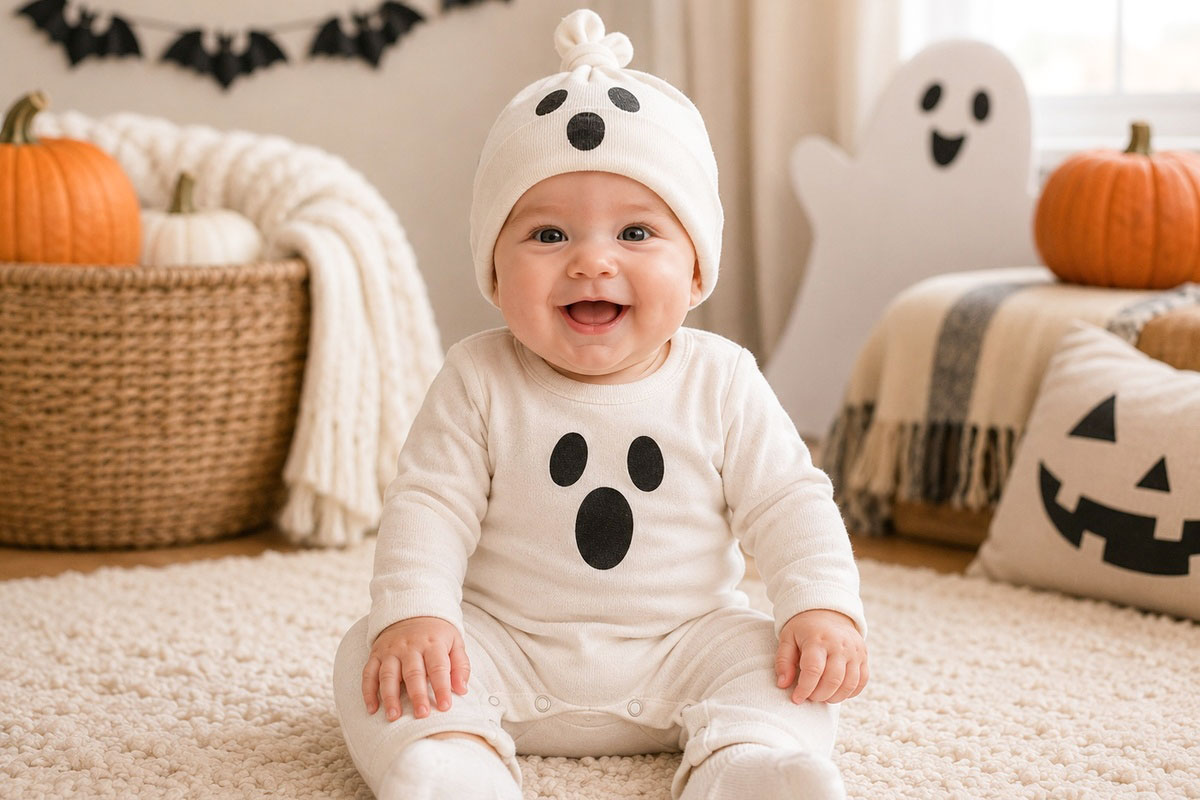
For easier Halloween photos, look for:
- One main costume color that shows clearly against the background
- A simple front detail such as a pumpkin face, animal tummy or contrasting collar
- Soft ears or a small hat that does not hide the baby's eyes
- Costume pieces that stay in place without constant adjusting
- An outfit that still reads as a costume when the baby is sitting or being held
For handmade newborn outfits created with pictures in mind, browse these baby costumes that double as photo props.
Skip busy backgrounds and piles of Halloween props around a very young baby. A simple setting keeps the photograph focused on the costume and the baby's face, and there is less around little hands to grab.
If you want a keepsake from the day after the costume comes off, the Baby Halloween Crafts page has ideas that belong to that side of the celebration. For costume photos, though, simple usually gives you the picture you were hoping for.
Take a few photos early, while the baby is comfortable and the costume is still neatly arranged. There is no prize for getting the perfect picture after everyone is tired.
Halloween Costume Safety for Newborns and Infants
For a baby, costume safety is mostly about keeping the outfit simple and making sure nothing interferes with normal movement, breathing, feeding or being securely buckled into a car seat.
Check the costume from the baby's point of view. Decorative cords, loose bows, long ties and dangling pieces do not belong near the neck or face. Skip small detachable decorations that can come loose, and make sure hats and hoods stay clear of the eyes, nose and mouth.
Before Halloween, check that the costume:
- Fits without pulling tightly around the neck, wrists or ankles
- Keeps fabric and costume pieces away from the baby's nose and mouth
- Does not have loose or easily detached decorations within reach
- Allows the baby's arms and legs to move normally
- Does not have long tails, capes or fabric that can become tangled under a crawling baby
- Can be removed quickly if the baby becomes too warm or uncomfortable
- Leaves diaper changes, feeding and ordinary handling reasonably easy
Car seats need a separate costume check. A bulky or padded Halloween costume can interfere with the way the harness fits. In the United States, the National Highway Traffic Safety Administration's infant car seat guidance explains that bulky clothing or blankets can prevent a snug harness fit and recommends buckling the baby correctly before placing coats or blankets over the harness.
That means a puffy pumpkin suit, thick animal costume or heavily padded bunting may need to come off before the baby goes into the car seat. Dress the baby in clothing that allows the harness to fit correctly, buckle the harness according to the car seat instructions, and add warmth over the secured harness when needed.
Also check the instructions for your own car seat. Costume accessories, extra padding or other items should never be placed underneath or behind the baby unless the car seat manufacturer specifically allows them.
Halloween does not have to last all evening for a baby. A short stretch in costume, a few photographs and comfortable clothes afterward can be a perfectly good first Halloween.
Frequently Asked Questions About Newborn and Infant Halloween Costumes
What is a good Halloween costume for a newborn?
A soft sleeper, romper or bodysuit-based costume is a good place to start. Look for something that is easy to put on, gives you quick diaper access and does not add bulky fabric around the baby's face, neck or back. Pumpkin, bat, cat and simple woodland animal outfits can all work with very few extra pieces.
What should a 0 to 3 month old baby wear for Halloween?
Choose a lightweight costume that works well while the baby is being held. A soft one-piece outfit with a simple hat or hood can create the Halloween look without large wings, stiff skirts, long tails or other pieces that bunch up against the person carrying the baby.
What should a baby wear for a first Halloween?
Baby's first Halloween costume can be as simple as a comfortable romper or sleeper in recognizable Halloween colors. Add one clear costume feature, such as soft ears, a small hat or a simple fabric detail. You can take the photographs while the full outfit is together and remove the extra piece afterward.
Can an infant Halloween costume be worn in a car seat?
Only if the costume allows the car seat harness to fit the baby correctly. Thick, padded or bulky costumes can interfere with a snug harness fit and should be removed before buckling the baby into the seat. Follow the instructions for your particular car seat and use normal clothing beneath the harness.
How do I choose a Halloween costume for a crawling baby?
Keep the hands, knees and feet clear. Avoid long capes, trailing skirts, loose tails and oversized costume feet that can slide underneath the baby. A short romper or bodysuit-based costume gives a crawling infant more freedom to move.
How can I make an infant Halloween costume easier for diaper changes?
Look for snaps along the crotch or legs, a zipper that opens far enough to reach the diaper, or separate tops and bottoms. Try one diaper change in the complete costume before Halloween. If several layers have to come off, simplify the outfit.
How should I dress a baby for Halloween in cold weather?
Use light layers that can be added or removed as the baby moves between indoors, outdoors and the car. Avoid depending on a thick padded costume for warmth, particularly when the baby will also ride in a car seat.
What works for a baby Halloween costume in warm weather?
Start with lightweight baby clothing and keep the decorative layer minimal. A short-sleeve bodysuit, breathable romper or simple one-piece costume can give you the look without heavy fleece, thick padding or a full head covering.
What should I check before buying an infant Halloween costume online?
Check the manufacturer's size chart against your baby's current measurements, then look at the fabric, closures, diaper access, care instructions, securely attached costume pieces and return policy. Do not assume that sizing up is automatically better. Extra fabric can bunch around a baby who is being carried or crawling, so choose the size that allows comfortable movement and the layers you actually plan to use.
Does an infant Halloween costume need shoes?
No. Decorative costume shoes are not necessary, especially for a baby who is not walking. Use whatever is comfortable and appropriate for the baby's normal activity and surroundings rather than adding oversized costume feet just to complete the character.
Keep Baby's First Halloween Simple
The costume does not have to do all the work. A comfortable baby in a simple pumpkin romper, little animal outfit or soft Halloween sleeper can make a better first Halloween memory than an elaborate costume that only lasts a few uncomfortable minutes.
Choose the idea that fits your baby's age and the way the evening will actually unfold. Think about being carried, sitting or crawling, easy diaper changes, the weather and how quickly extra costume pieces can come off. If the outfit passes those tests, you can concentrate on the pictures, the family visit and enjoying the occasion.
And when you are ready for more possibilities beyond the newborn and infant stage, browse the complete Baby Halloween Costume Ideas collection.


When you click on links to various merchants on this site and make a purchase, this may result in this site earning a commission. This does not affect the price you pay.

UBGI Gold Standard 2026
Reviewed under the site's
editorial checklist.
About Jan | Contact | Baby Nursery Ideas (Blog) | Site Map | Privacy Policy | Disclosure Policy | Disclaimer | Affiliate Disclosure | Earnings Disclosure | Facebook | Pinterest
I am a participant in the Amazon Services LLC Associates Program, an affiliate advertising program designed to provide a means for us to earn fees by linking to Amazon. As an Amazon Associate I earn from qualifying purchases.
Copyright © 2006-2026. All Rights Reserved.