Crib Screws: Replacement Screws for Baby Cribs
Crib screws are the small bolts and machine screws that hold the crib frame together at the rails, ends, and mattress support connections. When one screw is missing or replaced with the wrong size, the crib may not tighten correctly and the frame can become less stable. Matching the correct crib screws is important because the original hardware was designed to keep the crib structure square, secure, and properly assembled.
Trying to match crib screws before buying the wrong size? Check these first:
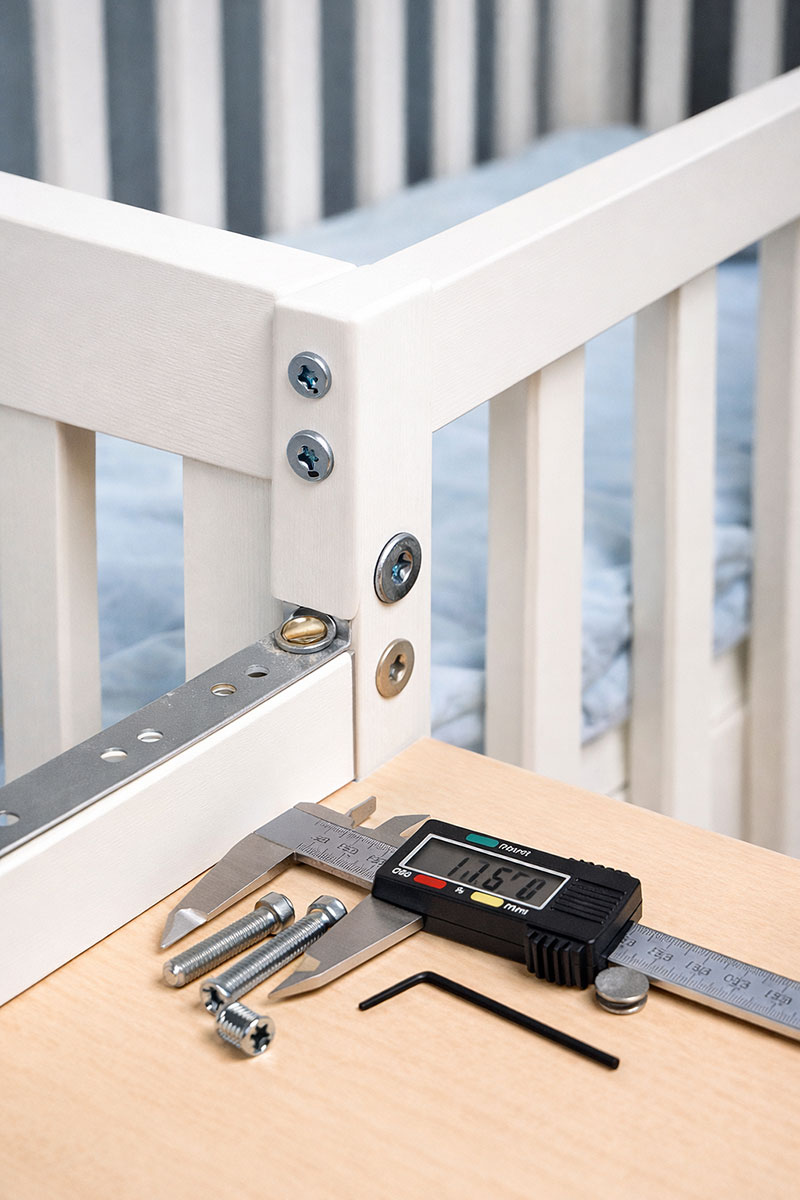
See a recommended digital caliper for measuring crib screws
Jump to a section:
Quick answer: Crib screws are the bolts and machine screws that hold the crib frame together at the sides, mattress support, and end panels. The safest replacement is the exact size, thread pattern, length, and head style originally used by the crib manufacturer. Even a small difference in screw size can prevent the crib frame from tightening correctly.
It usually starts with a small moment during crib assembly. One screw rolls off the table. Another is missing from the bag. Suddenly the crib frame is almost finished, but one corner will not tighten.
Crib screws may look like humble hardware, but they are part of the structural system that keeps the crib stable. These fasteners hold the rails, end panels, and mattress support together so the crib frame stays square and tight during everyday use.
The right screw is not optional.
Many parents only discover this after a move, during reassembly, or when a hand-me-down crib comes with a small pile of mixed hardware that all looks close enough.
For the main parts reference page, start here:
Common Crib Screw Types Parents See Most
Most cribs use more than one type of screw or bolt. Each one supports a different connection point in the frame.
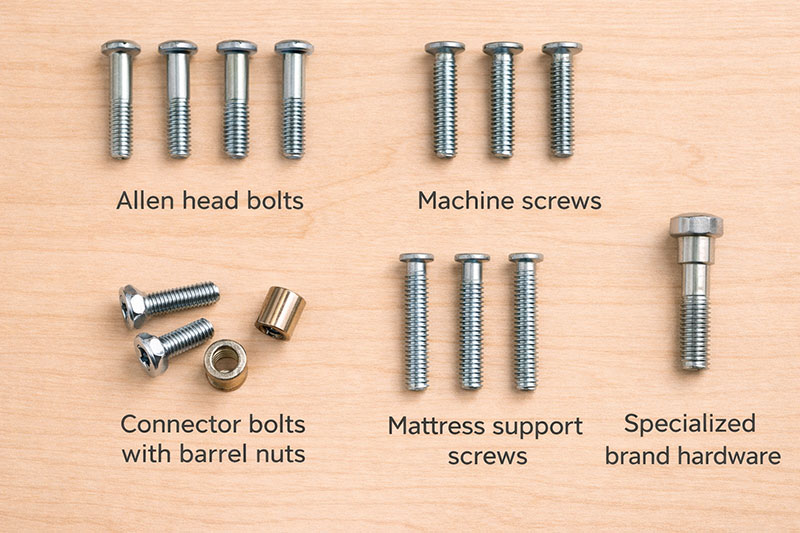
Allen head bolts. These are common on crib side rails and end panels. They use a hex key and usually tighten into inserts or connector hardware.
Machine screws. These are threaded screws often used with brackets, metal plates, or other fixed connection points.
Connector bolts with barrel nuts. One bolt passes through the crib frame and tightens into a round barrel nut hidden inside the rail.
Mattress support screws. These secure the metal mattress support frame to the crib ends, which is explained further in the crib mattress support guide.
Brand-specific hardware. Some crib makers use shoulder bolts or exact screw lengths designed only for that model.
This is where many people get stuck. Several screws can look nearly identical on a table and still perform very differently once installed, which is why the crib hardware identification reference can help sort out similar-looking pieces.
If your hardware bag is incomplete or the screws have been mixed together, these pages can help narrow things down:
how to measure crib screws correctly
How to Match Crib Screws Safely
Matching crib screws correctly takes more than checking length. Four details need to line up for the connection to tighten the way the crib was designed to tighten.
Length. Measure from the underside of the screw head to the end of the threads.
Diameter. The shaft thickness must match the threaded insert or barrel nut inside the crib.
Thread pattern. Two screws can look alike and still use different thread pitch.
Head style. The head shape needs to sit correctly against the crib surface so pressure spreads evenly.
A lot of problems begin when someone tries to match a missing screw by eye at a hardware store. It may seem close, but the threads do not seat well or the joint never pulls fully together.
The finished result should look simple and clean. The rails sit flush, the frame pulls together evenly, and the hardware tightens smoothly without force.
For brand-specific help, see:
Simmons crib replacement screws
Can you replace crib screws with hardware store screws
Why Hardware Store Screws Can Be Risky
Many parents assume any machine screw with the right width will work in a crib frame. Unfortunately, crib hardware is not reliably universal.
Several problems can happen when a generic screw is substituted.
The thread pitch may be wrong. A screw can feel tight while slowly damaging the insert.
The screw may be too long. It can bottom out before the joint closes fully.
The screw may be too short. It may not catch enough threads to hold securely.
The head shape may not seat properly. That can leave pressure uneven across the joint.
This often shows up with used cribs when the original hardware bag is gone and a replacement is chosen only because it looks similar.
In the United States, crib designs must meet federal safety standards established by the Consumer Product Safety Commission. Hardware that does not match the original design can interfere with the tested connections that help keep a crib stable.
For official safety guidance, see:
When to Stop and Identify the Crib Model
Sometimes the safest step is to stop the assembly and confirm the crib model before replacing any screw.
Pause and verify the crib if:
The hardware bag contains mixed screws.
A screw tightens but the rail still feels loose.
The threaded insert spins or strips.
The crib came from storage or a second-hand purchase.
More than one screw is missing.
This is common after moves, storage cleanouts, and hand-me-down nursery setups where original parts were separated years ago.
If the crib has a drop-side or movable-side design, it should not be repaired or used. Older drop-side cribs were banned from sale in the United States because of safety hazards.
If you need help identifying the crib or locating assembly details, start with:
Crib Screws Checklist Before Reassembly
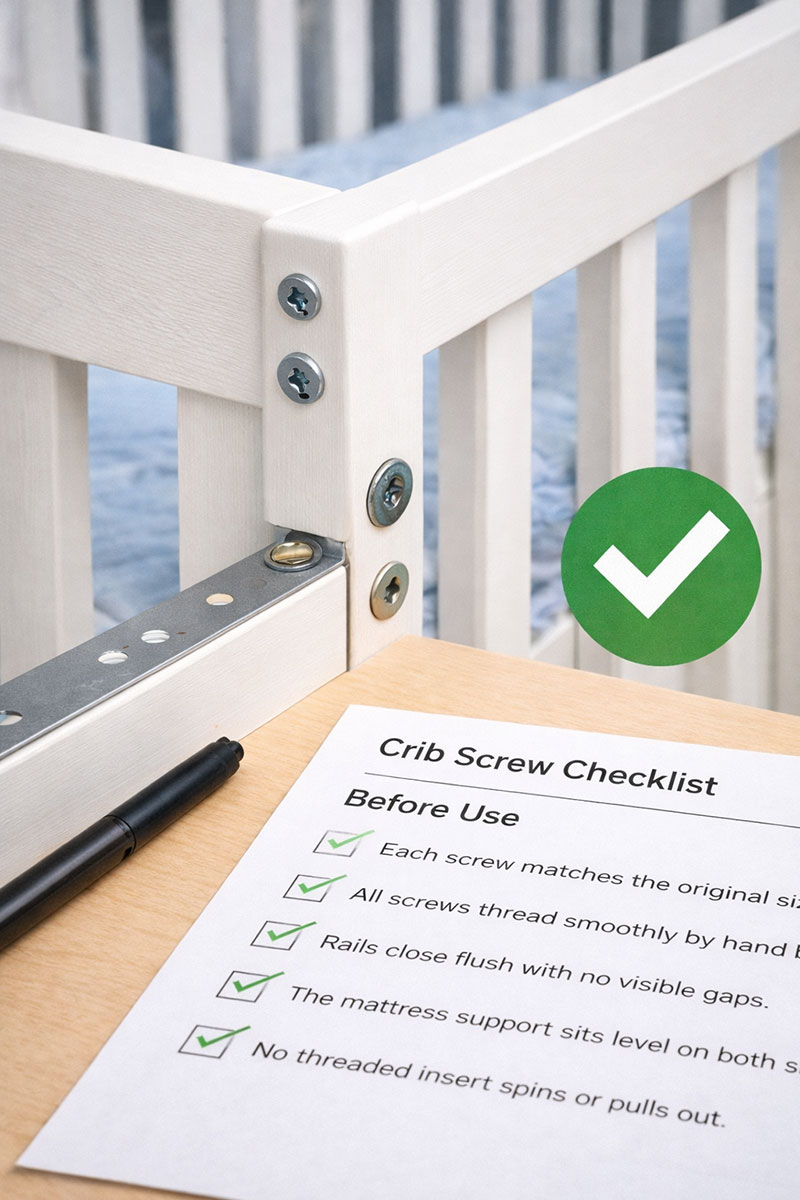
Before placing a mattress in the crib, check the hardware carefully.
Each screw matches the original size.
All screws thread smoothly by hand before tightening.
Rails close flush with no visible gaps.
The mattress support sits level on both sides.
No threaded insert spins or pulls out.
Every connection uses the correct paired hardware.
The finished crib should look square, solid, and evenly tightened at every corner.
Why Crib Screws Matter More Than They Look
Crib screws are small parts, but they hold the frame together. Using the correct size, thread pattern, length, and head style helps the crib tighten the way the manufacturer intended.
When the hardware matches correctly, the frame pulls together evenly and the rails stay stable through normal use.
Crib screws are the small bolts and machine fasteners that hold crib frames together at the rails, ends, and mattress support. The safest replacement is the exact original size and thread pattern designed for that crib model. Using the wrong screw size can keep the frame from tightening properly and may weaken the connection over time.
FAQ About Crib Screws
Are crib screws universal?
No. Most crib screws are not universal. Small differences in length or thread pitch can prevent the hardware from tightening correctly.
Can I use hardware store screws in a crib?
Only if the screw matches the exact size, thread pattern, and head style of the original crib hardware. A similar-looking substitute can still be wrong.
What if a crib screw is missing?
Do not use the crib with missing hardware. Identify the crib model and replace the screw with the correct match before assembly.
How do I measure crib screws?
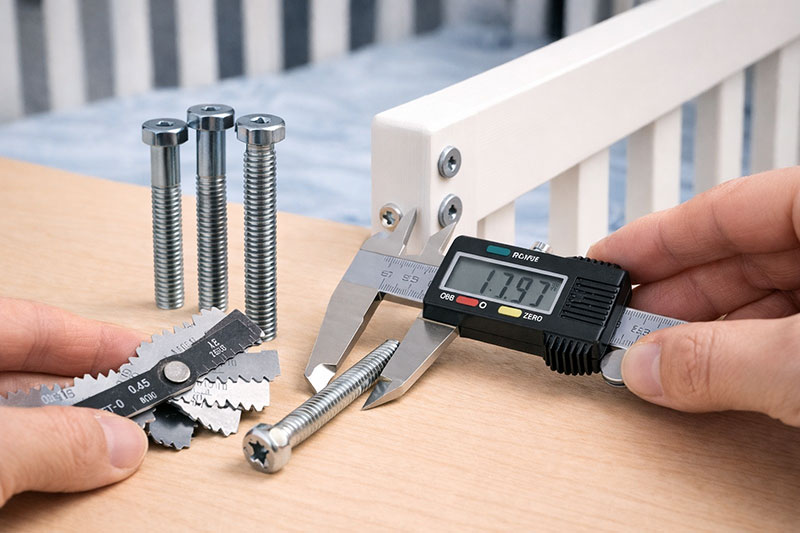
The best method is measuring length, diameter, and thread pattern with a caliper or thread gauge. This guide explains the process:
How to measure crib screws correctly
Can I repair an old drop-side crib with new screws?
No. Drop-side cribs should not be repaired or used. Modern safety standards require fixed sides for crib stability.
When you click on links to various merchants on this site and make a purchase, this may result in this site earning a commission. This does not affect the price you pay.

UBGI Gold Standard 2026
Reviewed under the site's
editorial checklist.
Photos, decorating ideas, party setups and reader submissions are shared for inspiration unless a page is specifically presented as a pattern, tutorial, reference guide or step-by-step project. Follow the instructions, measurements, safety guidance and manufacturer directions provided for the particular project or product.
About Jan | Contact | Baby Nursery Ideas (Blog) | Site Map | Privacy Policy | Disclosure Policy | Disclaimer | Affiliate Disclosure | Earnings Disclosure | Facebook | Pinterest
I am a participant in the Amazon Services LLC Associates Program, an affiliate advertising program designed to provide a means for us to earn fees by linking to Amazon. As an Amazon Associate I earn from qualifying purchases.
Copyright © 2006-2026. All Rights Reserved.