Winnie the Pooh Curtains for Nursery Rooms
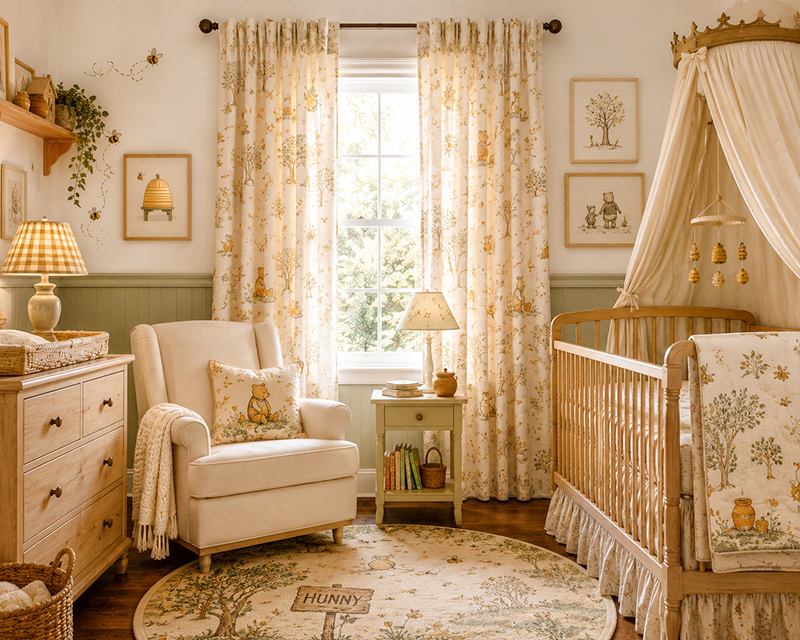
It's funny how often Winnie the Pooh curtains for nursery rooms become the first thing people notice. The bedding is picked. The art is hung on the wall. Then a pair of heavily printed curtains goes up and suddenly the window is what steals the show. I believe the window should support the Classic Pooh theme, not tell the whole story by itself.
By Jan Bay
Plan the nursery window:
Get the look:
Jump to the curtain idea you need:
Quick Answer: If you're searching for Winnie the Pooh curtains for a nursery, a more polished approach is to use honeybee prints, honeycomb patterns, warm yellow linen, sage green, woodland motifs, gingham, and layered window treatments. These choices create a familiar storybook atmosphere while giving the nursery a look that's easier to update as your child grows.
That's why I prefer decorating around the world of the classic books instead of making the curtains carry every detail. Bees, honeycomb patterns, woodland branches, warm golden tones, woven textures and simple fabrics still make people think of Pooh, yet the room has its own personality instead of looking like it came out of a box.
Sometimes what you leave out makes the theme better.
Once you stop looking for curtains covered in characters, your choices multiply. Upholstery fabrics, quilting cottons, linen blends and even home décor prints suddenly become possibilities. You can also choose the exact curtain length, fullness and light control your nursery needs instead of settling for whatever happened to be included with a bedding collection.
That flexibility also makes the room look more thoughtfully designed. A honeybee print paired with a woven Roman shade, a narrow honeycomb valance above ivory curtain panels, or sage gingham beside natural wood furniture all suggest the same storybook inspiration without repeating identical artwork from wall to wall.
Room darkening curtains are worth considering before you choose decorative fabric. It's much easier to add a themed panel over a neutral liner than to discover later that afternoon naps are interrupted because the window treatment lets in too much light.
How to Elevate a Classic Pooh Nursery With Custom Window Treatments
A Classic Pooh nursery can look very different depending on what happens at the window. Matching curtains may check the theme box, but custom window treatments make the room look planned. That does not have to mean expensive. It means choosing fabric, layers, length and trim with the whole room in mind.
I would start with the window’s job before choosing the pattern. Does the nursery need darkness for naps, privacy from a street-facing window, or just a finished look above a shade? That answer matters because the prettiest valance in the world will not help if afternoon sun lands directly across the crib mattress.
A more polished Pooh-inspired window might use one small themed fabric and one quiet support fabric. For example, honeybee panels over ivory blackout liners, a honeycomb valance above plain linen curtains, or sage gingham side panels next to a woven shade. The finished result looks collected instead of bought in one package.
For the base layer, my nursery window treatments page is the best place to compare panels, shades, valances and layered options before you commit to one style.
Best Fabrics for Pooh-Inspired Nursery Curtains
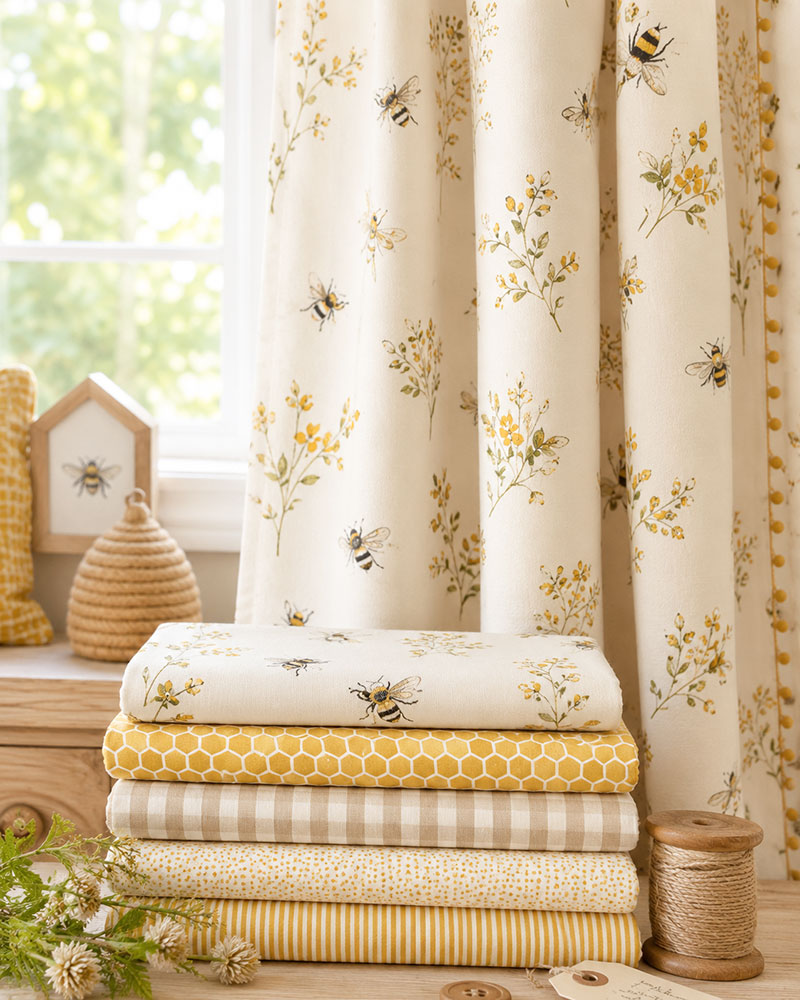
The fabric choice is where the room gets interesting. If you're planning Winnie the Pooh curtains for nursery spaces, honeybee cotton is the most obvious choice, but it is not the only one. A tiny honeycomb print, muted gingham, ticking stripe, small woodland branch pattern, linen blend, or warm woven texture can all work with a Classic Pooh nursery.
Small prints are easier to live with than large novelty designs. They read better from across the room, they photograph better, and they do not fight with crib bedding or wall art. A small bee print can look charming on full-length panels. A larger honeycomb pattern may be better as a valance, tie-back, or narrow trim.
Many nurseries run into trouble when every fabric has the same visual weight. If the curtains are patterned, let the crib sheet or changing pad cover stay quiet. If the bedding already has a print, use the window for texture instead. Linen, cotton duck, muslin, waffle weave and woven shades can all support the theme without adding another busy surface.
Get the look:
If you are sewing the curtains yourself, order a fabric sample before buying yardage. Nursery light changes fabric color more than people expect. Yellow can turn too bright in southern light, while beige can look dull in a shaded room. A sample taped near the window for a day tells you more than any online product photo.
The best fabric choice is the one that looks intentional in daylight and still makes sense when the nursery lights are on at night. That is why I would rather see one honeybee print used carefully than three matching pieces fighting for attention. A curtain should help the room look finished, not make it look assembled from a package.
Choosing Colors for Winnie the Pooh Curtains for Nursery Rooms
Color often determines whether a Classic Pooh nursery stays balanced or begins competing with itself. I would be careful with yellow. A little honey yellow near the window is plenty, while a full wall of bright yellow curtain fabric can quickly dominate the room, especially in afternoon sun.
Warm yellow, wheat, ivory, oatmeal, sage green, mushroom, clay, tan and antique white give you far more flexibility. They hint at honey, woodland paths and well-loved storybooks without asking every piece in the nursery to match exactly.
If the walls are already yellow, I would skip yellow curtains. Before long the entire wall reads as one large block of color and the window loses its importance. Ivory panels with bee trim, sage gingham or a honeycomb valance separate the layers while keeping the palette connected.
For a baby girl nursery, you can introduce a little blush through ribbon trim, a narrow check or a floral accent without covering the entire window in pink. My pink nursery curtains page shares several ways to work that color into a nursery without letting it take over.
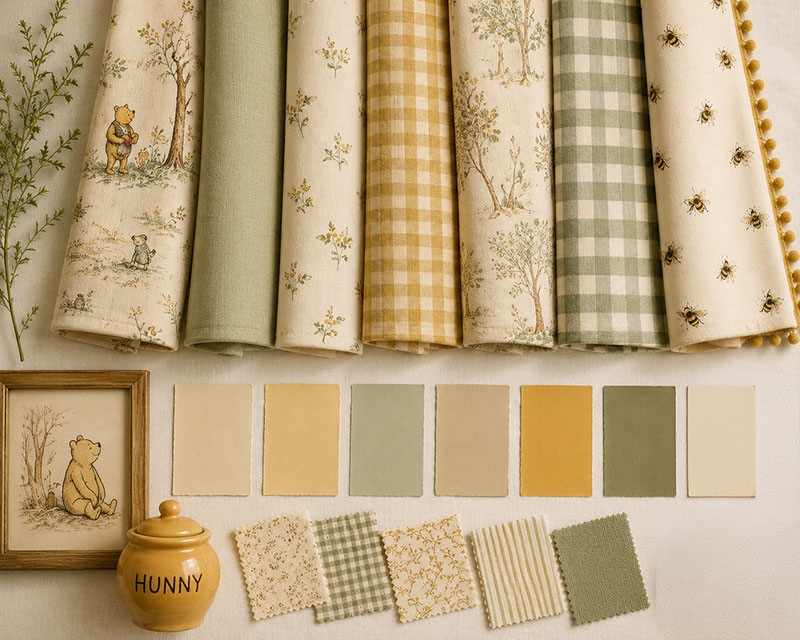
For a baby boy nursery, sage green and warm tan often stay current much longer than bright primary yellow. A sage check beside wood furniture has a timeless quality, while tan linen panels can remain in the room long after the nursery theme changes.
If you are ordering custom curtains, ask for a little extra fabric. It can be used later for matching tiebacks, a cornice board, a small accent pillow or even a lampshade. Buying everything from the same dye lot makes those additions much easier if the fabric is eventually discontinued.
One detail that's easy to overlook is the curtain hardware. A simple wood rod or an antique brass finish fits this decorating style much better than shiny chrome. It's a small decision, yet it helps the window feel like it belongs with the rest of the nursery instead of standing apart from it.
Valances for Winnie the Pooh Curtains for Nursery Windows
A valance can be the smartest choice for Winnie the Pooh curtains for nursery windows that are short, narrow or positioned above a dresser. Full curtain panels are not always practical in smaller rooms. A valance lets you introduce the theme at eye level without adding fabric where it can bunch behind furniture or become awkward to use.
The prettiest Pooh-inspired valances keep the idea simple. Honeycomb fabric with plain panels. Bee trim on a linen topper. Sage gingham over a woven shade. Once too many fabrics compete for attention, the eye doesn't know where to settle and the window loses much of its charm.
For a gathered valance, I would keep the fullness moderate. Too much fabric can crowd a nursery window, especially with a small print. About one and a half times the window width produces crisp folds, while twice the width creates a more relaxed cottage appearance.
If you are still choosing the shape, my nursery window valance ideas page can help you compare gathered, tailored, box pleat and simple rod pocket styles before you buy fabric.
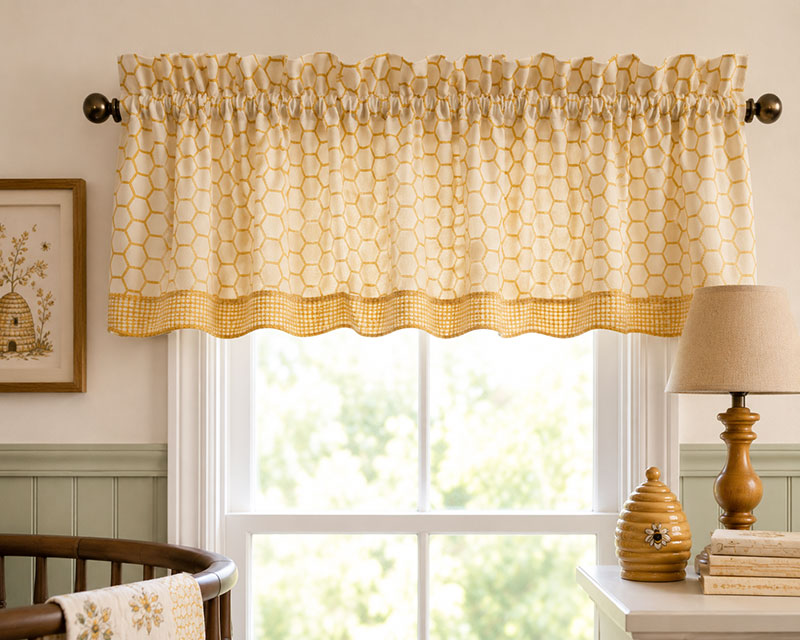
One detail I think is worth planning is the hanging height. Mounting the rod several inches above the window helps the ceiling appear taller and lets in more daylight. Visitors may never figure out exactly why the nursery seems so polished, but this is often one of the reasons.
Layering Blackout Curtains Behind Winnie the Pooh Curtains for Nursery Rooms
Many nurseries need blackout curtains, but that doesn't mean the decorative fabric has to do all the work. I believe the best solution is to separate function from style. Let a neutral blackout panel control the light while the outer curtain or valance provides the personality.
That approach also gives you more flexibility later. If your decorating style changes, you can replace the outer panels without buying another set of blackout curtains. It's one of those decisions that saves money without looking like a compromise.
White, ivory and oatmeal blackout panels disappear surprisingly well behind patterned curtains. During the day they stay in the background, and at bedtime they quietly do their job without competing with the rest of the nursery.
For a closer comparison of lining options, my guide to blackout curtains vs. room darkening curtains explains when each choice makes the most sense.
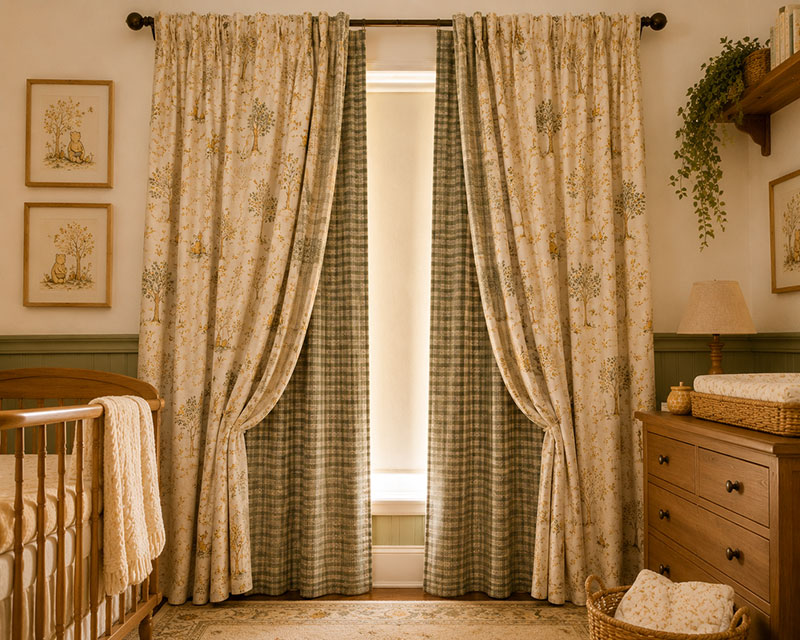
If the nursery faces east, test the curtains during the baby's usual morning wake-up time before shortening or hemming them. The amount of light coming around the edges can be very different at seven o'clock than it appears in the middle of the afternoon.
DIY Winnie the Pooh Curtains for Nursery Rooms
You don't have to be an experienced seamstress to make curtains that look professionally finished. Straight curtain panels are one of the easiest nursery sewing projects because most of the work involves measuring carefully, pressing the hems and sewing long, straight seams.
Start by measuring from the curtain rod to the point where you want the fabric to end. Add extra length for the top rod pocket or rings and for the bottom hem. Before cutting the fabric, check both sides of the window. Older homes often have floors that are slightly uneven, and measuring only one side can leave the finished curtains looking crooked.
If you're using patterned fabric, buy a little more than the measurements suggest. Matching honeycomb rows or bee prints across both curtain panels often takes extra yardage, but the finished result is worth it.
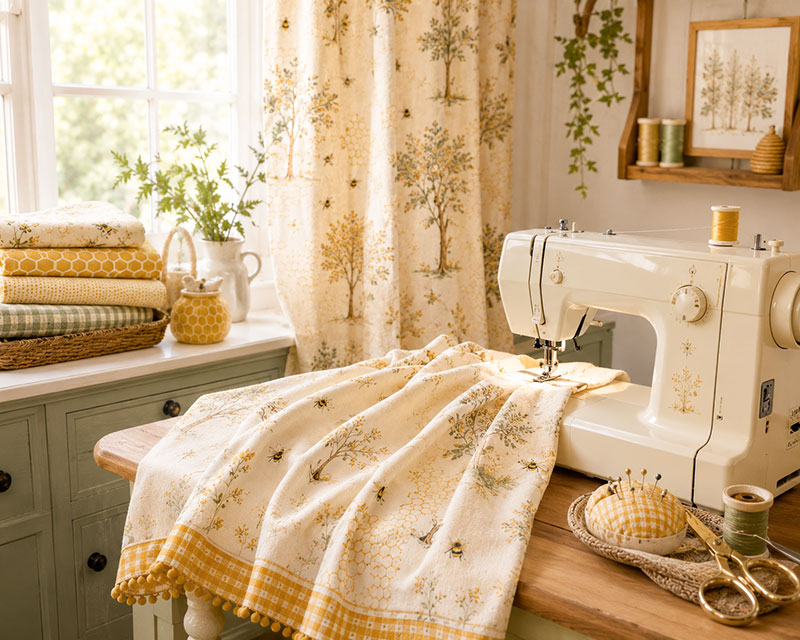
If sewing isn't your favorite project, consider having a local workroom make the panels after you've chosen the fabric. In many cases the sewing cost is less than replacing ready-made curtains that never fit the window correctly.
Sometimes the difference between an ordinary nursery and one people remember isn't the theme at all. It's the fact that every piece looks like it belongs together.
Winnie the Pooh Curtains for Nursery FAQ
Can I still decorate with Winnie the Pooh without buying a matching bedding set?
Absolutely. In fact, I think it produces a more interesting nursery. Choosing curtains, bedding, artwork and accessories one piece at a time lets each piece contribute something different. Repeat a few colors or honey-inspired details and the room naturally comes together without looking overly matched.
What curtain length works best in a nursery?
Floor length curtains generally create the most finished appearance, provided they cannot be reached from the crib. If furniture sits beneath the window, a tailored valance or Roman shade is often a better choice than trying to force full panels into a tight space.
Should nursery curtains match the crib bedding?
No. Coordinating almost always produces a more interesting nursery than exact matching. Repeat one or two colors, a honeybee motif or a honeycomb pattern, then let the remaining fabrics add variety instead of repeating the same print everywhere.
Are blackout curtains necessary for every nursery?
Not always. The answer depends on the amount of natural light, your baby's sleep habits and the direction the window faces. Many families find that layering decorative curtains over neutral blackout panels provides the best balance between appearance and function.
Can I make Pooh-inspired curtains myself?
Yes. Straight curtain panels and gathered valances are both beginner-friendly sewing projects. If you choose quality fabric, press every seam carefully and hang the finished panels correctly, homemade curtains can look every bit as polished as custom-made ones.
Whether you choose honeybee fabric, honeycomb prints, gingham or woven linen, think about how the window fits into the entire room. When the fabrics, colors and textures support one another, the nursery looks collected, comfortable and thoughtfully planned instead of relying on one oversized themed print.
If you're still comparing options, start with my nursery curtain ideas, then browse additional nursery window treatments. If you decide a valance is the better solution, don't miss these nursery window valance ideas before choosing your fabric.
A nursery changes quickly during the first few years, but thoughtfully chosen window treatments rarely need to. That's one reason I enjoy building the room around timeless fabrics instead of short-lived trends.
For general information about window covering safety around young children, see the U.S. Consumer Product Safety Commission's Window Covering Safety guidance.


About Jan | Contact | Baby Nursery Ideas (Blog) | Site Map | Privacy Policy | Disclosure Policy | Disclaimer | Affiliate Disclosure | Earnings Disclosure | Facebook | Pinterest
I am a participant in the Amazon Services LLC Associates Program, an affiliate advertising program designed to provide a means for us to earn fees by linking to Amazon. As an Amazon Associate I earn from qualifying purchases.
Copyright © 2006-2026. All Rights Reserved.