Changing Table Dresser vs Separate Changing Table: Which Makes Sense?
A changing table dresser usually makes more sense because it gives you a changing spot now and a regular dresser later. It also gives you extra storage, which starts to matter fast once diapers, wipes, sleepers, and blankets pile up. A standalone changing table can still work better in a small or awkward nursery where a full dresser feels too bulky. Most parents are not really choosing between two places to change a diaper. They are deciding whether they want one piece of furniture to do two jobs or whether they have room for a separate changing station.
Quick answer: Choose a changing table dresser if you want one piece that handles storage and diaper changes and still works later as a regular dresser. Choose a separate changing table if your nursery is tight, you already have storage elsewhere, or you only want a simple short-term changing setup.

Jump to the part that matches your question:
What Is a Changing Table Dresser? How Is a Separate Changing Table Different? A 10-Second Way to Choose Which Option Fits Your Life Better? Which Option Saves More Space? Does Height and Comfort Matter? Are Both Options Safe? Which Choice Do Parents Regret? How Do You Decide Without Regret?What Exactly Is a Changing Table Dresser and How Does It Work?
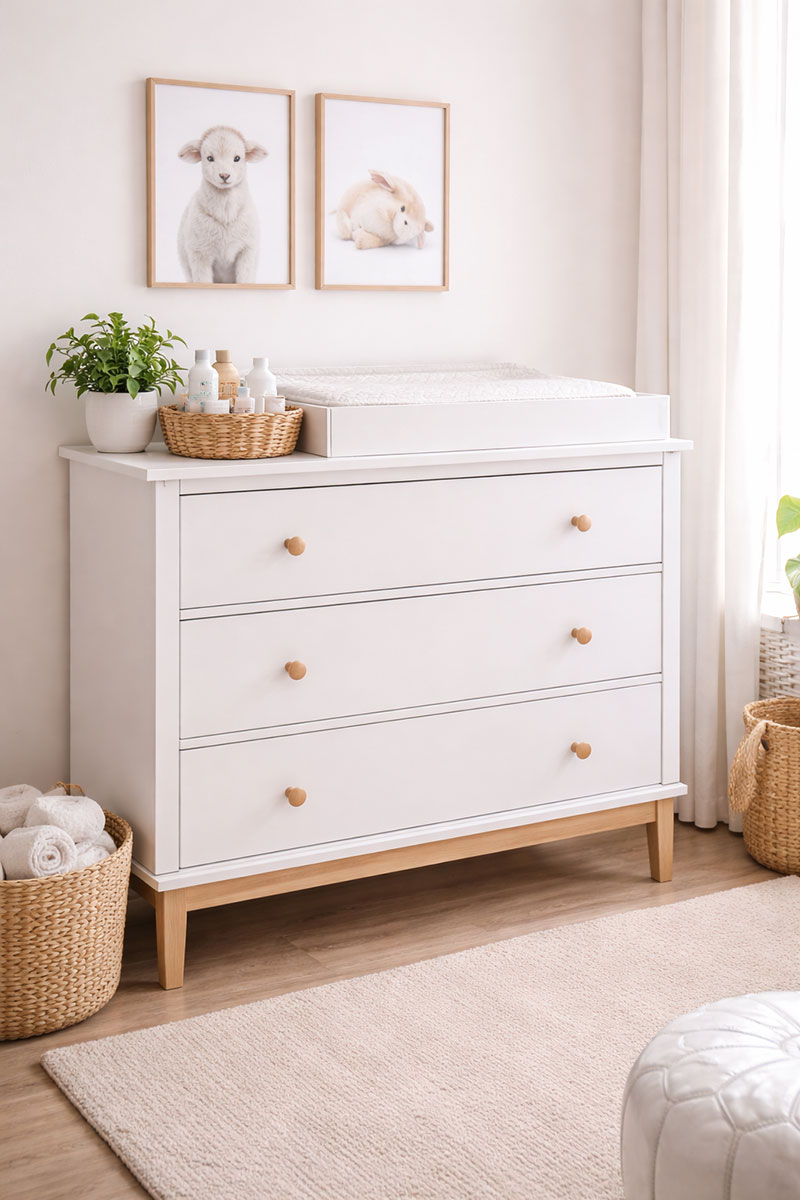
A changing table dresser is a standard nursery dresser that includes a secure changing surface on top. Some models come with a removable tray that sits on the dresser. Others are designed with a raised edge or guard rail built directly into the top surface to help hold a contoured changing pad in place. The goal is to combine clothing storage and diaper changing in one solid piece of furniture so you do not need two separate units in the room.
Definition: A changing table dresser is a multi use nursery dresser designed to support a contoured changing pad safely on its top surface while also providing drawer storage below for baby clothes, blankets, and daily essentials.
This design appeals to many parents because it feels practical. You are already planning to store clothing somewhere. Instead of adding a separate diaper station, you use the top of the dresser as your changing area. That keeps wipes, diapers, and outfits all within arm’s reach during changes.
Unlike a standalone changing table, this piece is designed to stay in the room well beyond the diaper years.
After the diaper stage ends, the removable changing tray can be taken off. The dresser continues to function like any other bedroom dresser. It can move from nursery to toddler room to big kid room without looking out of place. That long lifespan is one of the biggest advantages of choosing a changing table dresser over a standalone changing table.
Another benefit is drawer organization. Deep drawers allow you to sort sleepers, onesies, socks, and swaddles in a way that open shelf changing tables cannot. For parents who prefer a clean and uncluttered nursery look, closed drawer storage can make the entire room feel calmer.
For a more detailed drawer-by-drawer setup, my nursery dresser organization ideas show how to keep diapers, wipes, baby clothes, and backup supplies arranged where they are easiest to grab.
That said, the dresser must be sturdy. It should be properly assembled and anchored to the wall according to manufacturer instructions to reduce tip over risk. Stability matters more than style when it comes to furniture used during diaper changes.
What Makes a Separate Changing Table Different?

A separate changing table is a standalone piece built only for diaper changes. It typically has a flat top sized for a changing pad and one or two open shelves underneath for diapers, wipes, and creams. Some models include small drawers, but most focus on quick access rather than long term clothing storage.
Because it is purpose built, a separate changing table can feel straightforward. Everything related to diapering stays in one defined area. Supplies are visible and easy to grab, which can be helpful during those early months when you are still learning a routine.
Separate changing tables are often smaller and lighter than dressers. That can make them easier to fit into tight corners. In very small nurseries, the compact footprint may be the deciding factor.
However, once your child outgrows diapers, the table may no longer serve a primary purpose. Some families repurpose it as a small storage shelf. Others remove it completely to create more open space in the room. Unlike a dresser, it does not automatically transition into long term bedroom furniture.
This option can feel simpler at first. It keeps the diaper station separate from clothing storage. But it may not reduce the total number of furniture pieces you need.
A 10-Second Way to Choose (No Overthinking)
Choose a changing table dresser when you want one solid piece that handles storage and changing in the same spot, and you plan to keep it after diapers.
Choose a separate changing table when your nursery is very tight, you need a smaller footprint right now, or you already have a dresser that cannot safely support a changing setup.
Still torn? Use this quick tie breaker:
- If you will buy a dresser anyway, the dresser-top changing setup usually wins because it reduces “extra furniture.”
- If your walking path is already tight (door swing, closet clearance, crib clearance), a slim standalone table can be the smoother fit.
- If you hate visual clutter, closed drawers usually feel calmer than open shelves.
Blunt truth: the “best” option is the one you can keep stocked and stable every day without feeling cramped.
Changing Table Dresser vs Separate Table: Which Option Fits Your Life Better?
Most parents do better with a simple match: one choice works best for storage-first homes, and the other works best for space-first rooms.
Pick a changing table dresser when:
- You already plan to buy a nursery dresser anyway
- You want closed storage so the room looks calmer
- You want one piece that still works after diapers
- You want clothes, wipes, and backup outfits within arm’s reach
Pick a separate changing table when:
- The room is tight and you need a smaller footprint
- You want open shelves for quick grab access
- You already have a dresser elsewhere for baby clothes
- You want the simplest short-term setup for the diaper stage
Reality check: If you need both a dresser and a diaper station, combining them usually saves space and reduces furniture clutter.
Which Saves More Space in a Small Nursery?
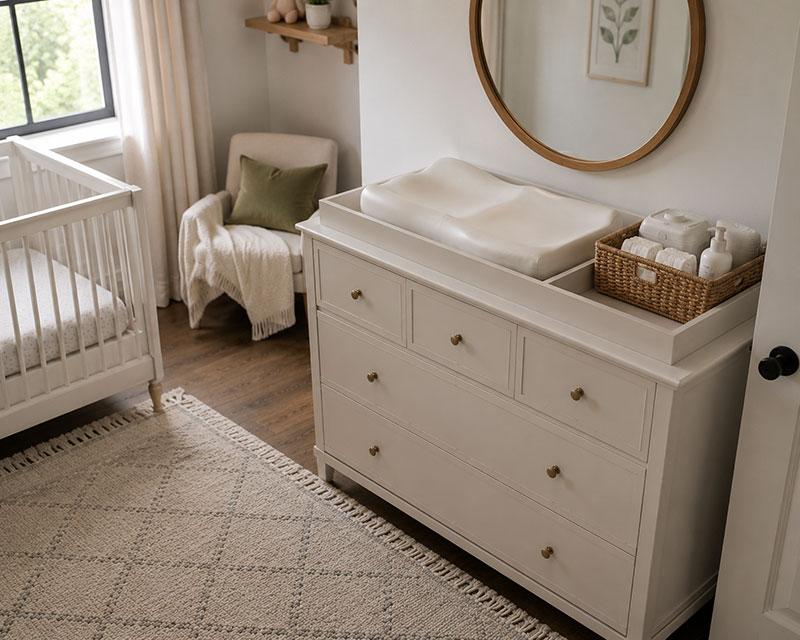
In small rooms, a changing table dresser usually wins because it reduces the number of large furniture pieces in the nursery.
For a clearer look at how those larger pieces should be arranged together, see nursery layout with crib and dresser.
The changing setup works better when the storage wall is chosen first, so this guide to where to put the dresser in a nursery can help you place the changing table dresser before adding baskets, pads, or extra supplies.
Fewer pieces can make walking paths clearer and reduce the cramped feeling that sometimes happens in tight layouts.
When planning furniture placement, think about door swings, closet access, and safe spacing around the crib. If you need help visualizing how pieces fit together, see my guide on nursery furniture layout to understand spacing and traffic flow.
A separate changing table can still work in very tight spaces where a full size dresser simply will not fit. In that case, you may need a small wardrobe or closet organizer to handle clothing storage instead. The key is thinking through the entire room, not just the diaper station.
Extra nursery supplies still need a place to go, and these under the crib storage ideas can help store diapers, sheets, blankets, and backup items without adding another dresser or changing table.
Extra nursery supplies still need a place to go, and these under the crib storage ideas can help store diapers, sheets, blankets, and backup items without adding another dresser or changing table.
For a wider view of how dressers, changing stations, and storage pieces fit into a complete nursery setup, browse the changing table dresser section inside my nursery furniture hub.
Does Height and Daily Comfort Matter More Than You Think?
Changing height affects your back more than most parents expect. Dressers are often taller than standalone changing tables. That can feel more comfortable for taller adults, but awkward for shorter caregivers.
Before choosing, measure from the floor to your elbow while standing naturally. A changing surface that lands a few inches below elbow height typically feels the most stable and reduces strain during late night changes.
Once you know the right height, it also helps to plan where to place a changing table in the nursery so the diaper station is easy to reach without crowding the crib, dresser, or main walking path.
Standalone tables are sometimes slightly lower and lighter. Dressers tend to feel heavier and more solid. Neither is automatically better. The more comfortable surface is the one that keeps you from hunching or lifting awkwardly multiple times a day.
Comfort is not a luxury detail. Diaper changes happen hundreds of times in the first year. Small ergonomic differences become noticeable very quickly.
Are Both Options Safe Under United States Standards?
Any furniture used for diaper changing must provide a stable and flat surface. The Consumer Product Safety Commission sets federal safety standards for full size cribs and other infant products in the United States. You can review official guidance at CPSC.gov.
While federal crib standards are clearly defined, dressers and changing tables themselves are primarily evaluated under furniture stability and tip-over guidance. Regardless of style, anchoring to the wall and using a secured changing pad reduces risk more than the specific furniture type chosen.
Always use a properly fitted contoured changing pad with a safety strap. Secure the pad to the surface according to the manufacturer’s instructions. Never leave a baby unattended during a diaper change, even for a few seconds.
If using a dresser as a changing surface, confirm it is sturdy and fully assembled. Wall anchoring is strongly recommended to reduce tip over risk. Many parents also consider finishes and certifications when selecting nursery furniture. You can read more about that in my article on do you really need a changing table.
Which Choice Do Parents Regret Later?
Regret usually happens when storage was underestimated or space was misjudged.
Parents who skip the dresser sometimes realize later they still need one, which means adding another large piece of furniture after the nursery is already arranged.
Parents who choose a dresser in a very tight room sometimes wish they had preserved more walking space.
The regret pattern is simple:
- If storage was already needed, combining functions tends to age better.
- If floor space was already limited, a smaller footprint usually feels smarter long term.
Most dissatisfaction comes from misjudging the room, not from choosing the “wrong” furniture type.
How Do You Decide Without Regretting It Later?
Ask yourself three practical questions before buying.
- Do you already plan to buy a dresser for the nursery?
- Is long term storage important to you?
- How much floor space do you realistically have?
If you answer yes to the first two, a changing table dresser is usually the smarter choice. It consolidates furniture and continues working long after diapers are gone. If space is extremely limited or budget is tight, a separate changing table may be sufficient for the short term.
Many parents prefer a secure contoured pad like this one:
For a broader overview of how dressers, cribs, storage pieces, and layout decisions work together, see my complete guide to baby gear essentials.
Contoured Changing Pad with Safety Strap
Keep the decision simple. Choose the option that fits your room, supports safe diaper changes, and continues serving your family beyond the first year. A changing table dresser combines storage and function in one piece. A separate table focuses only on diaper duty. Neither is mandatory. The best choice depends on space, budget, and how long you want the furniture to last.
When you click on links to various merchants on this site and make a purchase, this may result in this site earning a commission. This does not affect the price you pay.

UBGI Gold Standard 2026
Reviewed under the site's
editorial checklist.
Photos, decorating ideas, party setups and reader submissions are shared for inspiration unless a page is specifically presented as a pattern, tutorial, reference guide or step-by-step project. Follow the instructions, measurements, safety guidance and manufacturer directions provided for the particular project or product.
About Jan | Contact | Baby Nursery Ideas (Blog) | Site Map | Privacy Policy | Disclosure Policy | Disclaimer | Affiliate Disclosure | Earnings Disclosure | Facebook | Pinterest
I am a participant in the Amazon Services LLC Associates Program, an affiliate advertising program designed to provide a means for us to earn fees by linking to Amazon. As an Amazon Associate I earn from qualifying purchases.
Copyright © 2006-2026. All Rights Reserved.