Simple Chunky Crochet Blanket Free Pattern
By Jan Bay
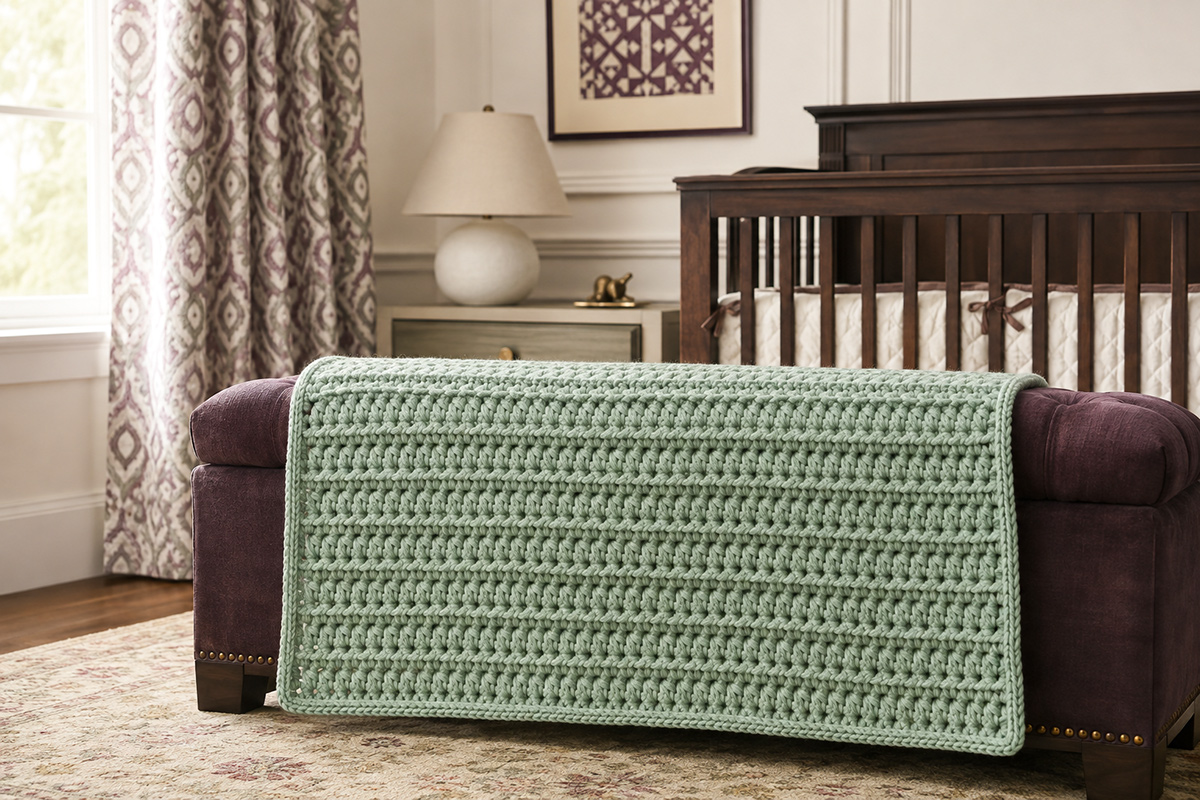
This simple chunky crochet blanket free pattern makes a 36-by-45-inch chunky crochet baby blanket using category 5 bulky yarn and one repeating half double crochet row. It includes the starting chain, stitch count, border instructions and gauge-based adjustments for stroller, lap and throw sizes.
Explore More Free Crochet Blanket Patterns
Fast Chunky Baby Blanket Pattern
Easy Ribbed Crochet Baby Blanket
Lightweight Crochet Baby Blanket
Choose Yarn for This Blanket
Jump to the Chunky Crochet Blanket Pattern
This is a simple blanket, not a two-hour shortcut: the 36-by-45-inch baby size still requires 70 stitches across and approximately 66 rows.
Finished Size and Pattern Overview
The main instructions make a chunky baby blanket that measures approximately 36 by 45 inches. It is large enough to cover a baby in a stroller or rest across an adult’s lap, yet it remains easier to handle than a full-size throw. Instructions for stroller and throw sizes are included later on the page.
This pattern uses a basic half double crochet stitch from beginning to end. There are no color changes, shaped sections or complicated repeats to keep track of. Once the first row is complete, each new row is worked the same way.
This is the adjustable category 5 half double crochet version. The fast chunky baby blanket pattern is a separate baby-size project with its own construction, stitch pattern and completion time.
- Finished size: Approximately 36 by 45 inches
- Skill level: Beginner
- Main stitch: Half double crochet
- Yarn weight: Bulky weight, category 5
- Construction: Worked flat in rows
- Turning chain: Does not count as a stitch
- Border: One simple round of single crochet
Chunky yarn creates a warm blanket with visible stitch definition, but it can also become heavy when the dimensions are enlarged. I recommend making the baby size first if you are new to working with bulky yarn. It gives you the satisfying texture without asking your hands to manage an enormous project.
Before You Begin
This pattern is calculated from a gauge of 8 half double crochet stitches and 6 rows per 4 inches. Make, wash and measure the gauge swatch before beginning the full blanket. Purchase enough yarn for the selected size from the same dye lot when possible. Yardage and row counts may change with the yarn, hook and individual tension.
Yarn, Crochet Hook and Materials
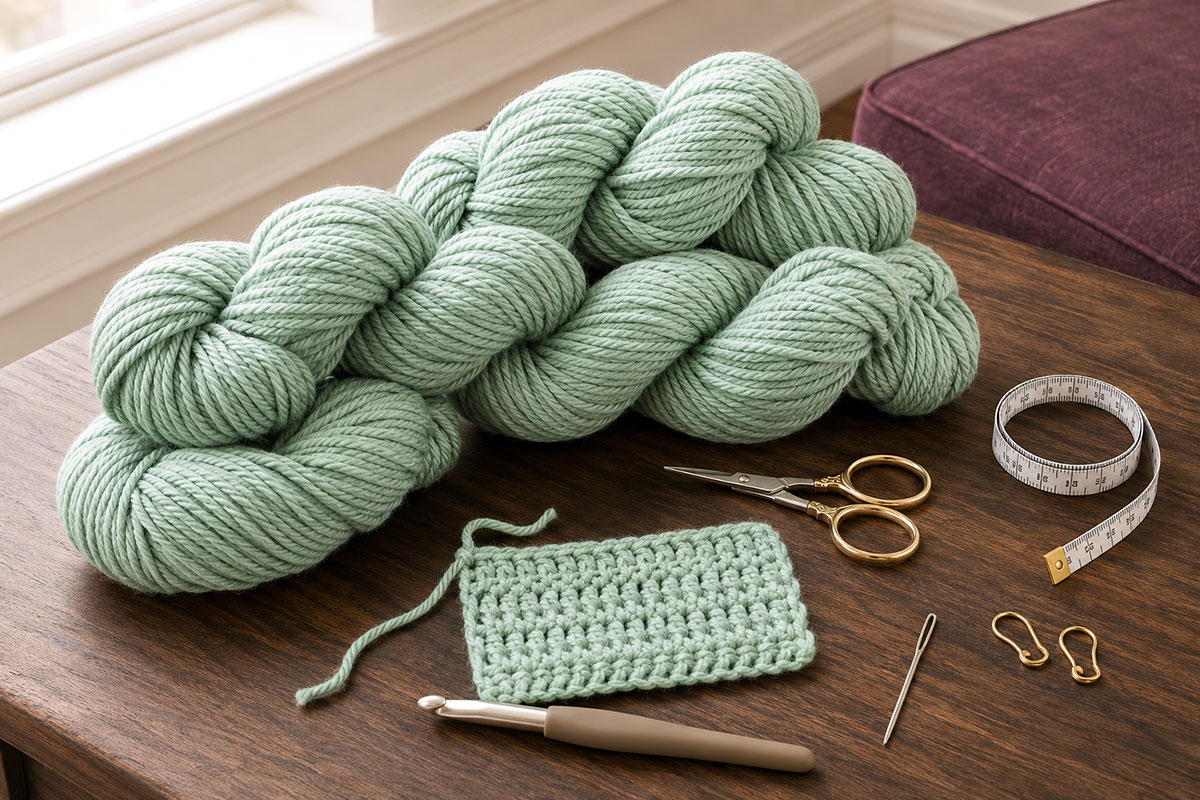
Choose a category 5 bulky yarn with a smooth, even texture. A washable acrylic or acrylic-blend yarn is practical for a blanket that may need frequent cleaning. Check the yardage on the label rather than buying by the number of skeins because bulky yarn packages vary considerably in size.
Materials List
- Approximately 1,100 to 1,300 yards of category 5 bulky yarn for the 36-by-45-inch blanket; the final amount must be confirmed with the chosen yarn and gauge
- US size M/N-13 crochet hook, 9 mm, or the size needed to match the gauge
- Scissors
- Yarn needle with an eye large enough for bulky yarn
- Two locking stitch markers
- Flexible measuring tape
The number of skeins depends on the yardage in each package. Divide the estimated yardage for your selected blanket size by the yards contained in one skein, round up to the next whole skein and purchase one additional skein when dye-lot matching or later availability may be a concern.
Estimated Yarn Amounts by Blanket Size
| Blanket size | Finished dimensions | Estimated yardage |
|---|---|---|
| Stroller | 30 × 36 inches | 800 to 900 yards |
| Baby blanket | 36 × 45 inches | 1,100 to 1,300 yards |
| Lap blanket | 40 × 48 inches | 1,350 to 1,550 yards |
| Throw | 50 × 60 inches | 2,100 to 2,400 yards |
These amounts include a modest allowance for the border and normal differences in tension. Buy all the yarn for your chosen size at the same time when possible so the dye lot stays consistent. Keep one unopened skein until the blanket is nearly finished if the seller permits returns.
Gauge, Abbreviations and Stitch Information
Make a gauge swatch before starting the blanket, even though the pattern is a simple rectangle. A small difference across eight stitches becomes much more noticeable when it is repeated across the full width.
Gauge
8 half double crochet stitches and 6 rows = 4 inches
Gauge is measured after the swatch has been gently washed and dried according to the yarn label. The finished fabric should feel flexible and comfortable rather than stiff or loosely stretched.
How to Make the Gauge Swatch
- Chain 13.
- Work one half double crochet in the second chain from the hook and in each remaining chain. You will have 12 stitches.
- Chain 1 and turn. The turning chain does not count as a stitch.
- Work one half double crochet in each stitch across.
- Repeat the previous row until the swatch contains at least eight rows.
- Measure four inches across the center of the swatch and then measure six rows vertically.
If you have more than eight stitches in four inches, move up to a larger hook. If you have fewer than eight stitches, try a smaller hook. Make another swatch after changing hook sizes.
US Crochet Abbreviations
- ch: chain
- hdc: half double crochet
- sc: single crochet
- sl st: slip stitch
- st or sts: stitch or stitches
Half Double Crochet
Yarn over and insert the hook into the indicated stitch. Yarn over and pull up a loop. You should have three loops on the hook. Yarn over once more and pull through all three loops.
Place a stitch marker in the first and last stitch of each row if the edges begin to wander. Bulky yarn can make the end stitches less obvious, especially when the blanket is folded across your lap.
Simple Chunky Crochet Blanket Free Pattern
The instructions below make the 36-by-45-inch baby blanket. The center panel measures approximately 35 by 44 inches before the border is added.
Starting Chain
Chain 71.
Keep the starting chain relaxed. It should lie flat without curling into a tight cord. If your chains tend to be firm, make the chain with a hook one size larger and return to the 9 mm hook before beginning the first row.
Row 1
Work one half double crochet in the second chain from the hook. Work one half double crochet in every remaining chain across.
Stitch count: 70 half double crochet stitches
Row 2
Chain 1 and turn. The turning chain does not count as a stitch. Work one half double crochet in the first stitch and in each stitch across.
Stitch count: 70 half double crochet stitches
Rows 3 Through 66
Repeat Row 2. Count the stitches at the end of every few rows and confirm that each row still contains 70 stitches.
After Row 66, the center panel should measure close to 35 inches wide and 44 inches long. Do not fasten off because the working yarn will be used to begin the border.
Measure the blanket without stretching it. If the length is short, continue repeating Row 2 until the center panel reaches approximately 44 inches. If it is already longer, stop at the end of the closest complete row. Matching the intended dimensions matters more than matching the exact row number because yarn and tension can change the row height.
Joining a New Skein
- Complete the current row before changing skeins whenever possible.
- Cut the old yarn, leaving a tail approximately eight inches long, and pull the tail through the working loop to fasten off.
- At the beginning of the next row, insert the hook into the first stitch and pull up a loop of yarn from the new skein, leaving an eight-inch tail.
- Chain 1. The chain does not count as a stitch.
- Work one half double crochet in the same first stitch and continue across the row.
- Confirm that the completed row still contains 70 half double crochet stitches.
- Weave the two yarn tails separately into the wrong side after several more rows have been completed.
Add the Simple Crochet Blanket Border
A single round of single crochet gives the blanket a finished edge without adding a heavy frame. The border also covers the small bumps along the row ends and makes the corners look more deliberate.
Border Round for the 36-by-45-Inch Baby Blanket
- At the end of the final row, chain 1. Do not turn.
- Work three single crochet stitches in the first corner space.
- Work 88 single crochet stitches evenly down the first long side. If the center contains exactly 66 rows, place four single crochet stitches across every three row ends. If you adjusted the number of rows to reach 44 inches, distribute the 88 stitches evenly across the actual row ends.
- Work three single crochet stitches in the bottom corner space.
- Work one single crochet into each of the 70 foundation-chain loops beneath the Row 1 stitches. Do not work into the skipped beginning chain.
- Work three single crochet stitches in the next corner space.
- Work 88 single crochet stitches evenly up the second long side, matching the placement used on the first side.
- Work three single crochet stitches in the final corner space.
- Work one single crochet in each of the 70 stitches across the top edge.
- Join to the first single crochet with a slip stitch. The border contains 328 single crochet stitches, including the corner stitches.
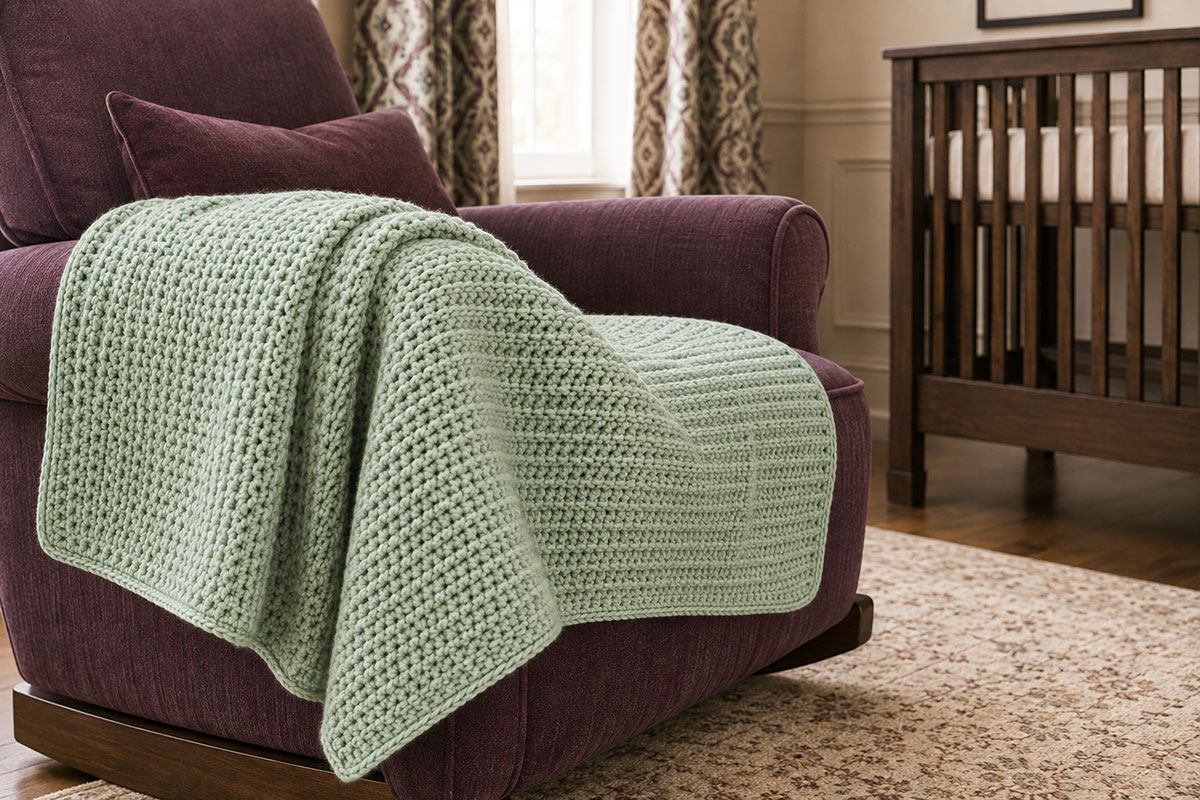
Lay the blanket flat before fastening off. If the edge pulls inward, there are too few stitches along the sides. If it ripples, there are too many. Remove that section and redistribute the stitches rather than hoping washing will correct a noticeably uneven border.
Fasten Off and Weave In the Ends
- Cut the yarn, leaving a tail approximately eight inches long.
- Pull the tail completely through the remaining loop.
- Thread the tail through a large yarn needle.
- Weave it through several stitches on the wrong side of the blanket.
- Change direction and weave through another short section so the end is less likely to work loose.
- Trim the remaining yarn close to the fabric without cutting the stitches.
How to Resize the Chunky Crochet Blanket
This pattern does not use a stitch multiple, so the width can be changed by adding or removing starting chains. Work one half double crochet into every chain after skipping the first chain. The number of half double crochet stitches will always be one fewer than the number of starting chains.
The measurements below allow approximately one additional inch in both directions for the single crochet border.
| Blanket | Approximate finished size | Starting chain | Stitches per row | Estimated rows |
|---|---|---|---|---|
| Stroller | 30 × 36 inches | 59 | 58 | 53 |
| Baby blanket | 36 × 45 inches | 71 | 70 | 66 |
| Lap blanket | 40 × 48 inches | 79 | 78 | 71 |
| Throw | 50 × 60 inches | 99 | 98 | 89 |
Border Counts for Each Blanket Size
Use the same border method for every size, but change the number of single crochet stitches to match the center panel. Work three single crochet stitches in each corner. Across the top and bottom edges, work one single crochet for each half double crochet stitch. Distribute the stated number of single crochet stitches evenly along each long side.
| Blanket | Top and bottom | Each long side | Approximate border total |
|---|---|---|---|
| Stroller | 58 stitches on each edge | 70 stitches | 268 stitches |
| Baby blanket | 70 stitches on each edge | 88 stitches | 328 stitches |
| Lap blanket | 78 stitches on each edge | 94 stitches | 356 stitches |
| Throw | 98 stitches on each edge | 118 stitches | 444 stitches |
These side counts are based on the stated gauge and the intended center-panel length. If you changed the number of rows, distribute the listed side stitches evenly across the actual row ends. After completing the border, lay the blanket flat and adjust the side placement only if the edge ripples or pulls inward.
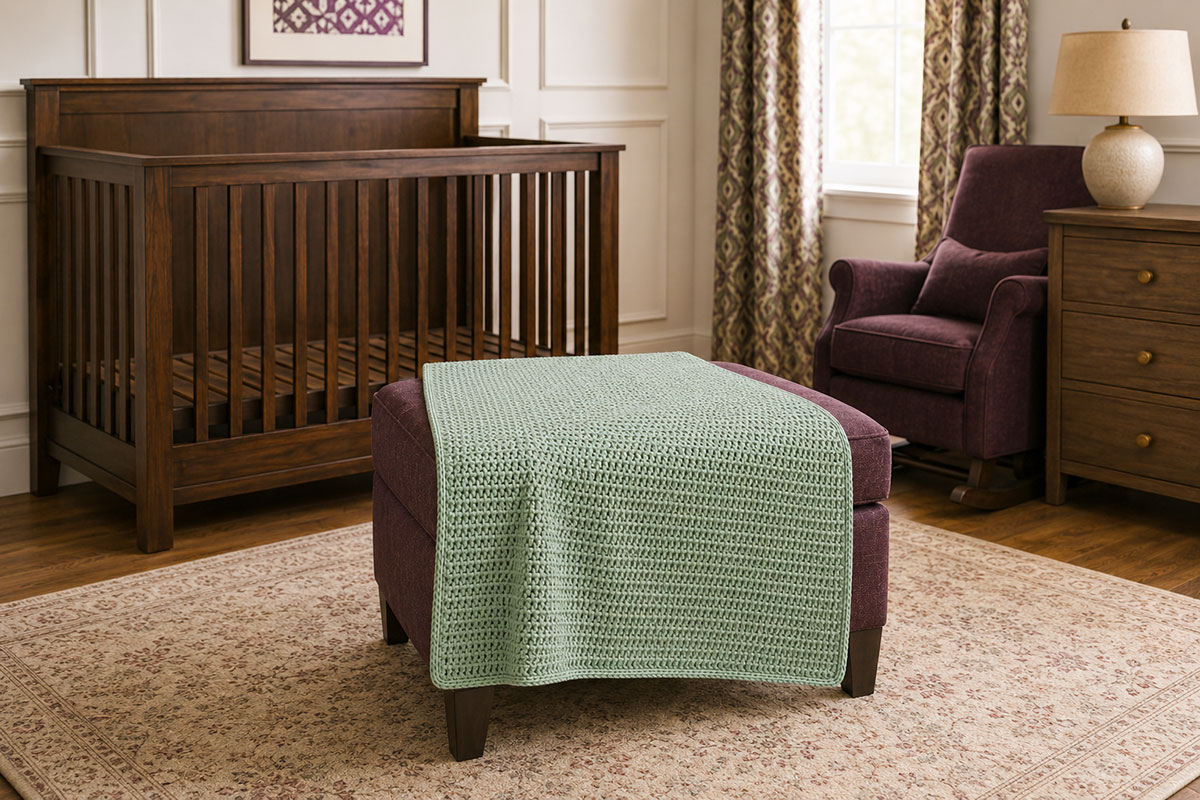
Use the row numbers as a starting point and measure the actual blanket before adding the border. Row gauge is often less consistent than stitch gauge, particularly with a large hook.
The handmade baby blanket size chart can help you compare common blanket dimensions before choosing which version to make. A custom starting chain is also easy to calculate: subtract one inch from the desired finished width, multiply that measurement by two stitches per inch and add one chain.
For example, a finished width of 42 inches needs a center panel approximately 41 inches wide. Multiply 41 by two stitches per inch to get 82 stitches, and then add one starting chain. Begin with 83 chains.
Choosing and Substituting Chunky Yarn
The pattern is written for category 5 bulky yarn. Yarn labeled super bulky, super chunky or jumbo is thicker and should not be substituted without making a new gauge swatch and recalculating the starting chain.
The Craft Yarn Council yarn weight system is useful when two yarn labels use different wording. Look for the weight number on the label instead of relying only on terms such as chunky, thick or quick.
What Type of Chunky Yarn Is Best for a Blanket?
A smooth, plied category 5 yarn makes the stitches easy to see and is less likely to shed than a loosely spun or fuzzy yarn. For a baby blanket, look for yarn that can be machine washed and dried according to the label. The fiber should also feel comfortable when rubbed against the inside of your wrist.
- Acrylic: Washable, widely available and generally lighter than many natural fibers.
- Acrylic and wool blend: Warm with a little more spring, but care instructions vary.
- Wool: Warm and resilient, though some varieties require hand washing and may feel scratchy against sensitive skin.
- Cotton blend: Smooth and washable, but a large chunky cotton blanket can become quite heavy.
- Chenille-style yarn: Soft and plush, although the stitches can be difficult to see and some yarns shed when the ends are not secured carefully.
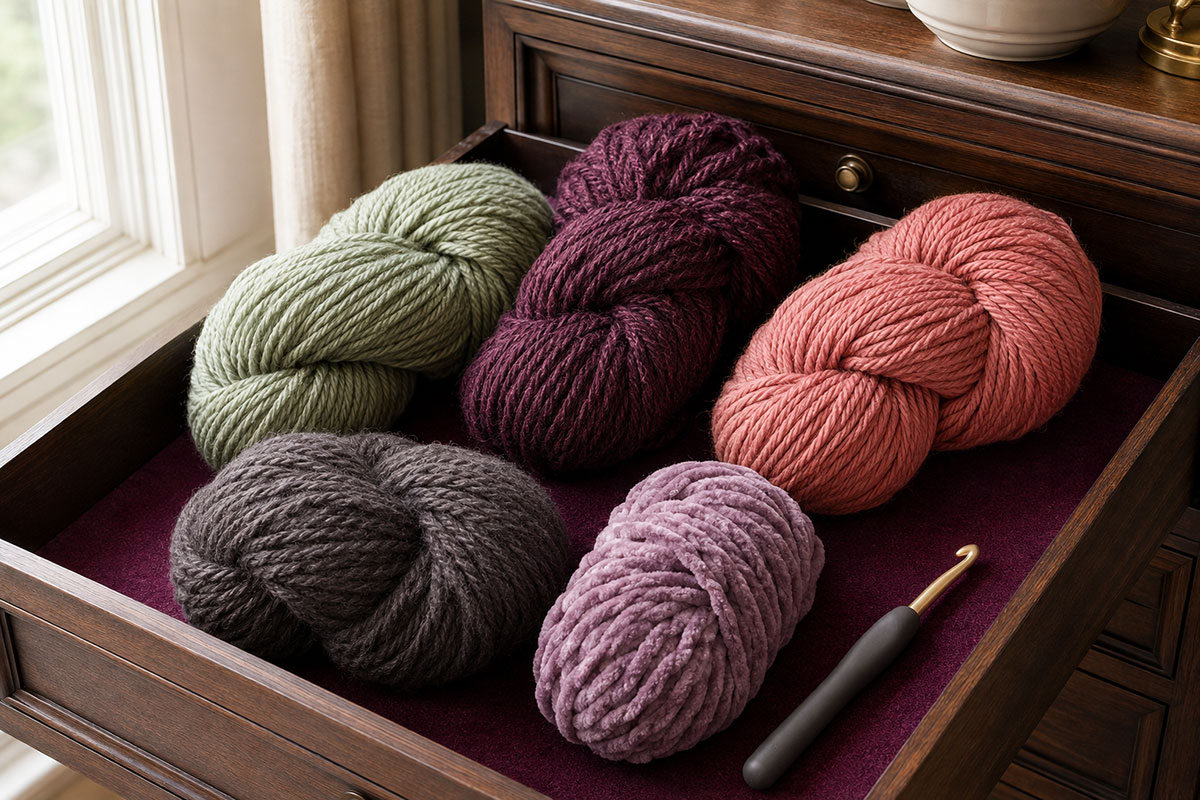
The guide to choosing the best yarn for a baby blanket explains how fiber, softness and washing requirements affect the finished project.
Benefits of Using Chunky Yarn
Bulky yarn makes the rows grow quickly and gives a basic stitch enough texture to look finished without complicated construction. The larger stitches are also easier to identify when learning where to insert the hook.
The tradeoff is weight. A full throw made with thick yarn requires much more material than the baby-size blanket and can become tiring to hold while working the final rows.
Can Super Chunky Yarn Be Substituted?
Yes, but the original stitch and row counts should not be followed without adjustment. Category 6 super bulky yarn will normally create a wider, heavier blanket with larger spaces between stitches.
- Choose the hook size recommended on the replacement yarn label.
- Make a washed and dried gauge swatch.
- Measure the number of stitches per inch.
- Subtract approximately one inch from the desired finished width to allow for the border.
- Multiply that width by the new number of stitches per inch.
- Round to the nearest whole stitch and add one chain.
- Crochet until the center panel is approximately one inch shorter than the desired finished length.
Do not assume that two bulky yarns will produce the same blanket because their labels show the same weight category. Yardage, fiber, twist and loft can all change the gauge and the amount of yarn required.
Wash, Shape and Safely Use the Finished Blanket
Wash the completed blanket according to the yarn label before measuring it one final time. Bulky crochet fabric may relax after washing, so the finished dimensions can change slightly.
Washing and Shaping
- Confirm that every yarn end has been woven securely in two directions.
- Wash the blanket using the temperature and cycle listed on the yarn label.
- Dry it according to the same instructions.
- While the blanket is still slightly damp, spread it on a clean, flat surface.
- Gently straighten the edges and arrange the corners without stretching the stitches.
- Allow it to dry completely before folding or using it.
Acrylic yarn should not be pressed with a hot iron. Excessive heat can flatten or damage the fibers. If the border needs light shaping, arrange it by hand while the blanket is damp.
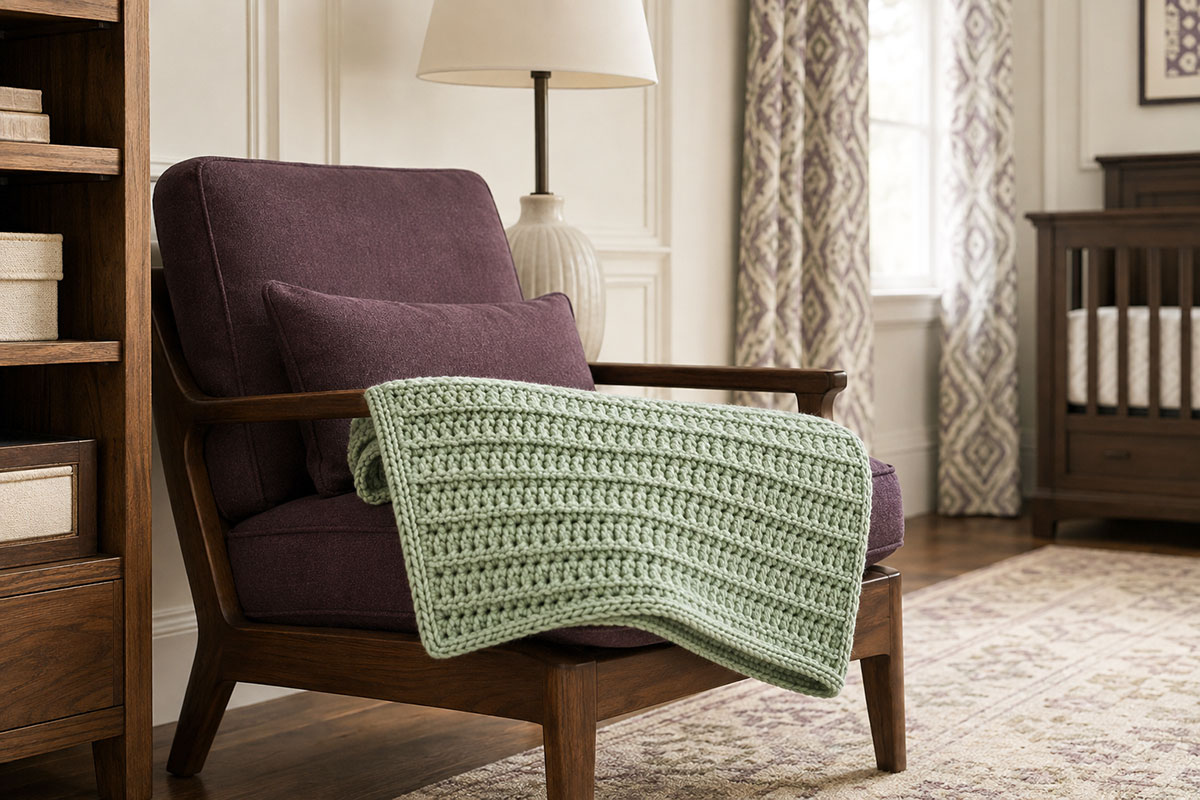
Using a Handmade Baby Blanket Safely
A handmade blanket can be useful during supervised stroller rides, floor play, cuddling and travel. Keep it clear of a baby’s face, stroller wheels and restraint straps.
Do not place a loose blanket in an infant’s crib, bassinet or other sleep space. The American Academy of Pediatrics recommends keeping blankets and other loose items out of a baby’s sleep area. Its safe sleep guidance for babies explains how to prepare a clear sleep space.
Inspect the blanket regularly for loose ends, pulled loops or damaged stitches. Stop using it around a baby until any damage has been corrected.
For another straightforward project with a different texture, the easy ribbed crochet baby blanket pattern creates raised rows without requiring color changes.
Fix Common Chunky Blanket Problems
The Sides Are Becoming Narrower
Count the stitches in the current row. Each row of the baby-size blanket should contain 70 half double crochet stitches. A missing first or last stitch will gradually pull the sides inward.
Place a locking marker in the first and last stitch as soon as each row is completed. Move the markers upward while you work.
The Starting Edge Is Too Tight
A tight foundation chain can make the bottom of the blanket narrower than the top. Undo the first row and remake the starting chain with a hook one size larger. Return to the pattern hook for Row 1.
The Blanket Is Wider Than Expected
Measure the gauge across the center of the fabric. If fewer than eight stitches fit within four inches, the stitches are too large for the pattern gauge. Move to a smaller hook or use the resizing calculation to determine a new starting chain.
The Fabric Feels Stiff
A hook that is too small can make bulky yarn feel dense and rigid. Try a larger hook and make another swatch. The stitches should remain defined while allowing the fabric to bend and drape.
The Border Is Wavy
A rippled border contains too many stitches. Remove the affected side and place fewer single crochet stitches into the row ends. Keep the blanket on a flat surface while checking the new placement.
The Border Pulls the Blanket Inward
A border that cups the blanket needs additional stitches along the sides. Add the extra stitches gradually instead of placing several into one spot. The corners should still contain three single crochet stitches each.
A New Skein Created a Visible Bump
Join new yarn at the beginning of a row when possible. Leave both tails long enough to weave securely into the wrong side. Avoid making a bulky knot in the middle of the blanket because it can feel uncomfortable and may work loose during washing.
Questions About the Simple Chunky Crochet Blanket
Is this chunky crochet blanket suitable for a beginner?
Yes. The center is worked entirely in half double crochet, and every row after the first follows the same instructions. A beginner should practice the stitch, make the gauge swatch and use markers in the first and last stitches before beginning the full blanket.
What crochet stitch is used for the blanket?
The blanket uses US half double crochet for the center and one round of US single crochet around the edge. The turning chain does not count as a stitch.
How long does a chunky crochet blanket take to make?
Completion time depends on crochet speed, interruptions and the selected size. The repeated row is easy to continue in short sessions, but the 36-by-45-inch baby blanket still contains approximately 4,620 half double crochet stitches before the border. It should not be presented as a guaranteed two-hour project.
How many skeins of bulky yarn are needed?
Use yardage rather than a fixed skein count because package sizes differ. The baby-size blanket is estimated to require 1,100 to 1,300 yards. Divide that amount by the yards in one skein and round up.
Can category 6 super bulky yarn be used?
Yes, but not with the original chain and row counts. Make a new gauge swatch, calculate the stitches per inch and use the resizing instructions to determine a new starting chain. The finished blanket will generally be heavier and have larger stitches.
Is this blanket intended for infant sleep?
No. A handmade blanket can be used for supervised cuddling, floor play, travel or stroller use when it is kept clear of the baby’s face, wheels and restraints. Do not place a loose blanket in an infant crib, bassinet or other sleep space.
Choose the Size That Fits the Project
The baby-size blanket gives the pattern enough length to show off the chunky rows without becoming difficult to carry or wash. Choose the stroller dimensions when you want a smaller travel blanket, or use the throw instructions when the blanket is intended for an older child or adult.
Before buying yarn, check the finished measurements, calculate the required yardage and make the gauge swatch. Those three small steps prevent nearly every expensive surprise associated with a chunky blanket.
Keep exploring the free crochet baby blanket patterns for lighter yarns, different textures and projects suited to other seasons.
When you click on links to various merchants on this site and make a purchase, this may result in this site earning a commission. This does not affect the price you pay.

UBGI Gold Standard 2026
Reviewed under the site's
editorial checklist.
Photos, decorating ideas, party setups and reader submissions are shared for inspiration unless a page is specifically presented as a pattern, tutorial, reference guide or step-by-step project. Follow the instructions, measurements, safety guidance and manufacturer directions provided for the particular project or product.
About Jan | Contact | Baby Nursery Ideas (Blog) | Site Map | Privacy Policy | Disclosure Policy | Disclaimer | Affiliate Disclosure | Earnings Disclosure | Facebook | Pinterest
I am a participant in the Amazon Services LLC Associates Program, an affiliate advertising program designed to provide a means for us to earn fees by linking to Amazon. As an Amazon Associate I earn from qualifying purchases.
Copyright © 2006-2026. All Rights Reserved.