Polar Bear Nursery Ideas for a Cozy Arctic Baby Room Theme
By Jan Bay
A polar bear nursery can feel warm and welcoming even when the theme comes from the Arctic. Polar bears are Arctic animals, so snowy imagery belongs here naturally, but the room does not have to look cold or seasonal. Start with soft white and natural wood, then add navy blue, warm gray or another muted accent color. Use polar bear wall art, simple textiles and a few carefully chosen decorations to establish the theme without putting a bear on every surface.
Explore More Polar and Animal Nursery Ideas
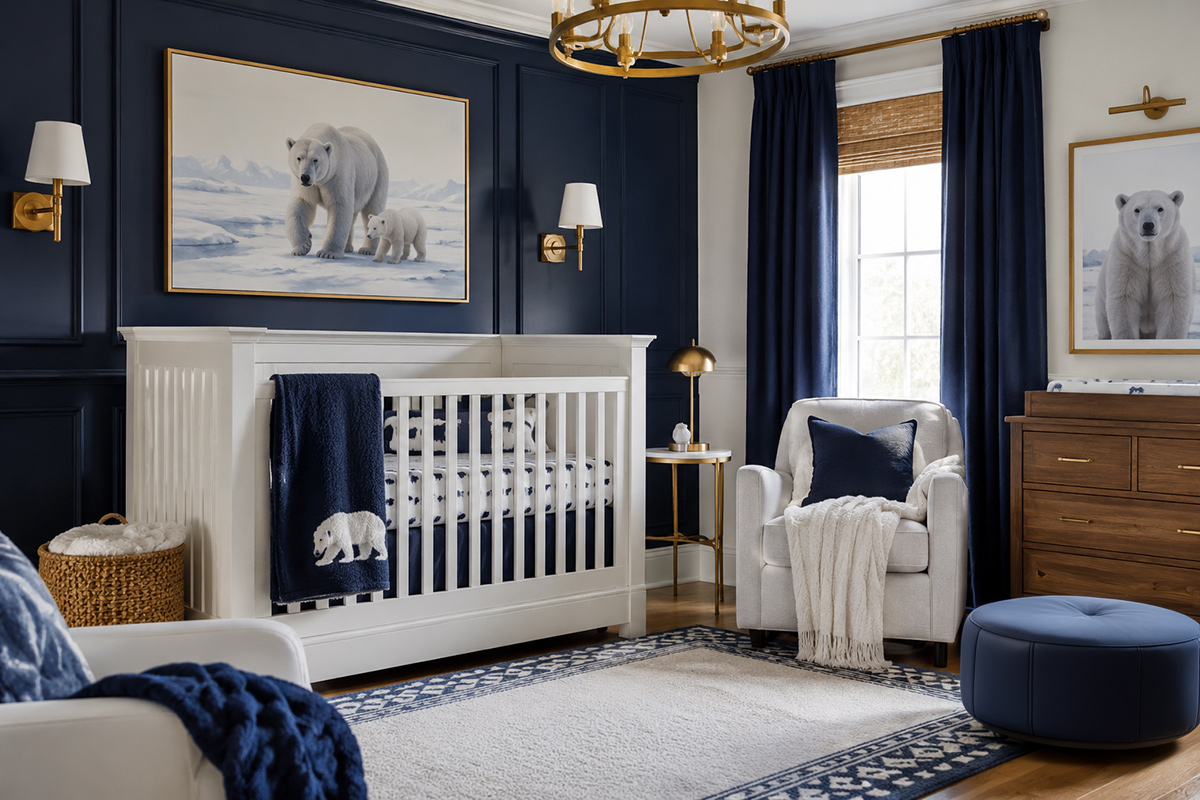
A warm polar bear nursery can use soft white, navy blue and natural wood to create an Arctic-inspired baby room without making the space feel cold.
For infant sleep, keep the crib bare with a fitted sheet only. Decorative throws, pillows and other soft items shown in nursery styling belong outside the sleep space.
Jump to Polar Bear Nursery Ideas
Polar Bear Nursery Colors
A polar bear room does not need to look icy. In fact, too much bright white can make the nursery feel unfinished instead of cozy. I would treat white as the snowy background of the theme, then add enough warm material and contrast to give the room some depth.
A simple palette can begin with soft white or warm white on the larger surfaces. Add pale gray, mushroom, taupe or another gentle neutral for contrast. Natural wood is especially useful because it keeps an Arctic theme from becoming cold or stark. A medium wood crib, dresser or picture frame can do more for the room than adding another themed accessory.
Navy blue or charcoal is useful in small amounts. Either can appear in a polar bear print, window treatment, rug pattern or a few furniture details. Because a polar bear is almost entirely white, the darker color gives the eye something to focus on and helps the bear imagery stand out.
For an accent color, choose one shade and repeat it in a few places rather than bringing in several unrelated colors. Muted sage, soft clay, dusty rose, camel and warm brown can all work with white and gray. The accent does not need to appear on a polar bear itself. It can come from a rug, curtain, changing pad cover or small piece of artwork.
A useful way to plan the room is to choose one main neutral, one wood tone and one accent color before buying or making the decorative pieces. Repeat each of those choices around the room. That creates a nursery that looks connected even when the individual pieces were collected at different times.
If the room already has white furniture, resist the urge to make every other surface white too. A warm gray wall, woven-looking rug, medium wood frames or deeper window treatment can keep a white crib from disappearing into the background.
For more ways to build a northern color palette around snow, wildlife and natural textures, see these Arctic nursery theme ideas.
Polar Bear Nursery Wall Art
Wall art is one of the easiest places to make a polar bear nursery recognizable because it gives the theme a clear focal point without requiring every object in the room to have a bear printed on it.
Choose the style of the bears before choosing the number of pictures. A realistic wildlife print creates a very different room from a soft watercolor illustration or a simple black-and-white bear silhouette. Mixing all three can make the wall look like a collection of unrelated purchases. Keeping the artwork in one general style makes the nursery look more intentional.
One large polar bear picture can be enough for a small room. In a larger nursery, a group of two or three related prints can fill a dresser wall or reading corner. They do not have to match exactly. A mother and cub, a single bear crossing snow and a simple Arctic landscape can tell a small visual story while still looking like one collection.
I would also give the artwork some breathing room. A large polar bear deserves space around it. Filling every open area with snowflakes, mountains, lettering and animal prints can make the main image harder to appreciate.
For a cleaner arrangement, repeat either the frame finish or the mat color. Natural wood frames bring warmth to a pale nursery. Thin charcoal frames create a little more definition. White frames can work well on a gray or taupe wall where their edges remain visible.
A wall beside the crib, above a low dresser or near the room entrance can carry the theme just as effectively as the wall directly over the crib. I prefer reserving the crib wall for lighter visual treatment when possible rather than hanging a large, heavy framed piece directly above where a baby sleeps.
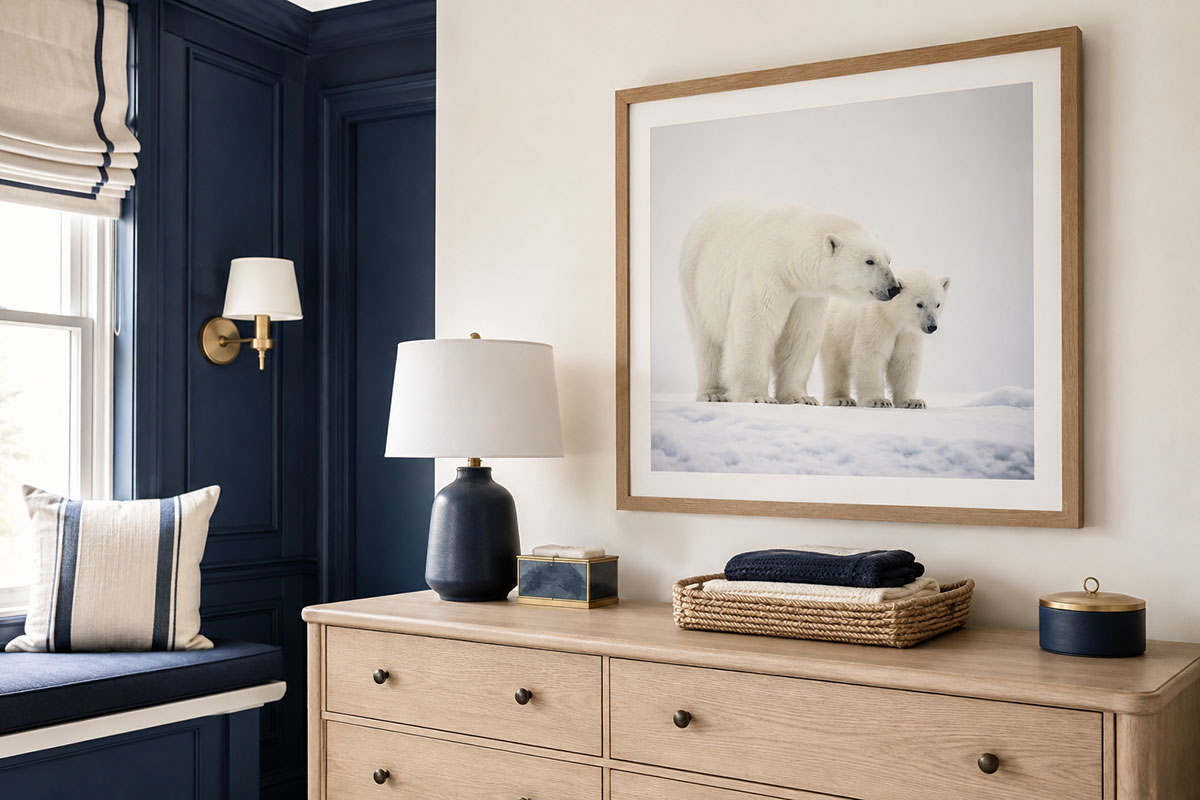
Natural wood frames and a limited group of polar bear prints can establish the theme without covering every wall with animal decor.
Do not forget the empty wall space around the pictures. That space is part of the arrangement too. Leaving some open area around a bear print helps the room feel finished rather than crowded.
Crib Bedding and Textiles
The crib does not need layers of decorative bedding to carry a polar bear theme. A fitted sheet can provide a small pattern or a touch of color, while the rest of the room does the decorative work.
Current U.S. Consumer Product Safety Commission safe-sleep guidance says the infant sleep space should have a firm, flat surface with a fitted sheet only. Pillows, blankets, crib bumpers and other soft items should not be added to the baby's sleep space. You can review the current guidance on the CPSC Safe Sleep page.
That still leaves plenty of room for textiles elsewhere in the nursery. Curtains, a washable floor rug, a changing pad cover and fabric storage pieces can repeat the colors without placing decorative items inside the crib.
A fitted sheet with tiny polar bears can work when the walls and artwork are simple. If the walls already carry several bear images, I would choose a plain white, gray or softly patterned sheet instead. The room does not become more clearly themed each time another bear is added.
Texture is especially useful in a mostly neutral room. Look for contrast between smooth painted furniture, visible wood grain, woven-looking fabric and a low-pile rug. Those differences keep pale colors from blending into one flat surface.
Window treatments can also help balance the nursery. On white walls, a warm gray or mushroom curtain adds definition. On gray walls, an ivory or soft white curtain can lighten the room. Keeping the curtain fairly simple gives the polar bear artwork more attention.
If you want a heavier throw or decorative blanket in the room, keep it for adult use and store it away from the infant sleep area rather than styling it inside the crib. A blanket folded over the back of an adult chair can still contribute color and texture without becoming part of the baby's sleep space.
For a handmade piece that features the same animal theme, the polar bear crochet lovey pattern combines a small white bear with a square blanket. Keep the finished lovey outside an infant sleep space.
Polar Bear Nursery Decor and Theme Inspiration
The most interesting polar bear nurseries are not rooms where a bear appears on every surface. The theme becomes more convincing when the room suggests the animal's environment as well as the animal itself.
Think about shape first. Soft curves can appear in a round rug, an arched mirror, a globe-shaped ceiling fixture or simple circular wall details. Then add the straighter lines of the crib, dresser and picture frames. That mix keeps the room from becoming too sweet or too severe.
Next, repeat materials. If the crib is natural wood, use that wood tone again in two or three smaller places such as picture frames, a shelf or a lamp base. If charcoal appears in the artwork, repeat a little of it elsewhere. Small repetitions make separate pieces look as though they belong in the same room.
The polar bear motif itself can stay limited to a few meaningful places. Artwork is an obvious choice. A second bear reference might appear on a fitted sheet, storage bin or small decorative object positioned away from the sleep space. After that, let the colors and materials carry the theme.
Snow and ice do not have to be represented literally. White walls, a pale rug and soft gray fabric can suggest a snowy landscape without covering the room in snowflake decorations. Natural wood adds the warmth that a real nursery needs visually.
Lighting deserves attention too. A single bright ceiling light can make a white and gray room look harsher than intended. Use the room's general ceiling fixture for full illumination, then add a properly positioned lamp for softer light during feeding, dressing or bedtime routines. Keep cords secured and out of a child's reach as the baby grows.
Storage can become part of the design rather than something to hide. Matching baskets or bins in white, gray or natural fibers can keep diapers, extra sheets and small supplies together. A simple storage system also prevents the themed accessories from competing with everyday baby items scattered around the room.
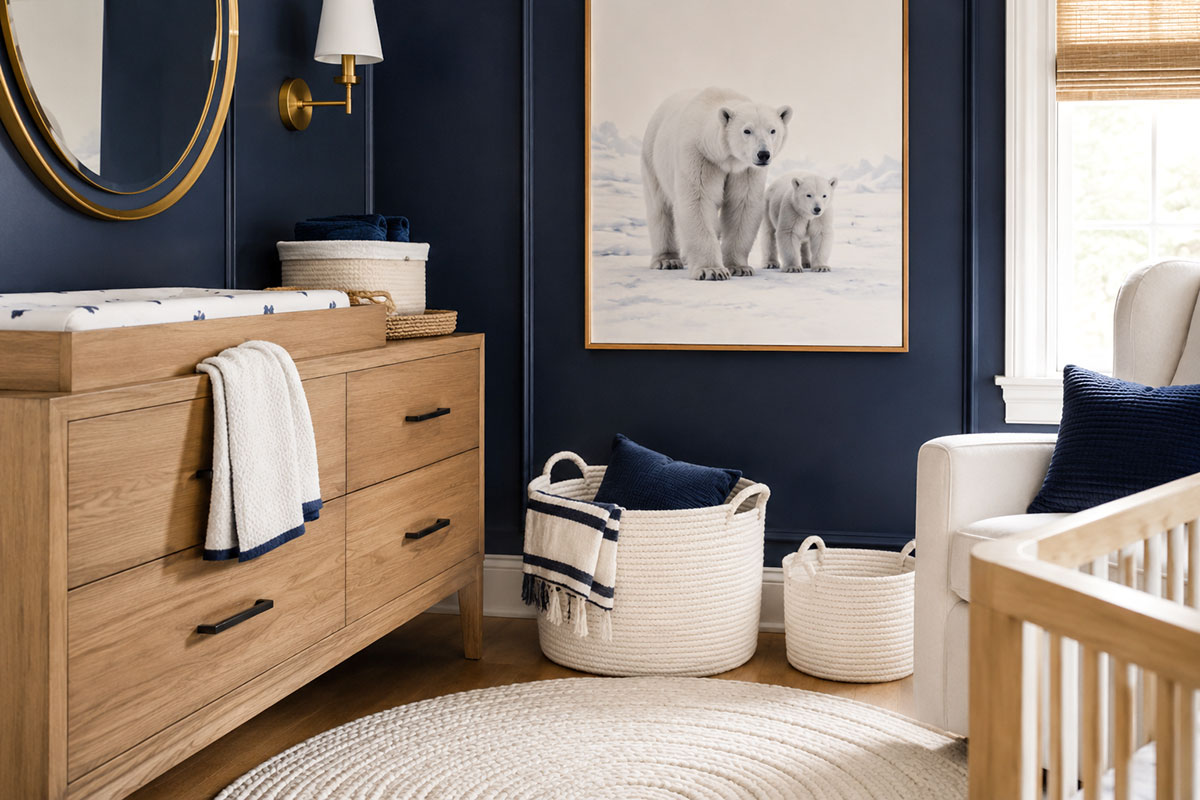
A few repeated materials and colors can make the polar bear theme visible throughout the room without putting a bear on every accessory.
If you enjoy animal rooms, the updated penguin nursery ideas offer another way to use black, white and natural materials while creating a very different animal theme.
Boy and Girl Polar Bear Nursery Ideas
A polar bear nursery can be designed for a baby boy, baby girl or a gender-neutral room without changing the central theme. The difference can come from the accent colors, artwork and textiles rather than from replacing the polar bears.
For a baby boy polar bear nursery, charcoal, sage, warm brown or muted rust can add definition to white and gray. A darker rug border, sage curtain or brown leather-look drawer pull can introduce color without turning the room into a completely different theme.
For a baby girl polar bear nursery, dusty rose, soft clay, muted mauve or warm taupe can work with the same white bear artwork and natural wood furniture. A small amount of the accent color is enough. It might appear in the curtains, rug pattern and one piece of artwork rather than on every textile.
A gender-neutral version can stay close to ivory, warm gray, mushroom, natural wood and charcoal. Sage is another easy addition when the room needs a little color. This palette also makes it easier to change the room later because the major furniture and wall colors are not tied to one narrow decorating scheme.
The artwork can change the personality of the room more than the color does. A close view of a polar bear cub feels gentle and playful. A wide snowy landscape with a small bear feels more natural and understated. Simple graphic art creates a more modern nursery.
There is no need to label the room visually as a boy or girl nursery unless you want to. Start with the polar bear theme you like, then add the colors that make sense with the furniture and finishes already in the room.
Winter and Arctic Theme Ideas
A polar bear nursery can lean toward either an Arctic animal theme or a broader winter room, but those two directions are not quite the same.
An Arctic nursery keeps the focus on northern wildlife and landscapes. Polar bears are a natural centerpiece, and the room can include references to sea ice, snowy terrain and other Arctic animals. If you want a larger collection of northern nursery ideas, the Arctic nursery theme page gives the polar bear room a natural parent theme.
A winter-inspired nursery can be looser. It might use snowy trees, stars, white landscapes, soft gray skies and cozy textures without trying to represent a specific habitat. That makes it easier to combine woodland and winter elements when you are choosing the room for its mood rather than its geography.
If geographic accuracy matters to you, keep in mind that polar bears are Arctic animals while penguins are native to the Southern Hemisphere. They do not share a natural polar habitat. A whimsical nursery can certainly use both, but an educational Arctic animal room would keep the animals grouped according to where they actually live.
That distinction can also help you decide what belongs in the room. A true polar bear nursery does not need penguins, Christmas decorations or every animal associated with snow. A few carefully selected northern references make the idea easier to understand.
For a winter look that stays useful beyond the holiday season, avoid decorations that depend on Christmas symbols. Snowy landscapes, stars, pale neutrals, natural wood and polar bear imagery can remain in place throughout the year without making the nursery look seasonal.
The result should still feel like a baby's room first. The Arctic idea provides the story, but the crib, storage, lighting, walking space and everyday routines determine whether the room works well.
Polar Bear Nursery Questions
What colors work best in a polar bear nursery?
Soft white, warm gray, mushroom, taupe and natural wood make an easy foundation. Add one muted accent such as sage, clay, dusty rose, camel or warm brown. Using a limited palette helps the white polar bear imagery remain visible without making the entire room bright white.
Can a polar bear nursery be gender neutral?
Yes. Ivory, gray, mushroom, charcoal and natural wood work especially well for a gender-neutral polar bear nursery. The same room can later be changed with new artwork or an accent color without replacing the main furniture.
How can I make a polar bear nursery feel warm instead of icy?
Use natural wood, warmer whites and several textures instead of relying on pure white and cool gray alone. A wood crib, woven-looking rug, fabric curtains and wood picture frames add visual warmth while still keeping the snowy character of the theme.
How many polar bear decorations should I use?
There is no required number. Start with one clear focal point, such as a large print or a small group of coordinated wall pictures. Repeat the bear motif only a few more times if the room needs it. Colors, materials and shapes can carry the theme after the focal point has been established.
Can I put decorative blankets and pillows in the crib for the nursery look?
No. Keep decorative pillows, blankets, bumpers and other soft objects out of an infant's sleep space. Use the walls, curtains, rug, fitted crib sheet and furniture area to decorate instead. The U.S. Consumer Product Safety Commission recommends a firm, flat infant sleep surface with a fitted sheet only.
Do polar bears and penguins belong in the same Arctic nursery?
Not if you are trying to represent the animals' real habitats. Polar bears live in the Arctic, while penguins are native to the Southern Hemisphere. They can still appear together in a playful polar-themed room, but an educational Arctic nursery should keep that geographic difference clear.
A polar bear room can be simple enough to grow with a child and still have plenty of personality. Choose the palette first, give the bears one or two clear focal points, then let wood, texture, artwork and useful nursery furnishings finish the room. You can continue browsing baby nursery themes for more animal, color and decorating ideas.
When you click on links to various merchants on this site and make a purchase, this may result in this site earning a commission. This does not affect the price you pay.

UBGI Gold Standard 2026
Reviewed under the site's
editorial checklist.
Photos, decorating ideas, party setups and reader submissions are shared for inspiration unless a page is specifically presented as a pattern, tutorial, reference guide or step-by-step project. Follow the instructions, measurements, safety guidance and manufacturer directions provided for the particular project or product.
About Jan | Contact | Baby Nursery Ideas (Blog) | Site Map | Privacy Policy | Disclosure Policy | Disclaimer | Affiliate Disclosure | Earnings Disclosure | Facebook | Pinterest
I am a participant in the Amazon Services LLC Associates Program, an affiliate advertising program designed to provide a means for us to earn fees by linking to Amazon. As an Amazon Associate I earn from qualifying purchases.
Copyright © 2006-2026. All Rights Reserved.