Baby Nursery Ideas That Grow With Your Child
Baby nursery ideas that grow with your child focus on long-term structure, not a short-term theme. The room should still function when the crib converts, walking begins, and play space becomes necessary. Convertible furniture, open traffic paths, and neutral finishes create a foundation that won’t need rebuilding in two years.
- Convertible crib that transitions into a toddler bed
- Neutral nursery color palette that matures over time
- Clear floor space for future play and movement
- Durable storage that works beyond the baby stage
Three-Layer Nursery Planning Model
Layer 1 — Structure: crib placement, dresser stability, circulation space.
Layer 2 — Foundation: neutral finishes, durable materials, flexible storage.
Layer 3 — Expression: textiles, wall art, seasonal details that can rotate without disruption.
Here is how that framework looks in a neutral, convertible nursery.
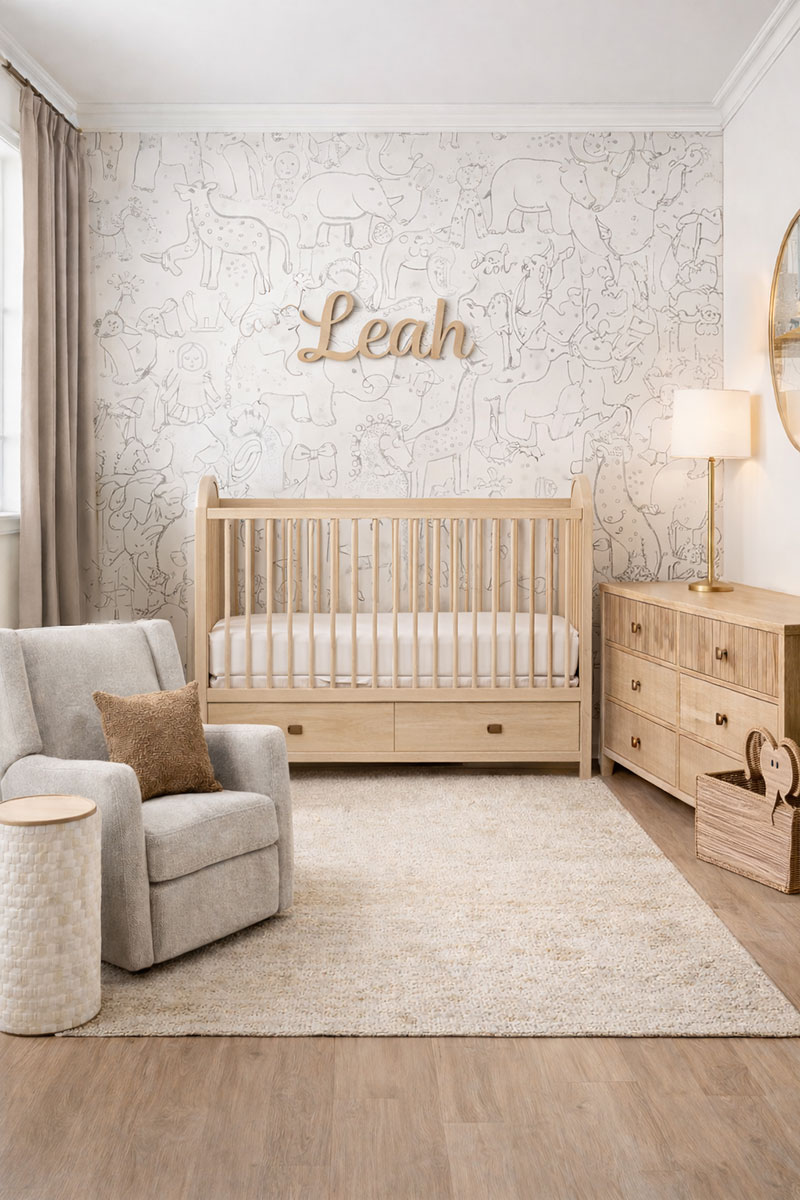
How to Plan for Baby Nursery Ideas That Grow With Your Child
When parents search for ideas for a nursery that transitions well, they are usually trying to avoid redesigning the room two years from now. In practical terms, that means building the nursery around a standard crib, stable storage, and open floor space that still works once a toddler bed replaces the crib. In the United States, crib placement and sleep environments are shaped by federal safety standards and manufacturer guidance. This page explains general design and safety principles, not product-specific instructions.
Crib Mattress Dimensions
A standard full-size crib mattress measures approximately 52 inches long by 28 inches wide.
That footprint does not change when the crib converts, which is why layout spacing should be evaluated early.
A nursery designed to transition well relies on convertible sleep furniture, durable storage, and preserved circulation space that remains functional beyond infancy.
It is not about choosing a trendy theme. It is about choosing furniture and layout decisions that hold up. Convertible crib. Neutral finishes. Adjustable storage. Clear walking paths. Those elements carry the room forward.
Think beyond year one
Design for age three. Soften for baby.
The structure stays. The details rotate.
What Long-Term Nursery Planning Actually Looks Like
At its core, baby nursery ideas for a room designed to evolve revolve around durability and flexibility. A convertible crib that transitions into a toddler bed. A dresser that functions as a changing station now and everyday storage later. A layout that keeps usable floor space instead of filling every wall.
I use the term “convertible crib” consistently. You may also see “4-in-1 crib” or “lifetime crib.” The idea is the same: one bed frame designed to evolve without being modified or replaced at the first growth stage.
Finishes matter too. Warm wood tones age better than bright white alone. Muted sage, clay, soft ivory, and layered neutrals mature naturally. A nursery color palette built this way does not feel outgrown at preschool age.
For broader planning inspiration, I often reference nursery ideas that show adaptable layouts rather than fixed themes.
When window height, light direction, or blind placement could affect how the crib transitions into a toddler setup, review my nursery layout ideas according to window location so the room’s structure supports both the baby stage and what comes next.
Future Layout Test
Stand where the toddler bed would eventually sit. Is there still a clear path across the room?
If the answer is no, the layout is temporary.
Why This Approach Matters
Reworking a nursery every two years drains money and energy. Furniture that cannot transition becomes excess. Wall themes that feel sweet at six months feel limiting later.
Thoughtful long-term nursery design protects against that cycle. It reduces crowded pathways, supports safer movement once walking begins, and maintains visual calm as the room evolves.
The Consumer Product Safety Commission outlines principles for safe sleep environments and crib spacing. Those standards influence how thoughtful nursery layout is planned. Clearances around the crib. No reachable cords. Stable furniture placement. These are structural considerations, not decorative ones.
Most nursery redesigns happen because the room was styled before it was structured.
They decorate first. Then they try to rework the room around safety and growth.
Long-Term Framework Rule
When theme drives the layout, the room becomes temporary. When structure drives the layout, the room lasts.
Where Short-Term Thinking Breaks Down
The biggest issue I see with baby nursery ideas that grow with your child is over-committing to a baby-specific aesthetic. Large character murals. Name decals covering entire walls. Accessories that cannot blend into a toddler room.
At six months, those details feel charming. At three years old, they feel restrictive.
Another weak point is furniture crowding. Crib placement too close to windows.
Before finalizing your layout, review ideal crib location placement rules for real nursery rooms so window spacing, traffic flow, and wall positioning work safely long term.
Rockers blocking pathways. Dressers filling corners that will later need play space. These layout decisions become more noticeable as mobility increases.
In smaller rooms especially, structural clarity matters. That is why I frequently connect readers to nursery layout for a 10x10 room, where spacing constraints reveal design flaws quickly.
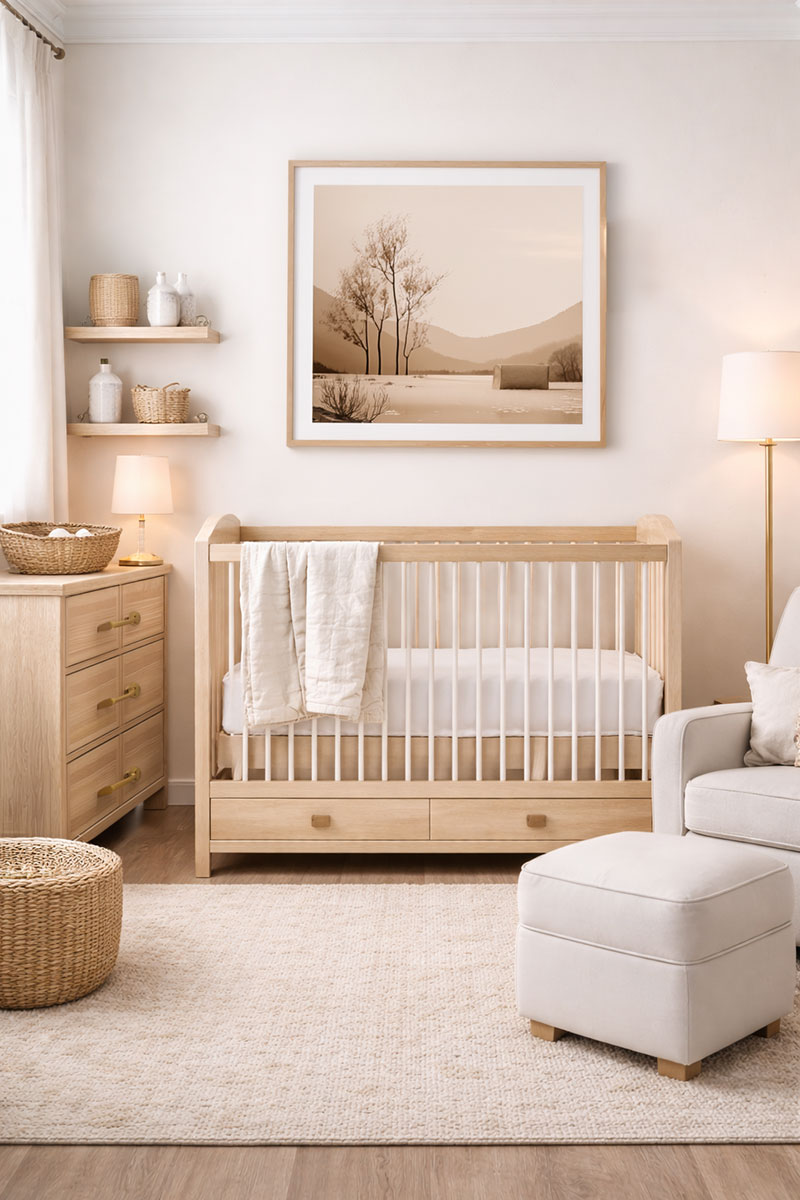
When evaluating furniture, identify how each piece functions beyond infancy. A convertible crib that becomes a toddler bed supports continuity. A dresser that still feels appropriate in a preschool room prevents unnecessary replacement. These are the pieces that anchor long-term nursery design without locking the room into a single stage.
To evaluate proportions and footprint before committing to a larger piece, compare options in my guide to the best dressers for a small nursery, especially if long-term floor space is a priority.
Did I Choose Well?
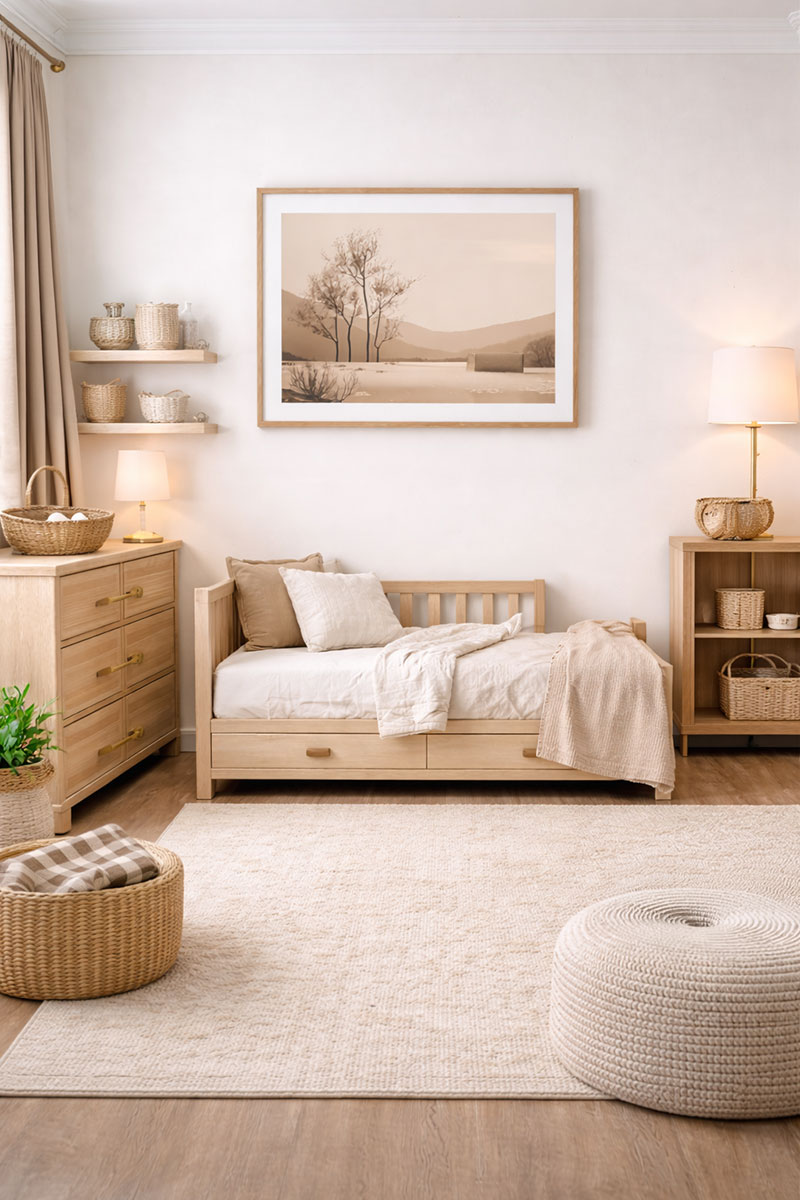
Most nursery designs that transition well from the baby to toddler stage rely on three stable elements: a convertible crib, durable storage, and adaptable wall decor. Accent items change. Structural pieces remain.
Ask simple questions. Does the crib convert without replacing the frame? Does the dresser maintain visual maturity? Can the art be swapped without repainting?
In most cases, choosing convertible furniture is the more stable long-term decision.
Keep this simple
Keep the structural pieces constant and allow the surface elements to evolve.
That keeps the room from requiring a rebuild every year.
For crib design categories and comparison context, I reference baby cribs to clarify construction styles and conversion pathways.
Special Situations
Older cribs. Secondhand purchases. Missing manuals.
These require added caution. Identify the model clearly and confirm it aligns with current safety expectations before planning continued use. This page does not provide repair guidance or workaround solutions.
What Comes Next
Step back and look at the room as a whole. Consider future bed placement, play space, and circulation flow. Baby nursery ideas that grow with your child function best when the room feels open, balanced, and ready for change.
That same philosophy extends into adaptable nursery themes and toddler room ideas. A neutral base allows artwork, textiles, and accessories to shift naturally over time without replacing core furniture.
When the foundation is steady, updates feel simple. And long-term nursery layouts that adapt as your child grows continue to make sense long after the crib stage has passed.
Book storage is one of those structural pieces that matures well over time. These nursery bookshelf ideas for growing rooms show how to keep reading materials organized from crib stage through toddler years.
When you click on links to various merchants on this site and make a purchase, this may result in this site earning a commission. This does not affect the price you pay.

UBGI Gold Standard 2026
Reviewed under the site's
editorial checklist.
Photos, decorating ideas, party setups and reader submissions are shared for inspiration unless a page is specifically presented as a pattern, tutorial, reference guide or step-by-step project. Follow the instructions, measurements, safety guidance and manufacturer directions provided for the particular project or product.
About Jan | Contact | Baby Nursery Ideas (Blog) | Site Map | Privacy Policy | Disclosure Policy | Disclaimer | Affiliate Disclosure | Earnings Disclosure | Facebook | Pinterest
I am a participant in the Amazon Services LLC Associates Program, an affiliate advertising program designed to provide a means for us to earn fees by linking to Amazon. As an Amazon Associate I earn from qualifying purchases.
Copyright © 2006-2026. All Rights Reserved.