Nursery Glider vs Rocking Chair vs Recliner
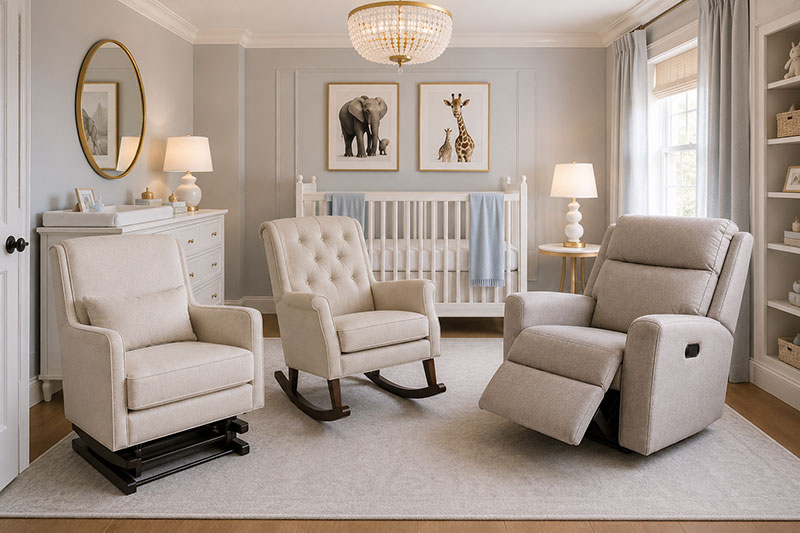
A nursery glider vs rocking chair vs recliner decision usually comes down to comfort, space, and how you will use the chair during real feeding and snuggling time. A glider is often the easiest everyday nursery chair, a rocking chair is the simplest traditional choice, and a recliner gives the most lounging comfort but needs the most room.
Before you choose a nursery chair, these pages may save you from buying the wrong one:
The chair may fit, but will it work in the room?
The layout mistake that makes a nursery feel too small
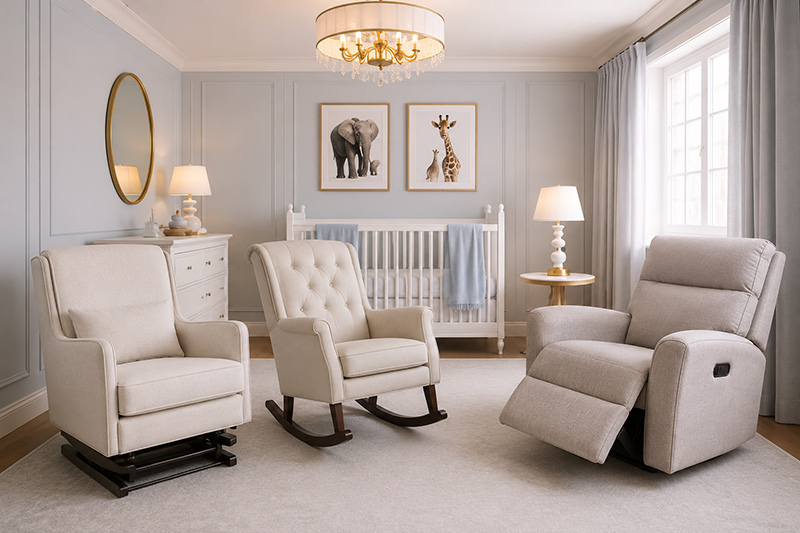
Shopping note: The best nursery chair is not always the prettiest one. It needs to fit the room, support feeding, and let you stand up safely while holding a baby.
Jump to the part you need:
Glider vs rocking chair vs recliner
Best nursery chair for feeding
Best chair for a small nursery
Nursery Glider vs Rocking Chair vs Recliner Quick Answer
At some point every nursery chair starts looking the same online. Then the baby arrives, feeding sessions stretch past midnight, and suddenly the tiny details matter much more than the fabric color.
The nursery glider vs rocking chair vs recliner choice becomes clearer once you compare how each chair moves, how much space it needs, and how easy it is to stand up from a seated position while holding a baby.
A nursery glider is usually the easiest all-around option for feeding and daily use. A rocking chair takes up less visual space and has a traditional motion many people still love. A recliner offers the most support during long sitting sessions but needs more floor space and can become frustrating in tighter nursery layouts.
Quick answer:
A glider works best for everyday nursery use, a rocking chair works well in smaller rooms, and a recliner makes long nighttime feeding sessions easier when space allows.
The wrong chair becomes obvious fast. Usually around the third night someone tries standing up while holding a sleeping baby and realizes the chair arm sits too low, the cushions make their back ache or the seat pushes them uncomfortably forward.
These nursery layout ideas can help if the room still feels unfinished after the furniture arrives.
Glider vs Rocking Chair vs Recliner Differences That Matter
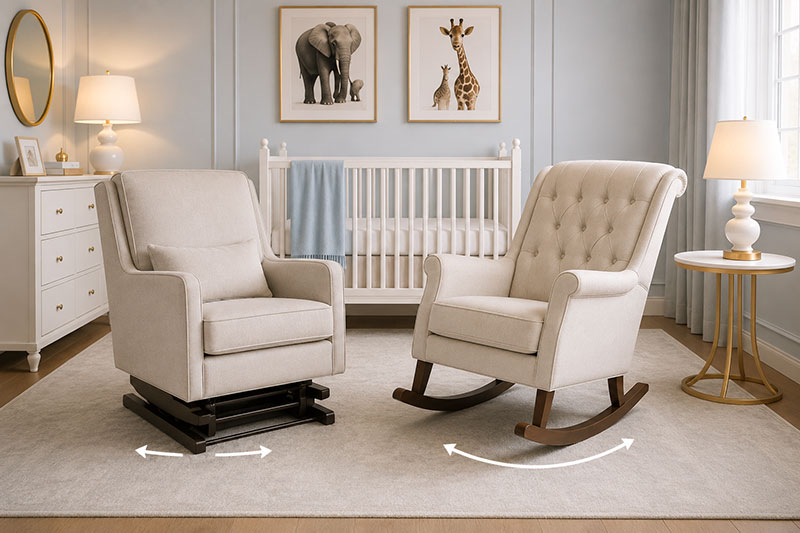
A nursery glider moves in a smoother back and forth motion than a standard rocking chair. That movement matters more than people expect during long feeding sessions because drinks, bottles, and side tables stay steadier nearby.
Rocking chairs move in wider arcs and may squeak a little. Some people love that sound and motion. Others realize the chair pushes too far backward once the nursery rug and nearby furniture are in place or find the squeaking irritating.
These issues may show up after the room is fully assembled and someone notices the rocker bumping the wall or shifting across the floor slightly every few days.
Recliners create a completely different experience. They support naps, overnight soothing, and long stretches of holding a baby without constantly repositioning. The tradeoff is footprint. Once the footrest opens, many nursery recliners suddenly dominate the room.
For a tighter side-by-side chair comparison, see my nursery recliner vs glider guide before choosing the larger chair.
I believe nursery recliners make the most sense when the room has enough walking space.
If you are still planning furniture placement, these nursery furniture layout ideas and where to put a recliner in a nursery tips can help avoid awkward spacing problems later.
Best Nursery Chair for Feeding and Long Nights
Feeding comfort changes everything. Some nursery chairs look impressive online but become tiring after forty minutes because the arm height sits wrong or the back support angles too far backward.
Tall parents may notice those comfort problems even faster, so my guide to the best nursery chair for tall parents explains how seat depth, back height, and leg support change the way a glider, rocker, or recliner feels.
Gliders often work best during feeding because the movement stays controlled and the seat height makes standing easier afterward.
For nursing-specific comfort details, my guide to the best nursery glider for breastfeeding explains which arm support, seat angle, and reach-zone features matter most during longer feeding sessions.
That small detail matters late at night when one arm is asleep and the baby finally drifts off after pacing the room for an hour.
Recliners help during overnight stretches because they support the neck, shoulders, and lower back better than most traditional nursery seating. Parents recovering from a C-section sometimes prefer recliners because standing requires less forward leaning which may be uncomfortable in the first few weeks.
Rocking chairs can still work extremely well, especially solid wood styles with supportive cushions, but they rarely match the body support of a larger recliner.
A separate nursery rocking chair guide goes deeper into rocker comfort, noise, small-room fit, and the details parents tend to regret after real nighttime use begins.
Older gliders and wooden rockers can often be made more comfortable with better padding, and my guide to nursery glider rocker cushions explains what to check before replacing the whole chair.
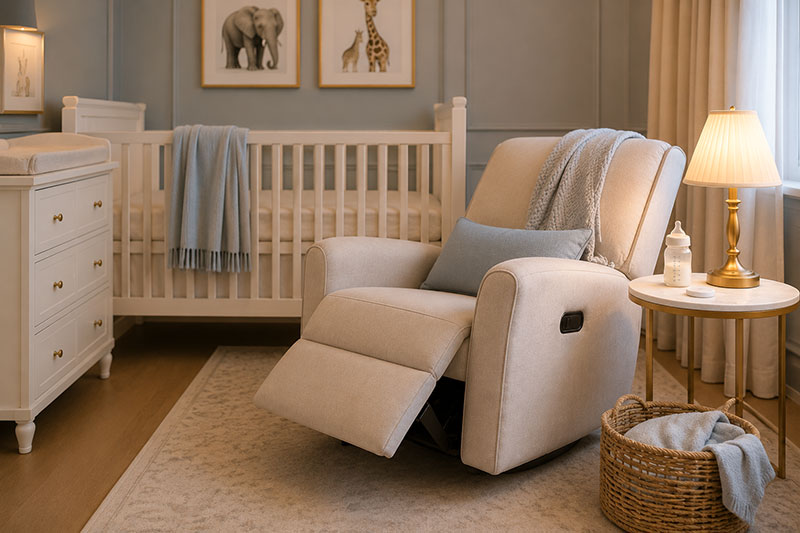
The United States Consumer Product Safety Commission recommends keeping sleep spaces clear of loose blankets, cords, and similar hazards near cribs and nursery furniture.
For current nursery sleep-space safety guidance, visit the U.S. Consumer Product Safety Commission Safe Sleep page.
Best Nursery Chair for Small Nursery Layouts
Small nurseries expose bad furniture decisions immediately because every inch counts and everything starts to compete for space. Recliners are usually the first piece that creates trouble once drawers, baskets, and feeding tables enter the room.
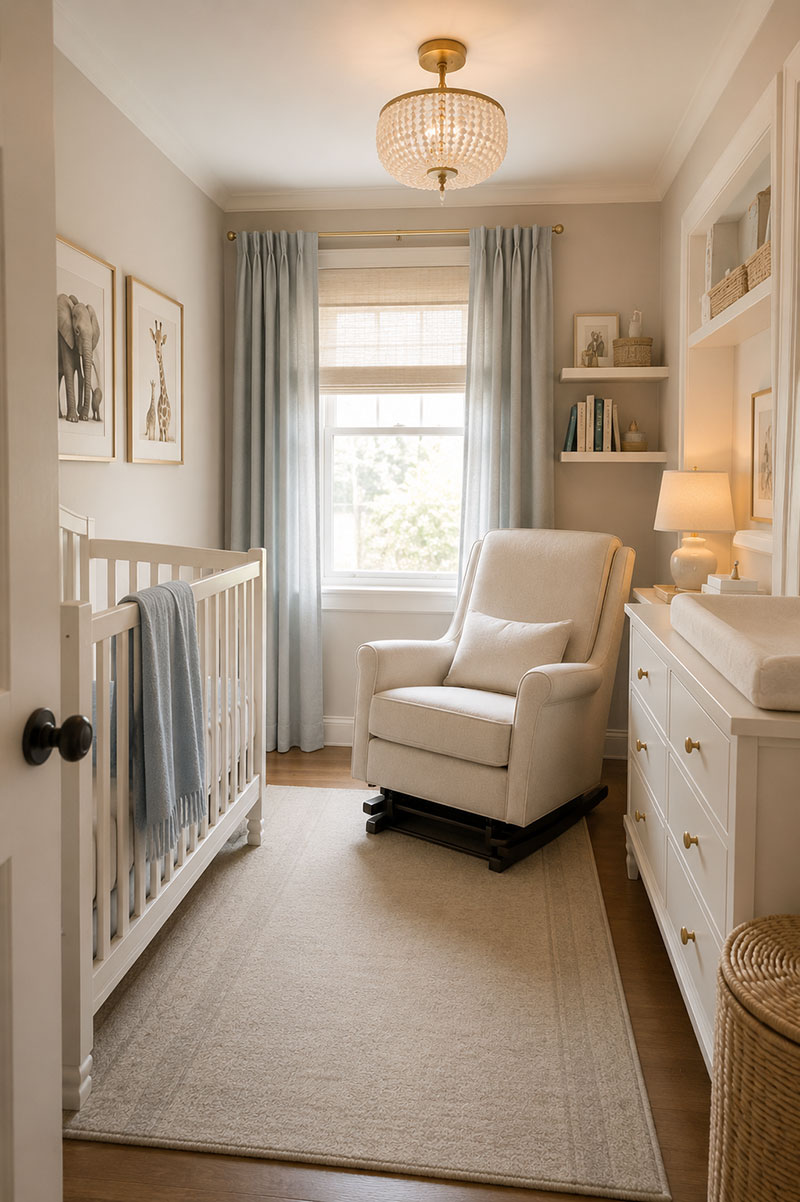
A glider generally works better in compact nursery layouts because the movement stays contained within the chair footprint.
Rocking chairs can also fit nicely in smaller rooms, although some need more clearance behind them than expected.
One narrow nursery I helped rearrange looked completely different after the oversized recliner moved out and a slimmer glider replaced it near the crib wall. Suddenly the dresser drawers opened fully again and the room stopped feeling boxed in.
These small nursery layout ideas, cribs for small spaces, and nursery floor plan layout ideas can help before buying larger nursery furniture.
Which Nursery Chair Should You Choose?
Finding the best nursery chair depends less on trends and more on what happens during real daily use.
A nursery glider vs rocking chair vs recliner decision should come down to your room size, feeding routine, and whether comfort or floor space matters more.
Choose a glider if you want the safest all-around choice for feeding, movement, and room flexibility.
Choose a rocking chair if you prefer traditional motion and want something visually lighter inside the nursery.
Choose a recliner if nighttime comfort matters more than floor space and the room can support a larger chair footprint.
The chair should make the nursery easier to move through, not harder.
That sounds obvious until somebody tries carrying laundry baskets around an oversized recliner for six straight months.
These related pages may also help:
- Best chair for a small nursery
- Nursery room organization ideas
- Do you actually need a nursery?
- Baby nursery themes
FAQ About Nursery Gliders, Rocking Chairs, and Recliners
Is a glider or recliner better for a nursery?
A glider works better for many nurseries because it takes up less room and supports feeding comfortably. Recliners provide more body support during long overnight sessions when the room has enough space.
Are rocking chairs still good for nurseries?
Yes. Many people still prefer rocking chairs because the motion feels familiar and the chair often looks less bulky than a recliner.
Which nursery chair works best in a small room?
Gliders usually fit best in smaller nurseries because the movement stays contained within the chair footprint instead of extending far backward.
Do nursery recliners take up too much room?
Some do. Recliners need additional clearance behind the chair and in front of the footrest once fully extended.
Can you use a regular recliner in a nursery?
Yes, as long as the chair fits the room properly and still allows clear walking space around the crib and dresser.
When you click on links to various merchants on this site and make a purchase, this may result in this site earning a commission. This does not affect the price you pay.

UBGI Gold Standard 2026
Reviewed under the site's
editorial checklist.
Photos, decorating ideas, party setups and reader submissions are shared for inspiration unless a page is specifically presented as a pattern, tutorial, reference guide or step-by-step project. Follow the instructions, measurements, safety guidance and manufacturer directions provided for the particular project or product.
About Jan | Contact | Baby Nursery Ideas (Blog) | Site Map | Privacy Policy | Disclosure Policy | Disclaimer | Affiliate Disclosure | Earnings Disclosure | Facebook | Pinterest
I am a participant in the Amazon Services LLC Associates Program, an affiliate advertising program designed to provide a means for us to earn fees by linking to Amazon. As an Amazon Associate I earn from qualifying purchases.
Copyright © 2006-2026. All Rights Reserved.