Nursery Curtains: How to Choose the Best Curtains for a Baby Room
Nursery curtains are one of the easiest ways to make a baby room look finished, but the best curtains for a nursery should do more than decorate the window; they should help control light, work safely around the crib and furniture, and support the way the room will be used for naps, nighttime feedings, and everyday baby care.
Plan the Rest of the Nursery
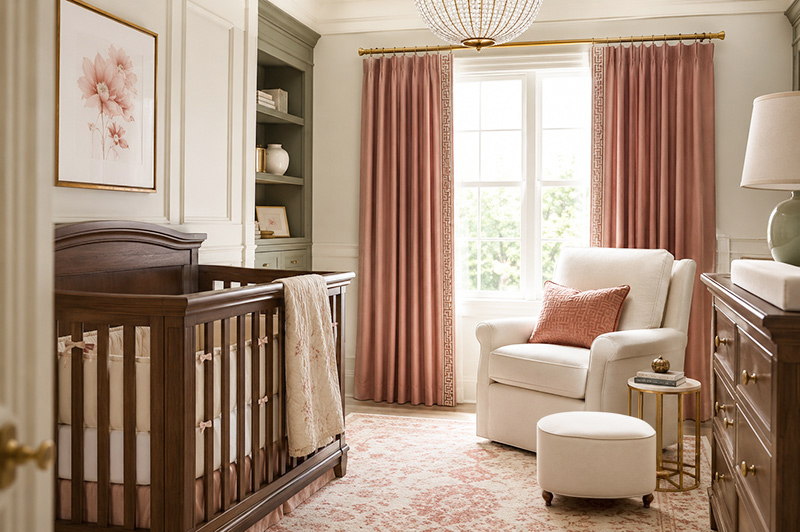
The best nursery curtains add softness and style while helping manage light, privacy, and safer window design in a baby room.
See Top-Rated Nursery Window Treatments
Before choosing nursery curtains, ask yourself one simple question. Is the window causing a sleep problem, a privacy problem, or a decorating problem? The answer determines almost every decision that follows.
Many nursery windows look perfectly fine until the room is actually being used. Then the afternoon sun lands directly across the crib. Early morning daylight arrives much sooner than expected. A nearby streetlight shines through the window all night. What seemed like a decorating detail suddenly becomes part of everyday life.
That is why nursery curtains deserve more attention than they usually receive.
Jump to a Section
What Type of Curtains Are Best for a Nursery?
Light Blocking Nursery Curtains
What Type of Curtains Are Best for a Nursery?
Quick Answer: Wide curtains mounted beyond the window frame generally provide the best combination of privacy, daylight control, and flexibility.
The curtain itself is only part of the equation.
I once visited a nursery where expensive blackout curtains had been installed, yet daylight still poured into the room during naps. The problem was not the fabric. The rod was barely wider than the window.
After replacing the rod and extending the curtains farther beyond the frame, the room performed completely differently.
That experience reinforced something I continue to see repeatedly. Installation often matters more than the curtain fabric itself.
When shopping, look for:
- Adequate width
- Reliable hardware
- Easy maintenance
- Appropriate light filtering
- Durable construction
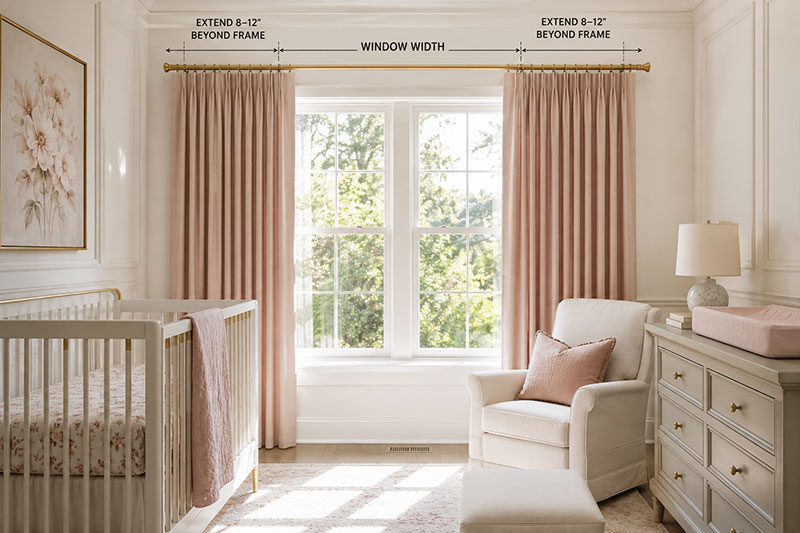
Proper width often improves performance more than upgrading to a more expensive curtain fabric.
Before making a final decision, you may also want to compare curtains with other options in my nursery window treatments guide.
Nursery Blackout Curtains and Nap Time
There is a reason nursery blackout curtains generate so much search traffic.
They solve a real problem.
Many babies nap during the brightest hours of the day. A room that seems perfectly comfortable for adults can become surprisingly bright when sunlight lands directly on the crib.
Blackout curtains help reduce that issue by limiting incoming daylight.
If you're unsure whether full blackout fabric is necessary, compare blackout curtains vs room darkening curtains before buying.
Some rooms benefit from a closer look at nursery blackout curtains, including when they make the biggest difference for naps, seasonal sunlight, and bedrooms with challenging window exposure.
They can also help reduce glare during feedings and quiet time.
One detail that rarely gets mentioned is seasonal sunlight. A room that seems manageable during winter can become dramatically brighter during summer.
That seasonal change catches many families off guard.
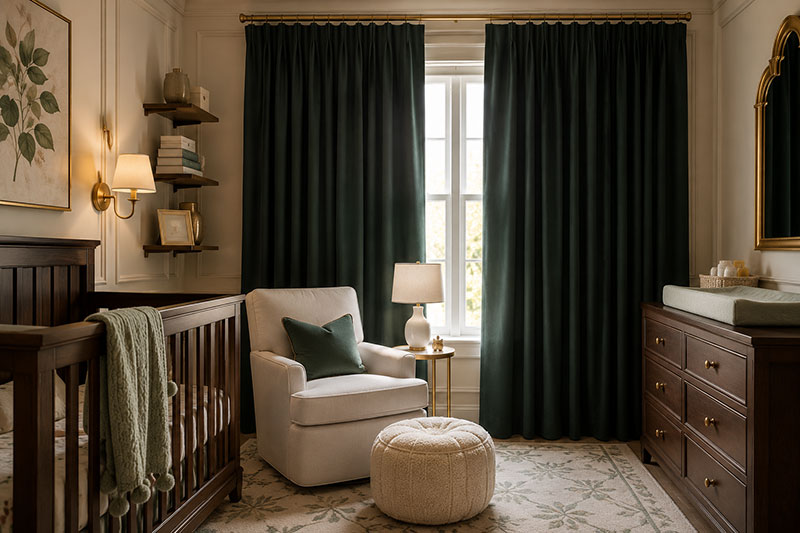
Blackout curtains are commonly used when daylight reaches the crib during typical nap hours.
Best Blackout Curtains for Nursery Rooms
The best blackout curtains are not necessarily the darkest ones available.
The best option is the one that fits the room properly.
A moderate blackout curtain installed correctly often outperforms a premium blackout curtain installed poorly.
Look for products that cover the window completely, operate easily, and work well with the room layout.
Usability becomes surprisingly important after the baby arrives.
When you are opening and closing curtains multiple times a day, convenience matters.
Light Blocking Nursery Curtains Without Full Blackout Fabric
Not every room requires complete darkness.
Light blocking nursery curtains provide an option between sheer panels and full blackout products.
They reduce brightness while allowing some natural daylight to remain.
For many homes, that balance works extremely well.
North facing rooms often require far less light control than west facing rooms.
That is why window orientation should influence your decision.
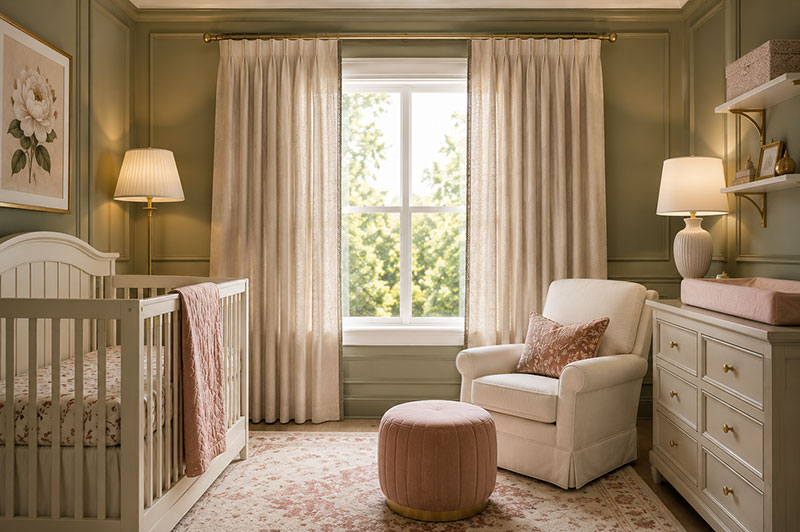
Many nurseries perform well with moderate light filtering instead of complete blackout coverage.
Nursery Room Curtains That Continue Working for Years
One of the biggest decorating mistakes is choosing curtains that are tied too closely to a newborn theme.
The nursery changes quickly.
The baby grows.
The room evolves.
The curtains often stay.
For that reason, I believe nursery curtains should support the room rather than define it completely.
Artwork can be updated. Bedding can change. Wall decor can evolve.
Replacing custom curtains is usually far less convenient.
Several of the most successful nurseries I have seen used relatively simple curtain designs while allowing other elements in the room to carry the personality.
If you're still deciding on colors, patterns, or decorating styles, browse these nursery curtain ideas before choosing fabric.
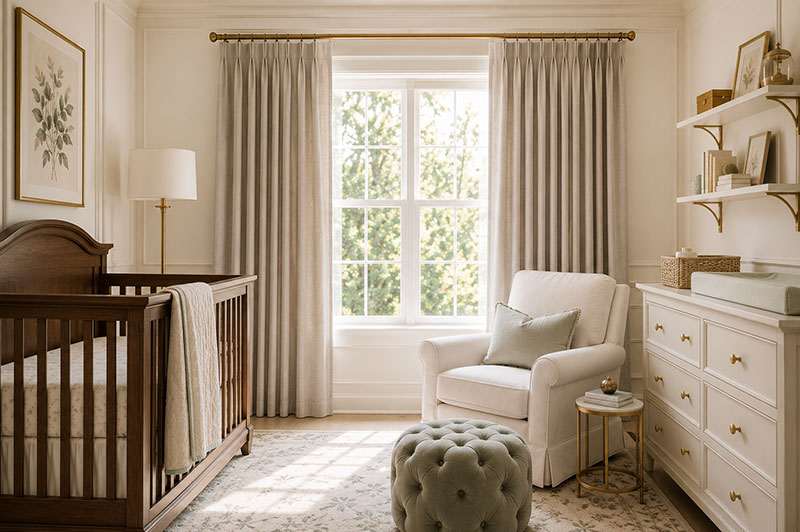
Window treatments that adapt to future room updates often provide the best long term value.
What Color Nursery Curtains Work Best?
There is no single correct answer.
The best color depends on the room, lighting conditions, furnishings, and long term plans.
What I have found over the years is that adaptable colors tend to age more gracefully than highly themed choices.
Many rooms that look fantastic for a newborn become difficult to update later because one decorative element dominates everything else.
Curtains do not need to match the walls exactly.
In fact, coordinating colors often create a more natural appearance than exact matches.
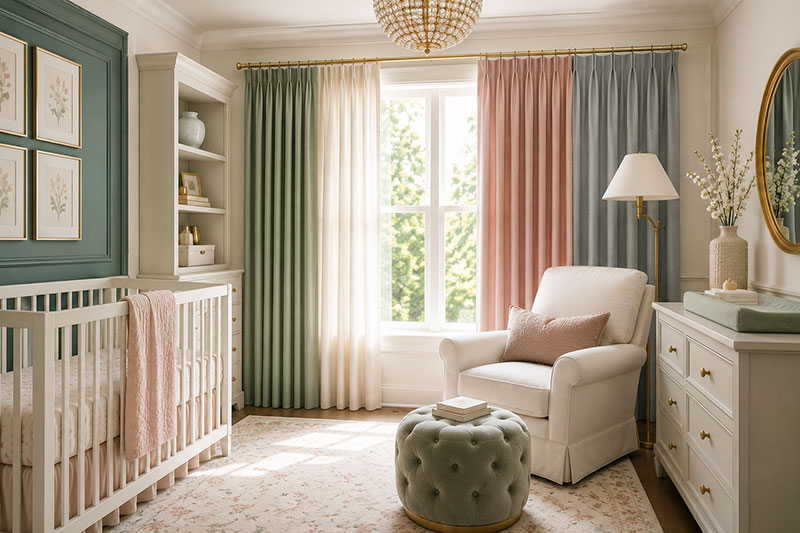
Choosing flexible colors can make future nursery updates much easier.
For soft feminine rooms, these pink nursery curtain ideas show how different shades of pink work with white, gray, sage green, and floral nurseries.
Should Nursery Curtains Go to the Floor?
In many rooms, yes.
Floor length curtains visually increase height and create a finished appearance around the window.
However, room layout should guide the final decision.
Changing tables, gliders, toy storage pieces, and bookshelves can all affect ideal curtain length.
I remember one nursery where the curtains looked perfect until the rocking chair arrived. Every time someone sat down, the runners caught the fabric.
The solution was simple, but it was a reminder that functionality should always come before decorating rules.
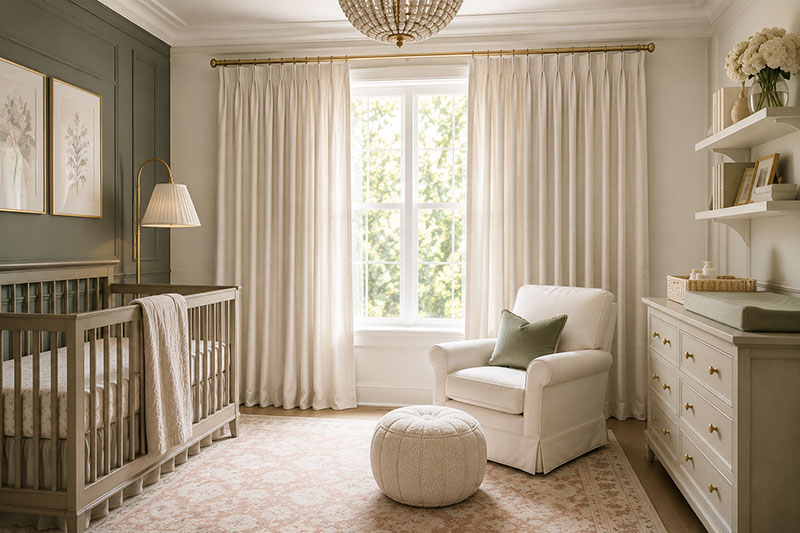
Curtain length should work with the room layout rather than compete against it.
Curtain Rod Placement Changes Everything
The curtain rod is one of the most overlooked nursery purchases.
Yet it influences nearly every aspect of how the curtains perform.
A properly sized rod allows curtains to move beyond the glass area when open.
This brings more daylight into the room during playtime while still providing privacy when needed.
Undersized rods limit flexibility and often create unnecessary light gaps.
Many curtain disappointments begin with rod selection rather than curtain selection.
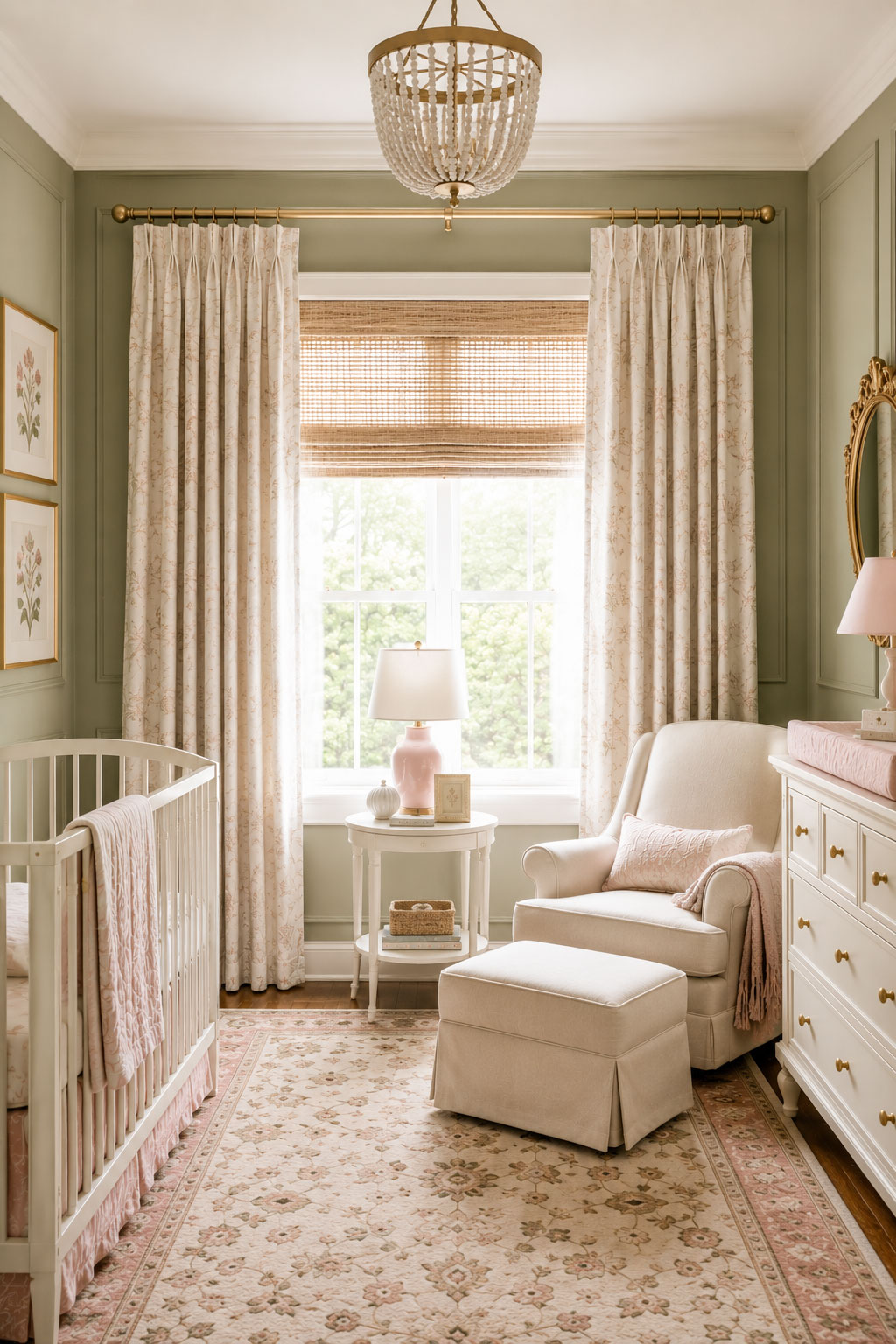
Rod placement often determines how effectively curtains perform day after day.
Nursery Curtain Safety Comes First
No decorating decision is more important than safety.
Keep cribs, chairs, and climbing furniture away from cords and accessible operating mechanisms.
A room that appears perfectly safe for a newborn can look very different once a child becomes mobile.
The Consumer Product Safety Commission recommends reducing accessible cord hazards whenever possible.
One practical trick is sitting on the floor and looking toward the window from a toddler's perspective. Potential issues often become easier to identify from that angle.
Nursery Drapes Versus Standard Curtains
The terms are often used interchangeably, but there can be meaningful differences.
Nursery drapes are generally heavier and more structured than standard curtain panels. They frequently include additional lining and can provide greater privacy and improved control over incoming sunlight.
For rooms with large windows or significant afternoon exposure, drapes are often worth considering.
They can also help reduce glare during feedings and quiet time without requiring additional window treatments.
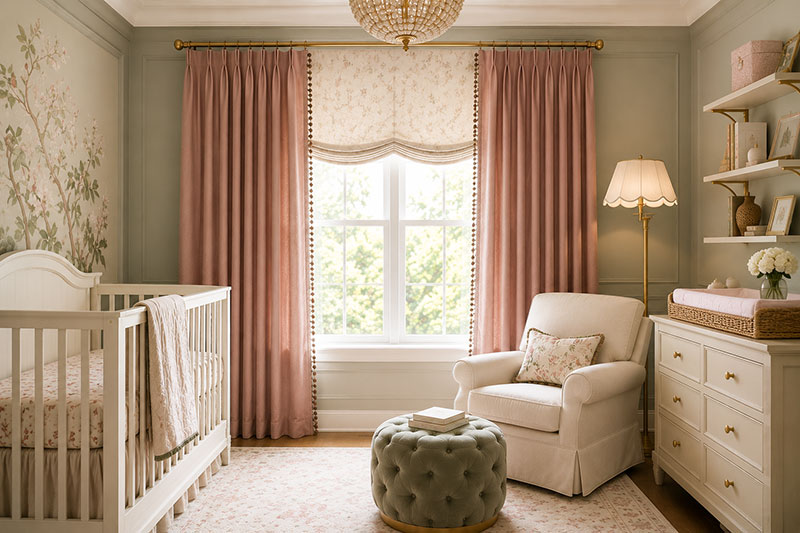
Drapes are often selected when additional privacy and sunlight control are priorities.
Best Curtain Fabrics for Nursery Use
Fabric selection affects much more than appearance.
It influences maintenance, privacy, durability, and how the room functions throughout the day.
Cotton blends remain popular because they are relatively easy to clean.
Lined fabrics help reduce visibility from outside after dark.
Polyester blends often resist wrinkles and maintain their appearance with less effort.
One thing I pay attention to is how realistic the cleaning requirements are.
Nurseries are lived in spaces. Dust settles. Windows are opened. Everyday life happens. A curtain that requires complicated care may look appealing in a showroom but become frustrating over time.
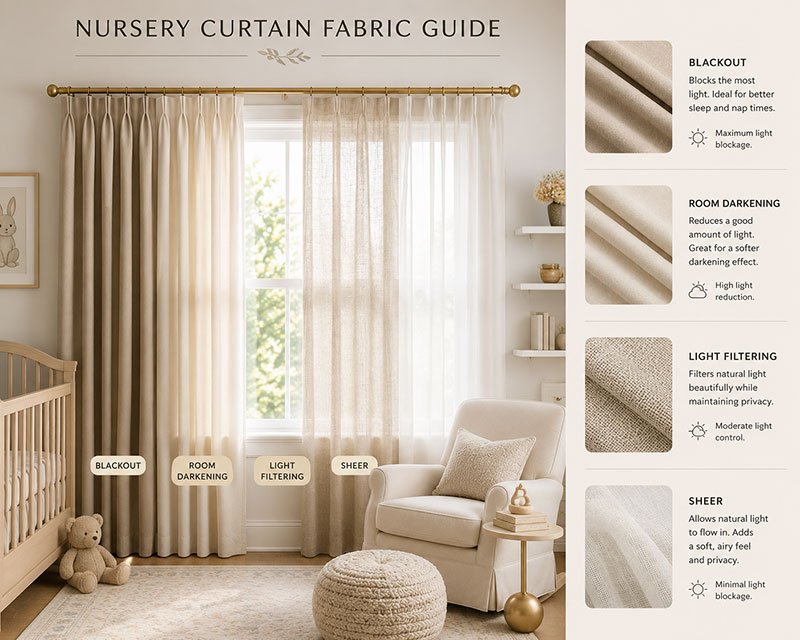
Fabric selection should balance maintenance, privacy, and room conditions.
Layered Nursery Window Treatments
Some of the most functional nurseries use more than one type of window treatment.
A shade handles light reduction.
A curtain adds privacy and visual balance.
A valance can provide a finishing detail across the top of the window.
Layering allows each product to perform a specific job.
This approach also provides flexibility throughout the day because different combinations can be used depending on lighting conditions.
If you are considering adding a decorative top treatment, my nursery window valances guide includes additional ideas.
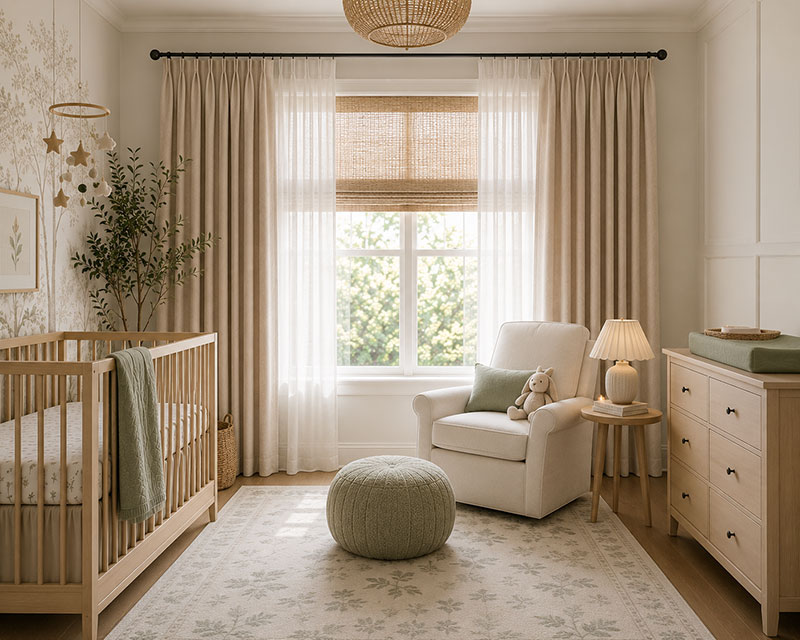
Layering allows multiple window treatments to work together throughout the day.
Curtains vs Shades vs Blinds
Each option solves a slightly different problem.
Curtains provide coverage and help frame the window.
Shades offer a streamlined appearance and sit close to the glass.
Blinds allow precise adjustment of incoming daylight.
Many families ultimately choose a combination rather than relying on a single product.
Window treatments work best when they are planned alongside the room's lighting. My nursery lighting guide explains how daylight, lamps, and window coverings work together.
A blackout shade paired with curtains remains one of the most practical solutions for many nurseries.
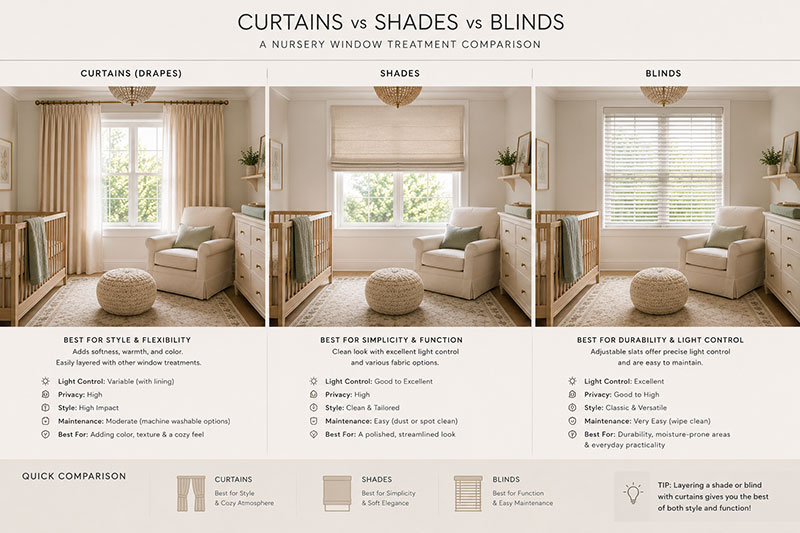
Different window treatments solve different nursery challenges.
If you are still comparing options, continue to my nursery window treatments guide for side by side comparisons of curtains, shades, blinds, drapes, and valances.
Common Nursery Curtain Mistakes
- Buying curtains before measuring correctly
- Ignoring the direction the window faces
- Choosing rods that are too narrow
- Placing furniture too close to operating cords
- Selecting highly themed curtains that quickly feel dated
- Focusing entirely on appearance while ignoring functionality
Most of these mistakes are easy to avoid once the room is evaluated during different times of the day.
A nursery can look completely different at 2 PM than it does at 7 PM. Spending a few days observing sunlight patterns often prevents expensive purchasing decisions.
What Changes When Babies Become Toddlers
Newborns rarely pay attention to the window.
Toddlers often do.
Rainstorms, birds, passing vehicles, changing seasons, and neighborhood activity suddenly become interesting.
The nursery window gradually shifts from a sleep management concern into part of how a child experiences the outside world.
Several parents have told me that the window became one of their child's favorite places in the room.
That is one reason I prefer flexible solutions that allow darkness when needed while still providing access to daylight and outdoor views during waking hours.
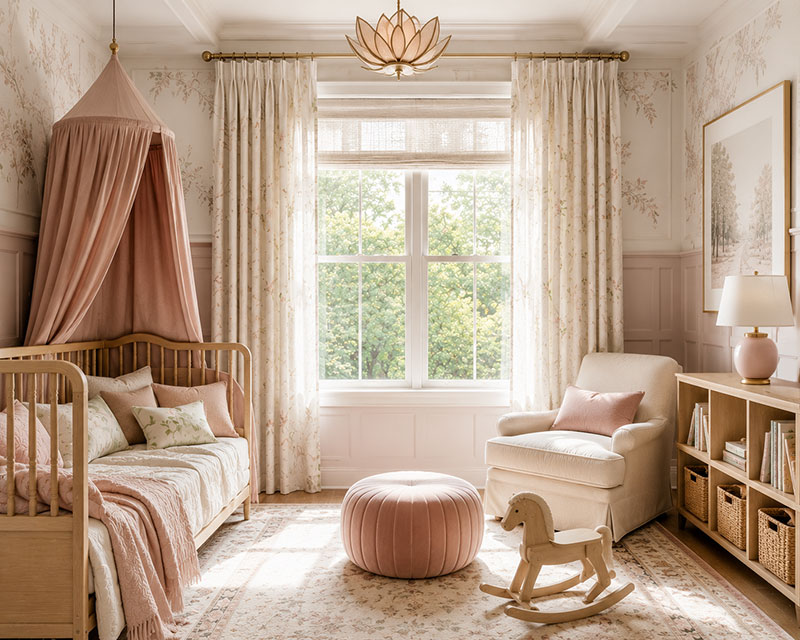
The role of the nursery window often changes as children grow and become more curious about the world around them.
Before You Buy Nursery Curtains
- Measure the window accurately
- Observe sunlight patterns throughout the day
- Select rod placement before choosing curtain width
- Consider furniture locations
- Review future safety needs
- Decide whether blackout coverage is necessary
- Check cleaning requirements
- Confirm hardware compatibility
- Think about how the room may evolve over time
Completing this checklist eliminates many of the most common nursery curtain mistakes before any money is spent.
Quick Nursery Curtain Summary
Nursery curtains should be chosen based on room function, privacy needs, sunlight exposure, safety considerations, and long term flexibility. Proper width, appropriate rod placement, and realistic maintenance requirements often matter more than decorative details. The best nursery curtains continue working well as both the room and the child change over time.
Nursery Curtains FAQ
What type of curtains are best for a nursery?
Wide curtains mounted beyond the window frame generally provide the best combination of privacy, sunlight control, and flexibility.
Do nursery curtains need blackout fabric?
No. Rooms with limited sunlight may perform perfectly well with light blocking curtains instead of full blackout products.
Should nursery curtains go to the floor?
Many rooms benefit from floor length panels, although furniture placement should influence the final decision.
How long should nursery curtains be?
Most installations work well when curtains are mounted above the frame and extend close to the floor.
How wide should nursery curtains be?
They should extend beyond the window opening to reduce daylight gaps and provide complete coverage when closed.
What color nursery curtains work best?
Colors that coordinate with multiple elements in the room often remain useful longer than highly themed choices.
Should curtains match nursery walls?
Coordinating colors often create a more natural appearance than exact matches.
Are white nursery curtains practical?
Yes. They work with many decorating styles, although they may require more frequent cleaning.
Can nursery curtains help keep a room cooler?
Yes. Curtains, drapes, and shades can help reduce solar heat gain in rooms receiving direct sunlight.
Are nursery curtains washable?
Many are, but cleaning requirements vary by fabric and manufacturer.
Are blackout shades better than blackout curtains?
Neither is automatically better. Many nurseries benefit from combining both products.
What are nursery drapes?
Drapes are generally heavier and more structured than standard curtain panels.
Can curtains help improve sleep?
Reducing incoming daylight during naps may help create more consistent sleep conditions.
Can curtains and shades be used together?
Yes. Layering multiple window treatments is one of the most effective nursery window solutions available.
Do I need a valance with nursery curtains?
No, although a valance can add a finished appearance and additional design detail around the window.
The best nursery curtains are the ones you stop thinking about because they quietly solve problems every day while allowing the room to function exactly the way it should.


About Jan | Contact | Baby Nursery Ideas (Blog) | Site Map | Privacy Policy | Disclosure Policy | Disclaimer | Affiliate Disclosure | Earnings Disclosure | Facebook | Pinterest
I am a participant in the Amazon Services LLC Associates Program, an affiliate advertising program designed to provide a means for us to earn fees by linking to Amazon. As an Amazon Associate I earn from qualifying purchases.
Copyright © 2006-2026. All Rights Reserved.