How to Quilt on a Sewing Machine (Beginner Guide for Baby Quilts)
You can learn how to quilt on a sewing machine without buying industrial quilting equipment. It is one of the most practical beginner skills, especially when starting with a baby quilt or crib-size project. With a standard home sewing and quilting machine, the correct needle, and a walking foot, you can machine quilt a baby quilt smoothly and confidently.
Start With a Baby Quilt Pattern
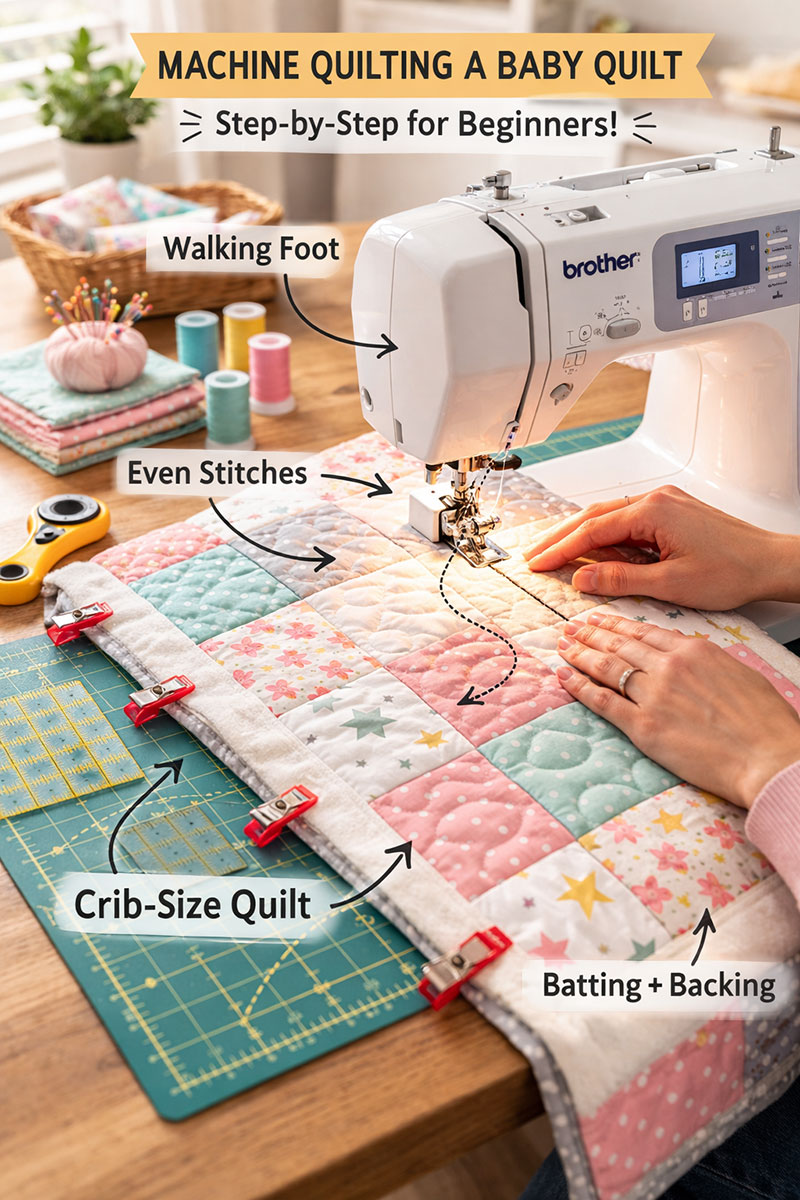
Can You Quilt a Baby Quilt on a Regular Sewing Machine?
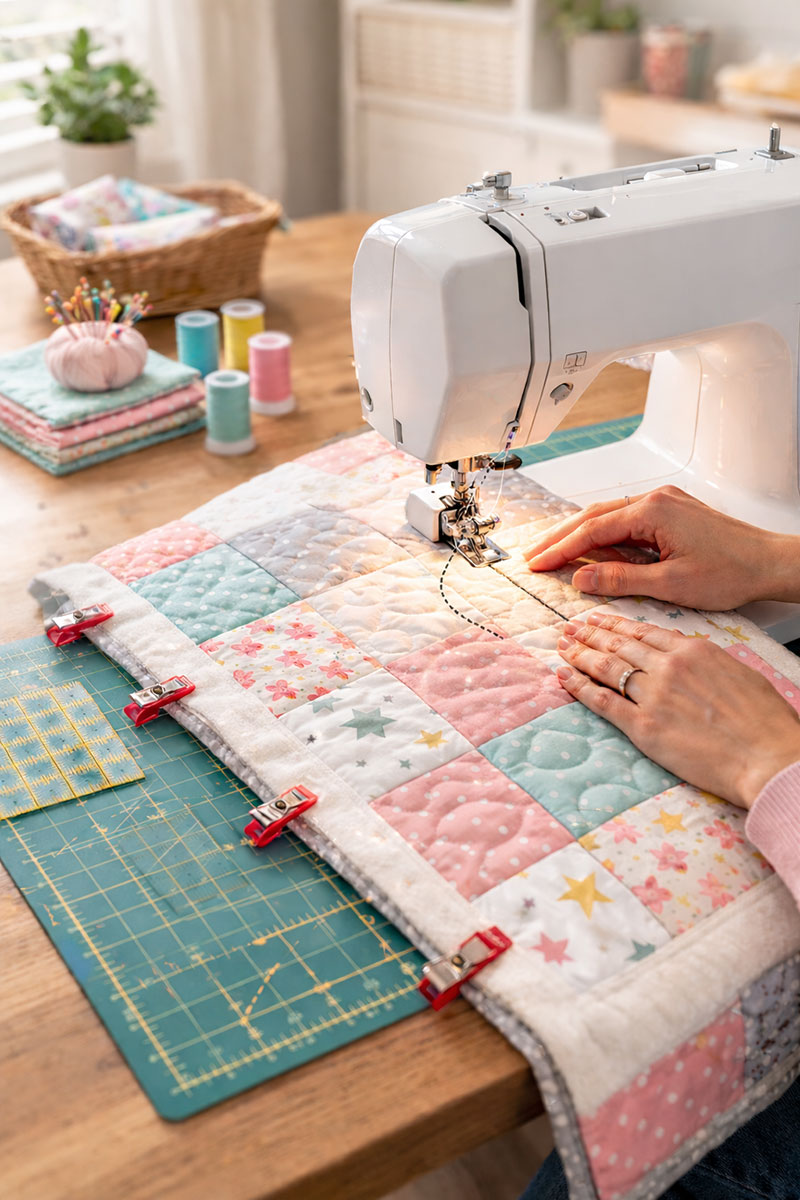
Yes, you can quilt a baby quilt on a regular home sewing machine. A long-arm system is not required. A properly functioning home sewing and quilting machine, paired with a walking foot and correct needle, is fully capable of quilting a crib-size project.
Many beginners picture bulky bed quilts overwhelming a small throat space. A baby quilt is different. Its smaller dimensions make it ideal for learning machine quilting without strain.
Because a crib quilt is compact, it is easier to rotate, easier to support, and far less likely to shift while stitching.
My complete baby quilt guide covers sizing, materials, and beginner-friendly layout ideas for baby quilt projects.
My crib quilt size guide also explains the dimensions that usually work best for crib quilts and other baby-size projects, making it easier to confirm proper proportions before quilting begins.
Checking finished measurements against the crib quilt size guide helps ensure the quilt fits the crib correctly.
Tools You Need for Machine Quilting
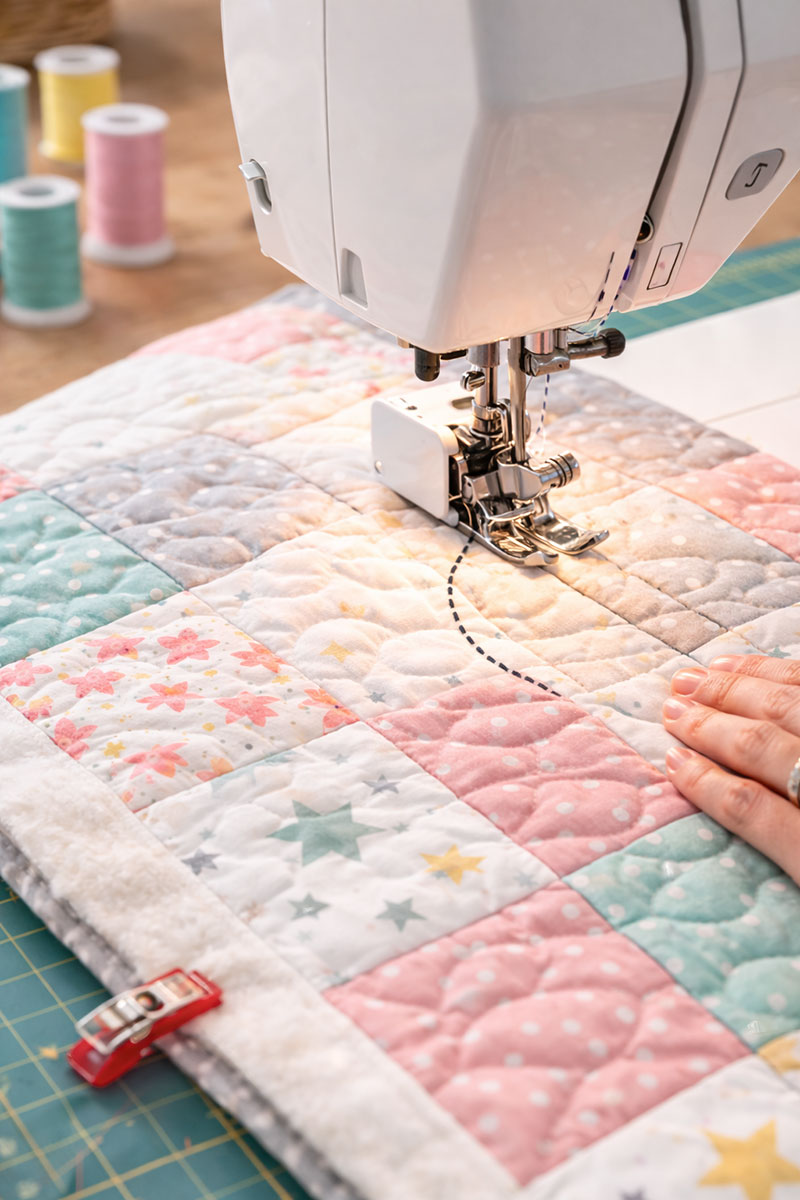
Successful machine quilting depends on preparation more than speed. Before quilting a baby quilt, confirm you have:
- Walking foot (even-feed foot)
- 90/14 quilting or universal needle
- Quality cotton or polyester thread
- Quilt sandwich properly basted
- Extension table if available
A walking foot feeds all quilt layers evenly. Without it, shifting begins. That is where puckering starts.
If batting selection is unclear, my crib quilt batting comparison outlines cotton and polyester options.
Fabric choice affects how smoothly the quilt feeds through the machine, so my baby fabrics guide can help you choose quilt-weight cotton, flannel, muslin, and other washable fabrics before you start sewing.
How to Quilt on a Sewing Machine (Step-by-Step Baby Quilt Guide)
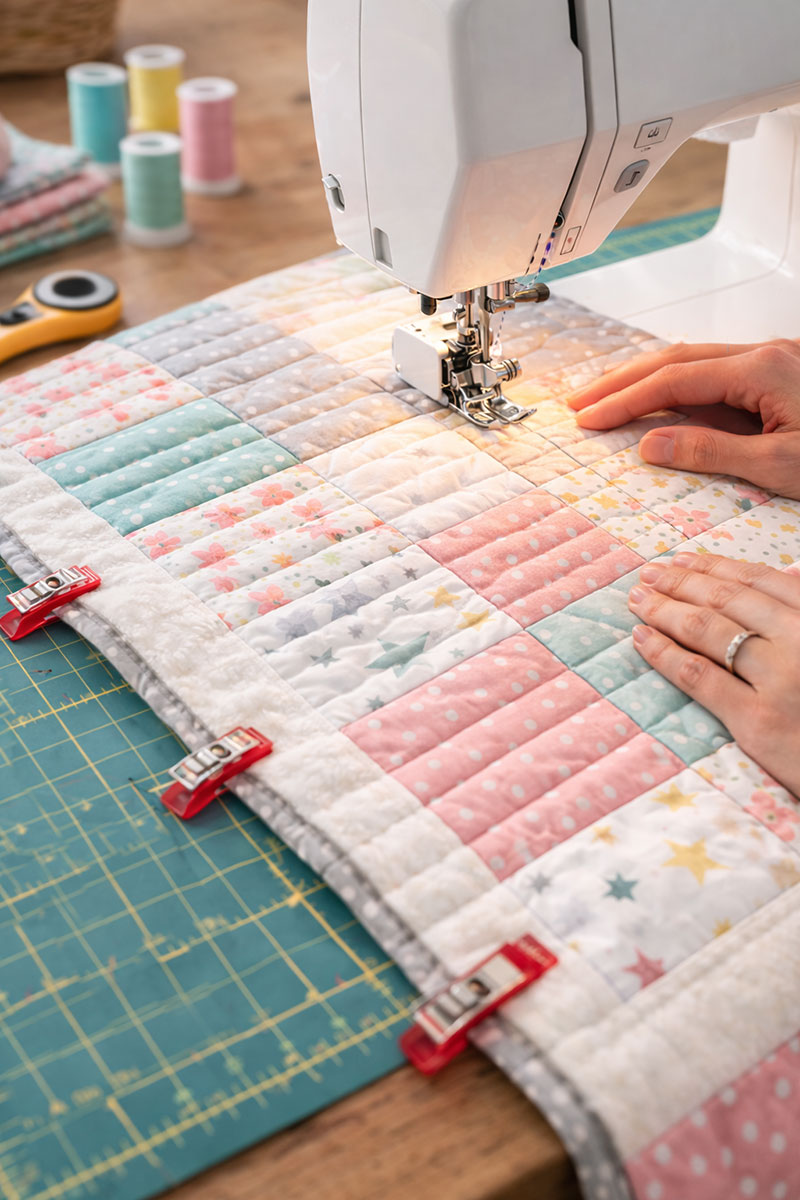
Definition: Quilting on a sewing machine means stitching through the quilt top, batting, and backing layers using a standard home machine to secure them into one finished quilt.
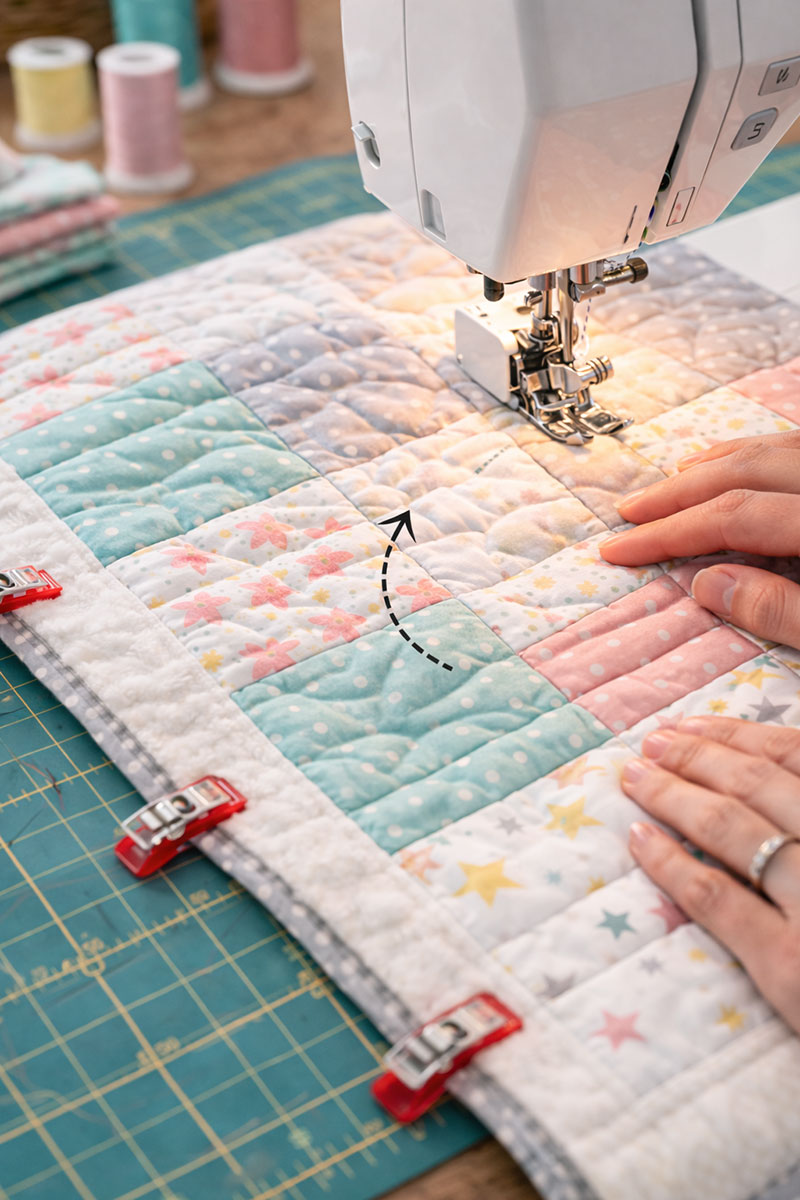
Step 1: Baste Properly. Secure layers every 3–4 inches using pins or clips.
Step 2: Start in the Center. Work outward to reduce fabric distortion.
Step 3: Use Straight Lines First. For a first project, stitch in the ditch or quilt 1–2 inches apart in straight rows.
Step 4: Support the Quilt Weight. Keep the quilt level with the machine bed to prevent drag.
Step 5: Adjust Speed, Not Force. Let the feed dogs move the fabric. Avoid pushing.
Because a crib quilt is manageable in size, you can rotate it comfortably for simple grid or crosshatch designs. Advanced free-motion work can come later.
Do not overcomplicate your first quilt.
Common Beginner Mistakes to Avoid
Quick Beginner Checklist
- ✔ Walking foot attached
- ✔ Fresh 90/14 needle installed
- ✔ Quilt layers basted evenly
- ✔ Test stitch completed on scrap fabric
- ✔ Quilt supported to prevent drag
Confirming these five basics prevents most quilting problems.
Skipping the walking foot. This is the leading cause of uneven feeding.
Using a dull needle. Replace needles regularly to prevent skipped stitches.
Quilting too far apart. Follow batting stitch-spacing guidelines.
Pulling the quilt. Let the machine feed the fabric naturally.
Skipping a test stitch. Always test tension before quilting.
Puckering is usually caused by uneven layer feeding, not inexperience.
Sewing Machine Features That Help With Quilting
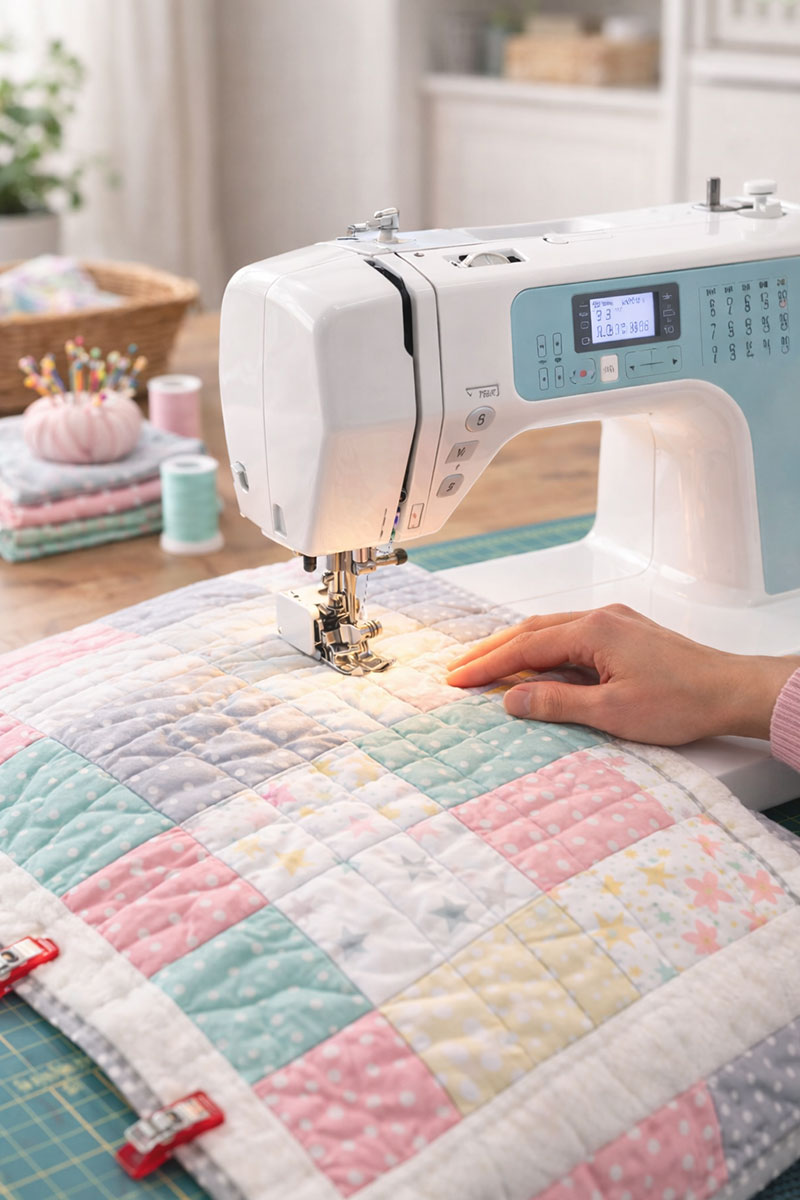
This section focuses strictly on performance features, not brand comparisons.
When selecting a machine for quilting baby quilts, prioritize:
- 6–7 inches of throat space minimum
- Adjustable stitch length
- Strong motor for layered seams
- Walking foot compatibility
- Extension table support
Many beginner-friendly machines under $600 are fully capable of quilting crib-size projects.
Once you are comfortable quilting gentle curves and appliqué edges, a butterfly crib quilt pattern is a pretty next project for practicing soft shapes on a nursery quilt.
For a sweet floral project that also lets you practice soft appliqué shapes, my daisy crib quilt pattern is a lovely next step for a spring nursery quilt.
Stability and even feeding matter more than decorative stitch count.
Straight stitching quality is the priority for baby quilt projects.
Beginner-Friendly Quilting Machine
For crib-size projects and straight-line quilting, this model provides consistent stitch control, reliable feeding, and sufficient throat space for maneuvering small quilts without upgrading to industrial equipment.
General consumer product safety guidance in the United States is overseen by the U.S. Consumer Product Safety Commission.
According to the American Academy of Pediatrics, loose bedding should not be placed in an infant sleep environment. Quilts are best used for supervised tummy time, stroller outings, or keepsake layering rather than unattended crib sleep.
This guide focuses solely on how to quilt on a sewing machine using a baby quilt example. It does not involve modifying equipment or altering safety components. A properly functioning home sewing machine is sufficient.
Quick Summary: You can quilt a baby quilt on a regular home sewing machine using a walking foot, proper needle, and straight-line stitching from the center outward. Crib-size quilts are ideal beginner projects because they are easier to maneuver and less prone to shifting.
For final layout planning before quilting, continue with the crib quilt size guide.
When you click on links to various merchants on this site and make a purchase, this may result in this site earning a commission. This does not affect the price you pay.

UBGI Gold Standard 2026
Reviewed under the site's
editorial checklist.
Photos, decorating ideas, party setups and reader submissions are shared for inspiration unless a page is specifically presented as a pattern, tutorial, reference guide or step-by-step project. Follow the instructions, measurements, safety guidance and manufacturer directions provided for the particular project or product.
About Jan | Contact | Baby Nursery Ideas (Blog) | Site Map | Privacy Policy | Disclosure Policy | Disclaimer | Affiliate Disclosure | Earnings Disclosure | Facebook | Pinterest
I am a participant in the Amazon Services LLC Associates Program, an affiliate advertising program designed to provide a means for us to earn fees by linking to Amazon. As an Amazon Associate I earn from qualifying purchases.
Copyright © 2006-2026. All Rights Reserved.