Crib Quilt Size (Standard Dimensions)
A standard crib quilt size typically ranges from 36 x 45 inches to 45 x 60 inches, depending on pattern layout and the amount of overhang you prefer. Unlike a fitted crib sheet, a quilt does not need to match the mattress exactly. Most standard quilt dimensions are chosen for visual balance and safe decorative use rather than a tight mattress fit. Below, you’ll find clear guidance on average baby quilt measurements, mattress overhang, batting sizes, and how a quilt compares to a crib blanket.
Plan Your Baby Quilt Next Steps
What Is the Standard Crib Quilt Size?
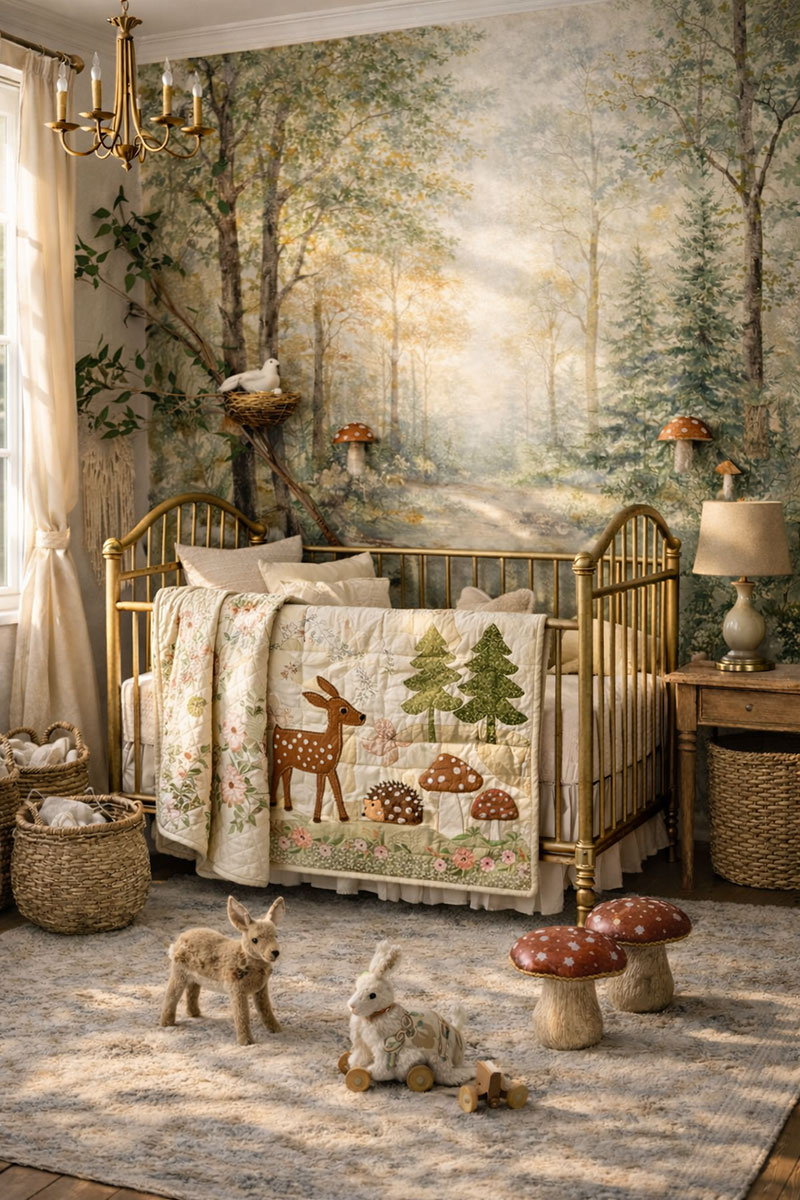
The most common standard crib quilt size falls between 40 x 50 inches and 45 x 60 inches. The average crib quilt size you see in nursery inspiration photos is about 45 x 50 inches. Smaller crib size quilt patterns may finish at 36 x 45 inches, especially for beginner-friendly layouts.
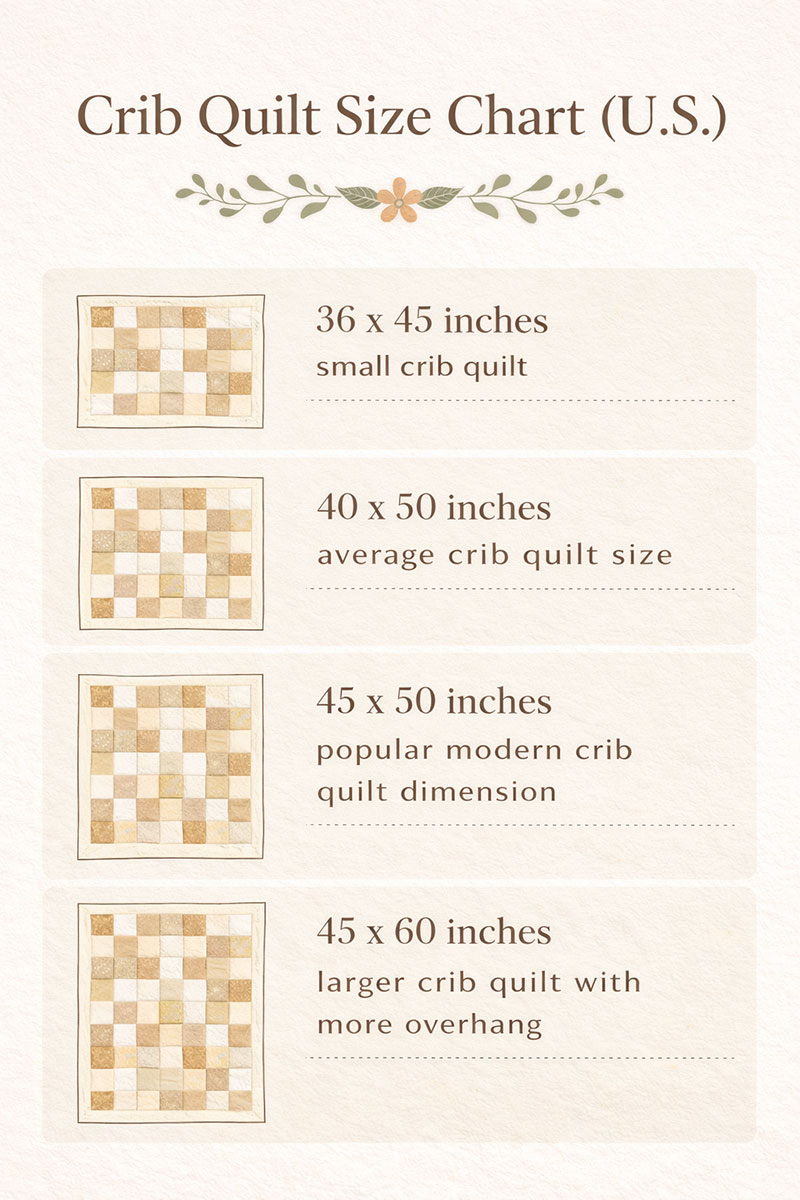
Standard crib quilt size: Most crib quilts in the United States measure between 36 x 45 inches and 45 x 60 inches, with 40 x 50 and 45 x 50 inches being the most common finished dimensions.
For reference, a standard U.S. crib mattress measures approximately 28 x 52 inches. Quilts are intentionally larger than the mattress to allow for drape or display over the rail.
They are not intended to be tucked tightly around a sleeping infant.
For broader safe infant sleep recommendations in the United States, see guidance from the CDC’s infant sleep recommendations, which outline current sleep environment best practices.
Crib Quilt Size Chart
Crib Quilt Size Chart (U.S.)
- 36 x 45 inches – small crib quilt
- 40 x 50 inches – average crib quilt size
- 45 x 50 inches – popular modern crib quilt dimension
- 45 x 60 inches – larger crib quilt with more overhang
If you are searching “how big is a crib quilt” or “what size should a crib quilt be,” this range covers nearly all standard crib size quilt patterns sold or made in the United States.
How Much Mattress Overhang Should a Crib Quilt Have?
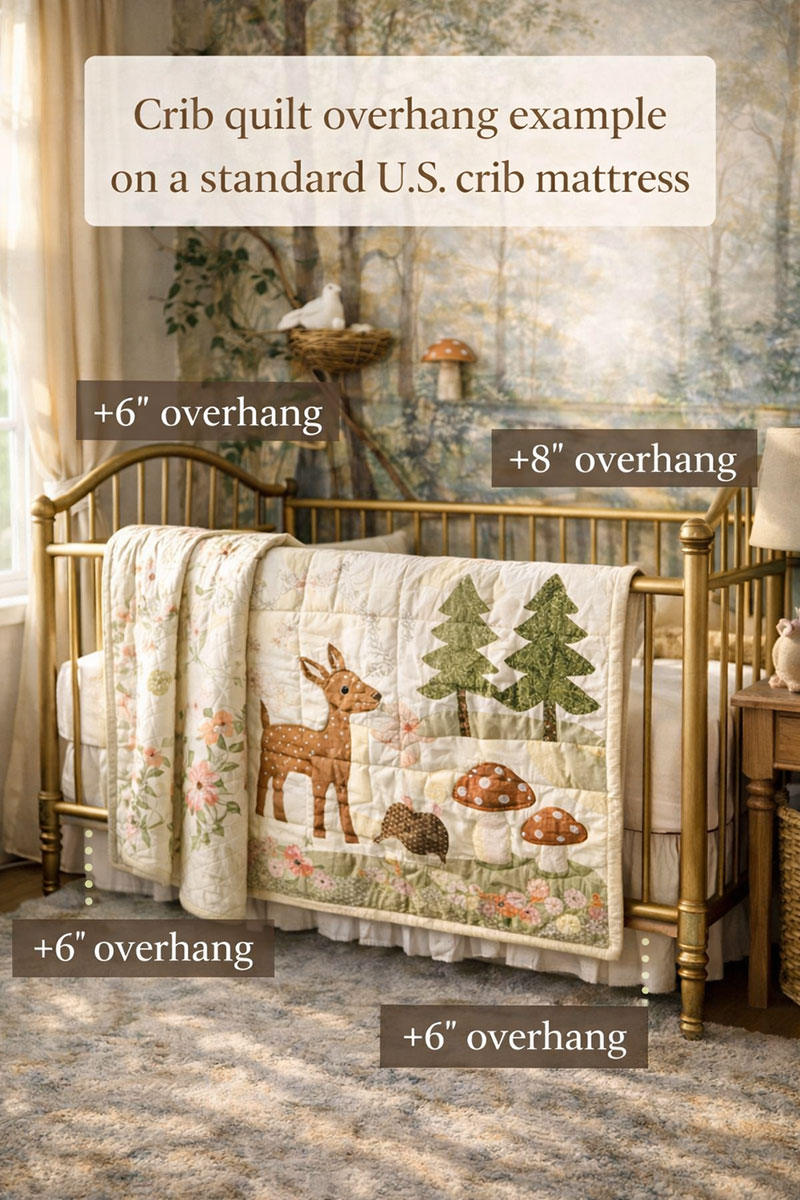
Because a standard crib mattress is 28 x 52 inches, overhang depends on the finished quilt size.
Example:
- A 40 x 50 inch quilt will have minimal side drape and slight length overhang.
- A 45 x 60 inch quilt allows more balanced visual overhang on all sides.
Most designers aim for 4–8 inches of visible drape on the sides when the quilt is displayed. Decorative overhang should look intentional, not oversized.
Does a crib quilt need to fit the mattress? No. It should be proportionate, not fitted.
What Size Batting Do You Need for a Crib Quilt?
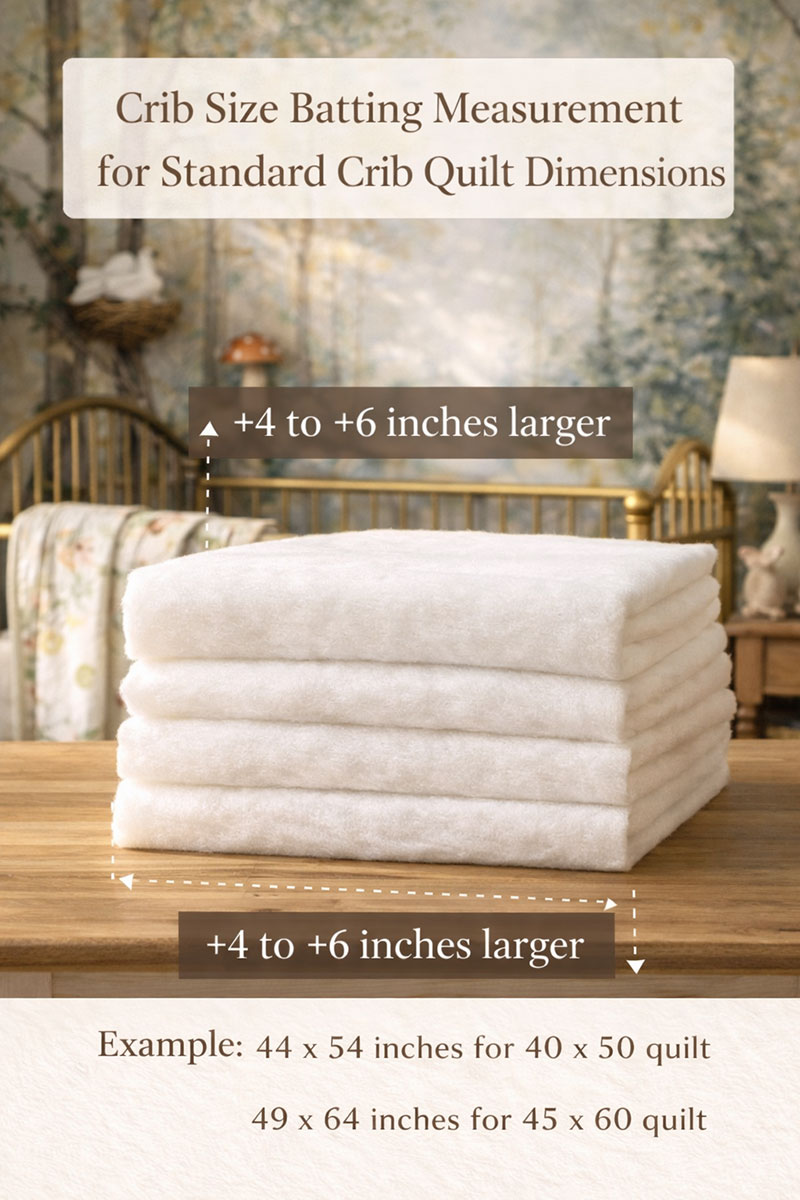
Crib size batting should be slightly larger than your finished quilt top before trimming.
If you’re unsure which loft or fiber type to choose, my crib quilt batting guide explains the differences in a simple way and can help you match the batting to the kind of crib quilt you want to make.
Fabric choice also affects the finished size, drape, and softness of a crib quilt, so my baby fabrics guide can help you choose cottons and nursery fabrics before cutting quilt blocks.
For example:
- For a 40 x 50 quilt, start with batting at least 44 x 54 inches.
- For a 45 x 60 quilt, use batting around 49 x 64 inches.
Choosing both pattern layout and crib quilt size together helps ensure proportions feel balanced before cutting batting or finalizing border measurements.
Crib Quilt vs Crib Blanket Size
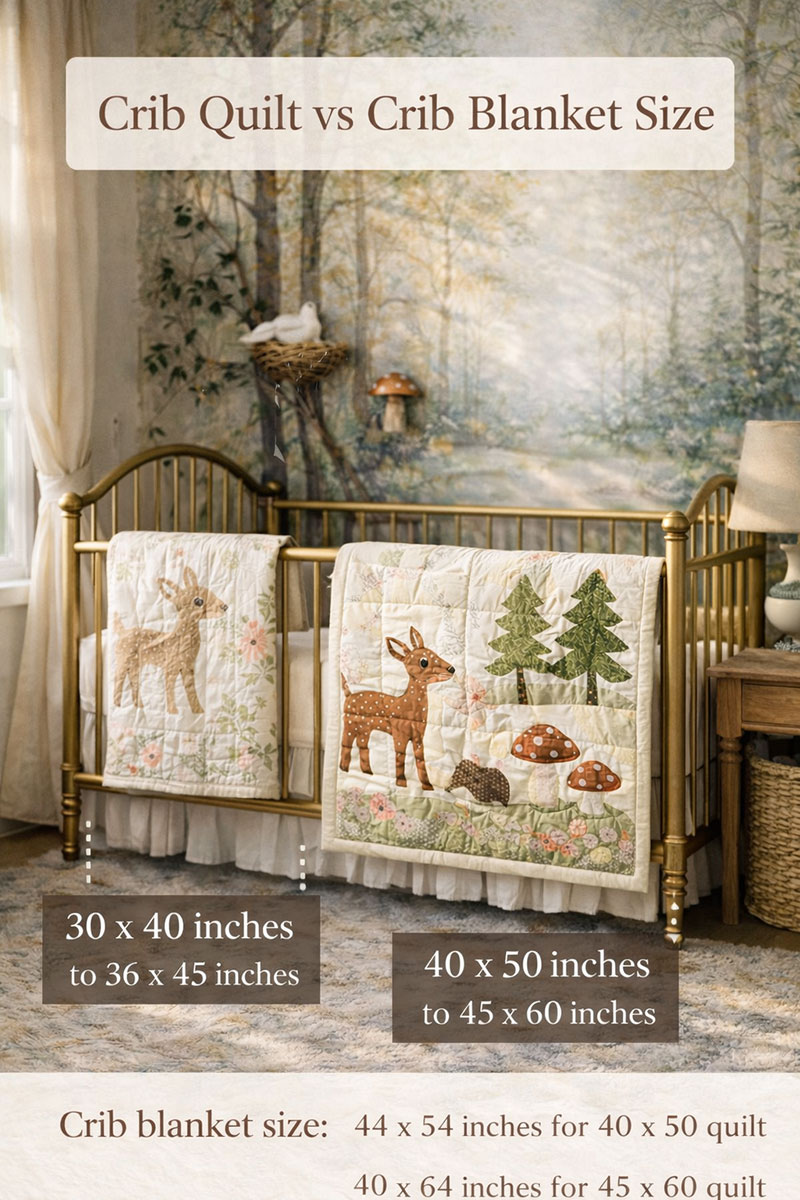
Crib blanket size is often slightly smaller than crib quilt size.
- Crib blanket size commonly ranges from 30 x 40 inches to 36 x 45 inches.
- Crib quilt size usually ranges from 40 x 50 inches to 45 x 60 inches.
A crib blanket may be lighter weight and less structured, while a quilt contains batting and layered stitching. When people search “crib quilt vs crib blanket size,” they are usually deciding between decorative display and lighter layering.
A quilt is typically constructed with three layers and stitched for structure, while a crib blanket may be single-layer or knit, which affects drape, weight, and display proportions.
If you’re planning a full nursery layout around your crib, you can explore broader placement ideas in our nursery layout guide.
What Size Should a Crib Quilt Be for a Standard U.S. Crib?
If you're wondering what size a crib quilt should be for a standard U.S. crib, the safest and most common range is between 40 x 50 inches and 45 x 60 inches. That size provides visual balance when draped over the rail and avoids looking undersized against a 28 x 52 inch mattress.
A smaller quilt, such as 36 x 45 inches, can work well for minimalist nursery styling or beginner quilt patterns. A larger quilt, closer to 45 x 60 inches, creates a more dramatic display and slightly more overhang on the sides.
To see that smaller measurement used in a complete project, my 36 × 45-inch apple crib quilt pattern provides the cutting measurements, nine-block layout, printable appliqué pieces and finishing instructions.
The ideal crib quilt size depends on how it will be used. Decorative nursery display quilts are often sized for proportion and drape. Keepsake quilts or heirloom pieces may be slightly larger. A quilt intended for supervised tummy time may be closer to crib blanket size.
When in doubt, aim for proportion over precision. A crib quilt does not need to fit the mattress like a sheet. It should look intentional when folded or draped, not stretched or tightly wrapped.
Final Measurement Summary
Most standard U.S. crib quilts measure between 36 x 45 inches and 45 x 60 inches, with 40 x 50 and 45 x 50 inches being the most common finished dimensions. Decorative overhang is intentional, not fitted, and batting should always be cut slightly larger than the finished quilt top to allow for shrinkage and squaring.
This page serves as a focused crib quilt size reference so measurement decisions remain consistent across patterns, batting selection, and nursery styling.
To see how these standard dimensions translate into a themed layout, review the woodland baby crib quilt pattern example, which applies typical 40 x 50 and 45 x 60 inch proportions to a balanced forest-inspired design.
Once you’ve settled on dimensions, you can explore themed layouts inside my crib quilt patterns for boys guide to see how different block styles translate into standard crib quilt sizes.
For seasonal layouts that use these same standard dimensions with softer florals, bunnies, and light pastel palettes, browse my spring crib quilt pattern ideas for inspiration that still fits a standard U.S. crib beautifully.
For a more whimsical themed option that displays well in standard crib quilt dimensions, see this safari animal baby quilt pattern.
When you click on links to various merchants on this site and make a purchase, this may result in this site earning a commission. This does not affect the price you pay.

UBGI Gold Standard 2026
Reviewed under the site's
editorial checklist.
Photos, decorating ideas, party setups and reader submissions are shared for inspiration unless a page is specifically presented as a pattern, tutorial, reference guide or step-by-step project. Follow the instructions, measurements, safety guidance and manufacturer directions provided for the particular project or product.
About Jan | Contact | Baby Nursery Ideas (Blog) | Site Map | Privacy Policy | Disclosure Policy | Disclaimer | Affiliate Disclosure | Earnings Disclosure | Facebook | Pinterest
I am a participant in the Amazon Services LLC Associates Program, an affiliate advertising program designed to provide a means for us to earn fees by linking to Amazon. As an Amazon Associate I earn from qualifying purchases.
Copyright © 2006-2026. All Rights Reserved.