Crib Quilt Batting: Cotton vs Polyester vs Wool Comparisons
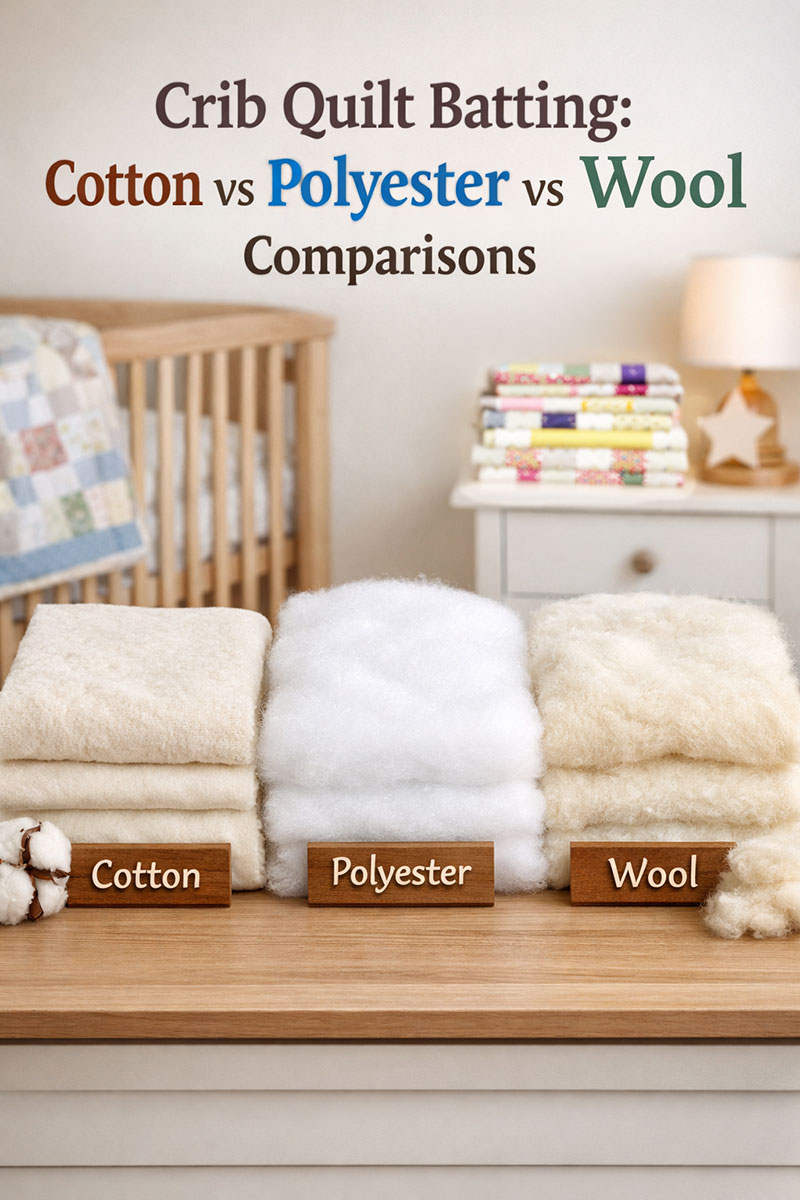
Crib quilt batting comparisons help you decide between cotton, polyester, and wool before you start sewing. The batting you choose affects warmth, breathability, loft, washability, and how the finished crib quilt drapes over the mattress. For baby quilts, you want something lightweight, breathable, and durable but not overly thick or stiff. This guide clearly compares cotton, polyester, and wool crib quilt batting so you can choose the right option based on climate, care preferences, and the look you want your quilt to have.
Browse More Crib Quilt Guides
Crib Quilt Batting Comparisons (Quick Guide)
Crib quilt batting is the insulating layer inside a quilt that affects warmth, loft (puffiness), breathability, washability, and overall feel. Cotton is breathable and traditional. Polyester is lightweight and lofty. Wool regulates temperature and resists moisture. The right choice depends on climate, washing frequency, and how lightweight you want the finished quilt to be.
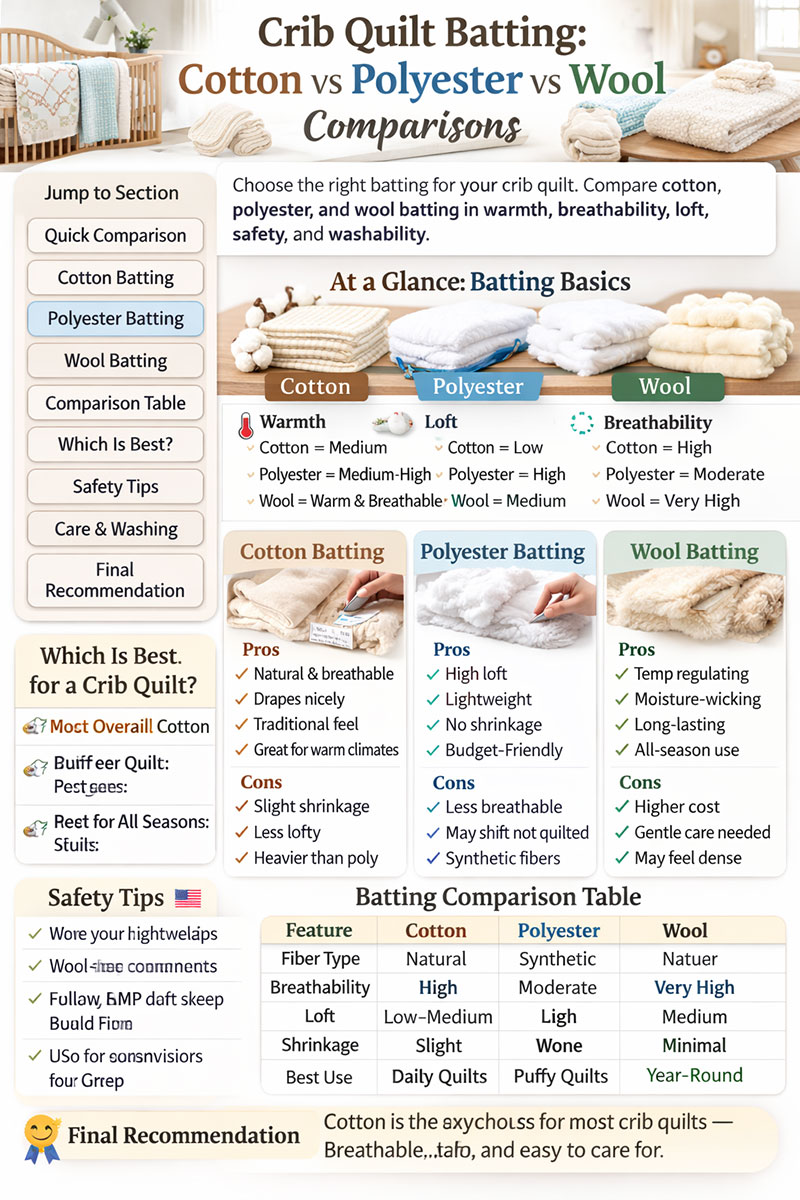
Each material behaves differently once quilted and washed. For baby quilts especially, loft and airflow matter more than decorative thickness, and my baby fabrics guide can help you choose quilt cottons and nursery-friendly prints that work well with the batting you select.
Cotton Batting
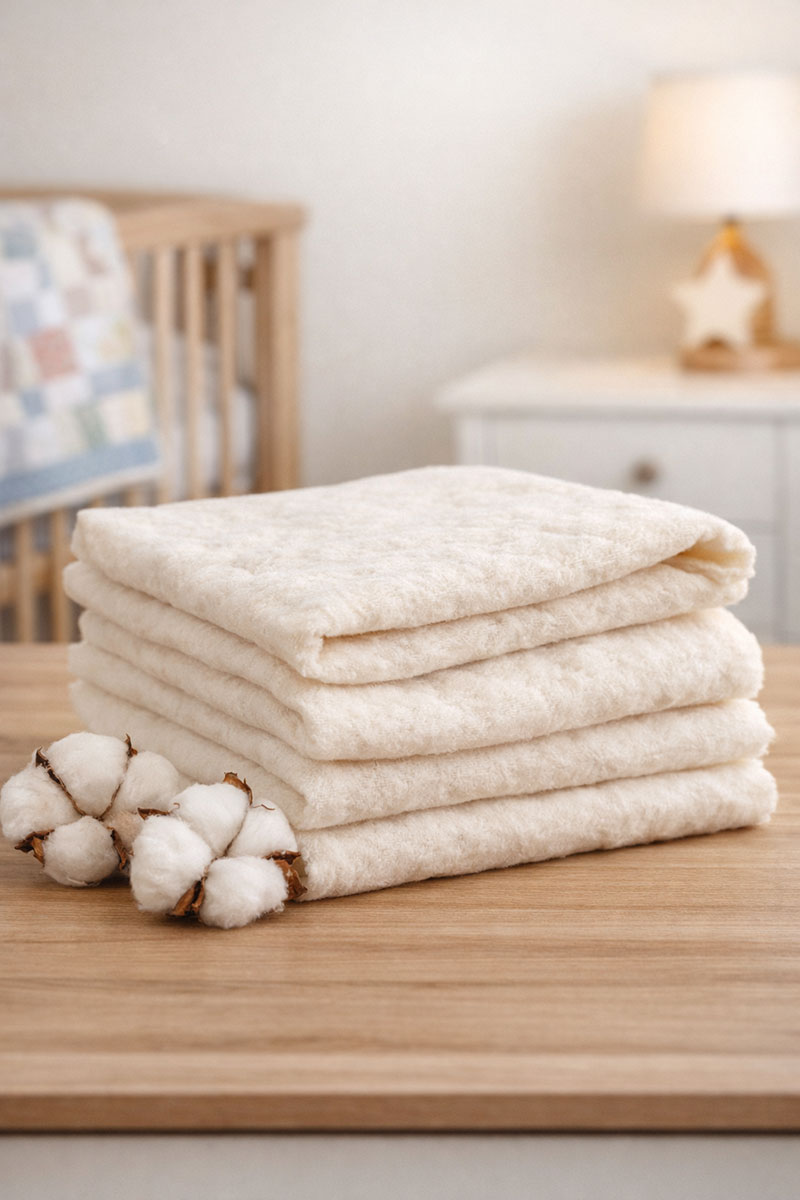
Cotton batting is the most commonly used option for crib quilts. It is made from natural fibers and produces a flatter, breathable finish that drapes nicely over a crib mattress.
Strengths: High breathability, soft traditional feel, easy to quilt, stable structure after stitching.
Limitations: Slight shrinkage (often 3–5% unless pre-shrunk), slightly heavier than polyester, less dramatic loft.
For everyday nursery use, cotton strikes a strong balance between comfort and durability. It washes well and feels familiar in hand.
For a reliable low-loft option suitable for baby quilts, you can review this cotton crib quilt batting to compare thickness and material details before purchasing.
Polyester Batting
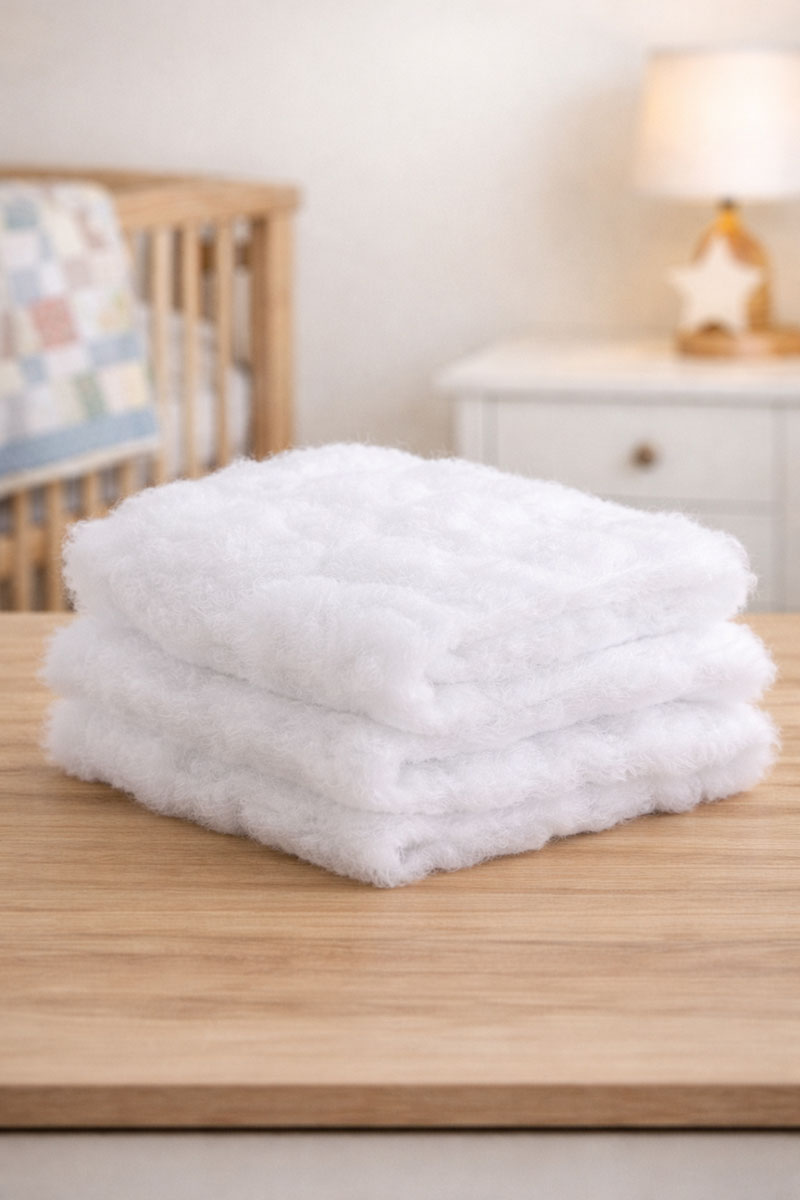
Polyester batting is synthetic and known for its loft. It produces a fluffier, puffier quilt with a lighter overall weight.
Strengths: High loft, minimal shrinkage, dries quickly, budget-friendly.
Limitations: Less breathable than natural fibers, may shift if quilting lines are spaced too far apart.
Poly batting creates visual softness but can feel warmer due to reduced airflow. It works best when you want a visibly plush look without adding weight.
Wool Batting
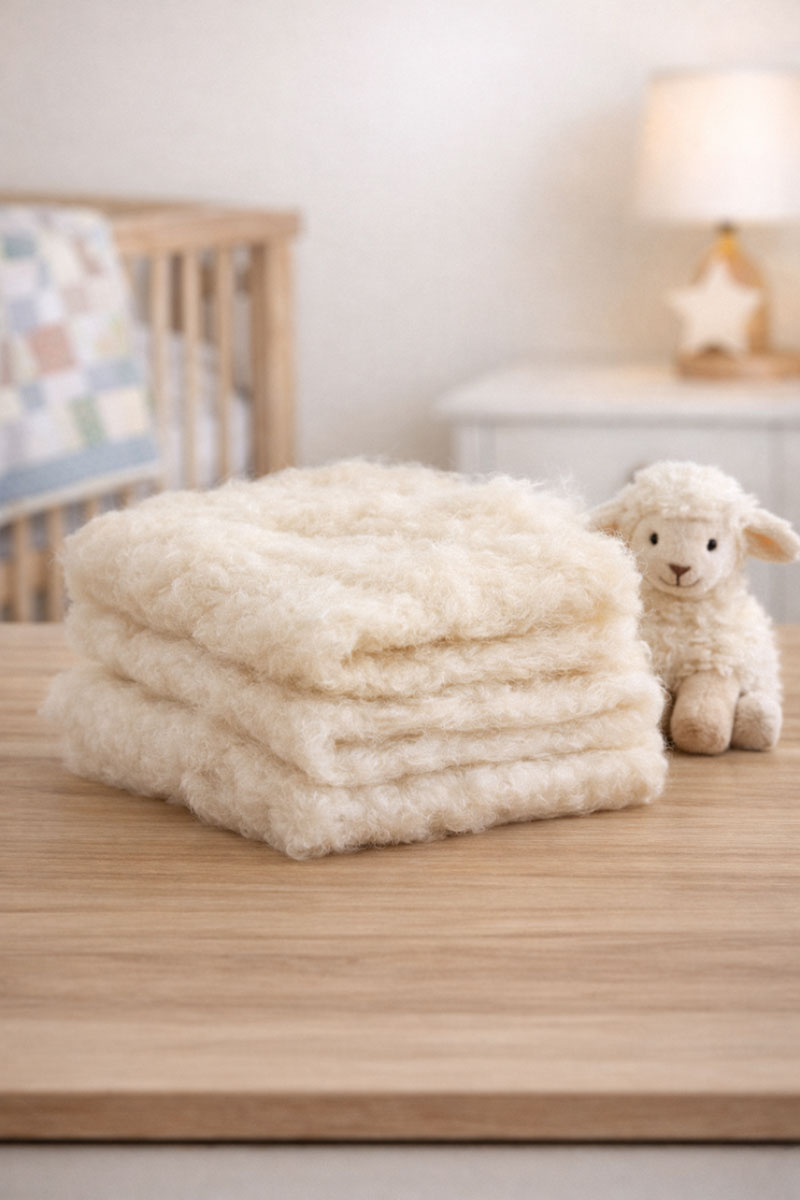
Wool batting is natural, breathable, and temperature-regulating. It traps warmth in cooler weather while allowing airflow in warmer conditions.
Strengths: Moisture-wicking, odor-resistant, lightweight for its insulation level, long-lasting.
Limitations: Higher cost, may require gentler washing methods.
Wool is often chosen for premium heirloom quilts because it maintains resilience without becoming dense.
Which Batting Is Best for a Crib Quilt?
For most nursery environments, cotton offers the safest balance of breathability, comfort, and washability. Wool is excellent for climate variability. Polyester is useful when lightweight loft is the primary design goal.
How Crib Quilt Batting Affects the Finished Quilt’s Appearance
The type of crib quilt batting you choose changes more than warmth. It directly affects how the finished quilt looks, hangs, photographs, and ages over time. Two quilts made from the same fabric can look completely different depending on what is layered inside.
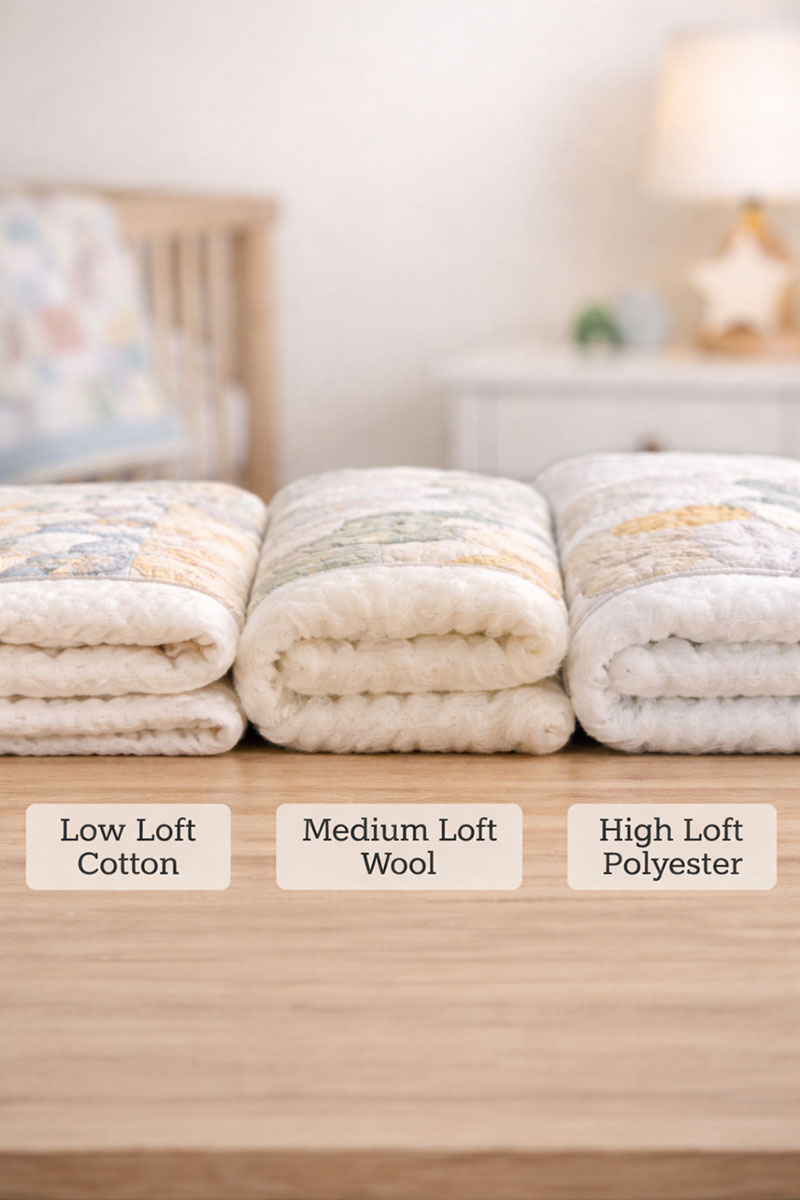
Cotton batting creates a flatter, more tailored appearance. Stitch lines appear subtle and structured. The quilt drapes smoothly across the crib mattress without exaggerated puffiness. Over time, cotton develops a slightly crinkled texture after washing, which many quilt makers prefer because it gives an heirloom look.
Polyester batting increases loft. The stitching becomes more defined because the batting rises between quilt lines. This produces a visibly puffier quilt. It can look soft and plush in photos, but the thickness may feel more padded in hand. If quilting lines are spaced widely, polyester can appear even more dimensional.
Wool batting falls between the two. It offers gentle loft with resilience. Rather than flattening or becoming stiff, wool maintains a subtle spring. The finished quilt appears airy rather than dense. It tends to hold its shape beautifully over time without excessive wrinkling.
Visual outcome matters.
If your goal is a smooth nursery aesthetic with clean lines, cotton is often the safest visual choice. If you prefer depth and defined stitching texture, polyester will exaggerate quilting patterns. Wool offers softness without dramatic puffiness, making it popular for heirloom-quality baby quilts.
Crib Quilt Batting and Washability
Crib quilts must tolerate repeated washing. Spit-up, diaper leaks, and everyday handling make durability important.
Cotton batting can shrink slightly during the first wash unless it is pre-shrunk. This shrinkage creates the characteristic crinkle that many quilt makers appreciate. After the initial wash, it remains stable and durable.
Polyester batting does not shrink and dries quickly. It maintains loft through multiple wash cycles. However, extremely high heat can reduce its fluffiness over time.
Wool batting requires gentler washing conditions. Cold water and low heat drying help preserve its structure. When properly cared for, wool remains resilient for years without matting.
For long-term durability, quilting lines should be spaced according to the batting manufacturer’s guidelines to prevent shifting or bunching inside the quilt.
Choosing Crib Quilt Batting Based on Climate
Climate plays a practical role in batting selection.
In warmer regions, breathability is the priority. Cotton and wool both allow airflow, reducing heat buildup. Polyester retains warmth slightly more due to lower airflow.
In cooler climates, wool provides insulation without becoming heavy. Cotton can also work well when layered properly. Polyester may feel warmer due to loft, but airflow should still be considered.
Regardless of region, crib quilts used inside a crib should remain lightweight. According to the American Academy of Pediatrics, safe sleep environments in the United States should avoid heavy bedding inside the crib. Quilts are best reserved for supervised time, tummy time, or decorative layering when the crib is not in active sleep use.
Final Considerations Before You Choose Crib Quilt Batting
When deciding on crib quilt batting, ask three practical questions:
- How often will this quilt be washed?
- Do I prefer a flat drape or visible puffiness?
- Is breathability or loft more important for this nursery environment?
Cotton remains the most balanced option for most crib quilts. Wool offers premium temperature regulation. Polyester provides loft and budget flexibility. Each has a place depending on your priorities.
If you are planning dimensions for your project, review the crib quilt size guidelines to ensure your batting thickness and finished measurements work together correctly.
If you are planning additional layers, sizing, or construction details, review the full baby quilt guide here to ensure your finished dimensions and materials work together correctly.
Keep the finished crib quilt lightweight.
For themed project ideas that pair well with low-loft cotton or breathable wool options, browse my baby boy crib quilt patterns to see how batting choice supports both structure and design.
For a forest-inspired example that shows how low-loft cotton or wool performs inside a nature-themed design, see the woodland baby quilt pattern layout for a practical construction breakdown.
Bottom line: Cotton is the most balanced option for most crib quilt projects. Wool adds climate control. Polyester adds loft. The right choice depends on how the quilt will be used and washed over time.
When you click on links to various merchants on this site and make a purchase, this may result in this site earning a commission. This does not affect the price you pay.

UBGI Gold Standard 2026
Reviewed under the site's
editorial checklist.
Photos, decorating ideas, party setups and reader submissions are shared for inspiration unless a page is specifically presented as a pattern, tutorial, reference guide or step-by-step project. Follow the instructions, measurements, safety guidance and manufacturer directions provided for the particular project or product.
About Jan | Contact | Baby Nursery Ideas (Blog) | Site Map | Privacy Policy | Disclosure Policy | Disclaimer | Affiliate Disclosure | Earnings Disclosure | Facebook | Pinterest
I am a participant in the Amazon Services LLC Associates Program, an affiliate advertising program designed to provide a means for us to earn fees by linking to Amazon. As an Amazon Associate I earn from qualifying purchases.
Copyright © 2006-2026. All Rights Reserved.