How to Choose Frog Fabric for Nursery Sewing and Baby Projects
By Jan Bay
This page will help you choose frog fabric for bedding, curtains and nursery decor so the room can be cute without looking like a cookie cutter, store bought collection anyone can buy. You will need to make choices that give you the look you want without letting things get too “froggy.” The key is choosing the right fabric for what you're making. But how much frog print do you actually need? A little frog quilting cotton mixed with gingham, ticking, dots or a good solid can give you a much more pulled together look than one frog print after another. On this page, I'll show you how to choose the mix, scale and colors so the finished nursery looks coordinated without looking like it came straight from a matching set at the local discount store.
Explore More Frog Nursery Ideas
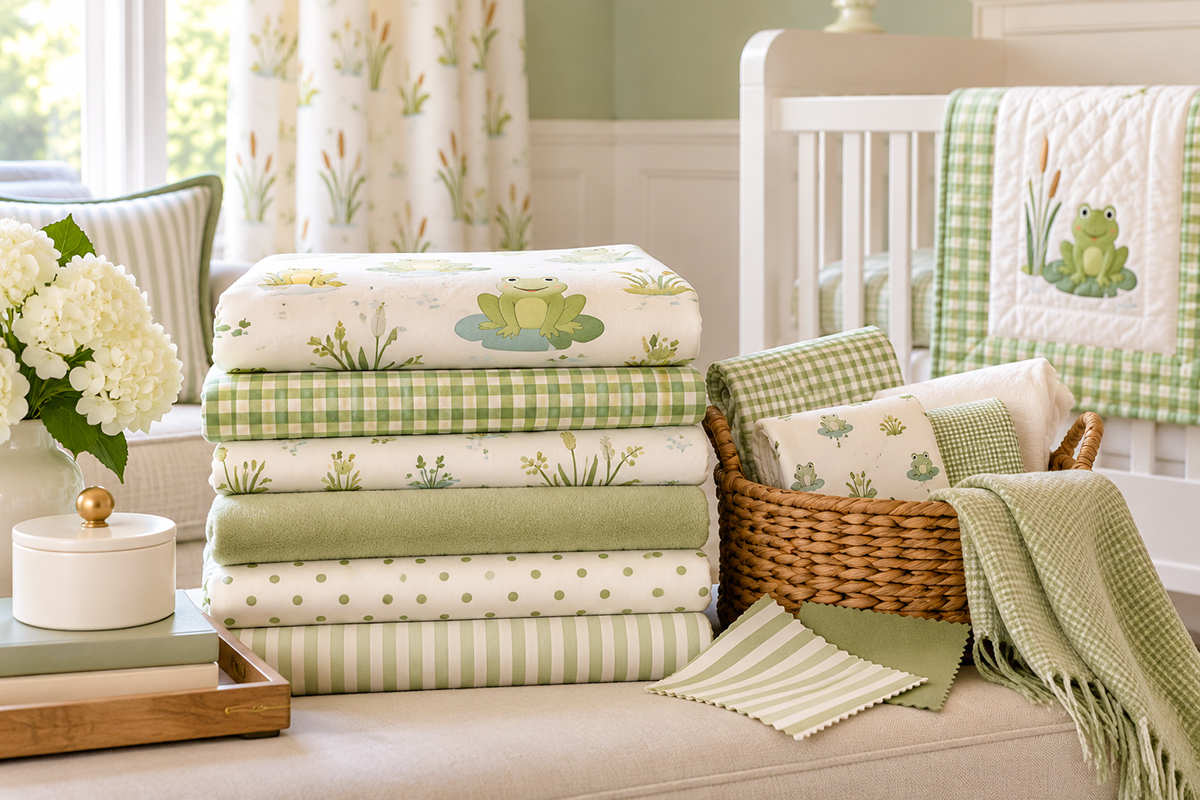
Helpful for Frog Nursery Sewing Projects
Frog Print Fabric and Coordinating Fabrics
Use the frog print as the feature fabric, then look for solids, gingham, ticking, dots or small geometric prints that pull one or two colors from it.
Jump to:
Choosing Frog Fabric for the Project
Frog Cotton Fabric, Flannel and Fleece
Choosing the Right Frog Print Scale
Frog Fabric Color Combinations
How to Mix Frog Fabric With Other Prints
Nursery Sewing Projects for Frog Fabric
Choosing Frog Fabric for the Project
Start with what you're actually making. A frog print that looks adorable folded on a shelf can be completely wrong once it's cut into a curtain panel, quilt block or tiny bib. Before you buy several yards, look at the size of the frogs, how far apart they are and how much of the repeat will show on the finished piece.
If you're making curtains, a larger frog print has room to breathe. You can see the whole frog, the lily pad or whatever else is going on in the design. Put that same fabric into a small bib or narrow quilt strip and you may end up with half a frog, one eyeball and a cattail. Cute fabric. Not such a cute result.
Smaller frog prints are easier to use on little projects because you don't have to fight the repeat. I'd look for those first if you're sewing bibs, burp cloths, small basket liners or patchwork pieces.
For a quilt, you have more choices. A medium or larger frog print can work nicely in bigger feature blocks, while smaller frog print cotton can go into repeated blocks, borders or smaller patches. You don't have to use the same frog fabric everywhere. In fact, I wouldn't.
If the project is going to take several yards, buy enough from the same bolt or production run when you can. Printed fabrics can vary slightly between runs, and discovering that after you've cut half a curtain panel is not a good surprise.
Then look at the background color. White, cream, pale green and soft aqua frog fabrics are easy to coordinate, but the background matters just as much as the frog itself. A bright white print beside warm ivory bedding can look mismatched even when the greens are perfect.
My rule would be simple: choose the frog fabric for the largest or most noticeable project first. Then pull the coordinating fabrics from it. Don't start with six cute prints and hope they will all behave. Chances are they won't.
If you're also choosing bedding, the ideas on my frog baby bedding page can help you decide which part of the room should carry the pattern and which parts should stay quieter.
Frog Cotton Fabric, Flannel and Fleece
The fabric type matters just as much as the print. You can find the cutest frog design in the world, but if the fabric doesn't suit the project, you're going to fight it all the way through.
Quilting cotton is the easiest place to start for a lot of nursery sewing. It works well for quilt tops, crib skirts, valances, basket liners, fabric storage bins, bib fronts and other projects that need a woven fabric with some structure. It's also where you'll usually find the biggest range of frog print fabric.
Flannel gives you a softer, warmer feel. I'd look at frog flannel fabric for receiving blankets, burp cloths or other projects where that extra softness makes sense. Just remember that flannel and quilting cotton don't behave exactly the same way, so don't mix them into a project without accounting for the difference in weight and texture.
Fleece is better saved for projects that actually benefit from bulk and warmth. A frog fleece fabric may be fine for a stroller blanket or a soft floor blanket for supervised play, but I wouldn't choose it just because the frog print happens to be cute. If the project needs a crisp seam, neat patchwork or a tailored look, quilting cotton will usually make your life easier.
If you're buying fabric online and can't feel it first, check the fiber content and fabric description instead of relying only on the photograph. The Federal Trade Commission's Textile Fiber Rule explains the fiber-content information required on many textile products sold in the United States. That label information can help you tell whether you're actually looking at cotton, polyester fleece, a blend or something else before you plan the project.
And don't assume every listing that says "cotton" means quilting cotton. Look at the weave, weight and intended use too. Jersey, canvas and quilting cotton can all contain cotton and behave very differently under a sewing machine.
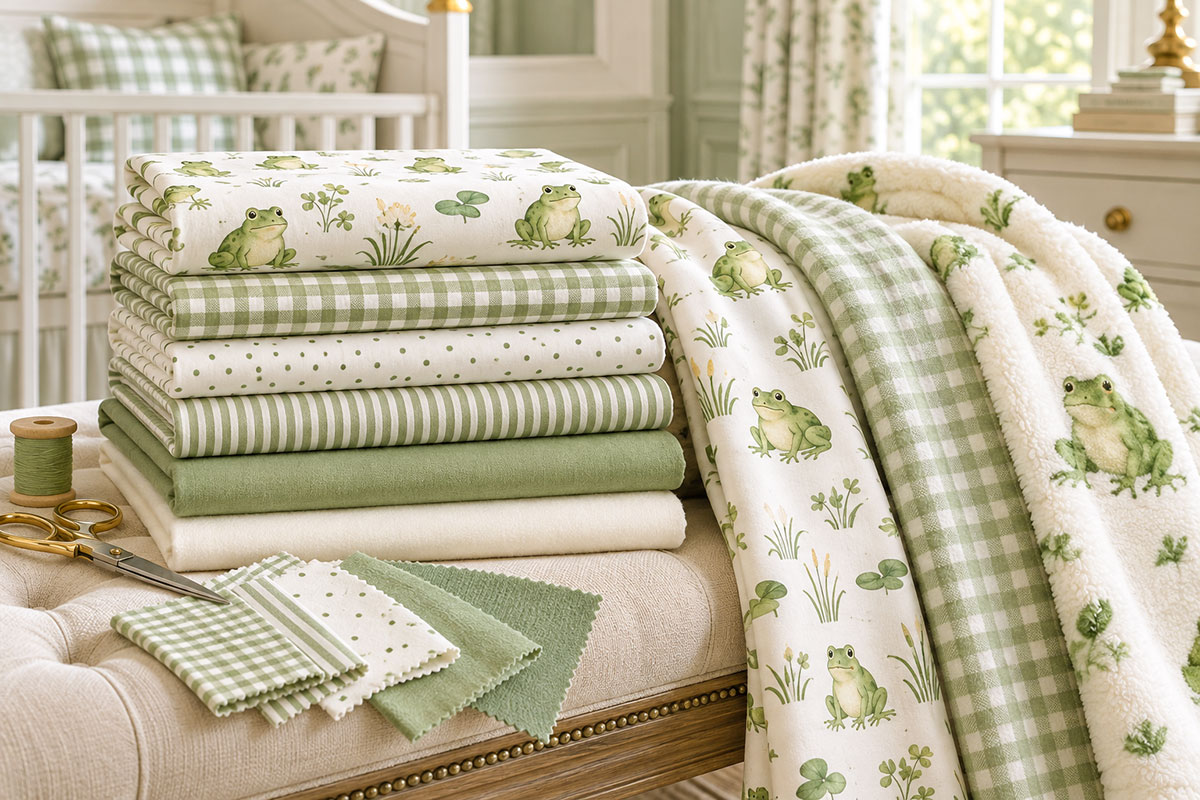
Choosing the Right Frog Print Fabric Scale
Print scale can make or break the project. This is one of those things that's easy to miss when you're looking at a little fabric swatch on a screen.
A large frog surrounded by lily pads may look wonderful across a curtain panel or in a big quilt block. Cut that same print into a four inch patch and the frog may disappear completely. You could end up featuring one foot, half a face or a very impressive cattail.
Small prints are much more forgiving on bibs, burp cloths, narrow borders and other little pieces because the design repeats often enough that you still know what you're looking at after it's cut.
Medium scale frog prints are probably the easiest to use across several projects. They can carry a quilt block, work on a basket liner and still show enough of the motif on a valance or pillow used outside the infant sleep space.
Before ordering frog fabric by the yard, look for a ruler, dimensions or repeat measurement in the listing photos or description. If none is shown, don't assume the frog that looks two inches tall on your screen is actually two inches tall.
I'd also think about where your seams are going to land. If the fabric has large frogs spaced far apart, you may need extra yardage so you can center the motifs instead of cutting wherever the pattern happens to fall.
That extra planning matters most on anything with a clear front, such as a valance, basket panel or large quilt block. On a backing or small accent strip, you can be much less fussy.
Frog Fabric Color Combinations
Green is already doing a lot of work in a frog print, so I wouldn't automatically add three more shades of green around it. Look at the whole fabric first. The background and the tiny secondary colors can give you a much better palette than the frog itself.
If the print has sage frogs on a warm white background, pull out the warm white first. Then add one quieter green and one small contrast color. Soft pink, muted coral, pale yellow, aqua or a little brown can all work if they're already present in the print.
A fabric with brighter frogs needs more restraint around it. I'd pair a bright green frog print with white, cream, pale gray-green or another quiet solid rather than adding another loud novelty print beside it.
For a more tailored room, frog fabric mixed with green and white gingham can be very pretty. Ticking stripes give you a slightly more traditional look. Tiny dots or a small geometric print can break things up without adding another recognizable theme.
Don't get hung up on finding an exact green match. Close but noticeably different greens can sometimes look accidental, while one clearly lighter or darker green looks deliberate. Either match it closely or give yourself enough contrast that nobody thinks you missed.
If you're coordinating fabric with the rest of the room, the colors on the frog wall art page can give you another place to pull from. You don't need the fabric and artwork to match exactly. They just need enough color in common to look like they belong in the same nursery.
How to Mix Frog Fabric With Other Prints
This is where I'd keep myself on a short leash. Once you have a frog print, gingham, stripe, dot and maybe one botanical or pond inspired print, you're probably done.
You don't need five novelty fabrics competing for attention.
I like to give each fabric a job. Let the frog print be the recognizable theme. Let the gingham or stripe provide structure. Let the solid give your eye somewhere to rest.
If your frog print is large, pair it with smaller supporting patterns. A big frog beside a big plaid beside a big floral can turn into visual traffic very quickly. Change the scale from one fabric to the next.
A simple mix might look like this:
Feature fabric: frog print cotton
Supporting print: small sage gingham
Secondary print: narrow green and white stripe
Quiet fabric: warm white solid
Optional accent: one pale pink, aqua or soft yellow pulled from the frog print
That's enough to sew quite a bit without making every piece identical.
If the frog print is already being used on curtains, don't feel obligated to repeat it on the quilt, crib skirt and every basket. Use the coordinates instead. The room will still read as a frog nursery because the main print has already done its job.
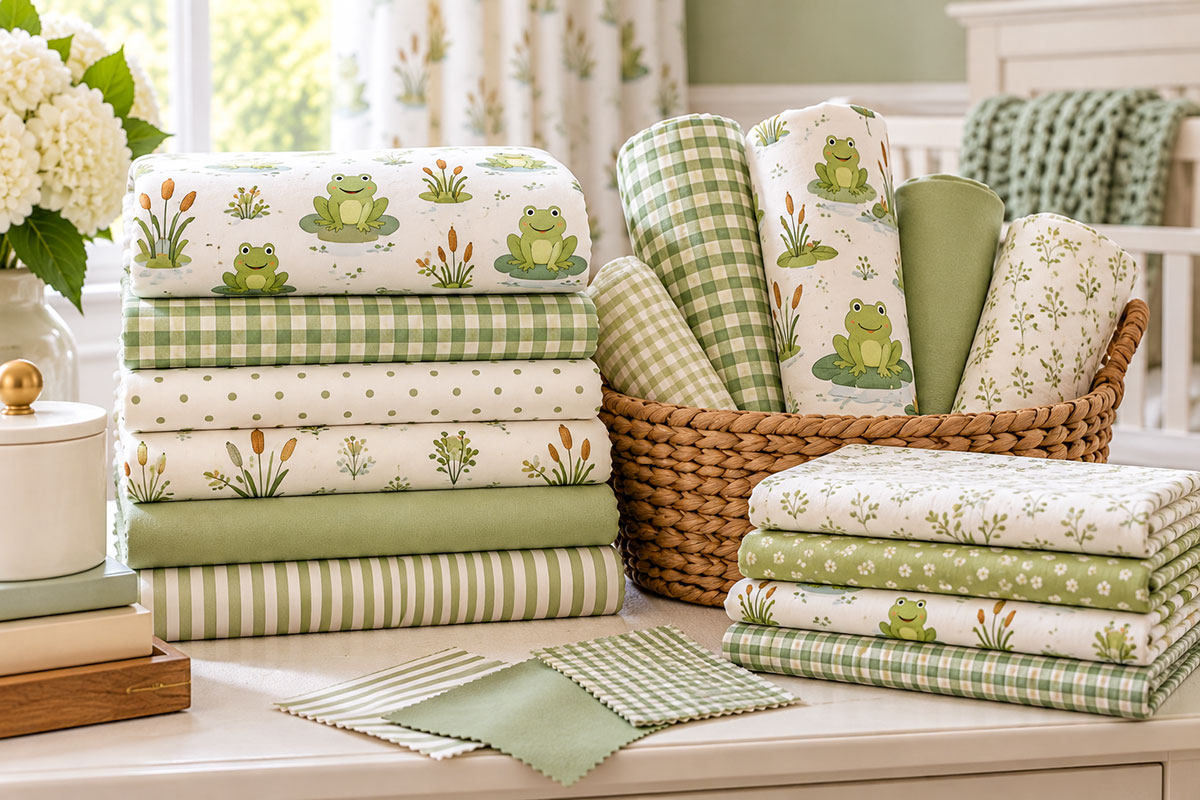
Nursery Sewing Projects for Frog Fabric
You can use frog fabric in quite a few nursery projects without making all of them from the frog print.
Curtains or a valance: This is where a medium or larger print has enough room to show. If the print is busy, I'd keep the rest of the window treatment simple.
Basket liners and fabric storage bins: These are good places for smaller frog prints because the panels aren't huge. You can also use frog fabric on the outside and a coordinating stripe or solid inside.
Bibs and burp cloths: Small scale frog print cotton or flannel makes more sense here than a large scenic print. On a little project, you want enough repeats that the finished piece still looks intentional.
Changing pad covers: A quiet frog print can work, but I'd avoid using your busiest fabric here if the curtains or quilt are already doing a lot visually.
Decorative fabric panels: If you have a frog fabric you love but don't want to sew an entire room around it, stretch a nice section over a backing and frame it as textile art. That's a good use for a larger print because you can choose the exact part of the design you want to feature.
Crib skirts: A stripe, gingham or solid coordinate may actually make more sense here than another frog print. If the crib sheet or quilt already carries frogs, let the skirt support them instead of competing.
And if you're sewing something as a gift rather than for the room itself, my frog baby gift ideas page has more ways to carry the theme without turning the gift into an entire matching collection.
Using Frog Fabric in Baby Quilts
A frog quilt does not need a frog in every block. I actually think the frogs stand out more when you give them some plain or geometric neighbors.
If you have a medium or large frog print, I'd use it in bigger feature blocks where the motif can stay intact. Surround those with gingham, dots, stripes or solids. That gives you a quilt that clearly has a frog theme without looking like you cut up one sheet of novelty fabric and stitched it back together.
A small frog print gives you more freedom. You can use it in narrower strips, smaller blocks or borders because the design survives being cut down.
Watch directional prints. If every frog is sitting upright, the orientation matters when you're cutting and piecing. You'll need to pay more attention to which way each patch faces, and that can increase the amount of fabric you need.
If the print is non-directional, life gets easier. You can rotate pieces as needed and waste less fabric.
I would also resist making the frog fabric the border just because there's some left over. Stand back and look at the quilt first. Sometimes a quiet gingham or solid border gives the frog blocks exactly the breathing room they need.
The same idea applies to the nursery around it. If the quilt carries the main frog print, use quieter coordinates elsewhere. You can see more ways to balance the theme on the frog nursery theme ideas page.
Putting the Frog Nursery Fabric Plan Together
Before you order anything, decide which project is going to carry the main frog print. Curtains? Quilt? A couple of smaller sewn pieces? Pick one.
Then build out from there.
If the curtains are the frog statement, I'd make the quilt quieter. Maybe gingham, solids and just a few frog feature blocks. If the quilt is the star, use a stripe or solid at the window. If you're only using frogs on bibs, baskets and little accents, you can afford more pattern somewhere else.
Try to keep the same handful of colors moving through the room. You don't need every fabric to come from one collection. In fact, avoiding the complete matching collection is part of what keeps the room from looking cookie cutter.
Lay the fabrics together before you cut anything. Look at them from across the room, not just from six inches away. One print may suddenly look much louder than you thought. Another may disappear completely.
If something feels like too much, remove one print before you add another one. That's usually cheaper than sewing the whole thing and deciding afterward that the frogs have taken over.
I'd aim for one obvious frog fabric, two or three good coordinates and enough plain fabric to give everything some breathing room. You can always add another small frog detail later.
You don't have to prove it's a frog nursery on every surface.


When you click on links to various merchants on this site and make a purchase, this may result in this site earning a commission. This does not affect the price you pay.

UBGI Gold Standard 2026
Reviewed under the site's
editorial checklist.
About Jan | Contact | Baby Nursery Ideas (Blog) | Site Map | Privacy Policy | Disclosure Policy | Disclaimer | Affiliate Disclosure | Earnings Disclosure | Facebook | Pinterest
I am a participant in the Amazon Services LLC Associates Program, an affiliate advertising program designed to provide a means for us to earn fees by linking to Amazon. As an Amazon Associate I earn from qualifying purchases.
Copyright © 2006-2026. All Rights Reserved.