Chalkboard Nursery Wall Ideas for Modern Nurseries
A chalkboard nursery wall is a section of wall, door, or painted surface that works like a reusable drawing board inside a baby’s room. The best chalkboard nursery wall ideas are not full black walls anymore. They are smaller, practical spaces used in play corners, reading nooks, closet doors, or lower wall sections where the surface can grow with your child and still look like part of the nursery.
These ideas are based on how chalkboard walls function in real nursery layouts.
More nursery wall ideas to help you plan the room:
See baby nursery mural ideas for a larger feature wall
Compare nursery wallpaper ideas before painting a wall
Browse baby nursery themes if you are still choosing a room style
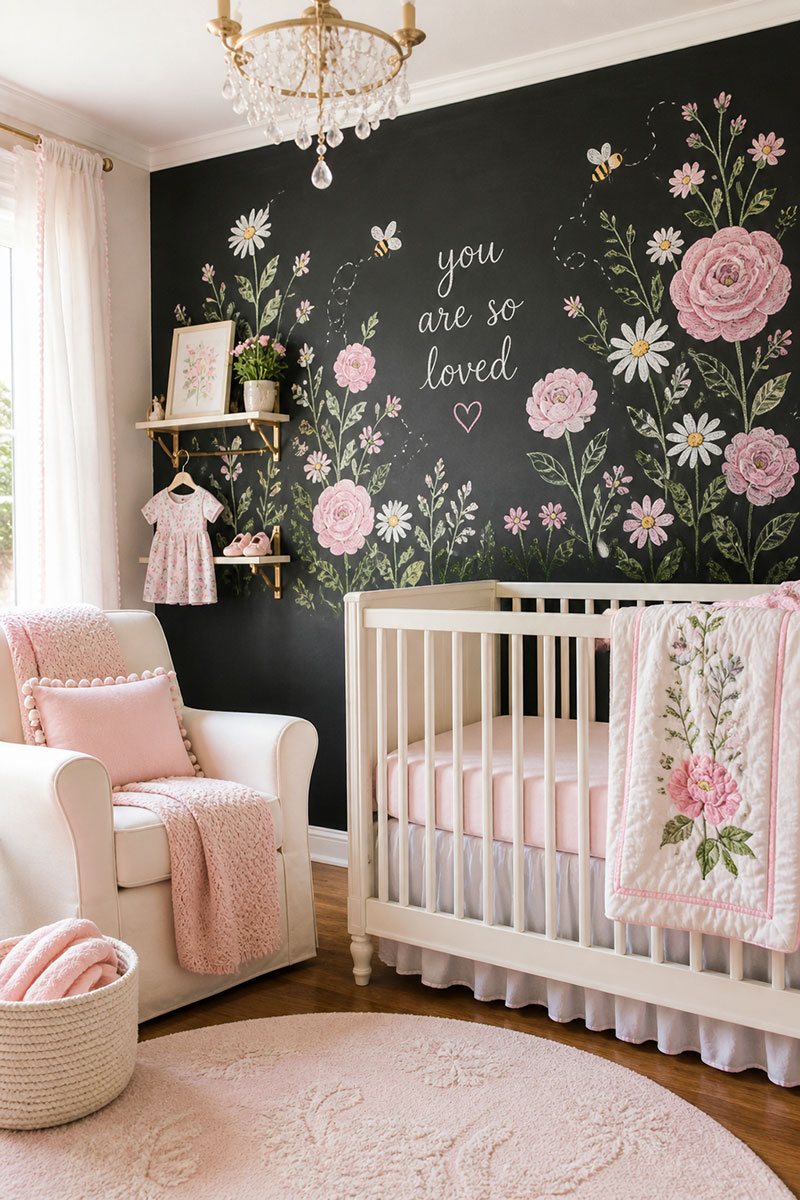
Sometimes chalkboard walls end up ignored for weeks, while others become the most used spot in the entire room.
Jump to the chalkboard wall ideas:
Chalkboard Nursery Wall Ideas (Half Wall)
Chalkboard nursery wall ideas work best when used in small, practical sections like play corners, half walls, or closet doors so the space stays usable, clean-looking, and easy to maintain as your child grows.
Half wall chalkboard nursery ideas solve a problem that shows up quickly once furniture is in place. A full wall can feel heavy once the crib, dresser, and storage pieces are set, and the room starts to feel tighter than expected. A lower section of chalkboard paint keeps the space usable while still giving you that interactive surface.
In real rooms, the bottom half of the wall ends up being the part that gets used anyway. It is where small hands reach first, and it keeps chalk marks away from bedding and eye level. The upper portion stays clean, which makes the room feel more put together even when the chalkboard area is being used every day.
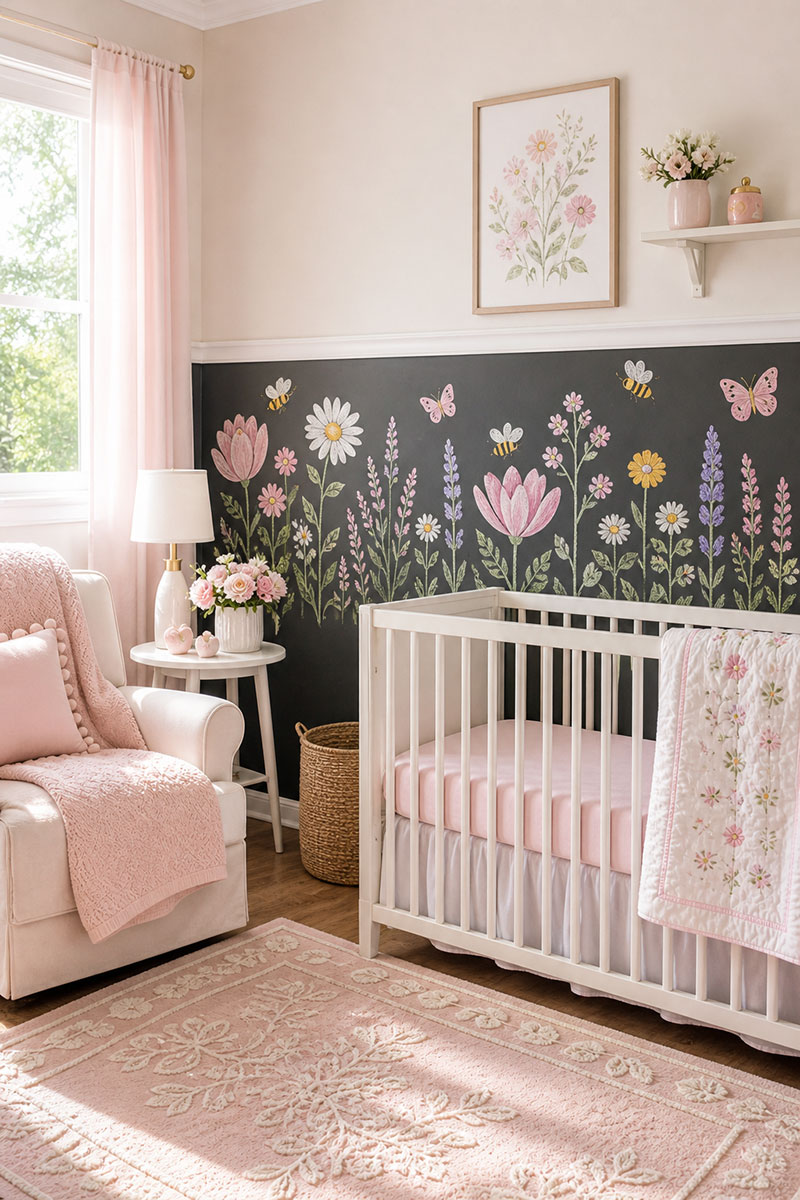
The biggest mistake with chalkboard walls is placing them where they look right instead of where they will actually be used.
If you want a wall that creates more visual impact without changing how the room works, my baby nursery mural ideas page shows how a feature wall can shift the entire space.
Chalkboard Reading Nook That Becomes Part of Daily Use
A chalkboard reading nook works best when it feels like part of the routine instead of a separate feature. This usually comes together when a chair or floor cushion sits right next to the chalkboard area so it naturally becomes part of quiet time.
I notice this setup gets used more when the chalkboard is slightly off to the side instead of centered. It gives the area a purpose without turning the entire wall into a focal point. Over time, that space shifts from simple scribbles to letters, names, and short notes that stay up for a few days before being wiped clean.
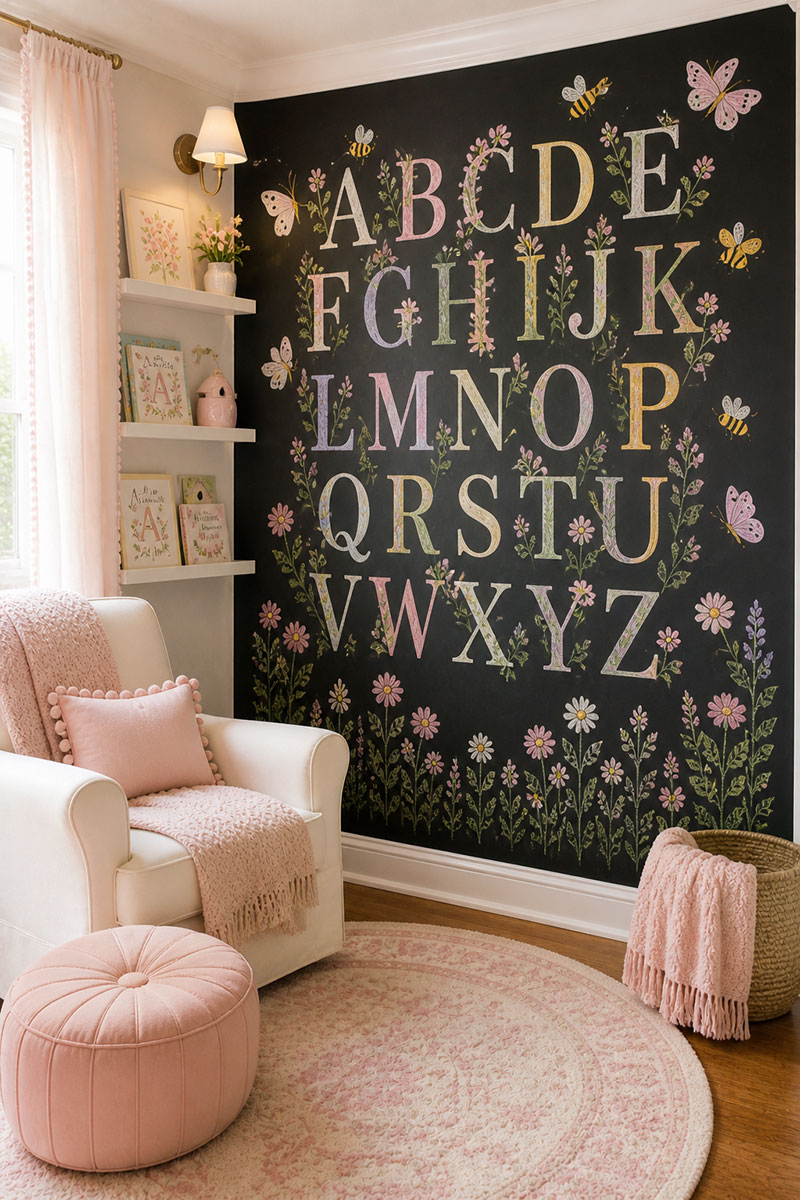
If you are still shaping the overall look of the room, my baby nursery themes page helps tie wall features like this into a complete setup.
Chalkboard Play Corner That Gets Used Every Day
A chalkboard play corner gives the nursery a clear purpose beyond sleeping. This is often the first place a child goes once they are moving around, and it becomes one of the most used areas in the room.
Many nurseries reach a point where toys start spreading across the floor. A defined chalkboard area pulls that activity into one spot. It creates a boundary without adding extra furniture or changing the layout.
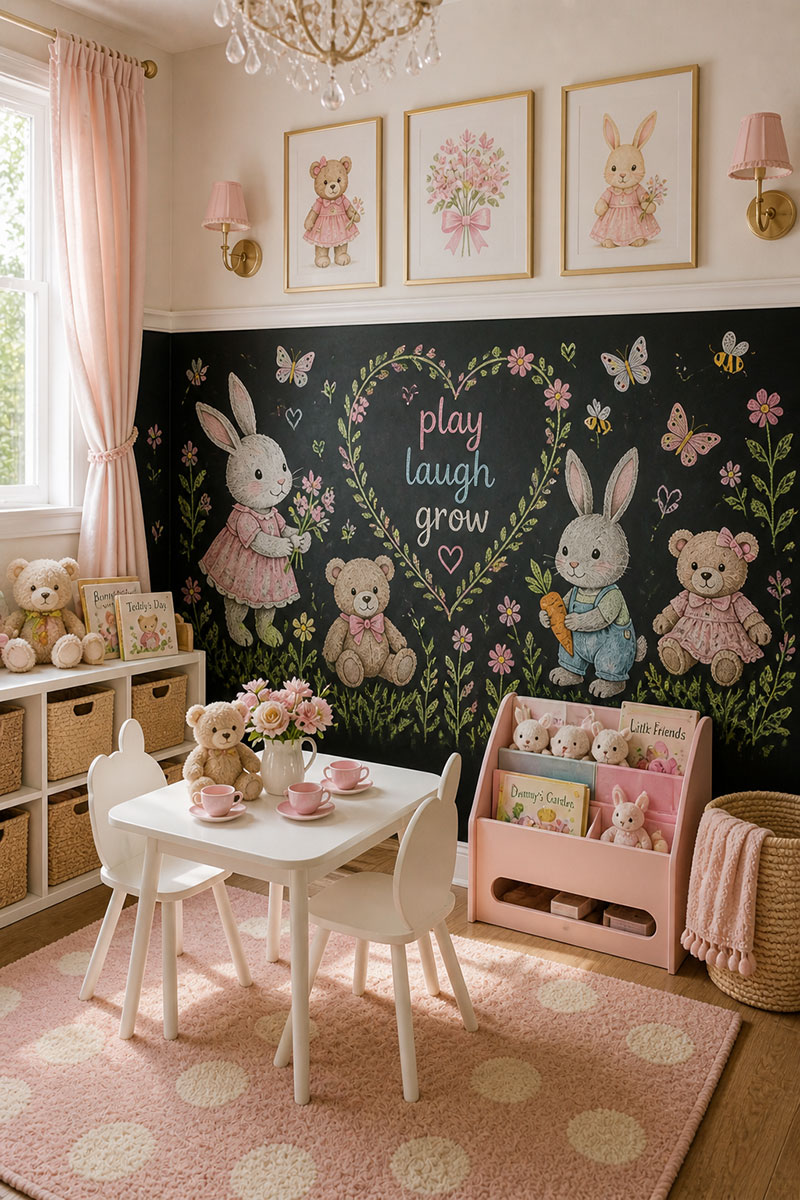
For more ways to structure the room so everything has a place, see my baby room ideas guide for layouts that keep movement simple and reduce clutter.
If the layout still feels off, visit the nursery layout ideas for small rooms page that shows how placement decisions like this affect the whole room.
Chalkboard Closet Door Ideas That Save Wall Space
Closet doors are one of the easiest places to add a chalkboard surface without changing the layout of the nursery. This works especially well in smaller rooms where wall space is already limited.
This usually comes up when there is no clear place for a feature wall. Painting the closet doors gives you the same function without moving furniture or blocking other design elements.
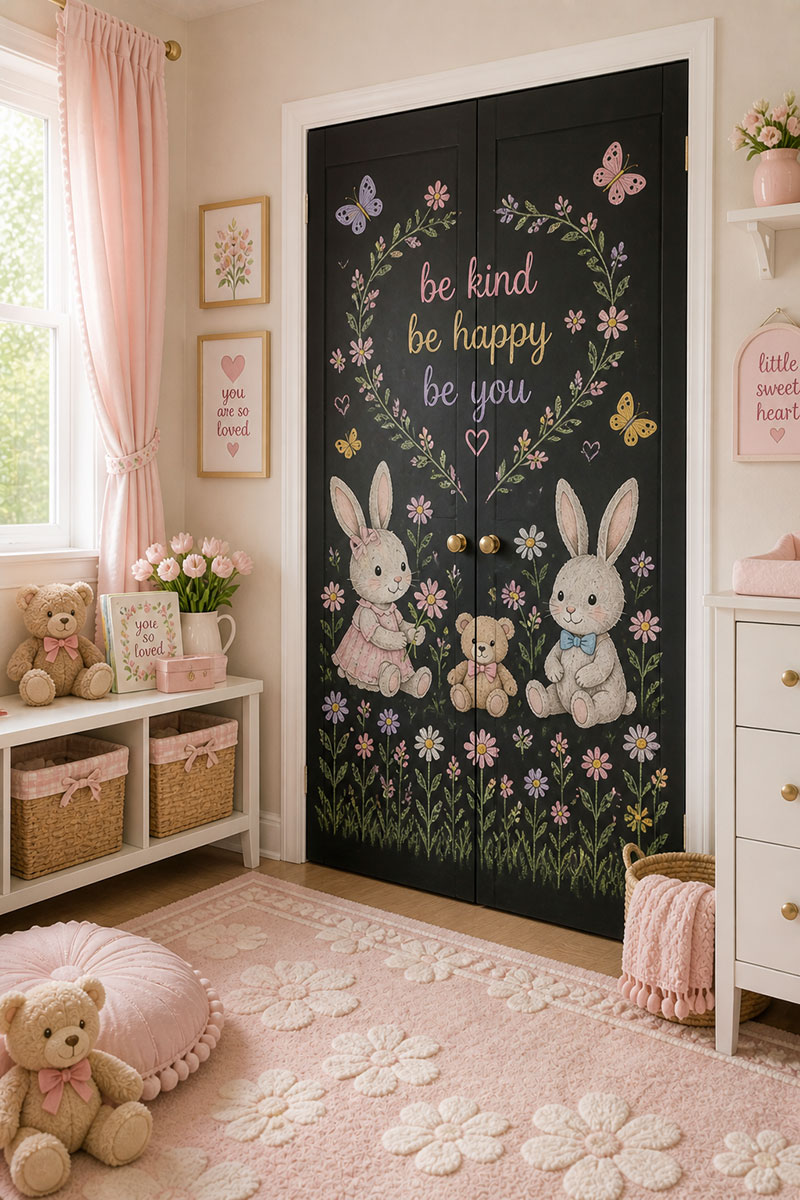
If you are comparing wall options before deciding, my nursery wallpaper ideas page shows how different finishes affect the space.
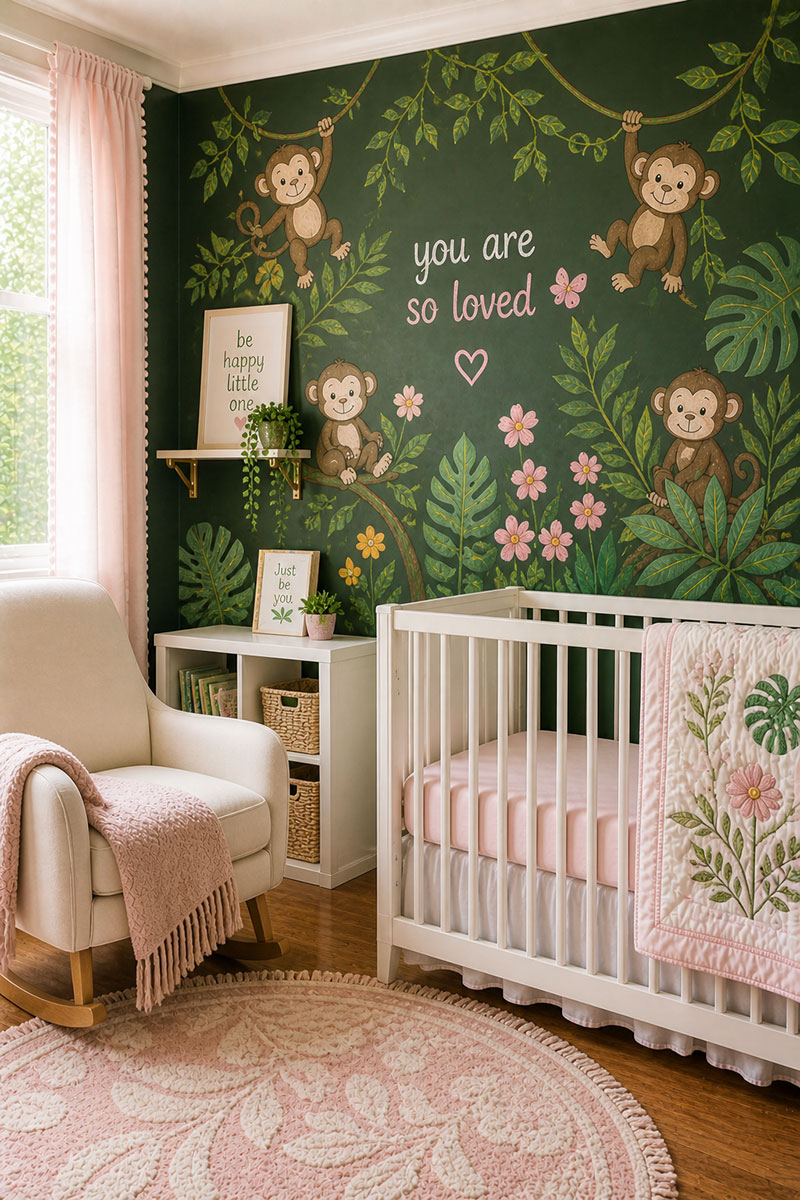
Modern Chalkboard Wall Colors That Fit Nursery Design
Modern chalkboard nursery wall ideas no longer rely on flat black paint. Dark green, charcoal, and other subtle tones are used more often because they blend better with furniture and flooring.
I believe this shift is why chalkboard walls are showing up more again. The surface still works the same way, but it does not stand out as a harsh block in the room. It feels like part of the design instead of something added later.
Where Chalkboard Nursery Walls Do Not Work Well
Some placements look good in photos but do not hold up in real use. Behind the crib is one of the most common mistakes because that space rarely gets used for drawing and can make the sleep area feel visually busy.
This also happens when the chalkboard is placed too high on the wall. It ends up being decorative instead of functional, which defeats the purpose of having it in the room at all.
Keeping the chalkboard within reach and slightly off to the side usually leads to better long-term use and less mess across the rest of the nursery.
If you are deciding between wall styles, my baby nursery mural ideas page shows what works better when you want a larger focal wall instead of a chalkboard section.
According to the U.S. Consumer Product Safety Commission, finishes and materials used in children’s rooms should be selected with safety and durability in mind, especially for surfaces that will be touched often.
A chalkboard wall works best when it is placed where it will actually be used, not just where it looks good.
This page focuses on where and how to use a chalkboard wall in a nursery so it stays useful, manageable, and part of the room over time.
Quick Answers About Chalkboard Nursery Walls
Can you use chalkboard paint in a baby nursery?
Yes, as long as the paint is labeled low-VOC or non-toxic and is fully cured before the room is used.
Are chalkboard nursery walls safe?
They are generally safe when low-VOC or non-toxic chalkboard paint is used and the area is placed away from the crib and sleep surface.
Should you do a full chalkboard wall in a nursery?
A full wall is rarely necessary. Smaller sections or half walls are easier to maintain and fit better with nursery layouts.
Where is the best place for a chalkboard wall?
Play corners, reading nooks, and closet doors are the most practical placements because they keep the activity contained.
What color chalkboard wall works best in a nursery?
Dark green, charcoal, and other subtle tones tend to blend better with nursery furniture than traditional black.
When you click on links to various merchants on this site and make a purchase, this may result in this site earning a commission. This does not affect the price you pay.

UBGI Gold Standard 2026
Verified for performance, SEO,
and accessibility compliance.
Photos, decorating ideas, party setups, and reader submissions are shared for inspiration only and are not intended as step-by-step decorating, construction, or DIY instructions.
About Jan | Contact | Baby Room Ideas (Blog) | Site Map | Privacy Policy | Disclaimer | Affiliate Disclosure | Earnings Disclosure
I am a participant in the Amazon Services LLC Associates Program, an affiliate advertising program designed to provide a means for us to earn fees by linking to Amazon.
Copyright © 2006-2026. All Rights Reserved.