Baby Cribs: Styles and Types Overview
This baby crib guide is the central overview of crib types in the United States, including full-size, convertible, mini, round, oval and metal cribs, with related guides for crib dimensions, mattress fit, safety standards, parts and space planning.
Trying to choose the right crib without making an expensive mistake? Start here:
What is the best crib for small nurseries?
Is a used crib worth the risk?
Can the wrong crib mattress be a danger to a newborn?
Are round cribs practical or just pretty?
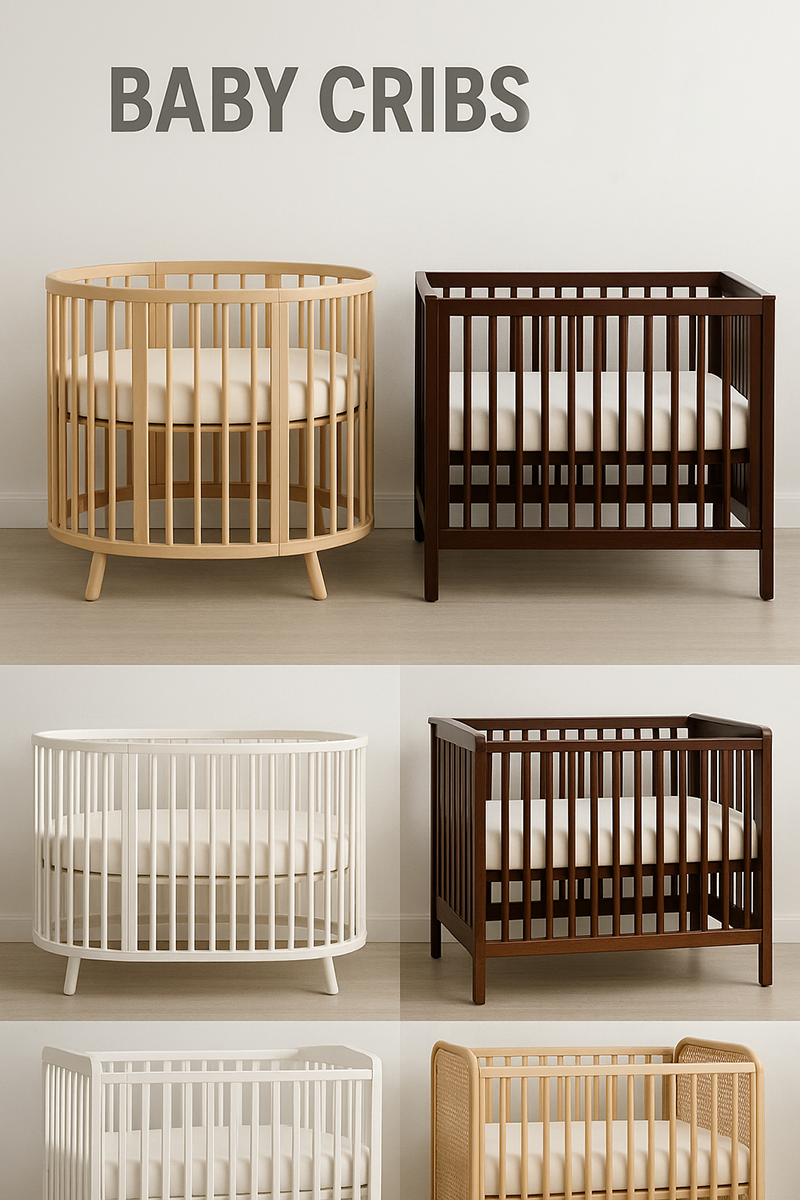
This page gives you a quick overview of the main baby crib types, how they differ, and which related guides to use next.
Older, stored, or secondhand cribs need one extra step before they are judged by style or size, and my crib recall information page explains how to check the model number and official recall status first.
A practical baby checklist before arrival can help you place the crib decision in the larger newborn planning picture, while a detailed newborn nursery essentials checklist helps organize the nursery itself so the sleep space, crib area, changing setup, and everyday newborn basics are ready before the baby arrives.
On This Page
Baby Crib Guides for Types, Sizes, Mattresses, Safety and Parts
Crib dimensions and standard sizes
Start here for standard U.S. crib measurements and how different crib sizes compare.
See the standard mattress size used in most full-size cribs and how fit affects safety.
Crib mattress basics and sizing
Compare crib mattress types, sizing basics, and what matters most before you buy.
Review crib mattress choices by safety, fit, and everyday practicality.
Learn how convertible cribs differ from standard cribs and what changes over time.
Mini cribs and compact crib sizes
Compare smaller crib formats for tighter nursery layouts and space-saving setups.
See how round and oval crib styles differ in shape, mattress type, and fit.
Review the safety rules that affect crib design, spacing, and mattress compatibility.
Use this hub to identify crib parts, hardware categories, and compatibility references.
For a deeper look at firmness, fit, and gap safety, see my crib mattress safety guide.
Baby Crib Types at a Glance
Standard Crib
52 x 28 mattress
Rectangular frame
Most common U.S. format
Convertible Crib
Full-size mattress
Modular transitions
Long-term furniture use
Mini Crib
38 x 24 mattress
Reduced footprint
Small nursery layouts
Round / Oval
Shaped mattress
Curved geometry
Specialty format
Metal Crib
Tubular construction
Steel or iron frame
Powder-coated finish
Decorative Style
Standard dimensions
Ornamental design
Theme-driven visuals
This page is the central structural overview of baby crib types in the United States. Related pages expand on crib dimensions, mattress systems, safety standards, structural components, and manufacturer classifications.
If price is part of your crib comparison, my cheap baby cribs guide looks at budget crib styles, size profiles, construction differences and product standards across lower-cost options.
How Baby Cribs Are Structurally Classified
In the United States, crib classification is determined by measurable construction standards rather than decorative styling alone.
- Mattress dimensions (standard vs compact sizing)
- Frame geometry (rectangular, round, oval)
- Rail configuration (fixed, panel, tubular)
- Conversion capability (non-convertible vs modular systems)
- Material composition (wood, metal, composite)
These measurable factors allow crib types to be grouped consistently across manufacturers regardless of finish, branding, or ornamental design.
For a labeled look at the headboard, footboard, side rails, slats, mattress support, and other structural sections, see the parts of a crib diagram.
Explore Baby Crib Types
Each crib format differs in structural configuration, mattress compatibility, and long-term use potential.
- Standard Full-Size Cribs – Rectangular 52" x 28" format used in most U.S. nurseries.
- Convertible Cribs – Modular designs supporting multiple furniture transitions.
- Mini Cribs – Reduced footprint models for smaller nursery layouts.
- Round & Oval Cribs – Curved geometry requiring shaped mattresses.
- Metal Cribs – Tubular or iron-based structural frames.
- Decorative Styles – Ornamental variations built on standard structural formats.
Standard Crib Measurements (U.S.)
- Full-size crib mattress: 52" x 28"
- Mini crib mattress: approximately 38" x 24"
- Interior width tolerance: typically +/- 5/8 inch
- Common adjustable mattress heights: 2–4 positions
Crib Mattress Size and Fit
Most full-size cribs in the United States are designed to hold a standard crib mattress measuring approximately 52 inches by 28 inches. Mattress dimensions and fit tolerances are regulated so that mattresses sit securely inside crib frames without dangerous gaps.
- standard crib mattress dimensions
- how a crib mattress should fit safely
- when to lower the crib mattress height
Crib Type Comparison Overview
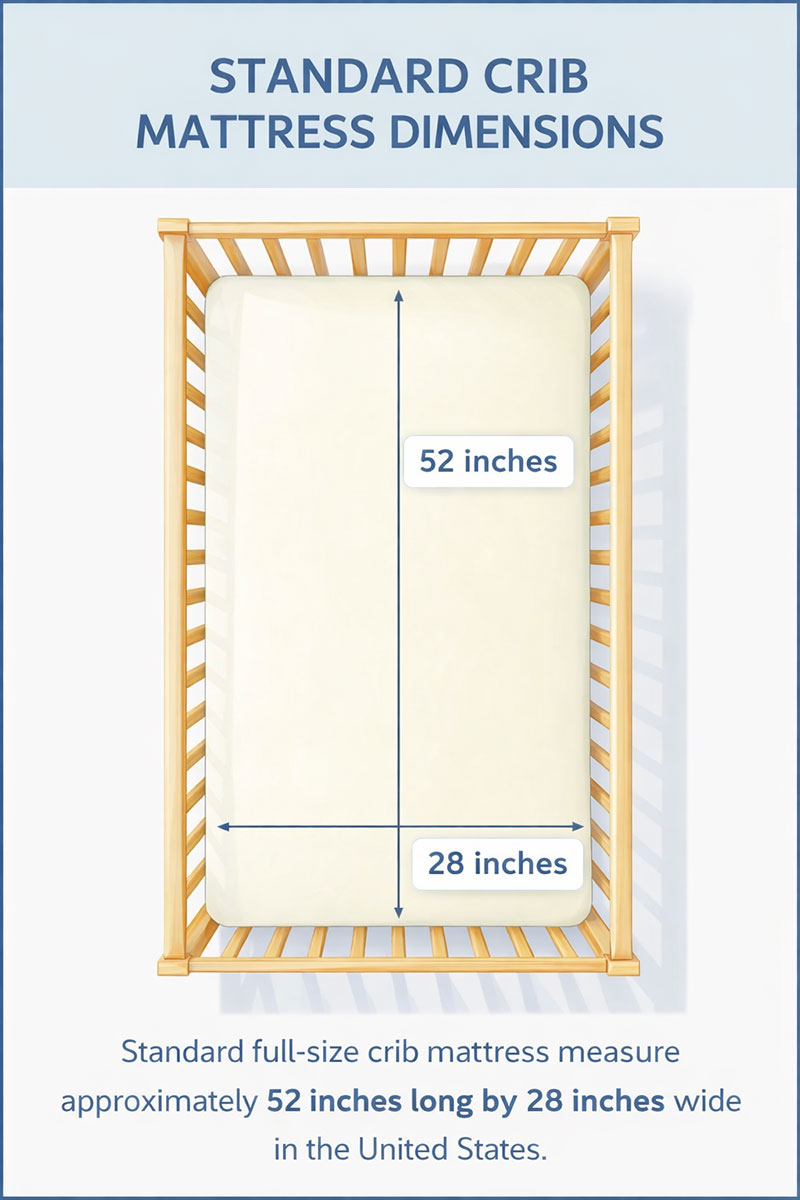
Standard full-size crib mattresses measure approximately 52 inches by 28 inches in the United States.
Measurement precision plays a central role in crib classification and compatibility documentation across manufacturers.
Why Structural Classification Matters
Structural classification helps parents, retailers, and manufacturers maintain compatibility across crib components, mattress systems, and safety documentation. While crib styles may change visually over time, measurable construction standards provide continuity across product generations.
Understanding mattress dimensions, rail spacing, and frame geometry ensures that crib mattresses fit securely, adjustable support systems function correctly, and replacement parts align with original manufacturer specifications.
Federal safety limits also regulate crib slat spacing requirements to reduce entrapment risks and maintain consistent interior rail measurements across U.S. manufacturers.
In the United States, crib sizing and safety frameworks are influenced by federal regulatory standards that define measurement tolerances and performance requirements. Structural classification therefore extends beyond style.
When structural wear, missing hardware, or repeated reassembly begin affecting frame integrity, it helps to review when a crib is no longer safe based on condition rather than category.
It supports safety compliance and long-term product compatibility.
Common Questions About Crib Types
Most crib format questions relate to mattress compatibility, conversion timelines, or space planning constraints. While decorative features vary widely, structural format determines long-term functionality and compatibility with accessories and replacement components.
Standard Full-Size Cribs
Standard full-size cribs are rectangular four-sided frames designed to hold a 52 x 28 inch mattress. They feature fixed side rails, vertical slats, and adjustable mattress support systems. This is the most widely manufactured crib format in the United States.
The structure beneath the mattress can be a spring frame, rigid platform or bracket-mounted base. The crib mattress support systems reference explains how these model-specific frames and mounting parts differ.
Frame variations appear in rail thickness, panel shaping, post height, and finish application, but the underlying structure remains consistent across manufacturers.
Convertible Cribs
Convertible cribs are manufactured with modular frame components that allow reconfiguration into alternate furniture formats when paired with compatible manufacturer parts. In their primary configuration, convertible cribs closely resemble standard full-size cribs.
Sub-types are defined by supported conversions rather than external appearance.
Model-specific toddler guardrails, full-size bed rails, and related hardware are covered in the crib conversion kits reference.
Mini and Compact Cribs
Mini cribs use reduced overall frame dimensions and are designed to fit smaller crib mattresses. Structural construction usually mirrors full-size cribs at scaled-down proportions, which is why these formats are often grouped separately based on mattress sizing. Parents comparing compact crib formats and the mattress category used with them can also review mini portable crib mattress sizes, fit, and firmness. For a closer look at foldable portable sleep spaces, this guide to travel crib vs pack and play differences explains how those compact setups compare in structure, use, and everyday practicality.
Travel-specific crib designs use similar compact sizing but focus more on portability, and this best travel crib guide shows which models are built for easy transport, quick setup, and short-term sleep use.
For exact measurements, fit tolerances, and the differences between compact mattress formats, see mini crib mattress size guide.
For a broader look at space-saving crib styles and layout-friendly options, see cribs for small spaces.
For families using the crib area as part of a compact nursery storage plan, these under the crib storage ideas show how to use low-profile bins and hidden storage without adding more furniture that would take up more room.
Because reduced footprint models affect traffic clearance and wall spacing, this reference on crib placement within a nursery layout explains how spatial dynamics shift when frame dimensions change.
Rug size can also change how the crib area functions, especially in smaller rooms, so my nursery rug placement guide can help you plan the floor space around the crib, chair, and walkway.
Round and Oval Cribs
Round and oval cribs are defined by curved perimeter geometry. Their classification is based on mattress shape and frame construction rather than decorative styling alone.
Metal Cribs
Metal cribs are constructed primarily from steel or iron components and are visually identified by tubular rails, slender frame profiles, and painted or powder-coated finishes. Historically common, they remain part of the broader crib classification system.
Decorative and Themed Crib Styles
Decorative crib styles incorporate ornamental features such as carved headboards, canopy frames, sculptural rails, or thematic motifs. While structural dimensions typically follow full-size standards, visual presentation distinguishes this category.
This page provides structural reference documentation only and does not offer usage instructions, repair guidance, or purchasing recommendations.
For federal crib safety standards and measurement requirements, see the U.S. Consumer Product Safety Commission crib guidelines.
Standard full-size cribs in the United States are regulated to maintain consistent interior dimensions so that properly manufactured crib mattresses fit without excessive gaps. Dimensional tolerances exist to prevent entrapment hazards and to ensure compatibility across manufacturers.
These measurable construction standards allow crib types to be grouped consistently regardless of decorative style, finish, or branding variations.
When you click on links to various merchants on this site and make a purchase, this may result in this site earning a commission. This does not affect the price you pay.

UBGI Gold Standard 2026
Reviewed under the site's
editorial checklist.
Photos, decorating ideas, party setups and reader submissions are shared for inspiration unless a page is specifically presented as a pattern, tutorial, reference guide or step-by-step project. Follow the instructions, measurements, safety guidance and manufacturer directions provided for the particular project or product.
About Jan | Contact | Baby Nursery Ideas (Blog) | Site Map | Privacy Policy | Disclosure Policy | Disclaimer | Affiliate Disclosure | Earnings Disclosure | Facebook | Pinterest
I am a participant in the Amazon Services LLC Associates Program, an affiliate advertising program designed to provide a means for us to earn fees by linking to Amazon. As an Amazon Associate I earn from qualifying purchases.
Copyright © 2006-2026. All Rights Reserved.