Jenny Lind Crib Parts & Replacement Hardware
Jenny Lind crib parts are manufacturer-specific hardware components used in spindle-style cribs marketed under the Jenny Lind design name in the United States.
Jenny Lind crib replacement parts are not interchangeable across manufacturers because the name refers to a design style rather than a single crib brand.
This page does not provide installation instructions, repair methods, or part substitution guidance.
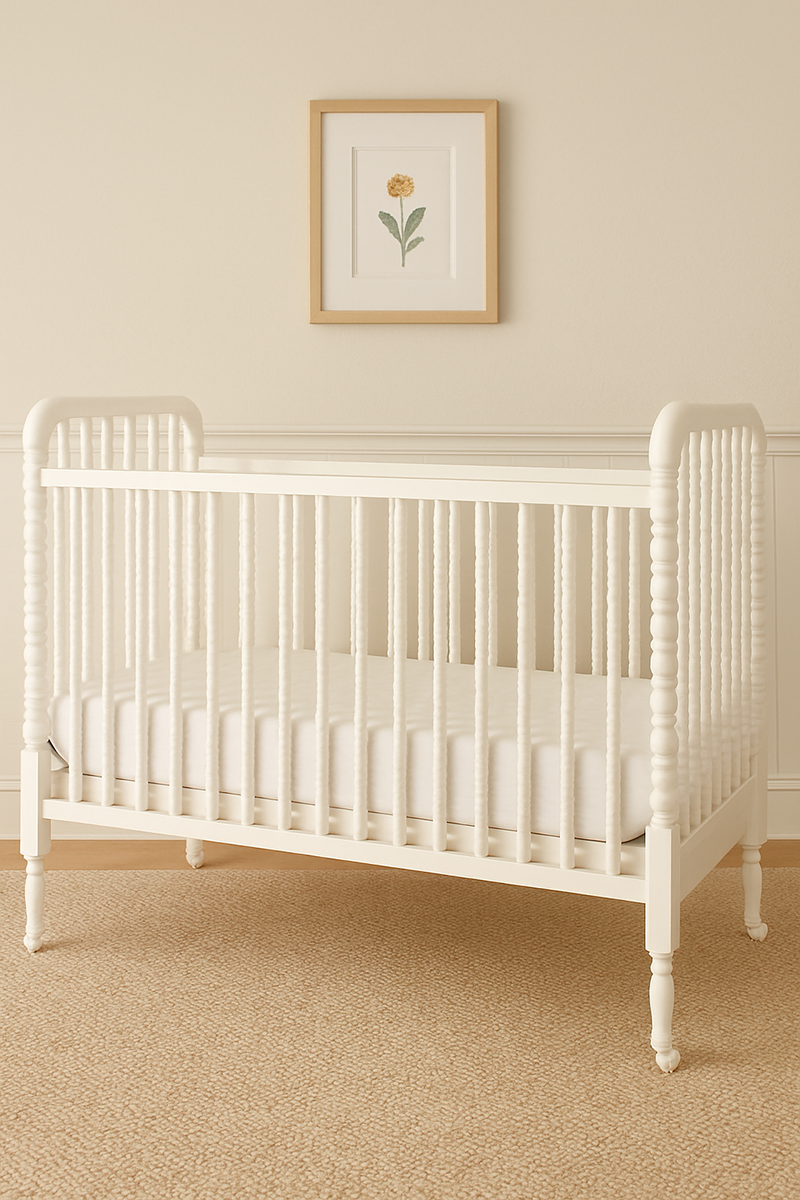
Example of the traditional Jenny Lind spindle crib design, identified by turned wooden spindles and rounded posts.
If you are missing Jenny Lind crib screws, bolts, brackets, barrel nuts, mattress support hardware, or a hardware kit, you can check current inventory here:
Inventory listings are provided as general reference only. Crib parts are brand-specific and model-specific, and no listing should be treated as compatibility confirmation for any crib. Before purchasing or using any replacement crib hardware, verify the crib brand, exact model number, production date, part location, measurements, and original manufacturer documentation whenever possible. Do not use a crib with missing, damaged, substituted, or unverified parts.
Jenny Lind crib parts identification summary
- Crib style reference: Jenny Lind spindle-style baby cribs
- Design characteristic: Turned wood spindles and traditional crib frame posts
- Manufacturer context: Produced by multiple crib brands using the Jenny Lind design name
- Typical hardware components: Frame bolts, fasteners, mattress support brackets, and spindle frame connectors
- Material types: Metal crib fasteners and structural support hardware
- Primary identification method: Manufacturer name and crib model number rather than the Jenny Lind style name
- Documentation sources: Manufacturer manuals, parts diagrams, and brand-specific parts pages
- Common search phrases: Jenny Lind crib bolts, Jenny Lind crib hardware, Jenny Lind crib replacement parts
- Page purpose: Style-based routing reference for locating manufacturer-specific crib parts
Because the Jenny Lind name refers to a crib design style rather than a specific manufacturer, identifying the crib’s brand and model number is usually required before locating accurate parts listings or manuals.
Jenny Lind Crib Parts & Replacement Hardware Guide
The term “Jenny Lind crib” is commonly used to describe a traditional spindle-style crib with turned posts and vertical spindles. While the look is distinctive, it does not represent a single manufacturer or a unified product line. As a result, crib parts associated with Jenny Lind–style designs are usually documented and referenced by the original brand and model rather than by the style name itself.
The Jenny Lind name refers to a historic spindle crib design that has been produced by multiple manufacturers, which is why hardware and parts documentation is usually organized by brand and model rather than by the style name alone.
This page functions as a routing reference explaining how Jenny Lind crib parts are categorized across different manufacturers.
For a structured comparison of how crib components and fasteners are labeled across different manufacturers, see crib parts identification across manufacturers.
When a crib is identified by brand and model, parts information is usually found in manufacturer documentation, manuals, or brand-specific parts pages rather than under the Jenny Lind name alone.
For broader manufacturer-level context, this routing connects to the crib parts hub, which organizes parts references by brand and model rather than by design style.
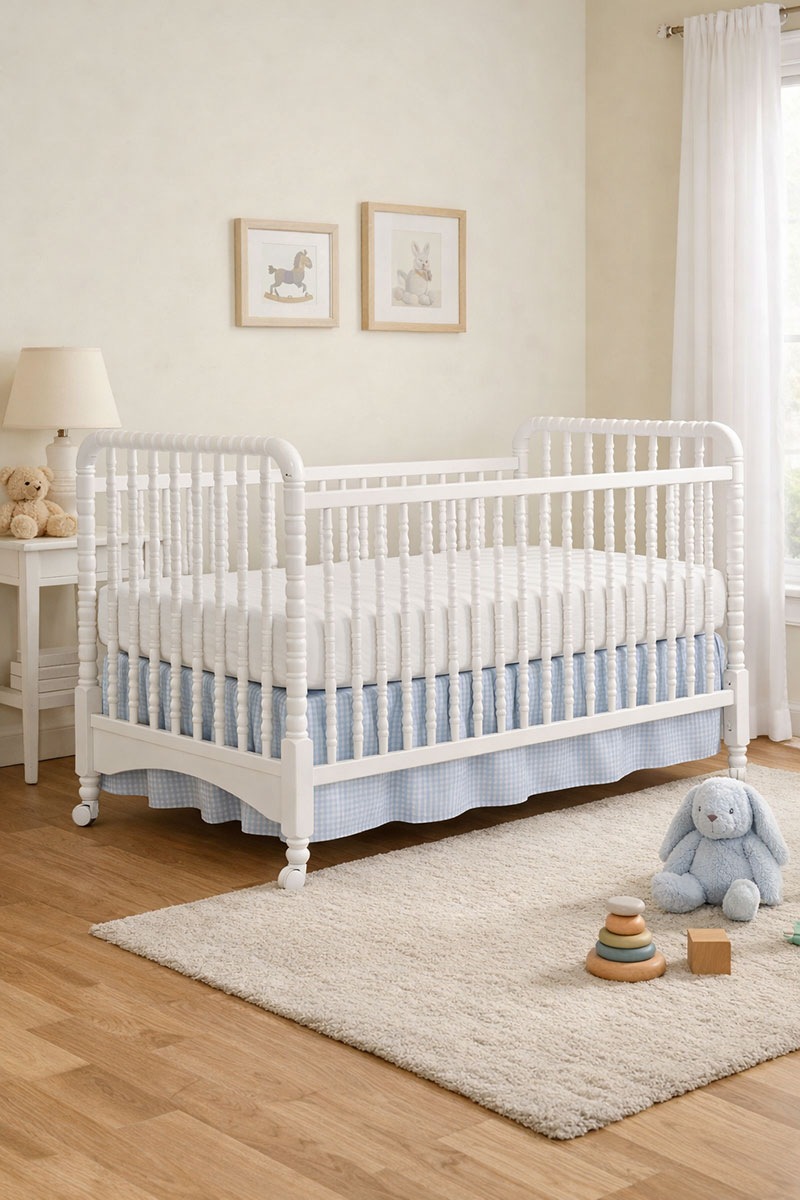
Why the Jenny Lind name does not identify parts
In baby furniture listings, “Jenny Lind” often serves as a design descriptor rather than a technical identifier. Multiple manufacturers have released spindle-style cribs under this name, sometimes across different production periods. Even when cribs appear visually similar, the underlying hardware systems may differ in size, threading, structure, or attachment method.
Because of this, parts listings and diagrams typically rely on model numbers, manufacturing ranges, or internal reference codes. Visual similarity alone is not how crib hardware is indexed in manufacturer documentation, which is why the style name by itself rarely leads to a confirmed parts match.
How Jenny Lind crib hardware is commonly categorized
Manufacturer references usually group crib hardware into consistent documentation categories. These often include frame fasteners, mattress support components, and conversion-related hardware where applicable. The specific names and configurations can vary by brand, even when the crib’s exterior appearance remains largely the same.
Common Jenny Lind crib hardware references
- Crib frame bolts and threaded fasteners
- Mattress support brackets or metal spring frames
- Side rail connectors and structural fasteners
- Spindle frame attachment hardware
- Conversion hardware for toddler or full-size bed configurations
Mattress support systems are one of the most variable elements among spindle-style cribs. Different brands may use distinct support frames, brackets, hooks, or corner hardware that are unique to a particular model generation. This variation is a primary reason Jenny Lind crib parts are documented by manufacturer rather than by design style.
Using brand pages for Jenny Lind–style cribs
When the manufacturer of a Jenny Lind-style crib is known, brand-specific pages are usually the best place to look for parts references and documentation. These pages organize information by model and production details rather than by style name, which helps reduce confusion.
Once the manufacturer of a Jenny Lind–style crib is known, parts information is typically located through brand-specific manuals, parts diagrams, or manufacturer reference pages.
The site’s crib parts and crib instructions hubs are designed to route style-based searches into the appropriate manufacturer sections. This structure allows visitors to move from a general design name into the correct brand context once identifying information becomes available.
Model identifiers used in manufacturer documentation
Parts references are commonly tied to a combination of model name or number, production timeframe, and an associated instruction manual or diagram. Some manufacturers include the term “Jenny Lind” in marketing or labeling while still requiring a specific model identifier for official documentation and parts indexing.
This naming structure explains why retailer listings, manuals, and parts diagrams sometimes use different terminology for the same crib model. In documentation systems, the model reference remains the stable identifier even when the marketing name changes.
Safety and recall context affecting parts references
Over time, crib safety standards and recall actions have influenced how manufacturers document and support crib models.
Federal crib safety standards and recall notices are published by the U.S. Consumer Product Safety Commission (CPSC).
For a broader overview of crib types, construction standards, and design classifications, see the baby cribs overview.
Changes in regulations or product availability can affect whether certain crib parts remain referenced, discontinued, or updated in later documentation.
For older or secondhand Jenny Lind–style cribs, accurate model identification becomes especially important, as parts specifications may differ across production periods. Manufacturer documentation is generally the most consistent source for determining how a specific model was originally referenced.
Common reasons Jenny Lind searches lead to mismatches
Style-based searches often return cribs that look similar but were produced by different manufacturers or models. Another common source of confusion occurs when a retailer’s product name differs from the manufacturer’s internal model name, even though both refer to the same crib.
In these cases, the retailer name functions as a descriptive label, while the manufacturer model number remains the primary reference used in manuals and parts diagrams. This difference explains why visually convincing matches can still be incorrect from a documentation standpoint.
Related pages frequently used with Jenny Lind searches
Visitors researching Jenny Lind–style cribs often continue to brand-based or general routing pages to locate manufacturer-specific references. These pages are structured to support that transition and reduce reliance on style-only matches.
Frequently asked questions about Jenny Lind crib parts
Are Jenny Lind crib parts interchangeable across brands?
Jenny Lind is a design name rather than a manufacturer identifier. Because multiple brands have produced spindle-style cribs under this label, parts and hardware systems are not typically interchangeable across manufacturers.
Why do manuals and listings use different names?
Retail listings often emphasize descriptive or marketing names, while manuals and parts diagrams rely on model-based identifiers. These systems serve different purposes, which can result in naming differences for the same crib.
Does the crib’s finish affect parts identification?
Finish and color are usually cosmetic details and are not primary identifiers in manufacturer parts documentation. Model references are generally more significant than appearance when hardware is indexed.
Where can I find official Jenny Lind crib manuals or parts diagrams?
Official manuals and parts diagrams are typically published by the original crib manufacturer rather than under the Jenny Lind style name alone. To locate documentation, identify the crib’s brand and model number from the product label, then consult the appropriate manufacturer page or the crib instructions hub for routing guidance. Style names by themselves usually do not correspond to a standalone manual or parts diagram.
This page is intended to clarify how Jenny Lind crib parts are referenced and to guide visitors toward manufacturer-based documentation. By understanding how style names and model identifiers are used, it becomes easier to navigate to the correct brand resources without relying on look-alike matches.
Where This Page Fits in the Crib Knowledge Structure
This page functions as a style-level routing reference within the broader crib documentation system on Unique Baby Gear Ideas.
For full crib design context and classification, see the Jenny Lind crib reference guide.
For manufacturer-organized hardware and documentation routing, visit the crib parts hub.
For regulatory and construction standards affecting crib documentation, see crib safety standards.
The section below contains visitor-submitted questions, comments, and images. These submissions reflect individual experiences and observations and are published for reference and discussion purposes only. They are not reviewed for accuracy, are not manufacturer guidance, and do not replace official instructions, safety standards, or professional advice.
SHARE YOUR JENNY LIND CRIB MODEL & PARTS REFERENCES
Visitor Questions & Parts Resources
Do you have a question about missing crib parts, need help identifying a crib model, or know of an instruction manual or parts resource that could help other parents?
Post it here.
Editorial Safety Note
Some older cribs were manufactured with sliding or drop-side rails that no longer meet current U.S. safety standards.
If a crib includes any movable or sliding side, it should not be repaired or placed back into use.
This page exists only to help identify crib models, parts, and reference resources.
It does not exist to enable the repair, modification, or continued use of recalled or unsafe crib designs.
Submission Guidelines
Submissions may include:
Questions about missing parts or hardware
Model identification details
Links to official manuals or manufacturer resources
Submissions must not include instructions for assembling, modifying, repairing, or re-using a crib.
Comments / Replies / Resources
Comments and visitor submissions reflect individual opinions, experiences, and shared resources and do not necessarily reflect the views of Unique Baby Gear Ideas.
They are not professional, manufacturer, or safety guidance.
PICTURES, IDEAS and SUGGESTIONS from our FRIENDS
Click below to see contributions from other visitors to this page...

Is Jenny Lind A Style or a Brand
I am trying to find two replacement forged eye bolts for an older Jenny Lind-style swinging cradle, but I am having trouble determining exactly what I …
Parts for a Jenny Lind Lullabye Crib Model 04530
Does anyone have information on the Jenny Lind Lullabye Crib, model 04530? I am missing the assembly instructions manual and some of the original hardware. …
Stationary rail for Delta Jenny Lind II crib
I have an older crib with a drop-side rail and would like to replace it with the stationary rail (Part #10191) and the matching hardware bag (Part #10185), …

Left and Right Brackets and Tabs for a Jenni Lind Crib
I have misplaced the left and right brackets/tabs for my Jenny Lind crib and need replacement parts so that I can assemble the crib safely.
Compare …

Metal Parts for a Jenny Lind Cradle
I have a Jenny Lind-style wooden cradle that is missing the metal bar used to keep the cradle from swinging. The bar appears to slide through the holes …
When you click on links to various merchants on this site and make a purchase, this may result in this site earning a commission. This does not affect the price you pay.

UBGI Gold Standard 2026
Reviewed under the site's
editorial checklist.
Photos, decorating ideas, party setups and reader submissions are shared for inspiration unless a page is specifically presented as a pattern, tutorial, reference guide or step-by-step project. Follow the instructions, measurements, safety guidance and manufacturer directions provided for the particular project or product.
About Jan | Contact | Baby Nursery Ideas (Blog) | Site Map | Privacy Policy | Disclosure Policy | Disclaimer | Affiliate Disclosure | Earnings Disclosure | Facebook | Pinterest
I am a participant in the Amazon Services LLC Associates Program, an affiliate advertising program designed to provide a means for us to earn fees by linking to Amazon. As an Amazon Associate I earn from qualifying purchases.
Copyright © 2006-2026. All Rights Reserved.