Corner Baby Cribs: Space-Saving Layouts
Corner baby cribs are commonly searched by parents working with small or irregular nursery layouts, including apartments, older homes, and shared rooms where floor space is limited.
This page references corner baby cribs as they are typically sold, discussed, or discontinued in the United States.
In most cases, the term does not describe a triangular or wedge-shaped crib; it refers to placing a standard or compact crib into a corner position to change room flow and reduce the amount of open wall space required.
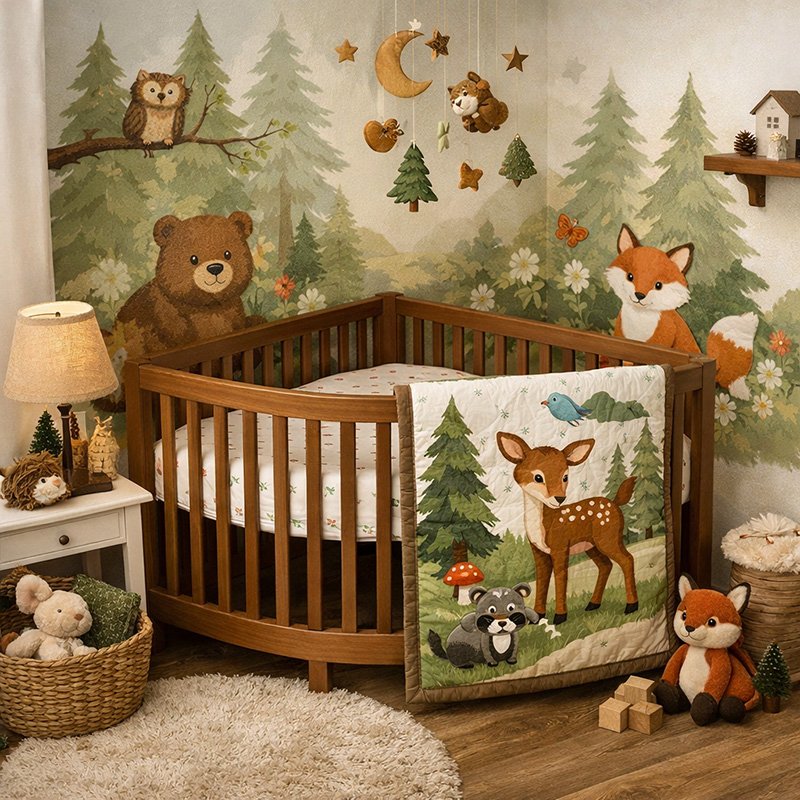
While corner baby cribs are often searched as a space-saving solution, they are uncommon today and usually create more layout limitations than advantages in modern nurseries.
Corner Baby Cribs: What the Term Usually Means
The phrase “corner baby crib” is commonly associated with layout constraints rather than with a specialized crib design. Searches using this term often relate to rooms described as narrow, shared, or visually crowded once standard nursery furniture is present. In many homes, door placement, closet clearance, or window spacing limits usable wall length, and corner placement becomes part of the layout discussion.
In modern use the term, “corner baby crib” is a layout description rather than a distinct crib type, and it typically reflects space constraints more than a preferred or widely used crib format.
Corner placement is often seen in compact rooms where floor access and walking paths are emphasized over symmetry. In these situations, the crib occupies part of the room perimeter rather than a centered position, which alters how remaining space is viewed and used.
Fit and access overview
When a crib is positioned in a corner, surrounding wall length and open-side clearance influence how the placement exists within the room. Corner placement reduces the number of accessible sides, which affects nearby furniture positions and walking paths.
Rooms with limited width may appear more visually balanced with corner placement, while very tight layouts can remain crowded regardless of positioning. In these situations, overall footprint becomes more noticeable than location alone.
Smaller footprints in limited rooms
In many compact nurseries, smaller crib footprints appear alongside corner placement. This combination is frequently associated with layouts that emphasize open walking space and reduced visual density rather than furniture scale.
How Corner Placement Changes Room Perception
Corner placement shifts the crib away from central walking paths and reduces visual interruption in the middle of the room. This change can make a nursery appear more open even when total square footage remains the same.
In multipurpose rooms, including shared bedrooms or spaces with additional uses, corner placement visually separates the sleep area from the rest of the room. Layout examples and room arrangement comparisons appear in the baby room decorating ideas section.
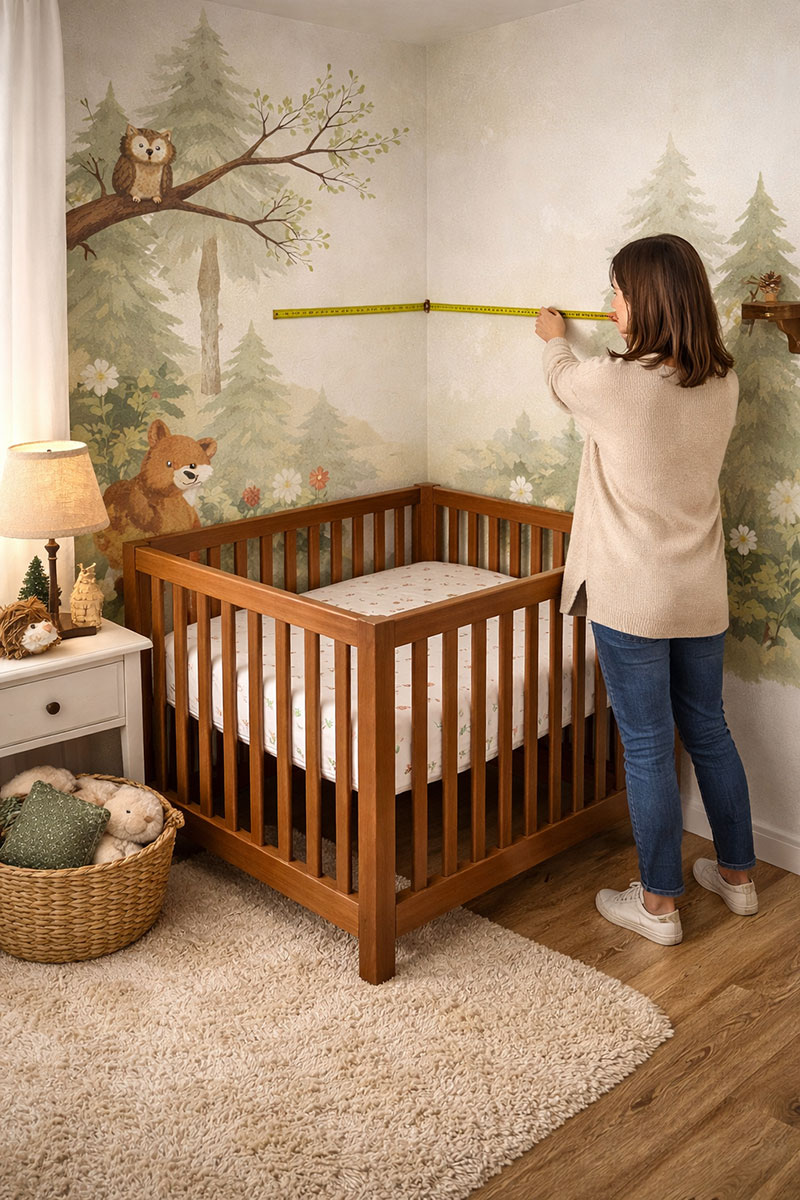
Crib Types Commonly Used in Corner Layouts
Corner placement typically involves standard crib categories rather than specialty designs. Selection within these categories is generally tied to room size, footprint, and long-term use rather than shape.
Full-size cribs in corners
Full-size cribs are sometimes placed in corners when room width allows sufficient clearance. This arrangement is often present in nurseries where doors, closets, or windows limit available wall placement.
Mini and space-focused cribs
Mini cribs and compact designs are frequently associated with corner layouts in small rooms. To see which compact designs work best, this guide to best mini cribs for small spaces compares footprint, layout fit, and everyday use.
For a wider comparison of crib styles that help make tight rooms feel more workable, see cribs for small spaces.
These options appear most often in apartments and shared spaces where a reduced footprint changes overall room balance. A comparison of these designs appears in the portable and small-space crib overview.
Convertible crib formats
Convertible cribs are sometimes placed in corners when future room changes are part of the overall setup. These models are identified by size and configuration rather than immediate layout alone. Additional background information appears in the convertible crib overview.
Corner Placement Details Observed Over Time
Corner placement changes how cords, outlets, curtains, and wall-mounted items align with the crib. These elements may seem less noticeable during early layout planning but become more visible once the room is in regular use.
Layout note
Uncluttered placement and separation from loose cords or fabric elements are commonly associated with simpler corner layouts. These characteristics are often noted after the crib is in place rather than during initial planning.
For federal compliance information related to crib design, mattress fit, and general product requirements, the U.S. Consumer Product Safety Commission provides a public resource here: CPSC crib compliance information.
Sheets, Bedding, and Shape Assumptions
Most corner crib layouts use standard rectangular cribs rather than specialty shapes. As a result, standard crib bedding dimensions generally apply regardless of placement within the room.
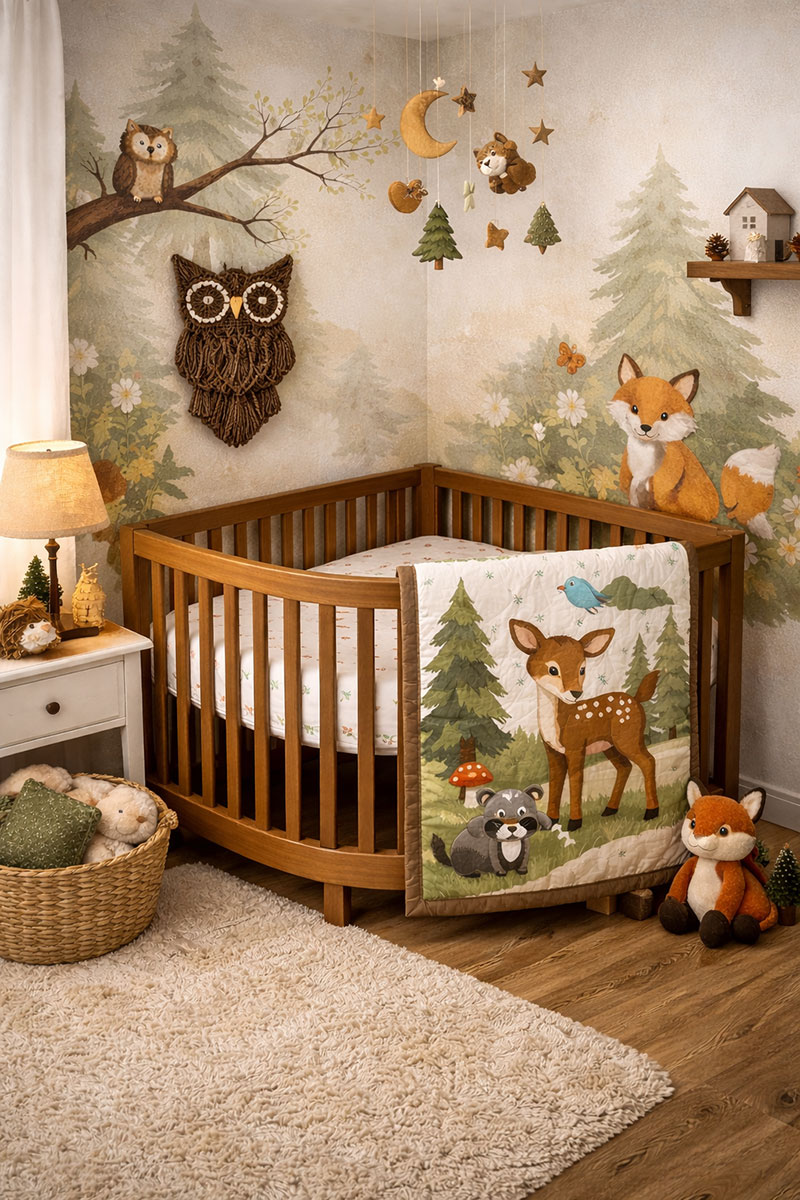
Theme-based nurseries, including woodland designs, often use decorative textiles placed outside the crib itself. General product information related to bedding categories appears in the baby bedding overview.
Most searches for corner baby cribs do not involve currently manufactured specialty crib designs, and new corner-specific crib models are uncommon in today’s retail market.
Discontinued Corner Cribs and Older Models
Some searches relate to discontinued corner crib models produced in earlier years. These designs often used angled frames and custom hardware, which can be difficult to identify once manufacturer support ends.
Because corner crib availability has changed over time, this page focuses on how the term is commonly used and interpreted rather than on current product availability or active model listings.
The Baby Trilogy corner crib is one example that appears in archived product listings and resale discussions. Identification and part comparison information for older models is organized within the crib parts information hub.
Corner Layouts in Shared Rooms
In twin nurseries and shared rooms, corner placement is often used to reclaim central floor space. This approach appears in layouts that include two cribs or a crib combined with another sleep surface.
Examples and spacing comparisons related to these arrangements are grouped in the crib layouts for twins and shared rooms section.
Layout Summary
Corner baby crib layouts are primarily about room organization rather than specialized crib construction. Placement influences walking paths, visual balance, and how other nursery furniture fits within the remaining space.
An overview of standard, compact, and specialty crib formats is available in the main baby cribs guide, where layout considerations and footprint differences are grouped together.
Comparisons between standard, compact, and convertible crib formats are grouped in the small-space crib overview, where footprint differences are presented side by side.
This page discusses crib placement concepts and room layout observations only and does not provide safety instructions, installation guidance, or approval of specific crib setups.
Please note that I am not an employee or official representative of Delta Children, Simmons, Storkcraft, or any other crib manufacturer. Manufacturer materials remain the authoritative source for model-specific determinations.
Community-submitted nursery photos and layout examples are collected through the Get Featured page.
When you click on links to various merchants on this site and make a purchase, this may result in this site earning a commission. This does not affect the price you pay.

UBGI Gold Standard 2026
Reviewed under the site's
editorial checklist.
Photos, decorating ideas, party setups and reader submissions are shared for inspiration unless a page is specifically presented as a pattern, tutorial, reference guide or step-by-step project. Follow the instructions, measurements, safety guidance and manufacturer directions provided for the particular project or product.
About Jan | Contact | Baby Nursery Ideas (Blog) | Site Map | Privacy Policy | Disclosure Policy | Disclaimer | Affiliate Disclosure | Earnings Disclosure | Facebook | Pinterest
I am a participant in the Amazon Services LLC Associates Program, an affiliate advertising program designed to provide a means for us to earn fees by linking to Amazon. As an Amazon Associate I earn from qualifying purchases.
Copyright © 2006-2026. All Rights Reserved.